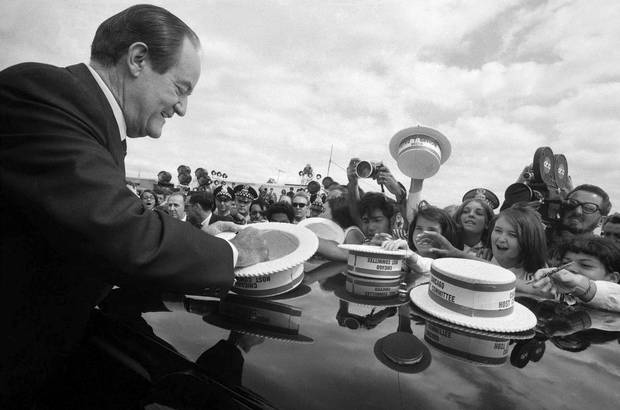
Vice President Hubert Humphrey arrives in Chicago for the Democratic National Convention of 1968, when just 15 nominating contests were held. The closer Donald Trump draws to winning the Republican presidential nomination over opposition from party leaders, the more his detractors ask: How can this happen? A change in the nomination process opened the door to candidates who could attract grass-roots followings even if they repelled party leaders.
Barton Silverman/The New York Times
Millions of political junkies from around the world will tune into the Republican National Convention in Cleveland July 18-21, and its Democratic counterpart in Philadelphia July 25-28, to learn more about the vice-presidential picks, to compare Donald Trump's and Hillary Clinton's convention speeches, and, for spice, to see whether efforts to foment a rebellion by delegates against Mr. Trump come to anything. (Don't count on it.)
But, truth be told, most recent party conventions have been pretty dull. The presidential nominees have been effectively chosen months in advance, and every convention minute is carefully choreographed. For sport, let's look at some memorable conventions in the past where the scripts were well and truly shredded, starting with the launch of a political party so obscure you probably never knew it existed.
What you'll find in this scan of U.S. political history is that a pattern emerges: A party that leaves its national convention divided loses the election. It happened in 1860, 1912, 1924, 1968, 1976 and 2008 (see below). So after watching the Democratic and Republican conventions this month, ask yourself: Which party seems more divided than the other? That will probably serve as a guide to which nominee will win in November.
The 1831 Anti-Masonic Party National Convention
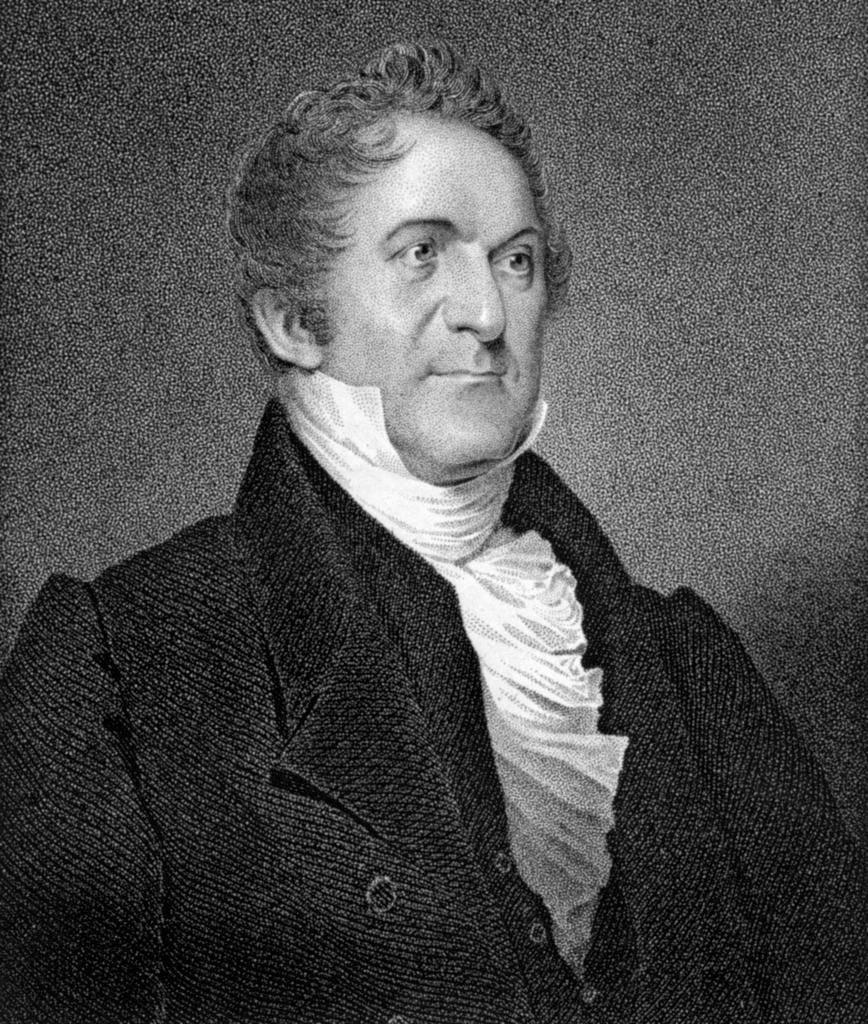
Prior to 1832, Congressional caucus members chose their party's presidential nominee. But times were changing, with a populist Democrat, Andrew Jackson, in the White House, and there was growing demand that citizens be involved in choosing the candidate for president.
One group of Americans feared the power and influence of Freemasons. (Like all prejudice, these fears were groundless.) A total of 111 supporters from 13 states met in Baltimore in September 1831 to choose a presidential candidate for the Anti-Masonic Party, ultimately picking William Wirt, a former U.S. attorney general and former Mason. Mr. Wirt and his party went nowhere, but both the Democrats and National Republicans (ancestors of the GOP) decided to imitate the new party and hold selection gatherings as well. With that, the national political convention was born. (In the end, Mr. Jackson was handily re-elected in 1832.)
The four conventions of 1860
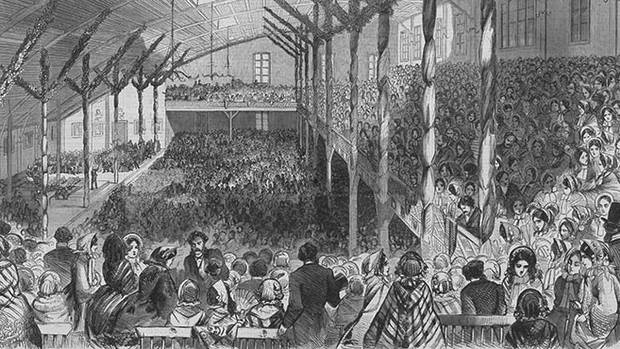
The Republican Convention of 1860 – “The Republicans in Nominating Convention in Their Wigwam at Chicago, May 1860,” from Harperís Weekly, May 19, 1860.
Library of Congress
The United States was breaking apart: Northern abolitionists were determined to end or at least limit slavery, southerners demanded the extension of slavery into the western territories, and hopes for compromise were fading.
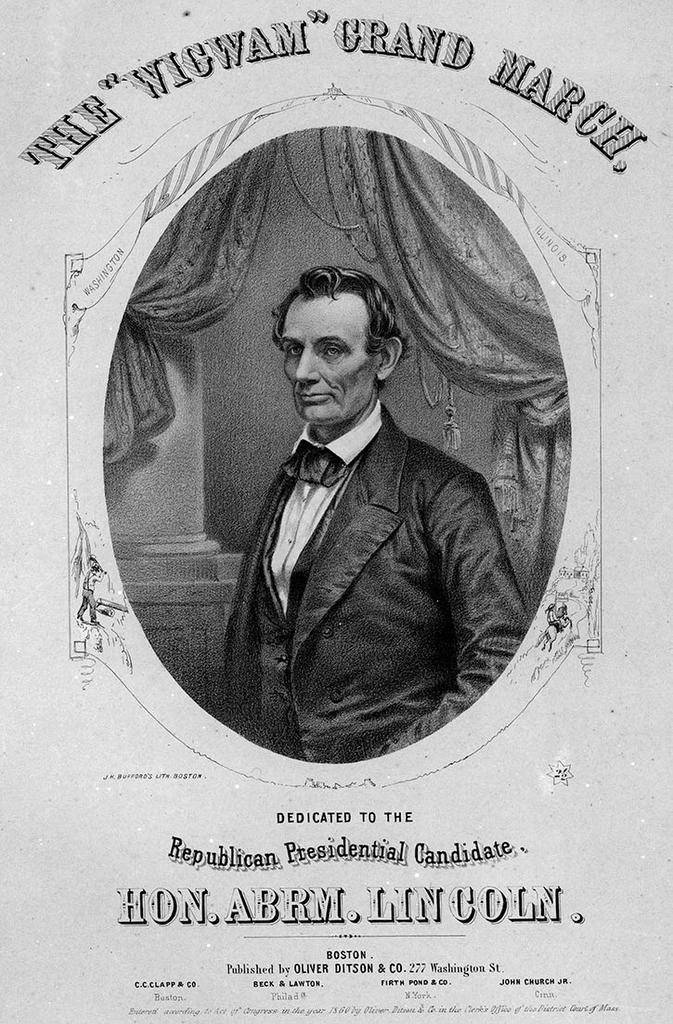
The new anti-slavery Republican Party, which had emerged from the declining Whig Party, met in Chicago in May 1860, with most people figuring New York Senator William Seward would win the nomination. Mr. Seward thought so too. Instead, a relatively unknown lawyer, Abraham Lincoln, came up the middle as everyone's second choice to snatch the nomination on the third ballot.
Meanwhile, the Democratic Party was collapsing. Extreme pro-slavery delegates bolted the April convention in Charleston, S.C., and the rest couldn't choose a nominee after 57 ballots. (Back then, candidates required two-thirds support.) Delegates reconvened in Baltimore in June; again the southerners bolted, and the rump chose Illinois Senator Stephen Douglas. The Southern Democrats nominated Vice President John Breckinridge for president, while the Constitutional Union Party – the last gasp of the Whigs – chose former senator John Bell, with a platform that tried to ignore slavery as an issue.
With the Democrats in disarray, the northern states handed victory to the Republicans and Mr. Lincoln, which southerners interpreted as a mandate for secession.
The 1912 Republican convention
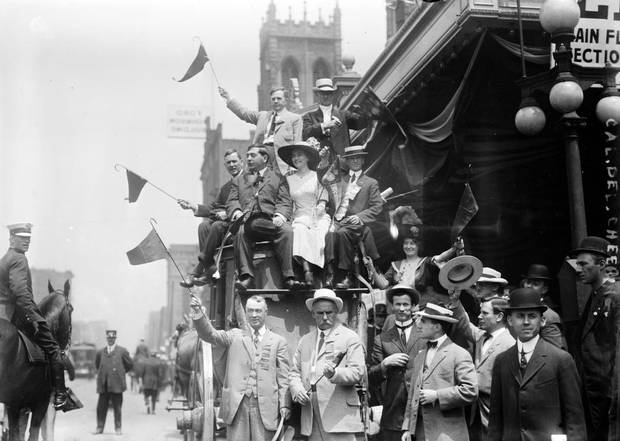
California delegates on stagecoach at the 1912 Republican National Convention held at the Chicago Coliseum, Chicago, Illinois, June 18-22, 1912.
Library of Congress.
The biggest mistake Theodore Roosevelt ever made was to announce on Nov. 8, 1904 – the night he was elected to his first full term as president (he originally became president after William McKinley was assassinated in 1901) – that he would not seek another term. Secretary of War William Howard Taft succeeded Mr. Roosevelt as the nominee and as president four years later. But Mr. Roosevelt was disappointed by Mr. Taft, considering his successor too right-wing. (Mr. Roosevelt's monumental ego might also have been involved.)
For the first time, some states held primary contests to choose delegates to the 1912 presidential conventions. Mr. Roosevelt swept most of them, but Mr. Taft and the Republican bosses controlled most of the party machinery, and they prevailed at the convention. Mr. Roosevelt, furious, formed a third party, formally known as the Progressive Party, but commonly called the Bull Moose Party.
The Republicans came third in the election, behind Mr. Roosevelt's Bull Moosers, but the vote split made Woodrow Wilson, the Democratic nominee, president.
The 1924 Democratic convention
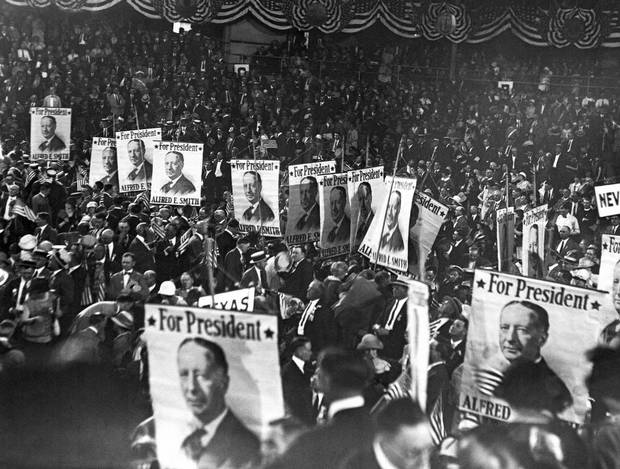
Interior view of Democratic National Convention in 1924 at Madison Square Garden in New York. The convention ran from June 24 to July 9, 1924, with a record 103 ballots to nominate a presidential candidate. John W. Davis won the party’s nomination beating the front runner Al Smith.
AP Photo
The key to an exciting convention is a divided party. Democrats were a mess in 1924; the Ku Klux Klan was so powerful within the party that the convention was called the Klanbake. The Klan endorsed William McAdoo, who had served as Wilson's treasury secretary. Though progressive in many ways, he didn't disavow the Klan endorsement and was also pro-prohibition. The other front-runner, New York Governor Al Smith, a Catholic, was anti-lynching and anti-prohibition; progressives rallied to his campaign.
With two-thirds support required for nomination, each cancelled the other out. For 16 sweltering days and 103 ballots – punctuated by some pretty bloody fistfights – Mr. McAdoo and Mr. Smith and a plethora of minor candidates fought to control the convention at New York's Madison Square Garden before settling, in exhaustion, on lawyer John W. Davis, who lost badly to Republican incumbent Calvin Coolidge.
But there was one positive footnote for the Democrats: Franklin Delano Roosevelt had been a rising star before polio ended his political ambitions, or so people thought. And yet Mr. Roosevelt, aided by iron braces and his son, showed his career wasn't over when he "walked" to the podium to place Mr. Smith's name in nomination, causing Democrats to reconsider.
1960 Democratic convention
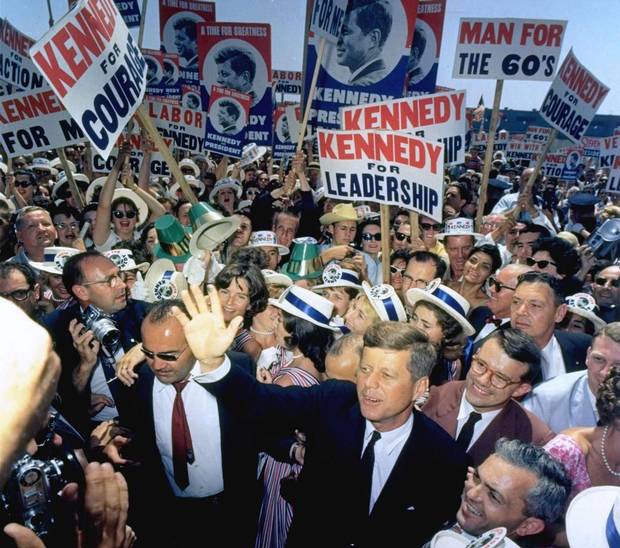
Sen. John F. Kennedy makes his way through a crowd of supporters and journalists as he arrives in Los Angeles, July 9, 1960 for the Democratic National Convention.
AP Photo
Although Senator John F. Kennedy, aided by his own charm and his father's money, had won the primaries, several contenders hoped for a stumble, one of them being Texas senator Lyndon Johnson. Kennedy didn't stumble but only won narrowly, with support of 53 per cent of delegates (the Democrats had wisely abandoned the two-thirds majority rule) on the first ballot.
The convention's most important feature was the emerging power of television. The networks had covered previous conventions, but by 1960, 90 per cent of American homes had boob tubes, as they came to be known, and Mr. Kennedy turned out to be a natural on TV. Google his New Frontier acceptance speech, and you'll see what millions of Americans discovered for the first time: Mr. Kennedy's comfort in front of the cameras, and his easy command of Ted Sorensen's powerful prose.
In one of the closest election races in American history, which Kennedy won with 49.72 per cent of the popular vote compared with Richard Nixon's 49.55, TV proved crucial to the outcome, especially in helping Mr. Kennedy to win the presidential debates in the eyes of viewers. From 1960 on, national conventions would be made-for-TV affairs.
1968 Democratic convention
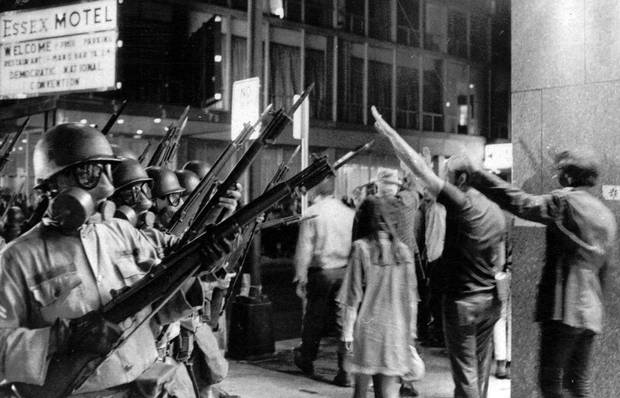
Young anti-war protesters raise their arms in the air and taunt bayonet-armed National Guardsmen Aug. 28, 1968 near Michigan Avenue in Chicago during the Democratic National Convention.
AP PHOTO
In the wake of recent racial turmoil sparked by shootings of African Americans by police, the Black Lives Matter protests, and the five officers who were killed in Dallas and the three in Baton Rouge, some people have drawn comparisons to the convulsions of 1968.
Not even close. The assassination of Martin Luther King in April of that year led to riots in more than 100 cites, leaving devastation that in some cases took decades to rebuild. Robert Kennedy, competing for the Democratic presidential nomination, had been assassinated June 5, the night he won the California primary. And then came the Democratic National Convention in Chicago that August, the most infamous in American history.
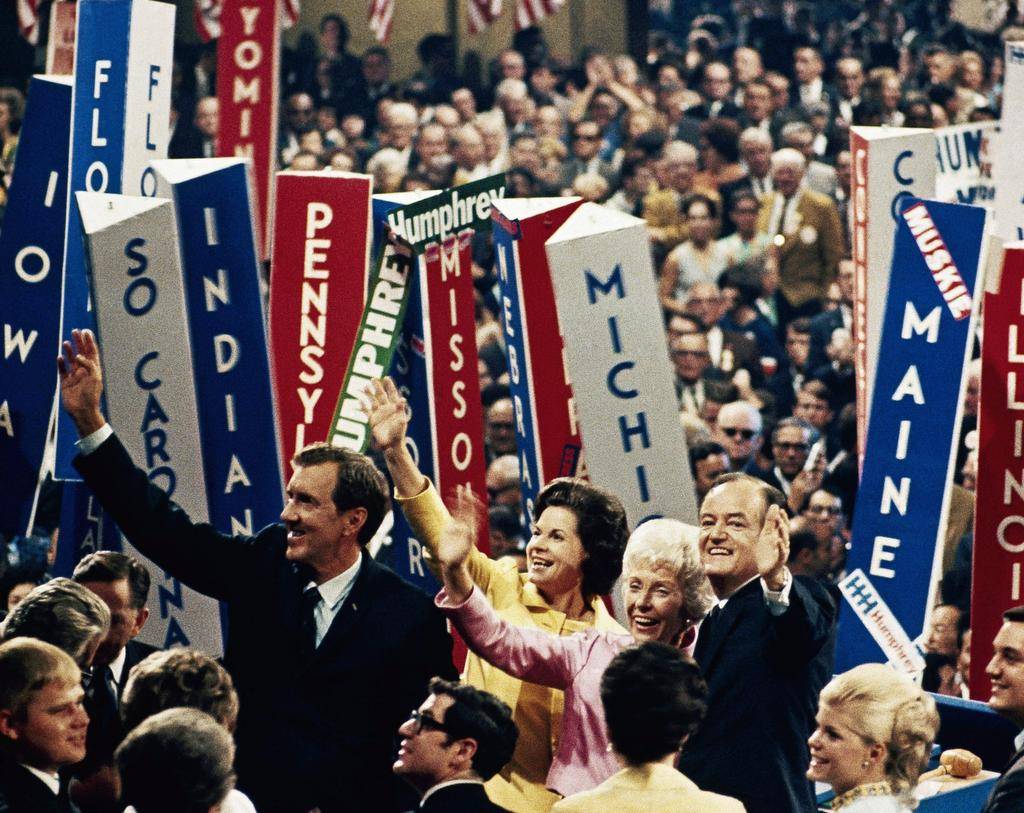
Democrats were riven between factions supporting and opposing the war in Vietnam. President Lyndon Johnson had withdrawn from the race, knowing he couldn't win his own party's nomination. The two leading contenders were Senator Eugene McCarthy (end the war) and Vice President Hubert Humphrey (support the war).
But it was the riots that defined the convention: 10,000 antiwar protesters faced off against 23,000 Chicago police officers and National Guard, with the national media, there for the convention, covering it all live. Though Mr. Humphrey prevailed, a divided, wounded Democratic Party lost to Republicans in November, making Richard Nixon president.
1976 Republican convention
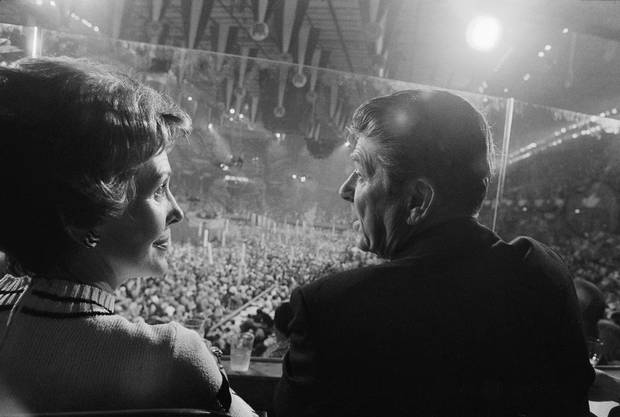
Nancy and Ronald Reagan at the Republican National Convention in Kansas City, Mo., on Aug. 19, 1976.
Teresa Zabala/The New York Times
The last Republican convention that began in suspense gathered in Kansas City, Mo., on Aug. 16, 1976. Gerald Ford was a weakened president, unforgiven for pardoning disgraced former president Nixon, and unfairly portrayed as a dim-witted bumbler (he was anything but).
Twelve years before, the conservative wing of the Republican Party had delivered the nomination to Barry Goldwater, which led to a crushing defeat. Now, they rallied around former movie star and California governor Ronald Reagan. The race was tight, with Mr. Ford arriving at the convention ahead in the delegate count, but not by enough to secure a win. In the days before the convention, both sides fought to woo uncommitted delegates and to torque the rules in their favour.
The advantage of incumbency allowed Mr. Ford to win those battles, and the convention. But the Republicans, divided, lost to Democratic nominee Jimmy Carter, and Mr. Reagan became an unstoppable force, going on to take the nomination and the presidency four years later against a Democratic Party divided by Senator Edward Kennedy's unsuccessful effort to unseat Mr. Carter.
2008 Republican convention
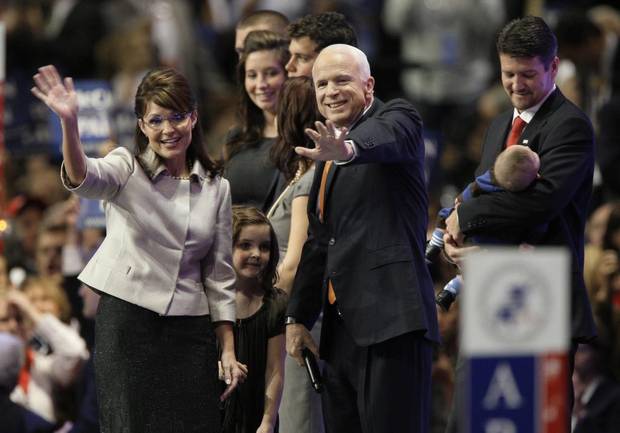
Republican vice presidential candidate Sarah Palin, left, is joined by Republican presidential candidate John McCain, second from right, and her family at the end of her speech at the Republican National Convention in St. Paul, Minn., Wednesday, Sept. 3, 2008.
Charlie Neibergall/AP Photo
We end with a convention that had an unremarkable contest for the nomination, but was historic for the forces it unleashed. Pathetic fallacy greeted the Republican National Convention when delegates gathered in St. Paul, Minn., that August. Proceedings were postponed for a day as Hurricane Gustav neared New Orleans, which had been devastated by Hurricane Katrina three years before. (Thankfully, the storm weakened in the Gulf.)
The real drama surrounded who Arizona Senator John McCain, the presumptive nominee, would choose for his vice-presidential running mate. Democrats had already anointed Illinois Senator Barack Obama, the first African-American presidential nominee in the nation's history, and Mr. Obama led Mr. McCain in the polls. Desperate to jump-start a flagging campaign, Mr. McCain's advisers persuaded him to choose Alaska Governor Sarah Palin, virtually unknown outside her state.
Republican vice-presidential nominee Sarah Palin’s full speech from the 2008 convention
At the convention, Ms. Palin was a hit, connecting with delegates in a homespun, aw-shucks speech that had advisers high-fiving each other. ("I got rid of a few things in the governor's office that I didn't believe our citizens should have to pay for," she said. "That luxury jet was over-the-top. I put it on eBay.") Once the campaign was under way, Ms. Palin's family dramas and her conspicuous weaknesses on policy made her more of a liability than an asset in the doomed campaign.
But a new movement was born that would soon be called the Tea Party. It divides and bedevils the GOP to this day.