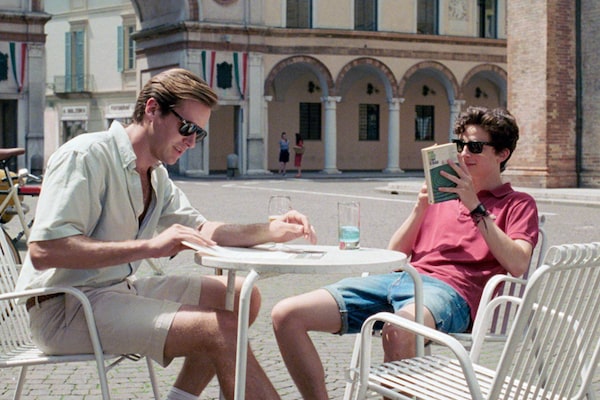
Armie Hammer and Timothée Chalamet star in Call Me By Your Name.The Globe and Mail
Oh, to be 17, in love and in Lombardy! The summer idyll conjured by the Italian director Luca Guadagnino in his adaptation of the André Aciman novel Call Me By Your Name has been seducing audiences and critics since it appeared on the festival circuit earlier this year.
The story of a precocious Jewish teenager's sexual awakening in the 1980s, this languid film full of long lunches and even longer glances is set in the sun-dappled grounds and old-world interiors of a picturesque villa somewhere in Northern Italy. Hailed for its sympathetic and sexy portrayal of a gay crush, it's a potent elixir, but before the last glass of Chianti is quaffed, the preciousness of its characters may prove cloying.
In their lovely summer house, young Elio's scholarly parents host a foreign graduate student every year, and this year Elio (Timothée Chalamet) falls hard for the self-confident American Oliver (Armie Hammer), hired to help his archeologist father with various academic chores. There follows a deliciously slow buildup to a love that does dare to speak its name – but softly. The romantic tension is exquisite; the sex, when it finally arrives, is tasteful yet lush (including that much-winked-at scene with a peach, the source of an emoji for the film's marketing campaign). And the winsome Chalamet does a compelling job of capturing both first love and the inevitable heartbreak that ensues.
Also, the sensitive young esthete who he portrays seems of a perfect piece with Michael Stuhlbarg's firm version of his pedantic father, Mr. Perlman, and Amira Casar's fine work as his lively mother. Hammer, meanwhile, personifies the insouciant figure for whom a young man might fall, but the notion that this god in swim trunks is a scholar is laughable. There's a particularly gag-inducing scene where, falling into a trap laid by Mr. Perlman, he discourses on the correct etymology of the word "apricot."
To be fair, Hammer is perhaps playing the character as he was originally written – the book is told exclusively from Elio's point of view and Oliver is largely a screen on to which the teenager projects his lust, mistaking the other man's diffidence for aloofness. But here, Hammer's Oliver mainly seems arrogant, more admirable specimen than admirable being.
Why then does Mr. Perlman so value his student? His big speech acknowledging Oliver and Elio's "friendship" and calling it a great gift (which has earned Stuhlbarg raves in some quarters) is another excruciating moment as director and screenwriter (the venerable James Ivory copying straight from the book) force an actor to summarize the themes of their film.
Meanwhile, as the al fresco dining and leisurely swims give way to end-of-summer blues, the film shifts from languid to long. By now, the liberal parents and the forgiving French girlfriend (Esther Garrel in a thankless role for both character and actor) are beginning to seem improbably convenient. Who are these fancy people? The erudite family may not stretch credulity – they are surely based on Aciman's own international clan – but they can certainly annoy you. (My breaking point was a scene where the mother translates a German fairy tale to her trilingual husband and son.)
Tellingly, Ivory and Guadagnino have moved the action from 1988 – when the spectre of AIDS would surely have been on a father's mind – to 1983, where Mr. Perlman's wise speech at least doesn't seem downright deluded. There is a strong element of wish fulfilment to this fantasy of cloudless days. It may make you swoon – or simply try your patience.