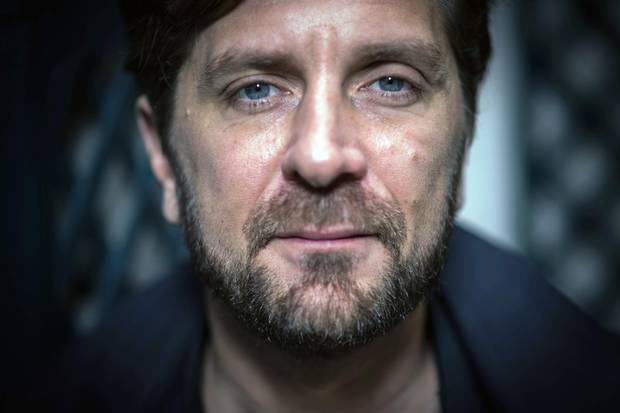
Ruben Ostlund has a motto, which rings like a cheeky revision on Gordon Gekko's famous proverb from Oliver Stone's Wall Street: Guilt is good.
The 43-year-old Swedish filmmaker, who began making alpine skiing movies before gaining international attention with his 2014 alpine ski-resort-set feature Force Majeure and netting the prestigious Palme d'Or at Cannes earlier this year for The Square, talks like an overcaffeinated undergraduate who is positively exploding with ideas. Among them: trust, apathy, masculinity, the way responsibility becomes diffused across large groups, the hypocritical tendency to sentimentalize homelessness. And, yes, above all else, guilt.
"There's a constant guilt that we're trying to handle," says Ostlund, early in the morning in a hotel suite following the Toronto International Film Festival premiere of The Square last month. "I don't know if this is more Scandinavian or Protestant. We deal with guilt. I think it's good, actually. Human beings are striving for equality, and we get very, very provoked when we see inequality."
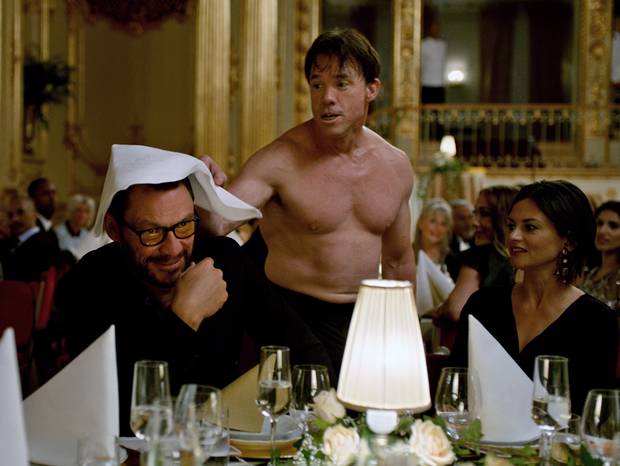
Dominic West and Terry Notary in The Square.
Courtesy of Magnolia Pictures
The Square presents itself as a film of ideas. Less of a traditional narrative, it takes shape as a series of comic vignettes following the upper-crust art curator Christian (Claes Bang) as he struggles to market a new, ambitiously utopian installation called "The Square." With varying degrees of efficacy and sophistication, Ostlund's film explores how guilt, apathy and empathy motivate human behaviour. The Square returns again and again to its central idea: in a vignette depicting a pickpocketing or an awkward confrontation following a drunken hook-up or in Christian's extended showdown with a precocious child. But it's most clearly condensed in the film's stunning centrepiece, which stars American actor and stuntman Terry Notary as a performance artist who goes ape on a room full of well-heeled art patrons.
It unfolds like this: A voice-over tells the rich, formally attired attendees that they're about to be confronted with a wild animal. Enter Notary, hunched and grunting like a gorilla, stalking the banquet hall, alternating between amusing, annoying and outright abusing the guests. It's a stunning piece of filmmaking, made all the more visceral by virtue of its genuine sense of danger and unpredictability.
"These were established people in the art world!" says a laughing Notary, who is, in his own words, "hung the hell over," recovering from a swirl of TIFF parties. "Thank God he didn't tell me that. I didn't know who I was throwing water at or who I was going to tip over in a chair!"
Ostlund sees this spectacle as an experiment meant to illuminate the bystander effect – a social physiological occurrence that renders people more passive and apathetic in large crowds. In short, the more people are present when something clearly bad is happening, then the less likely it is that any one person will bother to help. The (somewhat anachronistic) textbook example is of a young woman being brutally assaulted for more than half an hour in front of her Queens apartment building, while nearly 40 witnesses and bystanders refused to intervene or even call for help. The more people, the more the burden of responsibility is spread thin. Or as Ostlund puts it, excitedly: "We are herd animals! We get paralyzed! 'Don't take me, don't take me! Take someone else!'"
With The Square, Ostlund wanted to reflect this paralysis and passivity back at an audience. His and Notary's ape-man sequence was specifically designed to goad audiences at Cannes, where the film premiered and took top honours. "I wanted it to play in competition," the filmmaker explains. "Because every film in competition screens in the [Grand Théâtre] Lumière. And then you have people in tuxedos, sitting and watching another audience in tuxedos. I'm aiming to raise questions about yourself, trying to use it as a mirror. What would I do? I want to create moral dilemmas."
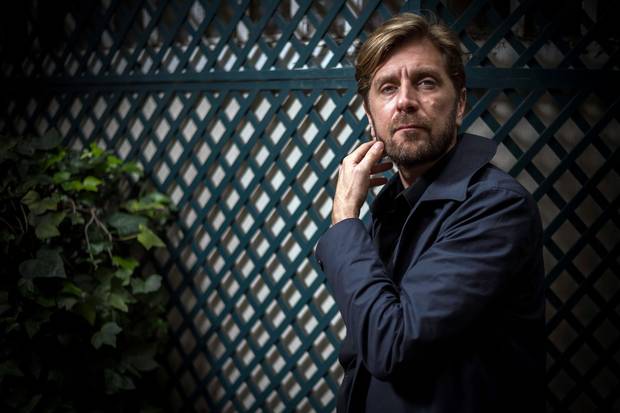
Ostlund’s art-world satire The Square won the Palme d’Or at the 2017 Cannes film festival.
LIONEL BONAVENTURE/AFP/Getty Images
The Square's ability to present such moral dilemmas is nonpareil. As in Force Majeure, Ostlund has an undoubtable knack for suggesting the psychological complexity of banal-seeming characters and situations. How he reconciles these dilemmas is another question. Seemingly unable (or unwilling) to reach salient conclusions, The Square dissolves into variations on the "what would you do?" theme. Perhaps such unresolved ambiguity is "the point." But what seems more likely is that Ostlund is too intoxicated by the presumed importance of his big moral questions to bother with answers or even satisfactory attempts at answers. As he says, "I really want to lift up topics that I think are important. But also make them wild, and entertaining!"
There are moments – as in Notary's bravado performance as the consummate in-your-face performance artist – when The Square feels as lively, exciting and thrillingly wild as anything happening in world cinema. As to the question of whether this is deeply considered intellectual cinema worthy of the Palme d'Or? Well, maybe Cannes's eminent jury just felt a bit guilty.
The Square opens in Toronto on Nov. 3 at the TIFF Bell Lightbox.