Want to hear a dirty little secret of playwrights?
While the world adores William Shakespeare, many of his artistic descendants are a tad ambivalent toward the Bard. “I think a lot of living writers start to feel a little stroppy about what a stranglehold he’s got on theatrical culture – especially as no one has to pay him royalties, you know?” says Rona Munro, the scribe of The James Plays, a trilogy of acclaimed Scottish history plays which begins its only North American engagement at Toronto’s Luminato Festival on Thursday.
“He’s got all the jobs, and we get the shittier theatres – thank you very much!” adds the Scottish-born Munro, 56, on the phone from London, with a chuckle that suggests she’s at least partly kidding.
Still, that was her point of view – cultivated, she acknowledges, by seeing far too many bad Shakespeare productions – until a few years ago, when she caught the Royal Shakespeare Company’s staging of the eight-play history cycle. And something happened: “What I realized when I was watching them was that most of what I knew about that period of English history came from those plays. When people dispute whether Richard III was or wasn’t a monster – they know who he was because of those plays.”
She also realized there was no Scottish equivalent. “So I thought: ‘Well, I’ll just do that, then! I’ll just write some Scottish history plays!’ ” Munro, whose CV includes scripts for film (Ken Loach’s Ladybird Ladybird, and Jim Loach’s Oranges and Sunshine), TV’s Doctor Who, and other works in theatre, is laughing now at her enthusiastic naïveté. But in 2012, she received a commission from the National Theatre of Scotland, London’s National Theatre and the Edinburgh International Festival to fulfill her vision. And in April, 2014, the company went into rehearsals with 420 pages of script for a three-play, seven-and-a-half-hour epic.
The trilogy made its debut mere weeks before the Scottish independence referendum that September, and proved to be something of a Rorschach blot. “Some people took the plays to be a ringing endorsement for Scottish independence,” recalls Munro, “but then other people felt that, you know: Look what a terrible, bloody, ghastly business a lot of it was.”
If you don’t know what Munro is talking about, you’re not alone. “One thing everyone always said, almost apologetically, is, ‘Oh, I don’t know anything about this history.’ And actually, neither do the Scots. Nobody knows this history, Scottish history is no longer really taught in schools. I mean, selected chunks of it are, but the medieval period is barely touched on. That’s one of the biggest reasons I wanted to do the plays. I really wanted Scottish history to have some kind of popular-culture version.”
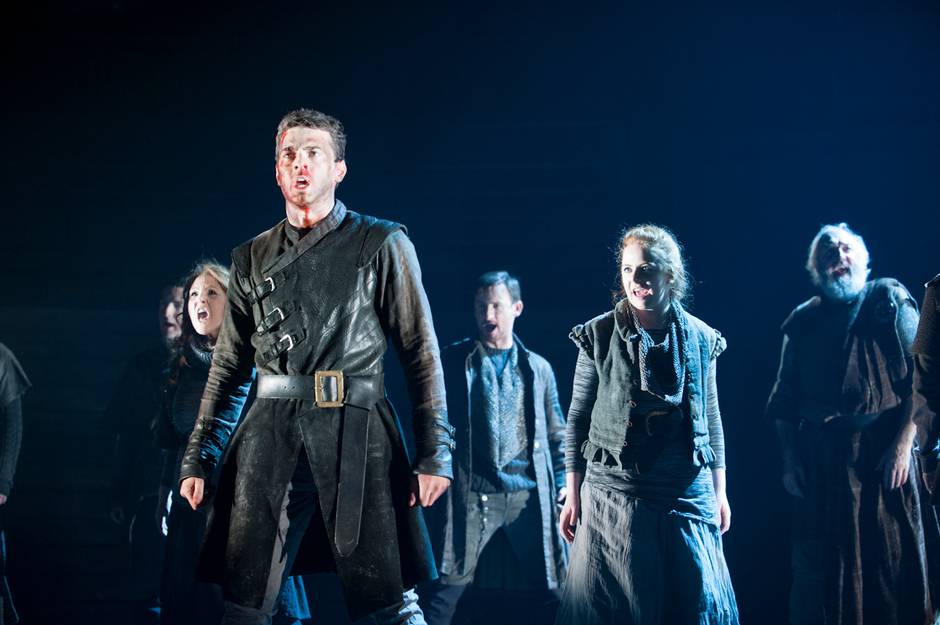
The result has been hailed by one critic as “Scotland’s answer to Game of Thrones,” and it is certainly a thrilling, bloody drama. But it is also intensely human. Munro’s royals and courtiers pulsate with humour, doubt, vulnerability, pride; they feel as contemporary as a Snapchat feed.
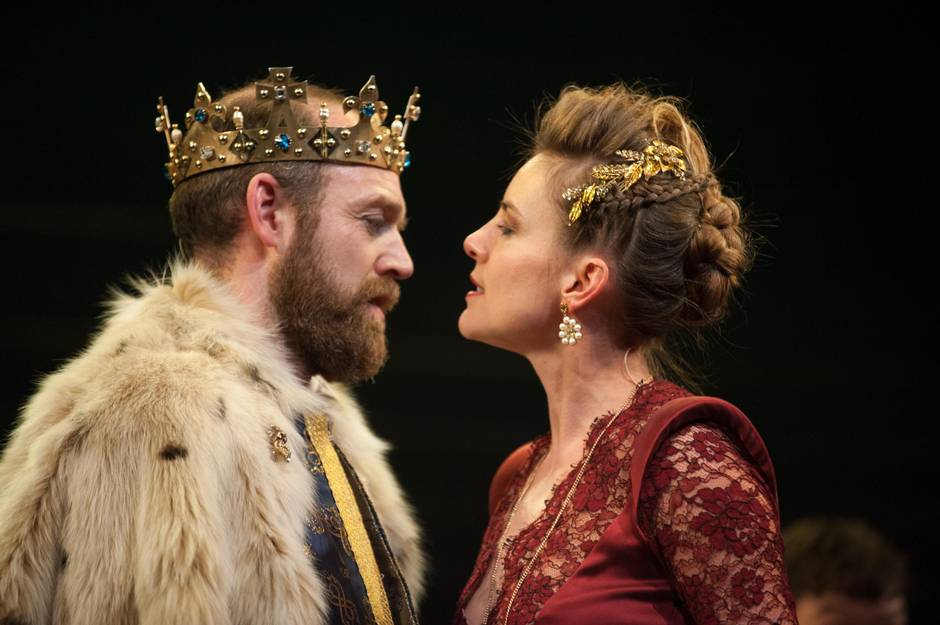
The trilogy begins in 1424 with James I, having been held against his will by the English for 18 years, being ransomed back to Scotland and ascending the throne. He writes poetry, tries to understand his new English-born bride, and seeks to be a king of peace. But those who had held power in his absence have other ideas.
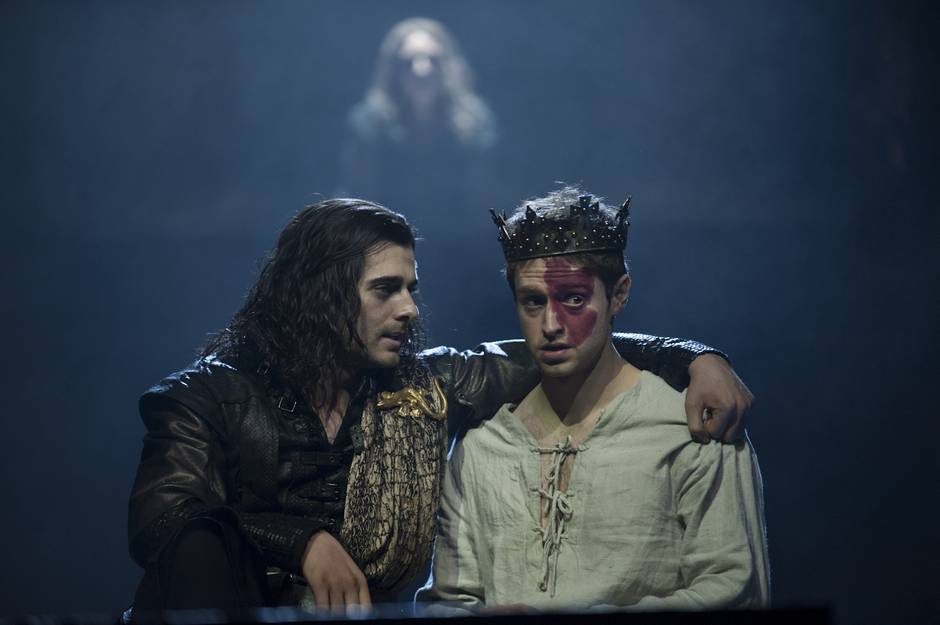
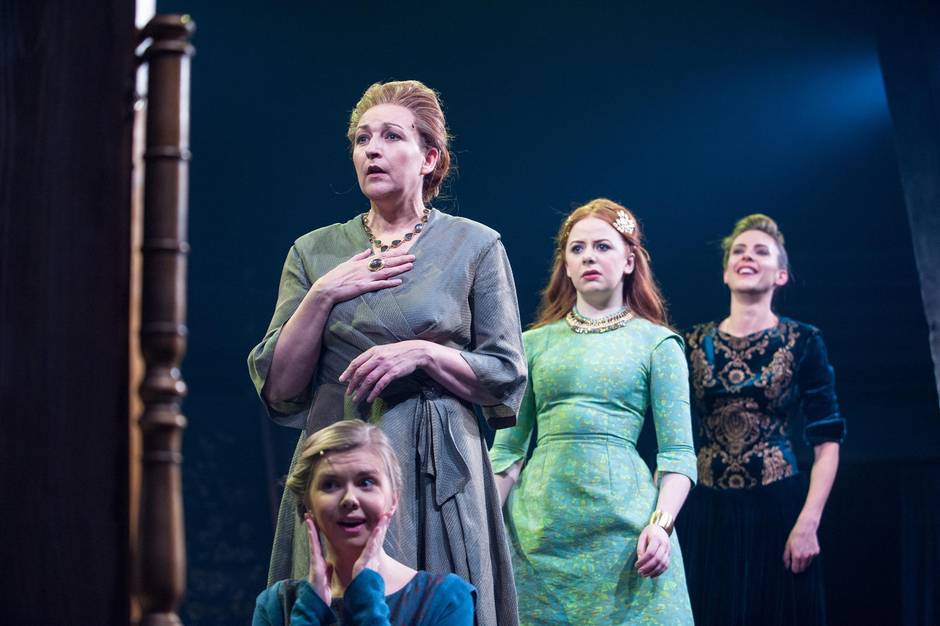
James II: Day of the Innocents focuses on the fraught relationship between the new king – beset by nightmares and mocked because of a large facial birthmark – and his sometime friend, Douglas. The final chapter may be named after the third king (James III: The True Mirror), but his ineffectual rule is overshadowed – in history, and in Munro’s drama – by his commanding, insightful wife, Queen Margaret of Denmark.
Munro admits that she didn’t quite realize the daunting task she and the company had set for themselves. “People have done trilogies of new plays – one play and then the next year they do the next one – but I don’t know if anyone’s done a trilogy all at once.
“They’re big, and we were constantly changing things, moving things around in rehearsal. You maybe discover something in James III and think, ‘Omigod, that actually affects James I! So, it was like this huge Rubik’s Cube, everything was constantly shifting,” she says.
“It was only just before we opened that we went, ‘Suppose they don’t like them?’ And that thought was so horrific that I don’t think I really stopped being frightened until they closed, and I suddenly realized we’d kind of done all right.”
More than all right, actually. After its first run in 2014, the trilogy was remounted last November, and has been touring internationally ever since; the Luminato appearance will be its final stop.
And, yes, there have even been praiseful comparisons to Shakespeare – which the modest Munro resists.
Still, there is this. “One of the reasons that Shakespeare’s plays have survived is because they’re big human stories,” notes Munro. “And I think the lesson that history gives us is that nobody ever knows anything. What you think you’re doing is probably not what you actually are doing. And because we don’t teach history, that basic fact keeps becoming invisible.
“I think one of the best things about making history accessible is just that constant reminder that they were just like us. They think they’re doing something for this reason and we can all see it’s [for another reason]. I just think it’s really salutary and it’s really humbling.
“And also – it’s not that long ago! You know, you can count the generations. We’re not talking about Neanderthal people in caves. We’re still living in some of the buildings they built, we’re still dealing with some of the geographical boundaries they erected,” says Munro.
“It’s not these sepia-tinted people that are existing back in some kind of mythical past. This is us.”
The James Plays Trilogy runs until June 26 at Luminato (luminatofestival.com).