Rural Alberta has rarely been anybody’s first choice to put a data centre. In fact, the entire province has mostly been overshadowed by Ontario, Quebec and British Columbia, places with cleaner electricity grids.
So it was unusual when a provincial staffer floated the idea of hosting artificial intelligence data centres, buildings packed with sophisticated computing equipment, to Tyler Olsen during a meeting early last year. Tech giants such as Google and Microsoft Corp. were scouring the world for places to put them, homing in on regions that could deliver electricity to the thousands of graphics processing units, or GPUs, housed inside. These chips are the bedrock for building and running AI models.
Mr. Olsen is the reeve for the municipal district of Greenview, Alta., a collection of small communities with 8,600 people and ample backcountry for hiking, hunting and fishing northwest of Edmonton. The area is so large that Mr. Olsen lives some three hours away from its administrative headquarters, so he splits his time between locations. “I’m far from a computer guy,” he said. He’s not a dedicated ChatGPT user, either. “My speeches, I write myself.”
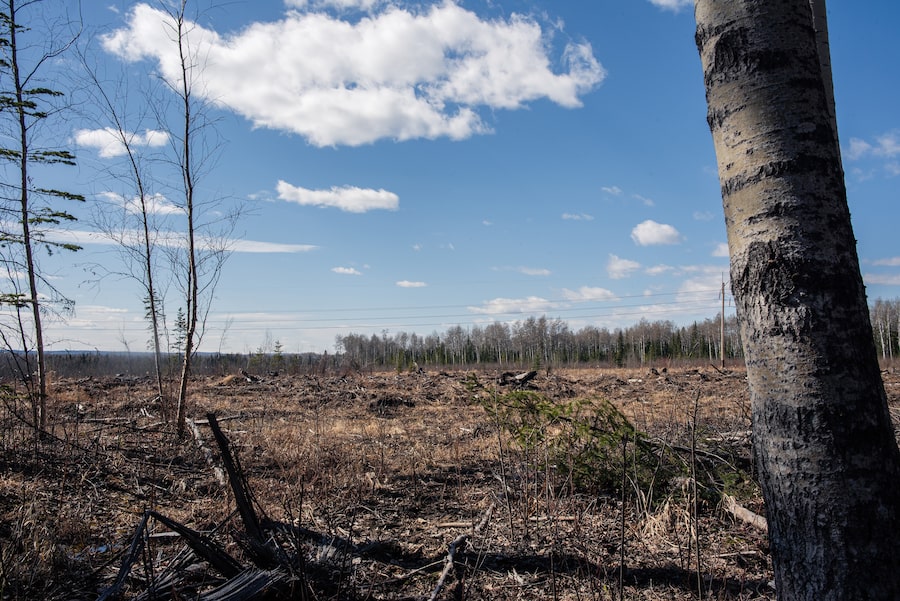
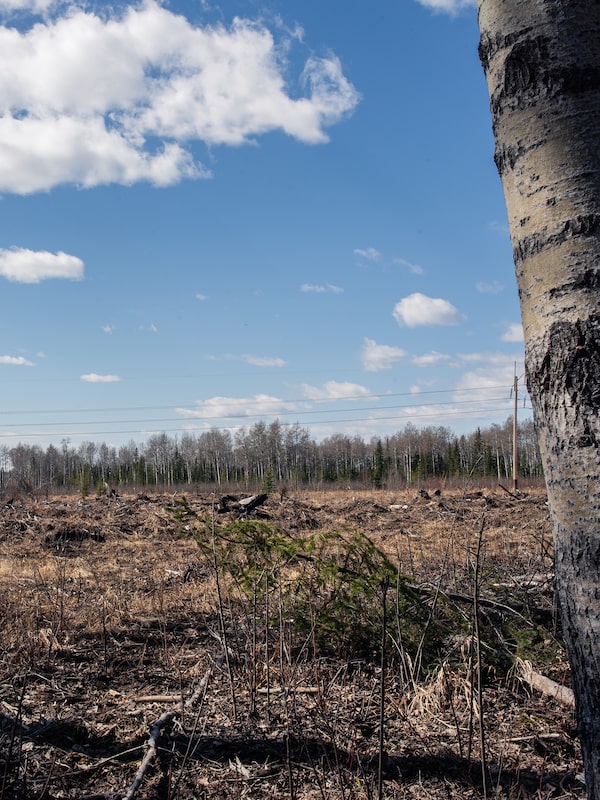
He didn’t think about data centres again until months later. Last September, a regional economic development body pitched a company called O’Leary Ventures, and soon executives were surveying the area from a helicopter. In December, the company announced plans to build Wonder Valley – the largest AI data centre complex in the world, requiring US$70-billion and 7,500 megawatts of off-grid electricity, enough to power about 6.5 million homes, right there in Greenview.

Kevin O'Leary, celebrity businessman and head of O'Leary Ventures, testifies before the U.S. Senate banking committee in 2022.J. Scott Applewhite/The Associated Press
The company is headed by Canadian celebrity businessman Kevin O’Leary, whose exploits of late include pushing for an economic union with the United States, advocating for Tesla vandals to be treated as terrorists and pitching Kevin O’Leary-backed bacon cheeseburger frozen dumplings on QVC.
True to form, Wonder Valley is high on flash, but has a very long way to go, including raising huge sums of money and securing customers. Sturgeon Lake Cree Nation in northern Alberta has also criticized the project for a lack of consultation. The first step for Wonder Valley is to finalize purchasing the land. Mr. Olsen, a supporter of the project, is nevertheless pragmatic. “Until they have the land and can make some deals, they haven’t got anything locked in,” he said.
Whether Wonder Valley is completed is beside the point; it’s merely an emblem of the zany enthusiasm for AI and the infrastructure that powers it. The Alberta government has a plan to attract data centres to the province, aiming for $100-billion of investment over a few years. So far, it’s working.
There are 21 requests for electricity from proposed data centres to the Alberta Electric System Operator (AESO), which plans and manages the grid. Some facilities are aiming to come online in the next two years. These projects are asking the AESO to be connected to 11,634 MW of electricity, not counting Wonder Valley. That’s more or less enough to power another Alberta. (Some requests may relate to the same facility, but broken into different phases.)
The need for new data centres is global, and mostly tied to generative AI, which requires immense amounts of computer processing capacity. As a result, AI developers say they need endless power – and fast.
Not long ago, a 30-MW data centre would have been considered hefty. Now the starting point is 100 MW. Ask anyone in the industry, and you’ll hear the most important factor when determining where to build is how quickly copious amounts of electrons can start flowing. The source of that power is a secondary consideration, even if it’s fossil fuel.
The power needs of AI have rekindled interest in nuclear energy, but that can take over a decade to come online. In the meantime, data centre operators are turning to natural gas. Alberta produces nearly two-thirds of Canada’s natural gas and has more than 563 trillion cubic feet of recoverable reserves. The province, which has a deregulated electricity market, wants data centres to tap into that supply, preferably by securing or generating their own power to avoid straining the grid.
“This is really a land grab,” said Sanjay Bishnoi, the chief executive officer of Entropy Inc., a Calgary company that develops carbon capture systems. “Speed is of the essence in terms of building out compute power, and that comes with more emissions.”
Not every proposed data centre will be built, but there will be some, possibly a lot. The problem is if it’s all powered by natural gas, Alberta risks eliminating the progress it’s made cutting greenhouse gas emissions in recent years, returning to a time when it ran coal power plants.
How to proceed is a question of values. Data centres attract investment and provide resources for Canadian companies to reap the benefits of AI. But expansion can also cause us to backslide on climate goals.
For now, the philosophy is to build first – and figure out the rest later.

Alberta’s Minister of Technology and Innovation Nate Glubish began speaking with tech companies about the possibility of building infrastructure in Alberta after attending an AI conference in California early last year. By December, he and Premier Danielle Smith announced the province’s data centre strategy.Kelsey McMillan/The Globe and Mail
A light bulb switched on for Nate Glubish, Alberta’s Minister of Technology and Innovation, early last year at an AI conference in California. Attendees talked about the huge computational resources needed to build and deploy AI models, while Dario Amodei, CEO of Anthropic, mentioned the billions of dollars the company spent on infrastructure. “I was like, ‘Wait. How many billion?’” Mr. Glubish recalled.
He later spoke with tech companies about the possibility of building in Alberta, emphasizing its natural gas resources and the province’s inclination to get things done. “They all confirmed they’re looking for places all around the world that can help them scale, and the most important thing is access to electricity at scale, and speed to market,” he said.
Last December, he and Premier Danielle Smith announced the province’s data centre strategy, including a “concierge” program to speed up the process, and touting Alberta’s low taxes and cool climate. (GPUs get extremely hot, often requiring water for cooling.) If successful, it would be a realignment in the location of these facilities.

The Equinix data centre in downtown Toronto, in November, 2024. According to a private company called Data Center Map, most of the 263 data centres in Canada are located near Toronto, Montreal and Vancouver.Fred Lum/The Globe and Mail
There were 263 data centres in Canada as of early April, mostly around Toronto, Montreal and Vancouver, according to a private company called Data Center Map. The numbers are incomplete, the company said, and it does not have information on what these facilities do. Most of them are likely for cloud computing and data storage; anecdotally, few are devoted to AI computing.
The Liberal government under then prime minister Justin Trudeau wanted to change that. Last year, Ottawa announced some $2-billion to build and access AI data centres, while the government’s fall economic statement put up $15-billion for facilities backed by at least one Canadian pension fund.
There might not be many places to put them. The country is facing more electricity demand than it can supply, with a shortfall of 15 per cent over the next decade, according to Royal Bank of Canada. Ontario, Quebec and B.C., which rely on hydroelectricity and nuclear energy, each have challenges. A dry summer in 2023 significantly reduced hydroelectricity output in Quebec, B.C. and Manitoba, while Ontario’s plans to build more nuclear power could take at least 15 years.
The Independent Electricity System Operator in Ontario has said the energy needs of data centres will grow 450 per cent between 2026 and 2040, but the province is seeing less interest than Alberta, with five proposals to connect to the grid totalling 1,541 MW. In Quebec, growth in the number of data centres has remained flat, and Hydro-Québec anticipates supplying 664 MW for these facilities in the next decade or so. In Alberta, there are single proposals for more than double that amount. BC Hydro is completing its next long-term planning outlook, but a spokesperson said there has been more interest as a result of AI. Manitoba Hydro is seeing more inquiries, too, according to a spokesperson.

Montreal-based eStruxture has 16 facilities in Canada, including a $750-million, 90-MW facility equipped for AI being built in Calgary. The first phase is slated for completion by late 2026.eStruxture Data Centers/Supplied
So, where can hopeful data centre operators go? “If you need that new power now, you don’t really have another option besides Alberta,” said Shaz Merwat, energy policy lead at RBC’s Climate Action Institute.
Beacon AI Centers, a new company spawned by a U.S. firm called Nadia Partners, is among the most ambitious. Beacon plans to break ground this year on six data centres located in a ring around Calgary and Edmonton, with the first coming online as early as 2027. All told, Beacon plans to scale these facilities up to around 3,800 MW, enough to power Calgary and Edmonton. The company doesn’t need all of that electricity right away, and said it will work with the AESO on ramping up. (A spokesperson added the company is also exploring on-site power generation for down the road.)
Beacon will secure the buildings and power, and overcome the regulatory hurdles, while the tenants will bring their own GPUs. Like others, Beacon aims to attract hyperscalers as customers, the term for the biggest developers and users of AI and cloud computing, such as Microsoft, Google, Amazon.com Inc. and Meta Platforms Inc.
“What will make this place attractive to them is if we can execute quickly and not have artificial constraints in the way,” said Ken Hughes, Beacon’s vice-chair. Mr. Hughes is an old hand in Alberta, having served as a member of Parliament and later as the province’s energy minister. “People build stuff in Alberta,” he said.
Microsoft, Google and Meta declined to comment on any plans in Alberta. A spokesperson for Amazon Web Services said the company opened a data centre hub in the province in 2023 that can run AI workloads.

Todd Coleman, president and CEO of eStruxture, says Alberta has been a welcoming environment when it comes to data centre development.eStruxture Data Centers/Supplied
Montreal-based eStruxture Data Centers has also looked westward. “We found a pretty welcoming environment in Alberta,” said CEO Todd Coleman. The company has 16 facilities in Canada, including a $750-million, 90-MW facility in Calgary equipped for AI, with the first phase slated for completion by late 2026. AI has not been a major part of its business, and Mr. Coleman estimates eStruxture has fewer than 10 customers purely working on AI applications. But that will change. “There’s a group of probably 20 to 40 large-scale target customers that we expect to be moving into the Canadian region in the next 12 to 24 months,” he said. “For us and those large-scale AI companies, we’re really chasing power.”
The nature of training AI models, which refers to the computational process of building them, could work in Alberta’s favour. For a lot of digital services, data centres need to be close to end users to reduce latency; think of the irritation you feel when Netflix buffers. Speed is important for running AI applications – asking ChatGPT a question, say – but less so for training. “It doesn’t really matter where you put that training model, as long as there’s sufficient land and power,” Mr. Coleman said.
But Alberta’s power comes with a caveat.
To get a sense of just how much electricity Alberta data centres could need, consider that the province’s energy consumption has peaked at just over 12,000 MW. The projected data centre load is not far from that record.
Alberta is encouraging operators to supply their own power, such as by setting up natural gas turbines. But the projects before the AESO, the province’s electrical grid planner, are seeking to draw power. That presents an incredible challenge to meet demand and ensure Alberta delivers consistent power, without blackouts or brownouts, and keep electricity prices stable. “We are looking to give reasonable opportunities for projects to connect,” said Bre Fox, the AESO’s director of customer projects and services. “The important message is we’re moving projects forward.”
Just because a company requests 1,000 MW doesn’t mean the power is needed today. A data centre can scale up. Even so, the AESO published an update in March making clear just how gargantuan the onslaught could be. The AESO warned that projects are clustering around Calgary and Edmonton with some requiring more electricity than most cities. In May, the AESO will provide more information on just how realistic it is to meet near-term demand, along with other details.
The document reads as a push to companies to secure off-grid power, as is the province’s wish. “It’s going to be a lot easier to get an approval,” Mr. Glubish said. “We will not compromise affordability or reliability of our grid.” (There is some nuance, however, as even a data centre using on-site generation may still rely on the grid for backup power.)
Arguably, Alberta is willing to compromise the work it has done reducing emissions. From 2015 to 2022, greenhouse gas emissions fell 7.2 per cent as the province phased out coal-fired power, which it completely ditched last year. Burning more natural gas threatens to undo that progress entirely.
Blake Shaffer, an associate professor of economics at the University of Calgary who studies energy and climate, said that powering 6,500 MW with natural gas would roughly double emissions from the province’s electricity sector. It would be as if shutting down coal plants never happened. RBC, meanwhile, estimates that powering 6,000 MW with natural gas could raise Canada’s annual emissions by 3 per cent. “We are still in a world where we’re trying to reduce emissions. Climate change has not gone away,” Prof. Shaffer said.
Asked about this, Mr. Glubish presented a common view in the industry. “This infrastructure will be built somewhere,” he said. “These emissions are going to happen.” Alberta is a responsible developer of natural resources, and can do so better than other places, he said. “It should happen in Alberta and create jobs and investment and opportunity for Albertans.”
The province is a leader in carbon capture and storage, he said, and data centre operators have told him they are interested in using it down the road. Beacon’s Ken Hughes, for example, said the company can “paint a path” to reducing emissions with CCS, but did not say when. Wonder Valley could use CCS, too, but not at first. “Carbon capture is not really ready for prime time,” said Paul Palandjian, CEO of O’Leary Ventures, adding the technology is a few years away. It reduces efficiency, and ultimately makes the project cost-prohibitive. “You’re just going to lose a ton of power,” he said.
Entropy Inc. is the rare company intending to build CCS for a natural gas-powered data centre in the province. The project is still in the early stages, with no public timeline, but it will be fairly modest to start at 30 MW. CEO Sanjay Bishnoi said the plan is to grow to 300 MW and that hyperscalers are among the target customers. “The potential tenants are quite intrigued by the idea that they can get reliable power, which comes from natural-gas-fired generation, and combine that with low carbon at the same cost,” he said.
Still, Entropy is an anomaly. Alberta is not mandating CCS, which adds cost. So why would anyone else do it? “The only way that happens is if someone else decides to pay for it, or a government comes in with a big enough stick,” Prof. Shaffer said. “All of those things I find unlikely.”

The Google Data Center Southland in Council Bluffs, Iowa, in January, 2019. Google is a 'hyperscaler,' the term for the biggest developers and users of AI and cloud computing. Since 2019, its emissions have surged 48 per cent.BRIAN SNYDER/Reuters
Some operators, however, point to the fact that the U.S. hyperscalers have set goals for carbon neutrality and are willing to pay more for clean power. These same companies are now imperilling these goals to win the AI race. Google’s emissions surged 48 per cent since 2019, Amazon’s are up 34 per cent since 2019 (the company does not break out its cloud division) and Microsoft’s increased 29.1 per cent since 2020.
And that was before the ESG vibe shift. A backlash to environmental, social and governance goals was already under way in some parts of the U.S. before the return of Donald Trump as President. With such initiatives becoming villainized politically, companies have cover to duck environmental responsibilities. U.S. Energy Secretary Chris Wright has branded net-zero goals as “sinister,” after all.
“This race to build data centres and to make people use AI is clouding our judgment,” said Sasha Luccioni, the AI and climate lead with Hugging Face Inc., which provides machine learning tools. Companies are gripped with FOMO – the fear of missing out – when it comes to AI, rather than sustainability. “AI comes along, and everyone says, ‘Actually, scratch that,’” Dr. Luccioni said.

Dr. Sasha Luccioni, AI researcher and climate lead at Hugging Face, says a better approach could be to build smaller data centres across the country to ease the strain on power grids and allow for more renewable energy to be incorporated.Adil Boukind/The Globe and Mail
A narrow way of thinking has taken over, she continued, in which companies are dead set on building monolithic data centres. A better approach could be to build smaller facilities distributed across the country. That would ease the strain on power grids and allow for more renewable energy to be incorporated, which is easier to do for a modest-sized facility. “You don’t need a bajillion GPUs in a single location,” she said.
Some companies favour renewable energy. Qscale, based in Quebec, is building a $1.1-billion data centre in the province that can eventually draw 142 MW of electricity. The first two phases are operating today. President and co-founder Martin Bouchard said that when it comes to new facilities, he is looking at a minimum of 200 MW, which would be impossible to do in Quebec right now. There is, however, a window of perhaps one or two years to secure electricity in Ontario. “There’s some potential, but it’s going to end soon,” he said.
Alberta’s proposal is interesting, he continued, though he has some reservations. “Clean energy is key, it’s in the DNA of the company,” he said. “It’s very difficult for us to envision a world where we’ll be powering AI through gas.”
Wind and solar power are not reliable enough to solely power a massive data centre, but they can be part of the mix. Alberta’s data centre plan talks about integrating renewable energy, even as the government has taken a dim view of it. Wind and solar projects had been growing in the province up until the government put in a temporary moratorium in 2023, followed by new criteria for approvals. “The grid was on a trajectory to becoming substantially cleaner,” said Jason Wang, a senior analyst with the Pembina Institute in Edmonton. “But that seems to be on pause.”
So why boost emissions, even if it’s temporary, to power AI? Wayne Lloyd, CEO of AI cloud company Consensus Core in Vancouver, suggested some of us are blinkered about energy. Canada exports some 45 per cent of its natural gas to the U.S. “We shouldn’t be under the illusion that just because we export the natural gas, it doesn’t get burned,” he said. It amounts to an out of sight, out of mind philosophy. “We feel great about it, but it actually doesn’t make any difference. We could be using this fuel to power a massive economic engine for ourselves.”
There are economic benefits from not only boosting natural gas development, especially given the trade chaos with the U.S., but also from developing AI, which has the potential to improve productivity, the logic goes. It’s a trade-off, one that Shaz Merwat at RBC has attempted to quantify. In a report, he calculated the GDP produced per tonne of carbon dioxide equivalent for a handful of sectors, including manufacturing, oil and gas, and transportation. Data centres came out on top, adding more than $2,700 in GDP per tonne of carbon dioxide. (He partly based his calculations on numbers from Amazon and Beacon.)

Deerfoot Solar Park, one of the largest urban solar projects in Western Canada, located in southeast Calgary. While wind and solar power are not reliable enough to solely power a massive data centre, renewable energy sources can be part of the mix.Amir Salehi/The Globe and Mail
The important point, he said, is that Canada has choices to make about how to allot scarce power. Data centres provide plenty of bang for the buck. “God has given us this great opportunity with AI to solve the productivity problem,” he said. His projections could be wrong, but only in one direction. “If I’m wrong, I’m probably underestimating it,” he said.
Nobody really knows yet how much lift we’ll get from AI. Economists have been attempting to divine an answer and come up with divergent guesses. Generative AI, which still has to overcome reliability issues, has yet to lead to massive gains in productivity or GDP. That’s not to say it won’t. Proponents are rightly quick to acknowledge these are very early days and adoption in Canada is low.
Still, there are signs that the billions of dollars spent on infrastructure are not getting us much farther ahead. When OpenAI put out a new model in February, CEO Sam Altman tempered expectations. “It is a giant, expensive model,” he wrote on X, adding that it “won’t crush benchmarks.”
That raises an unsettling question: Is it possible to build too many data centres, especially if generative AI doesn’t prove revolutionary?
Anyone who lived through the dot-com era may sense the parallels. Back in the 1990s, enthusiasm for the budding internet economy pushed some companies to build too many fibre-optic lines, precipitating a crash and ultimately bankrupting a few players. “People have real, blood memories of the fibre overbuild,” said Mr. Lloyd. But there’s at least one difference, he noted. A technological breakthrough with fibre optics massively improved the efficiency of transmission, which upended the economics. “It does not appear there are such dynamics in the AI market,” he said.
Some AI developers are squeezing more juice out of less equipment, though. Canadian company Cohere released a model in March that can run on just two GPUs, whereas comparable ones need up to 32. Chinese company DeepSeek shocked the industry and drove a frenzied sell-off in tech stocks in January after it said it trained a model with only 2,048 GPUs. Why, investors asked, do you need tens of thousands of chips if you can get by with a fraction of that? The uncertainty quickly disappeared as a consensus developed that if AI is cheaper, more people will use it, creating more demand for the infrastructure to power it.

A service road in Greenview, Alta., near the future 'Wonder Valley' AI data centre site. As the need for new data centres grows, Alberta is positioning itself, with its low taxes and cool climate, as a destination for future infrastructure projects.Kelsey McMillan/The Globe and Mail
All roads lead to more compute for AI companies, it seems, and Alberta is ensuring it will be a destination. “I don’t think anybody who’s building something in Alberta is going to have trouble filling it,” said Mr. Glubish.
The natural gas market might prove trickier than it seems today, though. The demand for gas turbines is growing, with delivery times stretching longer. GE Vernova Inc., a large turbine manufacturer, is nearly sold out for the year 2028. The company does not seem to be in a hurry to add more manufacturing capacity, with executives saying on a December conference call that it has to be done in a “thoughtful” way. Demand tied to AI data centres, the company said, hasn’t even started to hit yet.
It’s a classic economic phenomenon. Everyone stampedes toward an opportunity and the situation changes. Something looks like a great option, until, suddenly, it’s not.
Editor’s note: (April 30, 2025): This article has been updated to clarify that a spokesperson for Amazon Web Services had provided The Globe with information about its existing data centre hub in Alberta, which opened in 2023.