
Britain is the fourth-largest automaker in Europe and the industry employs about 168,000 people in Britain.EDDIE KEOGH/Reuters
Britain’s auto industry has fallen into its worst slump in a decade and there is little sign of a turnaround as the country prepares for life outside the European Union.
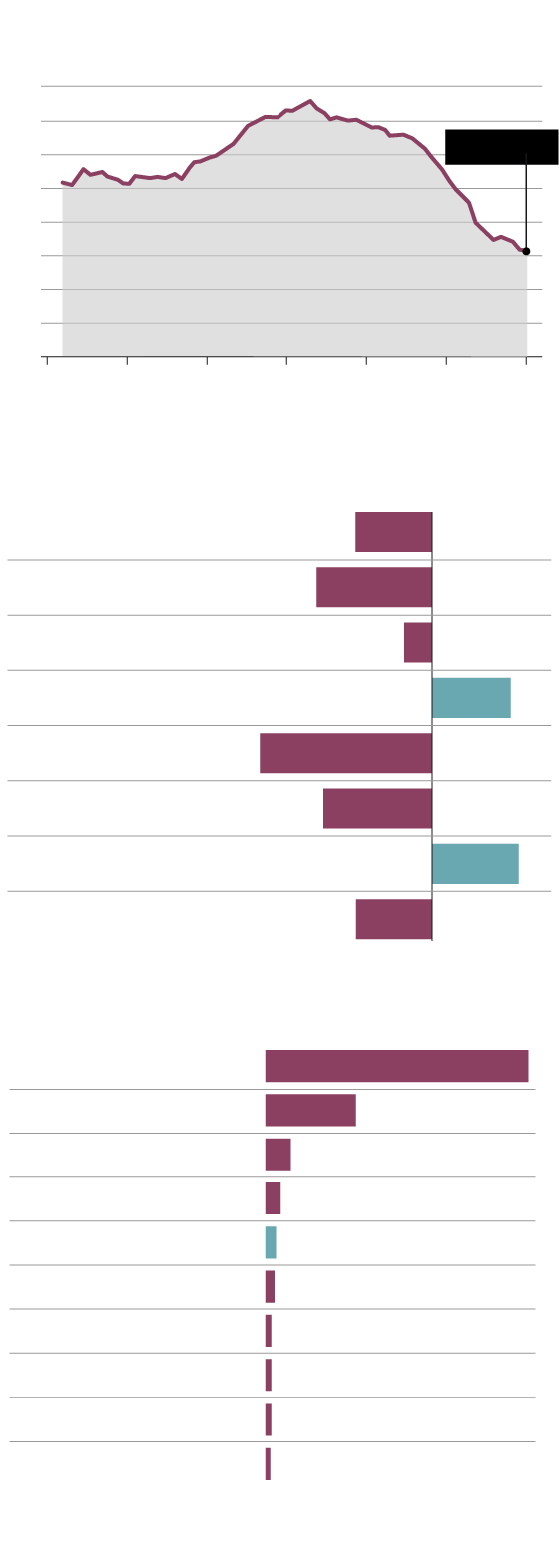
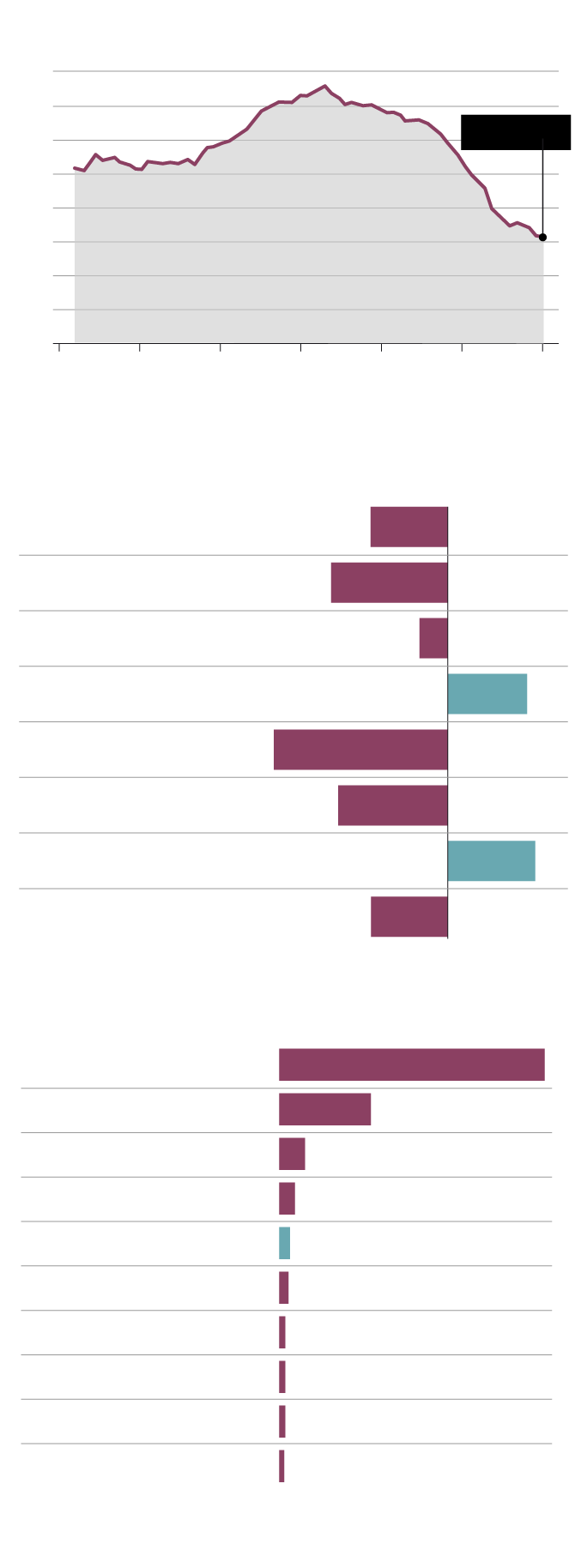
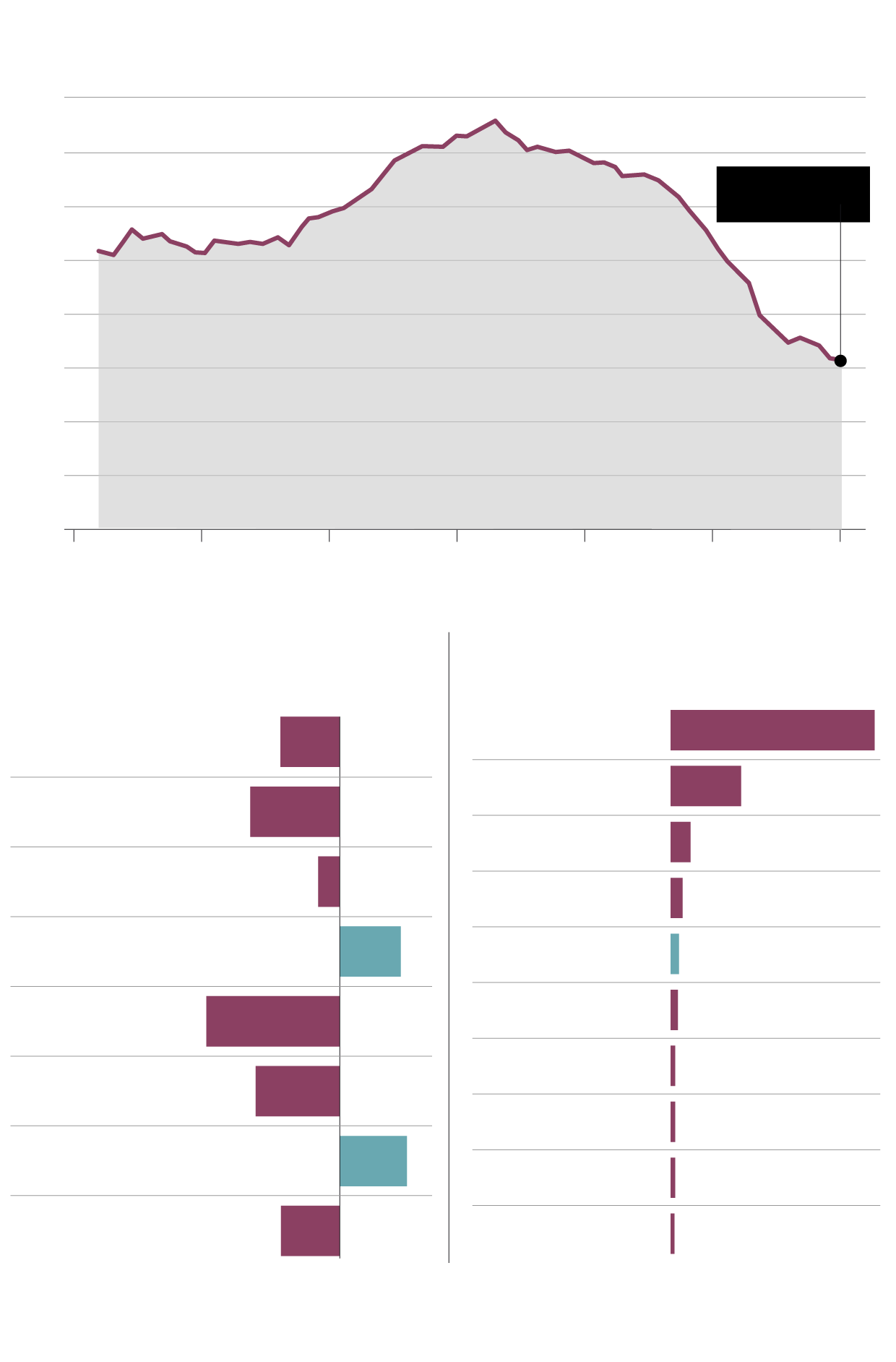
Car production fell 14.2 per cent in 2019 to 1.3 million units, the lowest level of output since 2010, according to figures released Wednesday by the Society of Motor Manufacturers and Traders. Production is expected to fall even further this year to 1.27 million vehicles. And while investment in auto plants increased to £1.1-billion, or $1.89-billion, from £589-million in 2018, that was still 60 per cent below the seven-year average.
british car output
In millions of units
1.8
1.7
1,303,135
1.6
1.5
1.4
1.3
1.2
1.1
1.0
Dec.
2013
Dec.
2014
Dec.
2015
Dec.
2016
Dec.
2017
Dec.
2018
Dec.
2019
manufacturer change
2019 vs. 2018
Jaguar
Land Rover
-14.3%
Nissan
-21.6%
-5.2%
MINI
Toyota
14.7%
Honda
-32.2%
-20.3%
Vauxhall
Others
16.2%
All makes
-14.2%
top export destination
Market share for British cars, 2019
EU28
54.8%
U.S.
18.9
China
5.3
Japan
3.2
Canada
2.2
Australia
1.9
Israel
1.2
Ukraine
1.2
S. Korea
1.2
Russia
1.0
JOHN SOPINSKI/THE GLOBE AND MAIL, SOURCE:
Society of Motor Manufacturers and Traders
british car output
In millions of units
1.8
1.7
1,303,135
1.6
1.5
1.4
1.3
1.2
1.1
1.0
Dec.
2013
Dec.
2014
Dec.
2015
Dec.
2016
Dec.
2017
Dec.
2018
Dec.
2019
manufacturer change
2019 vs. 2018
Jaguar
Land Rover
-14.3%
Nissan
-21.6%
-5.2%
MINI
Toyota
14.7%
Honda
-32.2%
-20.3%
Vauxhall
Others
16.2%
All makes
-14.2%
top export destination
Market share for British cars, 2019
EU28
54.8%
U.S.
18.9
China
5.3
Japan
3.2
Canada
2.2
Australia
1.9
Israel
1.2
Ukraine
1.2
S. Korea
1.2
Russia
1.0
JOHN SOPINSKI/THE GLOBE AND MAIL, SOURCE: Society of
Motor Manufacturers and Traders
british car output
In millions of units
1.8
1.7
1,303,135
1.6
1.5
1.4
1.3
1.2
1.1
1.0
Dec.
2013
Dec.
2014
Dec.
2015
Dec.
2016
Dec.
2017
Dec.
2018
Dec.
2019
manufacturer change
top export destination
2019 vs. 2018
Market share for British cars, 2019
Jaguar
Land Rover
EU28
54.8%
-14.3%
U.S.
18.9
Nissan
-21.6%
China
5.3
-5.2%
MINI
Japan
3.2
Toyota
14.7%
Canada
2.2
Australia
1.9
Honda
-32.2%
Israel
1.2
-20.3%
Vauxhall
Ukraine
1.2
Others
16.2%
S. Korea
1.2
Russia
1.0
All makes
-14.2%
JOHN SOPINSKI/THE GLOBE AND MAIL, SOURCE: Society of Motor
Manufacturers and Traders
Mike Hawes, the chief executive of the SMMT, called the outlook depressing and said the industry was the victim of global challenges as well as uncertainty surrounding Brexit. Several automakers closed their British plants twice last year for brief periods to prepare for what they thought was the Brexit deadline. But the deadline was changed three times by the government and the country is now set to leave the EU on Friday.
“Undoubtedly the reputation of the U.K. has suffered,” Mr. Hawes told reporters on Wednesday. “We did have, for many, many years, a reputation of being very politically stable and the last three years have been anything but. We need to re establish that reputation. … The sooner we do that the better.”
Britain is the fourth-largest automaker in Europe and the industry employs about 168,000 people in Britain. The sector once produced close to two million vehicles but it has been hit by several blows in recent years, including a shift away from diesel cars amid air-quality concerns. Britain’s two biggest car makers – Jaguar Land Rover Automotive PLC and Nissan Motor Co. Ltd. – have traditionally specialized in diesel vehicles and both saw their production fall sharply in 2019; down 14.3 per cent at Nissan and 21.6 per cent at Jaguar Land Rover.
The future looks grim for several other companies as well. Honda Motor Co. Ltd. has also announced that it will close its plant in Swindon next year, affecting more than 3,000 jobs, and Ford Motor Co. plans to shut an engine plant in Wales this summer, throwing 1,700 people out of work. There has also been growing concern about the fate of PSA Group’s Vauxhall plant in Ellesmere Port, which has about 3,000 employees. The plant’s future has been in doubt for months and that has only increased now that PSA is merging with Fiat Chrysler Automobiles and looking for efficiencies.
The industry is now bracing for the start of trade negotiations between Britain and the EU. While Britain will formally leave the bloc on Jan. 31, there will be a transition period until the end of the year. During that time, Britain will remain within the single market and customs union, but the country won’t participate in EU institutions. Both sides are expected to use the transition to negotiate a trade agreement. The deadline can be extended for up to two years, but British Prime Minister Boris Johnson has said he won’t agree to any extension. That leaves just 11 months to negotiate an agreement, which many experts say isn’t enough time to conclude anything comprehensive.
Mr. Hawes said the auto industry is particularly vulnerable to any deal that sharply increases friction at the border. Britain and EU auto sectors have become deeply intertwined over the years with British plants reliant on just-in-time delivery from suppliers across Europe. There is also a massive flow of finished vehicles between Britain and the EU. Roughly 80 per cent of all car production in Britain is exported and 55 per cent of those exports go to the EU. Meanwhile, 70 per cent of all the cars sold in Britain come from the EU.
Mr. Hawes said the industry is especially worried about non-tariff barriers, such as strict rules of origin. The expectation is that even a basic trade deal will require that a car manufactured in Britain must have 55 per cent British content in order to qualify for zero tariffs in the EU. That kind of calculation has never been made by British automakers, and the industry will need time to adjust, he said. “The average car has 15,000 parts and for each of those parts you are going to have to identify where the originating content comes from. It is a massive undertaking.” He added that reaching any deal by the end of the year “will be a significant challenge.”