

This story is part of a Globe-Pulitzer Center Ocean Reporting Network investigation, Surfaced, that traces the wildlife trade.
Behind a series of locked doors in a secret location near Canada’s capital is one of its most unusual inventories.
Some items arrived from abroad: rhino horns, carved elephant ivory, shark fins, corals and tropical hardwoods. Others originated in Canada: a partially taxidermied polar bear pelt, narwhal tusks, black bear gallbladders and wild ginseng roots.
Together, they are the standouts among thousands of seized wildlife parts – the physical ledger of a global black market in wild animals and plants that most Canadians don’t know reaches their doorstep.

Mr. Dubois has spent decades building expertise in wildlife identification - from exotic timber to wild ginseng and ivory - and trains officers across Canada and internationally.
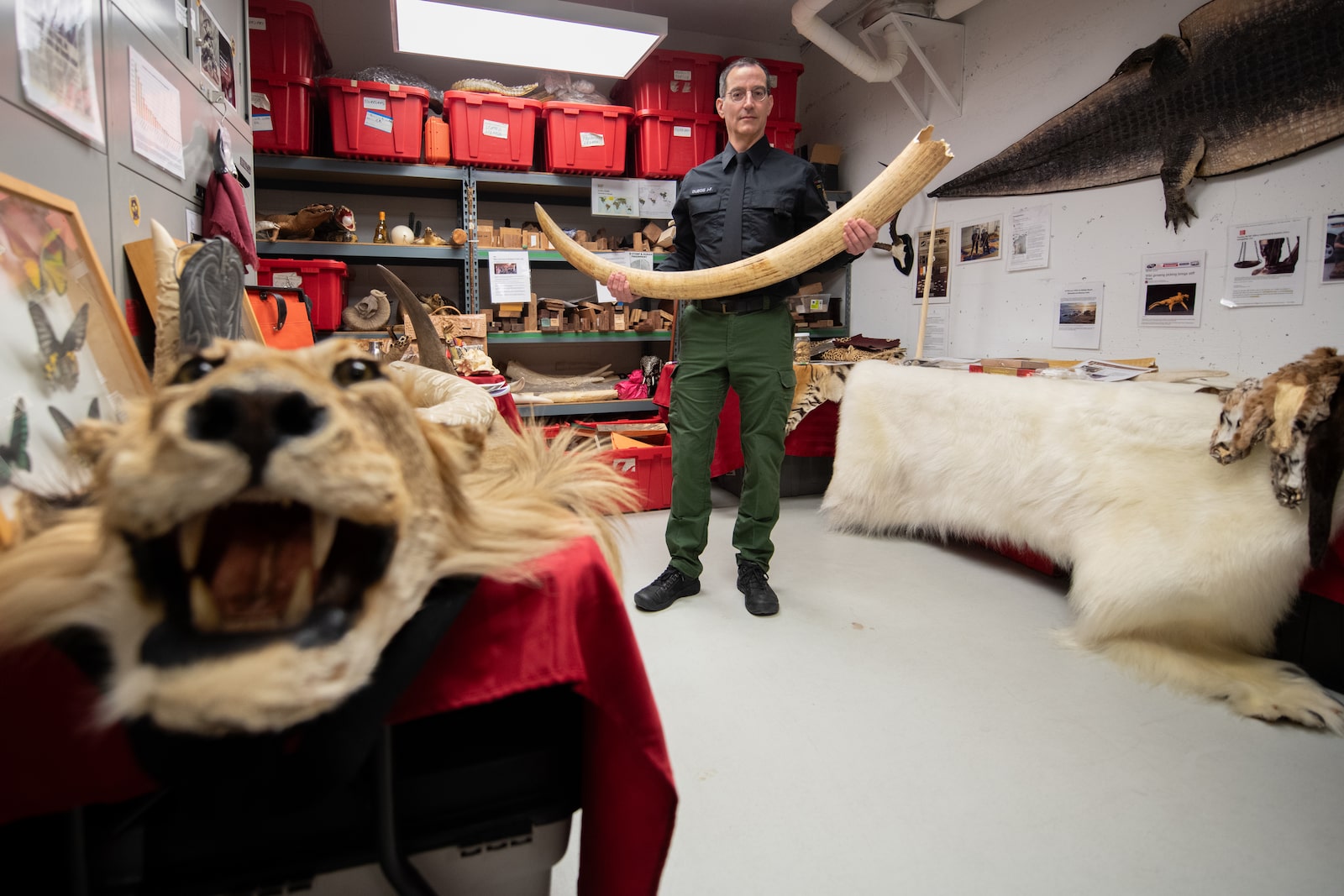
“There’s a demand – and if there’s money to be made, organized crime will take that occasion,” says Jean-François Dubois, a senior wildlife officer with Environment and Climate Change Canada who has granted rare access to the fluorescent-lit, windowless storage room lined with metal shelves and labelled containers.
Unhurried and plainly delighted to be out from behind a desk, Mr. Dubois moves through the room like a professor who has never lost his love for the material. He holds up a black rhino horn he estimates is worth six figures on the black market. It is kept in a separate safe for added security.
If you get caught at the airport with something like this, says Mr. Dubois, you’re probably looking at a fine of $20,000 to $30,000 for a first offence.
Get caught with $100,000 worth of cocaine? “You go straight to jail,” he says. “Organized crime realized there’s a lot of money to be made with wildlife, and if they get caught, the consequences are not the same,” he says.
That calculation is one of the reasons Canada has become a significant player in the illegal wildlife trade, despite long casting itself as a bystander, an investigation by The Globe and Mail and the Pulitzer Center has found. The investigation tracked how Canada has become an under-recognized hub for organized crime that is flying under the radar – propped up by vast wilderness, patrol blind spots and weak penalties. For some traffickers, breaking the law is cheaper than compliance.
“People don’t even know that this is an issue within our border,” says Michelle Anagnostou, a Canadian postdoctoral researcher at the University of Oxford whose PhD at the University of Waterloo produced the most comprehensive study to date of the illegal wildlife trade in Canada.
Drawing on interviews with more than 100 law-enforcement personnel and other experts across three countries, her research published over the winter documents how the trade is driven by the same criminal networks moving drugs, firearms and people, and why it persists.

Pangolins, found across Africa and Asia, are among the most trafficked mammals in the world. They are sought for their meat and scales, seen here. The latter are used in traditional medicine.
In Canada, just 6 per cent of enforcement officials Dr. Anagnostou interviewed felt the illegal wildlife trade was adequately prioritized by the government. That’s the lowest percentage of the three countries studied, below South Africa at 23 per cent and Hong Kong at 18 per cent – two jurisdictions widely recognized as hot spots.
“Access to high-value species and affluent consumer demand heighten the risk, and long, porous borders and extensive coastline make Canada a likely hub for illegal wildlife trade,” Dr. Anagnostou says.
Sheldon Jordan, a former director-general of wildlife enforcement at Environment Canada and an ex-Interpol official, says this country “is a source, a transit point and a destination, to a bigger extent than most Canadians realize.”
Last year, Mr. Jordan co-founded the Canadian Environmental Crime Research Network, which connects researchers, practitioners and policy makers in an effort to address and prevent environmental crime. “This is really understudied and more than likely underestimated.”
Lions, tigers and bears
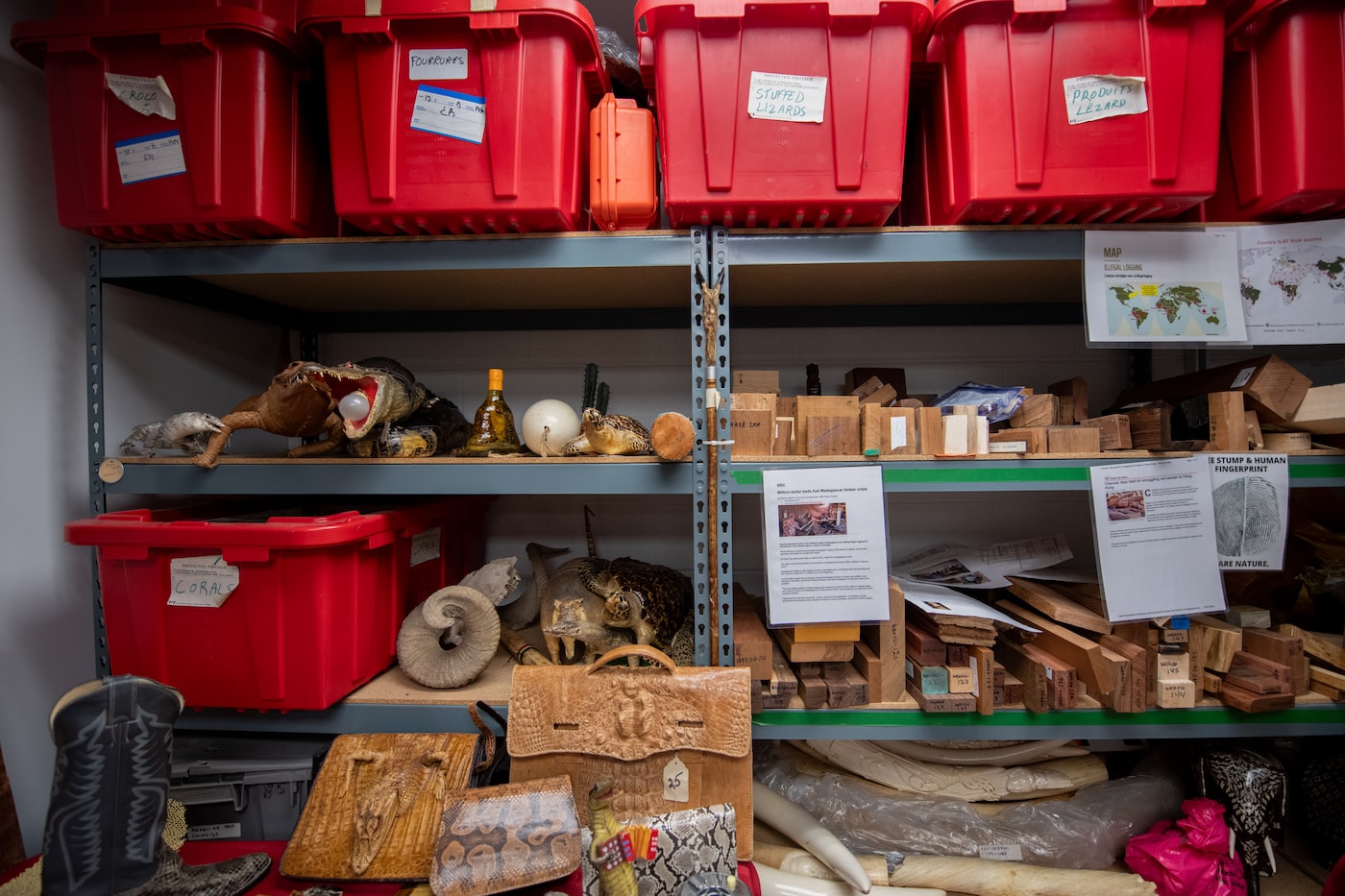
The physical evidence of Canada’s vulnerability is visible in what Mr. Dubois, the wildlife officer, calls “the CITES room” – named for the Convention on International Trade in Endangered Species of Wild Fauna and Flora, an international treaty signed by 185 parties, including Canada, that regulates trade in protected species. It entered into force in 1975 and is administered by the United Nations.
Canada implements the treaty domestically through the Wild Animal and Plant Protection and Regulation of International and Interprovincial Trade Act. Provinces and territories add their own layer of wildlife laws. No overarching strategy co-ordinates them.
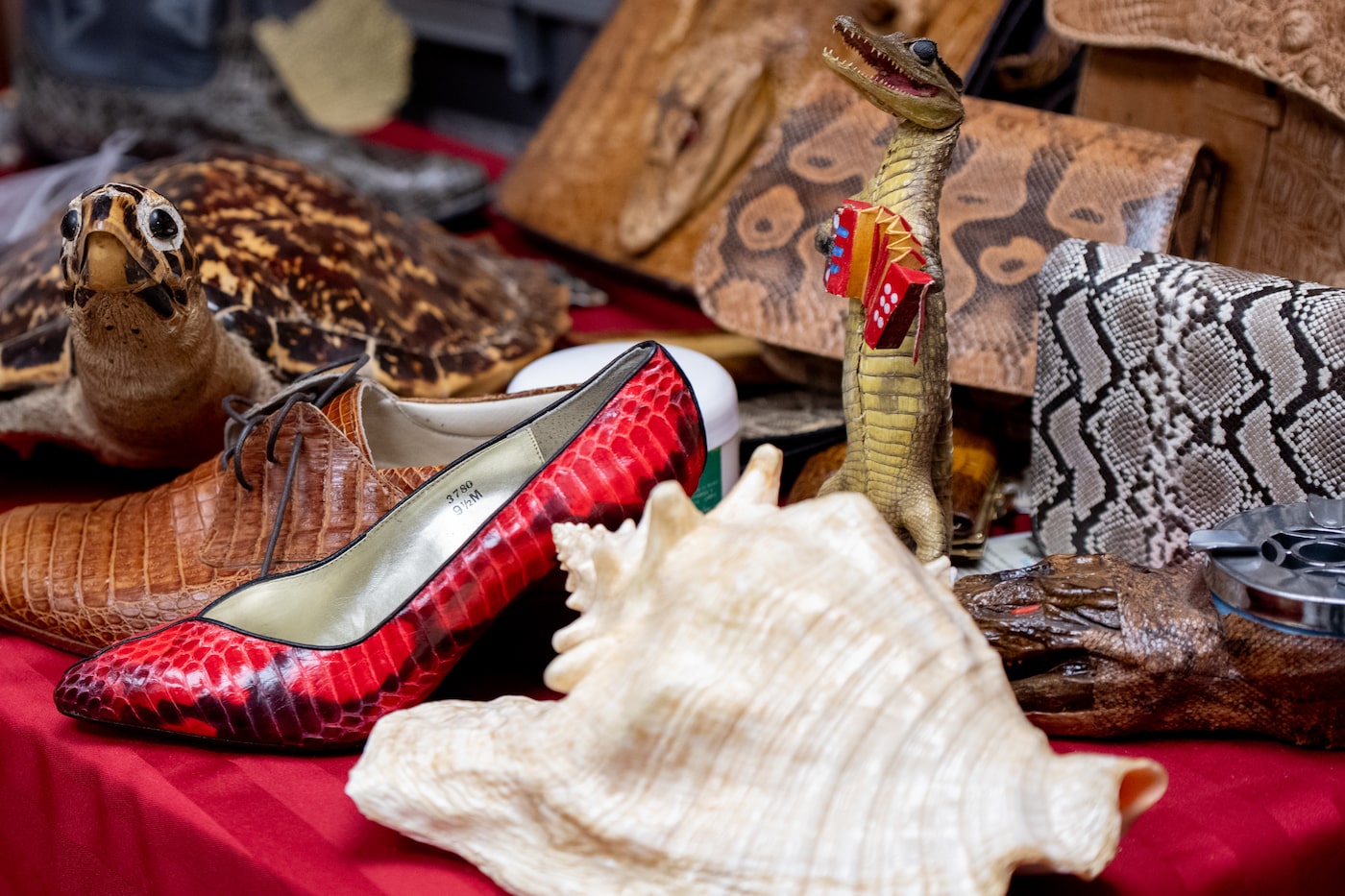
What lines these shelves, Mr. Dubois says, is a fraction of what moves in a market that takes advantage of an uneven enforcement system. But the variety on display tells the story of how illegal wildlife trade reaches Canada.
Some items were legally acquired in Canada but destined for markets where they were prohibited.

Narwhal tusks were seized on the tarmac in Winnipeg as four Mexican hunters attempted to leave on a private jet. Though the tusks were purchased legally in the Canadian Arctic, Mexico bans the import of marine mammals.
Two narwhal tusks, three polar bear hides and two polar bear skulls, legally harvested in Nunavut, were found stuffed in plastic tubes and duffle bags aboard a private jet belonging to four wealthy hunters from Monterrey, Mexico. Wildlife officers stopped the plane on the tarmac in Winnipeg, acting on a tip.
The lead hunter, Hector Martinez Sr., was no stranger to wildlife law: Court documents show he pleaded guilty in the United States in 1994 to attempting to smuggle a live African lion, three tigers, two jaguars, a leopard, a bobcat and three black bears into Mexico, for which he was fined US$10,000. In Canada in 2013, the four men were held in custody pending trial, sentenced to time served and fined a combined $80,000. They paid in cash, and forfeited the hides and tusks.
Other items in the CITES room were seized because of fraudulent paperwork.
Under the convention, polar bear products, narwhal tusks, and other high-value Canadian species can be legally exported, but each specimen requires a permit documenting its legal acquisition, with source and origin verified against provincial harvest records.
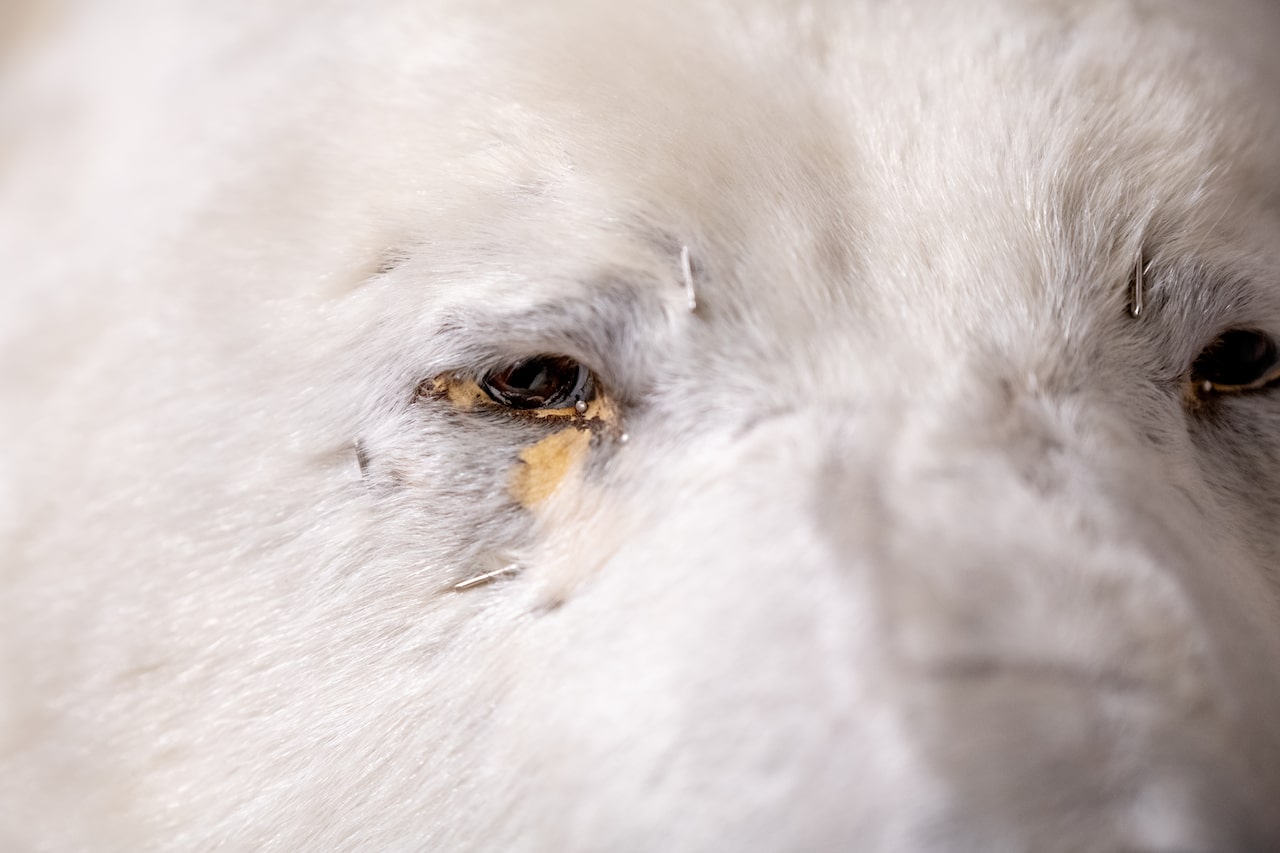

A polar bear pelt – legally acquired, partially taxidermied, with a radio tag still hidden in the fur – was in the possession of Cyril D’Souza, an Ontario taxidermist who attempted to export it, along with a full polar bear mount and two additional hides, to China on a permit associated with a different bear. He was fined $60,000 in 2023 and forfeited the products. There was no jail time.
Many of the goods move through legitimate commercial channels. Annual reports produced by Environment Canada since 1996 show the country is simultaneously an exporter and importer of wildlife under the convention – legally trading hundreds of thousands of specimens annually, with the U.S., European Union, and East and Southeast Asia as its primary partners.
But some legally acquired items are then fraudulently traded. Between 2015 and 2016, three Canadian auction houses were convicted under the federal Act.
In Toronto, Five Star Auctions and Appraisals and its director, Chun Al Jin, were fined $18,750 in 2015 after radiocarbon dating revealed that two elephant ivory tusks offered for sale as antiques were from elephants killed in 1977 and 1978 – too recent to qualify for exemption.
In Newmarket, Ont., 888 Auctions mailed a small elephant ivory tusk to a U.S. buyer in a package falsely labelled as a “gift ornament,” with no return address. It was intercepted by U.S. Fish and Wildlife Service agents.
In Montreal, IEGOR Hôtel des Encans was fined $33,500 in 2016 after pleading guilty to 16 counts for exporting narwhal tusk, elephant ivory, walrus ivory, leopard fur, lynx fur and coral to buyers across three continents without the required permits – products that had passed through the hands of dealers, appraisers, and shippers before anyone flagged them.
Some wildlife products tucked away in the Ottawa storage room arrived from abroad under circumstances the Environment Ministry cannot fully disclose.
The black rhino horn – one of the most valuable items in the room – was confiscated before 2008; the details of the seizure are confidential.
Two elephant tusks are known to have been seized by Montreal police during a search warrant at a drug dealer’s house, found alongside narcotics. In response to questions from The Globe, neither Environment Canada nor police could share when the bust happened or any other details.
But the case is an important data point in a pattern Dr. Anagnostou’s research documented across Canada: The networks moving wildlife and drugs are, increasingly, the same.
Trojan horses
Legal and illegal, converging and commingling, the hidden flows of rare flora and fauna are part of a criminal network that extends far beyond Canada’s borders.
Public enforcement records trace the illegal traffic: live reptiles and exotic pets arriving across the U.S. land border into Ontario and British Columbia; shark fins, traditional medicine ingredients and protected eels moving through Vancouver and Toronto from Hong Kong and China.
Spoils from Canada’s own high-value species – narwhal tusks, polar bear hides, black bear parts – move south to American buyers and east to Chinese markets through the same commercial infrastructure that handles legal trade.
The United Nations Office on Drugs and Crime, in its latest World Wildlife Crime Report, declines to put a number on the illicit wildlife trade, arguing its clandestine nature makes any estimate, including the commonly cited US$20-billion, an undercount. That ballpark annual figure doesn’t include illegal logging, fishing, mining or pollution crimes.
Though it is difficult to quantify, the illegal wildlife trade is believed to be the world’s fourth most lucrative criminal enterprise, only trailing drug trafficking, arms trafficking and human smuggling.
“Wildlife crime, environmental crime in general – it’s purely organized crime,” says José Adrián Sánchez Romero, a senior official at Interpol who helps co-ordinate wildlife and forestry crime enforcement across 196 countries.
“If you look at how they organize themselves, the kind of structures they use – shell companies, money laundering, transferring schemes – those are the exact same modules that organized criminal groups who are operating on drug trafficking are using.”

Dr. Michelle Anagnostou, a Canadian postdoctoral researcher at the University of Oxford. Her PhD at the University of Waterloo produced the most comprehensive study to date of the illegal wildlife trade in Canada.ANDREW WALMSLEY/The Globe and Mail
In a paper published last December in the Journal of Economic Criminology, Dr. Anagnostou, the principal researcher, shows evidence of the illegal wildlife trade converging with drug trafficking, arms trafficking, forced labour, sex trafficking and the illegal trade in mined resources across all three jurisdictions she studied.
In Canada, drawing on interviews with 31 enforcement officials and experts, drug trafficking emerged as the most commonly documented convergence. There were examples in every location where Canadian interviewees were based, across five provinces and territories.
At its simplest, it is barter: wildlife exchanged for drugs in communities where both move like currency, particularly where hunting and fishing are central to daily life.
In one investigation in an undisclosed location, officers conducting surveillance watched a driver stop after illegally killing a sturgeon – only for a second driver to arrive and trade the fish directly for heroin. In a separate incident in Saskatchewan, a major drug runner was buying fish from poachers, exchanging narcotics for the catch. In the Yukon, a police raid on an alleged drug dealer’s home turned up a grizzly bear hide and a polar bear hide. The accused dealer had never hunted, but was receiving wildlife products from people trading them for drugs.
Dr. Anagnostou’s research also documents cross-provincial networks collecting black bear gallbladders from poachers – the bile is a prized ingredient in traditional medicine – and marketing them through the same channels used for drugs.
It details an international wildlife trafficking operation that ran out of Canada for nearly a decade before expanding into narcotics, and another in which alleged traffickers on the West Coast were linked to Asian organized crime groups. In one case, a search warrant on an alleged wildlife trafficker turned up a loaded machine gun alongside drugs.

A confiscated black bear gallbladder held at a federal wildlife seizure room. Bear bile, extracted from the gallbladder, is prized in East Asian traditional medicine.
Meanwhile, indicators of forced labour emerged at an illegal elk poaching operation, where workers had no identification and were living in windowless rooms. The research also documented an outfitting operation that offered not just illegal hunting but also access to children for sexual exploitation.
And an emerging trade in what researchers call “oddities” – reptile bones, bird parts and even human remains sold on the black market – is growing but largely untracked.
“If you have all of this infrastructure to move illegal commodities from Point A to Point B, shifting into wildlife is such a low-risk crime, and you can make so much money that it just makes good sense from a criminal perspective,” Dr. Anagnostou says.
What hunters or harvesters are paid is often a fraction of what products command abroad. A black bear gallbladder worth roughly $150 to a Quebec poacher fetches between $2,000 and $10,000 in China, Mr. Dubois says in the Ottawa storeroom.
The markups rival those on illegal drugs – with a fraction of the legal risk.
“The criminal organizations operate like companies,” Mr. Sánchez Romero, the Interpol co-ordinator, says. “They find the niche where there’s demand for a product, and they know the level of enforcement is lower and the penalties are far lower. That’s a win-win for organized crime.”
The elephant in the room

A first-time courier importing fentanyl into Canada – someone with no decision-making power in the operation – can expect eight to 18 years in custody.
The Supreme Court of Canada upheld sentences of 10 and 14 years for wholesale fentanyl trafficking in 2021, and the established range for a first-offender courier importing heroin is 12 to 17 years. The statutory maximum for trafficking a Schedule I drug – cocaine, heroin, fentanyl – is life imprisonment.
By contrast, it’s exceptionally rare for someone involved in the illicit wildlife trade to land in jail – even though the criminal networks are often exactly the same, and even though the profit margins can be considerably higher.

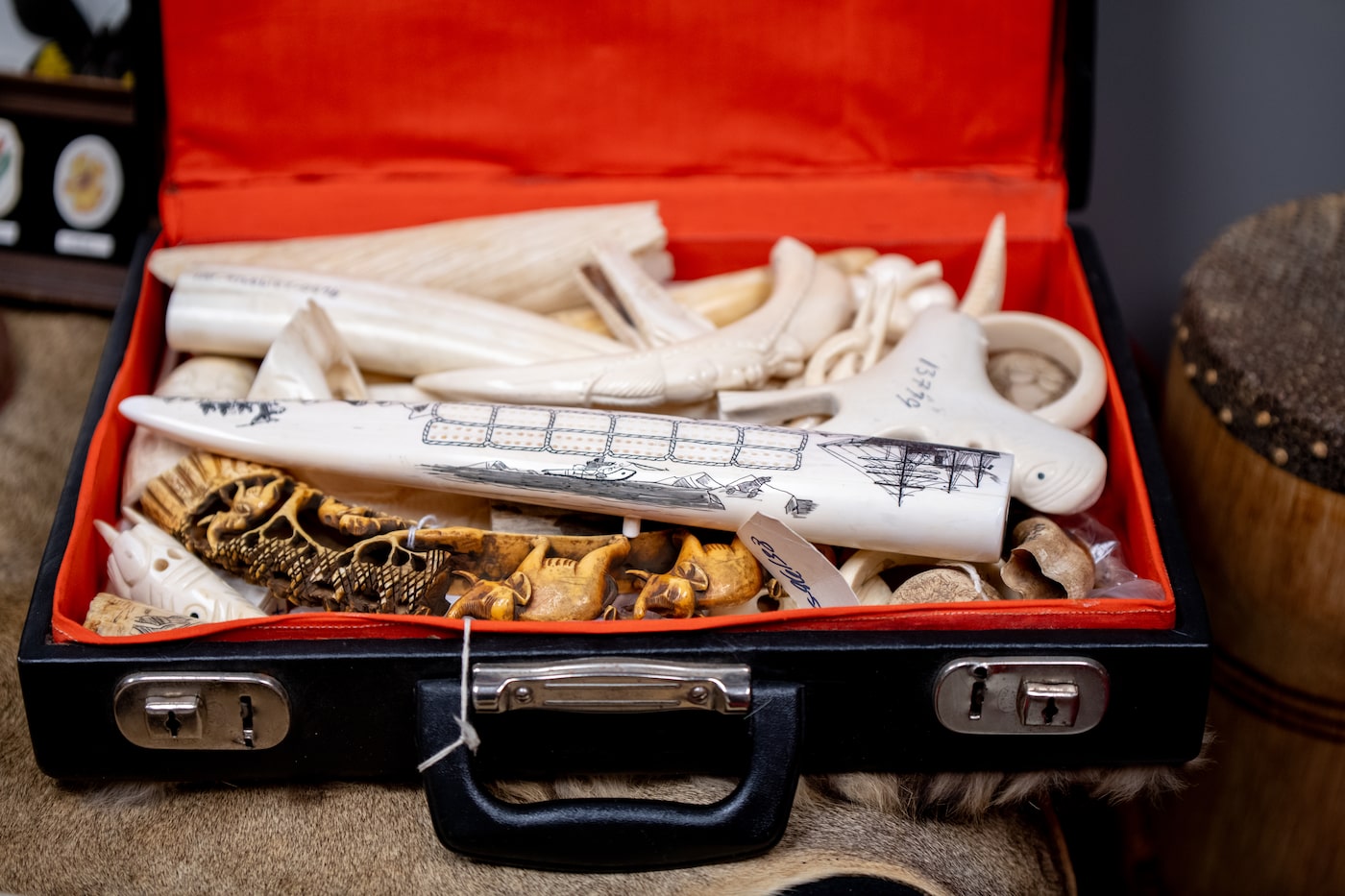
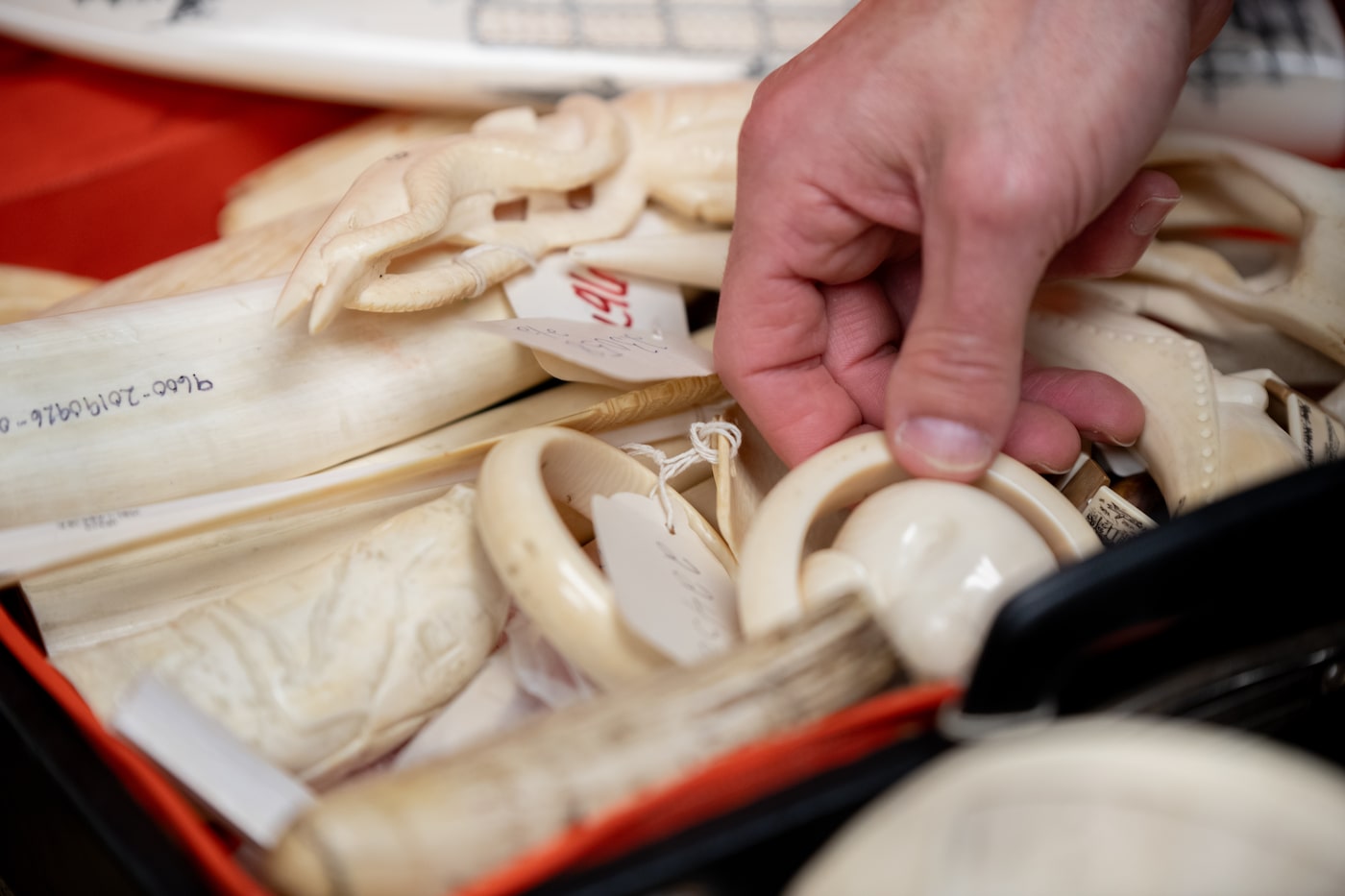
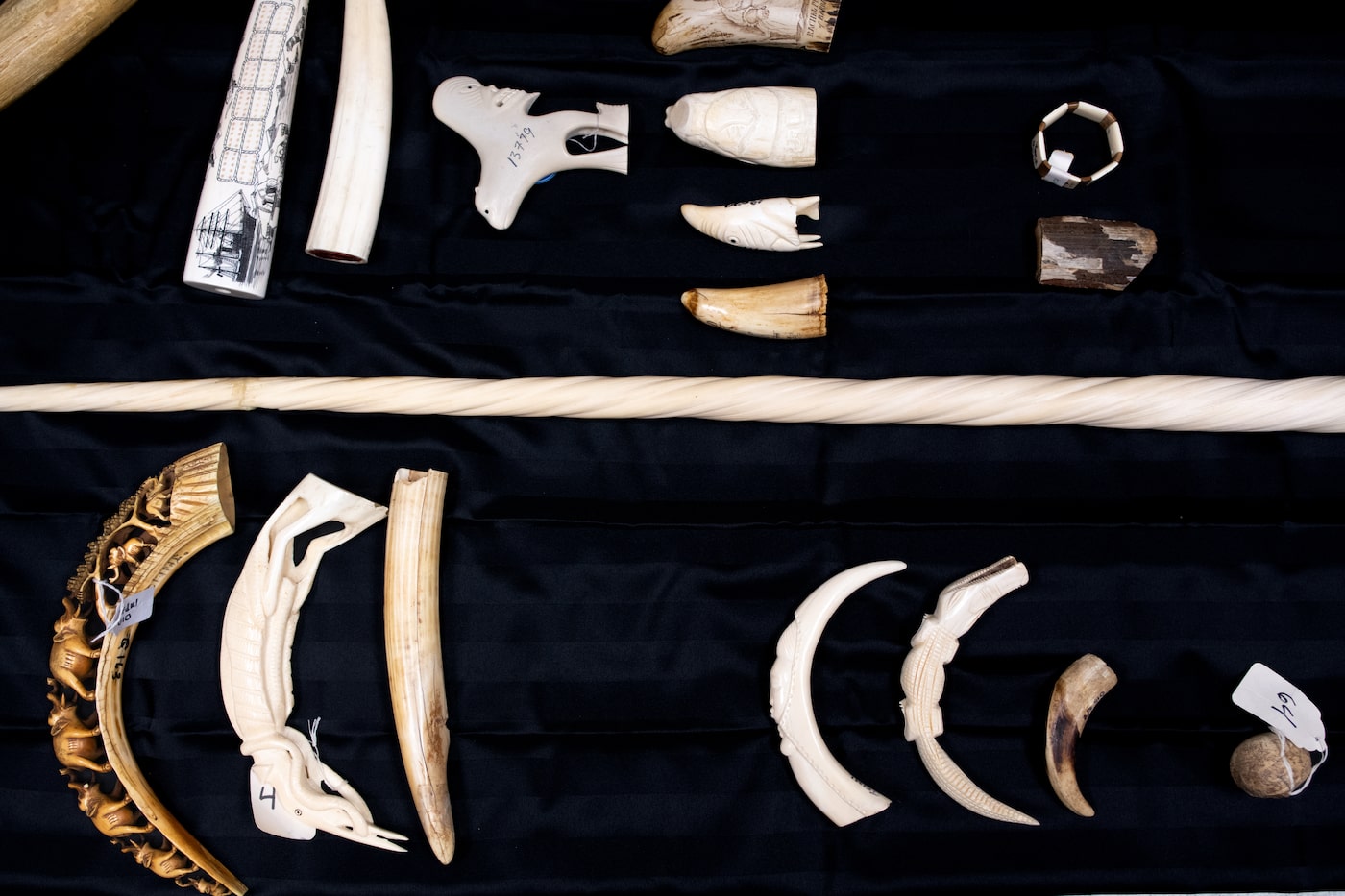
A selection of confiscated ivory and tusks. Under CITES, each specimen requires a permit documenting its legal acquisition, with source and origin verified against harvester records.
Wildlife trafficking carries criminal sanctions in Canada, but because they are governed by their own legislation, they fall outside the Criminal Code. On paper, a first indictable offence carries a maximum fine of $1-million and five years of imprisonment. In reality, a majority of penalties consist of fines under $50,000 that are imposed after summary conviction.
Sentencing judges look at the penalty ranges set out in federal legislation to get a sense of how seriously Parliament takes different types of offences, says Matthew Oleynik, a former criminal lawyer and founder of rangefindr.ca, a legal research tool that helps lawyers and judges identify appropriate sentencing ranges.
“They look at Parliament’s minimum and maximum sentence,” he says. Looking at the current legislation governing the illegal wildlife trade, he adds: “What that signals to me is that Parliament is either not taking this particularly seriously, or maybe just hasn’t turned its mind to these offences in a long time.”
The penalty framework has not been updated since 2009. Sheldon Jordan, who spent decades overseeing wildlife enforcement at Interpol and in Canada’s federal government, says that even if a review began today, it would take at least three years to complete.
That means fines will have gone at least 20 years without revision, their deterrent value quietly diminished by inflation.
The gap extends beyond Canada. Globally, the trade is growing more complex.
A recent study in Conservation Biology, drawing on two decades of global seizure data, found that 49 countries were involved in illegal wildlife trafficking 20 years ago; by 2018, that number had more than doubled to 110, with trade connections between countries increasing by more than 400 per cent.
A second study in the same journal, reconstructing more than 2,600 trafficking routes, identified 84 hidden transit hubs – intermediate stops where illegal shipments are consolidated, repackaged and rerouted to conceal their origins – with nearly 40 per cent of all trafficking routes passing through at least one such hub.
“The resources allocated in most countries to tackle wildlife crimes are not comparable to those related to drug trafficking,” says Mr. Sánchez Romero of Interpol.
“If you treat wildlife crime as organized crime, you then obtain good results,” he adds. “But if you still think that wildlife crime is small crime that is nothing worth the effort – well, then the results won’t be those that we are all expecting.”
Mr. Dubois, the current Environment Department official, said this area of law does not get proper recognition.
“They deserve the same consequences as the drug smugglers, firearm smugglers and human smugglers,” he says. “Because they’re the same people.”
Foxes in henhouses
Imagine spending years investigating a case, producing overwhelming evidence, then watching the convicted party receive a fine that amounts to less than the cost of the licences that would have made the activity legal in the first place.
That’s what one official described in an interview with Dr. Anagnostou, the lead researcher for a study published in February in Trends in Organized Crime. Crime, the official told her, is more cost-effective.
More than half the Canadian enforcement officials and experts Dr. Anagnostou interviewed felt penalties were too low.
The Globe and Mail examined Environment and Climate Change Canada’s public enforcement notifications – the subset of cases the department publicizes – and found that a majority of the 57 cases publicly reported since 2011 resulted in fines under $50,000, with a median fine of $20,000. Three of the convictions resulted in no fine at all.
The analysis found that of the cases examined, fewer than one in eight included any form of custody; five out of seven such sentences were served at home or on weekends.
Over the past decade, annual reports show the department has issued notifications for about one in three convictions, based on factors including the seriousness and nature of the offence, the penalty amount and the broader public interest.
Samantha Bayard, a spokesperson for the department, said public communications are issued “on cases that meet established minimum monetary thresholds for penalties, that will have the greatest impact in raising awareness.” She added that lower-penalty cases are occasionally included to encourage compliance.
Federal enforcement officers conduct inspections at ports of entry, border crossings and airports – checking the paperwork and physical contents of wildlife shipments moving through Canada’s trade infrastructure. But even when possible violations are flagged, convictions are rare.
According to the department’s annual reports, between 2016 and 2024 – the nine years for which complete data exist – 28,273 inspections produced 2,715 suspected violations, 423 investigations and 102 convictions: roughly one conviction for every 277 inspections. In 2024 alone, 6,619 inspections yielded five successful prosecutions. In 2023, 6,431 inspections produced four.
The Globe found only two fines issued since 2011 exceeded $200,000 – and both were exceptional cases.
Gregory Logan, a former RCMP officer from New Brunswick, was fined $385,000 in 2013 for a seven-year, cross-border narwhal tusk smuggling operation – the largest fine ever levied under the Act, still less than 40 per cent of the statutory maximum. After the investigation, which found approximately 250 narwhal tusks and hidden compartments in his truck and trailer, Logan received an eight-month conditional sentence served in the community, including four months of house arrest.
He was later extradited to the U.S. on money laundering charges stemming from the same conduct, and sentenced there to five years of incarceration. Canadian authorities treated it as a wildlife offence; the U.S. treated it as organized financial crime.
A Markham, Ont., company, Nationalwide Star Canada Corp., and its director, Zhou Hong Xia, were fined $250,000 in 2023 for importing 90,000 kilograms of endangered European eel destined for sushi plates in Canada.

Lions are listed under CITES Appendix II, meaning the trade of pelts and other parts is permitted with proper documentation – but enforcement gaps allow illegal specimens to enter global markets.
The Ontario Provincial Police, whose Organized Crime Enforcement Bureau monitors criminal networks across the province, said it has no specific investigations directly linking illegal wildlife trade to organized crime – but it acknowledged the logic behind making such connections.
“These groups are highly opportunistic and primarily driven by profit,” said Angie Sloan, a spokesperson for the OPP.
“They are often involved in a range of illegal activities, including those perceived as lower risk but financially rewarding. Profits generated from these activities may be used to support more serious and higher risk criminal operations, including drug and firearms trafficking.”
That “low risk, high reward” calculation is compounded by a sentencing regime that does little to deter repeat offending. The federal act requires courts to treat a history of non-compliance with environmental law as an aggravating factor, and mandates higher minimum fines for second or subsequent offences – yet the cases examined show no evidence that prior convictions were treated as such.
Carbo Herbal Supplies, a Toronto-area company that imports traditional Asian medicines, and its owner Qin Zhou were convicted in 2015 and fined $18,750 for smuggling turtle shells from Hong Kong. Convicted again two years later for importing 800 kilograms of protected plant and animal derivatives, they received a conditional sentence, community service and an order to publish an account of the offence in a traditional medicine newsletter – but no fine.
Topwin Trading, a British Columbia herbal medicine company, was convicted for the same type of offence in both 2010 and 2019, each time for illegally importing protected plant species used in traditional medicine. In the second case, border agents intercepted 51 boxes containing 10,200 vials of herbal oil derived from a protected orchid species. The fine was $50,000.
In a 2024 case, Bos Smoked Fish – a Brampton, Ont., food importer – was fined $25,000 for importing 662 kilograms of critically endangered European eel. It was less than the $35,000 the company paid for the product.
A game of whack-a-mole
In Nunatsiavut, the Inuit self-governing region of northern Labrador, the deputy minister of land and natural resources has a one-word answer when asked about federal wildlife enforcement capacity.
“Non-existent,” Jim Goudie says matter-of-factly.
“That may be too harsh and not accurate on paper – but really no federal wildlife enforcement exists in Nunatsiavut.”
Much of Canada’s wildlife enforcement activity, such as it is, occurs in rural and remote areas – where the hunting and harvesting happens and where Indigenous communities have historically faced policing as a tool of colonial control.
Dr. Anagnostou’s research found that this history complicates the relationship between communities and conservation officers. She argues that enforcement agencies must engage Indigenous peoples as partners rather than subjects of scrutiny.
In Nunatsiavut, the federal Fisheries Department has only a sporadic summer presence, with no full-time office. The RCMP maintains officers in four of the five Nunatsiavut communities, but wildlife is far from their priority.
“It’s the ITO – the Inuit treaty organizations – that bear the burden,” Mr. Goudie says. “And even then, it can only go so far. We can report and investigate, but we cannot seize or charge. In most cases, even when we do it 100-per-cent right, the amount of time that passes for the feds to show up is just too long.”
Researchers have found that wildlife law-enforcement agencies often operate in isolation, too, making for a patchwork system.

Confiscated wild American ginseng root. Protected in Canada under the Species at Risk Act, wild ginseng is one of the most poached plants in the country - sought for its roots, which command high prices in East Asian medicine markets.
Environment and Climate Change Canada covers the international and interprovincial trade of terrestrial wildlife – from polar bears to gyrfalcons to wild ginseng. Fisheries and Oceans Canada oversees aquatic species: narwhal, elvers, sturgeon. Provincial and territorial authorities have their own laws, officers and enforcement responsibilities.
Some Canadian officials Dr. Anagnostou interviewed did not feel comfortable disclosing how many staff were working in their jurisdictions.
One provincial authority reported staffing below what it was in 1990. Another shared that Canadian officers in multiple regions lacked two-way radios on the job – a gap researchers noted could affect officer safety by discouraging pursuit of traffickers in dangerous settings.
Across the country, the research found, wildlife enforcement agencies have faced severe backlogs in DNA and ballistics analysis, stalling cases of international significance. Officers have lacked the technology to open locked phones, leaving WhatsApp and e-mail communications between traffickers unread.
Insufficient salaries have demoralized front-line officers. And major wildlife trafficking investigations – the kind that could dismantle a network rather than just interrupt it – can take years to build, requiring dedicated analysts, specialized investigators and judicial authorizations that most agencies simply do not have.
Dr. Anagnostou sums it up: “Because it’s such a deprioritized issue by the government, this has translated into under-resourcing and understaffing of wildlife law enforcement agencies, coast to coast.”
Despite the stark situation her research found, she is optimistic about the prospect of turning things around.
“Canada’s really well positioned to be a global leader in the counter-wildlife trafficking space,” she says. “Canadians identify with wildlife and we love our natural heritage. We don’t have these systemic corruption issues that a lot of other countries are experiencing. But that window won’t stay open indefinitely.”

There are signs Canada is taking the issue more seriously.
Since 2017, Canada has participated in every edition of Operation Thunder, an annual Interpol and World Customs Organization-led crackdown on wildlife and forest crime. In 2019, it became the first G20 country to ban the import and export of shark fins, and it banned the import and export of elephant ivory and rhino horn in 2024. Significant seizures have followed.
Cross-border co-operation has also led to an increase in ocean patrols and a review of international money laundering networks connected to the wildlife trade. G7 leaders went further this week, naming environmental crime as part of the same criminal economy as drug trafficking and pledging joint financial investigations to trace and seize the proceeds.
“We’ve got the Lego blocks,” says Mr. Jordan, who is hoping his academic network will help put the pieces together. “We just need to build them into something that works.”
Somewhere, behind a series of locked doors, the inventory keeps growing.