

This story is the first in the new Globe series Think Big, looking at Canada’s most important nation-building energy and natural resource projects and the trade infrastructure needed to support them.
François Poirier is hoping that Canada will take advantage of a second chance to become one of the global leaders in exporting liquefied natural gas.
The chief executive officer of TC Energy Corp. TRP-T believes that Canada could be well-positioned to diversify its economy by further tapping into massive reserves of natural gas.
“You’re competing on the global stage for a time-bound opportunity,” Mr. Poirier said during an interview at TC’s head office in Calgary. “When I think about economic sovereignty, I think about the importance of Canada to be competitive.”
The Canadian government’s quest to boost economic sovereignty has been amplified over the past couple of weeks by the war in Iran and the ripple effects from the Middle East, including Qatar’s suspension of its LNG production during the virtual shutdown of the Strait of Hormuz.
What to know about the challenges of reopening the Strait of Hormuz
The United States and Israel launched attacks on Iran on Feb. 28. Before those strikes, roughly one-fifth of the world’s oil and LNG passed through the Strait of Hormuz. Global prices for oil and LNG spiked after the assaults.
Canada is playing catch-up with the U.S., where eight LNG export terminals have opened since 2016, and another four are slated to be operating by 2028.

TC operates the Coastal GasLink pipeline, which transports natural gas from northeast B.C. to LNG Canada’s terminal in Kitimat.DARRYL DYCK/The Canadian Press
The only LNG export terminal running so far in this country is the Shell PLC-led LNG Canada project in Kitimat, B.C.
Canada is the world’s fifth-largest producer of natural gas, but it ranked 19th out of 24 countries in exporting LNG last year.
TC, one of North America’s largest energy infrastructure companies, operates the Coastal GasLink pipeline, which transports natural gas from northeast B.C. to LNG Canada’s terminal in Kitimat.
Shell and four other LNG Canada co-owners are expected to make a final investment decision by the end of this year on whether to forge ahead with Phase 2 expansion plans, which would require increased capacity from the 670-kilometre Coastal GasLink pipeline.
Shell, Mitsubishi mull altering stakes in LNG Canada to raise funds for expansion
While Canada missed the boat a decade ago during the first wave of LNG export opportunities from North America, Mr. Poirier thinks the time is ripe to take advantage of the second wave.
“The opportunity has come back around again, because of geopolitics and just surging demand for natural gas. And so we have a chance to dominate, and we have to go after it.”
Mr. Poirier made the comments during the interview with The Globe and Mail in late February. He followed up with an e-mailed statement to The Globe in March.
“The events unfolding in the Middle East underscore how fragile global energy systems can be – and why energy security matters,” he said. “Periods of geopolitical disruption reinforce the importance of reliable, diversified energy supply. As global trade is disrupted and countries seek to diversify energy sources, dependable LNG plays an increasingly stabilizing role in the system.”
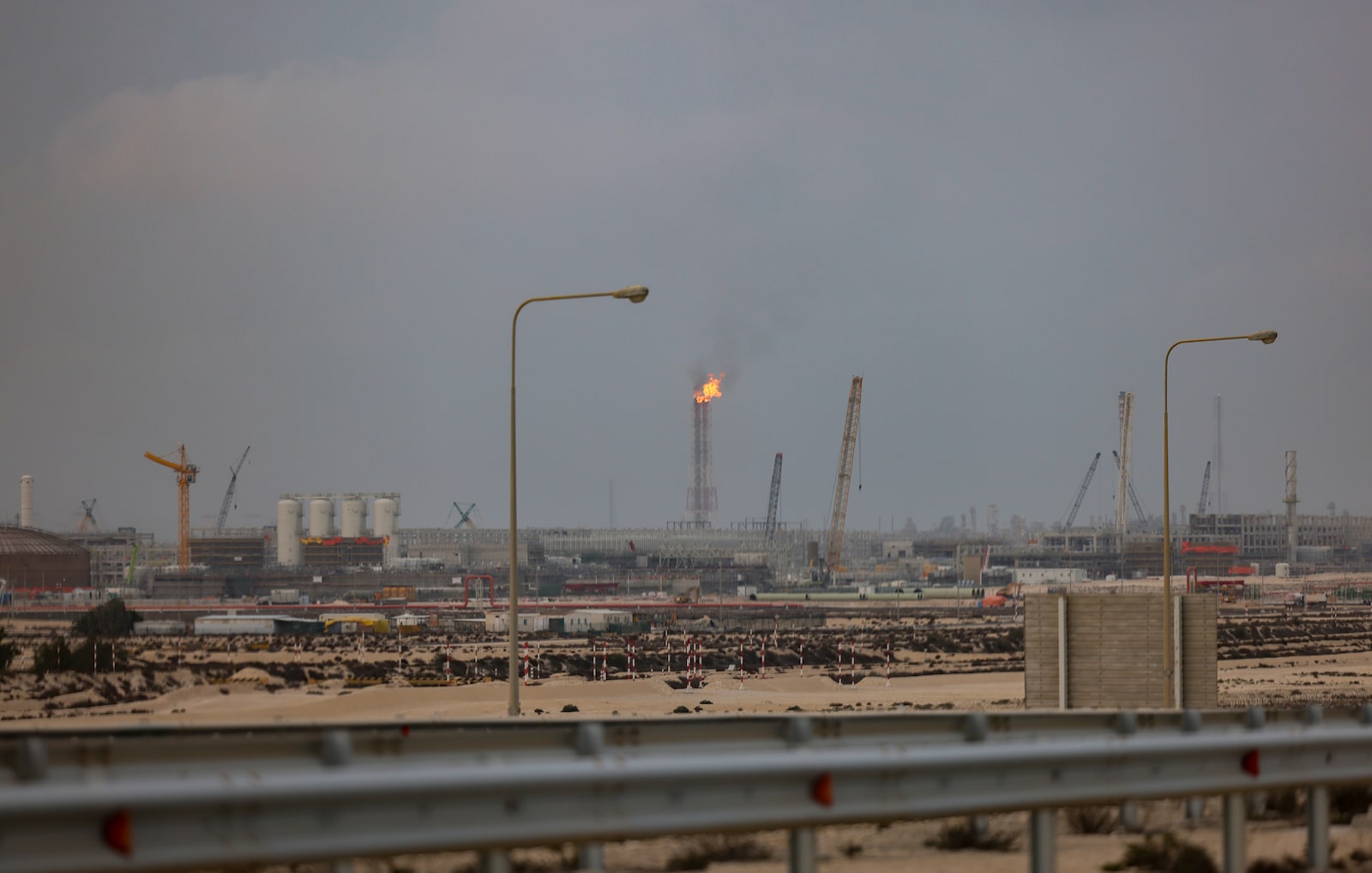
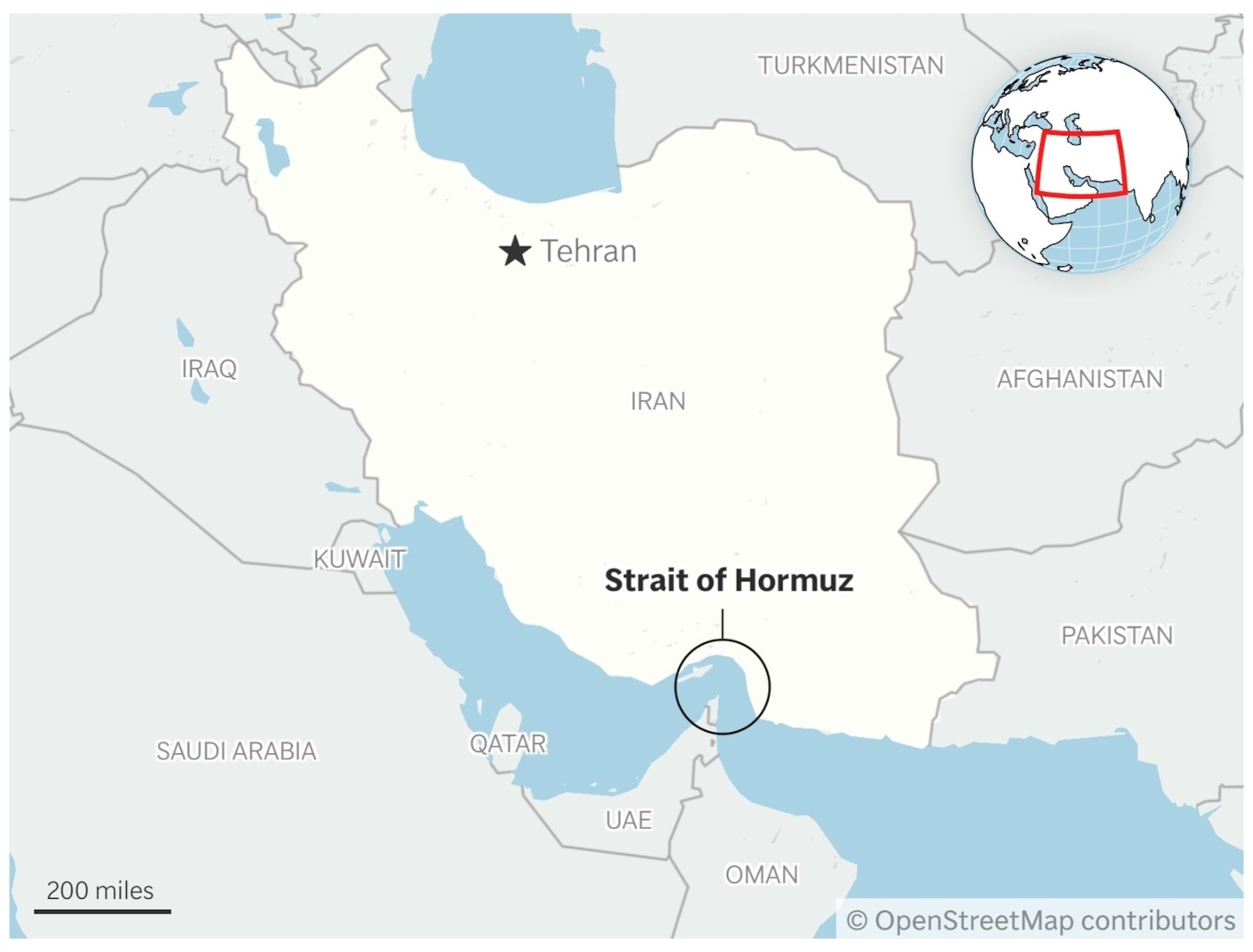
The Middle East conflict has raised the political and economic stakes. The oil and gas shipping choke point is the Strait of Hormuz, which is just 33 kilometres wide at its narrowest. The strait separates the Persian Gulf from the Gulf of Oman and the Indian Ocean, and the vast majority of energy exports from the region pass through it.
The lack of LNG supplies from Qatar has sent pricing shocks across the global industry.
“A disruption of this magnitude exposes how little flexibility exists in global LNG markets,” Josephine Mills, senior analyst at Enverus Intelligence Research, said in a statement.
Benchmark LNG spot prices for Asia-Pacific markets have jumped about 50 per cent over the past two weeks.
As the U.S. trade war persists, the federal and B.C. governments have characterized LNG exports to Asia as a crucial way for Canada to reduce economic dependence on American customers.
LNG development set to double global supply by 2030, IEA analysis shows
Mr. Poirier views plans by companies to expand Canadian energy export capacity as nation-building endeavours, sounding a patriotic chord that comes decades after a flurry of pipeline construction in the 1950s.
TC will celebrate its 75th anniversary next week. On March 21, 1951, TransCanada PipeLines Ltd. was incorporated through a special act of Parliament. TCPL, as it became known, constructed a pipeline in the 1950s to move natural gas from Alberta to Ontario and then into Quebec.
That pipeline triggered a huge political controversy in Ottawa, with the federal Liberal government lending U.S. companies money to help build along an all-Canadian route. The U.S. involvement was a flashpoint, and the Progressive Conservatives defeated the Liberals in the 1957 election, ending the party’s nearly 22 years in power.

TC Energy Corp, formerly TCPL and TransCanada Corp, will celebrate its 75th anniversary this March. The company has expanded its operations into the U.S. and Mexico, and has ventured into power generation in Canada.Todd Korol/The Canadian Press
TCPL changed its name in 2003 to TransCanada Corp, which in turn changed its name in 2019 to TC Energy Corp., reflecting how its operations had shifted over the decades beyond Canada and into the U.S. and Mexico, as well as venturing into power generation, mostly in Canada.
With power generation, Mr. Poirier sees opportunities within Canada for the construction of new data centres, which would increase demand for natural-gas-fired electricity.
David Finch, a Calgary-based energy historian, said the nation-building theme today differs from the earlier period in geographical aspirations. “In the 1950s, it was about continental access. What we’re talking about now is international access,” he said.
The original Trans Mountain oil pipeline was also built in the 1950s, stretching from the Edmonton area to the Vancouver region.
Overshadowed by all the talk of LNG exports is growth in production of natural gas liquids such as propane and butane.
Calgary-based AltaGas Ltd. ALA-T and Royal Vopak of the Netherlands are planning to open their Ridley Island Energy Export Facility, near Prince Rupert, B.C., that would ship liquefied petroleum gas such as propane to Asia by the end of this year. The new facility is situated next door to the propane-export terminal that AltaGas and Vopak opened in 2019.

AltaGas CEO Vern Yu says the Asian market is a huge opportunity for Canadian energy exporters.Todd Korol/The Globe and Mail
“The big thing is Asia is the biggest growth market for energy,” AltaGas CEO Vern Yu said in an interview in Calgary. “Asia is a huge opportunity for Canada as a whole to provide energy to, whether it’s crude oil, natural gas or natural gas liquids. It’s a very robust market and there’s lots of demand there.”
Woodfibre LNG near Squamish and Cedar LNG in Kitimat are under construction in B.C., but Mr. Poirier has concerns about whether Canada will fall further behind the U.S. in exports of LNG.
“We have to want to be the best,” he said. “That is a change in mentality for Canadian business culture, Canadian government culture. And we have to all align around our ability to compete because Canadian competitiveness is what is going to ensure our economic sovereignty.”
Cheniere Energy Inc.’s Sabine Pass LNG opened in Louisiana in 2016, the first U.S. project to begin exporting LNG from the lower 48 states.
A decade ago, there were more than 20 competing plans to ship LNG from British Columbia to energy-thirsty Asia. So far, only one LNG export terminal is up and running in Canada. LNG Canada started shipping natural gas in liquid form to Asia from Kitimat last June.
In sharp contrast, the U.S. has been the largest exporter of LNG in the world for the past three years.
It is usually followed by Qatar and Australia. Russia ranked fourth last year, followed by Malaysia.
Clark Williams-Derry, an analyst at the Institute for Energy Economics and Financial Analysis, estimates that the U.S. exported a record 108.6 million tonnes of LNG in 2025. He made the estimate based on data from Kpler, which provides real-time global analytics.
His analysis placed Qatar second at 81 million tonnes of LNG exported, followed by Australia at 77.7 million tonnes.
LNG Canada’s exports of more than 2.2 million tonnes put this country in 19th place. But Canada will move up in the global rankings in 2026 with the Kitimat terminal having a full 12 months of output. LNG Canada will be able to produce up to 15 million tonnes a year at full capacity.
U.S. LNG exports hit record highs as Ottawa seeks to boost Canada’s modest output
There are caveats to whether Canada can indeed get major projects built, including LNG Canada’s plans for its Phase 2 expansion on the Haisla Nation’s traditional territory and the Nisga’a Nation-backed Ksi Lisims LNG proposal in northwest B.C.
On Mr. Poirier’s mind these days are the pathways for capital spending. He is a self-described “portfolio theorist” who tries to obtain the highest risk-adjusted returns: “If capital were a bucket of water and you poured it downhill, it’s going to go where there’s the least resistance, right?”
He oversees the allocation of billions of dollars a year in capital spending at TC.
Broken down by geography, TC derived 43 per cent of its $15.2-billion in revenue last year from Canada, 47 per cent from the U.S. and 10 per cent from Mexico.
“We have the freedom to invest our capital anywhere, right? And certainly in any of the three jurisdictions,” Mr. Poirier said during the interview. “And so we’re constantly ferreting out opportunities in each of the three countries, and then the teams have to come to our capital committee and compete for an allocation of capital.”
Over the past decade, Canadian pipeline giants Enbridge Inc. and TC have been on the defensive at home, but have been able to expand their U.S. natural gas pipeline networks to the Gulf Coast.

Poirier hopes Canada will take advantage of a second chance to become one of the global leaders in exporting LNG.Todd Korol/The Globe and Mail
“What I would say is that we want to allocate more capital in Canada,” Mr. Poirier said. “And I believe that there’s a risk mitigation that comes from diversification. And right now, the U.S. has become our largest business, and it’s also growing the fastest.”
Prime Minister Mark Carney, as part of his quest to make Canada an energy superpower, announced last September that LNG Canada’s Phase 2 expansion plan to double its capacity made the list of major projects of national interest to be considered for fast-tracking.
Mr. Carney subsequently said Ksi Lisims near Pearse Island has been added by Ottawa to the growing roster of plans submitted to the Major Projects Office, which was announced in August to expedite a wide range of developments.
Climate groups say the focus on fossil fuels such as LNG ends up delaying the global transition to renewables, notably wind and solar.
“With renewables quickly scaling, LNG is competing more directly with renewables than it is with coal for new energy demand,” according to a report last month by Michael Sambasivam, a senior analyst at Investors for Paris Compliance, a climate advocacy group based in Canada.
Mr. Sambasivam compared investments in LNG with placing bets at a casino. “With an array of factors driving volatility in the market to develop new projects, LNG development has become a kind of high-stakes global casino,” he said.

By the end of this year, AltaGas Ltd. and Dutch company Royal Vopak are planning to open their Ridley Island Energy Export Facility, which is currently under construction near Prince Rupert, B.C., to ship liquefied petroleum gas to Asia.Fred Lum/The Globe and Mail
The Skeena Watershed Conservation Coalition issued a report last month that criticized the B.C. government for supporting plans to expand LNG exports. “The promises the B.C. government made of a self-supporting windfall have borne little fruit, raising the question of whether continued investment in the industry is worth it,” according to the report.
Ksi Lisims LNG’s expected major project status puts spotlight on First Nations dispute
But Lisa Baiton, president of the Canadian Association of Petroleum Producers, said there is potential for a bright energy future in Canada – “a pathway to become a global energy superpower as aspired to by the Prime Minister.”
Members of CAPP include the largest natural gas producers in Canada, led by Tourmaline Oil Corp., Canadian Natural Resources Ltd., ARC Resources Ltd., Ovintiv Canada ULC and Whitecap Resources Inc.
Tourmaline and ARC Resources have deals to supply natural gas to Cheniere’s Corpus Christi LNG export terminal in Texas, though their ability to transport the fuel is limited by Canada-U.S. pipeline capacity.
“I would just add that if we really want to tap Canada’s immense resources, that means we’re going to have to get on with building transportation and export infrastructure to get our products to all the global customers who are yearning for it,” Ms. Baiton said.

A section of the Coastal GasLink pipeline during its construction in 2022. It cost $14.5-billion to build, more than double the project's price tag of $6.2-billion in 2018.DARRYL DYCK/The Canadian Press
It cost $14.5-billion to build Coastal GasLink, which had a price tag of $6.2-billion in 2018, when construction began. Industry experts say it could cost roughly $6-billion to add five compressor stations to double capacity along Coastal GasLink’s route.
TC operates Coastal GasLink and owns 35 per cent of the pipeline. In 2020, TC sold a 65-per-cent stake to Alberta Investment Management Corp. and KKR & Co. Inc.
TC has agreed to set aside a 10-per-cent interest in the pipeline for a planned equity sale to as many as 20 elected First Nation councils along Coastal GasLink’s route.
But a group of Wet’suwet’en Nation hereditary chiefs has led a campaign that opposes Coastal GasLink. In 2020, demonstrators staged rail and highway blockades across the country in support of the hereditary chiefs’ position.
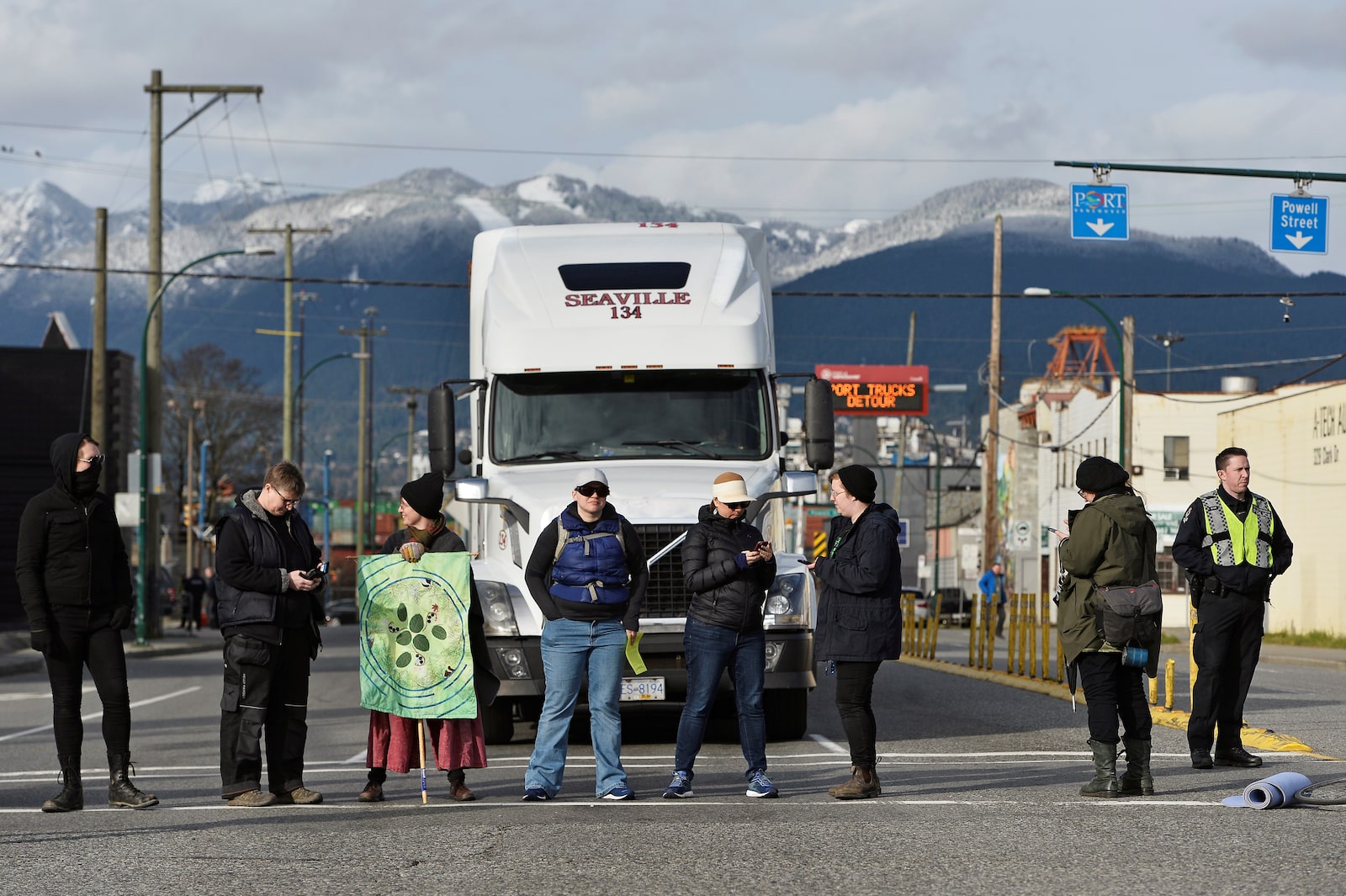

The Ksi Lisims project has faced opposition from nearby Indigenous groups and climate activists.
Construction costs alone for Ksi Lisims are expected to reach $10-billion, plus another $12-billion for the Prince Rupert Gas Transmission (PRGT) pipeline project, which would transport natural gas more than 750 kilometres from northeast B.C. to Pearse Island, which is located on Nisga’a territory.
Ksi Lisims would rely on natural gas from PRGT, which is co-owned by the Nisga’a and Houston-based Western LNG. They bought PRGT from TC in 2024.
The Nisga’a, Western LNG and a group of natural gas producers named Rockies LNG are partners in Ksi Lisims.

B.C. Premier David Eby, joined by Nisga'a Nation President Eva Clayton and Nisga'a CEO Andrew Robinson, announces the province has issued an environmental assessment certificate for the Ksi Lisims LNG project in September, 2025.ETHAN CAIRNS/The Canadian Press
The Calgary Chamber of Commerce issued a wide-ranging report in November that said economic reconciliation with Indigenous groups will be crucial to get major projects built.
“This should be supported by funding that enables Indigenous communities to participate in planning and regulatory processes from a position of strength,” said the report.
But First Nations opposed to Ksi Lisims and PRGT have said that they won’t be swayed, including Gitanyow hereditary chiefs, the Lax Kw’alaams Band and Metlakatla First Nation.
Nova Scotia Premier Tim Houston has been keen to tap into offshore reserves of East Coast natural gas in the long run. But the industry’s current focus is on nurturing the prolific Montney basin in northeast B.C. and moving natural gas to the West Coast.
B.C. Premier David Eby, who toured the LNG Canada site last July, is counting on revenue from natural gas to help relieve some of the financial pressures from the province’s huge debt load.
Despite the complexities of the LNG sector, the situation comes down to a basic principle: No pipeline means no LNG export terminal.
The lack of a direct pipeline route from Quebec into New Brunswick became a key factor in Pieridae Energy Ltd.’s decision in 2023 to cancel its planned Goldboro LNG project to ship the fuel from Nova Scotia to Germany.
With challenging economics for East Coast LNG, the focus has shifted to B.C., said Alfred Sorensen, the former CEO at Calgary-based Pieridae, which changed its name last year to Cavvy Energy Ltd.
LNG Canada’s Phase 2 plans have the best chance of succeeding, he said.
“The expansion of LNG Canada would probably be the easiest transaction to get done. There’s just so much economies of scale for that. A brand new project is never going to be able to compete against the marginal cost of an expansion,” Mr. Sorensen said.