

This story is part of the new Globe series Think Big, looking at Canada’s most important nation-building energy and natural resource projects and the trade infrastructure needed to support them.
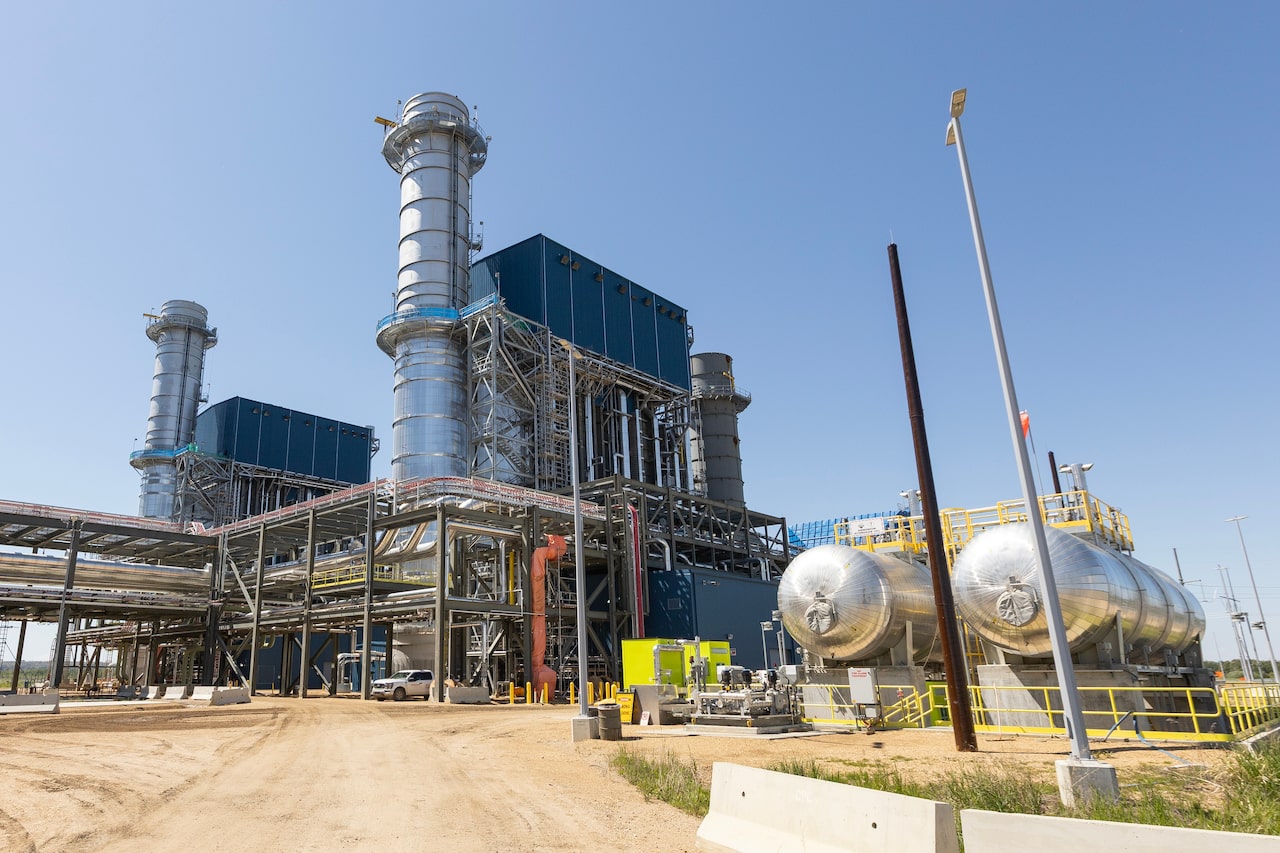
Alongside Alberta’s Highway 770, in a rural area roughly 70 kilometres southwest of Edmonton, undulating hills give way to one of the province’s largest electricity plants – Capital Power’s CPX-T Genesee Generating Station.
This hulking cluster of structures the same blue as the prairie sky powers roughly 10 per cent of Alberta’s grid. And if Avik Dey, the chief executive of Capital Power, has his way, it will soon be a hub for North America’s artificial intelligence data centre development boom.
Crunching along a gravel pathway outside the plant after a tour, he called Genesee the “crown jewel” of the Edmonton-based company. “We’re very proud of this site,” he said, squinting a little in the summer sun as he looked up at one of the three towering gas-fired units.
Mr. Dey’s firm belief that Genesee “is one of the most attractive sites for AI compute anywhere in North America” is partly a function of the site’s unique set-up.
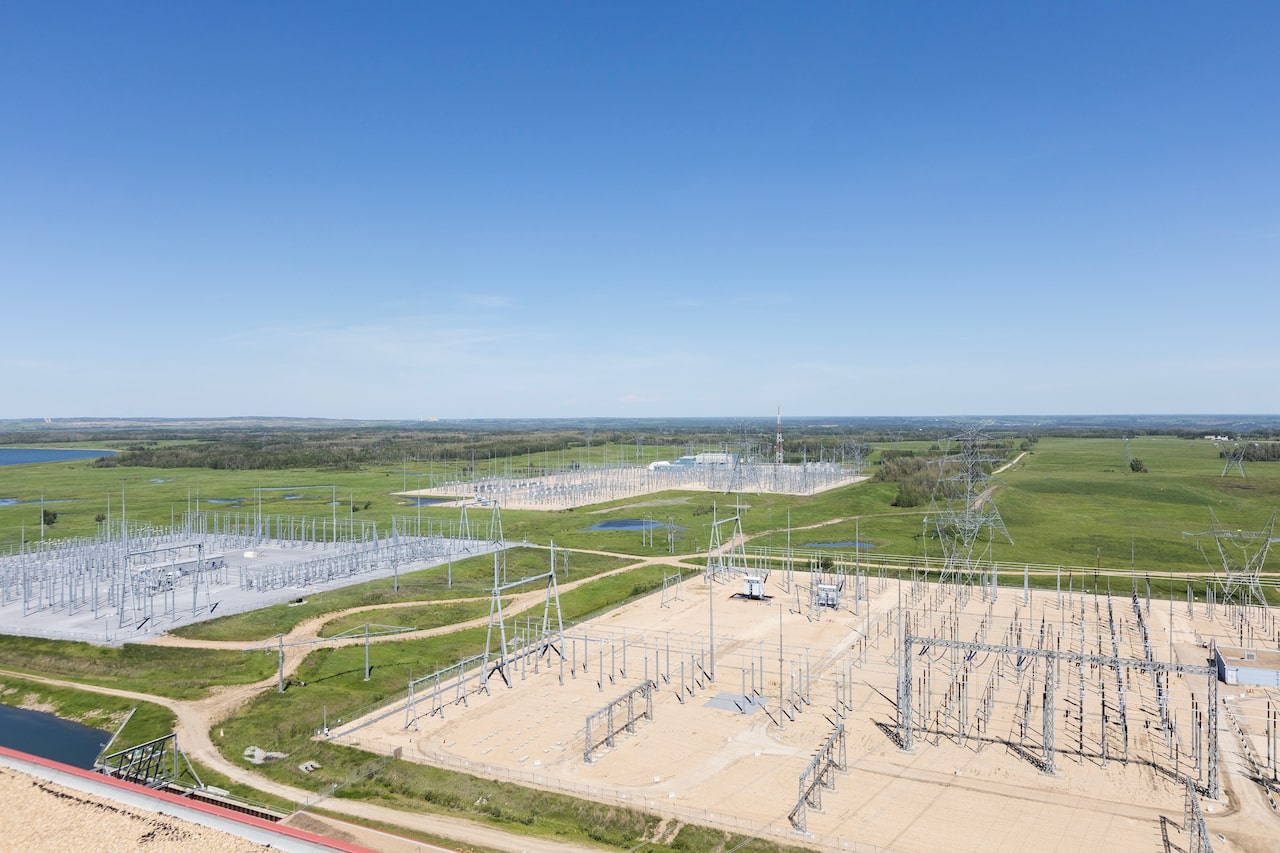
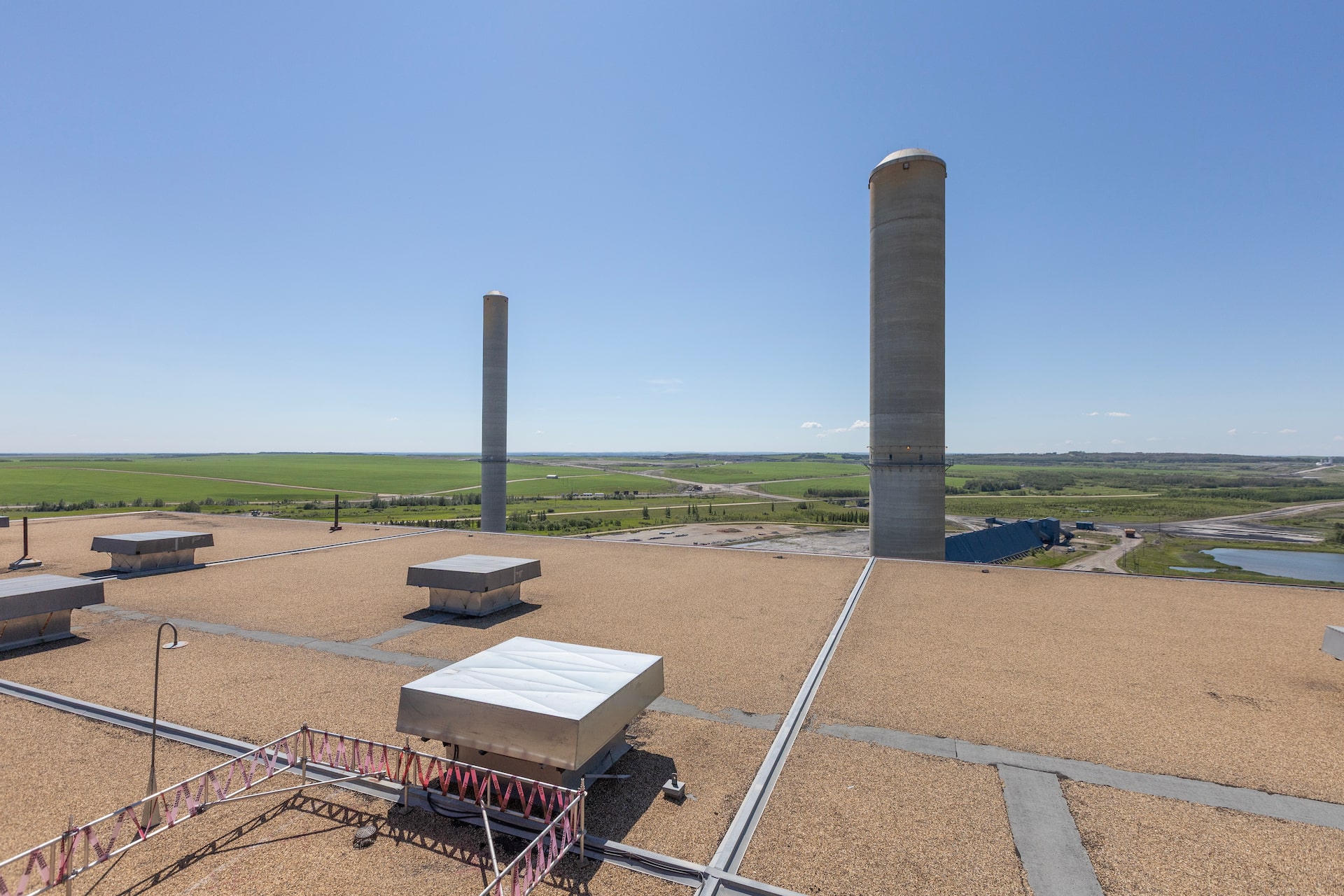
Directly across from the power station is a decommissioned coal mine that supplied the feedstock that fuelled Genesee from 1989 to 2023. In 2024, the generation units were converted to use natural gas – with a price tag of roughly $1.6-billion – five years ahead of a provincial mandate that phased out coal-fired electricity.
Between the power plant, the mine and surrounding land, Capital Power owns roughly 20,000 acres, which could be used to expand Genesee’s generation capacity or host data centres, Mr. Dey said.

CEO Avik Dey spent two decades working in executive, operational and investing roles across the energy sector before joining Capital Power, Canada’s largest independent electricity producer, in 2023.Megan Albu/The Globe and Mail
His conviction that Genesee is a logical place to develop those facilities reflects a deeper belief that Alberta as a whole is an attractive market; the province is “open for business,” he enthused during a recent earnings call.
“Policy clarity is improving confidence, attracting investment and positioning Alberta as a leader among North American data centre markets,” he said at the time.
Did Canada just join the AI boom?
Sitting inside a board room at Genesee recently, Mr. Dey recalled Capital Power’s first introduction to data centres. It was in 2023, when the industry was nowhere near the size it is today. When Capital Power got a call from a U.S. data centre provider hunting for a huge amount of electricity, the Alberta company’s response was a confounded, “What? You need 300 megawatts for what?”
Soon Capital Power was telling providers they should look to Alberta instead of the United States, citing the province’s regulatory system, sizeable natural gas reserves and unique market structure that allows private power companies to build generation capacity.
Back then, hyperscalers weren’t really looking to Canada, Mr. Dey said. Instead, they were focused on core U.S. markets such as Virginia and Maryland.
“The journey for us has been talking to them and others around what the opportunity is in Canada, particularly Alberta,” he said. “The advantage Alberta has today is we have the ability to bring capacity on faster than anywhere else in North America.”
The Alberta government has been courting big tech companies for the past couple of years too, and set up a “concierge” service to help attract developers to set up shop in the province.

Alberta Premier Danielle Smith announces Meta's proposal to build a massive $13-billion AI data centre in Sturgeon County, north of Edmonton. Ms. Smith said, 'Alberta is the ideal North American spot for data centres.'AHMED ZAKOT/The Globe and Mail
Last month, tech giant Meta Platforms Inc. announced that it planned to spend more than $13-billion to build a massive AI data centre in Sturgeon County, north of Edmonton. A consortium led by Pembina Pipeline Corp. is building a $4.6-billion natural gas plant to power the facility, and Capital Power has entered into a long-term, 250-megawatt power supply contract with Meta as well.
But data centres are proving controversial in many municipalities. Residents worry about noise and water use, and question the economic benefits, environmental impacts and the lack of transparency around some developments.
Earlier this month, for example, hundreds of protesters chanted “Down, down with corporations” outside a northern Alberta county office to voice their opposition to Meta’s planned facility.


In early August, hundreds of Albertans gathered at the county office in Morinville to protest against Meta's proposed 1-gigawatt AI data facility. For comparison, the city of Edmonton draws about 1.4 gigawatts of electricity.Amanda May Erickson/The Canadian Press
When asked about opposition to data centres during the recent earnings call, Mr. Dey acknowledged there is growing political pressure on where they are built, and said project proponents must ensure they are engaged with local stakeholders.
Majority of Canadians oppose government support for AI data centres, poll shows
While Mr. Dey is keen for Capital Power to boost its involvement in the data centre space, he is adamant it must do so “without compromising reliability and affordability to the consumer.” That will rely partly on unlocking Genesee’s full power generation capacity; even though its three units can collectively generate 1,857 megawatts, Alberta only allows any single unit to contribute 466 megawatts to the province’s grid to prevent reliability issues.
Mr. Dey said Capital Power is in talks with the Alberta Electric Systems Operator to figure out how the company can deliver more than 466 megawatts without affecting the province’s power system or infrastructure.
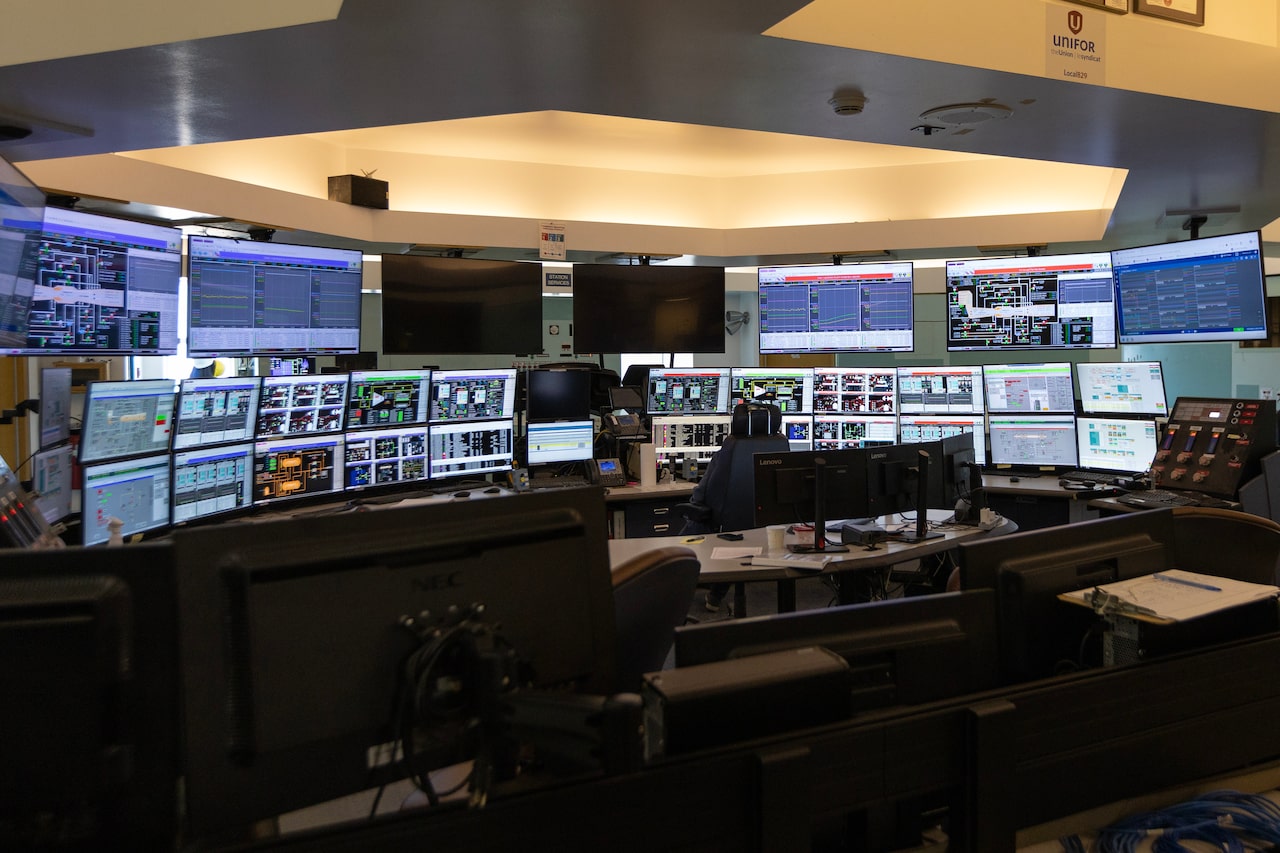
As Canada’s largest independent electricity producer, Capital Power plays a role in keeping the country’s lights on. The company has always seen itself as something of a steward of the electricity system, Mr. Dey said, driven by a belief that gas-fired power, which provides a constant baseload of electricity to the grid, cannot be shut-off without risking supply issues.
The company was borne from EPCOR Utilities Inc., a standalone entity with the City of Edmonton as its sole shareholder. Established in 1995, EPCOR aimed to capitalize on Alberta’s newly deregulated wholesale and retail power markets. It bought a swath of generation facilities in British Columbia, Ontario and the United States and, by 2009, it owned and/or operated 31 of them across North America, with a combined generation capacity of 3,100 megawatts.
That year, EPCOR’s power generation assets and business were moved to Capital Power, which had been established as a new, independent company. Capital Power began trading on the Toronto Stock Exchange on July 9, 2009.
Over the next five years it focused on finding its footing as an independent power producer, adding new facilities in B.C. and Alberta to its portfolio.
The modus operandi was relatively simple: Buy up older natural gas-fired power stations and make them more efficient.
Buying and managing sites that nobody else really wanted made for decent returns. At the time, Mr. Dey said, the gas-fired plants were generally considered late-life assets that would soon lose their value; there was a belief that North America’s power grid was relatively mature and the only thing left to do was make it more efficient.
Instead, demand for power skyrocketed, driven by the adoption of electric vehicles, AI data centres, growing automation and widespread industrial electrification.
“We didn’t foresee massive growth in electricity demand in the Western world, but specifically in North America,” Mr. Dey said. Meeting that demand will mean rapidly expanding the power grid, which in turn will require “all types of technology,” he added.

Mr. Dey believes the company’s Genesee Generating Station in Alberta, 'is one of the most attractive sites for AI compute anywhere in North America.'Megan Albu/The Globe and Mail
When Mr. Dey joined Capital Power in 2023, the company’s assets across North America could generate roughly 7,000 megawatts. Under his watch, it has grown to 12,000 megawatts.
The increase was partly driven by Genesee’s massive expansion. The largest infrastructure project in the company’s history, it added more than 500 megawatts of generation capacity.
Capital Power has also pushed hard south of the border. Mr. Dey said the U.S. market offers the company’s best chance for growth, with “significantly more” opportunities than Canada because of higher pricing, its open investment environment and the number of potential customers.
Last year Capital Power acquired gas-fired plants in Pennsylvania and Ohio, bringing its U.S. portfolio up to 14 plants, including sites in Washington, California, Arizona, Michigan and Alabama.
Not all of Capital Power’s assets are gas-fired power plants. It also dabbles in renewables, including various wind and solar farms across North America, as well as battery energy storage projects.

Capital Power also operates some renewable energy facilities across Canada and the U.S., including the 142-megawatt Quality Wind facility located near Tumbler Ridge, which supplies energy to B.C.’s power grid.Trent Ernst/Capital Power/Supplied
Before he landed at Capital Power, Mr. Dey, who is originally from Calgary, spent two decades working across the spectrum of the energy sector in executive, operational and investing roles. He also helped run the Arizona Coyotes NHL team for a spell, an era he refers to as his “sabbatical from energy.” (He now supports the Edmonton Oilers because “you cannot be a hockey fan or a sports fan and not respect Connor McDavid,” though he admits it’s the Toronto Raptors that really have his heart.)
Mr. Dey’s current role is not quite what he anticipated when he took the job.
“I expected Capital Power to become a growth business within a mature industry. I didn’t think the whole industry would – as quickly as it has – become a growth industry,” he said.
Prosperity Path: AI data centres are the future. Canada must overcome the backlash
As for what’s next for the power sector, Mr. Dey said he expects a continued build out of data centre infrastructure “and the acceptance of what’s happening in AI is actually reframing how we live, how we work.”
That means power providers will have to figure out how to meet the dramatic shift in customer needs, as the electricity value chain runs from molecule to megawatt to computed megabyte.
Where once the sector was a relatively simple business of running a power plant, making sure electricity was available and selling it to the grid, now it must work with utilities and a host of different stakeholders to find solutions that serve all of them.
“And guess what, there’s no precedent,” he said. “We’re breaking new ground on this, and for me that’s incredibly exciting.”