During the first week of February, amid the fog and chaos of the opening days of the trade war, Sam Waddington found himself scrambling to field calls from confused suppliers of his outdoor adventure store in Chilliwack, B.C., an experience eerily reminiscent of the pandemic five years earlier.
While that “groundhog day” feeling has passed, the flurry of e-mails and phone calls from the American vendors he relies on for 20 per cent of the premium camping, hiking and mountaineering products he carries has continued.
But now they echo the same, unnerving message: We’re sorry for what our President is doing, but we need to hike our prices.
Welcome to the summer of tariffs.
At a time of year when Canadians prepare to kick back and enjoy the few months of warm weather this country offers, the trade war launched by U.S. President Donald Trump against America’s allies and foes alike is casting a shadow over the season. It’s prompted people to cancel U.S. vacation plans, and left many workers in tariff-hit industries fearing for their jobs.
More directly, Canada has imposed retaliatory tariffs against the U.S., including on a number of seasonal goods from golf clubs and fishing rods to sleeping bags and lawn mowers that is leading to higher prices on some items.
At the same time, U.S. tariffs on steel and aluminum, along with that country’s punishing tariffs on imports from China, are now forcing some American suppliers to raise their prices or delay shipments.
Retailers like Mr. Waddington, who owns Mt. Waddington Outdoors in Chilliwack and Whistler – he shares his name with the tallest mountain to sit entirely within the province of British Columbia – are seeing that first hand.
One of his major suppliers has stopped shipping headlamps because it sources parts from China and the product is no longer economically feasible. Another company called this week to let him know it is now baking in permanent tariffs on steel and aluminum (the current U.S. rate is 25 per cent) and would need to raise prices on its carabiners, ice axes, tentpoles, stoves and pot sets.
Mr. Waddington stresses that he supports the retaliatory tariffs “100 per cent” as a way to put pressure on U.S. supply chains, and ultimately, American politicians. But he knows it’s only the first wave of trade chaos facing his store and customers. “We’re already feeling the impact of the countertariffs, with some much larger downstream impacts pretty acutely on the horizon,” he said.
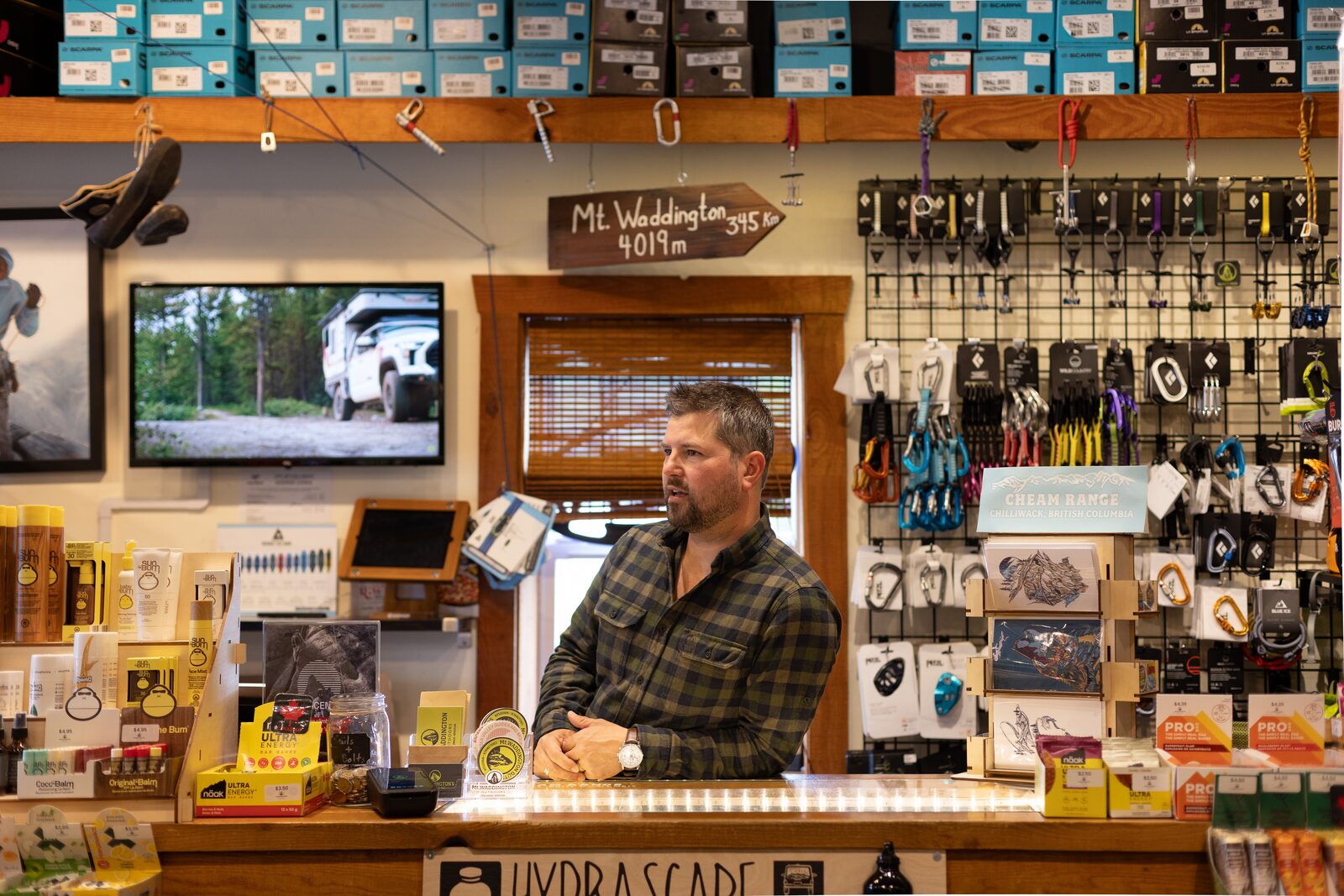
Canada’s countertariffs, for now, are the source of the most immediate price pressure.
As part of Canada’s plan to punch back against U.S. tariffs on this country’s goods, the federal government slapped countertariffs on roughly $60-billion of imports from the U.S. in March.
Then last month, Ottawa paused countertariffs for six months on products used in manufacturing, food and beverage processing and packaging, health and security, while auto parts have also been given a reprieve from duties.
Taken together, those exemptions mean the effective Canadian import tariff rate on U.S. goods will be “nearly zero” in the second and third quarters and “lessen the rise in prices and hit to the economy from the trade war,” according to an analysis released this week by economists Tony Stillo and Michael Davenport at Oxford Economics.
Yet that still leaves a range of goods subject to countertariffs, including a preponderance of items Canadians typically turn to when the weather gets warm.
There’s no official definition for summer products, but The Globe and Mail compiled a list of 75 items facing duties.

While there's no official definition for summer products, some items include recreational gear for camping, mountaineering and hiking, among others.Alison Boulier/The Globe and Mail
The eclectic collection includes recreational gear for camping, golfing, fishing, tennis, mountaineering, hiking and other sports, bicycle tires and bike-seat stems, tricycles, football helmets, surfboards, swimming pools and footwear such as soccer and football cleats.
The summertime list also includes products Canadians may use for home and cottage maintenance, like hand tools, paint, brushes, gardening tools and lawn mowers.
(Because of the sometimes unusual way import categories are grouped together, not all products captured on the list are exclusively summer-related – for instance, the trade category for golf bags also includes fitted covers for church bells.)
Last year, Canada imported roughly US$2.5-billion of these products from the U.S., accounting for a sliver of U.S. imports, according to trade data published by the U.S. Census Bureau.
There are already signs in the official inflation data that tariffs are putting upward pressure on prices, at least when it comes to sporting and exercise equipment.
The annual rate of inflation in that category spiked to 12.2 per cent in March, according to Statistics Canada. However, because of the relatively small size of that sector, the increase was erased by declines in travel and gasoline prices, which caused broad based inflation to slow slightly to 2.3 per cent.
In the world of sportfishing, stores still have a lot of inventory that they were able to bring in before the tariffs took effect, but those stockpiles won’t last long, said Moose Bertew, a professional sport fisherman and a director with the Canadian International Sportfishing Association.
Nearly every aspect of fishing is exposed to tariffs, with rods, reels and tackle all directly subject to countertariffs. At the same time, Mr. Trump’s steel and aluminum tariffs are pushing up boat prices, he said.
“Every corner of the industry is feeling it, from the basement bait makers to the big brands,” he said. “People are starting to see the price increases now, but you’re going to see how bad it’s going to get by the end of the season and coming into fall.”
On the golf front, calls to several golf clubs across the country suggest that so far, the tariffs have yet to lead to price hikes as stores work through their existing inventory that was brought in ahead of the trade war.
Some companies are also reshaping their supply chains to dodge the various tariffs, though the changes themselves imply steeper logistical costs.
Golf balls are a case in point. Titleist, a golf-ball brand owned by Massachusetts-based Acushnet Holdings Corp., previously supplied its Pro V1 model of golf ball to Canada from plants in its home state, the company’s chief executive officer David Maher told investors earlier this month.
But in the wake of the trade war, those balls are now shipped from a plant in Thailand that supplies the company’s other non-U.S. markets.

Some companies are also reshaping their supply chains to dodge the various tariffs.Illustration by Matthew Billington
Mr. Maher said the company still delivers U.S.-produced performance-model balls into Canada, which do incur the countertariff. “We have not yet reacted to this temporary rate,” he said. “However, if this becomes permanent, we will likely take pricing measures.”
To the extent that Canadian golfers begin to shift their spending away from U.S. brands, Canada’s relatively small golf-products industry is positioning itself to benefit.
In March, the Canadian Golf Brands Alliance formed as a way to certify products as being Canadian – members must meet two of three parameters: being founded in Canada, headquartered in Canada or manufactured in Canada.
“Canada’s national pride is being shouted from the rooftops to ‘Buy Canadian’ in grocery stores and other sectors but we’ve never had something like this for golf,” said Todd Bishop, the group’s founder and the CEO of Halifax-based Dormie Workshop, which produces leather golf club head covers.
“I don’t know if this would ever have been formed if it weren’t for what’s happened south of the border,” he said.
Tariffs are even coming for the midway.
In addition to the effect of steel and aluminum tariffs on manufacturers, Canada imposed countertariffs on items such as amusement-park rides, water-park rides and travelling-circus equipment.
The segment is a tiny slice of U.S.-Canada trade. Last year, Canada imported a total of US$26-million in roller coasters, bumper cars and the like from America. Even so, the impact is being felt.
In a note to customers posted on its website in March, Amusement Devices & Mfg. LLC., an Iowa maker of portable rides, said because of the impact tariffs were having on “the broader business environment for us and our customers in the United States and Canada” it had raised prices and warned that it might need to implement further price hikes. The company did not respond to an interview request.
Many retailers insist that, for now, price hikes are being avoided. Sail Outdoors Inc., a Laval-based outdoor-equipment chain with 12 stores in Quebec and Ontario, has not had to implement any tariff-related price hikes, according to chief executive officer Isabelle Lemay.

Mt. Waddington Outdoors already has an array of tariffed and soon-to-be-tariffed hiking and sport backpacks.Alison Boulier/The Globe and Mail
“It’s more likely the fall and winter season that may have a big impact if the counter tariffs stay in place,” she said.
As Mr. Trump began to ratchet up his tariff threats against Canada after his election victory last November, the retailer scrambled to move up deliveries of some products like fishing and hunting gear (shotgun cartridges are also on the countertariff list) from April to February.
Ms. Lemay estimated that about 10 per cent of Sail’s product portfolio is exposed to either countertariffs or America’s tariff battles with other countries, which she said should not disrupt the retailer’s recently announced plan to open eight new stores in Ontario and Quebec over the next five years.
Other large retailers have indicated that they are in a similar situation. Roughly 15 per cent of Canadian Tire Corp.’s cost of goods sold is tied to U.S. goods, which CEO Greg Hicks described as a “manageable fraction” in a May 8 earnings call.
“Our tariff task force has been working to minimize possible impacts, seeking alternative sources, negotiating with vendors and managing margins to blunt the risk of price inflation for consumers.”
The goal of the countertariffs was always to deliver “maximum impact in the United States and minimal impact on Canadians,” said former international trade minister Mary Ng, which is why many of the tariffed items skew from Republican states.
For instance, among the summer-related products examined here, red states like Texas, Ohio, South Carolina and Tennessee are all near the top, though the blue states of Illinois and California are also prominent.
It doesn’t appear that the preponderance of summer seasonal products on the countertariff list was a conscious decision on the part of the Department of Finance. Rather, they reflect the government’s broader strategy.
“All sorts of things got slapped with tariffs, I don’t recall any specific targeting of these products,” said Brian Clow, who served as deputy chief of staff to former prime minister Justin Trudeau. They do however fit with an important consideration the government had in mind as it drew up the list: whether products were “absolutely necessary versus luxuries or optional purchases.”
As Rachel Battaglia, an economist at the Royal Bank of Canada sees it, the countertariffs “were designed to not actually be paid, but to encourage substitution away from U.S. goods instead.”
That is why the countermeasures could have a smaller inflationary impact than many first feared.
“Our supply chains are very interconnected so there will be some inflationary pressure, but a lot of people are catastrophizing this and I think we should pump the brakes,” said Ms. Battaglia, who added that many of the sporting goods Canadians buy come from China.
Indeed, last year China shipped US$710-million worth of sporting goods to Canada, nearly double what was brought in from the U.S. And even then, many U.S. brands have historically shipped to Canada relied on Chinese factories to make their goods.
Mr. Waddington, on the other hand, has spent a decade actively courting more sustainable, niche vendors out of the U.S. who make premium outdoor products his customers crave. That was in the name of creating a more localized supply chain, and the trade crisis leaves him exposed.
“Our least expensive products to bring in right now are ones that have nothing to do with the U.S.,” he said.
And as the e-mails and phone calls come in from suppliers warning of price increases, he’s faced with a wrenching decision. “Do I cancel those orders? Because if I cancel a $100,000 order three months out, we no longer have a relationship of trust that I can go back to in the next 10 years of my business.”
“I have to mitigate some risk, but I also need to bet that saner minds will prevail some day in the future.”

Even if the tariffs and countertariffs have so far had a relatively moderate effect on broader price inflation, the trade war is shaking up the summer economy in other ways.
For one thing, Mr. Trump’s tariffs and hostile rhetoric about annexing Canada have spurred many Canadians to scrap planned travel to the U.S. this summer.
This week, Statistics Canada reported that the number of Canadian residents returning by automobile from the U.S. plunged by 35.2 per cent in April from the same month in 2024. It marked the fourth consecutive month of declines.
Meanwhile, the number of Canadians returning by air from the U.S. also fell 19.9 per cent from the year before.
Ms. Battaglia sees potential similarities between the travel slowdown now, and what happened during the pandemic, when home-bound Canadians shifted their spending toward recreational goods.
“We have a soft border close right now where people are staying home so I’ll be curious to see if we see spending on recreation increase,” she said.
If more Canadians opt to travel in their own country, that may also lead to higher demand for tourist accommodation. There are already signs that Canadian restaurants are benefiting from the U.S. travel boycott with higher reservation numbers.
And since Canadians aren’t alone in avoiding travel to the U.S., Canada may pick up some of that travel business.
“If we see Europeans choosing Canada as an alternative to the U.S., that in conjunction with more Canadians staying home could put upward pressure on hotel prices,” she said.
As for the countertarrifs, while Mr. Waddington believes that they’re necessary, this is still a “deep-sigh moment” for him.
“The world is crazy right now and for me hiking or paddling is my salve for that,” he said.
“To watch families that need a wilderness experience being unable to do that because the price just went up, or the barrier to selection just went up, it’s heartbreaking.