
Photo illustration by the Globe and Mail/iStockPhoto / Getty Images
In the run-up to the 2024 U.S. presidential election, the Heritage Foundation, a deeply conservative think tank in Washington, D.C., put together a transition bible for a Republican president, something they called “an agenda prepared by and for conservatives who will be ready on day one of the next administration to save our country.”
Scores of policies were proposed in Project 2025’s 900 pages, including a tariff strategy for “fair trade.” The author of this section, Peter Navarro – the architect of Mr. Trump’s first-term tariff plan – argued that the United States desperately needs to strengthen its manufacturing and defence industrial base. To help do that, he called for aggressive tariffs on China, as well as reciprocal tariffs on every other trading partner.
The plan was presented in a calm, almost thoughtful, way. Without a strong manufacturing base, Mr. Navarro wrote, the United States “will not be able to provide the weapons and matériel that would be needed should America enter another major world war or seek to assist a major ally like Europe, Japan, or Taiwan.”
Upon his return to the White House, Mr. Trump and his financial advisers – including Commerce Secretary Howard Lutnick, Treasury Secretary Scott Bessent, and Stephen Miran, his nominee for head of the Council of Economic Advisers – endorsed the plan, and in February the president put out a memorandum on reciprocal trade and tariffs, requesting a review of all trading partners to be conducted within 180 days.
Early on, Wall Street wasn’t all that fussed. “Is this the start of Smoot-Hawley 2.0?” market strategist Ed Yardeni wrote to clients on Feb. 14, referencing the global tariff war that accelerated the Great Depression. “We doubt it.” Mr. Trump, he believed, would use matching tariffs imposed on U.S. goods as leverage to negotiate lower or no tariffs.
A month later, Mr. Trump appears to be shredding the plan to pieces, and a sense of confusion has set in.
The president has set an April 2 deadline for his trade and tariff review, and any hope that it would be a thoughtful exercise is disappearing. It’s all turned so dark, so quickly, that this week the pending U.S. ambassador to Canada, Pete Hoekstra, was asked in confirmation hearings if he believes that Canada is a sovereign country. (Yes, he replied.)
Already it’s clear the tariff hawks miscalculated on two fronts. No one seemed to think other countries would retaliate forcefully, nor did they appreciate how their own president would respond when that happened. So far, Mr. Trump is playing victim in the economic war he started, and after Ontario slapped a 25-per-cent surcharge on electricity exports to the U.S. on Monday, Mr. Trump threatened to double his own tariffs on steel and aluminum to 50 per cent within 24 hours.
With 41 per cent of S&P 500 revenues earned outside the U.S., investors are increasingly rattled by the prospect of a trade war. On Thursday, Mr. Yardeni wrote a mea culpa. “It has dawned on Wall Street (and us!) that President Trump’s tariffs aren’t negotiating chips to help the U.S. lower tariffs around the world, promoting free trade. They’re trade barriers, triggering other countries to respond in kind, and they jeopardize U.S. inflation and economic growth,” he wrote to clients.
Kent Lassman is chief executive of the Competitive Enterprise Institute, and he wrote a section of Project 2025. Sitting in his Washington, D.C., office this week, he expressed concern.
“The assumption is they have an end game,” he said, referring to the White House. Mr. Lassman has been privy to enough conversations to know that isn’t the case. “I want to caution you from thinking they have a grand strategy.”
Peter Navarro’s call for “free, fair, reciprocal” trade emerged in the first Trump administration but ultimately didn’t get that much traction. While the tariffs he pushed for on China have remained in place, those he called for on steel and aluminum, including from Canada, didn’t last long. Now that he’s an architect of the Trump 2.0 trade playbook, many Americans aren’t sure what to believe. Steel and aluminum tariffs are back, and this time they’re even higher. But some Republicans have latched onto commentary from the likes of Mr. Bessent, a respected former hedge fund manager, for relief.
Mr. Bessent speaks in a measured tone, and early on he advocated for using tariffs as negotiating leverage. In January, the Financial Times reported that he hoped to implement reciprocal tariffs at a rate of 2.5 per cent per month, with the goal of getting some concessions as the pain got worse. Mr. Trump’s memorandum on reciprocal trade offered hope this could actually play out.
Yet the president’s treatment of Canada shows just how far off the rails Mr. Bessent’s plan has gone.
To start, Canada and Mexico already have a free trade agreement with the U.S., says Kimberly Clausing, a professor at UCLA Law who worked in the Treasury Department under President Joe Biden and served as the lead economist in the Office of Tax Policy. “You can’t say reciprocity hasn’t been achieved.”
Mr. Trump, of course, has tried to get around this by using the national security justification. Now that it’s been proven how little fentanyl enters the U.S. from Canada, he’s jumped to another strategy: claiming Canada uses unfair practices such as subsidizing milk production and commodities like lumber.
What he ignores is that the U.S. also uses subsidies or non-tariff barriers – the American sugar industry, for one, is heavily protected, just like Canadian dairy farmers.
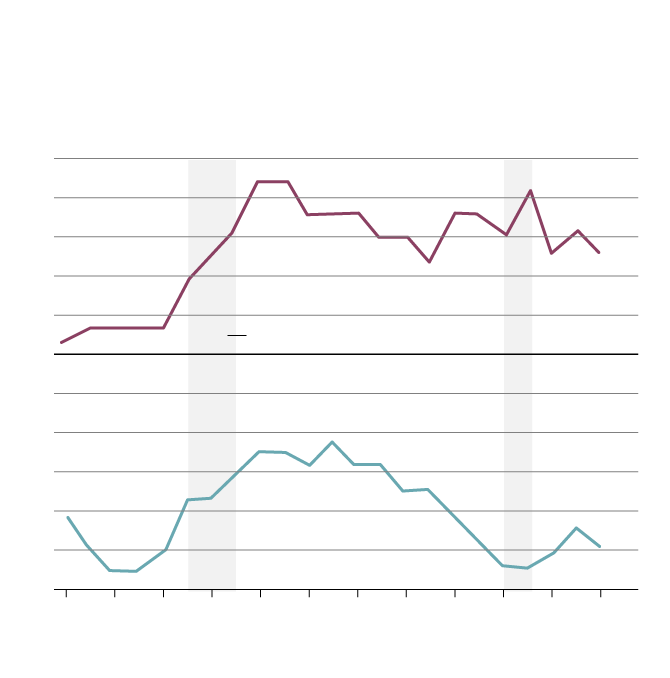
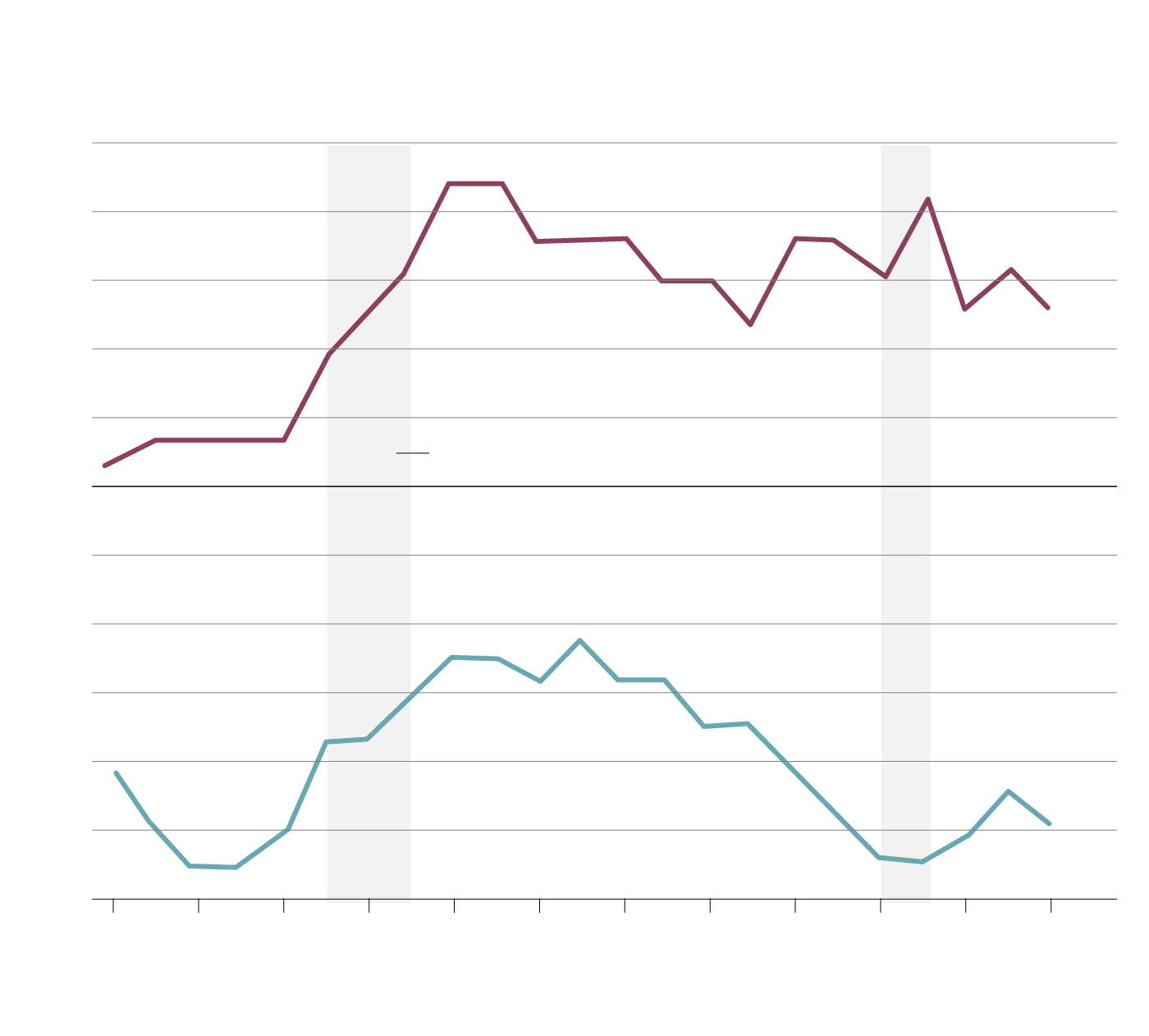
And then there’s the fact that more than 60 per cent of major U.S. industries run a trade surplus with Canada, while only a quarter of them run such surpluses with the rest of the world. So why pick on Canada?
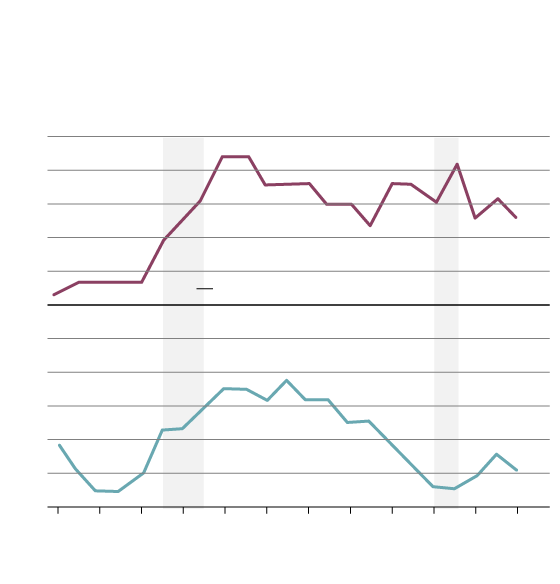
Most major U.S. industries run
a trade surplus with Canada
Share of 32 major U.S industries reporting a trade surplus with
Canada and rest of the world
75%
70
65
Canada
60
55
Recession
50
45
40
35
Rest of
world
30
25
20
2002
2004
2006
2008
2010
2012
2014
2016
2018
2020
2022
2024
the globe and mail, Source: nbc economics (data via u.s. census)
Most major U.S. industries run
a trade surplus with Canada
Share of 32 major U.S industries reporting a trade surplus with
Canada and rest of the world
75%
70
65
Canada
60
55
Recession
50
45
40
35
Rest of
world
30
25
20
2002
2004
2006
2008
2010
2012
2014
2016
2018
2020
2022
2024
the globe and mail, Source: nbc economics (data via u.s. census)
Most major U.S. industries run a trade surplus with Canada
Share of 32 major U.S industries reporting a trade surplus with Canada and rest of the world
75%
70
65
Canada
60
55
Recession
50
45
40
35
Rest of
world
30
25
20
2002
2004
2006
2008
2010
2012
2014
2016
2018
2020
2022
2024
the globe and mail, Source: nbc economics (data via u.s. census)
Mr. Lutnick, the commerce secretary, tried to explain that during a TV appearance this week, on the same morning he was set to meet with Canadian officials. “We put a tariff on steel and aluminum to make sure the dumping countries of the world stop, and we can build up our steel and aluminum in America,” he said. “And what does Canada do? They put a tariff on for sports equipment. I mean, really? It’s tone deaf.”
His arguments had multiple flaws. For one, Canada doesn’t dump or overproduce steel or aluminum like China does. In the current White House, however, that doesn’t seem to matter.
The problem, according to Bill Reinsch – a senior adviser at the non-partisan Center for Strategic and International Studies in Washington who spent 15 years as head of the National Foreign Trade Council – is that Mr. Trump doesn’t understand soft power. “It’s really a return to 19th-century big-country politics. He ignores the fact that this created two world wars and a Great Depression.”
Mr. Trump is also shifting his language on tariffs at home. On the campaign trail, he argued that other countries would pay the tariffs, not Americans. With the stock market falling partly because of inflation concerns, he’s now saying there’s no gain without pain. “Long term what I’m doing is making our country strong again. Financially strong. Militarily strong,” he said this week.
What Mr. Trump and the tariff hawks want – more manufacturing in America – is a reasonable goal. But the way they go about it matters. And right now, the president is living up to a popular characterization of him by comedian John Mulaney: He’s like a horse let loose in a hospital.
There’s also a realization that academics who made the tariff strategy sound so good in theory missed part of the equation. “No one in the technocratic camp has sat across from a fuming U.S. senator,” says Mr. Lassman. “They’ve never had to deal with the raw politics.”
In Washington, a growing number of strategists are quietly advocating for Canada to tone down the rhetoric and let the president think he’s got a win. Asked about this strategy on Thursday, newly sworn-in finance minister François-Philippe Champagne wouldn’t budge. “I think there’s no alternative to standing up for Canadians, standing up for workers and standing up for industry,” he said. “I think if there’s one thing that President Trump respects is strength, is frankness, is people who defend their own interests.”
As Canada digs in, Republican frustration is starting to bubble over. This week, Politico reported on growing anger at Mr. Lutnick, and lobbyists are starting to float the idea of Congress taking back control of tariffs from the president.
Lately, though, Mr. Trump has mused about thinking in centuries, not quarters, and the new calculus in D.C., according to Justin Kintz, a partner at Forbes Tate who specializes in government relations for corporate clients, is that White House officials believe they can use the heft of the U.S. economy to win a war of economic attrition.
“The question,” he says, “is, does the U.S. economy have as much stamina as our president?”