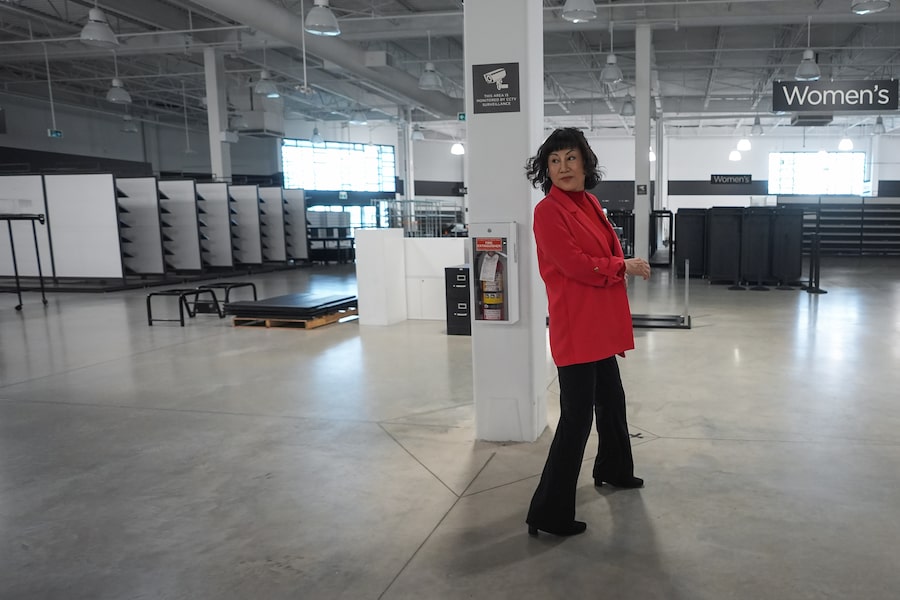
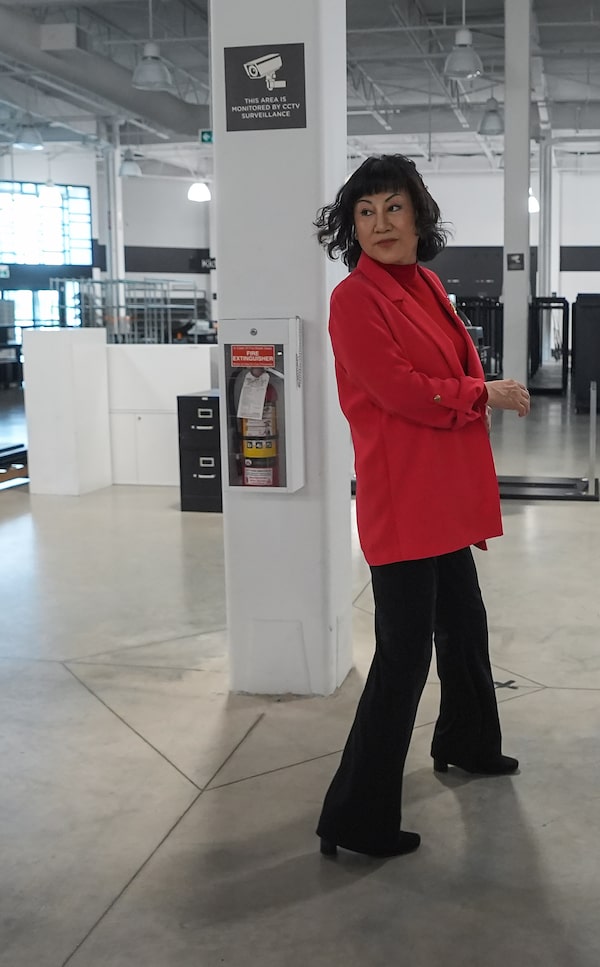
In early June, several of Canada’s largest mall owners attended meetings in Toronto to hear from a B.C.-based real estate executive about her plan to take over the leases of more than two dozen former Hudson’s Bay locations – some of the core assets being sold off amid the historic demise of Canada’s oldest retailer.
The landlords did not like what they heard. Weihong (Ruby) Liu had never run a major retailer before, let alone a nationwide chain. Her aspiration was to fill 25 spaces across the country with new “Ruby Liu” department stores. But they said there was little concrete detail on how she planned to get the venture off the ground.


A business plan prepared by Central Walk included images of the Ruby Liu logo and renderings of the proposed department stores. Ms. Liu's aspiration was to fill 25 spaces across the country with new 'Ruby Liu' department stores.Supplied
Some of the meetings grew tense, with the mall owners concerned about the future of their multimillion-dollar properties. But Ms. Liu’s team told them to take comfort: She had hired a senior executive with years of retail experience – former Hudson’s Bay president Wayne Drummond.
But that was not the case.
In reality, Mr. Drummond, according to court filings, had been retained for just a few hours, paid $3,000 solely to meet with the landlords and had no in-depth knowledge of Ms. Liu’s business plan.
The disparity between what her team said publicly about Mr. Drummond’s role in the venture, and the reality behind the scenes, set off alarm bells within the court-supervised process to liquidate the business.
Ontario Superior Court Justice Peter Osborne later called the misrepresentation “startling” in his decision that rejected the proposed lease deal.
But it was far from the only unusual occurrence in the bitter fight over the stores, which consumed months of the court’s time, disgorged thousands of pages of legal filings and pitted Ms. Liu against some of the country’s most prominent mall owners, including Cadillac Fairview Corp. Ltd., Oxford Properties, Ivanhoé Cambridge, KingSett Capital Inc., Primaris Management Inc., QuadReal Property Group and Morguard Investments Ltd.
Thomson and Weston families submit $18-million joint bid for Hudson’s Bay charter
A Globe and Mail examination of the proposed deal found examples of unusual conduct beyond the details that have been made public in the past several months.
Publicly, the strange saga has involved accusations of corruption and discrimination, “inappropriate” letters to the judge in the case and questionable business plans that experts said did not stand up to scrutiny.

Ms. Liu arrives at court in Toronto in August. The fight over the former HBC stores consumed months of the court’s time and pitted Ms. Liu against some of the country’s most prominent mall owners.Cole Burston/The Globe and Mail
Beyond that, there are discrepancies between what Ms. Liu said publicly about her plans for the Bay – and about her business background – and what has been said elsewhere. The Globe examined social-media records and public statements from Ms. Liu and others, showing omissions and contradictions from the information supplied to the Canadian courts.
Most notably, Ms. Liu faced allegations in China that investors paid for spaces they did not receive. In describing her track record of success to the Canadian court, Ms. Liu made little mention of the allegations. There were other contradictions in her avowed hiring plans for Canadians laid off during the Hudson’s Bay bankruptcy. And there were signs of unusual attempts to demonstrate support, including by packing the courtroom with an entourage of supporters and by adding a Canadian reporter who had been writing about the case to her payroll.
A representative for Ms. Liu, Linda Qin – chief executive officer of Ms. Liu’s company, Central Walk – did not respond to repeated requests for comment that The Globe made by e-mail and phone.
As the fight wore on, Ms. Liu’s team has portrayed her as a rags-to-riches business savant who would “save Canadian retail.” Her opponents spun a different story: that of an industry dilettante whose ill-conceived plans would crumble, further damaging the value of an industry landscape already badly corroded by the long decline and fall of a 355-year-old Canadian retail giant.

Ms. Liu received court approval in July to take over three former HBC locations in malls owned by her company, Central Walk, for $6-million. But the plan for the additional 25 stores attracted concern from landlords.DARRYL DYCK/The Canadian Press
‘Relax and lay back’
Hudson’s Bay Co. first announced the $69.1-million lease deal with Ms. Liu in May, after a court-supervised auction.
In social-media posts, Ms. Liu liked to hold up a white sheet of paper, laser-printed with the logo of the stores she wanted to launch: her name in cursive, under a picture of a red gemstone.
Three of the leases went unopposed, because they were for spaces in malls owned by Central Walk. Ms. Liu received court approval in July to take over those locations for $6-million.
But the plan for the additional 25 stores attracted almost immediate concern. The Globe first reported in June that landlords were alarmed by the meetings that month, during which Ms. Liu was unable to respond to basic questions – including who the stores’ suppliers would be, what the plans were for shipping and logistics, and how she would fund millions of dollars of badly-overdue repairs to broken escalators, leaky roofs and failing heating, ventilation and air-conditioning systems.
Representatives for Hudson’s Bay had attempted to prepare Ms. Liu’s team for the meetings to obtain the landlords’ consent to the deal. In response, Ms. Liu’s team told Hudson’s Bay’s lawyers to “relax and lay back,” Stikeman Elliott lawyer Ashley Taylor wrote in correspondence that was revealed in court filings.
By early July, Hudson’s Bay appeared to be regretting the deal. In a letter sent to Ms. Liu’s then counsel on July 5, Mr. Taylor wrote that her company, Ruby Liu Commercial Investment Corp., was in breach of their agreement and had “failed and/or refused to take the most basic and necessary steps to advance its bid,” including creating a “credible business plan.”
Some of the Bay’s senior lenders had also had enough: They asked the court to terminate the deal, saying it was wasting cash they were owed on legal and professional fees, as well as rent on the disputed spaces.
Ms. Liu was frustrated. In a video posted to Chinese social-media platform RedNote in July, she complained about her treatment in the deal. In the “war room” shown in the video, a message on a whiteboard read, “only by enduring hardship can one become a master.”
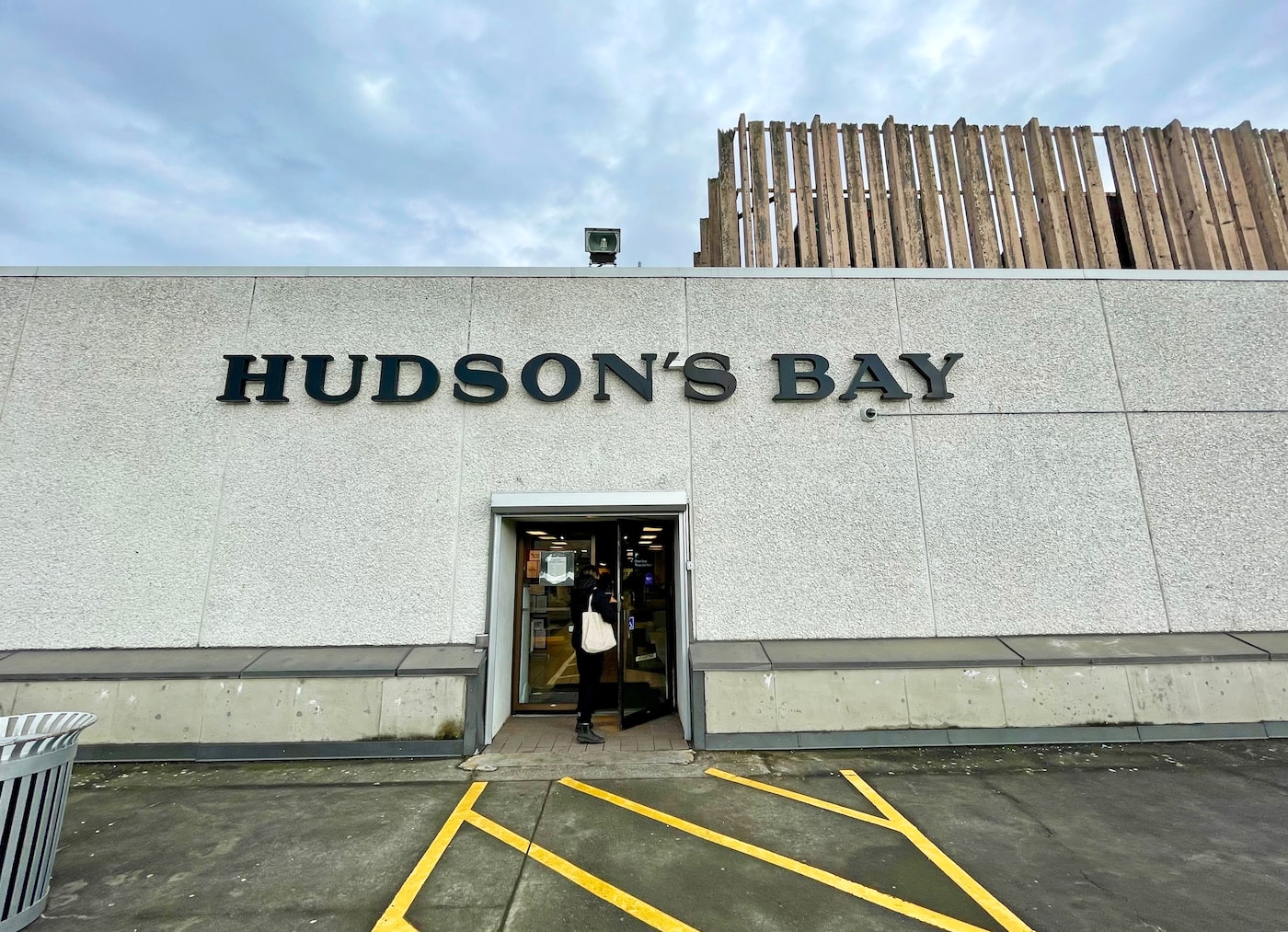

Not everyone was so critical. In May and June, Canadian online publication Retail Insider posted a series of positive articles written by its publisher, Craig Patterson. Ms. Liu was “preparing to reshape Canadian retail by rethinking what a store can be,” he wrote. And she was “poised to become one of the most influential figures” in the industry.
By July, Mr. Patterson was working for Ms. Liu, and appeared at a court hearing wearing a ruby ring.
“I’m temporarily providing a bit of retail guidance to Ruby and the team,” Mr. Patterson wrote in an e-mail responding to questions from The Globe in July, adding that there was “nothing newsworthy” about the connection. Mr. Patterson declined to comment for this story.
Meanwhile, landlords were pushing back against being forced into a very long relationship with the new tenant. Many of the leases included renewal rights that extended decades into the future.

Richard Baker, executive chairman of the Hudson's Bay Co. in June, 2018. Mr. Baker presided over HBC during the downfall of the Canadian retail icon.Tijana Martin/The Canadian Press
Despite the fact that the stores had been allowed to deteriorate under the control of Hudson’s Bay executive chairman Richard Baker, the leases still held considerable value. Department stores traditionally served as anchor tenants, crucial to drawing in shoppers. If such prominent spaces were occupied by another retailer that ultimately failed, it would harm not just the landlords, but other tenants with stores in those malls.
As opposition to the deal mounted, Ms. Liu decided to write directly to Justice Osborne, who was overseeing the case. In an e-mail from Ms. Qin – the Central Walk CEO who frequently served as a translator for Ms. Liu during media interviews – and signed by Ms. Liu, she wrote that the first time she laid eyes on the judge, she felt immediately he was “a person of justice and strength.”
“Yet what I still cannot understand is this: Among so many lawyers who would do anything for money, how do you remain so steadfast, so confident, so noble?” the e-mail went on. She praised the judge’s “grace,” “dignity” and “quiet but commanding presence.”
“Is this what I have read of in books – true nobility?” she wrote. “Or is it the lifelong defence of your own integrity and kindness? Or perhaps, is there also a silent sorrow in your heart at the compromises this world demands?”
In another e-mail to the judge the next day, Ms. Liu wrote that the landlords had “schemed” against her plan, with the hope that it would be rejected and the valuable leases would be handed back to them.
The judge disclosed the correspondence at a hearing the following week, reminding those present that no party in the case should communicate with him directly. The same day, the office of the Chief Justice of the Ontario Superior Court sent a letter to Ms. Liu calling the e-mails “inappropriate.”
The e-mails also told the story of Ms. Liu’s life, and how she built a personal net worth she said exceeded $1-billion. Her background and track record of success, she argued, should be a compelling reason for the judge to “give me a chance” to build a new retail empire in Canada.

Born in Harbin, China, Ruby Liu rose from poverty to become a well-connected member of the Chinese elite. In 2014, Ms. Liu moved to Canada and continued to invest in commercial real estate with her company, Central Walk.Nathan Denette/The Canadian Press
Wealth through crisis
Weihong Liu was born in 1966 in Harbin, China, and grew up poor in a home she described in court documents as a “makeshift shelter” five metres wide, next to a set of railway tracks. Ms. Liu’s mother worked 17 to 18 hours a day in a factory, according to a 2007 article in Shenzhen Business Daily.
Her family life was difficult. In a 2023 interview with a Canadian Chinese YouTuber, Ms. Liu said that she “hated” her father for his mistreatment of her mother. In Grade 10, Ms. Liu was forced to drop out of school because her family needed her to earn money.
She had already been working before then: In an affidavit sworn in July, which echoed some of what she wrote to the judge, Ms. Liu said that she had begun helping her grandmother sell food at age 6. At 16, she launched a wholesale business that sold clothing and other items.
Around 1988, according to the affidavit, Ms. Liu sold the wholesale business and moved to Shenzhen. There, she opened a small shop selling soda at the bus station, according to Shenzhen Business Daily. In the early to mid-90s, she began investing in restaurants, and then turned her focus to real estate.
Ms. Liu also told the YouTuber in 2023 that she bought up cheap properties during the economic crisis in 2008, and later sold them at significant profit. “My wealth is accumulated through economic crises when no one wants them,” she said in the interview, conducted in Mandarin.
Over time, Ms. Liu became a well-connected member of the Chinese elite, joining the Chinese People’s Political Consultative Conference, a government advisory body that mainly functions as a networking organization. In the 2023 YouTube interview, Ms. Liu acknowledged her CPPCC membership, and she pushed back against claims she acted as a “white glove” for Chinese officials, making deals they could not do for political reasons.
As her business connections grew, Ms. Liu branched into real estate development. The company she launched, Yijing Investment Development Co. Ltd., partnered on the Vanke Four Seasons Flower City housing development in 2001. In 2002, according to an article in China Business World, Ms. Liu invested 700 million yuan (roughly $133-million) in a joint venture to develop a 460,000-square-foot shopping centre in Shenzhen’s central business district. She eventually sold the Yijing Central Walk shopping mall to Hong Kong REIT for more than $1.32-billion, according to the affidavit.
The mall had been the subject of some controversy. In February, 2012, the Shenzhen Business Daily published an investigation into leasing practices at Yijing Central Walk. Prospective buyers said they had paid for properties they never received, and were unable to get a refund on their investments. According to Chinese media reports, at a news conference, some of them appeared with banners that read, “Return my hard-earned money.” During that event, Ms. Liu blamed her banking and other partners, and said the money would be refunded to all buyers.
But Ms. Liu refused to answer questions from the reporter who broke the story, Xingmei Qin. When Ms. Qin followed Ms. Liu and attempted to question her, Ms. Liu reportedly punched her in the chest, knocking her to the floor. Ms. Liu later apologized but continued to deny wrongdoing in the controversy. In a RedNote video posted in September, she claimed the reporter had been part of an “evil” group attempting to “seize the shopping mall.” The incident convinced Ms. Liu to leave China, she stated in the affidavit. In 2014, she moved to Canada.
Ms. Liu still maintains ties to China, including apparently continuing to hold a Chinese passport, according to Hong Kong company records. She also maintains an address in a residential area in Shenzhen, according to 2024 and 2025 annual returns for her Hong Kong-registered company, Techion Trading Co. Ltd.
In British Columbia, Ms. Liu continued to invest in commercial real estate. Her company, Central Walk, acquired the Mayfair Shopping Centre in Victoria, Tsawwassen Mills mall just south of Vancouver, and the Woodgrove Centre in Nanaimo, as well as the Arbutus Ridge golf club outside Victoria.
When Hudson’s Bay was granted protection from its creditors in March under the Companies’ Creditors Arrangement Act, she saw an opportunity.

People browse liquidation items at Hudson's Bay Company's flagship store at the Eaton Centre in Toronto in May. Ms. Liu saw a business opportunity when HBC was granted creditor protection in March, and began closing its remaining retail locations.Cole Burston/The Globe and Mail
Extraordinary power
The CCAA process allows the court to force landlords to accept the assignment of leases to a new tenant in some cases – an “extraordinary power,” Justice Osborne wrote.
The matter faced weeks of delays. A hearing on July 15 was adjourned after Ms. Liu appeared without legal representation.
But she was accompanied by supporters. Outside the courthouse, an employee named Mia Wu approached two reporters, saying no one had arranged for her to speak to the media, but that she wanted to express her admiration of Ms. Liu. She praised her boss’s work ethic, saying she loves golf but had “put away her clubs” to focus on the Bay deal. She also described her appreciation for being invited to live in an “employee dormitory” with Ms. Liu and other staff.
“Support this lady! Pleeeeease,” she said, as she departed. “Support Ms. Liu! Support Canada! Support our community!”
By the time the hearings got under way in late August, Ms. Liu had hired her third set of lawyers, and her entourage had grown. Some spectators attending court that day wore matching shirts with a silkscreened icon of the Ruby Liu logo. The courtroom quickly filled up, leading to jockeying for seats.
Over two days of proceedings, Ms. Liu frequently took out her phone to transcribe the proceedings for live translation, or to read the day’s news coverage of the hearings. On her way out of the courtroom, Ms. Liu paused to greet a journalist from a local newspaper who had quoted her in a headline that day saying “I will win” – smiling and patting the reporter gently on the cheek.

Ms. Liu, flanked by supporters, speaks with media as she arrives at court in Toronto in August.Cole Burston/The Globe and Mail
The hearings were contentious, with landlords’ lawyers saying Ms. Liu’s plan was “doomed to fail,” and Ms. Liu’s lawyers countering that she was well-capitalized and ready to invest in launching premium retail stores.
But there were some inconsistencies in her proposals. The promise to hire 1,800 employees, Justice Osborne noted, would have meant each store had fewer staff than had been employed by Hudson’s Bay – an operation hobbled by understaffing. Even so, the Ruby Liu financial forecasts predicted the stores would outpace the Bay’s sales.
Ms. Liu also pledged to give priority to hiring former Hudson’s Bay staff. But on Chinese-language social media, her message was different.
“I really want to, after acquiring Hudson’s Bay, make all 25 stores staffed entirely by Chinese people – Chinese managers, Chinese salespeople, trained by Chinese people,” she said in a RedNote video posted in early September.
There were also concerns about financing. The business plan detailed a commitment to invest $375-million, including large sums set aside for repairs and renovations, and for buying products to stock the stores.
But the judge noted that commitment would not be contractually enforceable by the landlords. And Ms. Liu’s personal guarantee to make rent payments on all the stores for one year would be difficult or impossible to enforce in Canada, the judge wrote, noting her personal assets are held offshore in Hong Kong and the British Virgin Islands.
Ms. Liu had said she would be prepared to sell one or more of the B.C. malls Central Walk owns to fund the business if necessary; but the malls operate at a loss and are “heavily mortgaged,” the judge noted.

As early as June, retail landlords became alarmed when in meetings Ms. Liu was unable to respond to basic questions, including how she would fund millions of dollars of badly-overdue repairs to broken escalators, leaky roofs and failing heating, ventilation and air-conditioning systems.DARRYL DYCK/The Canadian Press
The court monitor overseeing the process warned the new stores risked being “insolvent in the near term.” Expert reports filed by the landlords’ lawyers said the Ruby Liu business plan overestimated projected revenues and profits, underestimated costs, presented an unrealistic time frame to opening, and lacked key details about strategy.
For example, Ms. Liu’s team initially told the court that a company called J2 Retail Management would assist with procuring inventory for the stores. Later, they said that J2 was no longer involved and presented no alternative plan.
It was not just that the business plan was flawed, the judge also raised questions about how well Ms. Liu understood it.
During the proceedings, Ms. Liu testified that she was “actively involved” in developing the plan. But during cross-examination, she said through an interpreter “that she did not speak English, and the business plan was not translated into Mandarin until shortly before her cross-examination began,” the judge wrote.
And promises to hire more seasoned retail executives did not materialize. The example of Mr. Drummond was “particularly illustrative,” the judge wrote.
In mid-June, Ms. Liu’s team asked the former Hudson’s Bay president to meet with the media and tell them how excited he was to work on the project. Mr. Drummond declined, citing “limited understanding” of their business plan or his proposed role. But Ms. Liu’s team continued to tell reporters and landlords that he was part of the team – leading to media reports Mr. Drummond called “false and misleading” in correspondence with Central Walk.
Justice Osborne deliberated for weeks, before releasing his decision rejecting the deal on Oct. 24. Ms. Liu’s company “is not an established business at all,” he wrote, “let alone one established in the sphere in which it will be required to perform the lease obligations, the operator of a major national department store chain with all that entails.”
Days later, Hudson’s Bay disclaimed the leases, and it is now preparing to hand the spaces back to the landlords.
Ms. Liu has said she plans to appeal the decision.
With reporting from Alexandra Li in Beijing
More on the Hudson’s Bay
The Decibel: The B.C. billionaire fighting to take over Hudson’s Bay stores
Canadian Tire to launch limited Hudson’s Bay holiday collection next month
Court approves auction of Hudson’s Bay memorabilia and art collection