
The LNG tanker GasLog Glasgow arrives at Kitimat, B.C., on Saturday. It will carry the first liquefied natural gas from a new LNG Canada export terminal to Asia.Robin Rowland/The Globe and Mail
A vessel carrying the first shipment of liquefied natural gas from the new LNG Canada export terminal is poised to set sail to Asia as early as Monday, marking a milestone after nearly seven years of construction on the facility in northern British Columbia.
Chartered by Shell PLC SHEL-N, the GasLog Glasgow tanker arrived on Saturday. After it fills up, it will depart with the first batch of LNG produced at the $18-billion terminal in Kitimat.
Shell-led LNG Canada is the country’s first export terminal for the fuel, with the vessel preparing to make the journey across the Pacific Ocean as Canada seeks to diversify exports away from the United States.
Petronas mulls LNG Canada expansion as competition looms from Alaska
After the fuel has been loaded onto the tanker at LNG Canada’s marine terminal, it will be piloted nearly 300 kilometres out of the Douglas Channel to ocean water by tugboat escorts.
LNG Canada, which received its export licence in 2013, began building its terminal in 2018. The facility is located on a Kitimat industrial site on the traditional territory of the Haisla Nation.
It takes roughly 10 days for a ship to sail from Kitimat to North Asia, compared with 20 days from the U.S. Gulf Coast, via the Panama Canal.
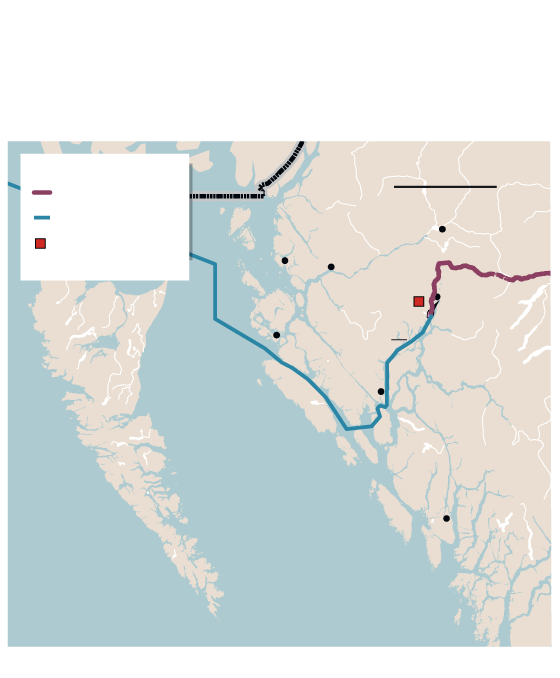
LNG Canada’s B.C. shipping route
At LNG Canada’s marine terminal in Kitimat, B.C., liquefied natural gas gets loaded onto tankers and then piloted nearly 300 kilometres out of Douglas Channel to ocean water by tugboat escorts. It takes roughly 10 days for ships to sail from Kitimat to North Asia.
MAP KEY
75 km
U.S.
Pipeline route
CANADA
Shipping route
Prince
Terrace
LNG Canada
project site
Rupert
Skeena
Kitimat
Kitkatla
Douglas
Channel
Browning
Entrance
Haida
Gwaii
Hartley
Bay
Banks
Island
BRITISH
COLUMBIA
Hecate
Strait
Kleemtu
Pacific
Ocean
Queen
Charlotte
Sound
brent jang and JOHN SOPINSKI/THE GLOBE AND MAIL, SOURCE: lng canada
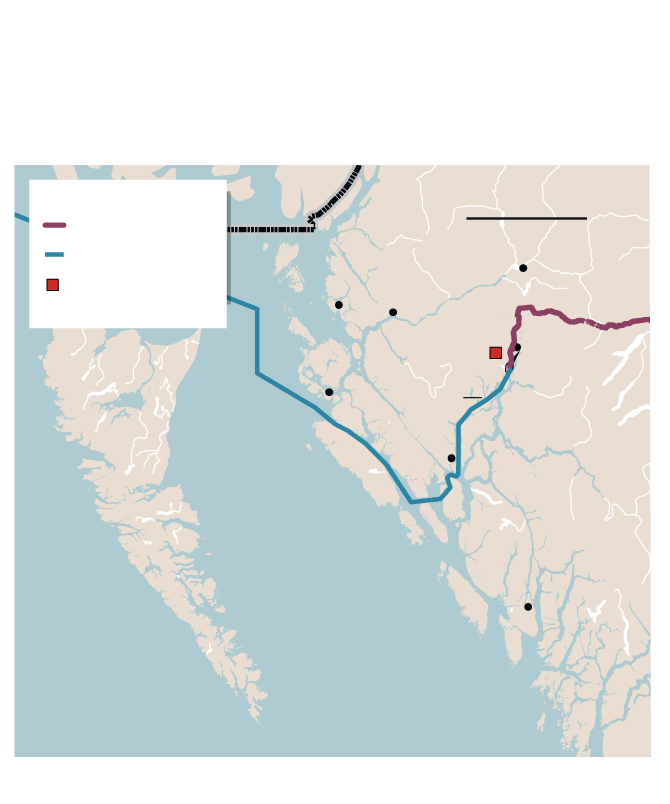
LNG Canada’s B.C. shipping route
At LNG Canada’s marine terminal in Kitimat, B.C., liquefied natural gas gets loaded onto tankers and then piloted nearly 300 kilometres out of Douglas Channel to ocean water by tugboat escorts. It takes roughly 10 days for ships to sail from Kitimat to North Asia.
MAP KEY
75 km
U.S.
Pipeline route
CANADA
Shipping route
Prince
Terrace
LNG Canada
project site
Rupert
Skeena
Kitimat
Kitkatla
Douglas
Channel
Browning
Entrance
Haida
Gwaii
Hartley
Bay
Banks
Island
BRITISH
COLUMBIA
Hecate
Strait
Kleemtu
Pacific
Ocean
Queen
Charlotte
Sound
brent jang and JOHN SOPINSKI/THE GLOBE AND MAIL, SOURCE: lng canada
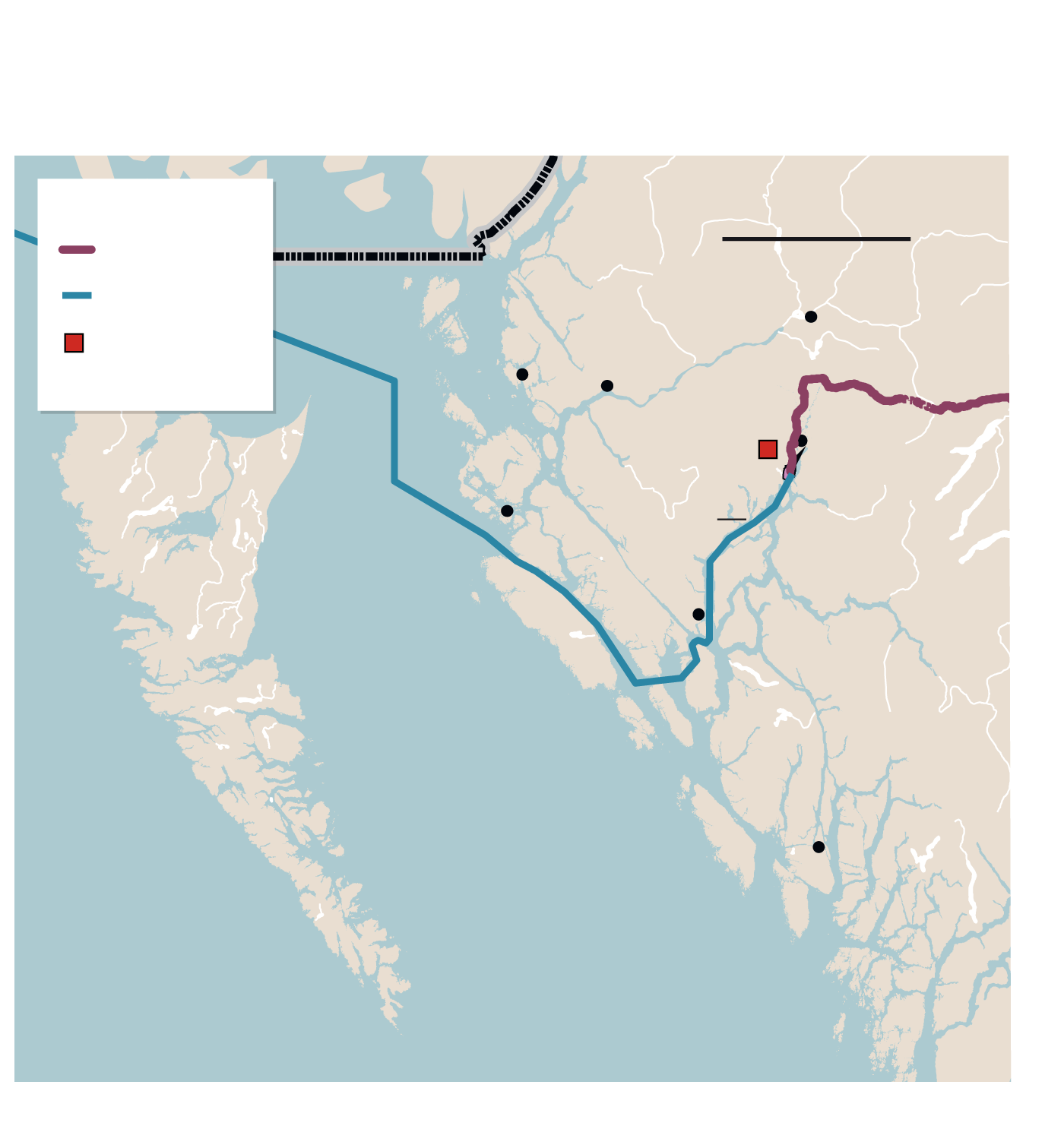
LNG Canada’s B.C. shipping route
At LNG Canada’s marine terminal in Kitimat, B.C., liquefied natural gas gets loaded onto tankers and then piloted nearly 300 kilometres out of Douglas Channel to ocean water by tugboat escorts. It takes roughly 10 days for ships to sail from Kitimat to North Asia.
MAP KEY
75 km
U.S.
Pipeline route
CANADA
Shipping route
Terrace
Prince
LNG Canada
project site
Rupert
Skeena
Kitimat
Kitkatla
Douglas
Channel
Browning
Entrance
Haida
Gwaii
Hartley
Bay
Banks
Island
BRITISH
COLUMBIA
Hecate
Strait
Kleemtu
Pacific
Ocean
Queen
Charlotte
Sound
brent jang and JOHN SOPINSKI/THE GLOBE AND MAIL, SOURCE: lng canada
The GasLog Glasgow measures 291 metres in length and sails under the flag of Bermuda, according to MarineTraffic, a ship-tracking and maritime-analytics provider.
Two marine pilots boarded the vessel near Triple Island, about 40 kilometres west of Prince Rupert, and took shifts to help navigate for 15 hours through coastal waters to Kitimat, Captain Steve Kennedy, president of BC Coast Pilots, said in a statement.
“The arrival of the GasLog Glasgow at the LNG Canada terminal in Kitimat is a historic moment,” he said, adding that more than a decade of preparation paid off, by government, industry and coastal First Nations.
At the peak of construction in 2023, the project required more than 9,000 workers on rotation in Kitimat. Large production modules that originated from China were installed at Canada’s first LNG export terminal.
LNG Canada is mulling a Phase 2 expansion, which would double the plant’s capacity to 28 million tonnes a year.
Another vessel, the Maran Gas Roxana, spent four weeks at the Kitimat site this spring, unloading imported LNG as part of the equipment-testing and cool-down process at the terminal.
While the fossil fuel industry argues that LNG will play an important role in the energy transition, climate activists say the world needs to focus on renewable energy, not on fossil fuels such as LNG.

The sprawling LNG Canada export terminal in Kitimat in April.Aaron Whitfield/The Globe and Mail
“From installing heat pumps to building wind and solar power instead of new LNG projects, we have solutions to protect communities from worsening climate impacts,” Jens Wieting, Sierra Club BC’s senior policy and science adviser, said in a statement before the ship arrived in Kitimat.
A study released in May by Investors for Paris Compliance, a climate advocacy group based in Canada, said the benefits of LNG have been greatly exaggerated. “The mechanics through which increased LNG production can replace coal are unclear,” the study said.
But the International Energy Agency issued a report in June that said LNG is cleaner than coal when accounting for greenhouse gas (GHG) emissions. “While there is a wide variation in the emissions intensities of coal and LNG, when all direct and indirect GHG emissions are factored in, we estimate that LNG results in about 25-per-cent fewer emissions than coal across energy use cases of these fuels,” the IEA said.
London-based Shell is the largest partner in LNG Canada, with a 40-per-cent stake.
The other partners are Malaysia’s state-owned Petronas (25 per cent), PetroChina (15 per cent), Japan’s Mitsubishi Corp. (15 per cent) and South Korea’s Kogas (5 per cent).

It will take roughly 10 days for the LNG tanker GasLog Glasgow to sail from Kitimat to North Asia, compared with 20 days from the U.S. Gulf Coast via the Panama Canal.Robin Rowland/The Globe and Mail
The total cost of building the project has been pegged at $48.3-billion, including the $18-billion Kitimat terminal, the $14.5-billion Coastal GasLink pipeline and other infrastructure, as well as annual budgets for drilling in the North Montney region of northeast B.C.
The contentious Coastal GasLink pipeline, operated by TC Energy Corp., is transporting natural gas 670 kilometres from northeast B.C. to the Kitimat facility.
Other energy projects that remain active in British Columbia include Woodfibre LNG, Cedar LNG, Ksi Lisims LNG and Tilbury LNG.
The domestic Tilbury plant in Delta is a small-scale operation that briefly exported a small amount of LNG in containers.
Industry analysts say Canada remains far behind the United States in developing LNG export terminals.
The first LNG export facility in the lower 48 states began operating in 2016. Venture Global LNG Inc.’s Plaquemines LNG, located south of New Orleans, started production in late 2024 to become the eighth LNG export terminal in operation in the U.S.