
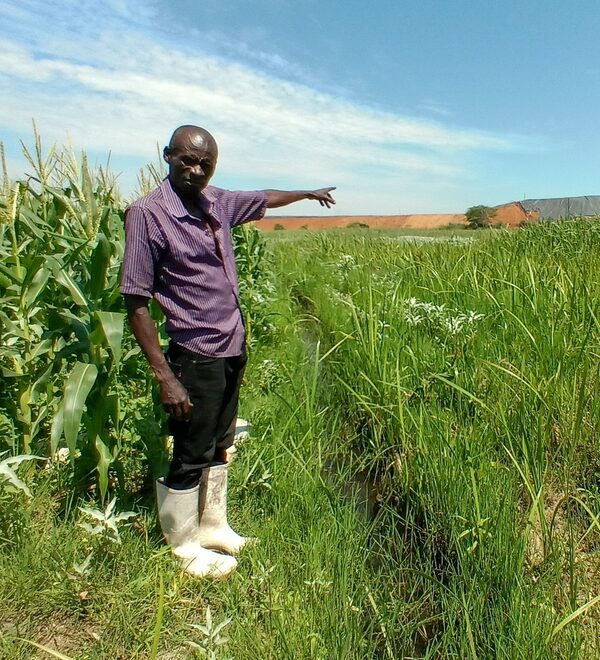
The noise was like a thunderclap. Then came the flood, and the foul smell of mining chemicals as the waters swiftly inundated the small farms around the river.
Less than two kilometres from the Chinese-owned copper mine, Bernard Njovu watched helplessly as the toxic chemicals destroyed his farmland and poisoned his well. Soon he realized what had happened: a dam at the mine had burst, inflicting disaster on him and thousands of other Zambians.
Nearly a year later, Mr. Njovu still struggles to find food and water for his family. Almost every day, he embarks on a five-kilometre journey for water. When he reaches a public tap, he fills a 20-litre container and lugs it home on his bicycle. “People are starving,” he says. “There are no gardens, no vegetables. It’s all gone. Our children are hungry.”
Spills and toxic pollution are the price that Zambia pays for its heavy reliance on mining. With copper generating more than 70 per cent of its export revenue, Zambia is one of the world’s most mining-dependent countries.
As copper prices soar, the world is fighting for access to Zambia’s minerals. Canadian companies such as First Quantum Minerals Ltd. FM-T and Barrick Mining Corp. ABX-T are among the biggest producers, with Chinese, Middle Eastern and American miners flocking to the country. They are powering an economic boom that will deliver a projected 6.4-per-cent growth rate for Zambia this year.

Plates of raw copper from Zambia supply a red-hot global market for the metal. Canadian companies run some of the largest mines, and Chinese and American firms are also major players.Rogan Ward/Reuters
But the copper profits come at a cost. Thousands of people have been forcibly displaced to make room for mines. Farms and livelihoods are jeopardized by mining expansions. The roads are clogged with heavy mining trucks. Chemicals have leaked into the water, soil and air. And there are legacy issues, too: waste dumps from decades-old lead and zinc operations that continue to cause illness today.
President Hakainde Hichilema has repeatedly promised to diversify Zambia’s economy – but he has also pledged to triple its copper production to three million tonnes annually.
“Foreign-owned copper mining is everything in Zambia,” said Duncan Money, a historian who specializes in southern African mining. “The fortunes of the industry and the international price of copper determine the fortunes of the country, and have done for the last century.”
Zambia’s politicians have been talking about diversification for decades, without much success. Just months after its independence from colonial rule in 1964, the country’s government commissioned an economic strategy plan. The key recommendation was to diversify away from copper mining. It never happened.
Zambian officials still hope to leverage the copper boom to stimulate growth in other sectors. They boast of a record maize harvest in the past year. But the reality is that mining remains dominant, and its hazards are mounting.


The polluted streams were connected with the Kafue River, the largest waterway wholly within Zambia. From fishing villages like this one to the capital, Lusaka, many Zambian communities depend on the Kafue's waters.De Agostini/Getty Images
The toxic spill on Feb. 18, 2025, by a Chinese-owned company, Sino-Metals Leach Zambia, is the latest high-profile example of those risks.
The company said the spill released 50,000 tonnes of acidic waste into waterways that connect to the Kafue River, a major source of drinking water in Zambia. But soon there was evidence that the spill was much worse than that.
Drizit Zambia, an environmental management company, conducted a two-month investigation and analyzed more than 3,500 samples downstream from the spill. It concluded that more than 1.5 million tonnes of waste material had spilled.
Six months later, about 900,000 cubic metres of toxic tailings were still present in the environment, the study found.
“These materials were found to contain dangerous levels of cyanide, arsenic, copper, zinc, lead, chromium, cadmium and other pollutants posing significant long-term health risks, including organ damage, birth defects, and cancer,” it said.
Sino-Metals, which had commissioned the study, disputed the findings. Drizit says the company terminated its contract a day before it was due to submit its final report. “Unless the remaining toxic tailings are removed and safely contained in a properly engineered facility, downstream communities will remain at risk for decades,” it said in a public statement.

The day after the February leak, the Sino-Metals Leach Zambia complex had a sign on it for a ‘hundred days of safety without accidents’ campaign.Richard Kille/The Associated Press
Western governments are still cautioning travellers about the spill’s impact today. The Canadian government warns of “high levels of pollutants, including chemicals and heavy metals” that have caused “severe environmental damage and poses serious risks to public health.”
Finland, in its advisory, says the mine waste on riverbanks can turn into dust and spread in the wind, causing further health hazards.
After the spill, Sino-Metals promised to provide compensation, including food and water for the worst-affected farmers.
But the water is distributed in small plastic sachets, and it lasts his family only a few hours, according to Mr. Njovu, who has four children.
Mr. Njovu and his wife received the equivalent of about $4,450 in compensation for the loss of their maize and groundnut crops, but this barely covered a single year of losses on damaged land that will take several years to be productive again, he says.
In a recent visit, The Globe and Mail saw Mr. Njovu pleading for help from a local councillor, Bertha Mulenga. The company halved its water distribution after paying the compensation, he told the councillor. “They reduced the water and we are struggling.”

Months after the Sino-Metals spill, Frederick Chileshe still finds ears of corn that rot before they ripen.Morgan Mbulo/The Globe and Mail
A few kilometres downstream, Frederick Chileshe walks through his corn fields and looks at the rotting cobs. “It never used to be like this,” he says. “They took our livelihood from us.”
He points to the remnants of the spilled chemicals: a yellow-orange sludge mixed with soil in his fields. And he talks about the stomach illnesses that afflict his family when they drink water from local streams or wells. “The Chinese have disconnected us from clean water,” he says.
He and his neighbours remember the day of the spill. The flood water was tainted with a white foam and a foul odour, soon followed by a surge of dead fish. One neighbour, Darlington Kapiya, says his wife and children ate some of the fish and became so sick that they were hospitalized.
He was given about $500 in compensation for the loss of one of his farm fields, but this covered only a tiny fraction of his losses, he says.
Sino-Metals did not respond to e-mailed questions from The Globe. In a statement on Jan. 7, the company said it has taken “proactive measures” to “help safeguard the normal livelihoods of affected residents.” In an earlier statement, it said its compensation payments were overseen by government authorities and were “conducted transparently and in full compliance with Zambian law.”
Toxic spills have become frequent at other Chinese-owned mining sites in Zambia. Just a few kilometres from the Sino-Metals disaster, acid waste has leaked repeatedly from a copper mine owned by another Chinese company, Rongxing Investments.
Zambian Water Development Minister Collins Nzovu told local journalists last year that he was appalled by the “blatant disregard for environmental regulations” at the Rongxing mine. After a spill in February, he ordered the mine temporarily closed. Its director was briefly arrested for allegedly disregarding cleanup orders.
Farmers near the Rongxing mine say their crops have often been damaged. “It is still dangerous today,” says Timothy Chakawa Kapili, a farmer whose fields are just across a small river from the mine.
Its waste has been leaking into the river since 2019, killing fish and frogs, and the spills have grown steadily worse, Mr. Kapili says. He points to the stunted corn plants on a field close to the river. “This is slowly dying,” he says.
The toxic spills are “symptomatic of a broader pattern of gross corporate negligence and inadequacies in environmental compliance, oversight and enforcement,” the Zambia Environmental Justice Coalition said in a statement last year.
The Globe could not reach Rongxing for comment, but company spokesperson Destiny Xian told Zambian media last year that it would address all concerns raised by the government.

While the waste spills continue, many Zambians suffer the lingering damage caused by older disasters. Just south of the copper-mining region, environmentalists describe the town of Kabwe as “the world’s most polluted town.” Lead poisoning, linked to a now-defunct mine, has affected the health of thousands of its people, according to studies based on blood tests.
For nine decades, Kabwe was dominated by its massive lead and zinc mine, which finally closed in 1994. Anglo American NGLOY, the South African mining giant, was an investor in the mine in its most productive years, from 1925 until 1974. The company is today based in London, but plans to shift its headquarters to Canada under its proposed merger with Teck Resources TECK-B-T.
More than 30 years after the mine’s shutdown, toxic dust is still blowing across the town from its uncovered waste dumps, nicknamed Black Mountain. Much of the town’s soil is contaminated. As many as 200,000 people are exposed to the lead dust. A study in 2018 found that 95 per cent of children in the worst-affected areas had elevated levels of lead in their blood.
“When the wind blows in this direction, we breathe the dust,” says 32-year-old Violet Chibuye, a mother of four children.
“I’ve noticed the effects of the lead in my children,” she tells The Globe. “They have coughs, flu, and they complain of pain in their legs. They ask me to stretch their legs to ease the pain.”

Violet Chibuye, daughter Mary and son Wanjivwa live in Kabwe, whose perennial problems with pollution stem from a now-closed lead and zinc mine.Morgan Mbulo/The Globe and Mail
Lead poisoning can cause a range of irreversible health effects, including stunted growth, memory loss and learning difficulties. Ms. Chibuye says she has become unable to concentrate, forgetting where she puts things and reading the same sentences several times to understand them.
Her four-year-old daughter, Mary, complains of aches when she stands up. “Mommy, my bones are hurting,” she tells her mother.
Her eight-year-old son, Wanjivwa, was once a top student. But his school grades have declined drastically. She notices that his eyes are red and itchy, and he has become hyperactive.
When she took the family to a local clinic for testing, lead was found in their blood. The clinic gave her painkillers, told her to add milk to their diet, and advised her to keep her children indoors. “But we can’t afford it,” she says. “And kids always want to go outside to play.”

Gertrude Siamakwebo, and her 17-year-old daughter, Temwani Sakala, have seen lead poisoning take a toll on their family.Morgan Mbulo/The Globe and Mail
Another resident, Gertrude Siamakwebo, remembers how her four-year-old daughter was diagnosed with malnutrition, even though she was getting a normal diet. “She looked so pale and thin, and I felt so sorry for her,” Ms. Siamakwebo says.
Blood tests found that the family had lead poisoning. The clinic advised her to plant grass in her yard to reduce the dust, but her water supply was too erratic to allow it. Instead she bought cement and paved over her yard to suppress the toxic dust.
Around the town, hundreds of homes had their front yards or laneways paved with cement tiles under a government program to reduce dust. Then the money ran out, and most homes are still surrounded by dust and dirt.
Matthias Chatabankana, who retired in Kabwe after working for the mine for 30 years, says he has been pleading for gravel to cover the dust in his front yard for years. “We keep crying for gravel, but they’ve forgotten about us,” he says.

Pensioner Matthias Chatabankana, 83, says the miners in Kabwe were aware of the dangers of lead poisoning.Morgan Mbulo/The Globe and Mail
In November, many of Kabwe’s residents – including Ms. Chibuye and Ms. Siamakwebo – gathered at local churches to watch a live screening of a court case in South Africa, where lawyers are appealing a lower-court ruling that dismissed their attempt to sue Anglo American South Africa on behalf of women and children affected by the lead pollution.
The residents hope the class-action suit will force the company to help with medical costs and environmental cleanup. “They must be held accountable,” Ms. Siamakwebo says. “It’s painful to see our community going through this suffering.”
Anglo American, responding to the lawsuit, says it held only a 10-per-cent stake in the company that ran the Kabwe mine before it was nationalized in 1974. The lawsuit, however, alleges that the company was actively involved in managing the lead emissions from the mine.
On its website, Anglo cites the South African court ruling in 2023, which concluded that the lawsuit would “set a grave precedent” by holding a business liable “half a century after its activities have ceased, to generations not yet born, as a result of being tested against future knowledge and standards unknown at the time.”
The company adds: “We have every sympathy for the people of Kabwe, the pollution the town experiences and any harm that may have come from it – contamination is not acceptable anywhere.” But it says the company will continue to defend itself because it does not believe it is responsible for the situation.
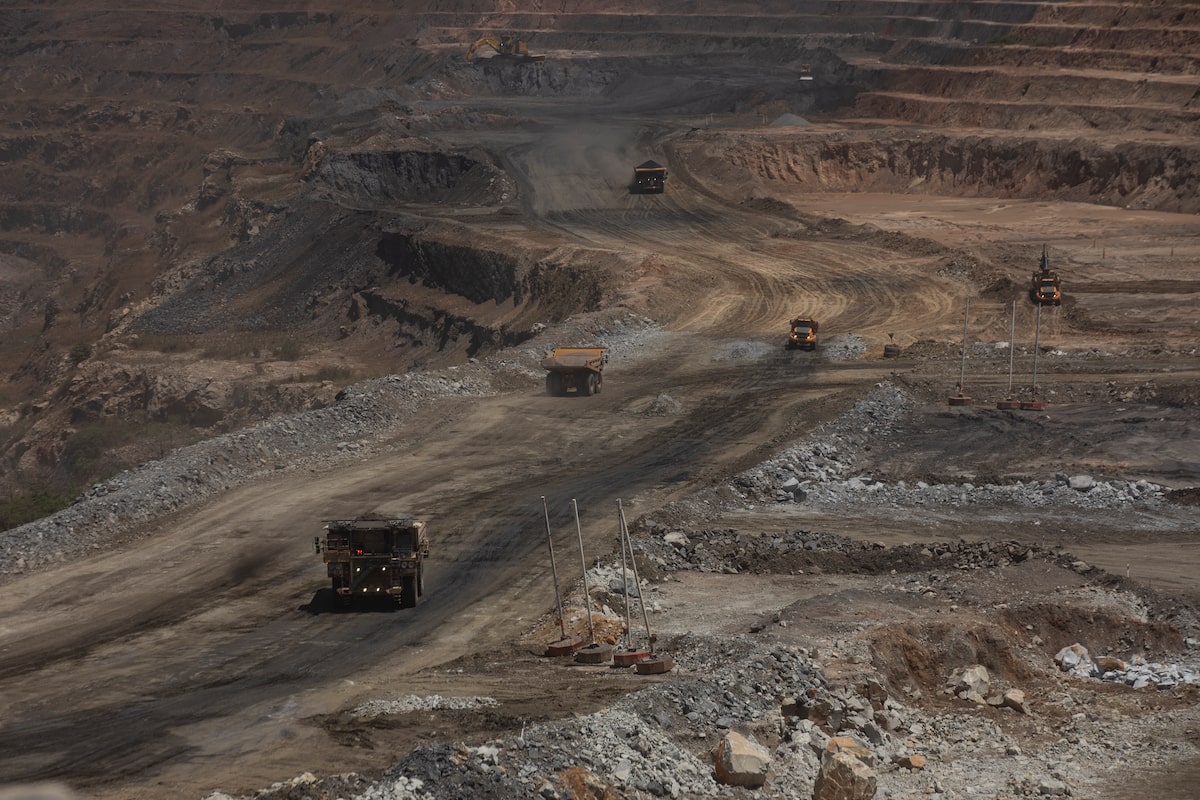

Much further to the north, thousands of Zambians who live near a Canadian-owned copper mine have a different issue: the loss of their land and the burden of relocation as the mine expands to exploit the copper boom.
Malizoze Painet, 64, lived for 30 years on a farm outside the town of Solwezi. She and her family grew vegetables, mangos, bananas and avocados, and they gathered mushrooms and wild figs from nearby fields. Then, in 2024, she was ordered to make room for an expansion of the Kansanshi mine, owned by Toronto-based First Quantum Minerals.
“They told me that I had to move because the mine is nearby and the blasting was coming closer,” she says. “I didn’t have any option.”
She says the company gave her about $1,000 in compensation and bought her a house in the town. But her new home is on a rutted road, filled with jagged rocks and almost impassable for cars, and she has to buy her vegetables from a store now.
She misses her farm life. “It’s very hard here,” she says. “It’s a very big change. Here we have to buy everything.”
She says the company promised to pay for farmland to replace what she lost. But the only land she could find is difficult to reach, about an hour away by local transport.
Ms. Painet shows The Globe the bulldozed site of her former farm – now behind the mine’s razor-wire perimeter fence. “I planted cassava there, and maize here,” she recalls, pointing across the fence.
Two of the mine’s security guards soon spot her and rush over. They tell The Globe that photographs are not permitted – even from outside the fence.

Malizoze Painet, touring the fence around her old farm with grandson Thomas Kasongo, says she misses her life there.
As the mine expands, it continues to displace more people. Its next phase will cover 6,000 hectares, and the company has told residents that it will not compensate them for any new fields, trees, perennial crops or structures that they add after Aug. 1, 2025.
As many as 3,800 farmers could be forced to leave their homes. The order has provoked anxiety and confusion.
“Everyone will have to move,” says Born Fwataki, a community leader. “We’re vulnerable because we don’t have anyone to stand for us. When the mine comes, they don’t give us all the information.”
Those who were displaced earlier did not receive fair compensation, Mr. Fwataki says. Some were never able to regain land for farming, while others got land that was too remote from local markets, he says. “They are still suffering today.”
Leigh Day, a British law firm, has launched legal action against FQM on behalf of farmers around the mine who have been forcibly resettled since 2005. They have been left “in a poverty trap,” with limited access to land and no crops or diminished harvests, the law firm says.
Axel Koettgen, assistant general manager of FQM’s Kansanshi mine, says the company has a dedicated resettlement team, working to ensure that it complies with global standards for resettlement. Under its policies, any resettled person should end up with a sustainable livelihood and a similar income, he told The Globe.
“As the mine expands, there’s always a need for resettlement,” he said. “The town has come closer to us. You need space – you don’t want people right next to your operations.”
FQM has tried to mitigate its environmental impact by creating wildlife reserves, rehabilitating and restoring its excavated land, and supporting farmers with marketing programs and local procurement of food supplies.
Zambian conservationist Dorian Tilbury praises the company for its financial support for a conservation project near one of its mines, which has helped to bring elephants back to the region for the first time in decades.
But he worries about the broader impact of mining: a population boom near mine sites, a surge of slash-and-burn agriculture, and an influx of new miners, some with prospecting and mining licences in wilderness areas.
“It’s starting to get crowded,” he says. “There’s huge pressure on this ecosystem. And in this country, mining trumps everything.”

Alexander Arosemena/The Globe and Mail
Mining in depth: More from The Globe and Mail
The Decibel podcast
Why have gold and silver prices been so high lately? Blame Donald Trump, central banks and AI, among other things. Reporter Tim Kiladze spoke with The Decibel last fall about the mix of factors at play. Subscribe for more episodes.
The world in minerals
The world is scrambling for Zambia’s critical minerals, with Canadian miners at the forefront
When Tigray became a ‘Wild West’ of illegal gold mining, Canadian firms staked a claim