On the concrete pads of a feedlot just south of Calgary, 30,007 cattle gorge on a million pounds of feed a day. But most of them are not from Alberta. More than two-thirds of them were calved in the United States, far from the snowy Kananaskis mountain ridgeline that looms over the pens where they now leap into the air as a bedding truck spreads a fresh layer of straw. Some come from as far as New Mexico.
It may not be their last trip across the border. When those cattle reach their target weights, there’s a good chance they won’t be sent for slaughter to the packing plant 13 kilometres away. Instead, they are likely to be trucked more than 12 hours to a plant in Utah.
On the opposite side of the continent, lobster traces a similar path. Nearly 40 per cent of the lobster caught in Maine goes to Atlantic Canada for processing – before returning to the U.S. to be eaten as lobster rolls and other delicacies.
Diners can be forgiven for failing to consider the marvels of transportation and geopolitics that deliver such succulence to their plates.
But in North America, surf and turf – that most fundamental of steakhouse staples – is today as much a product of free trade as an F-150 pickup.


Lobster fishermen bring a catch to shore in Rockport, Mass. on Feb. 12. Nearly 40 per cent of the lobster caught in Maine goes to Atlantic Canada for processing – before returning to the U.S.Nathan VanderKlippe/The Globe and Mail
The complex journeys these foods trace back and forth across the U.S.-Canada border are emblematic of the deep mutual dependency both countries have built in providing the most basic elements of sustenance. On the Atlantic coast, a cross-border bait trade in herring, menhaden and monkfish is used to set traps before so much as a pound of lobster is brought to shore. In the West, it’s not uncommon for beef semen to be sent from the U.S. to Canada, where it fertilizes an embryo that is then sent back across the border for implantation into a cow.
Even for the humble hamburger, free trade can begin before conception.
“Why would any government want to put tariffs on a food source?” asks Adam Schierman, an Alberta Angus breeder.
The answer from the White House lies in the US$63.3-billion trade deficit with Canada that President Donald Trump has decried as a measure of his country’s biggest trading partner taking flagrant advantage. Much of that deficit comes from Canadian energy exports – and the U.S. enjoys a considerable trade surplus in services.
Nonetheless, Mr. Trump has threatened a 25-per-cent tariff on all Canadian goods which, although it is currently on hold until early March, could be accompanied by further measures as the U.S., under his leadership, seeks to renegotiate North American free trade.

This much is true: Canada mines, drills, fishes and slaughters far more than it can consume. It means Canadian producers rely heavily on trade and, as a result, stand more vulnerable to the punitive effects of tariffs than their U.S. counterparts. Canada raises roughly twice as much beef as it eats. Canadians stomach only a small fraction of the Atlantic Provinces’ lobster harvest – less than 10 per cent of what is landed and processed in this country.
If tariffs come, “the burden will be on the Canadian fishermen and processors who rely on exports to the USA,” says Jordan Mazzetta, the owner of Minnesota-based Eddie M’s Seafood, who comes from a family with major lobster distribution and processing facilities in Canada and the U.S.
“Canada has a lot to lose.”
So, too, with beef. Canada raises far more cattle than it consumes. Tariffs are likely to crash prices north of the border, while pouring new profits into the pockets of American ranchers.
But that notion masks the tightly interwoven webs of trade that grow, harvest and deliver fundamental elements of nutrition to North American tables. To unravel it is to make a logistical and economic mess. It also risks new vulnerability. Erect a hefty new obstacle to the cross-border movement of cattle, and suddenly ranchers have less ability to move herds around droughts. Create a financial disincentive to trading genetics, meanwhile, and the extraordinary progress in bettering beef – which yield roughly 10 per cent more meat per animal than they did just two decades ago – is likely to stumble.
A single embryo can sell for $2,000. A prized bull can fetch $200,000. A 25-per-cent tariff would be so costly as to almost certainly constrict such sales and, with them, whatever further improvements lie ahead.
“In a year, you’re not going to see anything. But you look at a 20-year span, and we are going to have drastic effects on beef production,” says Mr. Schierman, who is president of Davis-Rairdan International, an Alberta based exporter of beef embryos.
“You’re just creating inefficiencies. And you’re making food more costly.”

Lobster has, from its earliest days as an industrial foodstuff, made for a tangled cross-border history. In the 1800s, American ownership interests in New Brunswick were accused of labelling poorer products as Canadian and better ones as American — despite all of them coming from the same Canadian cannery. One American brand exported Canadian lobster to the U.S. as a product of Maine.
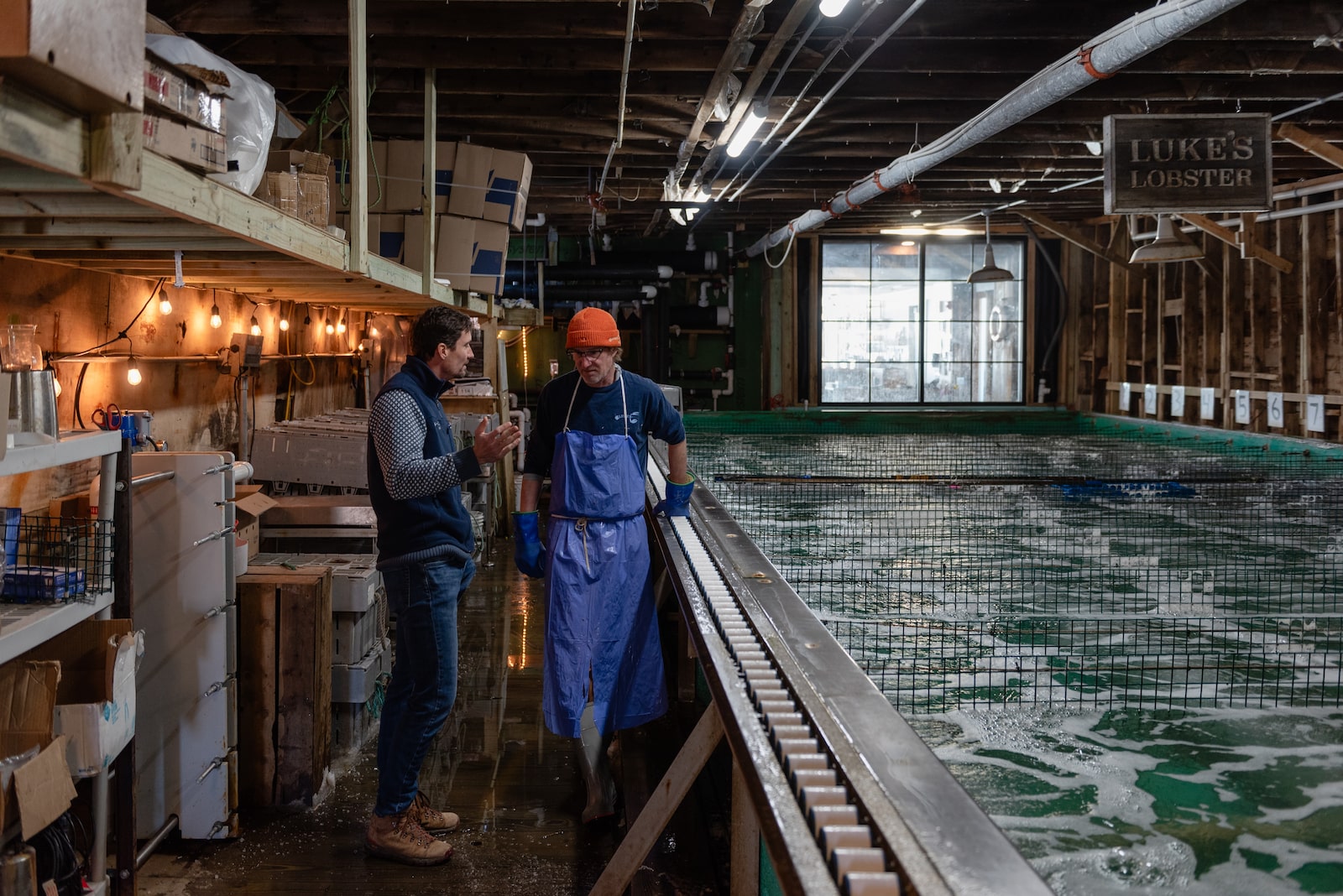
More than a century later, there’s a good chance it’s not local product that’s being served at the flagship location of Luke’s Lobster shack, perched on a pier in Portland, Me., where lobstermen dock their boats. Luke’s is a pioneering upstart seafood chain that has grown to 34 locations across the U.S. and Asia, selling a lobster roll with clam chowder as “The Mainer” and sandwiches it describes as prepared “in a New England style.”
But many are stuffed with meat processed in Canada. Lobster is Canada’s top seafood export, and much of this country’s annual harvest – $1.58-billion – is sold to the U.S., delivered by corporations that span the border and truckers that regularly cross it. In Maine last year, four in 10 pounds of lobster was sent to Canada for processing, much of it then trucked back south in the form of claw and knuckle meat, frozen tails and other products.
Trade follows a pattern set by complementary fishing seasons that swing from north to south, then back again. Much of Atlantic Canada’s lobster harvest takes place in winter, a season when Maine’s lobster fleet is mostly inactive.

Luke Holden, CEO and founder of Luke’s Lobster, is concerned that tariffs could have a detrimental impact on his business as a significant portion of his lobster supply comes from Nova Scotia and New Brunswick.Lucy Lu/The Globe and Mail
To keep his lobster plant going in Saco, Me., for example, Luke Holden, founder and chief executive officer of the seafood chain, buys Canadian lobster, particularly in May and June, before the busy summer catch season in Maine.
“The two industries really work as one and work really co-operatively,” says Mr. Holden. (For keen-eyed diners, a sign in Luke’s stores acknowledges the lobster roll comes from “Maine or Canada.”)
“Everyone from fisherman to dealer to processor to marketer, are co-dependent on that free trade.”
It is a dance of catching and processing from Cape Hatteras to the Strait of Belle Isle that tariffs could badly trip. New trade measures could not only could force a vital Canadian food industry to contract, but punish the very fishermen who voted for Mr. Trump.
So, it’s perhaps little surprise that opposition has come from both countries. Maine Sen. Susan Collins, a Republican, has sought to make the Trump administration aware that, as she said recently, “the Maine economy is integrated with Canada, our most important trading partner.”
Nat Richard, executive director of the Lobster Processors Association, recently met with industry officials in Maine to lobby these very points.
“It’s going to create pain on both sides of the border – we’re each other’s largest market,” Mr. Richard says.
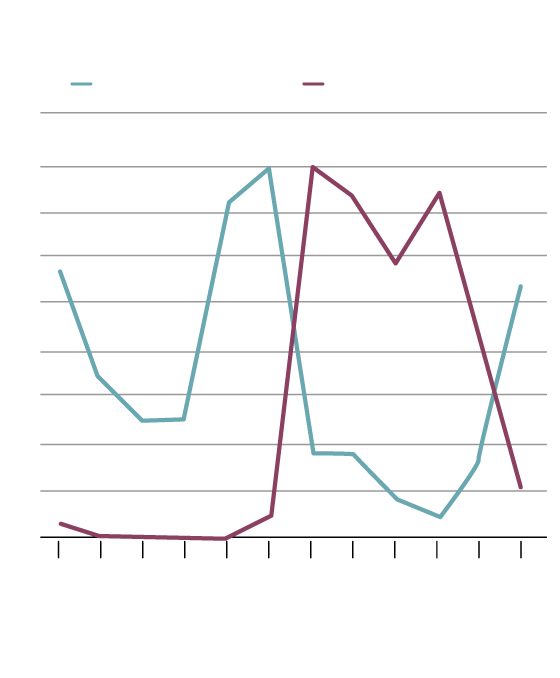
Lobster relations between Canada and the U.S.
Imports vs. exports, in millions of pounds, 2023
Canadian exports to U.S.
U.S. exports to Canada
9
8
7
6
5
4
3
2
1
0
J
F
M
A
M
J
J
A
S
O
N
D
2023
the globe and mail, Source: national fisheries institute
Lobster relations between Canada and the U.S.
Imports vs. exports, in millions of pounds, 2023
Canadian exports to U.S.
U.S. exports to Canada
9
8
7
6
5
4
3
2
1
0
J
F
M
A
M
J
J
A
S
O
N
D
2023
the globe and mail, Source: national fisheries institute
Lobster relations between Canada and the U.S.
Imports vs. exports, in millions of pounds, 2023
Canadian exports to U.S.
U.S. exports to Canada
9
8
7
6
5
4
3
2
1
0
J
F
M
A
M
J
J
A
S
O
N
D
2023
the globe and mail, Source: national fisheries institute
Tariffs would make it difficult for Canadian processors to compete for the Maine supply of lobster, as both countries would essentially chase the same business, he says. At the same time, tariffs could create a major oversupply in the U.S., where processing capacity is limited, hitting thousands of Maine lobstermen with lower prices.
“The people screwed here would be the lobstermen on both sides of the border,” John Sackton, the founder of Portland-based Seafoodnews, wrote in a recent opinion piece.
“Industries don’t survive disruptions like this and live to thrive another day,” he wrote.
He estimated a plunge in wharf prices would strip US$225-million in value from Canadian lobster exported to the U.S. and US$53-million from Maine lobster exported to Canada.
If the potential losses are higher to Canada, that is in part because Canada has played an outsized role in the business of lobster. In contrast with Atlantic fisheries, the shallower waters of the Gulf of St. Lawrence produce lobsters that sexually mature at a younger age, allowing them to be harvested younger. Too small to survive lengthy transport as live animals, their weakness inspired ingenuity among processors who, over the past two centuries, figured out how to freeze them or turn them into meat – processed, canned and, often, exported.
“That market developed there because that product was there. That’s where the processing started. It didn’t start in America,” says Spiros Tourkakis, a veteran Massachusetts-based lobster trader and entrepreneur, and executive vice-president of East Coast Seafood Inc., which for a time was the biggest lobster company on Earth. He is now looking for new ways to add value to the harvest, in chowder bites, croquettes – and even wedding cake.
It all depends on commerce that history created, but free trade has helped to maintain: a steady year-round supply from Shediac, N.B., to Sacramento.
“We consider ourselves one country when it comes to lobster,” says Mr. Tourkakis. That’s true for him personally, too. “Nova Scotia is as much a home to me as Boston,” he says.
For fishermen on the water, meanwhile, tariffs are a tempestuous prospect that few welcome. Kristan Porter keeps traps off the coast of Cutler, Me., a small community at the northeastern fringe of the U.S. where 60 per cent of the population relies on lobster.
“Everybody’s a little bit nervous if things change,” he says. “Nobody wants to upset the apple cart.”


Deep in the southwest of Nebraska, atop the sandy earth that blankets the Ogallala Aquifer, Trevor Thompson pilots his pickup through a tour that takes nearly three hours. It’s long enough to take in the immensity of an operation that, when it is fully built, may be the biggest cattle-feeding operation on the continent. Its construction will move enough dirt to fill Toronto’s Rogers Centre more than twice, pour enough concrete to cover two-thirds of Vancouver’s Stanley Park and fatten a herd as populous as Guelph, Ont.
Blackshirt Feeders is a study not merely in superlatives, but in a North American cattle business that, for now at least, knows no borders.
Canadians make up five of the eight ownership entities that have invested in the US$200-million project. The vast networks of pipe that form dividers between cattle pens come from Canada. Hundreds of water troughs bear a maple leaf flag sticker, affixed by the Hutterite colony where they are built southeast of Calgary. The micro machine that adds nutrients to feed passing through the mill comes from Canada, as does the automation system. When workers process cattle – a spectacle of speed that takes 34 seconds per head to weigh, vaccinate and install a growth implant – they enter the information into a computer system digitally linked with managers in Aldersyde, Alta.
The Canadian imprint extends to the things that aren’t visible, too.
“You can’t really take a picture of it, but the thoughts, the ideas, a lot of that comes from Canada,” says Mr. Thompson, who manages the feedlot.
“They’ve got a fresher look on things.”
It was Canadian know-how that designed this feedlot with concrete floors, which save cattle from mud-related injuries. The concrete also yields a dirt-free manure that can be loaded into a biodigester, where it can generate enough methane to make the operation a seller of natural gas.

Two-thirds of the cattle at Rimrock Feeders in High River, Alta., come from the United States.Nathan VanderKlippe/The Globe and Mail
Many elements of the Nebraska design came from Rimrock Feeders, outside Okotoks, Alta., where the 30,007 cattle feed with a view to the Rockies.
Here, it’s the beef that are grown with little regard for borders. In one pen are Holsteins, from New Mexico. In another, Holsteins crossed with Angus, from Idaho. In another, calves from Idaho, Washington and Oregon.
In the still cold of a minus 30-degree morning in February, their placid demeanour reveals none of the anxiety in the humans who control their fate – and whose fate is, in turn, determined by those humans’ ability to buy and sell livestock in the most profitable places, whether that’s next door or 2,000 kilometres away, deep inside the U.S.
Canada imported, on average 313,000 head of beef cattle a year over the past decade, many once again exported when they reach slaughter weight. In total, live beef exports averaged 674,450 head a year. In 2024, 44 per cent of total Canadian beef output went to the U.S.
Free trade has allowed “the natural economy” to dictate what makes sense, says Calvin Booker, a bovine veterinarian who is a respected feedlot consultant in Alberta.
Erase the border, and what matters is distance. San Francisco is a shorter drive from Calgary than it is from most cattle-growing operations in Texas or Kansas. Dinner tables in southern Ontario sit considerably closer to feedlots in the upper U.S. Midwest than to those in Alberta. The export paperwork to cross the border amounts to “a couple dollars a head,” Mr. Booker says. “So it’s irrelevant.”
Impose tariffs, however, and all of those considerations are knocked aside. Suddenly, the map is redrawn.
“The economy will shift instantly,” says Kendra Donnelly, the chief financial officer of Rimrock Cattle Co.
Beef producers know what this feels like. When bovine spongiform encephalopathy – mad cow disease – was found in Alberta in 2003, the U.S. and dozens of other countries immediately shut their borders, which remained closed for years. The resulting Canadian losses quickly reached into the billions of dollars.
“I was 16 when BSE hit. I didn’t feel the pain like I’m going to feel it this time,” Ms. Donnelly says. “If you’re 60-plus, you just felt that pain. And you saw your buddies go broke.” She has been speaking with some of those older ranchers, seeking guidance on navigating what lies ahead.
But there are no clear answers, in part because some of the same vulnerabilities remain from two decades ago. Canadian slaughterhouses do not have the capacity to process all of the animals raised domestically. And cattle futures still trade in Chicago, not in Toronto, removing one financial tool Canadian ranchers can use to protect themselves if tariffs cause the value of their animals to plummet.
“We have no way to hedge our cattle in Canada,” Ms. Donnelly says. “We’re all reliant on the U.S.”

Raw grain is processed into cattle feed at Blackshirt Feeders feed lot.

Tavin Barry, cattle manager of Blackshirt Feeders feed lot checks on cattle at the Haigler, Nebraska facility. Many elements of the feed lot's design came from Rimrock Feeders, in Alberta.Chet Strange/The Globe and Mail
A select few have sought safe harbour by diverting their investments south. Kee Jim is one of Canada’s top cattle ranchers. A decade ago, roughly 95 per cent of his cattle were in Canada. Today, “we’re 80-per-cent invested in the U.S.,” he says.
He chafes at obstacles to investment at home – securing regulatory permission in the U.S. is often far easier than in Alberta. But he is also unsparing in his assessment of what tariffs will mean for those whose interests lie primarily in Canada.
“It’s a catastrophic impact,” he says.
“Whenever you’re involved in agriculture, you have to worry about what the threats are. And for Canadian agriculture, trade is critical for virtually everything.”
He and Ms. Donnelly are among the investors in Blackshirt Feeders, the Nebraska feedlot, which is in a part of the state where the landscape is dotted with the pivot circles that irrigate a vibrant agricultural industry.
“Tariffs don’t do farmers any good,” says Aaron Keiser, who chairs the board of commissioners in Dundy County. Local crop growers worry that Canadian retaliatory measures would hurt domestic pricing for their corn, soybeans and Milo, a grain sorghum. Beef producers, however, may see a benefit if border levies propel prices upward.
Tariffs, Mr. Keiser said, are a subject of discussion, but not panic. “There’s so many things we can’t control already – you just add that to the list. It’s kind of business as usual,” he said.
Mr. Trump won 89 per cent of the county’s vote last November. Mr. Keiser sees no sign that the possibility of new trade measures has shaken confidence in the President.
“In rural America,” Mr. Keiser says. “He’s very popular.”
Nearly 3,000 kilometres away, the man who returned to the White House in January enjoyed a similar level of popularity in Cutler, Me., where Mr. Trump took more than 70 per cent of last year’s vote.
Lobstermen here have sought some of the things Mr. Trump has demanded, such as a more robust U.S. industry. “We should do more processing over here. Absolutely,” says John Drouin, a local leader who has harvested lobster for 46 years.
But as best as Mr. Douin can tell, the economics don’t work. “It’s just cost prohibitive,” he said. “Nobody wants to spend $50-million to build a plant. Because right now, they’ve been making money by letting the Canadians do it.”
Mr. Drouin, a registered independent, does not disclose who he votes for, even to his wife.
He cannot fathom, however, why any U.S. president would impose tariffs that threaten work that has sustained him for 46 years on the water. Wielding a punitive border tax on lobster as a tool of foreign policy amounts to “using my livelihood to get what he wants,” Mr. Drouin said.

Lobster boats sit at their moorings in Jonesport, Me, in April, 2023. The fishing industry is a major employer in the rural area.Robert F. Bukaty/The Associated Press
His worry extends beyond seafood. His Maine hometown lies a half-hour drive from New Brunswick, in a state that relies on Canadian electricity, gasoline and heating oil. “Goodness gracious – it’s not just lobsters,” Mr. Drouin says. Enact the threatened tariffs, and “almost everything in our daily lives in this state would go up 25 per cent.”
“Just let the trade go,” he said.
The business of food – be it the provision of surf or turf – offers few financial comforts. To raise cattle is to hope that prices for feed and beef will interact to deliver profit rather than loss. To harvest lobster is to fish in uncertain waters. No one knows how many pounds a season will bring, nor what prices it will fetch.
What they have known, for well over a century, is that between Canada and the U.S., “it’s all one industry and we need each other,” said Robert Bayer, a researcher who is former director of the Lobster Institute at the University of Maine.
Now that future, too, is uncertain.
One of Mr. Bayer’s current projects is a startup looking for ways to create anti-cancer and anti-viral medications from lobster blood – a venture that will struggle without sufficient access to live animals.
“Oftentimes, it’s only Canadian lobsters that we’re extracting from,” he said.
As he considers the possible demise of free trade, he struggles to understand Mr. Trump’s bid for tariffs, or the people who voted him back into the White House.
“I don’t think that they had any idea what was going to happen to them,” Mr. Bayer said.
“That goes for the country as a whole, in my opinion. I don’t think people had any idea what was going to happen to them.”