Christian Weedbrook wanted to be a filmmaker, but he failed out of film school – twice. He was 23 and working part-time in a video store and stocking groceries in his native Australia when he decided to give postsecondary education another shot.
He’d done well in math in high school, so he thought he’d try that. Officials at nearby University of Queensland in Brisbane weren’t sure what to make of him; a dean even asked to check his arms for track marks, suspecting he abused drugs.
“I’d exhausted every other option,” Mr. Weedbrook, now 49, said in an interview. “I thought ‘I’ll just go back to something I was okay in – math. I don’t know where this will head, I’ll just see.’”
From such inauspicious origins, Mr. Weedbrook’s life has taken a quantum leap. The company he founded a decade ago in his adopted home of Toronto, Xanadu Quantum Technologies Inc., is set to debut next week as a publicly traded company. That comes after shareholders of Nasdaq-listed special purpose acquisition company (SPAC) Crane Harbor Acquisition Corp. CHAC-Q voted Thursday to approve a merger with Xanadu.
With its subsequent cross-listing on the Toronto Stock Exchange, Xanadu will become the first Canada-based technology company since 2021 to go public there. It will come to market with more than US$300-million in funds raised from the deal and a pre-merger valuation of US$3.1-billion.
Like all investors in the emerging quantum computing space, Xanadu’s backers are betting on a technology that hasn’t yet worked at a commercially viable scale, and they’re hoping it can withstand precarious market conditions that have hit other quantum stocks.
Xanadu is one of several companies in a global race that features startups and giants, including Google GOOG-Q and International Business Machines Corp. IBM-N They’re all working to harness the logic-defying rules of quantum physics in machines they hope will vastly outperform the world’s most powerful computers in several categories. That, in theory, should allow them to power through sophisticated tasks such as complex economic forecasting, discovering advanced materials and pharmaceuticals – and, if used by bad actors, pick the cryptographic locks that protect global online systems.
Mr. Weedbrook and other proponents tout quantum as the next big thing after artificial intelligence, though he adds it’s unclear how the two technologies will go together.
What’s equally unclear is how Xanadu will fare in its public market debut. The timing couldn’t be worse.
Mr. Weedbrook is taking a gamble by going public via a SPAC combination. Other quantum companies that have done so have had wildly varied results.
SPACs are shell companies that raise money on the promise they will merge with an operating company within two years. If not, investors get their money back. SPAC investors can also get a refund if they don’t like the proposed deal or if market conditions are turbid. That redemption feature is a wild card in any SPAC deal.
For example, when D-Wave Quantum Inc. did its merger in 2022 as interest rates skyrocketed and tech valuations fell, 97 per cent of investors in its SPAC partner redeemed. The remaining US$9-million didn’t cover deal costs, leaving D-Wave tight for cash initially. Other quantum-SPAC deals had few redemptions.
Xanadu is also coming to market in unsettling times, with oil prices up and stocks down due to the Middle East conflict. Some companies that were thinking of going public have backed off; Metatek-Group Ltd., based in Britain, cut the size and price of its Toronto Stock Exchange offering this week.
As Crane Harbor units traded below their US$10 issue price this week, 88.1 per cent of the SPAC’s holders opted to redeem their share of the US$227-million it had raised. The remaining proceeds – US$27-million – will cover barely half of the US$45-million Xanadu deal costs.
However, it still leaves Xanadu ahead of where it was a year ago, when Mr. Weedbrook set out to raise US$200-million from private investors, after previously raising US$250-million in venture capital.
He decided it would be easier to raise through a public listing instead, and he was partly right: In concert with the SPAC merger, Xanadu secured another US$275-million in a financing that took just four weeks to close. Ninety per cent came from new investors, including chip giant Advanced Micro Devices Inc. AMD-Q, BMO Global Asset Management and CIBC Asset Management. None of that is refundable, meaning Xanadu will debut as a public company with more than US$257-million in net cash.
Asked earlier this month if he worried about redemptions, Mr. Weedbrook replied: “We’ll control what we can control. Having said that, we’re really lucky to have raised” the US$275-million side financing.

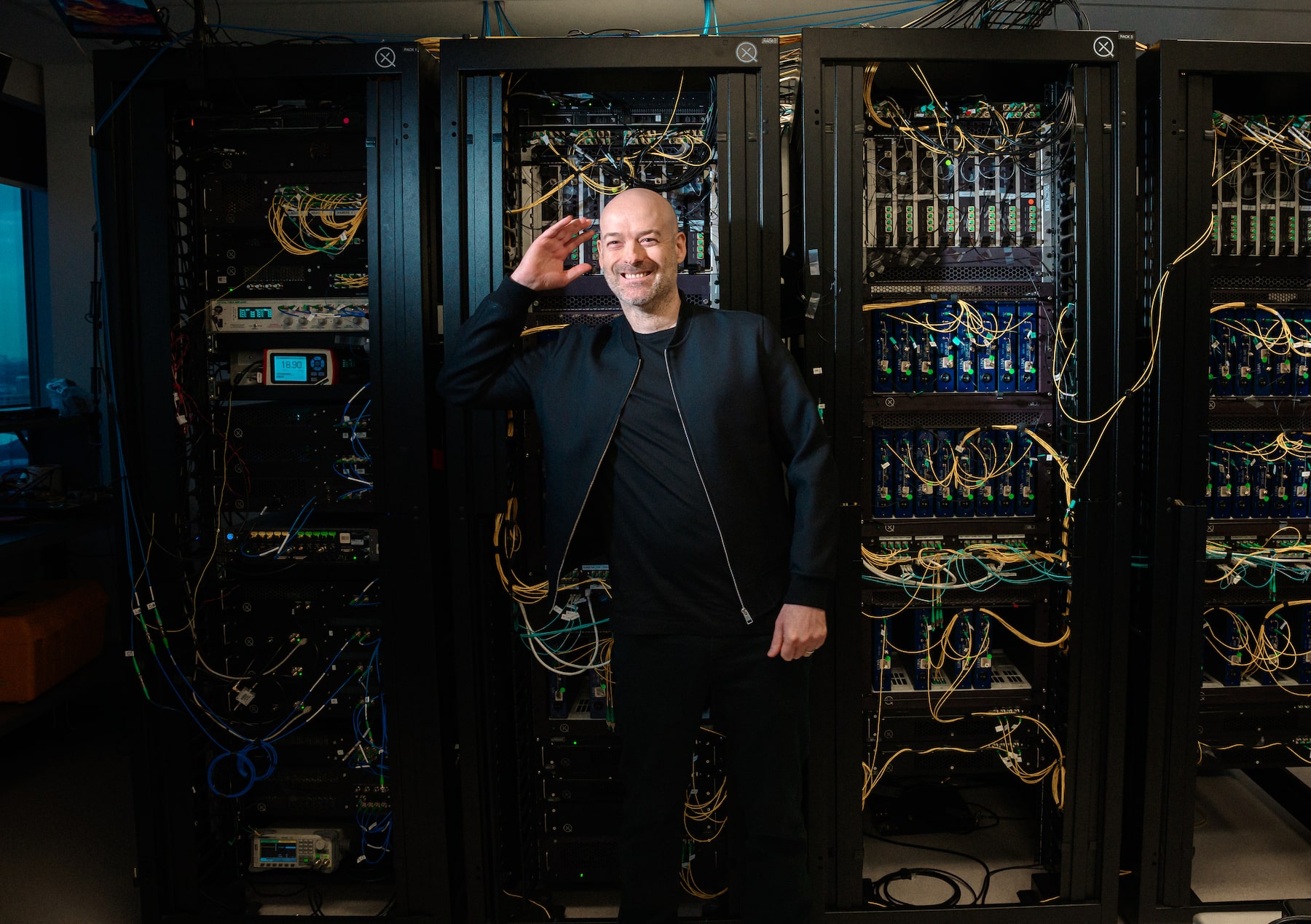
As Xanadu has emerged as one of the nascent sector’s leaders, Christian Weedbrook has transformed into a Steve-Jobs-like builder with an all-black wardrobe and single-minded drive to match.Janick Laurent/The Globe and Mail
If Mr. Weedbrook seems nonplussed about a bumpy entry onto public markets, that’s because he’s thinking longer term.
Xanadu has emerged as one of the nascent sector’s leaders. In the past five years, it has published four papers in the journal Nature documenting its scientific breakthroughs. In 2025, it advanced to the second stage of an international competition held by the U.S. Defense Advanced Research Projects Agency challenging quantum computer developers to prove their machines will work by 2033. Two other Canadian companies, Photonic Inc. and Nord Quantique, are also in the running.
Mr. Weedbrook is not only convinced that Xanadu’s machines will pass DARPA’s test – a feat that could net the company US$316-million in U.S. government awards, and likely matching funds from Canada – but do so this decade.
He’s pledged that by 2030, Xanadu will build its first data centre powered by hundreds of networked quantum computers. Xanadu has demonstrated it can connect its machines, and it’s negotiating with federal and Ontario governments to secure up to $390-million to help build manufacturing and supply chain capabilities.
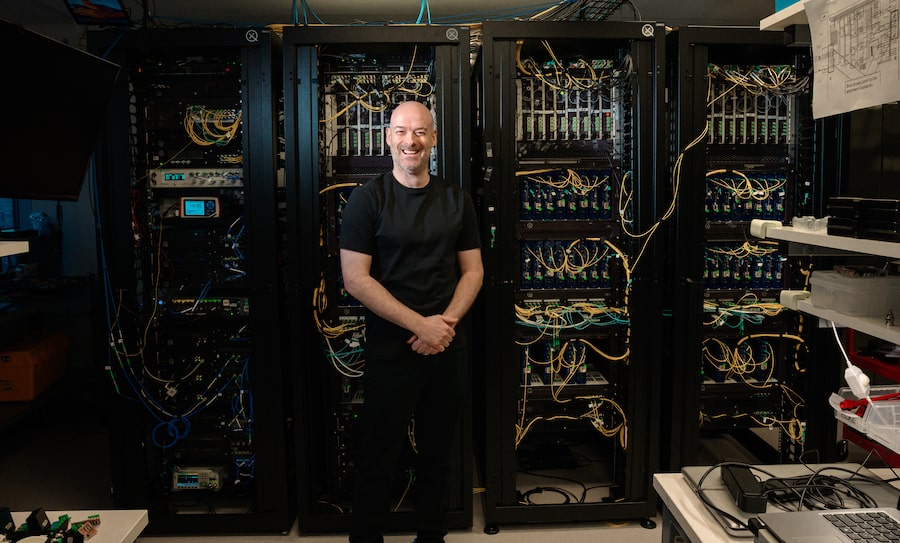
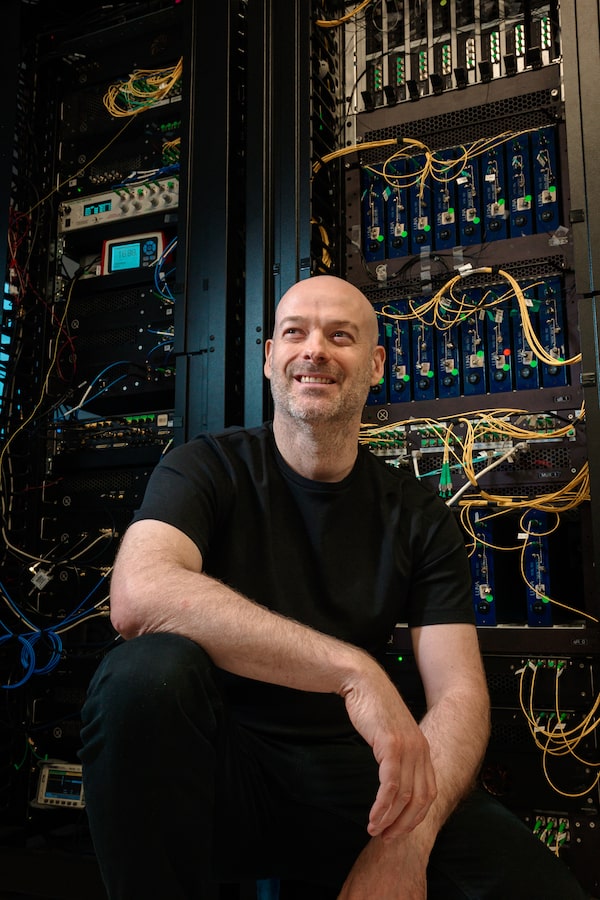
Along the way, the film school dropout has transformed into a Steve-Jobs-like builder with an all-black wardrobe and single-minded drive to match. It turns out Mr. Weedbrook was pretty good at math; he’s determined to be an even better entrepreneur.
“You can guarantee we’re working the hardest” among quantum computer developers, he said. “It’s all about getting to this vision.”

Toronto’s financial district in March, 2009, the year Mr. Weedbrook first visited the city that would become his adopted home. Over a decade and a half later, his company Xanadu is set to debut as a publicly traded company next week.CHRIS YOUNG/The Canadian Press
Toronto wasn’t showing its best side when Mr. Weedbrook visited for the first time in mid-2009. It was steaming hot and engulfed in a garbage strike. Nonetheless, he fell in love with Canada’s largest city.
Canada felt to him like a cross between the United States and Australia. After growing up on 20 acres of bushland an hour southeast of Brisbane, he was happy to trade regular sightings of wallabies, koalas and kookaburras for life in an urban jungle. The lifelong movie buff was also excited to spot Hollywood stars on the street during the Toronto International Film Festival. “That would never happen in Brisbane,” he said.
Mr. Weedbrook had come a long way since convincing the U of Queensland to let him in nine years earlier. He hadn’t been an aimless teen; Mr. Weedbrook just wasn’t a great student. He’d dabbled in entrepreneurship, written songs and made amateur films (one such cinematic endeavour, about a wheel that took over Australia, is posted on YouTube). He’d dreamt of creating his own Star Wars or Fleetwood Mac’s Rumours – or building something like the business legends he read biographies about, including Henry Ford and Thomas Edison.

A family photo of Christian Weedbrook, circa 1985. Mr. Weedbrook grew up in the bushland southeast of Brisbane, Australia, where he dabbled in making films and music.Xanadu/Supplied
Greater Brisbane might not have been the best environment for an aspiring artist, but U of Queensland was an ideal gateway for a budding technologist.
After deciding to major in math and physics, Mr. Weedbrook learned about quantum sciences. It turned out the school was one of the best places worldwide to study quantum optics, or how light works at subatomic levels. He eventually earned a doctorate in physics there, specializing in quantum information theory.
After a brief stint at the Massachusetts Institute of Technology, he transferred to U of T in September, 2010, to continue his post-doctoral studies. When that wrapped up, Mr. Weedbrook wanted to stay, so he started a company in 2014 called CipherQ. Its goal was to make the world safe from a quantum computing attack on encrypted data. The problem was there were no quantum computers remotely close enough to representing such a threat (there still aren’t). Venture capitalists weren’t interested.
They were, however, keen to back quantum computer developers. In February, 2014, Time magazine had featured Burnaby, B.C.-based D-Wave on its cover, calling its system, the world’s first commercially available quantum computer, “The Infinity Machine.” That year Berkeley, Calif.-based Rigetti Computing Inc., founded by Canadian Chad Rigetti, raised US$2.5-million in seed funding.
Their early machines were science projects; customers were national labs, universities and curious companies looking to tinker. To work, the machines had to be cooled to temperatures colder than deep space. They were expensive and finicky, requiring months of installation to meet specific operating conditions.
Mr. Weedbrook felt he had a better idea that would make quantum computers useful and available to people everywhere. Drawing from his experience in photonics, he wrote a white paper in his downtown Toronto condominium in 2016 to explain his plans, titled “How to Build a Universal Photonic Quantum Computer.”
For any quantum computer to work, it must harness peculiar phenomena such as “superposition,” in which a particle or system can simultaneously occupy more than one state.
This effect is notoriously difficult to relate to in everyday life. But it applies to qubits, the quantum equivalent of the 1s and 0s used in standard digital computer operations. The difference is that qubits can waver around in some partial combination of both 1 and 0 as a calculation is under way.

The Aurora prototype quantum computer at Xanadu’s Toronto office.Fred Lum/The Globe and Mail
Another phenomenon is “entanglement.” This occurs when qubits in superposition are linked and can influence one another. As more qubits are entangled, the amount of information they can hold grows exponentially. That is a quantum computer’s superpower: At sufficient scale, it should be able to race through calculations that would take the world’s most powerful supercomputers thousands of years to complete.
The challenge for quantum computer builders is that qubits are difficult to manage – and the more there are, the harder the job becomes. The need for supercooling, Mr. Weedbrook wrote, made the machines in development expensive, impractical and of limited real-world use.
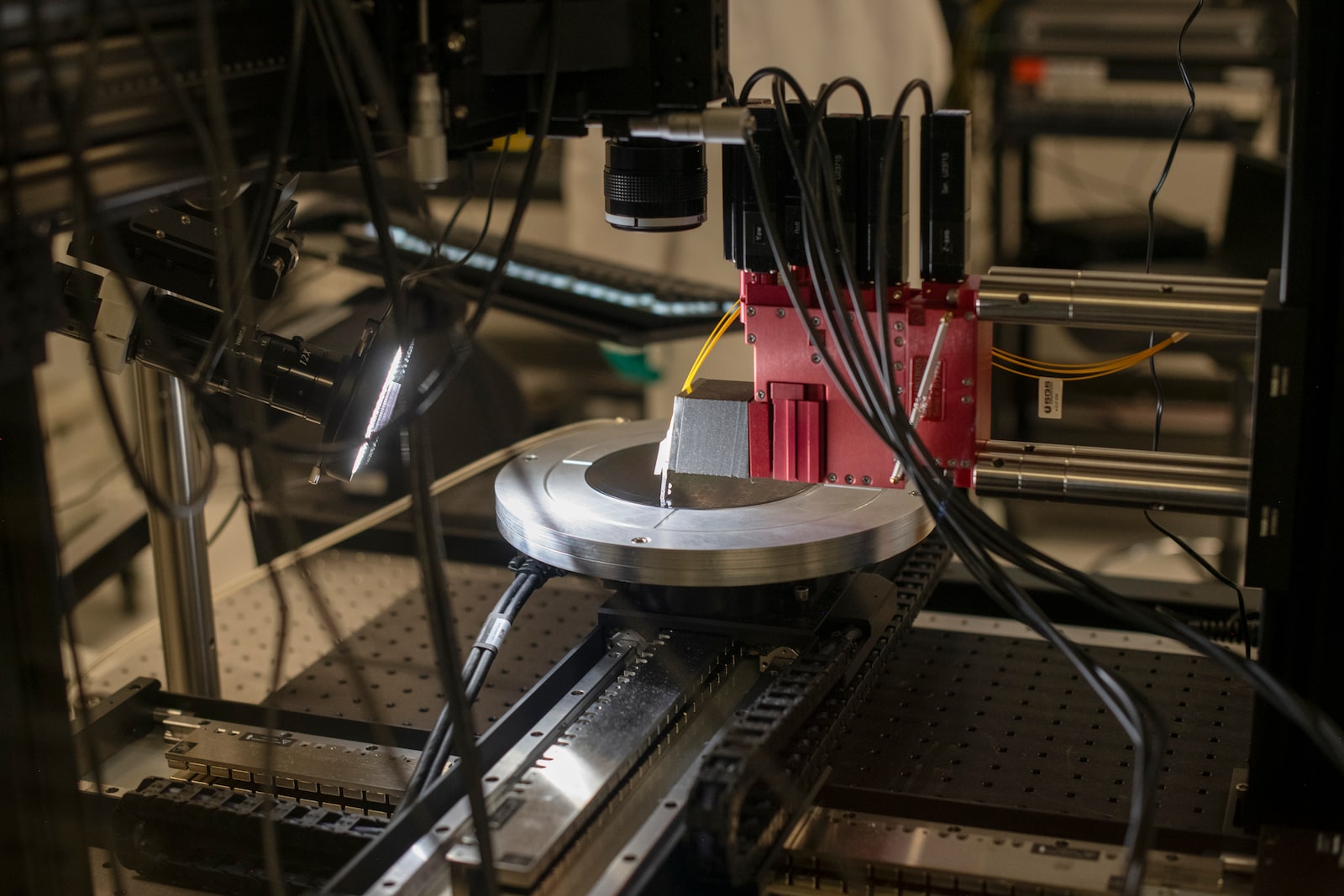
He proposed to exploit a different approach than quantum computers that rely on microscopic electronic circuits. His idea was to use light, whereby qubits consist of entangled laser pulses. This mostly dispensed with the problem of keeping a system ultracold since the quantum effects occur at room temperature. That would make the system cheaper and simpler to build.
Once created, the elements of a photonic quantum computer would be relatively easy to connect using established fibre-optic technology. With light as the medium of calculation, Xanadu’s bet was that it could turn its small devices into bigger, more powerful ones.
There were downsides to his approach, primarily signal loss. Each light particle, or photon, absorbed or scattered by the system’s interconnected hardware makes the pulses weaker and the calculations they perform more error-prone.
But the concept and novelty impressed investors. “Honestly, it took 10 seconds,” to get the idea, said veteran technologist Ken Nickerson, who was advising the venture capital arm of the Ontario Municipal Employees Retirement System (OMERS) at the time. “It was like, ‘Of course, that’s brilliant. Can it be done?’”
OMERS became one of Xanadu’s first investors; another early backer, Toronto tech entrepreneur Michael Hyatt, found the pitch compelling and potentially world-changing. “I realized this was either a one or a zero,” said Mr. Hyatt. “If he was right, the outcome was asymmetric.”
Xanadu faced some early challenges; Mr. Weedbrook was threatened with eviction from his home three times. The company’s first chip didn’t work.
But Mr. Nickerson said Mr. Weedbrook showed the same grit and determination as two founders he’d worked for: Bill Gates and Ted Rogers. “I believe Christian would gnaw off his own arm rather than fail.”
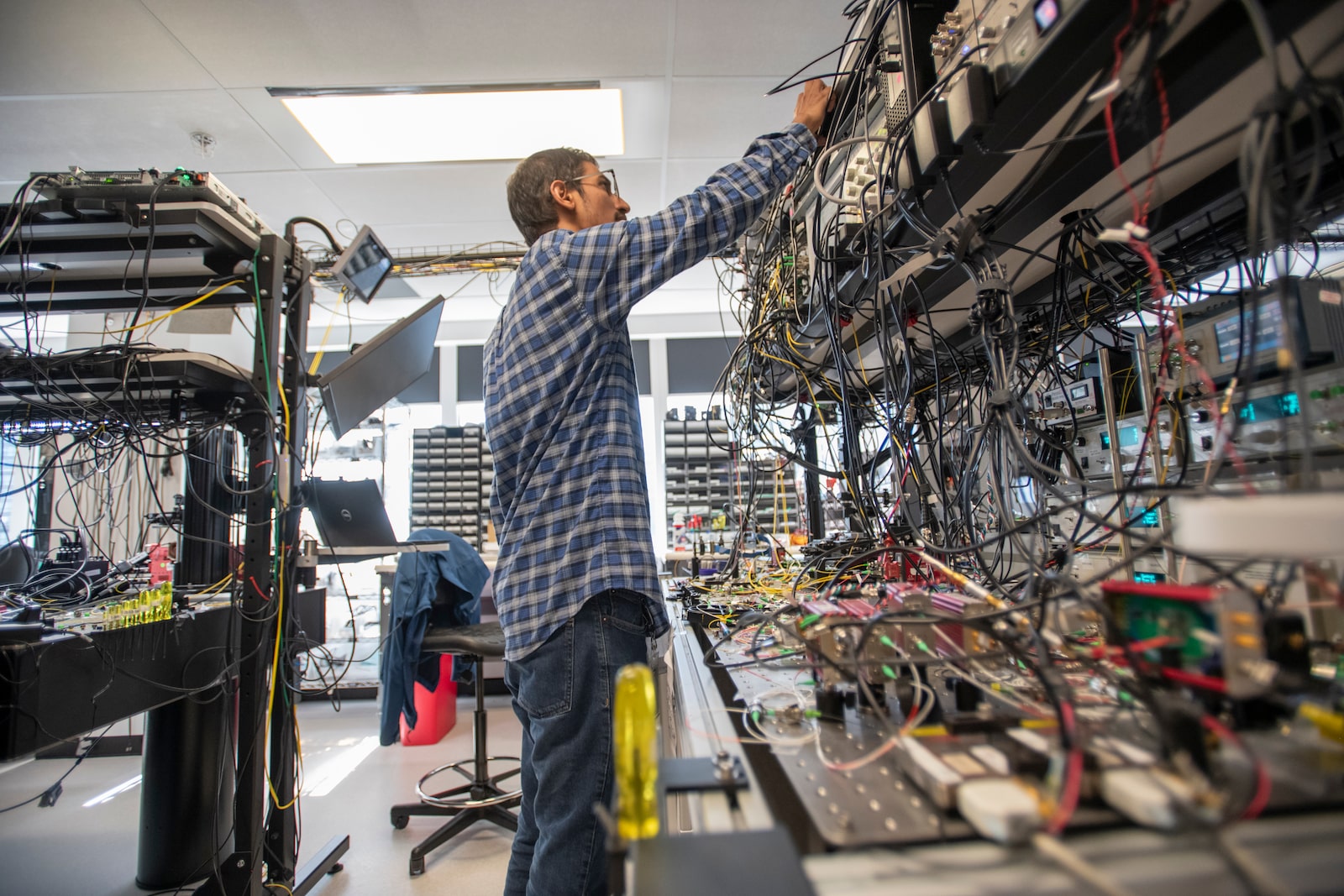
Mr. Weedbrook lives a short walk from Xanadu’s headquarters on the 24th floor of an office building at Bay and College Streets and works seven days a week. He describes himself as a homebody with few non-work-related interests, other than spending time with his wife and infant son, watching movies and listening to The Beatles (Xanadu has named several software tools after Beatles songs, including Penny Lane, Strawberry Fields and Blackbird). He meditates for an hour each morning before working.
“I can honestly say there hasn’t been a moment where I’ve switched off in the last 10 years,” he told The Globe and Mail. “It’s just been relentless. You have to do that as a startup founder.”
The monotone-voiced Mr. Weedbrook is a hands-on, obsessive boss who has a dry sense of humour. He is direct, blunt and matter-of-fact in conversation; that can be jarring and has made some Xanadu’s 245 employees uncomfortable, says Rafal Janik, Xanadu’s chief operating officer. “If you make a mistake, Christian will let you know directly and clearly. There’s been a lot of coaching I’ve had to give people [after the fact] to say he’s moved on – don’t do it again, but don’t stress about it.”
The founder can be prickly with investors, something he readily admits. Managing relationships with some venture capitalists “has probably been the most challenging part, even more than building a quantum computer,” he said.
Those who, in his words, treat investing like a 9-to-5 job and “don’t get back to your e-mails, don’t treat it seriously, reject you for no good reason” are particularly off-putting. “I care about execution. I’m trying to live each day as if it’s my last, to the best of my ability. I care about details. I care about execution.” Patience, he said “is always a challenge for me.”
He is also quite candid. “Maybe I’m not good at running a public company, I don’t know,” he told The Globe this week. “I’ve never done it before.” Some day, he mused, he could leave Xanadu and start another company based on one of the 100 ideas he’s scribbled in a notebook. “I’ve always said to everyone from day one: There are different phases in the company. It changes and people change, too,” he said.
But after 10 years building Xanadu, “the drive and fire hasn’t stopped in me,” he said. “At this stage, you want a founder-CEO who has the technical chops,” he said. “I have this desire to keep going, through thick and thin.”
Mr. Weedbrook, said Mr. Hyatt, “isn’t here to impress investors. He cares about the science.”
“I can honestly say there hasn’t been a moment where I’ve switched off in the last 10 years. It’s just been relentless. You have to do that as a startup founder.”
– Christian Weedbrook, CEO of Xanadu Quantum Technologies Inc.
Over its 10-year life, Xanadu has made great strides in addressing its key technical barriers, raising US$250-million from investors prior to the SPAC deal. In 2022, its Borealis system became one of the first to demonstrate “quantum advantage” by performing, in milliseconds, a task that would have taken 9,000 years running on a supercomputer.
The company also developed open-source software that has 35,000 active users across an array of quantum systems. And Xanadu has amassed a trove of intellectual property that could be applied to other fields using quantum science, though the company is now solely focused on building a computer.
Last year, Xanadu showed that it could incorporate all necessary components for a practical quantum computer onto a single photonic chip. On its own, such a device is limited, but many working together could power a commercially-relevant quantum data centre.
Xanadu already has big companies as early clients; for example, it’s working with Mitsubishi Chemical and Volkswagen on simulations to advance development of lithium access batteries and semiconductor chip fabrication technology, respectively. But “no one will have true, practical customer revenue” until a large-scale quantum computer comes online, Mr. Weedbrook said.
One of Xanadu’s most significant achievements came when it showed last June that it could build a well-known error-correcting code into its architecture. “That’s unique,” said Oliver Pfister, a professor at the University of Virginia who works on quantum computing and related technologies that use photons. “No academic group had done that.”
The milestone is crucial because all quantum computers generate errors as qubits fall out of superposition. But if enough qubits are available and can be connected in the right way, they can provide redundancy to keep errors at bay. Reducing errors and improving performance is the key scientific challenge Xanadu and its rivals must solve.
Mr. Weedbrook says Xanadu will need US$1-billion to build out its first data centre, meaning it still has US$700-million more to raise. Mr. Weedbrook expects governments will provide much of that, and he is confident Xanadu can get the rest by issuing stock later on.
But that only gets Xanadu to the starting gate – if everything goes according to plan. Whether the industry can deliver on long-standing promises, whether customers will be willing to pay big dollars for its services and whether quantum computers will change the world – all of these remain unknowns. There’s still no clear favourite in the race.
All the more reason, Mr. Weedbrook believes, to carry on. “This is not a normal startup. We’re trying to build one of the most difficult technological things that humanity has ever tried. If you just never give up, like a little engine that never quits, I wonder how far you can go. Let’s see.”