For Calgary Co-op, 2020 was already shaping up to be a momentous year. The grocery and fuel retailer had planned a major rebranding, along with changes in suppliers and a launch of new private label brands. The target date for all that to go live: April 13.
By then, of course, Canada and its institutions had been thrust into disarray by the COVID-19 pandemic. Grocery stores stayed open, but were forced to impose new food-handling and health safety measures. Gasoline sales plummeted as motorists, unfamiliar with the virus and its threats, stayed home. The co-op’s directors were well aware that their positions required navigating uncertainty. But this? It was beyond anyone’s experience.
“We were dealing with this full, substantive commercial operational change, and of course the essential services of grocery supply and the health aspects,” said Patricia McLeod, who was the member-owned co-op’s board chair at the time.
“The rules were changing, literally almost on an hourly basis, about walking directions in stores and all that kind of stuff. So, it really was, to me, the fundamental example of an exogenous, uncontrollable event and one that was a very significant transformational strategic change.”
The board was forced to act quickly and often, and inject itself a little further into business decisions while maintaining its fiduciary role. As things happened, the preparations for the planned business changes were extensive, and they helped the company handle the changing communications and crisis management needs that the pandemic brought, said Ms. McLeod, who stepped down from that role two years afterward.
But the experience shows how demands on directors are intensifying as companies wrestle with an increasingly disordered world. Juggling uncertainties has always been part of the gig. But corporate Canada got used to dealing with familiar issues over years of relative calm on the trade front, geopolitical stability among allies – especially the United States – and the steady pace of technological change.
The Globe and Mail’s comprehensive ranking of Canada’s corporate boards for 2025
There were booms and busts in financial markets, sure, but those proved to be relatively short-lived and boards had a well-thumbed playbook for how to make sure their companies were dealing with problems as they cropped up.
In just a few years, though, the game has changed amid a storm of new and fast-evolving crises – the pandemic, supply chain disruptions, runaway inflation, cyberattacks, shareholder activism, the backlash against diversity, equity and inclusion, shifting climate-reporting rules, U.S. President Donald Trump’s capricious trade policies and the rise of artificial intelligence.
The old playbook does not have a chapter on governance in the time of chaos.
It has forced boards to seek new ways to speed up decision-making when urgency demands that issues can’t be studied exhaustively or items pushed onto the next meeting agenda.

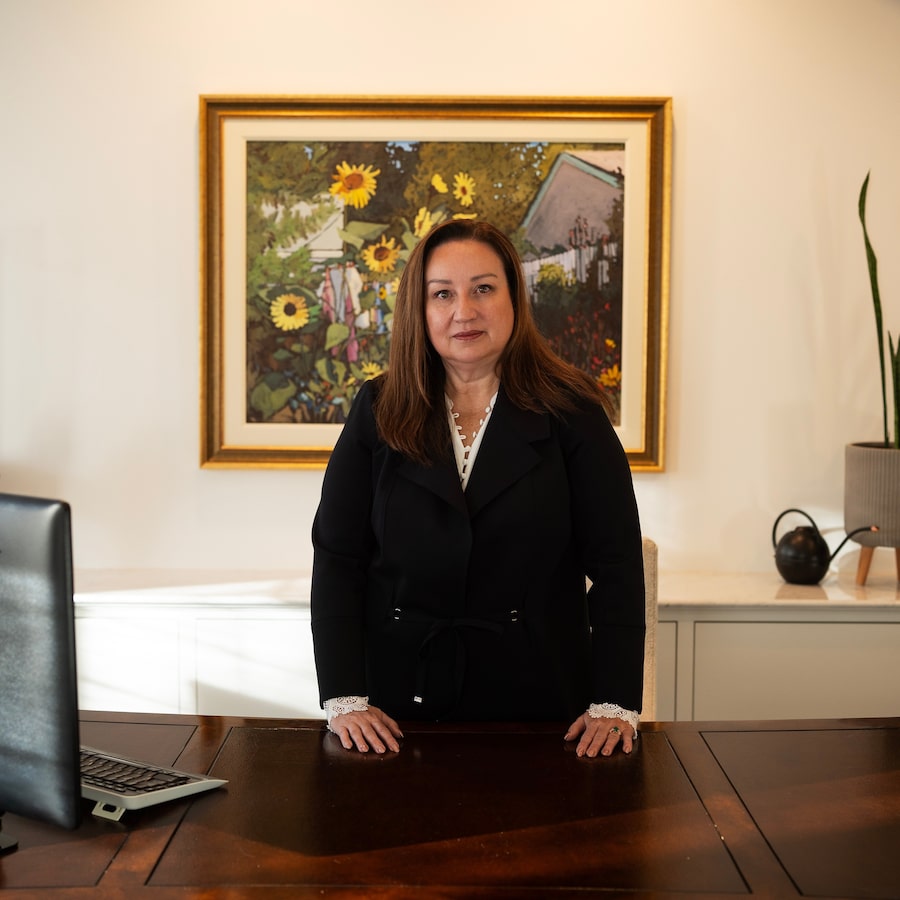
Ms. McLeod was board chair of Calgary Co-op when the COVID-19 pandemic thrust the organization into disarray. The experience navigating the pandemic revealed how demands on directors are intensifying as companies wrestle with an increasingly disordered world.Todd Korol/The Globe and Mail
For some boards, that’s meant undertaking war-game exercises to strengthen their critical response skills. For others, it’s knowing when to tap outside expertise in the specialized areas that may suddenly be problematic – or even to add experts to the board roster.
Six years ago, the prospect of a pandemic may have been buried deep in the fine print of potential risks, but there was little thought given to the likelihood for a massive business interruption, Ms. McLeod said.
“It was a huge lesson to me around the value of scenario planning and thinking ahead,” she said of Calgary Co-op’s turbulent year.
Researching the 2025 edition of The Globe and Mail’s Board Games, done in partnership with Toronto consulting firm Global Governance Advisors, the overriding theme was: How do boards navigate multiple disruptions simultaneously?
In a think piece published this year, leadership consulting firm Jefferson Hawthorne Group summed up what boards have been forced to confront: “What if stability isn’t the norm? What if the post-Cold War era of 35 years of calm we were accustomed to was the exception?”
The Toronto-based consultancy said the shocks that directors face today are “non-linear, buck conventionally held norms and are compounding into prolonged interconnected chaos.”

Ian Robertson, partner at Jefferson Hawthorne, says the range of threats to the country’s economy has put extra pressure on Canadian directors, pushing them to change the way they think about risk.Christopher Katsarov/The Globe and Mail
Jefferson Hawthorne partner Ian Robertson says Canadian companies have a global reputation for being prudent and disciplined, even reserved. But that style was built for an age of stability that is now in the rear-view mirror.
“That’s not going to hold up in a world that’s more chaotic and requires constant change,” Mr. Robertson said in an interview. “So the question is, then, how do you rethink your current approaches so that you, your governance and your company, withstand disorder? But more importantly, how do you convert disorder into an advantage?”
This year, trade disruption and government policy aimed at countering it have dominated concerns, especially among companies that had staked their future on a finely tuned free-trade relationship with the U.S.
Since Mr. Trump’s second-term inauguration, he has imposed new tariffs on some sectors, raised them, lowered them and threatened new ones. He’s begun trade talks and then cancelled them – often via his social media platform. The impact on many Canadian companies is acute in the forms of lost revenues and deep cost-cutting that has at times meant layoffs.
Executive teams must now develop strategies to seek out new markets and connect with policy makers to help ease the shock on their companies. But the crisis has also highlighted the importance of cultivating geopolitical chops on a board when a company – such as a steel, aluminum or softwood producer, or an auto parts supplier – depends heavily on trade. That can act as an “early warning system,” Jefferson Hawthorne said.
It also shows the need to consult trusted experts in various fields.
The speed at which AI has enveloped business practices this year is emblematic of how quickly the world is evolving, and how new items are being piled onto fiduciary duties. As AI use spreads throughout corporate functions, companies have begun disclosing wide oversight at the board level, largely within audit committees, according to the Global Governance Advisors analysis.
The data, compiled for Board Games for the first time, show that 45 per cent of the 206 companies measured indicated how their boards oversee AI and cybersecurity, a surprisingly high adoption rate given how little such information was disclosed in previous years, said Tony Spizzirri, the Global Governance Advisors partner who oversees the firm’s work for the series.
Boards may even be paying more attention to AI than what’s reflected in the data, if it falls under the broad information technology category, he said. “Just because the term artificial intelligence doesn’t show up in the proxy, it doesn’t mean that it’s not a part of the oversight of the committee and of the board.”
But there are risks. Paul Gryglewicz, managing partner and head of Canada at Global Governance Advisors, cited some instances in the past year in which directors, upon receiving materials to consider for board decision, have turned to ChatGPT to vet the information, and even seek alternative viewpoints. Of course, chatbots notoriously can be unreliable and that presents a new kind of governance risk, one he equates to seeking a complex medical diagnosis on WebMD.
As a result, boards may be forced to establish policies and parameters outlining AI use in board deliberations, he said.
“Within your first keystroke question you submitted to ChatGPT, you can start to feel like you’re having a conversation with a human being that’s the smartest person in the world,” Mr. Gryglewicz said. “But the reality is it’s only as smart as the public domain that it’s finding and the question that you pose to it, and it can be a risk in how it’s applied. So, I do think that this is something that’s unfolding.”
Board Games 2025: How we ranked Canada’s corporate boards
But what to do about the hydra-like problems that boards must attend to? The experts say bolstering fast decision-making around the table comes down to developing a kind of muscle memory. That can be done through simulations that require navigating a series of emerging issues simultaneously.
“What if we went through a leadership change, and then had a ransomware attack? What would we do if people weren’t in the right place at the right time to respond to this event? You start doing a little bit of think about scenario planning,” said Ms. McLeod, who today is chair of Cavvy Energy Ltd. and FutEra Power Corp., and a director of Flair Airlines.
It’s similar to approving budgets when there are such variables as prices, growth expectations and changes in customer demand, perhaps from something as severe as a pandemic.
“It’s not like you set a plan for every eventuality, but what you do is develop confidence that you know where to start with a complex problem, you know what the role of the board’s going to be, you know where management’s going to be, you know the resources you’re going to bring into the question,” she said.

Rahul Bhardwaj, CEO of the Institute of Corporate Directors.supplied
In the case of specific issues, such as trade and policy disputes, gathering expertise at the board level is becoming more critical. Rahul Bhardwaj, chief executive officer of the Institute of Corporate Directors, says it all points to a need for boards to bolster resilience and speed in their decision-making, often for numerous issues at once.
He notes that geopolitical and supply-chain literacy was rarely considered in the skills matrix for directors 15 or 20 years ago. That has changed.
Mr. Bhardwaj tells of a recent cross-country tour to meet with board members, when one said he had never expected to need supply chain expertise as a director, until the company was thrust into a crisis. “As a director, you don’t get to second guess. You just have to get really up to speed fast, which means you need to have a management team that’s up to speed fast, and you’ve got advisers that are able to get you there – and you have to look at the collective wisdom on the board,” he said.
There’s extra pressure on Canadian directors because of the range of threats to the country’s economy, so they must accelerate their thinking to outperform global competitors, and not just on pricing and operations, Mr. Robertson said.
“This isn’t about having extra skill sets around the table or changing people. It’s about changing the way you think about risk, and changing the way you think about how you interact and operate within your current environment,” he says. “So, the foundational principles that we saw as necessary were having a what I call a broad-spectrum radar system that allows people to track emerging risk signals beyond the financial.”
Consider the unexpectedly severe backlash from right-wing influencers that the Budweiser and Jaguar brands had in the past two years to advertising campaigns that targeted audiences outside their usual markets, including the LGBTQ community. Those shocks are often well outside board audit committee dashboards. It highlights the need to be able to pivot, Mr. Robertson said.
“What’s important is not to review reports but actually practice how a board reacts when data is incomplete. Information is asymmetric, and time is short. The critical threat in a lot of these situations is not the disruption itself, it’s the lost time.”
Editor’s note: A previous version of this article incorrectly stated Paul Gryglewicz is senior partner at Global Governance Advisors. He is managing partner at the firm.