English cucumbers grown in a greenhouse in Southern Ontario are finally cleared for travel after months of uncertainty.
On Wednesday, U.S. President Donald Trump exempted all goods compliant with the United States-Mexico-Canada trade agreement after threatening 25-per-cent tariffs on all Canadian imports since inauguration.
Much of our food exports will be exempt from the 10-per-cent baseline tariff imposed on America’s other trading partners.
It is good news for the cucumber and the businesses depending on its free movement. After being harvested in a farm one hour outside Toronto, the fruit (yes, it’s a fruit) often passes hands at least four times – from farmer to wholesaler to trucking company to U.S. vendor – before landing on a plate in a restaurant in a city somewhere in Canada or the U.S.
In total, around 32,000 people depend on the trade of greenhouse produce from Southern Ontario to the U.S. This is no small industry. The sector is one of the most concentrated and efficient in the world. More than 170 farmers harvest 521 million kilograms of cucumbers, tomatoes and peppers on a land mass roughly the size of downtown Toronto.
While the industry is breathing a sigh of relief, Mr. Trump’s on-again-and-off-again trade war exposed the key vulnerabilities within a sector wholly dependent on access to mammoth metropolises in the U.S. And the near crisis is raising questions about what Canada can do to ensure it keeps this sector competitive and resilient.

Mature cucumber plants are ready to be harvested at Beverly Greenhouses, a third-generation farm in Waterdown, Ont. The temperature, humidity and sunlight levels in the greenhouse are closely monitored and controlled to maximize efficiency and product yield.
The cucumber’s journey begins at Beverly Greenhouses, a farm owned by a third-generation farmers, the VanderHout family.
It is grown in a tightly controlled environment where the temperature, humidity and sunlight are monitored and adapted by computerized systems. The greenhouse also uses advanced recirculating systems for irrigation and fertilizer to maximize efficiency, key to staying competitive in Ontario’s cutthroat greenhouse sector, says Jan VanderHout, who inherited the farm from his father and grandfather.
The Beverly Greenhouses cucumber is part of a $3.2-billion agricultural ecosystem that spans 4,100 acres in Ontario. This industry not only produces up to 15 times more produce per area of land than field operations, the productivity rate bests major global competitors such as the Netherlands and Mexico, according to a 2024 RBC report. Greenhouse vegetables (the industry calls the cucumber a vegetable) account for 48 per cent of Canada’s fresh produce exports.
The basis of this entire sector is, however, free access to U.S. markets, said Marco Bertucci, owner of Bayshore Vegetable Shippers.
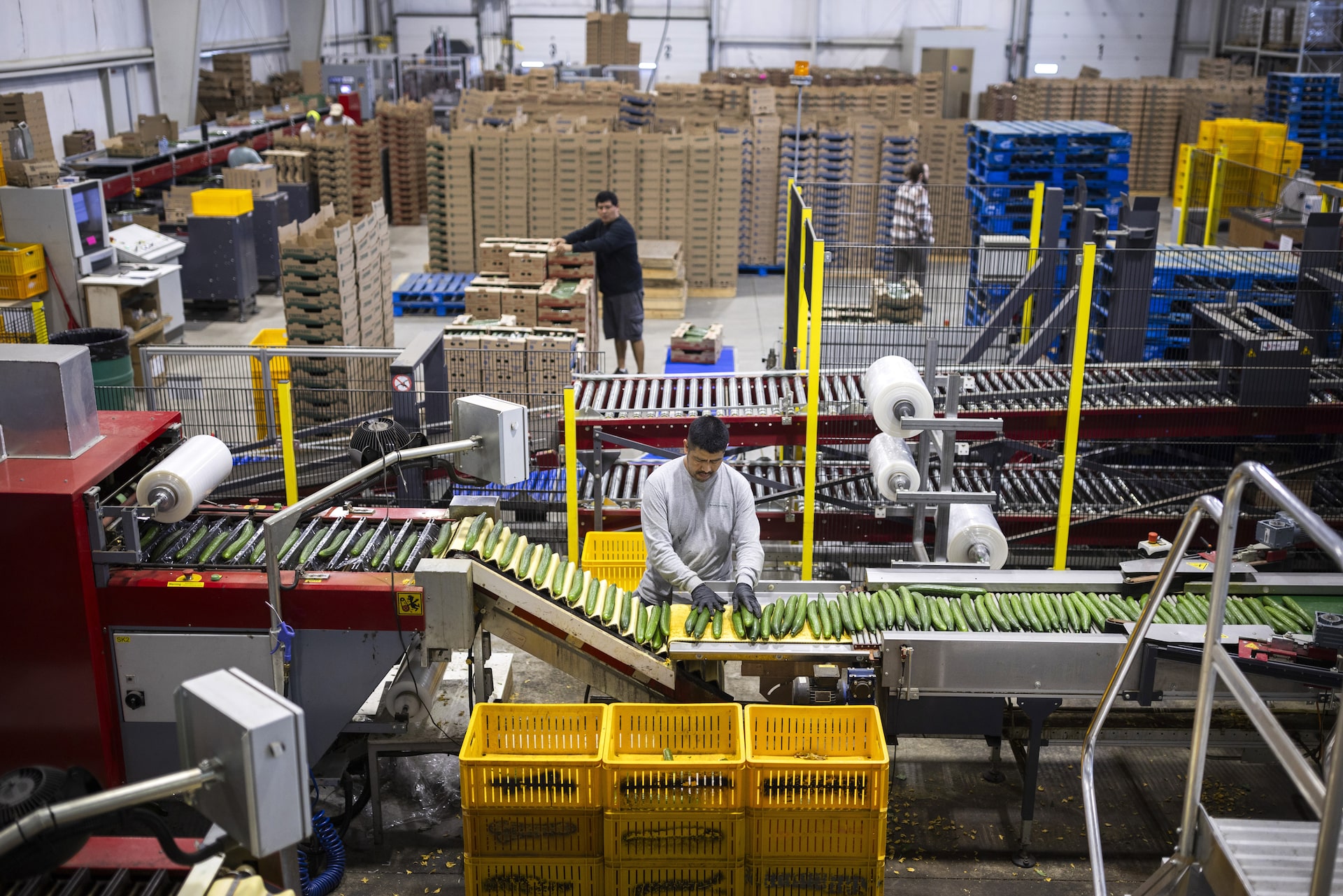
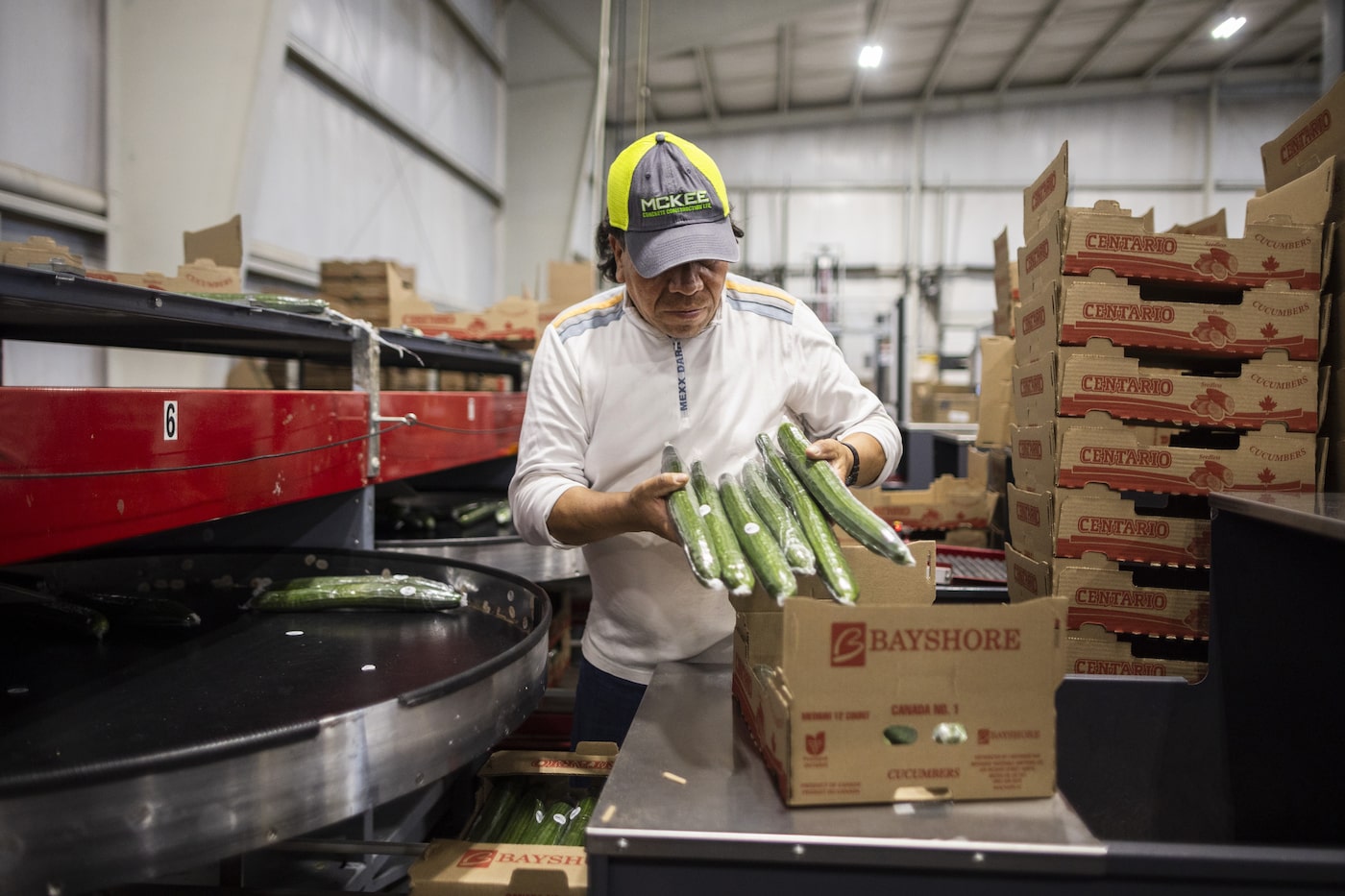
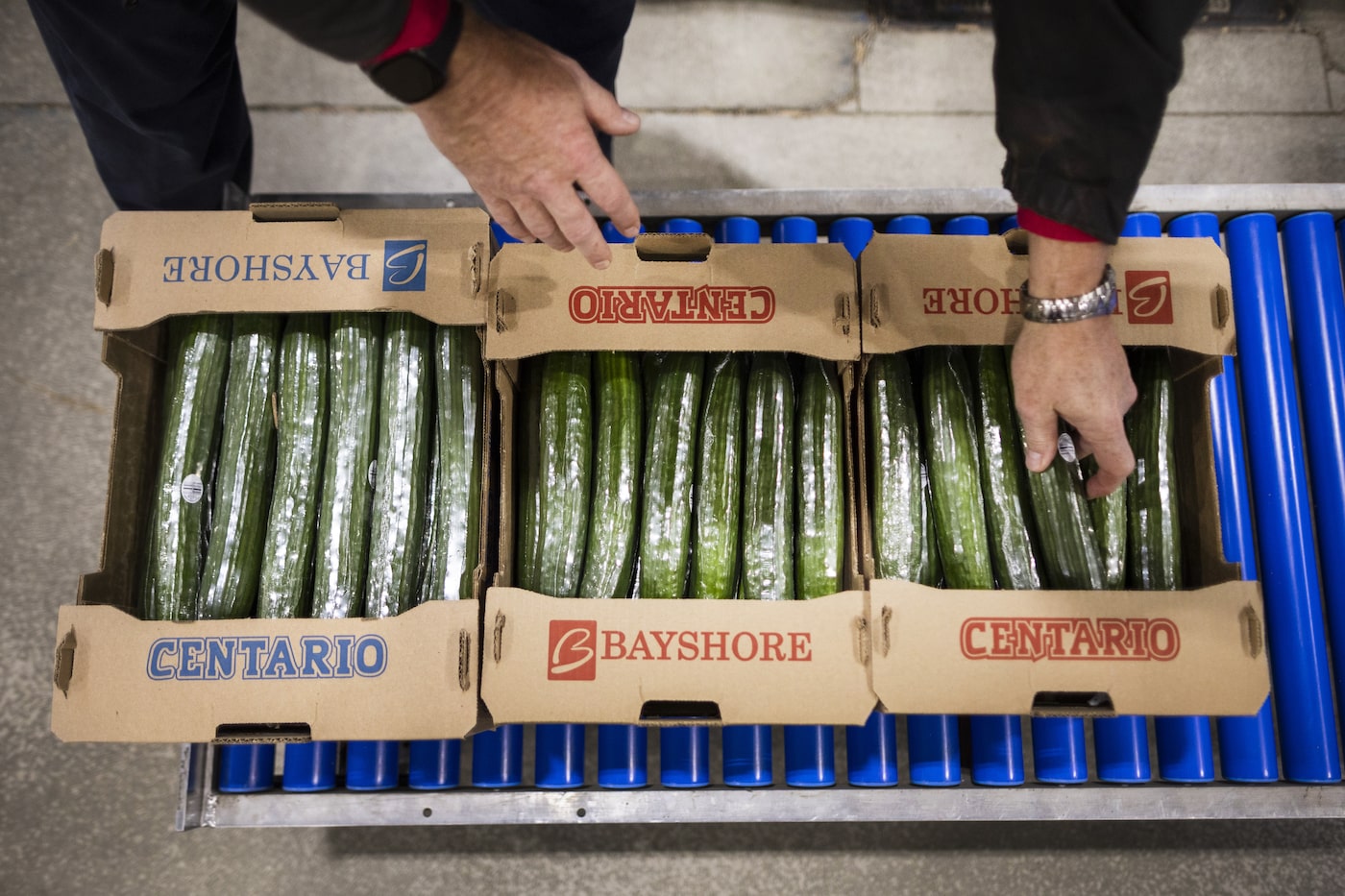
Mr. Bertucci is the next stage of the cucumber’s journey. He picks up trailer loads of the produce from the farm daily, and delivers them to his warehouse in Milton, Ont., around 30 minutes away.
Fresh produce starts to rot the second it is plucked from the vine. This is a just-in-time kind of business, he said, and moving product fast is essential. To do this he needs a wide customer base, and solid transportation logistics.
His customer base includes major retailers in Canada, alongside sushi restaurants, McDonald’s, retailers and other wholesalers in cities like Chicago, Philadelphia and Buffalo.
No other region within reach of the Ontario greenhouses has the population density to absorb the production churned out by the sector, including the entire Canadian population, said Mr. Bertucci. U.S. cities buy over 85 per cent of the produce grown in Southern Ontario’s greenhouses.
To ship to the U.S., Mr. Bertucci hires Slingshot Transportation Inc.
Transporting food is a balancing act, said Natasha Alcorn, general manager of the logistics company’s Canada operations.
The most important part is keeping the trucks cool, she says. Cucumbers must be kept at the temperature of a fridge, close to 34 F.
Another important part is the border, and getting over it as fast as possible. On average, it takes a trucker carrying vegetables around one hour to cross, she said, providing there’s no random inspections. Customs brokers work ahead of time to ensure products and drivers are preapproved.
Profitability is also key, and this means no truck travels empty. The cucumbers loaded into a truck and sent to the U.S. will be replaced by another product set for Canadian markets. This “free flow” system is based on a continual exchange of goods between Canada and the United States, she said. Cucumbers go south. Watermelons come north.
Ms. Alcorn’s drivers will take the cucumbers on a roughly 11-hour trip to Chicago where they will arrive at a terminal such as Chicago International Produce Market and might be sold to vendors like Coosemans Chicago Inc.
Canadian produce is a key part of company’s inventory, said sales director Alec Pappas.
“I’ve had a good relationship with my farms in Canada for a long time.”

Mr. VanderHout inspects a pallet of cucumbers before they start the next leg of their journey to the U.S. Greenhouse vegetables, including cucumbers, account for almost half of Canada’s fresh produce exports.
His customers include retailers, food service companies and restaurants, and the viability of his business is based on his ability to quickly and reliably restock with fresh inventory. Restaurants are last-minute buyers. He needs to ensure the shelves are continuously stocked.
“That’s kind of my role in the food chain,” he said.
Each role in this food chain – from grower to trucker to vendor – was threatened by Mr. Trump’s assault on free trade.
U.S. buyers of Mr. VanderHout’s cucumbers had started looking into U.S. suppliers, he said, and the greenhouse industry was poised to start selling more into Canadian markets.
And this left greenhouse growers in a perilous situation, Mr. Bertucci said. The Canadian market is not large enough to absorb the total production. It would lead to a glut and depress prices, he said. In the long term it would restrict supply and boost prices. A greenhouse is not traditional agriculture, he said. While a field farmer can leave a plot of land unplanted with little additional cost, a greenhouse operation is capital intensive and expensive to run. Scale of production is key to staying afloat.
Diversifying beyond Canada and the U.S. is especially tricky for greenhouse vegetables, said Massimo Bergamini, executive director of the Fruit and Vegetable Growers of Canada. A cucumber does not fetch a high enough price to be air freighted to Asia, and it will not store for weeks in a shipping container.
Learning from this moment therefore means asking hard questions about what can make the sector more profitable, efficient and competitive, he added. And that means modernizing government regulatory systems.
“We literally dodged a bullet,” he said. “And we don’t have the programs in place to support the sector.”
For example, greenhouse operations – because they fall between agriculture and manufacturing – are not covered by core agricultural business risk management programs, he said.

The Beverly Greenhouses cucumber is part of a $3.2-billion agricultural ecosystem that spans 4,100 acres in Ontario.
The Canadian Food Inspection Agency has also fallen behind its U.S. partners on invasive species regulations and fertilizer approval, said Richard Lee, executive director of the Ontario Greenhouse Vegetable Growers.
Water treatment infrastructure in Southern Ontario counties have also reached capacity and placed a moratorium on the sector, stalling growth, while the industry also struggles to find labour as few agricultural schools offer programs preparing students for the next frontier of farming.
These are all examples of how the greenhouse sector falls into a “non-man’s land” between agriculture and industrial operations, said a 2024 RBC report on Canada’s greenhouse vegetables. It therefore faces continual roadblocks for development and access to resources.
Agricultural arms of government need to “align with the speed of business,” Mr. Lee said.
As the dust settles on Mr. Trump’s trade war on Canada’s agricultural products, Mr. VanderHout hopes the story of the cucumber – and Ontario’s greenhouse sector – demonstrates the interconnected relationship between the U.S. and Canada, and the imperative for national food production. After all, with Mr. Trump in the White House, trade deals are no longer a given. Canada has to make sure it has a competitive, productive industry with something to offer trading partners.
“We need our interdependence,” he said. “ … and we need to start respecting our advantages.”