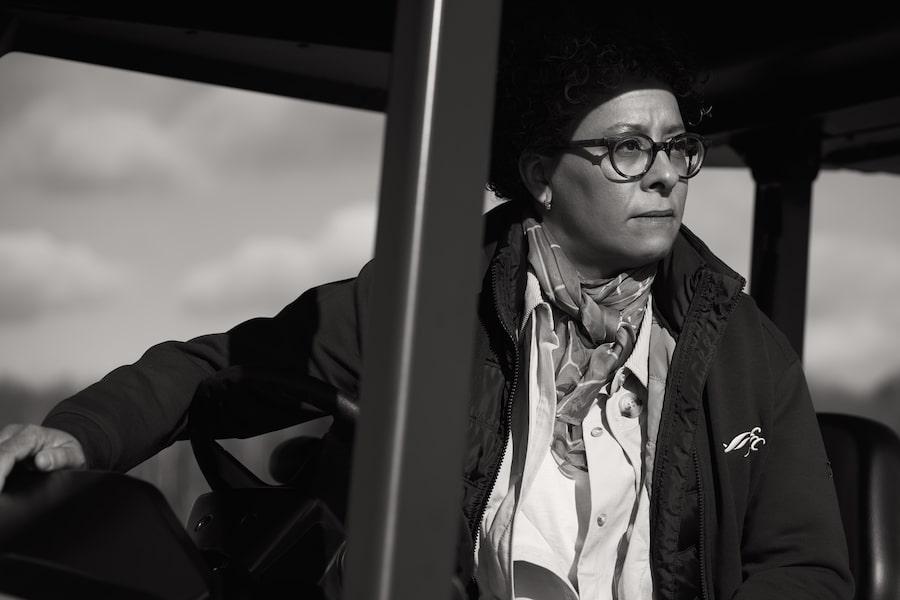

Justine Hendricks was at the Canada in Asia Conference in Singapore in early 2025 when she had an a-ha moment. As the CEO of Farm Credit Canada, the Regina-based federal Crown corporation with 100-plus branches and a century-old mission to finance Canadian agriculture, Hendricks was trying to tempt investors to give Canadian farming a chance.
During one meeting, she asked a major Asia-Pacific agri-food investor if he had any feedback for Canada.
“Your country,” Hendricks recalls him replying, “has everything we could want: natural resources, an educated population, strong political environment and a democracy with an outstanding reputation.
“So, what the hell is Canada waiting for?”
By almost every measure, Canada is an agricultural superpower. Farms cover nearly 154 million acres, and we grow just about everything. We’re the world’s largest producer and exporter of canola and pulses, and a major player in wheat, oats, barley, beef and pork. Potatoes, apples, cranberries, blueberries, mushrooms—you name it, we grow it. We also punch above our weight in beef and pork, exporting far more than we can consume, and we’re world leaders in breeding and genetics, and in food safety standards.
All told, agriculture contributes 7% of the national GDP—just shy of $150 billion a year. Transforming crops and animals into ready-to-eat food employs more than 300,000 people and accounts for 17.2% of total manufacturing, the largest share of any industry coast to coast.
We’ve lost our swagger on the global market, however. Canada’s share of agrifood trade has fallen half a percentage point since 2000, according to a February report from Royal Bank of Canada. We now sit in seventh place, knocked down from fifth by China and Brazil. Unless the sector’s productivity shortcomings are fixed, Canada is likely to fall to ninth over the next decade, said the RBC report.
“It’s almost as if, as a country, we kind of take food for granted,” Hendricks told an FCC conference in February.
Meanwhile, Canada’s agriculture sector is at the centre of a global trade war. In March 2025, after Ottawa slapped 100% tariffs on Chinese-made EVs, Beijing retaliated with levies on Canadian pork, seafood and canola. The Chinese market for canola is worth $5 billion, and it’s the top crop for 40,000 farmers across Saskatchewan, Manitoba and Alberta. These tariffs have since been eased, but not eliminated.
Canada’s supply management system for dairy has also been in the headlines as U.S. President Donald Trump takes aim at what he calls an unfairly protected industry. This is a tense subject as the Canada-U.S.-Mexico Agreement approaches its renewal deadline this summer. In April, U.S. trade representative Jamieson Greer delivered an ultimatum: Change supply management or risk a full renegotiation of the trade deal.

Hendricks believes her mission is to make the FCC a catalyst for capital and a unifying leader for Canada's disjointed agriculture sector.
To make matters worse, the shutdown of the Strait of Hormuz, which facilitates the transit of one-third of the world’s fertilizer, has doubled some prices for this key input.
“I feel for what farmers are up against,” says Hendricks.
She oughta know. Hendricks sits in the hot seat between financiers who say they want to invest millions—billions, even—in agriculture and Canadian family farmers who are as suspicious of outsiders as they were more than a century ago.
Hendricks joined FCC in January 2023 to kick Canadian farming into the next gear. That requires capital, and lots of it. Yet, as RBC’s lead researcher on the industry, Lisa Ashton, points out, food production in Canada is viewed as fragmented, confusing and high-risk by generalist investors. Agrifood companies attract just 4% of growth capital. Overall investment is lower today than it was a decade ago, with deals down 29% and the value of those deals down 32%.
Fragmentation is part of the cause. Some of this is structural. There are many steps between the soil and the grocery store shelf, and the businesses are often tucked away in rural communities, hidden from the average urbanite. There are around 400 associations representing business interests at each step of the process, who all clamour for government help and investor funds, suffocating a sector that needs attention, influence and capital now more than ever before.
And then there’s the fact that agriculture is mired in legacy questions of Canadian identity: East vs. West, francophone vs. anglophone, rural vs. urban.
“All too often, the Canadian effort to support, innovate, to defend and promote our food industry are disjointed,” said Hendricks in her February speech. “Frankly, they really lack a unified voice because it’s such a big sector.”
Hendricks believes that’s where FCC comes in. Her mission is to make the corporation a unifying leader and catalyst for capital. So far, she’s raised $5 billion from a host of investors, including generalist funds and those that specialize in agriculture. The funds aren’t managed by FCC; they’re pledges from investors to deploy capital should the corporation’s new division—FCC Capital—find them the right match.
Launched by Hendricks in 2024, it’s being led by investment-orientated executives from outside agriculture. So far, it’s deployed upward of $400 million across the food production chain, from the primary agriculture FCC has typically served to those in manufacturing and agtech.
Some industry leaders are excited about FCC broadening its focus beyond primary agriculture. “The signals she’s putting out to people in agriculture and food are welcome,” says Dana McCauley, CEO of the Canadian Food Innovation Network. “We’re excited to work with them as they start to stretch more into our end of the value chain.”
Arlene Dickinson is managing general partner at a firm that has invested $170 million in the food, beverage and packaged goods space over the past decade. She believes Hendricks’s fresh perspective has allowed her to do so much, so fast. She’s impressive in her understanding of what happens beyond the farm and across the entire supply chain, and in her “perseverance” to bring a fragmented sector together, says Dickinson. “She’s a woman who gets things done and doesn’t wait for permission to do it.”
But the stakes are high. Canadians are skeptical at best, pessimistic at worst, says venture capitalist Alison Sunstrum, head of a fund that focuses on food systems and agriculture. If Hendricks succeeds, she’s unlikely to get the credit due, she says. A failure, on the other hand, is unlikely to be ignored. “She’s brave as hell, that’s what I would say.”
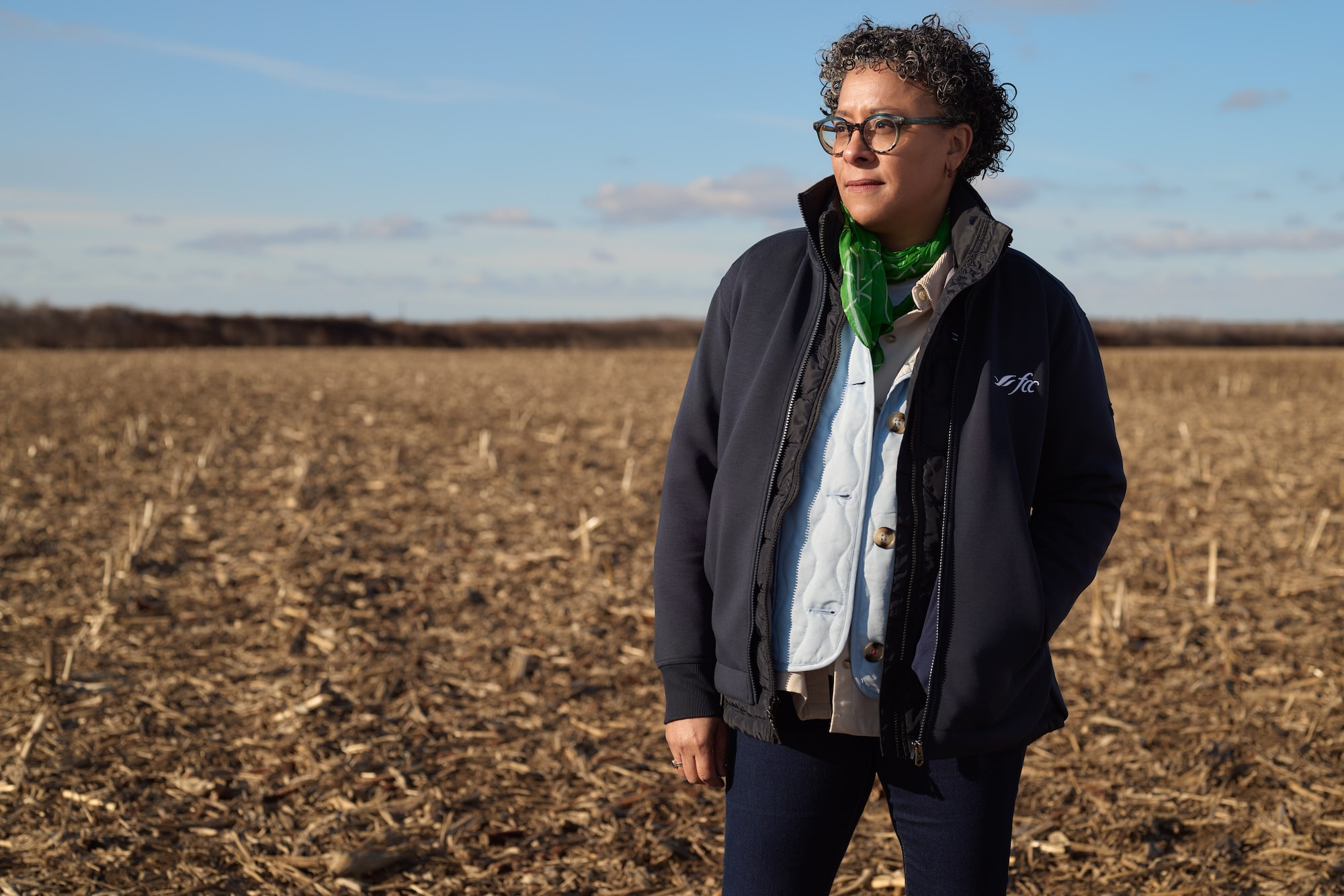
It’s said that the chief execs of FCC are born in the agricultural schools of Prairie universities. The president before Hendricks was an agricultural economist trained at the University of Saskatchewan. The president before him earned his degree in agricultural economics from the University of Manitoba. The president who first led FCC, Brigadier T.J. Rutherford, bred shorthorn cattle.
This suited FCC. It was mainly known for focusing on primary agriculture—that is, the business of growing crops and raising animals—with a heavy slant toward Western Canada.
So it was a change when the Ministry of Agriculture and Agri-Food hired Hendricks. She grew up in Montreal, where she was one of the first Black girls to attend her Catholic school. Her mom graduated from the first class of registered dieticians in Canada and later, as president of the National Institute of Nutrition, helped to develop Canada’s national food guide. Now, Hendricks is a CEO and single mother to three girls, and splits her time between Regina and Ottawa.
Hendricks cut her teeth as a branch manager at RBC after doing an MBA at the University of Ottawa. In 2006, she jumped to Export Development Canada as a small business manager. Over 17 years at EDC, she led its $9-billion insurance and capital solutions portfolio, transformed its financing and investment group, and wrapped up her tenure as chief sustainability officer.
Her time at EDC showed Hendricks how to use a Crown corporation as a creative tool in the industry. They function in a “grey zone” between private and public enterprise, she says. That’s exactly where she likes to be—as she puts it, a place where connectivity and creativity thrive.
That’s what FCC was looking for in a new CEO.
The organization traces its roots back to 1929. A report from Parliament at the time said Canada’s banks were unlikely to lend money to farmers. The report seemed to validate long-held grievances in the farm-heavy Western provinces, which argued that the financial power was concentrated in central Canada—to their detriment. It also found that farmers paid more for long-term credit than non-farmers and those in other countries, hurting our global competitiveness.
In 1929, the federal government created the Canadian Farm Loan Board to administer a system of long-term mortgage credit for farmers. It was empowered to help them purchase equipment or livestock, pay off debt or—in the words of the act—“any other purpose considered as improving the value of the land for agricultural purposes.”
The organization was a political punching bag from the jump. “This is class legislation of the worst kind,” said Thomas Church, a Conservative MP from Toronto. “It gives to the farmers of one province a benefit at the expense of the rest of the people. Those who will have to foot the bill are the artisans and toilers in the various centres of population.”
In 1959, the loan board evolved into a Crown corporation, with an average loan size of $7,500 (roughly $80,000 in today’s dollars). Gradually its mandate broadened as it launched a diversity of programs, created its own accounting software, and financed small-scale and large consolidated operations in tandem. By 1979, the average FCC loan was $110,000 (approximately $475,000 in today’s dollars).
It’s quietly helped Canadian farmers weather some of the roughest days. During the 1980s commodity crash, when interest rates hit historic highs, and prices for key crops and farmland fell to historic lows, FCC provided fixed-rate financing that helped farmers survive. In 2003, during the outbreak of mad cow disease, FCC helped beef producers who’d lost access to global markets overnight and saw cash receipts fall by 33% (an estimated total loss of $5.2 billion).
During the COVID-19 pandemic, it handed out an additional $5 billion in loans to help farmers weather the shuttering of processing plants and disruptions to supply chains.
Over the past 12 months of trade wars and the energy crisis, FCC has again deferred principal payments and handed out additional credits to help farmers get by.
Andre Harpe, chair of the Canadian Canola Growers Association, calls FCC a “stabilizing factor in the agricultural world.” Not a surprise considering its heft: From April 2024 through March 2025, the corporation made 241 investments across 21 funds, with a total capital commitment of $631.8 million, and it had 2,500 employees in 103 offices. FCC’s accounting software, AgExpert, surpassed 25,000 users last year and supports the management of 6.4 million acres of farmland.
In 2022, the organization was a $41-billion company looking for a “transformation” leader, says FCC’s chair, Jane Halford. “We were looking for somebody who could give us a bold new strategy, somebody who could really navigate ambiguity, because obviously, the world was changing, but also we knew that Canada needed to change.”
The board wanted to move away from a focus on primary agriculture, she says, to represent the entire value chain, with a strong coast-to-coast presence.
Hendricks had a clear vision of what was possible, says Halford, and specific ideas about what the sector could accomplish over the next five years. It was all about connection. “Being a catalyst to bring people together is her magic power.”
That’s why travel is a non-negotiable part of her job.
Hendricks spent her first 90 days at FCC crisscrossing the country. She sat at kitchen tables with farmers across the Prairies, wearing jeans and an FCC T-shirt, hearing about the challenges they face—crop prices, land values, succession—and collecting direct feedback on FCC. She returned to Regina with a mountain of ideas. “Everything I’ve tackled has always been about trying to put myself in other people’s shoes, and showing a vulnerability, desire and curiosity to learn,” says Hendricks. “I’m not a leader who stays behind a desk.”
Each summer since she took the top job, she’s hit the road for around 10 days, visiting as many branches and clients as possible. Last year, she went to Manitoba. She drives herself, and in the first few summers, she took two of her daughters along. “Whether you’re in a big place or a small place, far from Ottawa or Regina or right in those cities, people know who she is,” says Halford.
These listening skills set Hendricks apart, says Sunstrum. She recalls the first time she invited Hendricks to speak at an investor event in Alberta (FCC has been a long-term investor in Sunstrum’s fund). She wasn’t “one of those people who walk in and leave the conference as soon as they’re done speaking,” Sunstrum says, and marries that personal touch with a vital “global perspective.” It’s a subtle but important change. “If you’re in Canadian agriculture, you’re global.”
The local and the global are intricately intertwined, Hendricks agrees. FCC’s closeness to Canadian farmers means it can be one more bridge connecting them to buyers across the world. A prime example is a top dairy farm she toured in Abu Dhabi that wants more of the best forage: alfalfa. Hendricks is determined to get Canadian alfalfa to that farm in the desert.
“Everything I’ve tackled has always been about trying to put myself in other people’s shoes, and showing a vulnerability, desire and curiosity to learn.”
– Justine Hendrick, CEO of Farm Credit Canada
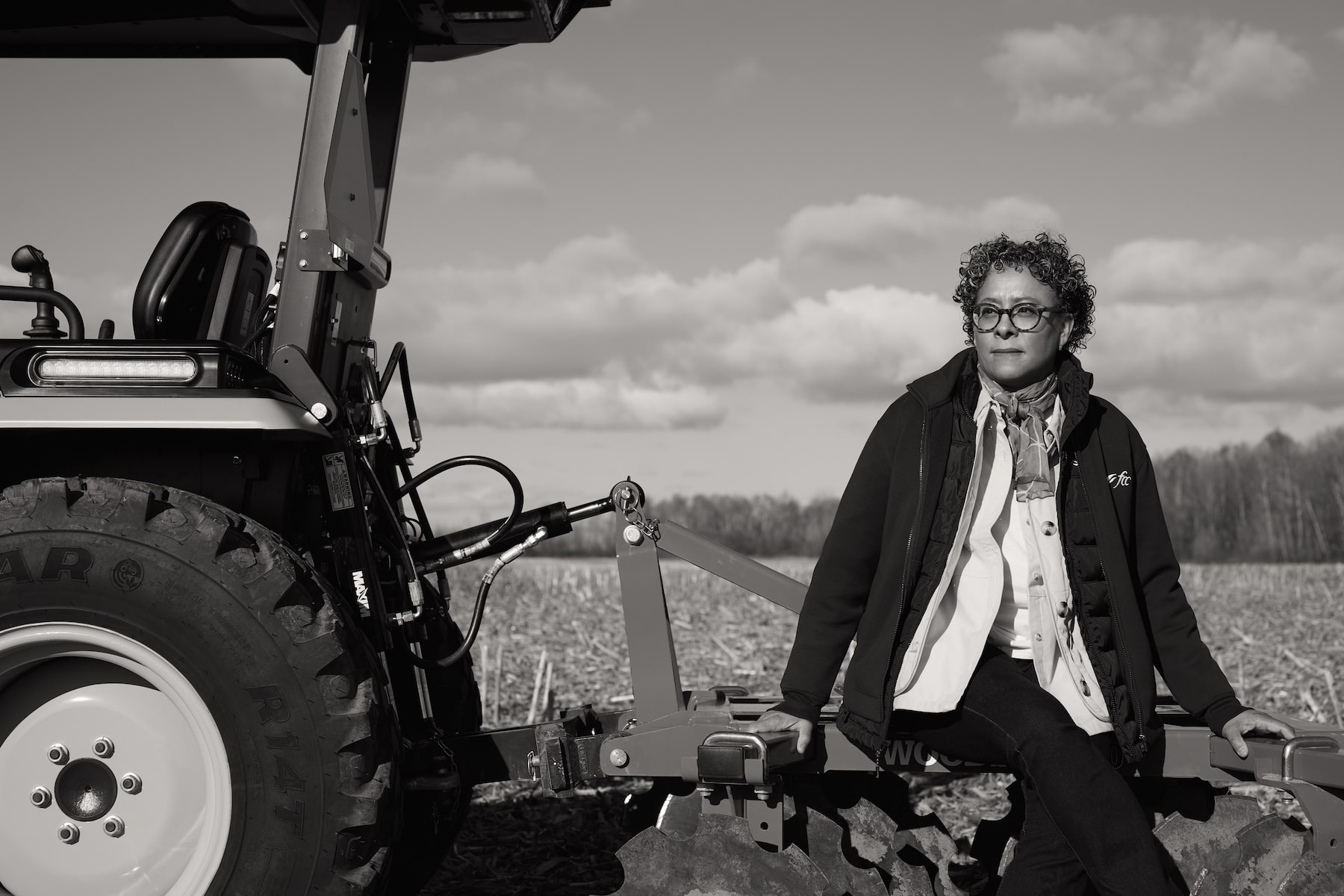
Connections are at the heart of the FCC Capital project launched in 2024. The program had deployed around $412 million in new capital by the end of March.
The team running FCC Capital includes Graeme Millen, a founder of Silicon Valley Bank, and Darren Baccus, founding partner of a California investment platform specializing in regenerative food systems.
FCC is effectively crowding in investment to create a “critical mass” that will ignite further investment, says Baccus, and his team’s job is to “drive deal flow.”
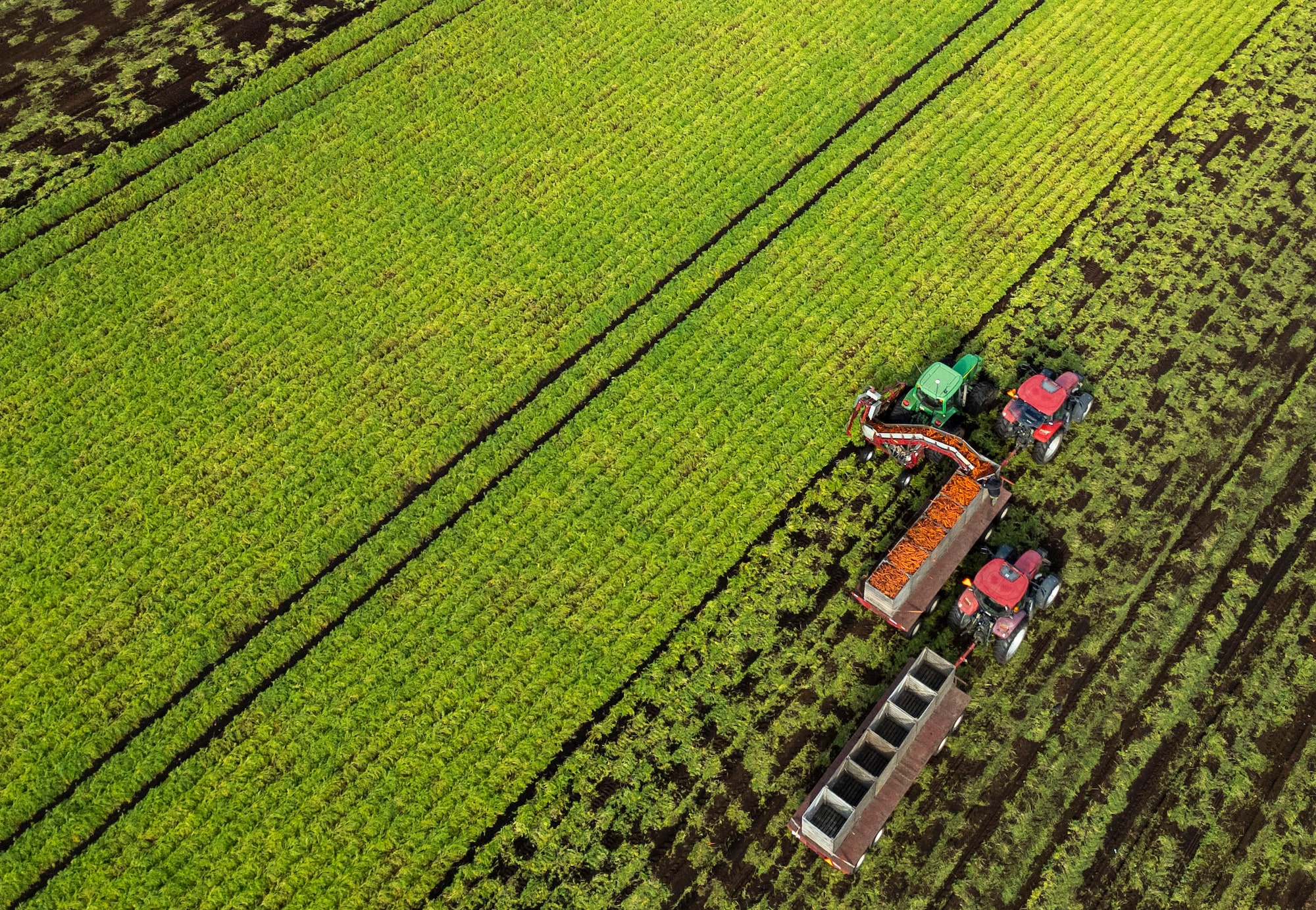
The fund has invested in traditional agricultural operations, like a warehouse in Battleford, Sask., that has already moved more than $3 million of product and, through more efficient supply logistics, saved growers around $600,000.
FCC Capital is also funding an agtech startup using AI to sort grain. The price paid to each farmer depends on the quality of the delivery, which is currently assessed by highly specialized people who collect and examine samples. It can be a lengthy process, subject to much regulation. Automated technology to consistently assess the quality of the grain in real time could streamline a key step.
On May 12, FCC also announced its role as a founding partner in AIVA, a network to connect farmers and agtech companies to test technologies on Canadian farms.
Connecting financial markets to technology to the soil will help “leapfrog the industry and others into a whole new spectrum of efficiency and effectiveness,” says Hendricks. For this reason, investing in innovation is not opposed to investing in primary agriculture—efficiencies in one will drive gains in the others.
This, Hendricks says, is the “end of the beginning.” Now, FCC needs to execute the strategy it’s laid out. “The pressure is on more than ever now,” she says. “We’ve got to deliver.”
After announcing the $5 billion in funding for FCC Capital in February, Hendricks said the phones started ringing. She’s hoping other generalist investors will now have the confidence to invest where they wouldn’t before.
It’s the kind of leadership and momentum the sector has long needed, says RBC’s Lisa Ashton. RBC pledged capital to the $5-billion fund, and in October, it launched RBC Generate, a $5-million, five-year investment to advance Prairie agriculture and position the sector as a national growth driver.
In becoming a bridge between the complex world of food production and generalist investors, FCC could help the industry with its high-risk reputation, Ashton says.
Across the past five years, capital has flooded into the food space for two of what Ashton calls “big, splashy opportunities”: vertical farms and artificial meat. But returns were dismal. Several high-profile vertical farms have filed for bankruptcy, and shares in the companies that pioneered artificial meat turned out to be significantly overvalued. “A general investor may only be able to understand where there’s a lot of hype, so that’s where they engage, which creates more risk,” she says, adding that an entity that understands farming and food fundamentals, and can see hidden potential, can also give investors more confidence.
But FCC’s new direction—and its new leader—have faced pushback.
At a February hearing in the House of Commons, Hendricks fielded a series of questions and accusations. Alberta Conservative MP John Barlow questioned her spending, suggesting that the near doubling of FCC’s executive team, from 25 to 45, lacked restraint, especially when paired with $64 million spent on consultants. Hendricks’s response: The size of the organization and increasingly complex risks facing the market meant FCC needed to expand to “stay on top.” She also noted that the contracts awarded—98% of them on a competitive basis—were to help it navigate technology and cyberspace, and to transform FCC for the modern era.
Barlow also questioned a $40-million FCC loan to a cricket protein farm that later went out of business. Baccus responsed, saying the FCC had recovered $15 million of the loan, and assured the committee that FCC applies “rigour” to the allocation and management of investments.
Bloc Québécois MP Sébastien Lemire, meanwhile, claimed there’s an impression that Ottawa only allocates money to major centres, and he questioned whether FCC’s new $5-billion fund would help rural players or work to consolidate big players in the industry. (The purpose of FCC, as stated in its annual report, is to “enhance rural Canada” through financing and supporting farming and food production across the country, and the majority of its offices are in rural regions.)
There were other swipes: How did an outsider with a background in finance, not ag, get the top job at FCC? Why had it not made inroads in Quebec? Barlow also mentioned receiving letters from FCC employees claiming Hendricks had created a toxic work environment.
For her part, she says FCC’s turnover rate is low and that regular staff surveys have shown high overall engagement with the transformation strategy. FCC is in the top quartile when compared to other financial institutions, she says.
Then there’s the Fidel Castro incident. In an internal video call, Hendricks said the former dictator of Cuba had tenacity and courage, and “stuck to his values.”
“The moment in which that took place, regretfully, I was probably not at my best,” Hendricks says now. The statements were also taken out of context, she adds. She was reflecting on the decisions a leader might make when faced with a difficult choice. Her mother, she says, is her greatest inspiration.
Hendricks isn’t surprised by the criticism—agriculture is a conservative sector, and she’s here to “shake things up.” That won’t always be well received. For every three positive responses she gets, someone will be skeptical. “You want the conversation,” she says, “but not everybody is willing to have it.”
She also understands where the distrust for her—and her background—originates. Many people in Ottawa don’t try to understand the agricultural sector and the impact policies might have on those who grow our food. “Nobody’s coming to understand,” she says. “That’s what people are frustrated about.”
But Hendricks believes she has an ace in her pocket: timing. Trump’s dismantling of the global status quo has forced Canada to pull together. It has also highlighted the importance of a robust resources industry, and the need to build more diversified and resilient trade relationships.
Canadian agriculture might be spread across the country, but it’s at the centre of a historic opportunity. And in five years, Hendricks wants to see it front and centre globally, with homegrown agricultural expertise and products in businesses and on shelves.
“I think this is the moment for Canada,” says Hendricks. “I really think this is our Canadian moment. And I wholeheartedly believe in this industry. It touches every Canadian every day. We can’t miss this moment.”