It was after midnight on June 1 when the shooter arrived at the industrial lot in Vaughan, a suburb north of Toronto. The property—a local hub for Green Infrastructure Partners (GIP), the construction outfit spun off from Canadian garbage giant GFL Environmental—was deserted, save for the rows of signature fluorescent-green machinery parked along the perimeter.
The perpetrator approached the maintenance facility and opened fire, spraying the front door, windows and two vehicles with bullets.
The attack didn’t make the news—this is the first time it’s been reported—but York Regional Police opened an investigation, and detectives soon came to believe that the gunman had been hired to send a message.
A month later, there were two strikes in five days: Six dump trucks at the GIP lot were set ablaze, followed by a fiery attack on equipment at a GIP road construction site about 20 minutes north. (Around the same time, police in Windsor, Ont., said they believed an arsonist had torched half a dozen commercial vehicles at a local GFL property, but investigators say they now believe it was a case of spontaneous combustion.)
Things went quiet until Sept. 29, when a gunman fired on the Rosedale home of GFL’s founder and CEO, Patrick Dovigi; one of the bullets went through his front door and grazed his living room couch. An hour later, someone shot nine bullets through the front door of former GFL senior vice-president Ted Manziaris, who still consults for GIP.
Dovigi—who leads one of Canada’s largest and most visible companies, with those bright green GFL trucks picking up trash from more than 700 municipalities across Canada and the U.S.—initially described the attack on his home as a botched robbery. But after The Globe and Mail reported on the back-to-back shootings—and that police believe they were linked—he said: “This is not The Sopranos.” (A month later, another GFL office in Toronto was shot at.)
Dovigi had reason to be prickly, not least because of the obvious threat the attacks posed to him, his family and his employees. But GFL was also in the middle of a big transaction. In June, the same month the violence started, The Globe reported that the waste giant was looking to sell its environmental services division.
A sale could help the company—which generates most of its $8 billion or so in annual revenue hauling residential and commercial waste—pay down its debt. If it fell through, GFL’s shares could continue the slide they’d started in the summer of 2023.
From its earliest days, GFL has been a serial acquirer, borrowing money to fund purchases of smaller rivals. Investors didn’t seem to care; the company’s debt load simply grew as the GFL empire expanded. Private equity firm after private equity firm lined up to invest, and after its 2020 initial public offering, institutional fund managers got positively giddy for the stock; GFL’s market value is now close to $25 billion.
But 2024 was looking grim. Investors were getting nervous about its debt load, given high interest rates. The waste management company had a massive valuation but wasn’t profitable. Dovigi was earning $68.5 million a year, making him Canada’s highest-paid executive. And the attacks put GFL under a different spotlight.

On September 29, 2024 – the same day a gunman fired on the Rosedale home of GFL’s CEO Patrick Dovigi – someone shot nine bullets through the front door of former GFL senior vice-president Ted Manziaris.
Yet in January, GFL signed a deal to sell 56% of its environmental services division to a pair of private equity partners for $6.2 billion in cash proceeds—money that would be used to pay down debt and buy back shares. GFL’s stock has now climbed nearly 50% above its 2024 low, and it’s up more than 150% since the IPO in March 2020. The company’s debt is even on track for an upgrade.
“If I could script a transaction perfectly,” Dovigi says now, “that’s exactly what happened.”
No one who’s followed his career will be surprised Dovigi pulled this off. As one former insider says: “When the shit’s up against him, he comes up like roses.”
GFL is unquestionably a success. But sometimes, the wins come with an asterisk—not that most investors seem to care.
The guy appears, well, bulletproof.
GFL’s headquartered in Vaughan, but Dovigi and his tight team of executives often work out of an office in Yorkville, near the area once known as Toronto’s Mink Mile.
Dovigi strides into the eighth-floor boardroom in a parka and navy cashmere sweater. It’s mid-January, and he’s agreed to a wide-ranging interview. Nothing’s off the table.
So, first things first: Why did someone set fire to GFL equipment and shoot up his house?
“I wish I knew,” he says.
That’s a very different response than the botched-robbery theory he put to reporters in the fall. “All I knew,” he says now, “was what I was told by the security guard at the house. The police didn’t even call me for, like, five days after it happened.” (Police opened an investigation immediately.)
It’s easy to see why the finance world has embraced him. At 45, Dovigi is charismatic and smooth, but somehow still sounds like a hockey guy from northern Ontario. And he’s unapologetically confident. When pressed about the complex terms of the recent sale, for instance, he says simply: “I became a billionaire by doing this. At some point, my track record sort of speaks for itself.”
If you’ve tracked GFL’s rise from nothing to fourth-largest player in North America, you know the broad strokes of Dovigi’s origin story: He grew up in Sault Ste. Marie, a small city famous for its steel manufacturing, emerged as a goaltending phenom and was later drafted by the Edmonton Oilers. Instead of pursuing hockey, he took a job at a small investment firm, where he was put in charge of a failing waste transfer site and got a crash course in the garbage business.
“I became a billionaire by doing this. At some point, my track record sort of speaks for itself.”
– Patrick Dovigi
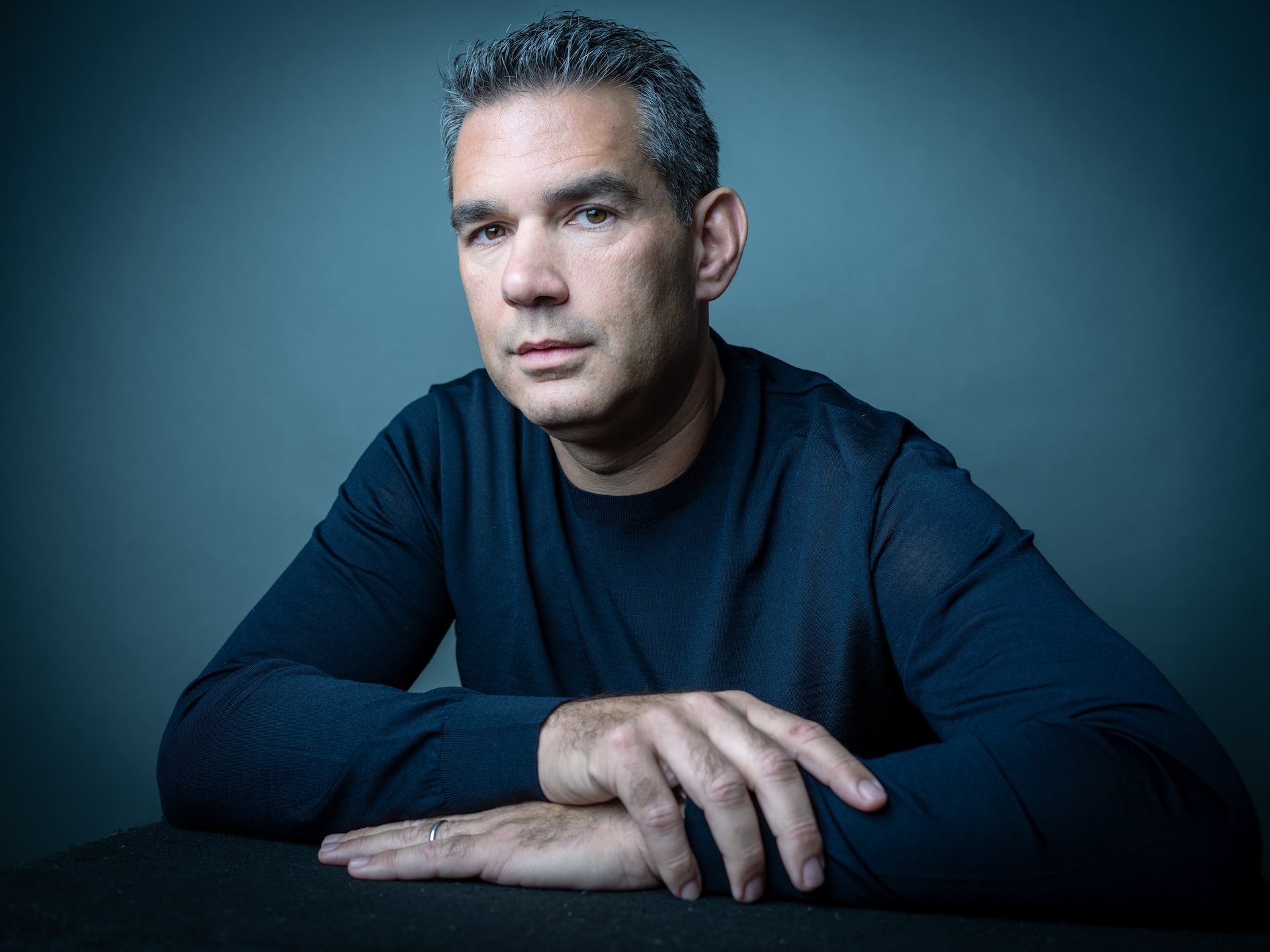
There’s more to it than that, of course, and the details provide a fuller picture of the man who’s managed to chart a course that shouldn’t work but somehow does.
By 18, Dovigi had left the Sault to play for the Ontario Hockey League’s St. Michael’s Majors in Toronto, where he was billetted with the wealthy Leibel family in posh Forest Hill. Lorne Leibel was a former Olympic sailor better known as the founder and president of Canada Homes, and one of the country’s wealthiest developers. His son Cody played for the Majors, too, and he and Dovigi became good friends.
In the summers, Dovigi would play shinny with Cody’s friends in Forest Hill, a group that included scions from some of the city’s wealthiest families. Eventually, he was drafted in the second round to the Oilers, but he says that when it became clear he’d spend much of his career in the minors, he opted not to sign. He enrolled in business school at what’s now Toronto Metropolitan University. A year in, someone in his new network told him that a bank called Standard Mercantile was looking for young talent.
At Standard Merc, Dovigi worked alongside Romeo DiBattista Jr., son of the wealthy owner of Brovi Investments. (DiBattista later made headlines during the Toronto Mayor Rob Ford crack scandal in 2013. Court documents connected to a police probe of Ford’s drug use highlighted DiBattista’s phone call with an alleged drug dealer, later acquitted, who sometimes drove Ford around. Reports at the time indicated DiBattista and the mayor were known to socialize at an after-hours club.
DiBattista was never charged, and the police document didn’t allege any criminality. His lawyer, Jeffrey Kaufman, says DiBattista and Ford grew up together, adding: “Mr. DiBattista had absolutely no involvement in the crack scandal,” and said that the call to the driver, Sandro Lisi—whose family owned a painting company—pertained to a plastering contract.)
Standard Merc had lent money to a transfer station in Vaughan called 310 Waste, but after Ontario’s environment ministry discovered the owners were illegally storing thousands of tonnes of garbage on site, Standard wanted out. Since the scarcity of transfer stations gave them value, Brovi, which had a second mortgage on the property, agreed to take it over under a new company called Waste Excellence Corp.
Dovigi was made a director and sent in to oversee the cleanup. “The deal I had with Brovi was that they were going to put up all the capital, I was going to do all the work, and we were going to split the profit 50-50,” he says. As part of the agreement, he says, he would be paid $250,000 a year.
Just after Thanksgiving 2004, as Dovigi was about to take over the transfer station, a massive fire broke out and continued to burn for weeks. (Three men involved in running the station before Dovigi came on board—Robert Sansone, Edmon Hanna and Guido Titton—were eventually sentenced to jail time for offences against the Environmental Protection Act in connection with the fire.)
Once the blaze was finally under control, Dovigi called the big waste companies with an offer: Haul out the garbage at his expense and dump it at their landfill sites for free, then agree to use the station once it reopened. They took the deal, and around the fall of 2006, the station reopened. The business exceeded even the most optimistic projections. As one of the only licensed transfer stations around, it had a booming clientele, and the land—roughly seven acres—was valuable. Dovigi figured he and Brovi had made around $10 million, and he says he was ready to collect his half.
Instead, Brovi sued Dovigi, alleging he’d stolen at least $673,000 through fraudulent schemes, including forged cheque signatures and diverting Brovi funds to personal companies. (DiBattista’s affidavit in the case says Dovigi had been promised a 20% stake in the waste facility, and that this deal wasn’t made until May 2006.) The claim was eventually settled.
Speaking about the case in detail for the first time, Dovigi says the accusations were false. “The DiBattistas know that they owe me 50%, they come up with this story,” he says. He didn’t have the money to take them on in court, though, so he says he agreed to a $500,000 payout. “I’ll never forget—I think the date was May 21, 2007. I literally walked out of the office and said, ‘This is the worst mistake you guys are ever going to make in your life—but thank you.’”
In a statement to The Globe, DiBattista says it was “ludicrous” to suggest Dovigi was ever getting half the profit. He also says the lawsuit was settled with Dovigi paying Brovi $500,000, not the other way around.
That summer, back in Forest Hill with his hockey buds, Dovigi laid out his vision for a new waste company. He had two things going for him: He now had connections in the industry, and it was the income-trust era, with markets so frothy that all sorts of garbage—figuratively speaking—was going public.
One of the players suggested Dovigi talk to his dad, Barry Goldberg, an investment banker at Genuity Capital Markets. Goldberg was intrigued, but this wasn’t really his area, so he sent Dovigi to Genuity’s boss, David Kassie. “I explained it all to him,” Dovigi says about that first meeting. “Here’s what I have. Here’s what I know I can close on. Here’s the price. Here’s what I believe we can make, how much leverage I think we can put on them.”
He’d identified three acquisition targets (research he says he compiled by cold-calling businesses in the recycling and waste section of the Yellow Pages to see who was open to selling and what they had to offer). Two were in Pickering, just east of Toronto—a transfer station and a processor of liquid waste. The third was a Toronto hauling company that also operated a transfer station. Kassie was impressed.
“One of the challenges, especially with younger people, is they’re really good or passionate about the area, but they don’t have the financial skills. They’re not solving for shareholder value,” Kassie says now. Dovigi, he adds, “actually had financial acumen.”
And his pitch made sense. Kassie had once run CIBC World Markets, so he had a track record of investing in emerging companies. He was also familiar with Laidlaw and Philip Services, both of which had become dominant players in the waste business by cobbling together smaller rivals. The thinking was always that investors would appreciate bigger entities whose revenues were spread across multiple geo-graphies (unlike mom-and-pop shops that tended to focus on a municipality or two). “It’s a pretty well-trodden path,” Kassie says. Worst-case scenario, they’d end up selling the assets for a mediocre return.
Dovigi was looking for $10 million, and Kassie was willing to write the cheque, on one condition: The money had to be committed by year’s end—Genuity had a use-it-or-lose-it arrangement to invest about $100 million annually for the Healthcare of Ontario Pension Plan. Ultimately, Genuity put up the cash, promising the pension fund an 8% return. Dovigi and the firm would split the remaining profit 40-60.
GFL Environmental’s first official day of operation was Dec. 21, 2007.

Patrick Dovigi leads one of Canada’s largest and most visible companies – GFL's bright green trucks pick up trash from more than 700 municipalities across Canada and the U.S.Fred Lum/The Globe and Mail
The 2008 financial crisis gave GFL a new raison d’être. Dovigi’s initial plan was to compile a few businesses and flip them for a tidy profit. But as the financial system unravelled, he saw opportunity in chaos.
With many of the big U.S. waste management companies looking to unload underperforming transfer stations, Dovigi became the perfect buyer. He picked up three more stations and virtually overnight became the dominant player in the Greater Toronto Area.
Three years in, GFL received an offer that Dovigi says would have made his investors three times their money. But he insisted they hold on. “I literally went to pound the table. I said, ‘We’re not going to sell. This is the craziest thing. Do not sell the business now. We literally have the whole country to ourselves,’” he recalls. “We need to raise more money.”
“Go find it” was Kassie’s reply. That led Dovigi to Roark Capital, a small but growing private equity firm in Atlanta led by Jeffrey Keenan, who’d run waste management company IESI. Dovigi’s pitch was a classic roll-up, and the more of the waste supply chain he controlled, the more profitable GFL would be. He wanted to expand into hauling via National Waste Services, which had contracts in Hamilton and other cities, and Turtle Island Recycling—co-founded by Ted Manziaris, whose home was also shot at last fall—which collected trash on Toronto’s western flank of Etobicoke.
Roark greenlit the deal.
In 2011, Dovigi pulled off one of GFL’s pivotal moves, winning Toronto’s first major collection contract with a bid of $17.5 million, $3.5 million less than the closest competitor. With Canada’s largest city on its resumé, GFL snapped up municipal contracts across the country, including in Winnipeg, Calgary, Vancouver, Halifax and Windsor.
Two tailwinds worked in Dovigi’s favour: ultralow interest rates and the growing popularity of private capital. The two are intertwined, since private equity firms buy companies using lots of debt, and near-zero rates gave them ample access to cheap financing.

In 2011, Dovigi won Toronto’s first major collection contract with a bid of $17.5 million. With Canada’s largest city on its resumé, GFL snapped up municipal contracts across the country.
Waste management might seem like a strange business for PE to love—it can’t be scaled by, say, selling the same software program over and over, and it’s capital intensive, requiring fleets of trucks that wear down over time. There’s also the regulatory risk that comes with providing a municipal service that has an environmental element to it. But waste companies have become one of PE’s favourite assets, not least because they throw off cash. Plus, they’ve largely proven capable of handling their debt loads—at least when rates were low—and waste is a defensive business that doesn’t shrink all that much during severe downturns. Analysts at RBC recently calculated that the three largest U.S. players saw demand fall by just 4% during the global lockdown in 2020. Waste, then, is considered an infrastructure asset, like a toll road or a port.
So when Roark wanted to sell in 2013, two other PE firms, HPS Investment Partners and Genuity (via a new fund) were happy to buy them out. And each time GFL swapped backers, it got new capital to deploy. In October 2015, it made its largest acquision to that point, buying the waste assets of TransForce Inc. for about $800 million. To close the deal, Dovigi secured a $458-million equity investment from Macquarie.
The following year, GFL’s expansion spree sent it across the U.S. border for the first time, to buy Michigan-based Rizzo Environmental Services from PE firm Kinderhook Industries. The business came with more than 40 municipal contracts, most significantly in and around Detroit.
Just weeks after the deal was announced, news broke that Rizzo executive Chuck Rizzo was the subject of an FBI corruption probe, having allegedly bribed local politicians to secure multimillion-dollar garbage contracts. He was later sentenced to 66 months in prison. GFL denied any knowledge of the investigation. “This is not the way GFL conducts business,” Dovigi told reporters. “We take these allegations very seriously.” Today, he has somewhat softer language when addressing Rizzo’s crimes, which included covering the legal expenses of a local politician and loaning thousands to elected officials. “Bribery, if you want to call it that,” Dovigi says. “I mean, I would call it more an idiot.”
GFL continued its U.S. roll-up, eventually expanding into two dozen states. The growth provided geographic diversification, but it was frenetic. “It’s controlled chaos in there—and I mean that in the most positive way,” says one former GFL employee.
With revenue exploding, GFL tested the IPO waters in 2017, but the timing was no good. Rating agencies were growing worried about its debt load, and Moody’s warned about this burden after GFL borrowed another US$400 million. At the time, its debt had climbed to 6.4 times EBITDA, or earnings before interest, taxes, depreciation and amortization. Waste Connections, its closest major rival by market value, had a debt load of less than half that, according to Moody’s.
As public investors grew skittish, Dovigi once again turned to private equity, trading HPS and Macquarie for BC Partners and the Ontario Teachers’ Pension Plan. With their blessing, he bought Waste Industries in October 2018 for $3.3 billion, including debt.
That deal helped GFL catch up to the big three U.S. players—Waste Management, Republic Services and Waste Connections, all of which are publicly traded and whose shares had jumped an average of about 300% over the previous decade.

GFL founder and CEO Patrick Dovigi, centre, rings a ceremonial bell on the floor of the New York Stock Exchange, celebrating his company's IPO on March 4, 2020. GFL’s stock is now up more than 150% since the IPO nearly five years ago.Richard Drew/The Associated Press
Dovigi decided the time was right for another IPO run, and in March 2020, just as a mysterious coronavirus was spreading, GFL got the deal done. With markets already sliding two weeks before widespread lockdowns, the company raised US$1.4 billion in new shares, listing on both the TSX and NYSE. (GFL raised another US$775 million by selling convertible units that paid annual interest.)
Shahir Guindi, former national co-chair of Osler, Hoskin & Harcourt, sat on GFL’s board during the IPO. He says pegging Dovigi’s success to his network and knack for raising money undersells his skill set. “His ability to raise money is one thing,” says Guindi. “His ability to make money is compelling. To put businesses together, to put people together. He’s very talented at making two plus two equal five.”
Not everyone was convinced. Not long after the IPO, in August 2020, short seller Spruce Point Capital declared in a report that there was a “100% Downside Risk” to owning the stock. After conducting a forensic financial and accounting review, Spruce Point believed GFL was using aggressive accounting to inflate cash flow and understate debt. The report also drew a link between Dovigi and “controversial people” that “some observers have dubbed ‘organized crime.’” Among other things, it made mention of the FBI investigation of Rizzo Environmental and the three men who’d been convicted relating to events at 310 Waste, but these unsubstantiated allegations of links to organized crime were never proven.
GFL’s stock dipped briefly but quickly rebounded.
Dovigi, meanwhile, was more concerned with managing the growth of a newly listed company. “There’s how you run a business privately, and then there’s how you run a business publicly,” he says now. “And those are two different things.”
With markets melting down and central banks slashing rates, GFL borrowed more debt to fund new acquisitions. In June 2020, it bought a cluster of U.S. businesses for US$835 million. Two months later, GFL spent another US$1.2 billion on Houston-based WCA.
The debt-fuelled expansion could be seen as reckless, but Darryl McCoubrey, an analyst at independent research firm Veritas, says investors became entranced by one simple idea: “the promise of growth.” In its first year of trading, GFL’s stock jumped roughly 75%, while shares of its U.S. rivals remained flat.
Since Dovigi owned 10% of the company, his personal wealth exploded. Through 2021, he sold $81 million in stock, according to insider filings. Some of the proceeds found their way into a US$72.5-million mansion in Aspen that overlooks downtown (which he sold last year for more than US$100 million), along with multiple condos on ultra-exclusive Fisher Island in Miami. Then there’s his home in Rosedale, a condo in New York, a cottage in Muskoka, another place in Aspen (which once belonged to Jack Nicholson) and a yacht that cost a reported ¤330 million. (Dovigi says bluntly: “I’m not hiding from it. Yes, I have beautiful houses. Yes, I have a boat. I’m not the only one in Canada who has the same. I will never own an asset that I believe I’ll lose money on.”)
Dovigi also started diversifying into infrastructure. In late 2021, GFL signed a deal to acquire Coco Paving, a family-owned road-paving business in Ontario, for an undisclosed sum. (Earlier in the year, CEO Jenny Coco had gotten into trouble tied to her ownership of private lender Bridging Finance, which imploded and left 26,000 investors in limbo.) GIP was created to house the paving company and a few other GFL assets. To finance the new business, he brought in HPS, which took a 47% stake; GFL owned another 45% and Dovigi 8%.

Coco Paving's office and lot in North York, Ont., in January, 2021. In late 2021, GFL signed a deal to acquire Coco Paving, an Ontario-based family-owned road-paving business, for an undisclosed sum.J.P. MOCZULSKI/The Globe and Mail
For investors, the lingering question was fiscal discipline. Dovigi has a habit of emphasizing how much GFL is growing and downplaying what it spends to achieve that growth. That didn’t seem to matter when rates were low, but when central banks started hiking them in 2022, it became more problematic.
Dovigi often talks about GFL’s debt relative to adjusted EBITDA, which strips out a few additional expenses. According to him, the company’s debt amounted to roughly four times annual adjusted earnings. Rating agencies S&P and Moody’s had a different take, pegging GFL’s debt at about five times. One reason for the disparity: the treatment of acquisition costs. GFL argues that those expenses, which amounted to $78 million in 2023, were one-time items. The rating agencies argue that since GFL is a serial acquirer, they’re recurring expenses.
When interest costs finally became a concern in mid-2023, GFL promised to cool its acquisition spree, and it quietly started cutting costs. Dovigi also announced plans to sell some underperforming assets, including parts of the Rizzo business in Michigan, where Dovigi says residential collections weren’t making the returns GFL was looking for. The buyer, Priority Waste (backed by—surprise—a private equity firm), also arguably had a more efficient business model, using high-tech trucks that could be operated by a single worker.
A Priority spokesperson said that at the time of the hand-over, the company discovered that roughly 200 of the 400 GFL trucks it received weren’t roadworthy. Some appeared to have been sabotaged; Priority says others had been defecated in. Dovigi dismisses all these assertions, noting that Priority had the right to inspect the equipment before the deal closed.
GFL’s debt, meanwhile, barely budged. Before selling the assets, its debt load totalled $9.6 billion. Afterward, it fell to $7.9 billion, yet by mid-2024 it had climbed back to $9.5 billion.
With GFL’s share price falling—it was down around 20% between July 2023 and May 2024, while major rivals were up that much or more—Dovigi drew the ire of his second-largest shareholder. He’d long been one of Canada’s best-paid CEOs—in 2018, he earned $47.5 million in total compensation. But after Dovigi’s $68.5-million pay package was disclosed in March 2024, Teachers voted against it, though the vote was non-binding.
Dovigi’s three major U.S. rivals all make most of their money hauling garbage and burying it at their landfill sites. GFL’s mix is a bit different. The environmental services division, for instance—which offers liquid waste management and soil remediation, and contains some of the first assets Dovigi put together to form GFL—makes up about 20% of its revenue.
For years, the division seemed almost untouchable. But during the drama in 2024, some investors, including Adam Wyden, founder of ADW Capital Management in Miami, started calling for a sale. Not only would it help pay down debt, but it would also remove an overhang on the shares. Because BC Partners still owned so much stock, Wyden believed some investors were wary to buy, knowing its repeated secondary share sales would drive down the stock price. “Other investors don’t go into the market and buy, because they know BC is going to keep selling,” says Wyden, adding that, in his view, that’s why GFL’s stock has at times traded at such a discount relative to its peer group.
Under pressure, GFL launched an auction for the division, and by November, Dovigi said he expected the company to earn $6 billion from the sale. He was right. But when the deal was announced in January, it came with a twist. Two private equity firms, Apollo Global Management and BC Partners, would each buy 28%, while GFL would keep 44% for itself. The new owners would also add roughly $4 billion in debt to the business.
So, while GFL can use the cash proceeds to pay down existing debt, it will remain a significant owner of a business with billions of dollars of new debt. To do this, GFL structured the deal similar to the creation of GIP. The business will sit on its balance sheet as a single line item, which means investors will only see the value of GFL’s equity position. All cash flow and financial details will be kept private—though the rating agencies will rate its debt—and any money borrowed won’t be consolidated with GFL’s debt.
GIP’s experience over the past two years highlights the trade-offs of this structure. The infrastructure business has struggled with cost overruns, and GIP has parted ways with some of its most senior talent, including CEO Christian Dover, who’d been with GFL since 2016. GFL shareholders, though, have almost no way of knowing what’s happening inside the business.
Dovigi just sees the upside. “Everybody was assuming we were selling the business, we were getting $6 billion, and that was the end of it,” he says. “We ended up getting $6.2 billion in cash, still owning 44%, still having an option to buy back the business in five years.”
BC Partners’ involvement is also unusual. As GFL’s largest shareholder, the British private equity firm already technically owns a stake in the environmental services division, yet it’s borrowing money to buy that same business—money that could then be used to buy back at least some of its stake in GFL. The waste giant hasn’t fully spelled out that BC and Teachers will own less, but in our interview, Dovigi indicated that Teachers likely wouldn’t have a board seat by May, and BC Partners would be down to one director, reflecting their reduced stakes.
Most stock analysts don’t seem to mind the complexity, though. “We push back on the argument that selling environmental services is just a financial engineering exercise by GFL,” CIBC analyst Kevin Chiang wrote in a recent note to clients. He calculated that even after adding in GFL’s $1.8-billion portion of the new debt, the sum is less than the $3.8 billion in debt GFL said it would repay from its own balance sheet.
Even Veritas’s McCoubrey acknowledges that being a GFL skeptic can feel like screaming into the wind. “I’ve been ‘sell’ since the IPO,” he says, “and I’ve been wrong since then.”
Late in January, police in York Region and Toronto called to tell Dovigi they were close to making an arrest in both the arson and shooting cases, though he says he can’t talk about specifics until charges are laid. (Police wouldn’t confirm this to The Globe.) What he will say: His top priority is ensuring the safety and well-being of his employees. “Money can fix a lot of things, but when things like this happen, it shakes people up, it shakes us up as a senior management team,” Dovigi says. “We can hold our heads up high, knowing we’ve always competed fairly, and at some point, justice will be served.”
As for the business itself, Dovigi’s not taking a breath. Even though he’s got more competition from PE buyers, there are still scores of smaller players to scoop up—RBC analysts estimate there are several thousand in the field. GFL is also reaping the benefits of price increases that all the waste giants have been able to push through in the past two years. And because interest payments will eat up less of GFL’s revenue, it’ll have more capital to spend on its renewable energy projects, such as creating clean fuel by capturing the natural gases emitted by decomposing garbage. RBC forecasts that renewable natural gas will account for roughly 10% of the natural gas supply in the U.S. by 2040, up from less than 1% today.
Kassie, Dovigi’s first financial backer, loves the aggression, what with Canada facing a productivity crisis and a shrinking number of global champions. “We need more of that in Canada,” he says.
But that aggression can be a double-edged sword. GFL’s business model is eerily similar to the Canadian waste roll-ups that came before it, including Laidlaw and Philips. Both ended in misery. The real test might just be whether GFL can walk the fine line between growth and financial discipline. For 15 years, Dovigi had ultralow rates as a comfort blanket. Those no longer exist.
He’ll also have to navigate life as a truly public company. Once BC Partners and Teachers sell down their shares, they’ll have much less control, and Dovigi could be subject to more public market norms—including more scrutiny of his pay.
Toward the end of our interview, while he’s talking about how he pulled off one of the largest IPOs in Canadian history, the conversation finally turns to that remarkable compensation package.
“Is that why you’re worth $70 million?” he’s asked.
He pauses for a moment.
“I’m underpaid,” Dovigi says. “If I was under private equity, I’d get paid a lot more.”
Your time is valuable. Have the Top Business Headlines newsletter conveniently delivered to your inbox in the morning or evening. Sign up today.