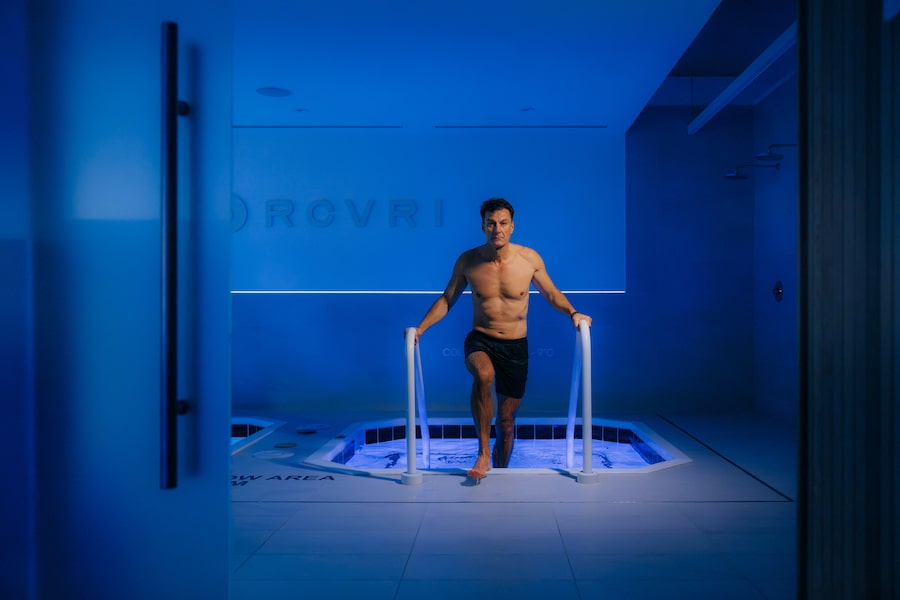
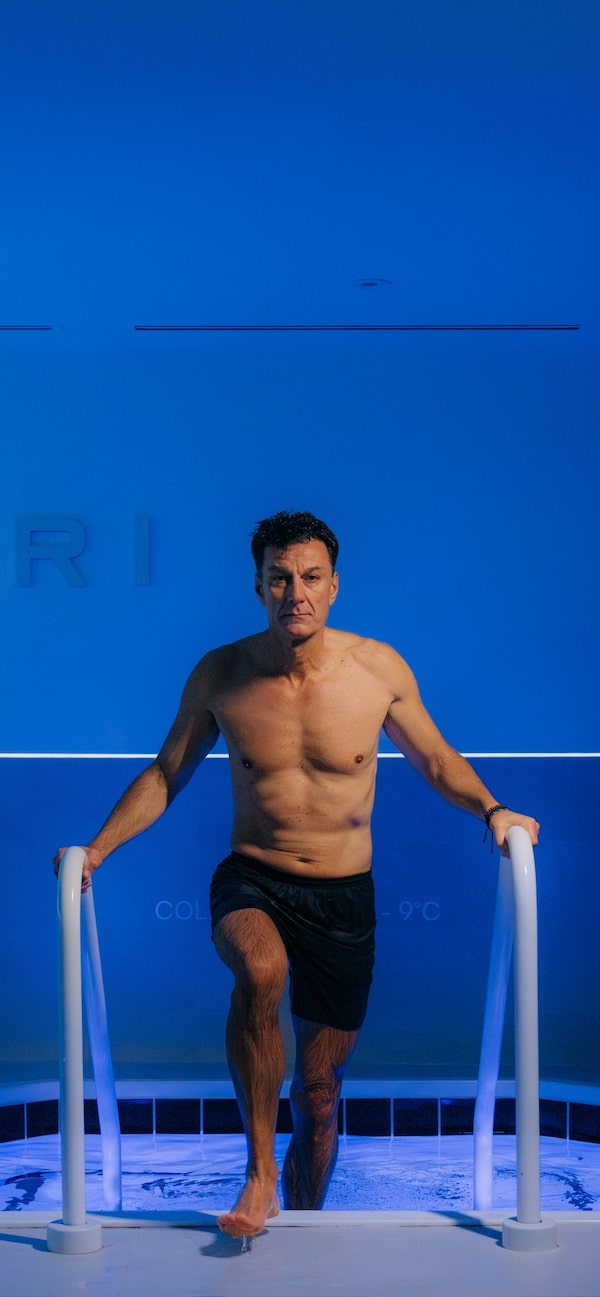
Anthony Lacavera has a rigorous daily routine that he hopes will ensure he lives to be 200 years old.
The minute he opens his eyes, he drinks a litre of water, followed by a second litre within the next 30 minutes. Over the next two hours, he drinks a third. “Starting the day that way is hugely important, because we are primarily water,” says Lacavera. “So it’s pretty obvious, pretty intuitive.”
Most days, before 11 a.m.—after a daily workout based on a rotating schedule that includes yoga, meditation and weightlifting—he consumes roughly 2,000 calories via a four-course breakfast featuring several potatoes, a chicken breast (on heavy lifting days), a mix of olive oil and vegetables, boiled eggs and a large bowl of oatmeal with seven kinds of nuts and seven different seeds. “I try to get 30 different ingredients in my body before noon,” says Lacavera, who has an edict against in-person morning meetings, instead focusing on reading emails and industry news as he eats.

Anthony Lacavera undergoes a facial treatment meant to stimulate facial tissue and help drain the lymphatic system. The 52 year-old telecom entrepreneur has a rigorous daily routine that he hopes will ensure he lives beyond the average lifespan.Christopher Katsarov Luna/The Globe and Mail
The deeply driven telecom entrepreneur has maintained the same general routine for about 25 years, when he first started studying his own biological markers to establish a protocol designed to see him celebrate his bicentennial. And it’s one he kept up even during his days as CEO of Wind Mobile, the Canadian telecom company he founded in 2008 and sold eight years later to Shaw Communications for $1.6 billion.
Each year, he spends close to $100,000 on comprehensive blood, biometric and food sensitivity tests, medical scans, hormones and supplements. And he tweaks his routine often, depending on medical advances and the latest evidence-based research. Over the past couple of years, for instance, he’s incorporated red-light therapy (reputed to trigger blood flow and energize cells) and cold-water immersion (believed to bring benefits that include a stronger immune system and greater metabolic health) into his weekly regimen.
The bottom line is, there’s nothing Lacavera won’t try when it comes to slowing or reversing the march of time. At 52, he says he has the biological markers of someone in their mid-30s.
Now he wants to share the knowledge he’s accumulated with the rest of us. In 2025, Lacavera teamed up with fitness guru and self-proclaimed “life engineer” Gary LeBlanc to launch EverMe, a mobile app backed by a group of Canadian business titans, including former Magna International honcho Don Walker (EverMe’s chair), retired Manulife Financial CEO Roy Gori and Alibaba president Mike Evans, plus astronaut Chris Hadfield and TV personality Kevin O’Leary. All are members of an exclusive club that calls itself the Longevity League, and together with a group of outside investors, they’ve raised a combined $5 million to get EverMe off the ground.

Kevin O’Leary is one of the financial backers of the EverMe app. His own extreme longevity regimen includes a blood plasma transfusion every 90 days at a facility in Miami.Luis Mora/The Globe and Mail
The app, which currently has about 5,000 active users, draws on artificial intelligence to find, read and organize complex research papers, trending longevity information and expert perspectives on how to live a healthier life—in both body and mind. More importantly, says Lacavera, EverMe can quickly sift through the thousands of longevity articles that pop up each day online to point users toward legitimate medical research as opposed to bunk. “We want to help people get control of their own health and wellness, get agency, and have a community that supports them while they do it,” he says.
The market for age-defying products and services has exploded, abetted by a vast community of online influencers and a host of Silicon Valley startups with deep-pocketed investors. OpenAI CEO Sam Altman has invested US$180 million in Retro Biosciences, a venture that aims to stall or reverse aging, while Amazon founder Jeff Bezos reportedly joined a group backing Altos Labs, a secretive longevity-focused company that had US$3 billion in investment when it was founded in 2022.
According to the non-profit Global Wellness Institute, the longevity economy is worth nearly US$7 trillion a year. It’s not hard to see why: In a world that reveres youth (or at least the appearance of it), we’re getting older. By 2040, McKinsey & Co. projects that almost 15% of the global population will be 65-plus. We’re also living longer: Average global life expectancy is projected to increase by 4.5 years from 2022 to 2050, prompting more and more people to ask the same question Lacavera and his compatriots did: How can I ensure I’m spending those years in the best shape possible, physically and mentally?
At the same time, we’re being bombarded with conflicting health studies and outright misinformation (even from once trusted sources like the U.S. Department of Health), making it increasingly difficult to discern what’s real science and what’s not. To compound the problem, many people no longer have access to a family doctor they can turn to for advice, instead resorting to self-diagnosis, shady online “experts” and AI chatbots.
“It’s not a healthy space right now, ironically,” says LeBlanc, a mechanical engineer by training whose book Find Your SuperHuman is a bible of sorts on how to turn complex health data into daily routines. “It’s actually a space that is the most click-baity.”
EverMe’s high-powered backers (a list that also includes White Claw founder Anthony von Mandl, former Canada Pension Plan Investments chief executive Mark Machin, one-time Facebook Canada managing director Jordan Banks, plus a host of medical experts) hope the app will become a haven for anyone seeking reliable longevity-focused information. LeBlanc, who serves as EverMe’s president (Lacavera is CEO) aims to market it to medical clinics and other practitioners, who will in turn provide patients with direct access. “Entrenching ourselves in clinics gives us both credibility and a lot of data, meaning a lot of feedback from the doctors,” says LeBlanc. “It’s also a great revenue source.”
Walker, though, is quick to stress that he and his fellow Leaguers aren’t in this for the money. “The idea is, how do we go about disseminating intelligent information to everybody?” he says. “It’s not a secret. It’s not something we’re going to try and hide for ourselves.”

Don Walker, who stepped down as CEO of Magna five years ago, drinks a daily shake that contains 30-odd ingredients.Shlomi Amiga/The Globe and Mail
If Lacavera is the Longevity League’s guinea pig—the guy willing to try just about anything—Walker is the engineer who’s looking to optimize his health regimen.
He’s always been fit—he was a wrestler in high school, and devoured men’s magazines for tips on diet, supplements and the latest workout fads. But he didn’t get truly serious about longevity until his mid-50s. He’d been at the helm of Magna for many years by then and found himself wondering if there was an “intelligent way” to live a longer, healthier life—not just for himself, but as a potential retention tool for Magna directors, executives and employees. “As an engineer, I wanted to develop a flow chart that anybody could easily follow,” says Walker, who’s now 69. “So, if you’re at point A and you want to get healthier, you need to do B and C and D and so on. And in the end, it could lead to longevity.”
But the more medical research he read, the more he found the material contradicted itself. A decade or so ago, he was having dinner with a few friends who had similar questions about longevity and a hankering to learn more.
Walker started inviting them to meet up in Toronto once a month to discuss how to live longer, healthier lives. In time, the circle grew, and they began to invite medical professionals to discuss their research, among them Richard Isaacson, a Florida-based neurologist who specializes in brain health and Alzheimer’s research; cardiovascular doctor David Wright; naturopathic doctor and hormone expert Maille Devlin; and sports medicine specialist Anthony Galea, whose Institute of Human Mechanics treats injuries with cutting-edge techniques like platelet-rich plasma therapy, which uses a component of a patient’s own blood to promote healing. (All are EverMe backers.)
Today, the Longevity League has nearly 40 members. They still meet monthly, though mostly online to accommodate busy schedules. Once a year, they attend a weekend retreat in Muskoka to dig into longevity issues, from brain health, protein intake and stem cell therapy to cold plunging, peptides, muscle-mass cardio routines and beyond.
The idea for EverMe grew out of conversations within the group, says Walker: “We have all this information. We should be making it available to everybody.”
Lacavera and LeBlanc decided to pursue the idea and launched a pilot mobile app last year that allowed users to access its research database. In March, the pilot phase ended—users now pay about $10 for a monthly subscription, though some content is still free.
Sitting at Cafe Landwer in Toronto in a comfy grey T-shirt and jeans, with a cup of chamomile tea (he prefers green, but they didn’t have any), Walker is hesitant to discuss the league publicly. He’s protective of the invite-only group, which includes a circle of people he considers to be close friends and who are eager to help the general public gain access to unbiased health information.
Walker retired from Magna five years ago and now spends a fair amount of his time perfecting his health and wellness regimen—which, he notes, is largely free.
Quality sleep is key: He tries to get 8.5 hours a night. So is daily movement. Walker has a list of challenges he sets for himself. For example, he does a routine LeBlanc introduced to him: 250 push-ups and 100 chin-ups, with a goal of completing them in under 20 minutes. In addition, he does four weight workouts each week, including HIIT and lower-intensity cardio.
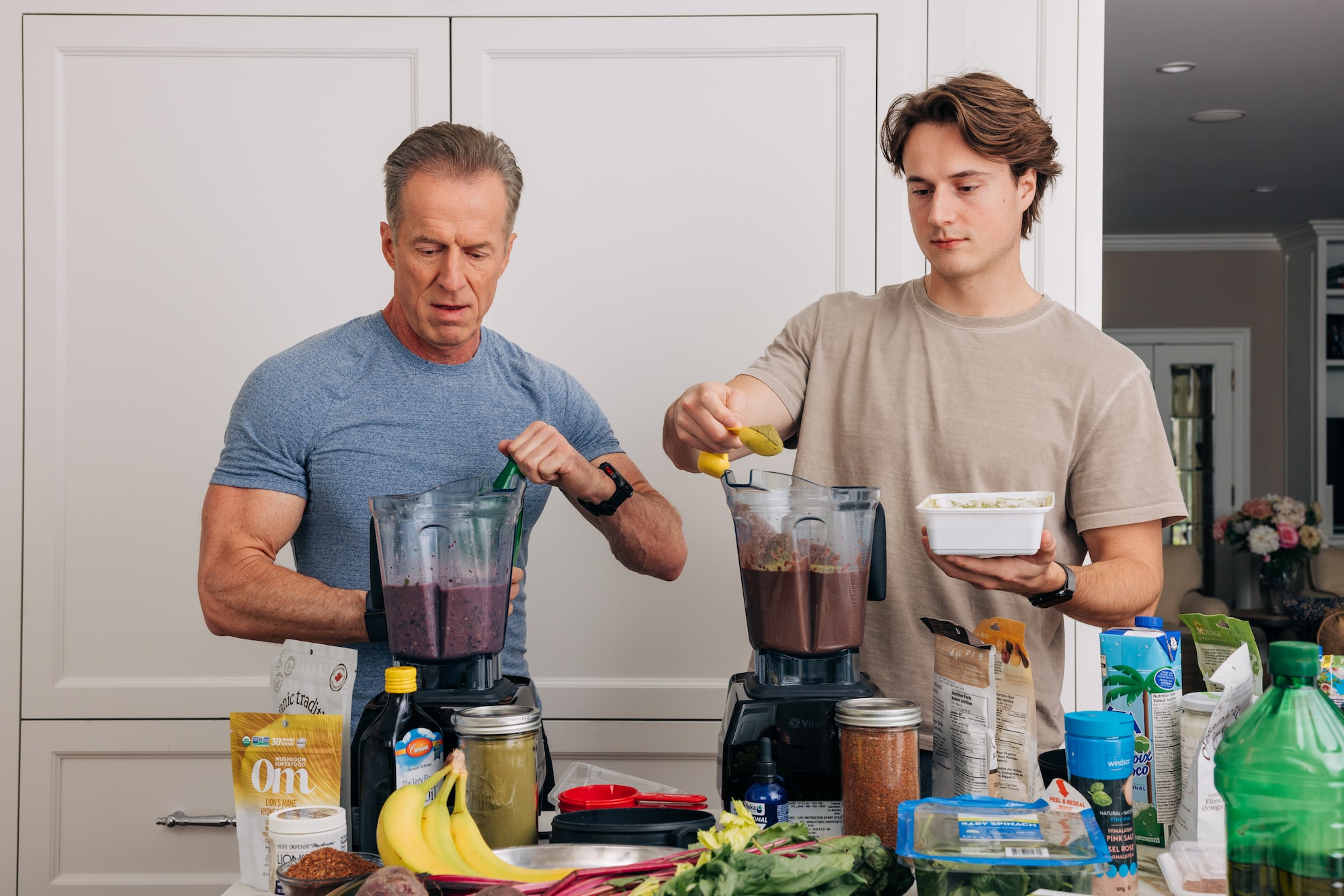
Walker also swears by a 26-ingredient “superhuman” shake created by LeBlanc, though he boosts it to 35 ingredients and has outsourced its preparation to his 24-year-old son Dillan, who runs a beverage business and is working on a plan to market the drink commercially. (The company, called Baseline Nutrition, is in the process of developing a way to customize shakes based on an individual’s blood work.) The shake “probably gives me 70% to 80% of the nutrients I need,” Walker says. He also takes one custom-made supplement on top of his daily shake, based on a blood test that determined his body’s deficiencies.
Walker is a proponent of appropriate medical scans for cardiovascular and brain function, and musculoskeletal health—and they can be reasonably inexpensive. The DEXA body scan, for instance, which costs between $50 and $100, can test for lean muscle mass, visceral fat and bone density. The data the scans produce won’t do his chin-up and push-up routine for him—“I can’t do it yet,” Walker says. “I’m at about 20 to 27 minutes, depending on how I’m feeling that day”—but they can help him develop a plan to improve.
When LeBlanc arrives for a meeting near St. Lawrence Market in Toronto, he’s wearing a handful of fitness trackers, including an Apple watch, a Whoop and an Oura ring. “I have them all,” the youthful-looking 54-year-old says with a chuckle. “But I’m actually checking device-to-device anecdotally to see how far off they are.” EverMe links with a user’s fitness tracker to record personalized biometric data, he explains, and he wants to make sure the data the app receives is accurate. “I want our intelligence to be the adult in the room,” he says.
LeBlanc’s longevity journey began in his early 30s, when a close friend died of cancer. The loss pushed him to quit his executive role at Bacardi and dig into the research behind diet, health and fitness. He released Find Your SuperHuman in 2017, for which his longtime friend Walker wrote the foreword. The Longevity League began around the same time, eventually leading to the EverMe app.
Currently, the app provides access to information on hundreds of the most common health, wellness and longevity topics, including peptides, cryotherapy, metformin, ayurvedic medicine and gut health. LeBlanc and Lacavera hope to have close to 500 longevity-specific subjects for users to peruse by the end of 2026.
Though it’s driven by agentic AI (EverMe has filed two patents for its AI chatbot tool, one for its orchestration agent and one for its methodology for ranking research), a steering committee of a dozen experts approves the final content and helps train the AI. Most AI tools, even the health-centered ones, are trained to scour the entire internet, including Reddit threads, social media rants and biohack influencers. That’s what makes EverMe different, say Lacavera. It’s a tight-knit database of “controlled, vetted and curated research.”
“EverMe does not,” he emphasizes, “involve gym bros with no training or credibility spewing off about peptides.”
So far, more than 20,000 health and wellness research papers, along with expert opinions, have been uploaded to the database. Say a user wants to know more about peptides, which every biohacker and fitness influencer these days is touting as a miracle cure that can help you lose fat, build muscle and sleep like a proverbial baby. The EverMe AI can sift through its library of scientific research and offer an evidence-based analysis of the risks and benefits. For some queries, it can also offer actionable research based on biometric data uploaded through a fitness tracker. The business will operate solely off subscription fees, and similar to the Netflix model, content is curated based on a user’s interests, including past consumption and search history.
Naturopathic doctor Elizabeth Goldspink, a member of the Longevity League and founder of Wellex, a dietary-supplement company, says today’s overloaded longevity environment provides EverMe with an opportunity to help people distinguish between what is foundational and what’s peripheral. For instance, when Hailey Bieber sat down with Kendall Jenner to discuss how NAD+—otherwise known as nicotinamide adenine dinucleotide IV therapy—would help her stop aging, there was a surge in NAD+ searches on EverMe. (Its verdict: While these supplements appear promising, users should approach with caution, since the long-term effects of certain compounds are still under investigation.) “The conversation has become very optimization-heavy, with biomarkers, supplements, technology and tracking,” she says. “But most longevity gains still come from remarkably unglamourous pillars: metabolic health, muscle mass, sleep architecture, nutrient sufficiency, stress regulation and social connection.”
Longevity, she says, should feel grounding and empowering—not anxiety-inducing.
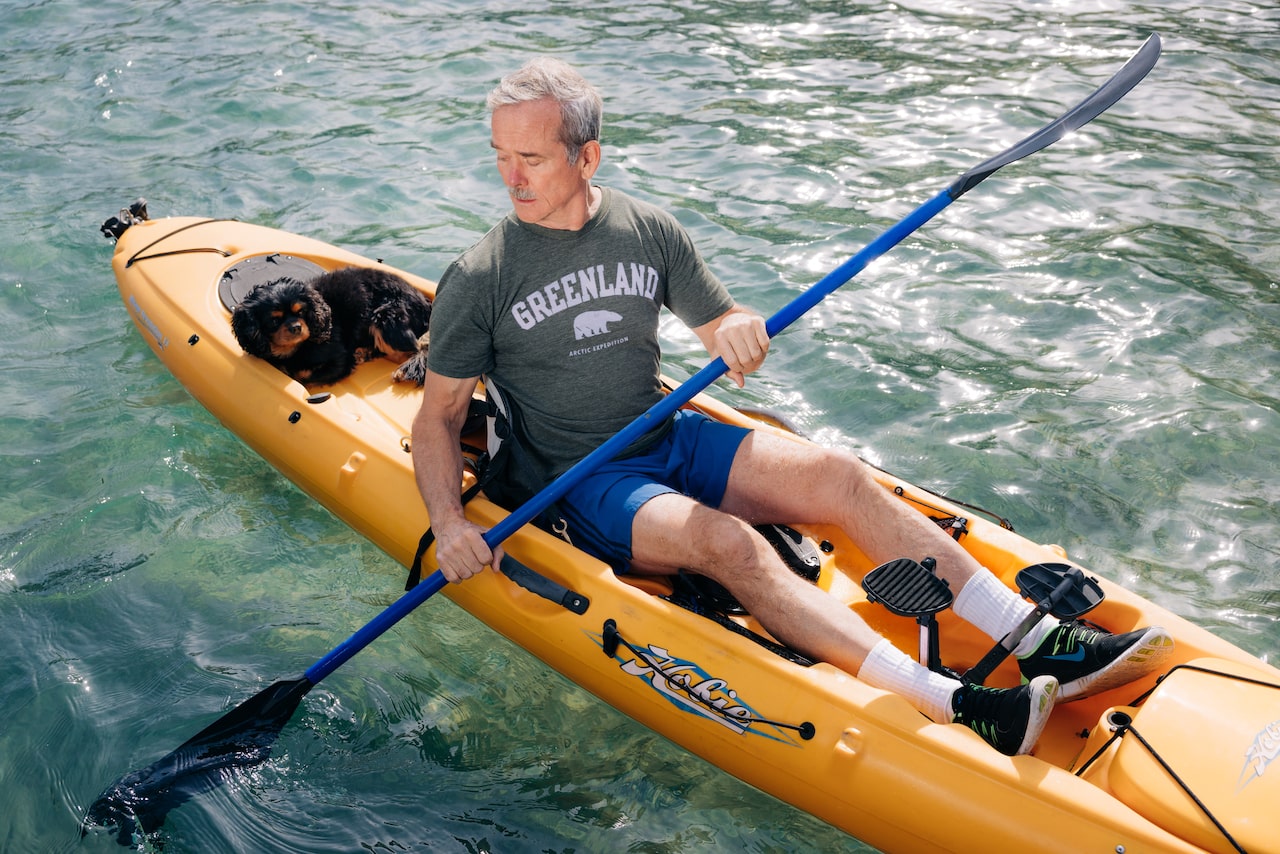

It’s the simplification of health data that prompted Hadfield to invest in EverMe. He joined the league after retiring from government service at 53. He enjoyed hearing about the life hacks fellow leaguers were trying out, though he leans heavily toward evidence-based ideas—hardly surprising for a man who spent his entire career steeped not just in science but in physical fitness, strength, endurance and the ability to perform under life-and-death conditions. He’s always thrived in an environment that encourages self-discipline, rigour and good habits; this is a man, after all, who decided he wanted to be an astronaut at age nine and set about making it so. “I try and take the most difficult path both mentally and physically,” he says.
Unlike Lacavera, Hadfield doesn’t have a specific age in mind as a longevity goal. For him, it’s about extending his healthspan—the number of years he can live in good physical and mental health. “I want to live to see my two granddaughters get married,” says Hadfield, who’s now 66. His eldest granddaughter is 10; his youngest just turned one.
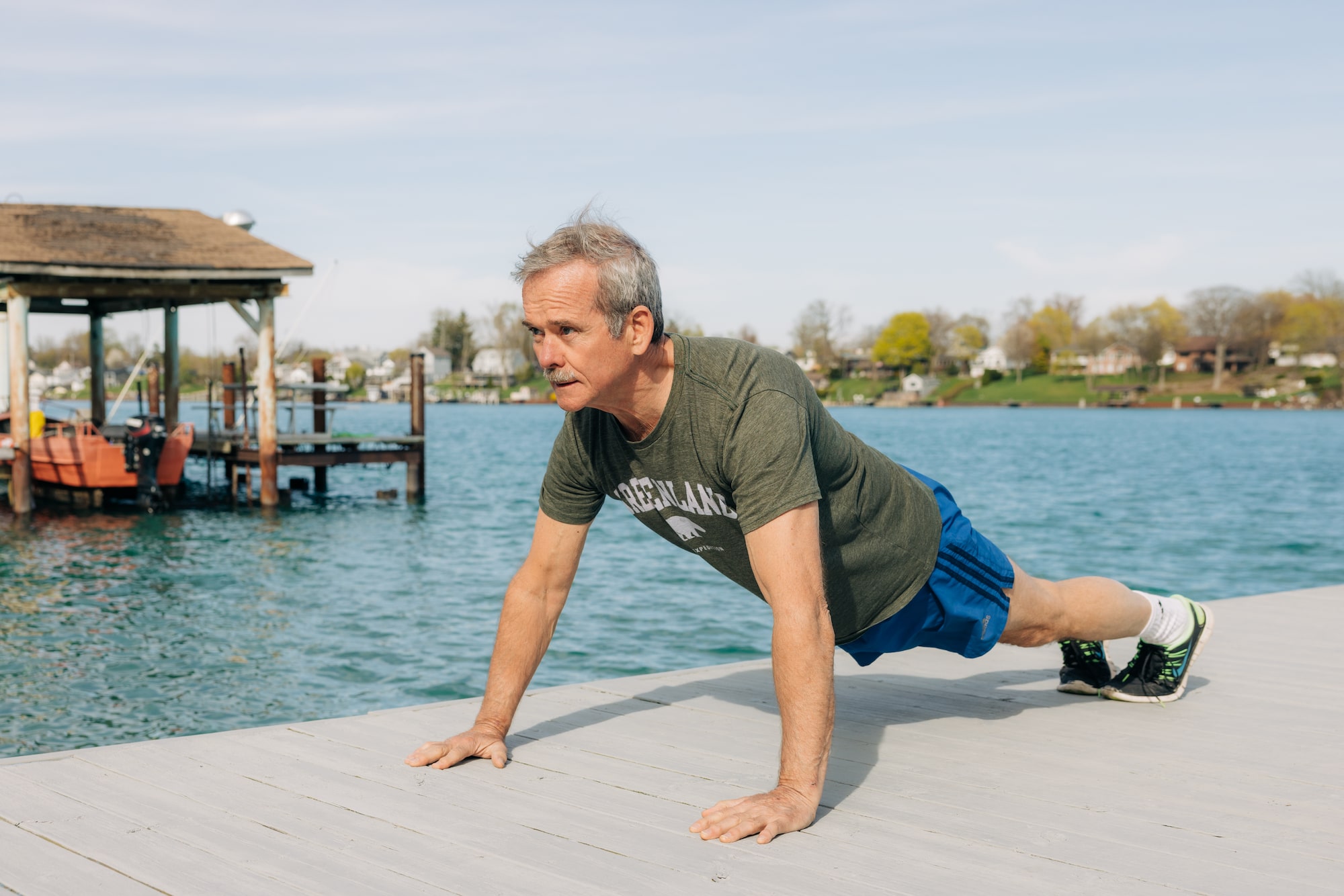
Hadfield’s daily routine is full of low-tech fitness hacks (alongside more heart-pumping activities). He does 30 push-ups before taking a shower. While drying off, he stands on one foot to help improve balance. For cardio, he runs and uses an at-home rowing machine. From June to October, he does an endurance version of slalom waterskiing. “You don’t need a gym to exercise your body and mind,” he says, noting that he and his wife, Helene, target brain health by doing crosswords together. Spending time with his grandkids provides some of the social interaction that’s critical to good health, too.
One major change he’s made came after a Longevity League lecture about gut health. He’d felt stiffness in his fingers while playing the guitar, and during his final months-long space voyage, his joints felt locked up when he awoke from motionless zero-gravity sleep. He figured that since his father had arthritis, it was inevitable that he would, too. But after the gut health lecture, he invested in food sensitivity tests that flagged gluten and dairy. After cutting out both, his joint pain disappeared.

Hadfield doesn’t have a specific age in mind as a longevity goal. For him, it’s about extending the number of years he can live in good physical and mental health.Shlomi Amiga/The Globe and Mail
Other investors are far more lavish in their methods.
Every 90 days, O’Leary has a blood plasma transfusion at a clinic in Miami that he says makes him feel like he’s 14. He wants to do them more frequently—every two months—but doctors have advised against it. “I honestly believe I am going to live forever,” he says. “I’m a vampire at this point.”
There’s seemingly no limit to what O’Leary, 71, will spend to test new, sometimes controversial, techniques aimed at rejuvenating cells, including extracorporeal blood oxygenation, and ozonation and exosome therapies that he flies to Dubai to receive. He also wears a continuous glucose monitor to track his blood sugar levels, despite not being diabetic. “What else am I going to do—buy another new watch?” says O’Leary on the phone from Geneva, where he is, in fact, sourcing watches for a new business venture. “My health is much more important to invest in.”
But unlimited access to medical experts and longevity influencers also gave O’Leary a front-row seat to the amount of “bullshit garbage” he was being asked to either collaborate on or sponsor under the guise of longevity. “This is why EverMe wants to help others break through that noise,” he says. “It’s become unbearable.”

For Roy Gori, longevity is about maximizing the quality of his life.Shlomi Amiga/The Globe and Mail
Roy Gori began thinking about medical testing and preventative therapies when he was appointed CEO of Canada’s largest insurer, Manulife Financial, in 2017. Already an avid runner, cyclist and triathlete, he was among the first to connect his digital watch with the fitness app that Manulife launched in select countries to motivate clients to maintain an active lifestyle.
Several years later, when genetic blood testing was approved in the U.S. for health insurers to use with clients, Gori was quick to mail off his sample. “People need to think about their wellness and health journey not as it’s traditionally been thought about, which is that you get sick and then you treat it,” he says. “You have to think about prevention and what you can do within reason.”
Given that Gori ran actuarial numbers for a living, it’s no surprise he believes prevention is vastly more effective than treatment. The conditions that shorten healthspan—cardiovascular disease, Type 2 diabetes, certain cancers, some types of cognitive decline—are largely preventable through an active lifestyle and other healthy living choices. They’re also conditions that are driving up the costs for private health and drug insurance.
When Gori was 21, he lost his dad, who was a heavy smoker, to cancer. It was a huge wake-up call, he says, and it prompted him to pay closer attention to his own health and fitness. Today, at 57, his routine consists of a well-planned exercise routine, a healthy diet of whole foods and wellness sessions that include cold-water therapy.
He does four cardio workouts a week and three sauna sessions. At the end of every shower, he blasts cold water for two minutes. He doesn’t eat after 7 p.m. and fasts until noon the next day. His diet is strictly zero-sugar, he does annual blood tests and full-body MRI scans, and when the weather turns frigid, he takes his cold therapy a step further with bone-chilling plunges in an ice-covered lake.
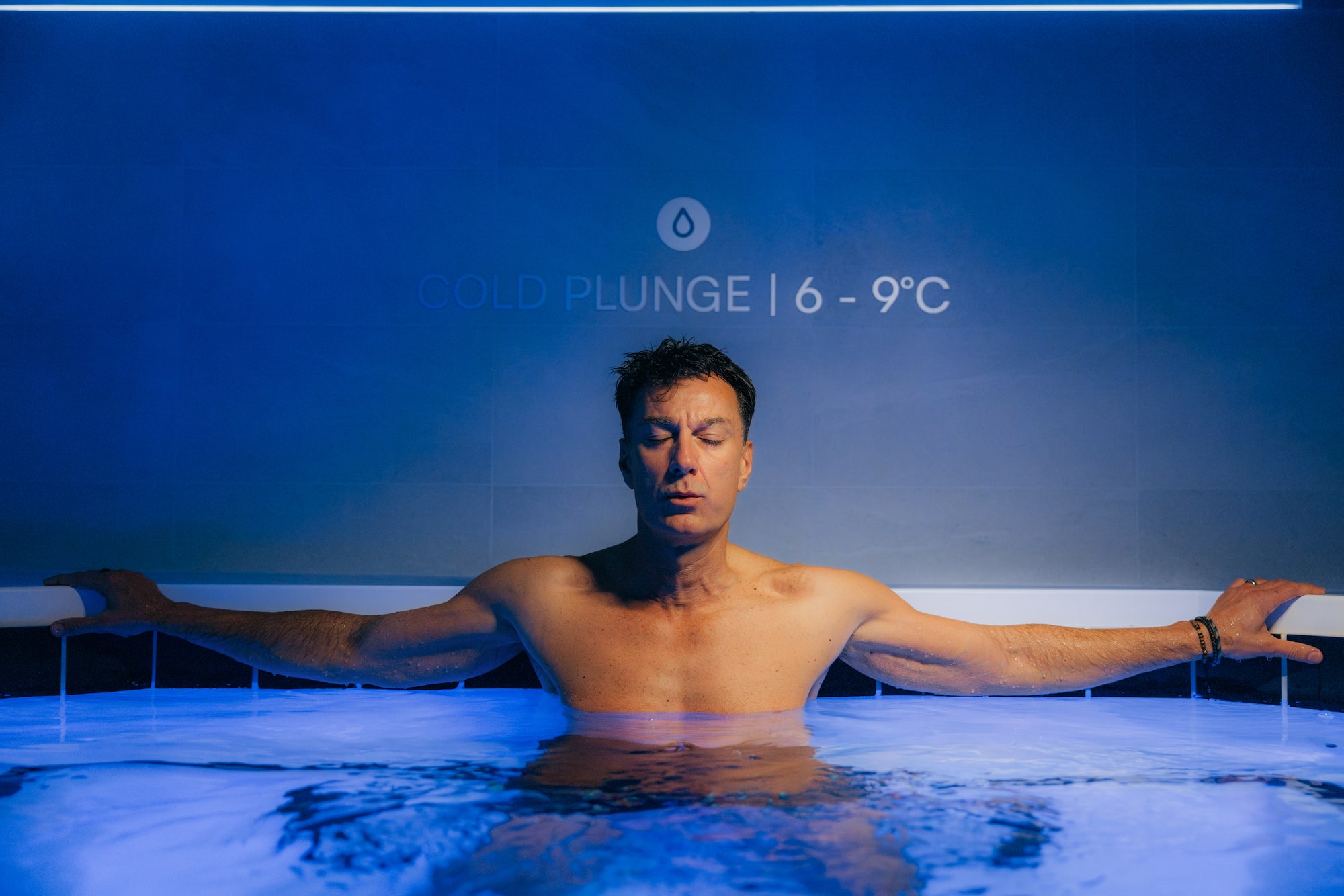
Gori fell in love with the practice at retreats in Ontario’s Algonquin Highlands, led by Nick McNaught and his wife, Lisa Kricfalusi, co-founders of the wellness company Unbounded. He says he’s become addicted to “cold camps” and contrast therapy—immersions in freezing water, followed by steamy saunas. Over the past couple of winters, he’s invited family and friends to join him plunging into frigid ice holes. “I’m a convert,” he says. “There’s just something extremely therapeutic about it.”
Kricfalusi, who also leads the EverMe business development team, says the practice regulates your nervous system, builds up stress resilience and decreases inflammation. “It’s great for your immune system, as it increases the number of white blood cells and how efficient they are,” she said during a recent interview, while McNaught prepared for a group plunge by cutting a hole in the frozen surface of Maple Lake. After several minutes in chest-deep water, the group clambered back up the ladder to do deep knee squats to get blood circulating again in their extremities, then headed to a nearby sauna for a 20-minute sweat—before returning to the ice hole to do it all over again.
Gori loves the ritual and how he feels after a plunge. For him, longevity is about maximizing the quality of his life. “If that’s until age 90,” he says, “I want to be completely able to do everything physically and mentally that I possibly can up until that age.”
Lacavera isn’t a fan of cold plunging, which he’s tried; he says it took too much time out of his day, trekking back and forth to a spa. “There’s tons of research that you can get 80% or 90% of the benefit of cold plunging just by getting in a cold shower 11 minutes a week,” he says. “And I learned that directly from the research in EverMe.”

Beyond his physical workout regimen, Hadfield targets brain health by doing crosswords.Shlomi Amiga/The Globe and Mail
In the end, time and cost are often deciding factors in health regimens. Tech entrepreneur Bryan Johnson, one of the biggest names in longevity research, spends more than US$2 million annually on his personal regimen, which includes more than 100 supplement pills a day.
Walker’s enthusiasm for EverMe stems from its affordability—it aims to put cutting-edge research in everyone’s hands, enabling them to decide for themselves which approaches are worthwhile.
In the end, though, what excites him most is the possibility of leveraging science and AI to treat advancing age the way we treat unwelcome medical conditions. “The question is, is aging a disease, or is it inevitable?” he says. “I’d say it’s a disease. And if you can solve the disease, you can live longer.”