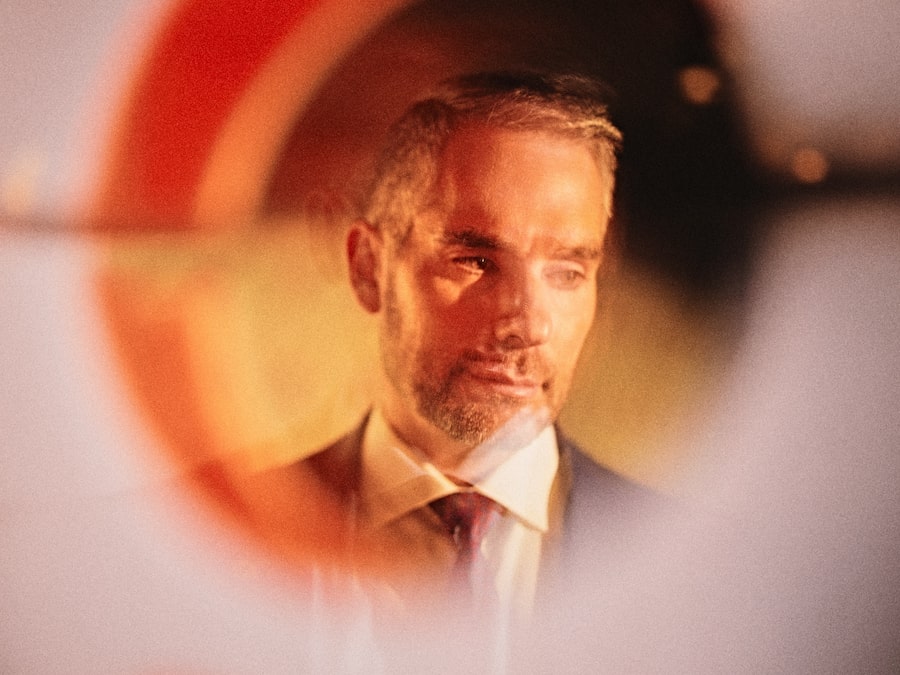
About 24 years ago, a senior Scotiabank executive encountered a young analyst in his first job at the bank’s head office. “Chadwick Westlake,” said the executive. “That’s a great name. I’ve never heard anyone with that name. Never go by any other name.” And so the young analyst, who’d been going by “Chad,” never did again.
After 18 years spent forging a career at Scotia, Westlake left to become CFO of Equitable Group, later EQB (which operates under the name EQ Bank), and seemed on track to succeed Andrew Moor as CEO. Then suddenly, in March 2025, Westlake jumped that track to become CFO at the software firm OpenText. Just four months later, after Moor’s unexpected death, EQB announced Westlake as its new president and CEO.
When he officially took over a month later, the changes at Canada’s seventh-largest Schedule I bank really began. In less than half a year, the 47-year-old Westlake has signed a transformative deal to buy PC Financial, put EQB through its first restructuring, cut 8% of its workforce—and seems intent on making a name for himself all over again.
We spoke at EQB’s new headquarters in Toronto.
Last year at this time, you left EQ to go to Open Text. Why did you do that?
They’d been calling me regularly for a while. Where I started becoming engaged with them was, it’s a great Canadian company. I’m a big fan of Canadian companies. I went to Waterloo. It’s a Waterloo company. And I thought, can I become effective in a different industry? And there was a long, ongoing succession process with EQ. The process wasn’t complete.
Everything changed with Andrew Moor’s death. How long after that did you get approached by EQ?
They’d already approached me as part of the finality of the succession process. And then things moved pretty quickly.
You’d never been a CEO before. Tell me about those first few weeks as the new boss in a place that had been through a trauma.
The early days were very difficult. Andrew was my friend, a mentor. My kids cried when he passed. It’s very difficult to separate the business from the personal and a company going through the most significant change it’s ever gone through. He was CEO for almost two decades. There is no playbook that readies you to come in as a CEO in this type of situation. Listening was my day-one approach. And I was very well known to the EQ team, the EQ stakeholders, so I think that gave them comfort.

Chadwick Westlake got to work fast after being named EQ Bank’s CEO last summer, soon signing a transformative deal to buy PC Financial.
When you arrived, the bank was struggling, earnings were disappointing, share price was falling. I’ve heard you say that the bank had lost focus.
I think so. The business model had diversified significantly. I think we started doing a lot of things. And when you go through a period of change like we did, including in leadership, you can lose a little bit of focus and a little bit of accountability. Some things were not as profitable or purpose-driven as they could be, and were not meeting our ROE threshold.¹ Things like insurance lending. So we deprioritized that business and refocused that energy onto businesses we believe deeply in, like the reverse-mortgage business. We ended up taking an overall restructuring charge for the first time. That resulted in about an 8% reduction in staffing and a refreshed look at the balance sheet.²
Recently you said that one of your top priorities was raising EQ’s profile. Tell me why.
My hypothesis is that 80% to 90% of Canadians don’t even know we’re here. We have high conviction in the products we offer, the services, the platforms, the digital-first capabilities. But if nobody can find you, how do you get in front of people to say, “Give us a shot. Try a product. We will work to win your business”? I couldn’t just go to our board and say I want to increase marketing by 10 or 20 times. So how do you solve for that in the most creative, thoughtful way possible that serves everybody?
You laid out a couple of other areas of focus, too—payments and wealth—and said you wanted to reignite the core franchise. So first, what’s the core franchise?
Equitable was formed originally as a commercial lender, and then it became a single-family lender about 12, 13 years ago. We serve brokers and third parties really well on the residential side and on the commercial side. That’s a core franchise. We’re exceptional lenders.
And payments and wealth—why those two areas?
If you look at our nearly 800,000 customers, the No. 1 thing they say is, “If you have wealth, payments and a credit card, we’ll be able to do more business with you.” All we have right now is GICs and high-interest savings accounts. As a challenger, we don’t believe as much in some of the traditional wealth and asset management solutions. We think there’s a passive, simple, customer-focused way to offer wealth solutions and a higher-yielding solution to people based on their aspirations, integrated into the EQ experience. Same thing with cards. We don’t have a credit card. It doesn’t matter who you are, sometimes you need more than what’s sitting in your bank account. If you can’t offer everything, you’re always going to be that secondary option.
That leads us to the PC Financial purchase. Was it the solution to all your problems?
Yeah, I wouldn’t say problems. I believe this is the most unique, transformative opportunity for a company like EQ to really scale up and compete to serve people.³ This has been my vision, my intuition, since the first second we even had a talk with them. Because this is good for EQ, and this is good for Canadians. And I saw this solving the opportunity, yes, of visibility so that we can openly compete, partnering with an extraordinary retailer and closing the product gaps.
How does this arrangement differ from what Loblaw had going with CIBC?⁴
With us, they have a significant influence and partnership. They’ll have two seats at the board table. This will continue to be a top strategic priority for us. And their ownership level in us will also drive that unified interest, with them being able to buy up to 25% of the company. I think it would be very difficult for them to buy up to 25% of CIBC. So it’s the level of partnership and strategic focus. They get somebody focused purely on Canada, on the PC Optimum loyalty program, on furthering the products that will build more consumer base for Loblaw in the process.

One of Westlake's top priorities is raising EQ’s profile, with the goal of making the company a household name by the end of the year.
When do you expect the deal to close?
I have conviction in this year, and I’d say my view—and what I would implore to the federal government and the regulator—is that this is one of the most tangible, immediate things we could do for competition in Canadian banking.⁵
Whenever it closes, you’re going to have an insurance business, a credit card business. You’ll be working with Canada’s largest loyalty program, with 17 million active members. You’ll suddenly have a physical presence in 180 pavilions. That’s a lot of new balls to juggle. How do you keep from dropping a few?
Don’t lose focus. That’s why you might see us exit more products or businesses, to focus on that EQ experience. Because the brand will be unified as well around EQ. And we’re adding talent. We’re not acquiring a business and then exiting 50% of employees. It’s a full net add-on. We’re bringing in the people who know how to run this with our strong leadership team. We understand omnichannel. We’re now one of the only omnichannel challenger banks in the world. So that digital experience should be consistent across the pavilion, ATM, wherever you are. And our visibility will be high. But you can’t rush to try to be all things and change things at once. So what is the sequence of events for where PC becomes an EQ brand? And how do we ensure we provide that comfort to customers? Because nothing is going to change with PC Optimum. That is owned by Loblaw. But we’ll be the exclusive financial provider of PC Optimum. This is not going to be one of 100 things we’re doing. This is going to be the biggest thing we’re doing. And we’re going to do it really well and execute.
You’ve said you want to reimagine the pavilion experience. What has to change?
My interest is not in creating a branch. My interest is being of value to people. What do people actually need in a pavilion? Do you need somebody there just to ask a question or to be able to complete something in digital? Maybe somewhere that your broker or an advisor could actually pop in and see you? And not about sales. I think there’s a difference between push and pull, and I think it should be a welcoming, simple, available environment where you can learn, transact and engage with the brand at your convenience.
You’ve promised that EQ will be a household name by the end of the year. Rebranding the pavilions is part of that. What else?
There’s seven to eight million Canadians a week who go into one of the Loblaw company stores.⁶ Our EQ brand will be everywhere. Even at the checkouts, those dividers will say EQ. So that’s step one. The digital marketing, we will be present. And that’s an extraordinary opportunity, but it’s just a starting point. Because people could see that and say, “Well, what’s that?” We will protect the experience of why people love PC Financial, why people love PC Optimum, why people go into those stores. And our existing EQ customers have to feel like they’re only going to gain, not lose.
Let’s talk about lending. EQ has more exposure to the mortgage market than any other Canadian bank—95% of your loan exposure is to real estate. How big a vulnerability is that?
I’d say it’s an opportunity. This is part of why diversification and scale matter in banking. I’m comfortable with that level of exposure. Real estate is a foundation of the country. So yes, that’s important. But I think it can cause more volatility over time if you’re very concentrated. With PC, we will diversify our revenue, because it’s not just about the assets but the revenue. Our revenue just about doubles with this, and our non-interest revenue increases by about 60%. So our revenue generated by housing will become significantly less. And then that concentration mix will come down when we add $5 billion in credit card receivables, as well.
Some analysts have noted a rise in your proportion of at-risk loans, leading to a material credit deterioration and a jump in provisions for credit losses.
Analysts have a lot of views. In 2024, we had higher PCLs due to equipment financing. Last year, our PCLs did increase, and a lot of that can be model-driven. We have a very prudent modelling approach, and we’re provisioning based on what we expect in the market. We have the lowest PCL ratio of all Canadian banks.⁷ And that’s trending back year after year after year. I think what caught people off guard maybe is that as a top lender we typically don’t have any losses. And with what’s happened with housing-price depreciation and a slower housing market, we had some losses. People thought, okay, so there’s something systemic. No. In our portfolio, the average LTV is about 65%.⁸ We had some prices depreciate materially, like 30%-plus, in some areas with some stressed borrowers, and we did have some losses. It was 50 to 60 out of 63,000 in that portfolio. It shouldn’t be blown out of proportion. We’re paid to take risks. That’s what you price for. But we still have the lowest loss rates.

Westlake spearheaded an overall restructuring process, resulting in an 8 per cent reduction in staffing and a refreshed look at the balance sheet.
I’ve heard you try to explain that EQ’s credit exposure is not as risky as people seem to believe. Why does that perception persist?
There can be a misperception of the word alternative.
As in “alternative lender.”
Yes. In the past, EQ has been seen as an alternative subprime lender. “Alternative” does not mean low credit quality. It just means “borrow for self.” People who don’t have a standard 9-to-5 paycheque, that you actually need to underwrite—an accountant, a lawyer, a truck driver, a broker. It takes a little bit more work. People have perceived in the past that if we’re alternative or we’re serving borrow for self, that means it’s higher risk. It doesn’t. It just means everyone is unique and different. The EQ of five or 10 years ago was different than it is today. We’re much more diversified. We’re not a mortgage bank. We’re the seventh-largest Schedule I bank in this country. Extremely well capitalized, the best TSRs.⁹ They lose the nuance of the company we’re building because we’ve evolved and grown so much. So it’s more about education. And that’s why we’ve stopped using the word “alternative” so much.
I’ve heard you say that Canadians are too complacent about banking. What do you mean?
People are too comfortable to switch. People don’t have as much urgency as they should to get a better deal for themselves. Even today, you could switch your payroll into an EQ account, and think of the interest rate you get here, versus having your payroll at a large six and getting, say, 0% interest. But you won’t—historically people haven’t enough—because it’s like, “Well, is it worth it? Can I trust them?” Anything past the Big Six has been seen as a passing fad or “Is that actually a real bank? Does it exist?” Switching still remains at all-time lows.
EQ Bank has had a company culture set by one boss for 18 years. Now you come in, bringing a lot of change. What do you want the bank’s culture to be?
Where I’ve leaned in is around urgency, accountability, entrepreneurial spirit, simplicity and focus. We had the top 50 leaders here on Thursday. I said, “I’m never going to be pissed off at you for making a mistake, but I am going to be pissed off at you for going too slow and not having a sense of urgency.” Because I think the most successful companies now move fast. That urgency is something I implore on the government, too.
FOOTNOTES
¹ According to Westlake, EQ’s return-on-equity threshold is “plus 15%,” typically 15% to 17%.
² This was the first workforce restructuring in the company’s nearly 60-year history.
³ Last December, after more than a year of talks (and informal discussion before that), EQB announced a deal to purchase PC Financial for $800 million, giving Loblaw Cos. 16% of EQB and an option to buy up to 9% more. If the deal is approved by government and regulators, EQB would emerge with nearly twice its current revenue and about four times the number of customers.
⁴ CIBC operated PC Financial from 1996 to 2017. That arrangement ended when CIBC launched Simplii Financial and took about two million PC Financial customers with it.
⁵ The deal was cleared by the Competition Bureau, but as of early March it still needs approval from OSFI and the finance minister.
⁶ Loblaw’s banners include No Frills, Real Canadian Superstore, Provigo, Zehrs, Fortinos, T&T, Shoppers Drug Mart and Pharmaprix.
⁷ Westlake is referring here to long-term loss rates (PCLs against total loans); EQB says its historical loss rate sat at 29 basis points in fiscal 2025, compared to 40 for the Big Six.
⁸ Loan-to-value ratio. Westlake was quoting a number from the previous quarter. EQB’s most recent average LTV ratio is 67%. Lower is better and anything higher than an 80% LTV requires CMHC insurance.
⁹ As of Jan. 31, 2026, EQB is ranked second in Canada and sixth in North America among peers for 10-year cumulative total shareholder return, with a cumulative return of 387.7% and a compounded annual rate of 17.1%.