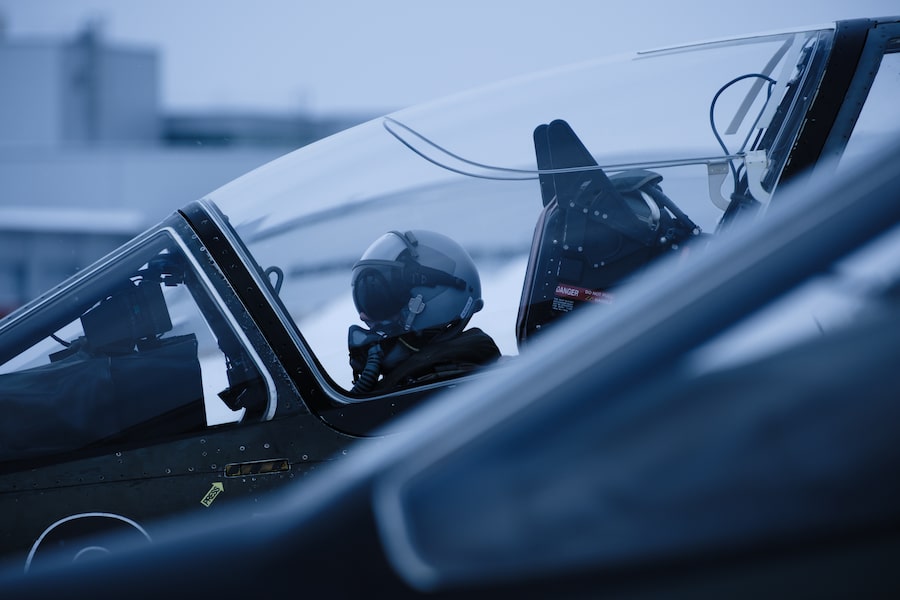

On any given day, German fighter pilot Elmar “Elmo” Besold might find himself tearing through the skies above the North Sea at 650 kilometres an hour, dogfighting with a Eurofighter Typhoon, or skimming the waves in his A-4 Skyhawk, bearing down on a German navy frigate to test its defences. Or he might be called on to drop computer-targeted practice bombs in a mock air strike to help train up joint terminal attack controllers (JTACs)—like air traffic controllers, but for war zones—before they face the real thing.
Not today, though. It’s early January, and the worst snowstorm in decades is about to slam into the Nordholz Naval Base in northwestern Germany. With all flights grounded, we’re in a well-lit hangar where 10 A-4s and pointy-nosed Dornier Alpha Jets sit in two rows. I’ve squeezed my very-much-not-a-fighter-pilot body into a narrow A-4 cockpit while Besold details the work he does with the German military. Not as an air force pilot—he retired from the Luftwaffe after 20 years, having reached the pinnacle of air-combat expertise: fighter weapons instructor.
These days, Besold collects his paycheque from Top Aces Inc., a private company based in Montreal—which is why there’s a Canadian flag on each aircraft’s tail. And even his less adrenaline-pumping missions say a lot about how successful Top Aces has been at exporting its defence expertise around the world and building trust with foreign militaries.
Editor’s Note: This Canadian defence contractor is ready for takeoff
In late December, an officer from the Wittmund Air Base, an hour and a half’s drive west (or about six minutes at Mach 0.5), contacted Besold with a problem: New emergency cables designed to stop jets when their brakes fail had been installed on the runway and needed testing. But doing so with one of the base’s advanced Eurofighters would mean taking the jet out of commission.
Besold had a solution. Days later, he piloted a Top Aces A-4—which were built with tailhooks for landing on aircraft carriers—across the cable at around 140 clicks an hour, triggering the emergency system and jolting the jet to a halt. “We can give the German military exactly what they want, when they need it,” says Besold. “I take a lot of pride in that.”
If Prime Minister Mark Carney wants to tighten Canada’s defence-industrial ties with Europe, there’s arguably no better place to see that opportunity in action than this remote corner of Germany, one of Top Aces’ two bases in the country—which, it should be noted, is considerably closer to the war in Ukraine than it is to la belle province.

Retired Canadian fighter pilots Didier Toussaint (left), Paul Bouchard and Dave Jennings (unpictured) are the founders of Montreal-based Top Aces.
Since a trio of former Canadian fighter pilots launched Top Aces 25 years ago, the company has largely flown below the radar, both figuratively and literally—at least outside military circles. Yet with 70 active aircraft and another 70 or so in reserve to feed its expansion plans, it’s provided contracted air services to the Canadian Armed Forces (CAF) and other militaries, including in Australia and half a dozen European countries. In the United States, Top Aces operates the world’s only private fleet of F-16 jets out of its own airbase in Mesa, Arizona.
Top Aces’ 80-plus pilots specialize in simulating combat training in the air. Sometimes they act as friendly forces. More often, they play the bad guys in what are known as adversary air or “Red Air” missions. And in the extremely niche sector in which Top Aces operates, it’s widely recognized as the market leader, making it one of Canada’s most remarkable export success stories.
This past January, Top Aces announced it had signed a new 10-year agreement to train Germany’s air force, army and navy using aircraft upgraded in-house with cutting-edge radar, high-tech sensors and the company’s own proprietary mission systems. The value of the contract: $680 million. Here at home, its current contract with the Canadian military, signed in 2017 with an option to extend to 2031, is worth $750 million.
It’s The Right Stuff meets the much less thrilling world of balance sheets and income statements.
“We’re Canadian, so we’re humble, but we’re also proud,” says Paul Bouchard, Top Aces’ co-founder and CEO, a 12-year veteran of the military who retired in the late 1990s. “We’re taking Canadian expertise and exporting it to Canada’s closest allies.”
This is a critical moment for the company and its 700 employees. The world has grown considerably more dangerous in recent years, with war on Western Europe’s doorstep, rising tensions with China, and the U.S. under Donald Trump testing decades-old alliances even as it pushes NATO countries to spend more on defence. Canada is set to boost spending from around 1% of GDP to 5% by 2035, while Germany plans to double its defence budget within five years.
At the same time, NATO countries are taking possession of their first U.S.-built F-35s, fifth-generation stealth fighters that will both drive demand for training in the air and push the limits of Top Aces’ older (albeit modernized) fleet.
Top Aces is effectively in an arms race of its own, navigating regulatory turbulence, gruelling timelines and steep technological challenges as it rushes to replicate the latest threats its customers could face in battle—and doing it with private equity backing and revolving credit facilities instead of vast government budgets.
In short, it’s make-or-break time for Top Aces. Good thing fighter pilots never lack for confidence.
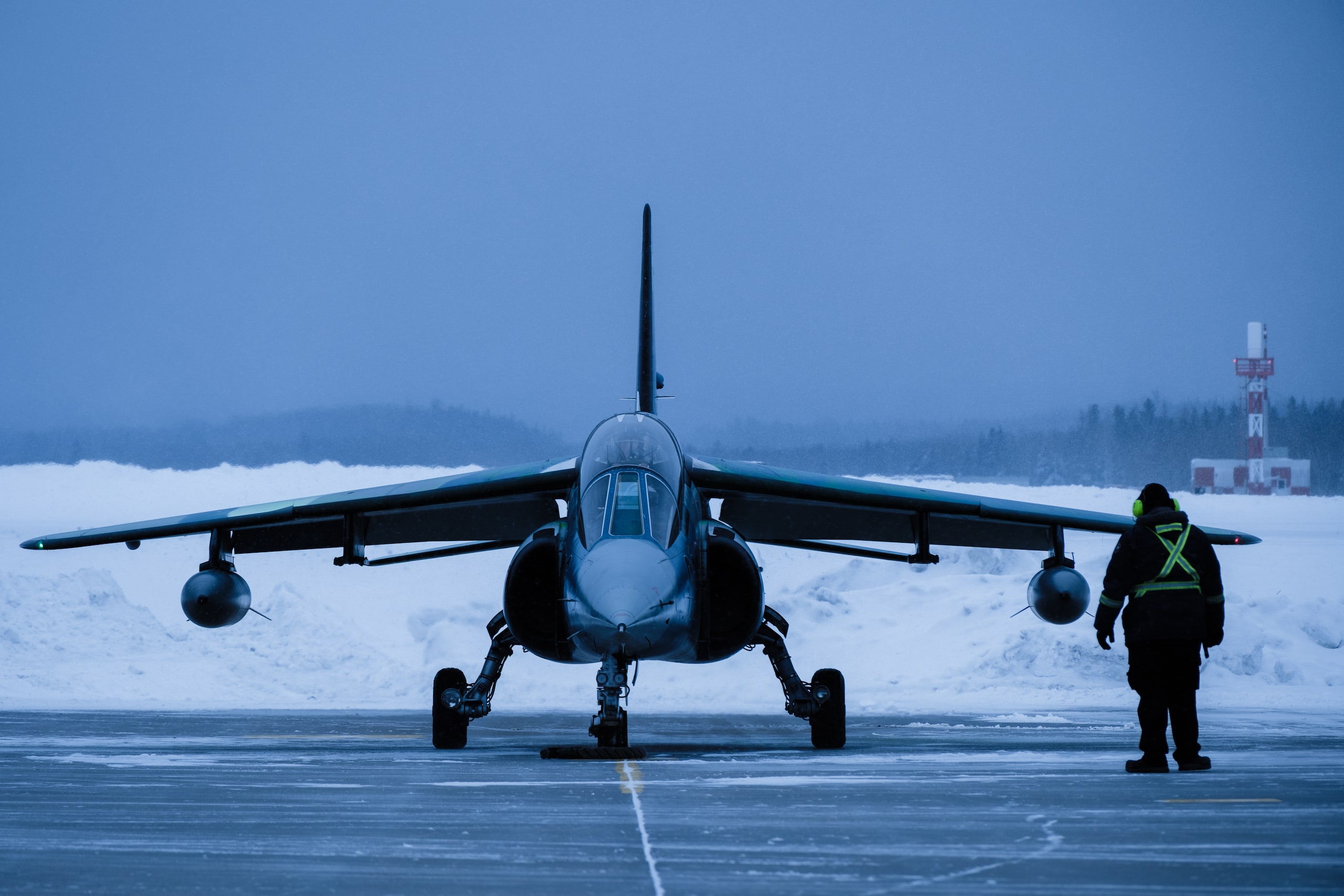
It’s a frigid -8°C in December, and a pair of Top Aces Alpha Jets are powering up on the tarmac at Saguenay-Bagotville Airport. The site includes both Canadian Forces Base Bagotville—home to two of Canada’s four tactical fighter squadrons—and the civilian airport. It’s not unusual for a mission-bound Top Aces jet to taxi past a jetliner en route to the runway.
Veteran pilots Kareen Mamo and her husband, William Mitchell, don flight helmets emblazoned with their call signs: Billy for him, Handles for her. Outside, a small ground crew inspects every inch of the jets as the screaming from their twin turbo-fan engines pierce the air.
Shortly after the Alphas lift off, eight CF-18s—Canada’s primary front-line fighter aircraft—roar into the skies behind them, with four serving on the friendly “Blue Air” side, and four joining Top Aces on the Red Air side under Mitchell’s command.
In restricted airspace north of Bagotville, the Red Air squad makes several pushes at speeds topping 900 kilometres an hour, testing the tactical intercept skills of the Blue Air crew by replicating threats ranging from a cruise missile to enemy aircraft. The sortie unfolds out of sight, but I watch the contorted flight paths of the Top Aces jets on a common flight-tracking app; the CF-18s remain invisible to me.
After 1.5 hours in the sky, plus several more on the ground in briefing and debriefing sessions, safety reviews and other prep work, it’s over. “I almost made it through, but they got me,” says Mamo afterward. Which, after all, is the point: Red Air isn’t necessarily there to win. As Mitchell puts it, “We’re testing their tactics and flow, not to make them make mistakes, but to capitalize when they do. We’ve all been in their position before.”
A similar routine plays out multiple times a day at Top Aces bases and deployment areas across North America and Europe. In 2025, its pilots and aircraft clocked 14,500 flying hours, and that number is expected to grow by at least 10% this year, to 16,000. That’s more flight time than the entire air forces of some smaller NATO countries.
Decades ago, militaries handled most of their airborne training needs in-house. Canada had fleets of aircraft it could use as targets for such missions and a bounty of pilots to fly them. But then the CAF streamlined to focus on its CF-18s, and the end of the Cold War brought cuts to both budgets and pilot ranks. In the early 2000s, the military turned to the private sector to fill some of the training gap. So have most other Western countries.

A big reason Top Aces has been so successful is because of whom it puts in its cockpits. Most military pilots retire in their early 40s, and many fall into second careers flying for commercial airlines. But Top Aces has specialized in attracting retired elite fighter pilots who still relish the high-speed thrill of the stick but want a more normal schedule.
Mamo and Mitchell are a case in point. They have two kids, ages 13 and 16, and a house in the Saguenay area. “When we leave here at the end of the day, we’re not wearing flight suits. We’re mom and dad, husband and wife. We keep it separate,” says Mitchell. “Our kids are the same. To them, the norm is that mom and dad go fly fighter jets, then come home—and somehow supper is on the table.”
For military customers, it means they continue to benefit from the money and training they invested in their people, while the pilots get to keep participating in military efforts. “We leave the service, but we’re still working alongside it,” says Mitchell. “We’re still able to contribute toward the national defence and security of Canada.”
All of Top Aces’ pilots are either graduates of Top Gun school—known more formally as the fighter weapons instructor course—or seasoned aggressor pilots with experience flying Red Air missions for the military. “The military gets to benefit from pilots who would otherwise go on to become commercial pilots, and get another 10 or 15 more years from their initial investment,” says Bouchard, 57. The premise is baked into the company’s motto: “Experience matters.”
It also means pilots and their customers have a shared understanding of what’s involved in training missions. Col. Sebastian Fiedler, commander of 71 Tactical Air Wing in Germany, says the benefits go beyond expertise. “Some of the pilots at Top Aces used to fly with us and other units of the Luftwaffe. Obviously, tasking contracted Red Air assets works differently from how you’d co-ordinate military assets, but in the end, working with the company often feels like working with one of your own units.”
Col. Phillip Rennison, the commander of 3 Wing at Bagotville, who still goes up against Top Aces in training missions, agrees. “The one thing they’ve always ensured,” he says, “is that they have experienced fighter pilots that speak the same language.”
“We’re Canadian, so we’re humble, but we’re also proud. We’re taking Canadian expertise and exporting it to Canada’s closest allies.”
– Paul Bouchard, Top Aces co-founder and CEO
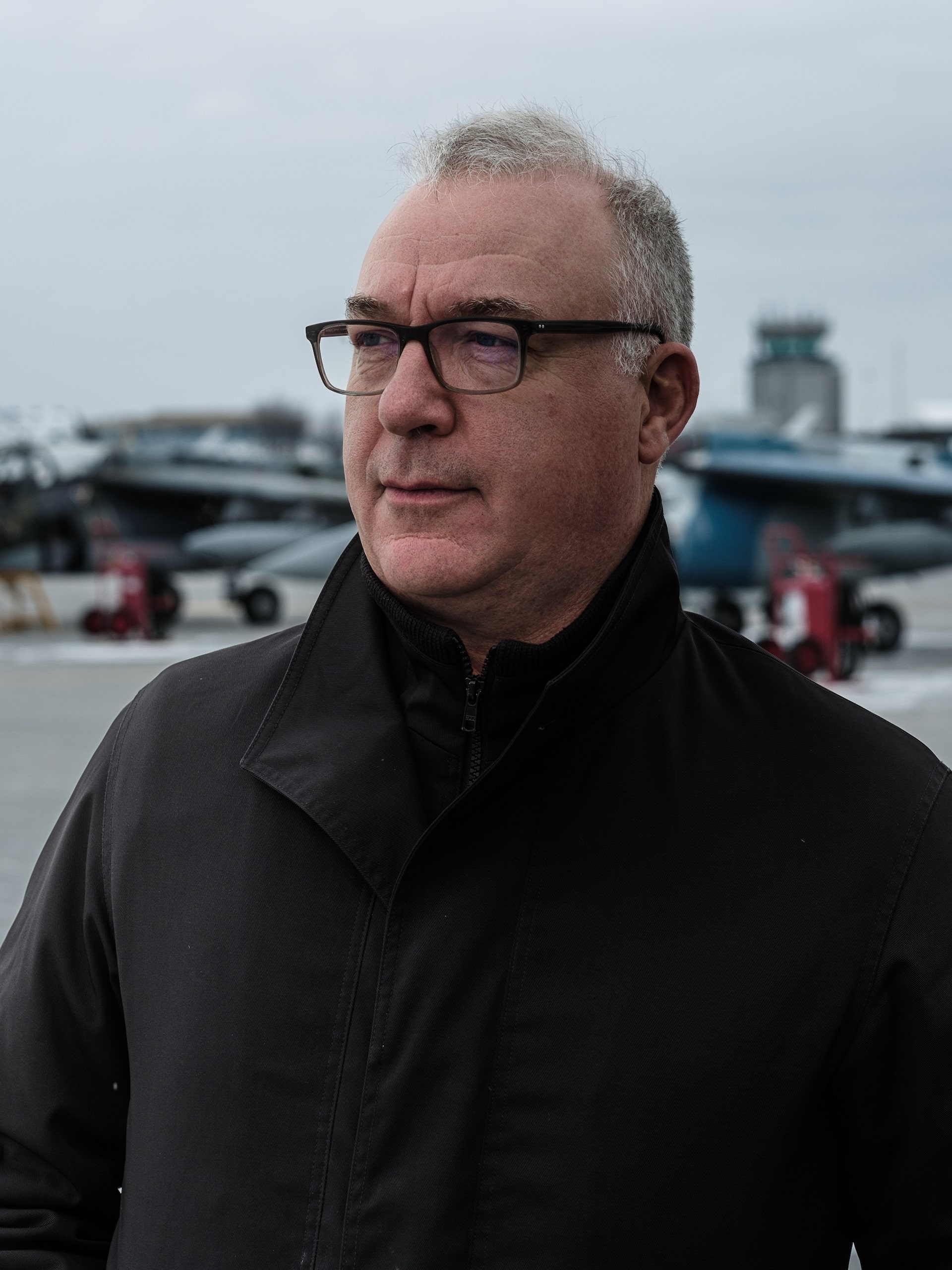
That fighter-jock cred springs from Top Aces’ trio of founders: Bouchard and fellow Top Gun graduates Didier Toussaint and Dave Jennings.
All three retired between 1998 and 2000, and took jobs in the private sector: Bouchard at Bombardier, Toussaint and Jennings at Air Canada. None of them were happy working for someone else, though, and in 2000, they launched Top Aces to advise defence contractors then working on a CF-18 upgrade.
In 2002, amid its outsourcing push, the CAF put out a request for proposals to run its Contracted Airborne Training Services (CATS). As fighter pilots, the Top Aces crew had plenty of ego and a knack for remaining calm under pressure. What they didn’t have were planes or the financing to purchase them, nor any real sense of the bureaucracy they’d face. Nonetheless, they put a $50,000 non-refundable deposit on some Alpha Jets languishing in the U.S. and spent another $50,000 hiring an expert in writing government bids.
It paid off. In January 2005, the office fax machine spat out a missive saying Top Aces had won the $94-million contract. They had just six months to get up and running, secure financing, buy and upgrade planes, and hire and train pilots and maintenance staff. “We didn’t fully grasp the complexity of what we were taking on,” says Bouchard. “Maybe that’s better.”
They mortgaged their homes and borrowed heavily to buy eight Alphas for around $10 million. Their first paid flight-hour was in Arizona that August, helping train Canadian Army JTACs on how to call in air strikes ahead of a deployment to Afghanistan.
The young company benefited from a surprisingly agile bureaucracy at Transport Canada and the Department of National Defence (DND). From the start, the two departments conceived of a shared regulatory structure that classified Top Aces’ jets as civilian aircraft but gave oversight to DND for specific areas like ejection seats and explosive cartridges. (In the U.S., Bouchard says, contracted air services fall entirely under military purview.) That Transport Canada certification and continuing oversight has been Top Aces’ international calling card, an assurance to other countries that even though the jets are weapons of war, they’re maintained to civilian aircraft standards.
In 2007, Top Aces was acquired by Discovery Air, a publicly traded company that provided air services to the mining industry. But a downturn in the mining sector and heavy debt tipped the company into bankruptcy 11 years later. Clairvest Group, a private equity firm that provided early loans to Top Aces, supported it through Discovery’s restructuring and won control when Clairvest’s debt was converted to equity. (Jennings, who’d left Top Aces to run Discovery, quit in 2012 and now flies for Air Canada.)
Ken Rotman, Clairvest’s CEO and chair of the Top Aces board, is quick to admit the company operates in a challenging sector, but he sees two forces driving it forward. First, it’s expensive for militaries to maintain an entire fleet dedicated to training, especially as the F-35 becomes more prevalent. And importantly, says Rotman, “people have woken up to the fact that the world may not be a friendly place. Countries have realized they need to increase their defence budgets, and that’s providing a good amount of tailwind to Top Aces.”
As a private outfit, the company won’t divulge specific financial figures. But Rotman says profitability has grown by 500% in a short period and that near-term prospective contracts will push it up by another 150% within the next two years.
Last year, Top Aces issued its first high-yield debt, raising $200 million from senior unsecured notes. Ratings agency Fitch assigned the debt a B rating (“highly speculative”), noting in a March 2025 report that while the company is benefiting from increased defence spending, its small scale poses risks. Fitch pegged the company’s “going concern EBITDA”—an estimate of earnings after a hypothetical reorganization or bankruptcy—at $50 million and assumed margins of 30%-plus, which would imply annual revenue of around $170 million. Rotman says both its revenue and profit are “significantly above” Fitch’s trailing audited numbers.
Either way, Top Aces—owned by a combination of Clairvest, the Caisse de dépôt et placement du Québec, other institutional investors and management—seems primed to go public. Both Bouchard and Rotman say that’s possible, but no timeline has been set.
As for whether Rotman gets a buzz from being part owner of a fleet of fighter jets, “the cool factor wears off pretty quick,” he says, pointing to the high capital costs, and intense regulatory and flight expertise needed to keep Top Aces in the air and winning contracts. On the plus side, those present steep barriers to entry for potential rivals. “A lot of people say, ‘Well, I can go buy some old aircraft and bring in some pilots to fly them.’ Good luck with that,” says Rotman. “Call us after you burn through the second $100 million.”
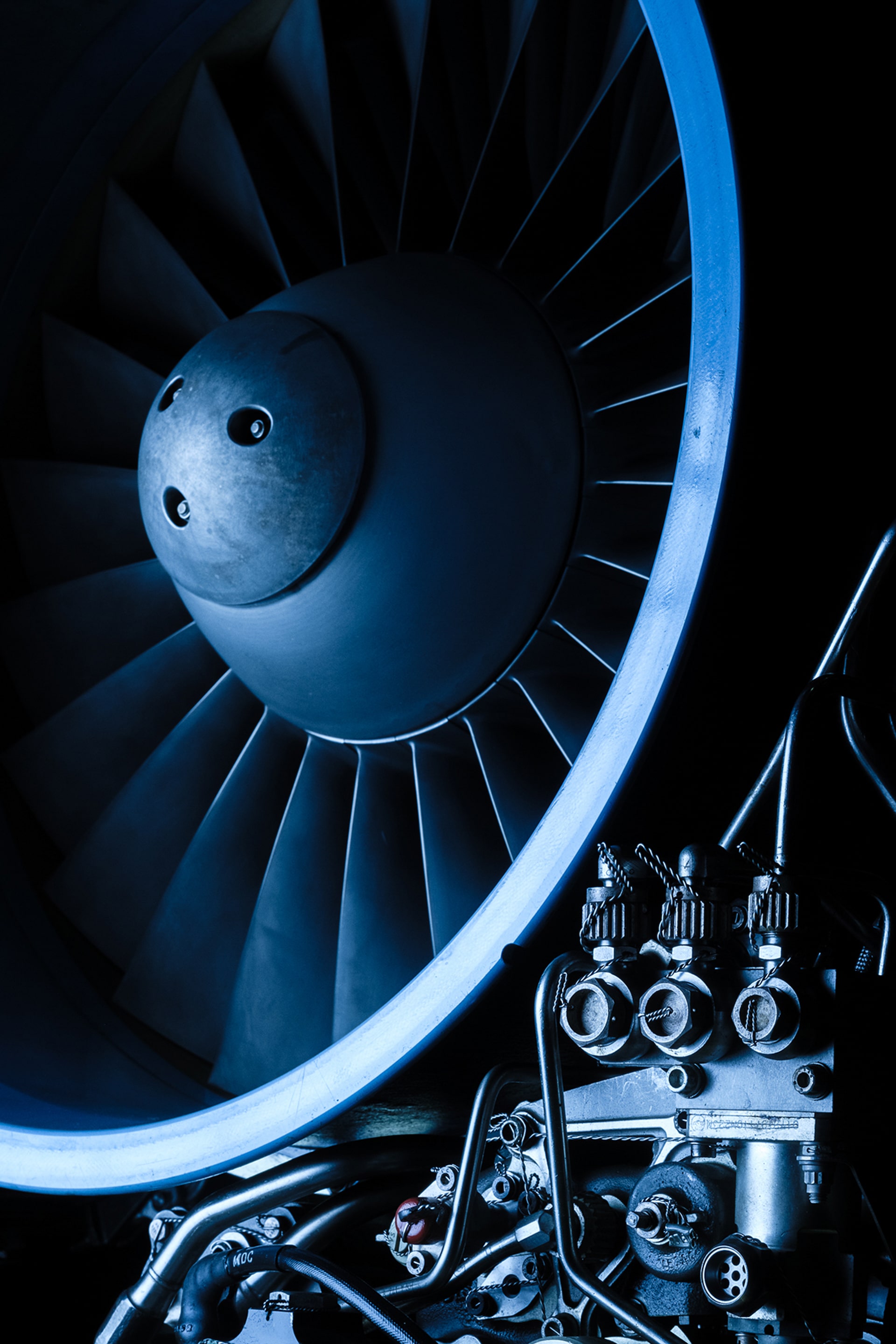

Inside a hangar in Bagotville, an Alpha Jet purchased from the Luftwaffe is undergoing major surgery to bring it back to life. A large bin sits nearby, filled with spaghetti-like entrails ripped from the aircraft’s bowels. A piece of paper taped to the side of the fuselage reads: “Last flown Jan. 29, 1993.”
If there’s a secret to Top Aces’ success, says Bouchard, this is it: the company’s ability to source, maintain and upgrade older planes. Or as he puts it: “obsolescence management.”
Its planes are indeed old. The A-4 Skyhawk was developed in the 1950s and manufactured through the ’70s, but its subsonic manoeuvrability makes it an ideal trainer, since it replicates the threat posed by smaller foreign fighters. (It was the fighter flown by instructor pilots Viper and Jester in the original Top Gun.) Likewise, the Alpha Jet was built between the early 1970s and early 1990s. Even the company’s 30 F-16s, which it bought from the Israeli military in 2021, were built in 1979. One jet, now painted in grey camouflage to mimic a Russian SU-57 stealth fighter, still bears the kill marking from when it shot down a Syrian MiG-23 in 1981.
But it’s what Top Aces does with the jets once it has them that sets it apart. “We buy them, bring them back to life, get the engines ready. We design and prototype our own cockpits and mission systems in-house, do our own production and all our own modifications, then provide all the life-cycle support for that aircraft,” says Bouchard. “Usually that’s done by a very large organization, but we’re a relatively small aerospace company. It’s a real discriminator for us.”
None of that is cheap. A used fighter jet costs somewhere in the “single-digit millions,” depending on the platform, says Bouchard. But Top Aces spends two to three times that on upgrades.
And its fleet is growing. It recently signed a deal to buy four Alpha Jets from Red Bull’s Austria-based aerobatics team. In February, it was set to send a team there to dismantle them, pack them into containers and ship them back to Canada for retrofits.
One of the first things the company did after it got its initial eight Alphas in the mid-2000s was to strip out the seats and replace them with modern ejection seats. “That seems pretty basic, but without that change, perhaps we wouldn’t attract the same quality of pilots that joined us,” says Toussaint, 57, Top Aces’ group president, who flew missions in Kosovo alongside Bouchard in the mid-1990s. Indeed, almost every conversation with executives circles back to safety. The company publishes a running tally of its record on that front: more than 150,000 accident-free flying hours and counting.
Beyond that, it has warehouses filled with fuselages and other spare parts, and a highly evolved supply chain that ensure the company “is in control of our own future,” says Christian Corneau, the senior director of maintenance at Top Aces, who spent 23 years in the military as an aerospace engineer. Whenever a squad of CF-18s deploys on a training mission with allies, Top Aces jets, pilots and maintenance crews accompany them. This past November, the Canadian and U.S. air forces carried out a joint training exercise in Florida called Nighthawk Rage. Top Aces sent three Alpha Jets and three A-4s, along with Corneau and a 53-foot trailer crammed with every conceivable part the jets might need.
It’s a similar scene at Nordholz. One A-4 looks like it’s been pulled apart like a magician might separate his assistant’s torso from her legs, and a maintenance crew gingerly slides the turbojet engine out for scheduled maintenance.
Doing all this in-house, with relatively inexpensive vintage aircraft, keeps Top Aces’ operating costs down. A CF-18 can easily cost tens of thousands of dollars an hour to operate and maintain, which Toussaint says is several times higher than the cost of operating an Alpha Jet. And that doesn’t account for the wear and tear that would occur if the CF-18s were used for Red Air training against other CF-18s.
As such, Top Aces estimates that since winning its first contract in 2005, it’s added 10 years to the life of Canada’s already stretched CF-18 fleet and saved the CAF more than $6 billion.

The CF-18’s years are numbered. Canada still has roughly 80 of the jets left, and they’ve undergone several rounds of upgrades since the 1980s to keep them flying long past their original planned retirement in the early 2000s.
Later in 2026, Canada is set to take possession of 16 of the F-35 fighter jets it has financially committed to buying from Lockheed Martin. The fate of the remaining 72 on order is up in the air pending a review by the Carney government—and, presumably, the rantings and ravings emanating from the White House.
Still, the advanced fighters are rolling onto allied airfields around the world. And as a stealth craft with long-range missiles designed to kill adversaries before they even spot it, that puts vintage fighters at a serious disadvantage. Which means Top Aces needs to up its tactical and technological game.
The company anticipated the need for more advanced aircraft early on, setting in motion a 10-year process of regulatory hurdles and negotiations with the U.S. government necessary to purchase and import the company’s F-16s. For now, the fourth-generation fighters—which have a top speed of Mach 2, or somewhere around 2,500 kilometres an hour, twice as fast as the rest of Top Aces’ fleet—are being used exclusively in Red Air missions against U.S. forces and visiting allies, though the company hopes to eventually transfer some of them to Europe. It’ll need Washington’s approval, however, making it no surprise that Top Aces execs tread lightly on the subject of politics. (“We continue to see excellent collaboration among the armed forces of our allied nations, and will not comment on political issues or hypothetical scenarios,” is the reply I got from a Top Aces spokesperson when I asked about Trump’s chaotic threats toward Greenland.)
But it’s worth noting—and Bouchard does—that its U.S. division is a separate company, headquartered in Mesa, as per U.S. Defense Department requirements. That now seems fortunate, given Trump’s unpredictability.
Top Aces also delved heavily into research and development at its Montreal headquarters in 2017, working to design a new open-architecture mission system for its fleet. It allows the jets to better replicate the threats posed by fifth-gen fighters from Russia and China by incorporating sensors and features like infrared search and track systems, advanced radar, data links to other aircraft, and helmet-mounted displays. (The only condition the company had when agreeing to be interviewed for this story was that we not photograph the cockpit showing its proprietary technology.)
“We recognized that the F-35 was going to change how air forces train and that if we want to evolve, we were going to have to get our hands on more advanced aircraft,” says Bouchard. The company, he adds, has already clocked hundreds of hours in missions against the advanced jets in North America, Europe and Australia.
Tom Lawson, Canada’s former chief of the defence staff, says it’s not just luck that Top Aces keeps getting contracts and extensions. “Other teams of Canadians with fighter pilots on board have thrown up pretty good competition, but Top Aces keeps bringing new ideas and better equipment into their bids and leaving the competition in the dust,” says the former fighter pilot, who retired from the military in 2015. “They have never suffered from the complacency that established companies often suffer from.”
A direct competitor to Top Aces in the contracted airborne services space is Florida-based Draken International, majority owned by private equity giant Blackstone. It’s also faced competition from Montreal-based simulation and training giant CAE Inc. When the CATS contract was re-tendered in 2016, the two companies jointly bid on it but lost out to Top Aces.
Lawson sees advanced simulators—which are increasingly being used to train F-35 pilots—as one of the biggest challenges facing Top Aces. “To fly against a very capable Red Air that’s at least fourth-gen may, in a few years, not be as exciting as going to the simulator and trying your hand against a Chinese J-35 or having another F-35 flying against you.”
Yet military officials still see a long runway for Red Air services. Col. Fiedler, with the Luftwaffe, says simulators are an important part of training, but pilots will still need live training to get ready for combat. Col. Rennison at Bagotville adds that simulators can only do so much. “With a simulator, you don’t have the sense of potential collision with another aircraft,” he says. “There are no G-forces felt when you’re doing an intercept.”
As for pitting F-35s against F-35s, that’s already happening in the U.S. In 2022, the Air Force reactivated its own aggressor squadron at Nellis Air Force Base in Nevada using the advanced fighters. That ended a long-standing Red Air contract Draken had at the base, with one Air Force official, Lt. Gen. David Nahom, testifying before a U.S. Senate committee that Red Air contractors “aren’t very effective” at replicating the threats from the most advanced enemy fighters.
While both Bouchard and Toussaint argue the full transition to F-35s for most militaries will still take years—the last CF-18 isn’t slated to be replaced until 2032—they’re not resting on even the cutting-edge technologies they’ve put into their jets today.
In 2023, Top Aces teamed up with San Diego–based EpiSci, which develops tactical artificial intelligence tools for the defence and aerospace industries. The collaboration resulted in what Top Aces calls an “AI wingman,” a synthetic bandit that can be inserted into live training missions to create a higher volume of threats for Blue Air pilots to contend with. There will be no physical plane in the sky, but for pilots engaged in beyond-visual-range missions, the AI aircraft would appear as a Red Air threat on their cockpit displays. Bouchard says the technology is now entering flight testing.

The AI wingman is a stepping stone to Top Aces’ next innovation: unmanned aircraft guided by the same AI engine being developed now. Bouchard has given the company a three-year timeline for the project but wouldn’t provide further details. “We recognize that where the threat is going is a combination of manned fighters and combat drones,” he says. “So if we’re going to be a relevant training partner, we have to field that threat. It’s not realistic for a private company to own an F-35 any time soon, but a supersonic stealth drone? That is feasible.”
Russia’s invasion of Ukraine—and the heavy use of drones on both sides—was a wake-up call about both the evolving nature of war and, for Europeans, the threat developing on their doorstep. “Maybe for the U.S. and Canada, it’s a far-away war, but the Ukraine war has really changed something here,” says Thomas Beringer, a 23-year veteran of the Luftwaffe who’s now Top Aces’ vice-president in Europe.
As part of its support for Ukraine in 2024, the Canadian government signed a $15-million contract with Top Aces to supply training and other services to the Ukraine air force as it built up its fleet of F-16s. That contract ended last year, but other European countries have since provided funding. “They need to train fighter pilots to move on to the F-16s they’re acquiring, and they need to train maintenance personnel,” says Bouchard. The company’s Mesa-based crew specializes in F-16 support. “As the only commercial operator of F-16s, it puts us in a unique position to support Ukraine.”
And while the company landed its first deal with Germany in 2015, it got serious about European expansion at the start of this decade, with the war and the rollout of F-35 fleets pushing those efforts into overdrive. In addition to the re-upped German contract, Top Aces has been running trials in the Netherlands and Denmark, and it expects both nations to seek bids for long-term contracts. It’s in the process of bidding on a long-term deal in France. It’s also in talks with other European nations that it so far can’t identify.
And all this happened even before Canada’s federal government pivoted toward closer defence ties with Europe. In December, Canada joined the European Union’s Security Action for Europe (SAFE) procurement program, which means it’ll be able to make joint defence purchases along with EU nations, and Canadian companies will be able to bid on contracts financed by loans from the ¤150-billion fund. “Canada is very well perceived in Europe,” says Beringer, “so it does come to our advantage.”
Former chief of defence staff Lawson says the Trump administration’s antagonism of its allies will be good for Top Aces, especially considering that its capabilities match or outstrip anything the Americans have going. “I think that’s going to work to their advantage, certainly for a few years, because how long does it take to wash the taste of soap out of your mouth?” he says. “The same distaste that we have in our mouths in Canada, everybody you speak to in Europe will say the same thing—especially the Danes.”
Back at home, Top Aces has set its sights on a massive project: modernizing and transforming Canada’s air combat training infrastructure. That includes the 12,000-square-kilometre Weapons Range in Cold Lake, Alta.—home to Canada’s busiest fighter base—which is used for air-to-air combat training, complete with hundreds of ground targets and sensors for monitoring exercises.
The federal government’s newly created Defence Investment Agency is in the early stages of planning what the project will look like. A spokesperson for Public Services and Procurement Canada—which will oversee the design of the project and award the contract—says the government was preparing to release a more detailed request for information to industry in early 2026. There’s no timeline on exactly when a contract will be announced, but the rewards are potentially immense: DND pegs the estimated cost of the project at between $1 billion and $5 billion.

As the world has grown considerably more dangerous in recent years–with war on Western Europe’s doorstep, rising tensions with China, and Donald Trump threats to countries' sovereignty testing decades-old alliances–it is a critical moment for Top Aces and its 700 employees.
Top Aces, of course, wants nothing less than to be the prime contractor on the project, assembling a consortium of industry players to design and build the high-tech infrastructure to host large multicountry training exercises. Meanwhile, it would oversee day-to-day operations of the weapons range and plan training missions.
It’s a wildly ambitious leap for a relatively small outfit, but so is becoming the world’s top private fighter-jet training force. “We’ve been doing this for close to a decade with Canada’s closest allies,” says Bouchard. “We have the intellectual property and know-how to provide the most advanced operational training possible. We intend to bring that expertise home to Canada.”
In the meantime, the missions continue. Last fall, an unresponsive aircraft that took off from Ohio entered Canadian airspace, headed for Toronto. Two CF-18s quickly positioned themselves along either side of the wayward aircraft, instructing the pilot to identify themselves and change course.
The mystery plane wasn’t a mystery, of course. It was a Top Aces Learjet 35A, taking part in a two-day, multicity training exercise co-ordinated by NORAD to prepare pilots with the Canadian, U.S. and Mexican air forces to deal with “illicit flight” events ahead of the World Cup this summer.
The lesson here is that you never know where the next threat is going to come from. That’s never been more true—for militaries or for Top Aces.