If you ever want to see the Canadian generational divide in action, just bring up the subject of Nortel.
Mention the erstwhile telecom giant to young Canadians, and you might get nothing more than a blank stare or perhaps a quick Google search.
Among Canadians of a certain age, however, the name alone conjures up a complex web of emotions. First, because Northern Telecom, as it was once known, was such a steady presence in our homes: Since its founding in 1895, it furnished everything from stoves to washing machines to TV sets to (of course) telephones.
Then Nortel found itself smack in the middle of one of the most remarkable moments of the modern era: the dot-com boom of the late ’90s. The internet was exploding, and the world was becoming ravenous for telecommunications technology.
Thanks to Nortel’s early work in optical networking, it was perfectly positioned to ride one of the biggest market waves in history.
See an excerpt from a Nortel recruitment video from 2000 which promised "limitless opportunities."
Nortel
At its peak 25 years ago, the stock accounted for more than a third of the entire value of the Toronto Stock Exchange, making instant millionaires out of investors and employees (of which it had 100,000 worldwide) alike.
In one of the hottest sectors on the planet, Canada was No. 1.
Our reign didn’t last long, of course. In so many ways, Nortel was a company ahead of its time, and the crashing end of the dot-com era, along with a string of bad acquisitions and accounting restatements, sent everything south.
What ensued: layoffs, writedowns, asset selloffs, bankruptcy.
But for those few extraordinary years, from the late 1990s into 2000, Nortel was the place to be in tech. Here, in their own words, employees who were there tell the inside story of the rapid rise, crest and collapse of a Canadian company that stood astride the world.
Natalie Raffoul

Natalie RaffoulSupplied
- Then: Summer student
- Now: managing partner, Brion Raffoul LLP (Ottawa)
After I was hired in 1997, I went to headquarters for an orientation they did for all the students—and there were a lot of us. Headquarters was an incredible place: a massive facility, with amazing dining spaces, testing areas, a network of underground tunnels. Coming in as a student, I had never worked anywhere like that before. The vibe was fantastic—Nortel was on fire.
There was a tremendous sense that we weren’t rookies at this. There was a feeling that we were world class and that we deserved to be there. This was our game.
Angela Mondou

Angela MondouPeter Tym/The Globe and Mail
- Then: Senior Manager, Global Logistics
- Now: president and CEO of TechNation (Mississauga)
I’m the kind of person who likes excitement, which I got plenty of when I was in the military living in Europe. I was there when the Berlin Wall came down. I was in the war room during Operation Desert Storm. I was in Yugoslavia. So after the military, I wanted to work for an exciting global company, and that meant Nortel.
They moved me to Europe to help run logistics—as a single parent with two kids. They even sent along our nanny. If you had energy and ambition, the sky was the limit. Everything was moving so fast. We were shipping telecom gear to 127 countries around the world.
Sonya Shorey

Sonya ShoreyDavid Kawai/Supplied
- Then: Senior manager of communications and organizational development
- Now: CEO, Invest Ottawa
We used to do town halls, called general information sessions, with upwards of 1,000 people gathering for Steve Jobs-esque announcements. It was all about introducing the vision, laying out the tech road map, talking about how we were going to create the future. We were always about bigger, better, faster. I can still see it. We had cool movie-style posters, videos with special effects, even a motorcycle on stage.
One of my favourites was “Mission: Impossible,” when we built a whole theme around that, since our company was delivering on impossible missions. I think I still have it on VHS. We did it at a large theatre in Nepean, and people were cheering, jumping out of their seats. We literally brought that movie to life, and at the end of the video, the VP walked out, and everyone went crazy. I’m kind of pumped up about it right now.
Hamid Arabzadeh

Hamid ArabzadehSupplied
Then: VP and GM, metro optical business
Now: Chair & CEO, Ranovus (Ottawa)
I was assigned to international markets, and helped develop the business in places like Mexico, Brazil and China. I also spent a lot of time on our European expansion—building optical networks across the U.K., France, Germany and Spain, and connecting them all together. We were the big multinational then, so the tables were turned. People all wanted to work for a Canadian company, because they respected us. They all knew we were the ones doing the most advanced technology and that we could produce it at mass volume.
Peter Collier

Peter CollierROGER YIP/Supplied
- Then: Senior manager
- Now: VP, technology products and services, Metro Supply Chain (Toronto)
I was part of the group that went and saw what turned into our first optical product, buying a company called Cambrian Systems in 1998. I remember going into their building in Ottawa, and it was a very small group of guys, with wires and components all over the place. It wasn’t in any kind of state that we could take to market. I remember looking at that, and hearing how much Nortel paid for it—US$300 million—and thinking it was a crazy amount of money to spend. But that was a turning point for the company and one of our big products. Going from copper to optical fibres, it’s a dramatic increase in the quantity and quality of data that can be transferred, and it drove a huge part of the boom years.

Shawn McCormickSupplied
Shawn McCormick
- Then: Director, R&D
- Now: SVP, software development, Signiant (Ottawa)
Our group was focused on taking the latest advances and turning them into products customers could actually use. It was definitely leading-edge stuff, building some of the earliest products out in the industry. We were known for the high level of quality: It’s not unusual to go into Facebook groups today and find people with our old products saying, “This thing is still running!” And it will be something built back in ’92 that’s still in service. That’s pretty incredible reliability. It was unheard of at the time.
Rob Tetreault

Rob TetreaultSupplied
- Then: Senior manager
- Now: Senior regulation compliance and enforcement advisor, Health Canada (Ottawa)
The budgets were crazy. I was taking care of labs, and over a year that budget might have been up to $200 million. I started out as a test engineer, and within five or six years, I was already in charge. It was a great place for opportunities like that, if you had the potential and the will. It was pretty overwhelming, but I didn’t even realize it at the time because everything around me was moving so fast. Only when I left Nortel did I realize that managing a team of that size, with that budget, was not normal.
Life at the peak
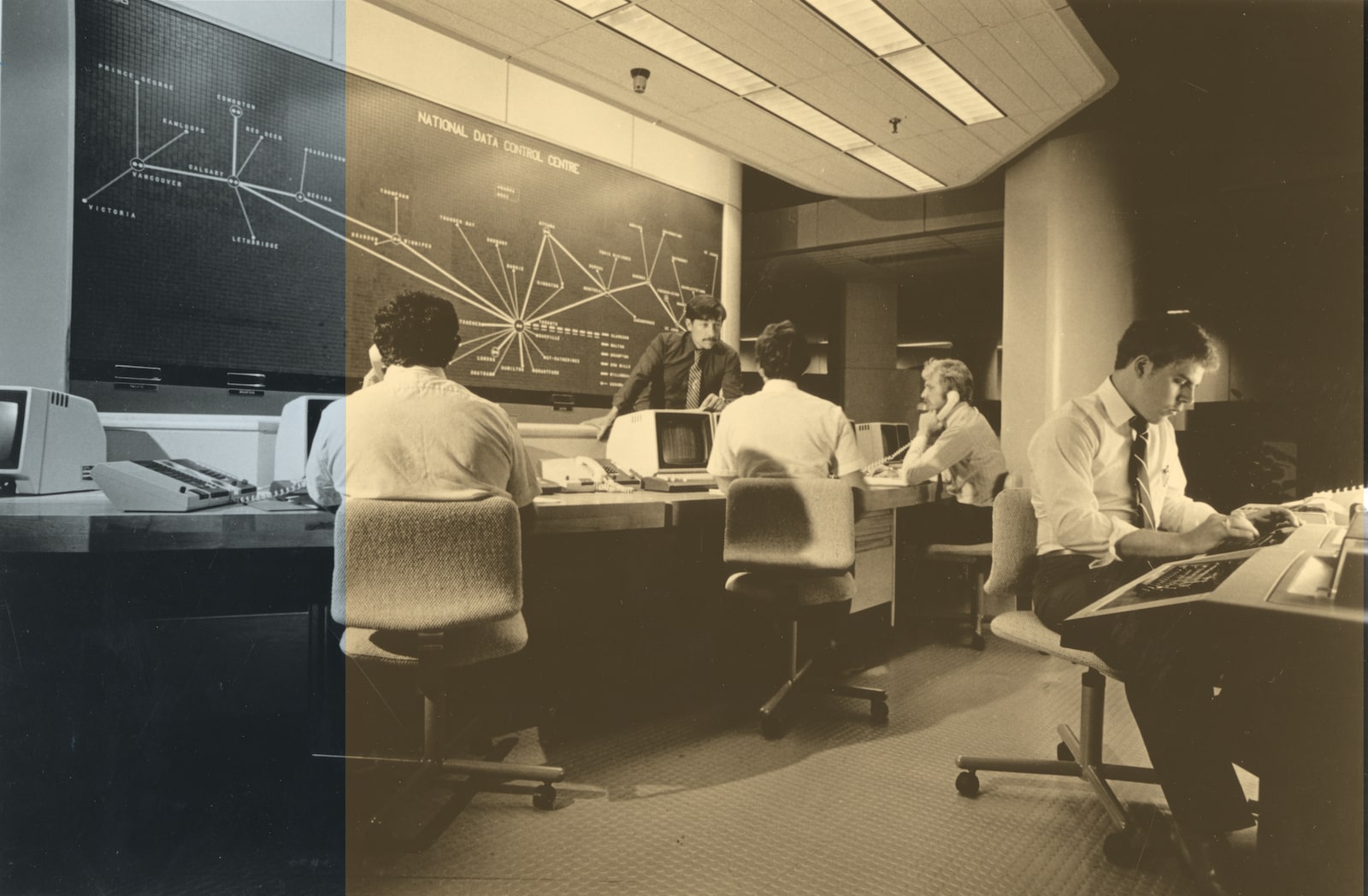
Peter Collier: Historically, we’d always been a voice-oriented company, but we knew we needed products to market that merged voice and data. So purchasing Bay Networks [in 1998]—that was Nortel’s big move to converge the two. I remember flying down to meet with their team in Santa Clara, Calif., and the cultural differences were dramatic. Their engineers were all in shorts and T-shirts, living a different lifestyle, and on Friday afternoons they converted their cafeteria into a pub, with beer and chips and popcorn. This was not something that was part of the Nortel culture. Our people were very formal and structured, even down to the way we dressed. Nortel was very old-school.
Sonya Shorey: It was like being on a rocket ship. The attraction of talent was such a huge imperative at the time that I remember big contests being held. [Former head of the optical division] Greg Mumford did a video that I directed to amplify that message, encouraging all employees to attract their friends into Nortel. As part of that competition, a sports car was being given away. I remember thinking, Wow, that really speaks to the volume of opportunities there.
Angela Mondou: We were moving every kind of tech you could imagine through global logistics centres. We used to have to lease large aircraft from Russia to fly equipment. We had to get product to places like the mountains of Brazil, where we needed helicopters to get to the final landing zone. I went to Africa to do a whole reconnaissance about how to move stuff into Kinshasa in the Congo. It didn’t get any better than that. I felt like I’d left the military and landed in heaven.
Shawn McCormick: When you’re testing out new systems, often there’s not a lot of equipment available to you. So we used to work through the night on that scarce equipment just so we would have access. I remember we had a Nortel manufacturing plant in Saint-Laurent in Quebec, and if we wanted to do a big systems test, we would set it up right on the production line and do it there. But we couldn’t get access during the day, so we would have to do it overnight. It wasn’t unusual to leave Ottawa at 2 p.m., drive there and test until 2 a.m., and then drive back home. That’s how crazy it was. But we all thought it was normal.
Rob Tetreault: Even back then, we used to do videoconferencing, presenting to 20,000 employees around the world. Now, of course, everyone uses Zoom and Teams every day—but we were doing that 25 years ago, with similar technology. It was a regular event. That just goes to show how far ahead the company was.
AM: I remember when John Roth, our CEO at the time, launched our “Come Together” campaign. We went into a big theatre with a giant screen, it was all dark, and that Beatles tune starts playing. We watched all these high-tech visuals of the cool products we were working on. He said things like, “Imagine wanting to go to the Super Bowl, but sitting in your living room and being in the middle of that 3-D game.” I remember thinking, “What is he even talking about?” And now look at where we are, with goggles and the ability to live in virtual spaces. We were working on that all the way back then.
Hamid Arabzadeh: There was an HR tool inside Nortel that showed how much you were worth. It was a stock option calculator available across the entire company. You’d log in, and it would show you how many shares you had, the strike price, the value. People would look at it and go, “Oh my god, I can retire now.” Then they’d go back to work.
RT: With that stock price, lots of people were becoming multimillonaires. People were spending, splurging, buying fancy cars, paying off their houses. I’d never had stocks before or been exposed to the world of options. I had thousands of shares, which split multiple times—every once in a while, I would calculate it and go, “Wow.” But they only vested after a few years, and by then it had totally collapsed, so I was never able to sell. For me, it was all smoke and mirrors.
PC: I was pretty young at the time, but I remember talking to a guy who was older than me and had a lot of stock options. He said, “If the stock goes up another dollar, I’m going to buy a condo in Florida. If it goes up $2, I’m going to buy a condo and a Corvette.” The amount of wealth people were seeing personally was pretty incredible. Looking at that stock price, it felt like you were going to be king of the world.
HA: We even had World Cup soccer at Nortel. Thirty or 40 teams of employees showing up, from countries all around the world, playing for the title. Generally the factory teams would win it, because the sales guys couldn’t run as much and didn’t have enough time to practise. I even played in that World Cup for three years, for the Latin American side. It was hardcore.
SM: I would say the peak was in early 2000, when it seemed everything was going our way. It was almost like magic, how everything was falling into place. I ran a group called network solutions at the time, integrating all sorts of different products and making sure they all worked together. I thought of my team as the Bad News Bears, because we all had vastly different backgrounds—but whenever anyone came to us with a request, we had what they needed. Looking back, I don’t think I could ever recreate that moment. Right people, right equipment, right place, right time.
HA: We had a division in Montreal called systems engineering, which was excellent at hiring very good people, training them and then putting them in front of customers. That was the real core of our expansion, taking our R&D knowledge and transferring it to the market. That team hired an unbelievable number of people who are in key leadership positions around the industry right now—people like Charlie Kawwas at Broadcom. They did a fantastic job at hiring young people in their late 20s and just letting them run loose. It was phenomenal.
SS: By the end of the ’90s and into 2000, there was very much an acquisition culture. We were the hunter, not the hunted. We were in a strong position at the time, so it felt almost like being a superhero. The fact that we could continue to do all this within Canada, we felt very powerful, and there was a real pride in that.
The beginning of the end

RT: We always talked about “Vision 2000″ and being the No. 1 company by the year 2000. And in fact, we did reach that goal. But once you were there, the dynamic totally shifted, because then every other company was coming for that position. All the attention was on us, and they all wanted to take our spot. Once we were finally No. 1, we just didn’t know how to stay there.
HA: What damaged the company was in the year 2000, when the business development team bought a whole series of companies for billions of dollars. Investment bankers had put fear into the mind of the CEO, saying that if we didn’t buy these companies, someone else would. That was when the company started to crack. Almost all of those startups failed.
AM: I remember being sent somewhere in Silicon Valley to have a meeting with a company we’d just bought for billions that was building some leading-edge technology. I asked to see the product, and they showed me two areas with nothing in them but rope. I said to them, “What is this?” They said, “This is the prototype. You bought a concept.” The actual product didn’t exist. We just bought it to ensure our competitors didn’t get it. Within a couple of years, the companies we bought for billions were selling for millions. The stock just went down from there, and then we were really behind the 8-ball.
SS: By then, there was sadness, deflation, heartbreak. People recognized that all the dreams we had weren’t going to come to fruition. It was a long process, not overnight, and you could feel the weight inside the building get heavier and heavier. We’re all human, and we knew that the decisions being made weren’t just affecting individual employees but their families, too. There was so much anxiety that it was hard to keep anyone motivated anymore.
SM: When the downturn came and things started getting really ugly, I had to let people go in 11 different rounds of layoffs. You had built these teams and brought these people in, and then you’re forced to cut and cut and cut. It was an awful thing to live through. Even after a couple of years of layoffs, they still wanted me to stay on. But I had a sense that we were never going to recover.
Natalie Raffoul: When I think about Nortel, what was exciting was that they recruited the best talent and then had an almost unlimited budget to do big things. So the level of innovation was very high, but they also had a deep understanding of the importance of protecting that innovation. They were very good at not just coming up with ideas, but at documenting and patenting those ideas. It was a very sophisticated organization. At the end of the day, the patents were the most valuable part of the business. Their single biggest asset was that portfolio, which sold for US$4.5 billion at auction—a record-breaking amount.
SM: I have a friend who worked at Nortel at the time, who ended up going to Amazon in the U.S. And Amazon is extremely hard to get into. He said, “I’ve worked with a lot of smart people in my career—but no one ever matched the calibre of people I worked with at Nortel.” To find that at such a large organization, that’s extremely rare.
RT: These days, people just do a job to earn a salary and go home. But back then, it was about more than that. Nortel was almost a movement. You wanted to be a part of that culture, to bring products to the world that would make everything better. I haven’t had that feeling anywhere else.
PC: You can still see the footprint of Nortel today. Of course we had a huge campus in Ottawa, but we also had a big operation in Calgary, and even down in Richardson, Tex. That would bring other tech companies into those areas—building off each other’s resources, hiring each other. It was like Silicon Valley, but we were able to make that happen in Canada. Those places became tech hubs because of Nortel.
HA: Nortel was basically the university after university. It sent you to the absolute edge of experimenting on things. The more you gave to it, the more you got back. I went in as a systems engineer, and eight years later, I was reporting to one level below the CEO. That’s what prepared me for the next stages of my career. I look at that journey, and I know I’m not alone. What doesn’t kill you makes you stronger—that’s what you got at Nortel.
SS: It created generations of opportunities for engineers and leaders in the business world, right up until today. So much of the innovation, so much of the IP, so much of the talent from those formative stages—it set the foundation on which others were able to build. The impact it had on the tech sector can’t be overstated. We are standing on the shoulders of giants—and Nortel was our giant.

Workers build the giant Nortel Networks sign, which will be installed atop the new corporate headquarters building in Toronto in 2005.NORM BETTS//Bloomberg New/The Globe and Mail
1895
Bell Canada spins off Northern Electric and Manufacturing Co. but holds onto majority ownership
1964
Northern Electric becomes a wholly owned subsidiary of Bell.
1976
The company is renamed Northern Telecom.
1997
John Roth, who started at Northern Telecom as a design engineer in 1969, becomes CEO in October.
1998
Northern Telecom is renamed Nortel.
2000
Nortel is spun off from BCE in May, and its stock hits a high of $124.50 on July 26. By October the stock falls roughly 20% after the company misses a revenue growth target.
2001
In November, Roth gets the boot and is replaced by Nortel lifer Frank Dunn, previously the CFO. Layoffs begin in earnest.
2002
By October, Nortel’s stock hits a low of 67¢ on fears it’ll seek bankruptcy protection. The headcount is around 35,000, down from its peak of 90,000, amid heavy losses.
2003
In October, the company announces it will restate results back to 2000.
2004
On Jan. 29, Nortel announces its first annual profit since 1997—US$732 million. Six weeks later, it delays its audited results and says it may restate them yet again.
After announcing its 2003 profit was half what was reported, Dunn and CFO Douglas Beatty are fired on April 28. Former U.S. admiral Bill Owens becomes CEO.
In August, the RCMP announces a criminal probe into Nortel’s accounting. Less than a month later, Nortel postpones its 2003 results to October; ultimately, they wouldn’t be released till 2005.
2005
Former Motorola exec Mike Zafirovski becomes CEO in November after Owens announces he’s stepping down.
2006
In February, Nortel agrees to pay US$2.5 billion in cash and stock to settle shareholders’ class action lawsuit over accounting scandal.
2008
The RCMP lay fraud charges against Dunn and two other former execs on June 19. In November, Nortel posts a third-quarter net loss of US$3.4 billion and announces another 1,300 job cuts.
2009
Nortel files for creditor protection on Jan. 14, leaving roughly 20,000 pensioners with dramatic reductions in benefits. Six months later, Nortel is delisted from the TSX.
2011
On July 11, Microsoft, Apple, RIM, Sony, EMC and Ericsson buy 6,000 Nortel patents for US$4.5 billion.
2013
Dunn, ex-CFO Doug Beatty and ex-controller Michael Gollogly are acquitted of manipulating financial statements on Jan. 14.
Your time is valuable. Have the Top Business Headlines newsletter conveniently delivered to your inbox in the morning or evening. Sign up today.