
As we parse the results of Report on Business’s seventh annual Women Lead Here benchmark, we’re choosing to highlight hope.
We’ll admit it’s not the easiest sell right now.
After all, we’re living through a moment in which certain world leaders crow about “ending” diversity, equity and inclusion (DEI), while a bro’s coterie of big-name corporations publicly defund or eliminate programs meant to help women advance. In some high-profile rings of power, gender equity initiatives have become about as welcome as a surprise audit.
The practical fallout of these headline-grabbing gambits is hard to ignore. The most recent Women in the Workforce report by McKinsey & Co. and LeanIn.org surfaced a startling “ambition gap”: Facing mounting demands and dwindling institutional support, women are, for the first time since the project’s inception, notably less interested in corporate ladder-climbing than men. This aligns with the 2025 Annual Report Card produced by the Canadian Prosperity Project, which documented a clear drop in the share of women in the management pipelines of Canada’s largest companies, from nearly 55% in 2022 to just over 45% in 2025.
Our own research reinforces these trends. In recent months, the Report on Business team analyzed the 4,615 executives who comprise the top three leadership tiers of the 472 largest publicly traded companies in Canada. As per usual, much of what we found was discouraging.
A stubbornly large share of Canadian companies remain total boys’ clubs, with more than 22% of evaluated companies run by exclusively male leadership teams. For a further 23%, “gender diversity” amounts to a single woman in a position of power.
Moreover, any momentum to change this appears to be slowing: Just 29% of firms have more women executives now than they did a year ago—the lowest number in ranking history.
But we promised you hope, and indeed, there is some light on the horizon. At 6.6%, the share of women CEOs is ticking upwards from last year’s all-time low of 4.7%. (To be fair, we trail well behind the U.S., the U.K. and France on this metric.)
For the first time in years, there are more women top bosses in Canada’s largest companies than guys named Mike. (By one, but still.) Perhaps most importantly, 27% of all leadership roles in corporate Canada are now held by women. That’s the largest share since we started measuring and brings us close to the middle of the pack among our G7 peers.
This progress is disproportionately on the shoulders of a mighty minority: the 85 companies that earned a spot on this year’s Women Lead Here benchmark, which are clearly outperforming the field on executive gender equity. For the first time in ranking history, more than half of winning firms have reached or surpassed gender parity in their boardrooms. On average, 48% of the people in their executive ranks are women, including a (relatively) respectable 21% of their CEOs.
While most Canadian corporations have stalled—if not regressed—in advancing gender equity, this year’s Women Lead Here honourees are quantifiably doing the slow, steady, not-always-glamorous work of advancing women-friendly workplaces. That’s admirable, yes, but in the shambolic economic conditions of 2026, it’s also very valuable. Companies with more women leaders tend to fare better in times of crisis. They’re usually more innovative, productive and profitable, too. (It’s worth noting here that the average profit margin among Women Lead Here honourees is 9.5%, more than twice the average of non-winners.)
So: What are these corporations getting right? What does it take for organizations to cultivate gender-diverse leadership teams over the long haul?
We asked the human resources heads of some of the longest-tenured Women Lead Here firms to share a few ideas.

Michele WalkauSupplied
- It takes active buy-in at the apex of the org chart to set a standard that equity is a core priority. “It really does start with the tone at the top,” says Michele Walkau, senior vice-president of brand and culture at Toronto-based First Capital REIT, where 41% of senior leadership roles are held by women and where CEO Adam Paul sits on what’s known as the Everyone Belongs council, an employee-led initiative to drive a workplace that supports everyone. “That sort of leadership permeates through the organization and sends the message that this matters,” says Walkau.

Tanya FinlaySupplied
- It takes belief in the value—the real, tangible value—of representation, according to Tanya Finlay, VP of people and culture at Fortis, which boasts a leadership team that is 57% women. When the St. John’s-headquartered utility was getting off the ground nearly 40 years ago, its leaders were “very intentional” about appointing women into senior roles, she says—and the results of this visibility have trickled down over time. “That translated to women being present and influential at those leadership tables,” Finlay explains. “That really has laid the foundation for where we are today: You see it showing up in our governance, our succession planning, and our leadership development programs.”

Bianca WilliamsonSupplied
- It takes clear eyes to recognize where the organization is at, really—not where it might or should be—and where it needs improvement. “Making progress on women in leadership takes real intention,” says Bianca Williamson, senior VP of people and culture at Corus Entertainment in Toronto, where 45% of executive roles are held by women, and which has developed formal mentorship, sponsorship, and early-career development programs to build more diverse leadership pipelines. “It starts with understanding your data and being honest about where barriers still exist, then doing the work to remove them.”

Colleen McCarvilleSupplied
- It takes formal structures of accountability to keep gender equity efforts relevant and effective. “We have frameworks and regular reporting that ensure we analyze our gender equity and gender pay equity on a continuous basis,” says Colleen McCarville, senior VP, corporate services at Halifax-based Killam Apartment REIT, which has a leadership team that is 60% women. “In an organization of our size, we cannot take a strong culture for granted. The impact of the culture, and the programs it has led to, needs to be subject to regular review and analysis.”

Gillian WhitebreadSupplied
- And finally, it takes an organization-wide understanding that equity takes time. “It’s a marathon, not a sprint,” reasons Gillian Whitebread, executive VP and head of human resources at Hydro One, where 47% of executive jobs are held by women (and where Megan Telford will soon take over as CEO). The company has initiated several slow-burn efforts to diversify the talent mix at all levels of the organization, including a program for pre-university women interested in careers in STEM that has helped the utility dramatically increase the gender diversity of new-grad hires—the long-term effects of which are extending up the chain. Plays like these require discipline and patience, Whitebread says, but they deliver clear results: “If you treat it like a sprint, you are going to be disappointed in your progress, and you’re going to make decisions that don’t set you up for long-term success.”
Yes, pursuing gender equity can be a long game. Yes, it’s rarely the easiest path for an organization to take. But even in an environment of DEI backlashes, “glass cliff” appointments and—let’s not gild the lily—more vestiges of sexism than anyone would like to admit, there are businesses choosing to prioritize it and getting ahead for their efforts.
See? Hope.
With 85 companies on this year’s benchmark, that’s 18 female chief execs. Meet a few of them below.
Samira Sakhia
Knight Therapeutics
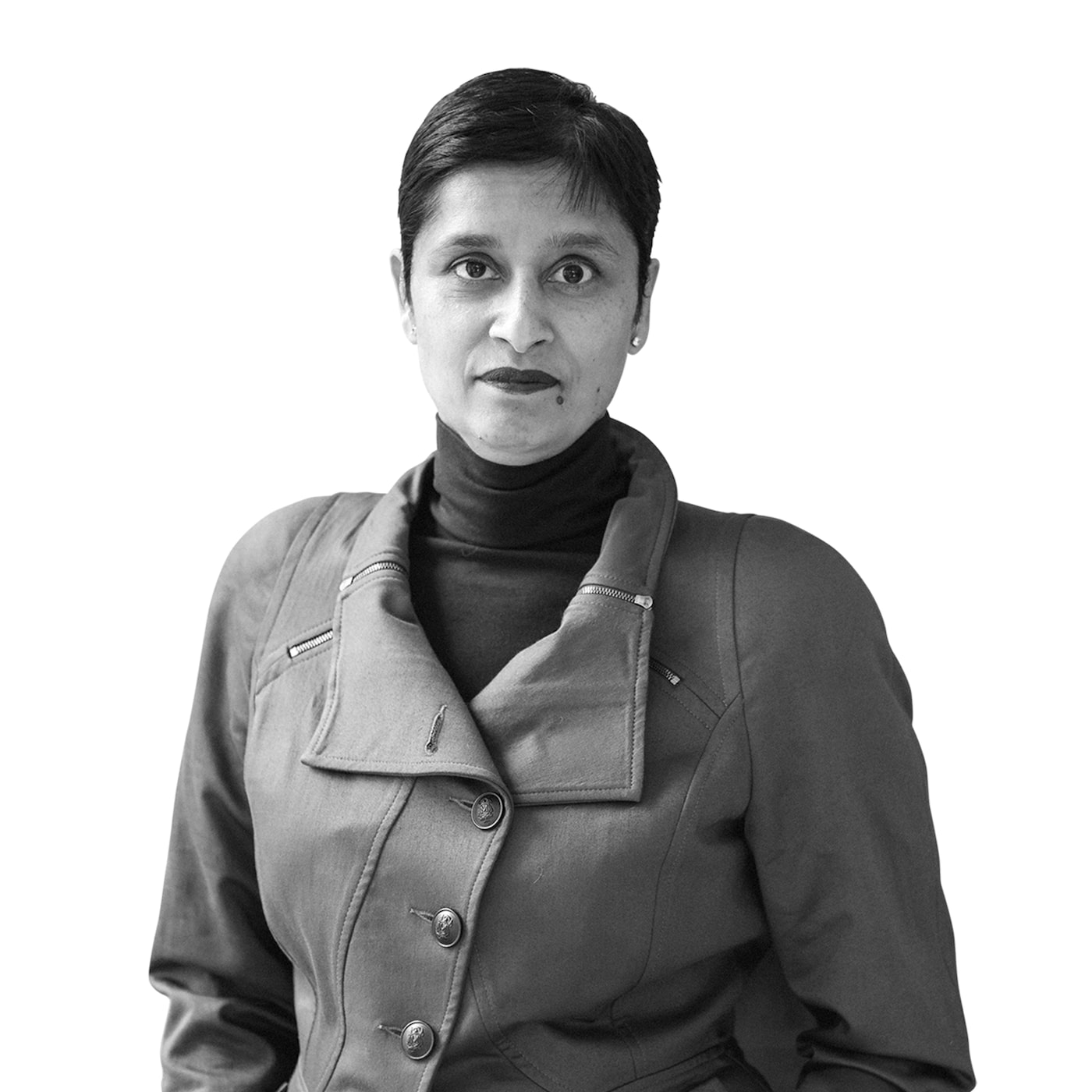
Sakhia is a lifelong globetrotter: She was born in Pakistan, moved to Saudi Arabia at age 7, then the U.K., Toronto and Miami before starting at McGill in 1986. She was CFO of biotech firm Paladin under co-founder Jonathan Goodman from 2001 to 2015, then joined him at Knight in 2016. She succeeded him as CEO in 2021.
Tracy Robinson
CN Rail

She succeeded CEO J.J. Ruest amid a bitter dispute with an activist investor in 2022, the first woman to run the railway in its 107-year history. Her hobby is skydiving: “Skydiving has a lot in common with leadership. The first thing I learned was trust. Before you even think about jumping, you have to trust the people around you.”
Annick Guérard
Transat
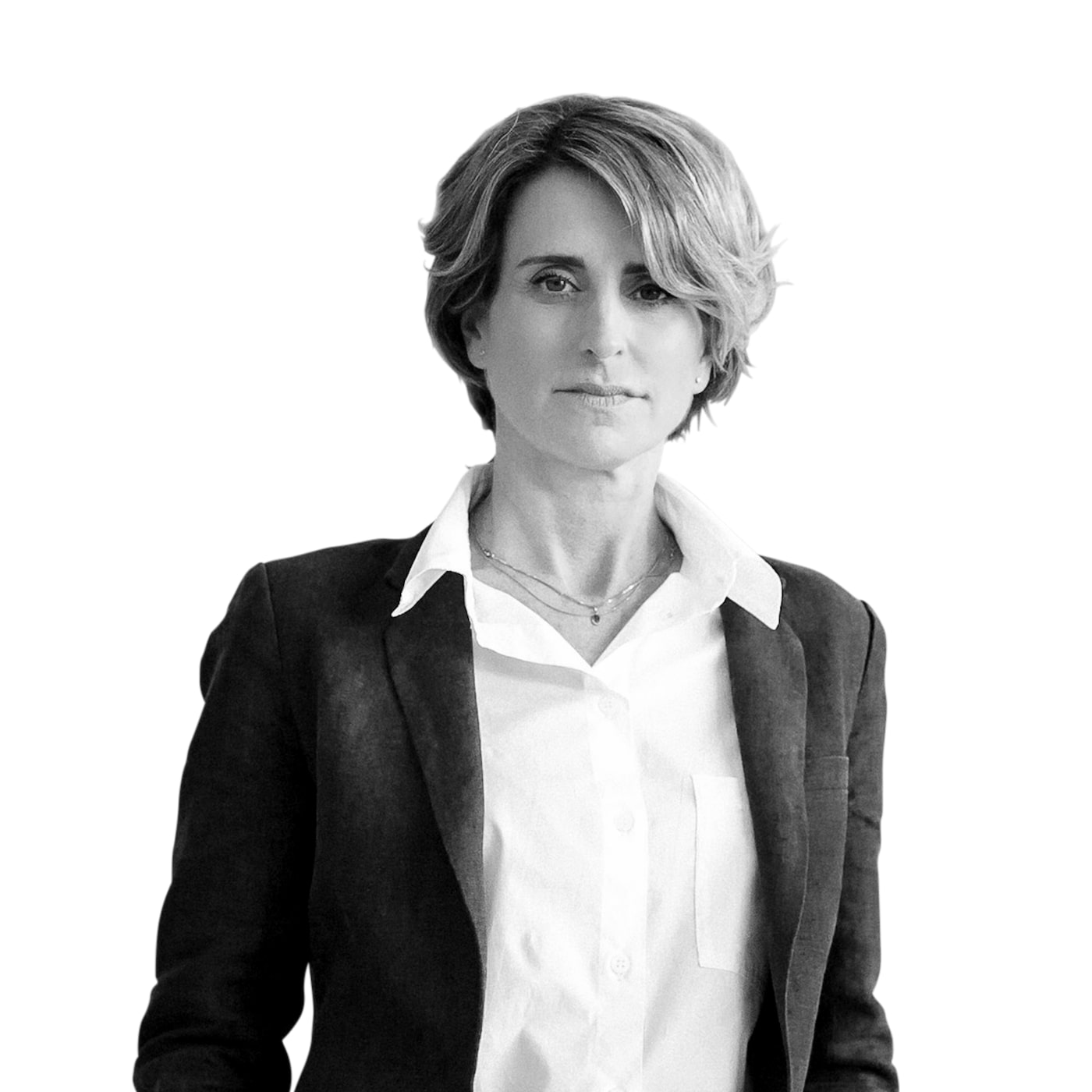
In 2021, Guérard became the first woman to run a Canadian airline when she succeeded co-founder Jean-Marc Eustache.
Angela Sahi
Morguard

Succeeded her dad, K. Rai Sahi, who started Morguard 50 years ago (and is now executive chair), in November 2025. The company now owns and manages $19 billion in assets across Canada and the U.S.
Susan Senecal
A&W Food

Tasted her first onion ring at A&W in Montreal, where she grew up, and has been hooked ever since. She joined A&W 34 years ago and has been CEO since 2018.
Meghan Roach
Roots

Corporate cred: worked for Searchlight Capital Partners, the private equity firm that bought a majority stake in Roots in 2015, then the board and ultimately became CEO in 2020. Sports cred: caught Bo Bichette’s homerun ball during Game 7 of the World Series.