

More than 30 years ago, David McKop travelled from his native Zimbabwe to Calgary for a holiday.
During his vacation, as he was driving down Deerfoot Trail, he noticed pigeons in the sky – he could tell they were racing birds, not wild ones, just by the way they flew. A third-generation enthusiast of the sport, Mr. McKop couldn’t help himself; he followed the birds in his car as they returned to their home coop.
“I introduced myself to the owner,” he recalls. “He told me where the club was.”
What he soon learned was that the Calgary Racing Pigeon Club, established in 1904, is the oldest of its kind in Canada.
When Mr. McKop ended up relocating to the city in 2000, joining the club was one of the first things he did.
Pigeon racing, he said, is “something you get in your blood, it’s like a drug.” Mr. McKop is currently co-president of the club, which has 35 members.
“Once you get into the hobby, it’s very difficult to get out of it.”

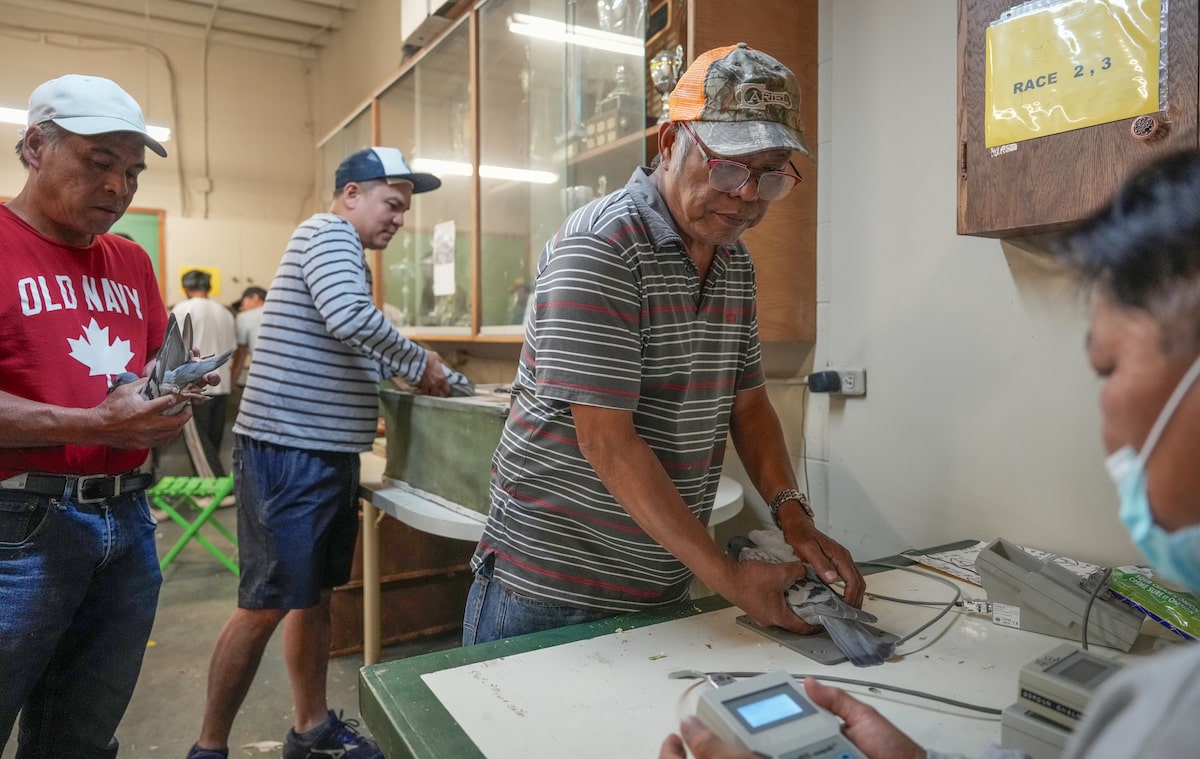
David McKop arrives at the racing club with pigeons from his coop at home, in top photo.

The bands on Mr. McKop's pigeons have RFID chips, a modern form of accessories that have been used since the 1800s to tell birds apart.
The sport began in Belgium in the early 19th century and still has enthusiasts around the world, but it’s not exactly booming. “It’s all seniors who are slowly moving out, and not being replaced,” says Mr. McKop, 69.
With that – and the associated costs of the birds, feed and fuel – in mind, the Calgary club does what it can to attract and support new members, Mr. McKop says.
“Sometimes some of us old members give them birds for free.”


Despite the club’s 121-year presence in the city, Mr. McKop says misguided notions about the sport remain. “They think all pigeons are these wild pigeons that are a problem,” he says. “They don’t know that every year we vaccinate these birds. If the birds are not healthy, they cannot race.”
Which is what they do every weekend from May to September, with events ranging from 160 to 800 kilometres in Alberta and Saskatchewan.
On Fridays, the owners choose their racers for the weekend, put them in baskets and take them to the club. The birds wear electronic tags that are scanned before they’re put on a truck bound for the race’s starting point. By Saturday morning, they are released en masse. When the birds reach their respective home coops, they’re scanned again and their times are downloaded and calculated. On Monday evenings, members gather at the club to hear the official results.
Housing, feeding, training and transporting the birds can add up to a terrific amount of work – not that Mr. McKop is planning to step away from pigeon racing.
“Once it gets a hold of you, you’re done,” he says.

