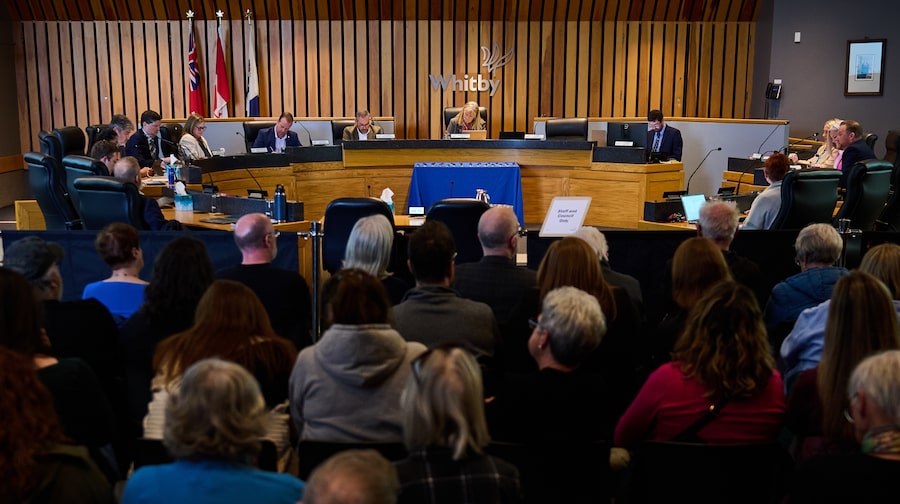
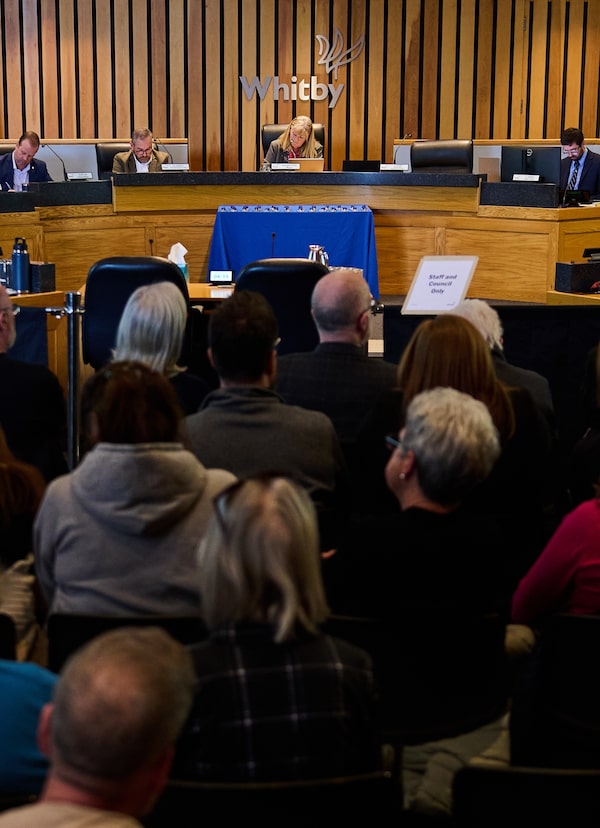
The political circus came to Whitby town hall, about 50 kilometres east of Toronto, at 7:15 p.m. on April 20.
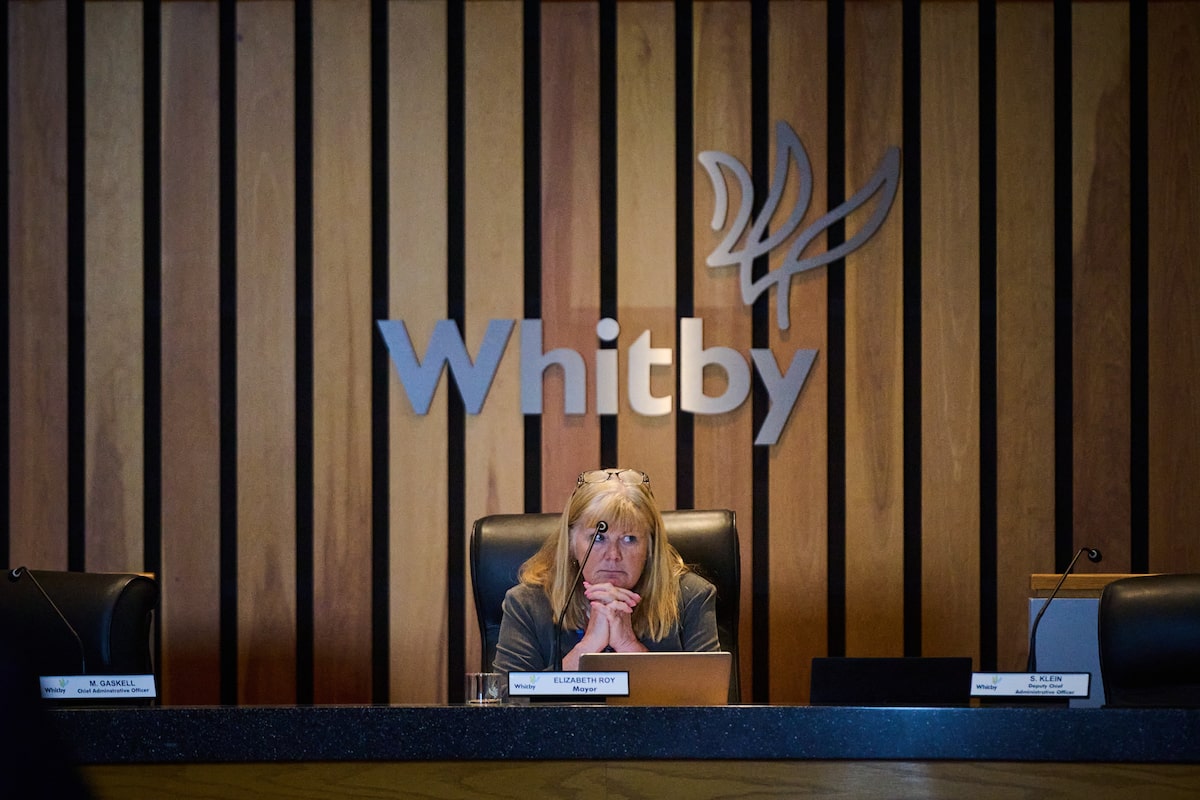
Inside the council chambers, Regional Councillor Chris Leahy’s colleagues had just voted 7-1 to dock him a month’s pay – about $4,000 – for, in the words of an integrity commissioner’s report, implying “wrong-doing or malfeasance by staff” and “eroding public trust.”
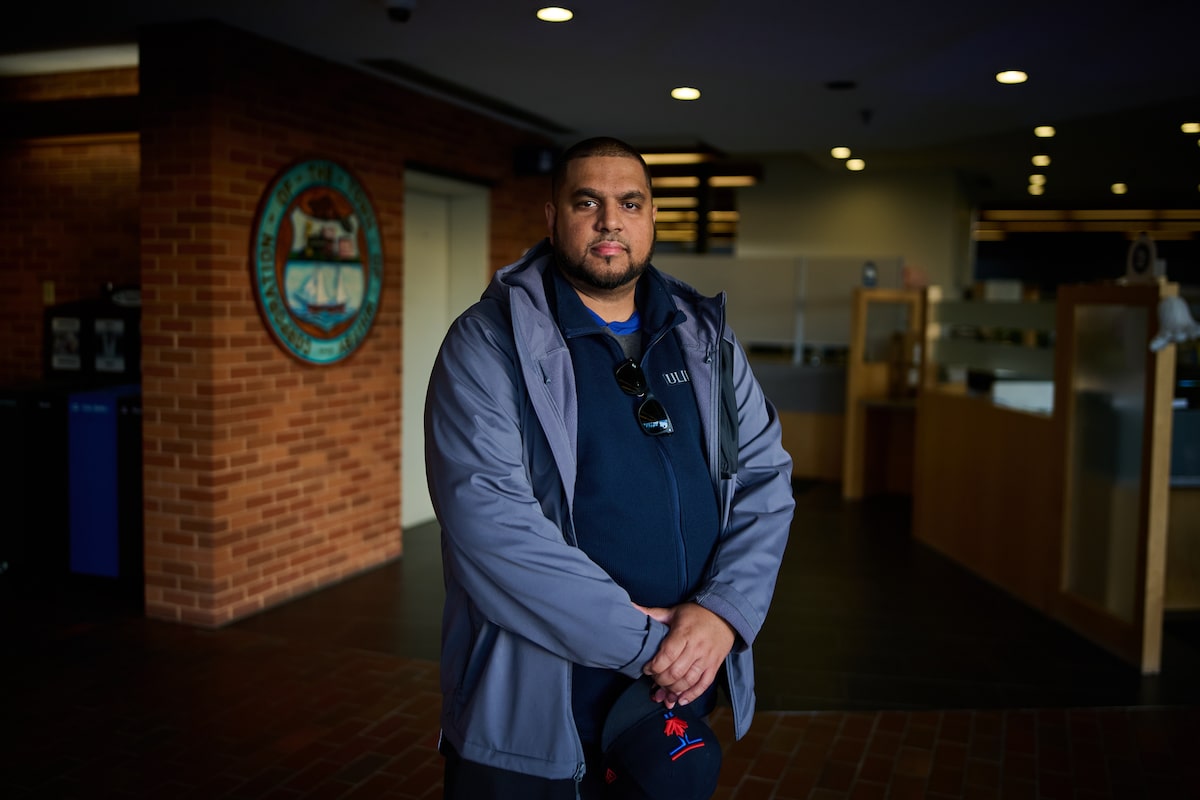
But outside, it was all cheers and high-fives for the chastised councillor. “Chris for mayor,” chanted dozens of supporters, many wearing fluorescent work vests to reference his support for placing a crossing guard at a dangerous intersection. They hooted more as he answered questions from David Menzies, of the right-wing news outlet Rebel Media, who referred to Mr. Leahy’s political opponents as “precious hot-house flowers.”
And then a few detractors moved in.
“Dirtbag … Dirtbag … Just being a dirtbag,” one yelled.
“You’ll never be mayor in this town.”
Two police officers eyed the proceedings warily.



The heated and chaotic scene is one among scores of recent hostile encounters involving Canada’s municipal councils, where both elected officials and staff are describing a new strain of political incivility afflicting the bodies that preside over water, emergency services, transit and other essential services.
With local elections slated this year in British Columbia, Manitoba, Ontario and New Brunswick, a drift toward enmity – accelerated by pandemic misgivings and the caustic state of U.S. political discourse – now threatens to further erode participation in a level of government that has been a stepping stone to greater political glory for the likes of John A. Macdonald, Wilfrid Laurier and Doug Ford.
“It’s deterring the aspiring people and the one-term people who are saying ‘Oh, I’ll stick it out until the end of the term, but there’s no way I’m running again,’” said Robin Jones, president of the Association of Ontario Municipalities (AMO) and mayor of Westport, Ont.

Visitors to Whitby's town hall can come face to face with dozens of former mayors on the portrait wall. The first was James Rowe, whose house was turned into a waterfront culinary hub under the current city council.
The anecdotal trend is difficult to track, but a few organizations are trying.
About two-thirds of respondents to a 2025 Canadian Municipal Barometer survey of local politicians said they’d experienced harassment. Roughly one-third of local politicians in a New Brunswick study said they’d considered resigning because of the constant abuse. In 2024, an organization representing Quebec municipalities found that 74 per cent of leaders reported enduring harassment and that nearly 10 per cent of the province’s 8,000 local politicians had quit since the 2021 election.
Previous Whitby council terms had been largely congenial, generating few headlines beyond this city of around 160,000 people.
But during the first few months of a term that started in 2022, rookie Councillor Niki Lundquist noticed things descending into the kind of impassioned antagonism usually reserved for U.S. presidential runs: angry crowds, human rights complaints, demeaning social-media posts, code-of-conduct investigations, incendiary council motions.
Two years in, she decided that her first term on Whitby town council would also be her last.
“So much of our time is spent on contentious nonsense that has nothing to do with our role,” said Ms. Lundquist. “I thought ‘Why am I doing this?’”

Mr. Leahy had faced complaints that his videos about the intersection controversy would bring 'public ridicule' of city staff.
Much of her dismay centred around Mr. Leahy, a polarizing figure who has put forth motions to end all city business with companies engaged in the federal government’s Temporary Foreign Worker (TFW) program and another to ask Ottawa to review Andrew Mountbatten-Windsor’s (formerly Prince Andrew) inclusion in the line of succession.
Last year, Mr. Leahy posted a video highlighting a town staffer’s incorrect remarks regarding an intersection where two students had been struck by cars. Mr. Leahy wanted a crossing guard posted. The staff member said the speed limit was 60 km/h, too swift for crossing guards. In the video, Mr. Leahy showed that the posted limit was actually 50 km/h. When the town acknowledged the error and put up 60 km/h signs to conform with a local by-law, he posted another video highlighting the absurdity, adding a distinctive Law & Order sound effect to underscore his case.
The town’s chief administrative officer, Matt Gaskell, filed a code-of-conduct complaint saying the videos “exposed staff to public ridicule for what was an honest mistake,” according to an integrity commissioner’s report that examined the videos and a separate allegation that Mr. Leahy confronted a town employee at a Christmas event, something he says never happened.
The videos did not name the staff member or say anything false, the report said, before recommending a one-month suspension of pay for breaching “the Code of Conduct by publicly disrespecting Town Staff.”
“I am being punished for the truth,” said Mr. Leahy in a scrum with reporters shortly after council voted to support his suspension of pay.
The whole messy scene convinced Ms. Lundquist that this isn’t the time to abandon local politics. “I work really hard in our community, like so many others, to do good. I’m not going to cede that public space to people who don’t want to do good.” Mr. Leahy made a similar pitch, saying he wanted to tackle the “conduct and culture” around council. He registered his mayoral candidacy on May 1, the opening day for nominations ahead of the Oct. 26 civic elections.

Whitby's town hall will learn who its new occupants are after Ontario's municipal elections on Oct. 26, two weeks after B.C.'s vote and two days before Manitoba's. New Brunswickers vote on May 11.
Similar turmoil has touched municipal halls well beyond Whitby.
In Sarnia, Ont., Councillor Bill Dennis has faced a series of integrity commissioner investigations for, among other things, allegedly swearing at residents, and has been barred from attending council meetings in person.
In Kamloops, B.C., a running feud between Mayor Reid Hamer-Jackson and his council has spawned dysfunction, defamation lawsuits and code-of-conduct investigations costing upward of $500,000, according to local media reports. The mayor has been found in breach of the code five times and had a significant portion of his roughly $130,000 salary docked. A municipal adviser appointed by the province found that councillors worked well together but that Mr. Hamer-Jackson showed contempt for staff and “authority structures,” leading to a number of departures.
He’s running for re-election.

Allan MacEachern is the outgoing mayor of St. Stephen, N.B., but has had trouble enlisting people to run in his place.John Morris/The Globe and Mail
In St. Stephen, N.B., Mayor Allan MacEachern is not. He’s told residents he can no longer abide the constant social-media harassment and dust-ups over things beyond his control, such as the closing of public places during the early months of the COVID-19 pandemic.
“You could spend your life on Facebook reacting to all the information that is wrong or not clear and you just don’t have time for it,” he said of the $37,000-a-year mayoral post. “It’s a lot, and the negativity affects your family.”
He’s been trying to recruit successors. “They tell me they wouldn’t touch the job with a ten-foot poke,” he said. “We’re missing out on good people.”
On a recent podcast, former Moncton mayor Dawn Arnold said she once received 2,500 life-threatening e-mails in 24 hours and that a man had been jailed for threatening her life. Like many local politicians, she said the change in decorum came during the pandemic. Others point to the information vacuum left by the collapse of local journalism and the deterioration of political debate in the U.S.
“I think we’ve seen a marked change in the last 10 years or so, which is when Donald Trump was elected in the U.S.,” said John Mascarin, a lawyer specializing in municipal issues who has spoken at several information sessions for aspiring candidates in Ontario. “You’re just not going to see the old days of working together in bipartisanship like on The West Wing until something fundamentally changes. People don’t think they have to be polite and civil because they don’t see their leaders acting that way.”

The B.C. legislature has been looking at ways to hold municipal councillors to standards of conduct.Chad Hipolito/The Canadian Press
Governments are working on those fundamental changes.
B.C. has long made municipal codes of conduct optional. But new legislation would create a standardized, mandatory code with penalties ranging up to a 90-day suspension without pay.
Last year, the Alberta government repealed municipal codes of conduct, arguing that they were “weaponized” to silence debate, and plans to introduce new rules this year.
Proposed legislation in Ontario also creates a universal code, but adds a mechanism for the complete removal of council members from office for serious violations.
Mr. MacEachern, the outgoing St. Stephen mayor, presided over his last council meeting in mid-April. He says the same vitriolic social feeds that persuaded him to leave office are now overflowing with well-wishers. “That shows me the good people are still out there,” he said. “It’s just that the one per cent making the noise is hard to handle.”

Anyone who hopes to end up on Whitby's mayoral portrait wall has until Aug. 21 to file nomination papers.