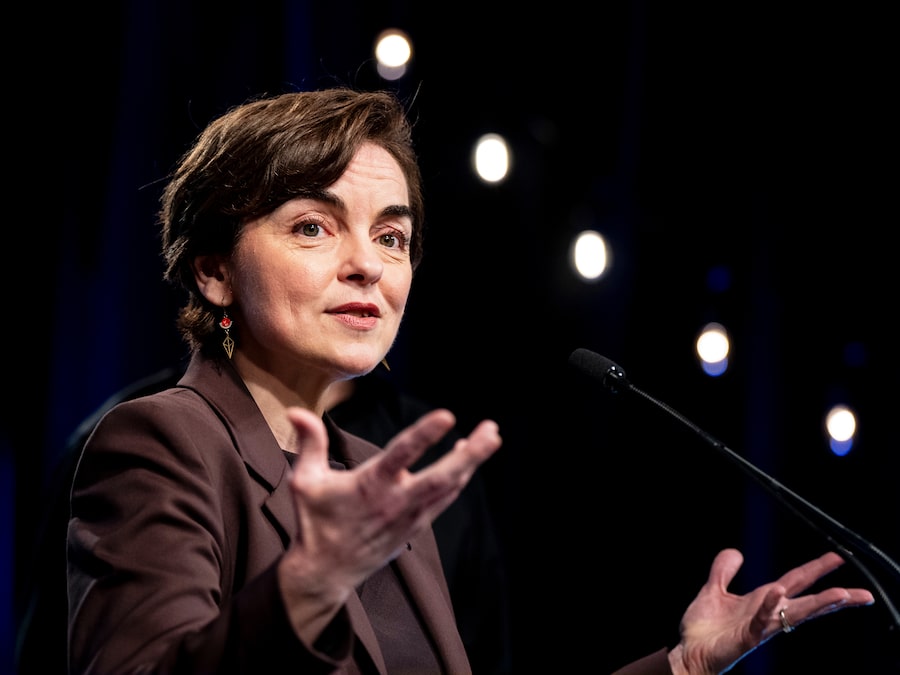
Christine Fréchette has done her best to outrun her own party.
Since taking over the Coalition Avenir Québec and becoming Premier in April, she has tried less to rehabilitate a tarnished brand than to erase it.
Her strategy was on display at the launch of the Quebec election campaign in late August, when observers quickly noticed that her bus and election signs did not feature her party’s name. “Avançons,” her campaign slogan read. Let’s move forward.

The CAQ campaign bus is labelled ‘Team Christine Fréchette,’ setting her apart from the brand built by her predecessor.Graham Hughes/The Canadian Press
Ms. Fréchette, 56, began the first debate of the campaign by declaring that she is not her predecessor, François Legault.
As she faces a restive electorate looking for change, she has attempted to shed the baggage of her party’s eight years in government. In this election, she is selling herself.
For a moment, voters were buying in. Early in the campaign, which began days after trade talks between Canada and the United States fell apart, Ms. Fréchette invited comparisons to Prime Minister Mark Carney. Like him, she embodied the sort of unflappable technocrat that seemed a welcome contrast to the erratic and hostile behaviour of U.S. President Donald Trump.

Ms. Fréchette and Prime Minister Mark Carney have had to face a common threat from U.S. President Donald Trump on trade issues.Christopher Katsarov/The Canadian Press
Though the Coalition Avenir Québec had spent months circling the drain, Ms. Fréchette, who declined an interview request from The Globe and Mail, orchestrated an unlikely comeback.
It seemed possible she could achieve what Mr. Carney had done in last year’s federal election and turn near-certain defeat into an improbable victory. If she was a touch bland, well, perhaps that was exactly what Quebeckers were looking for.
But then it went away. Days ahead of the vote on Oct. 5, Ms. Fréchette’s campaign has lost its momentum. The winds of change are blowing in the direction of a Parti Québécois government, regardless of Leader Paul St-Pierre Plamondon’s unpopular promise to hold a third referendum on independence.
Despite Ms. Fréchette’s best efforts, the legacy of the CAQ has caught up to her. Now, she is fighting for the survival of the party she would prefer not to name.

Christine Fréchette is not the kind of politician who delivers thunderous oratory or inspires breathless excitement, but in a way, that’s what her supporters like about her.
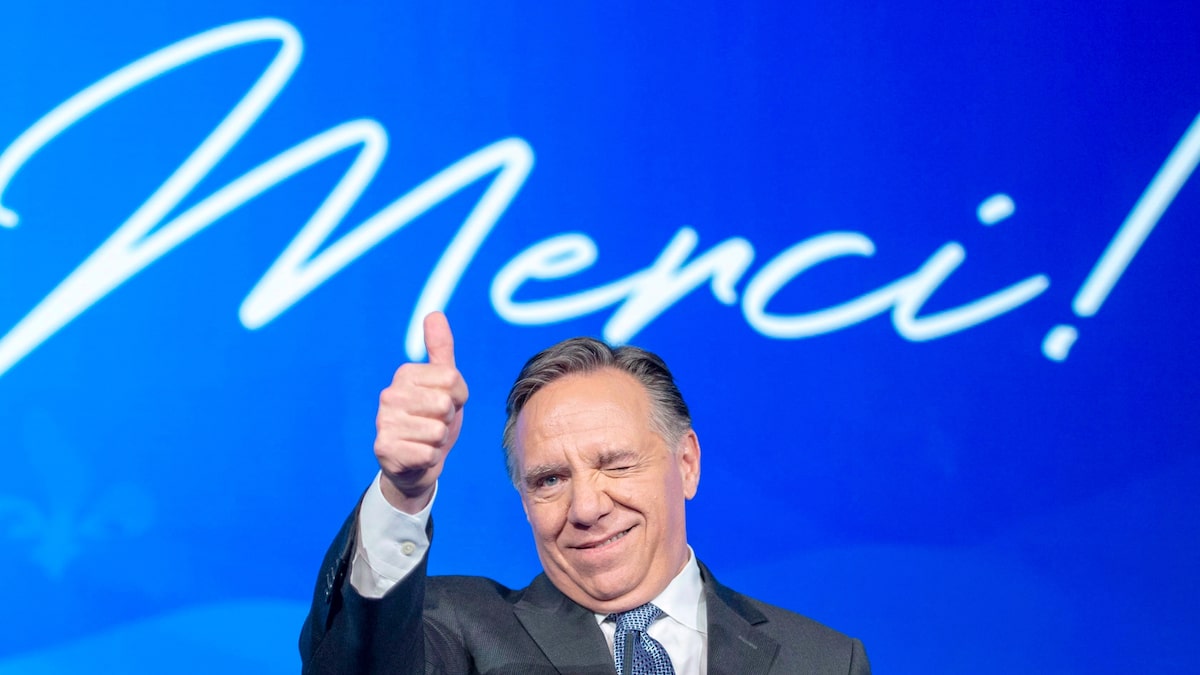
She has had the unenviable task of reshaping a party built in the image of Mr. Legault, who co-founded the CAQ in 2011 and led it to form government in 2018.
Mr. Legault, who announced his resignation in January after more than seven years as premier, had a folksy, plainspoken style and a hair-trigger reaction to negative press. Though he walked on water during the COVID-19 pandemic, a series of controversies and questionable financial decisions had made him one of the least popular politicians in the country by the time he made his exit.
At a September campaign event on Montreal’s South Shore, supporters told The Globe and Mail they’d joined the party specifically because of Ms. Fréchette.
Marie-France Bilodeau, 69, said she previously voted for the CAQ but grew disenchanted with Mr. Legault’s performance. She became a party member to support Ms. Fréchette’s bid for the leadership earlier this year. “She’s really smart. I think she takes the time to think things through before making decisions,” Ms. Bilodeau said. “She’s calm.”
As the room emptied out after the event, she approached the CAQ Leader. “The only thing that brought me back was you,” she told her.

Ms. Fréchette is rallying Quebeckers under the slogan Avançons, let's move forward.Jacques Boissinot/The Canadian Press
Ms. Fréchette doesn’t stand out as the type of person who would want to be premier, though she showed an interest in public policy and civic life from a young age.
The cut and thrust of partisan politics appealed less to her, said Vicky Trépanier, a long-time friend. “She wants to have in-depth debates.”
Ms. Trépanier, who is not involved in politics, met the future Premier when they were both part of the student movement of the 1990s. Ms. Fréchette earned a Master’s degree in international relations from Laval University in 1994, and went on to work for a provincewide student union.
In those early years, she rubbed shoulders with a group of future politicos, including Martin Koskinen, who would become Mr. Legault’s long-time chief of staff. “She wasn’t someone who wanted to be the centre of attention,” Mr. Koskinen recalled in an interview.
Several years after completing her studies, Ms. Fréchette began organizing annual simulations of a North American parliament attended by university students from Canada, the United States and Mexico.
It was an impressive achievement, said Ms. Trépanier, who helped out with the paperwork and grew close to Ms. Fréchette during that time. “She created an institution that didn’t exist.”

Jean-François Lisée gave Ms. Fréchette her first job in partisan politics.Paul Chiasson/The Canadian Press
Starting in 2007, Ms. Fréchette worked at a centre for international studies at the University of Montreal, where she met Jean-François Lisée, a future leader of the separatist Parti Québécois. When Mr. Lisée was elected to the National Assembly in 2012 and named minister of international relations, he hired her to work in his office.
Ms. Fréchette had voted “yes” in 1995, but she was never a “militant sovereigntist,” said Ms. Trépanier, her friend.
Her career with the PQ would be short-lived, however. She left the minister’s office in 2014, unable to accept the government’s proposed charter of values, which would have banned religious symbols for many public servants.
Ms. Fréchette would go on to spend nearly five years as the head of the chamber of commerce of eastern Montreal. But there were signs she was looking for a new political home. Ms. Trépanier recalled that after Ms. Fréchette left the PQ, the two of them attended a meeting of a group of so-called “orphelins politiques” (political orphans) organized by none other than Mr. St-Pierre Plamondon, who would seek the PQ leadership for the first time in 2016.

Ms. Fréchette's partner is Guy Nadeau, a businessman based in Montreal.Jacques Boissinot/The Canadian Press
As the CAQ gained prominence, Mr. Legault, who had moved in the same circles as Ms. Fréchette in her younger years, tried to recruit her to the party multiple times, according to her partner, businessman Guy Nadeau. She declined his invitation to run for the CAQ in 2018, having started her position at the chamber of commerce not long before.
But when he came calling again four years later, she was ready to take the plunge. Among other things, she was impressed by how Mr. Legault had handled the pandemic, Mr. Nadeau said. “It took shape slowly in her mind,” he said. “She’s not an opportunist.”
Ms. Fréchette won a seat in the National Assembly as the CAQ formed its second majority government. She was named immigration minister, before being moved to the high-stakes energy and economy portfolio in 2024.
In the fall of 2025, after the CAQ’s support had collapsed, colleagues told Ms. Fréchette she should consider running to replace Mr. Legault if he resigned, her partner said. She felt it might be a “unique opportunity” that wouldn’t come along again, he added.
Mr. Koskinen, Mr. Legault’s chief of staff, hadn’t expected the reserved Ms. Fréchette would want the job.
But he now believes her restraint was part of her appeal to party members. “Quebeckers weren’t going to choose a François Legault 2.0.”

After being sworn in as the province’s second-ever female premier in April, Ms. Fréchette hit the ground running.
Political observers suggested the best she could hope for was to save her party from devastation. But ahead of an election set for October that would hinge partly on the question of sovereignty, she took steps to prove she could work within Canada.
While Mr. Legault had an often adversarial relationship with Ottawa, Ms. Fréchette arranged a meeting with Mr. Carney two days after her swearing-in. The two leaders have since made several joint announcements, and the CAQ enjoyed a modest bump in the polls.

Ms. Fréchette has been out and about several times with Mr. Carney, such as this August news conference in St. John's with her Newfoundland counterpart, Tony Wakeham.Paul Daly/The Canadian Press
Ms. Fréchette kicked off her campaign in late August as a new round of U.S. tariffs loomed, naming Mr. Trump as her prime adversary. Her party’s fortunes rose again, with one survey putting the CAQ neck-and-neck with the PQ.
But the Trump effect didn’t last, said political analyst Antonine Yaccarini. “People have gotten somewhat used to the tariff crisis.”
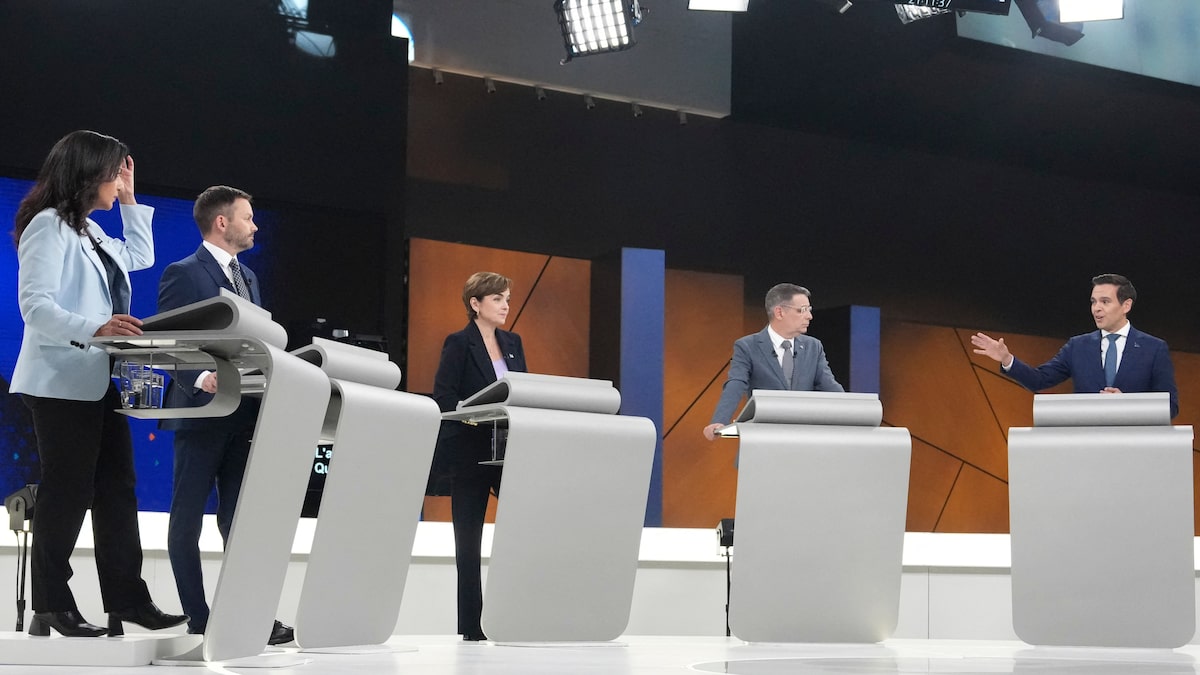
Ms. Fréchette has proven less adept at campaigning than at being Premier, Ms. Yaccarini said, and her debate performances were underwhelming. She is also an easy mark for her opponents, given the eight years of unpopular CAQ decisions that are all too easy to dredge up.

Ms. Fréchette says she would not hold a referendum on Quebec independence; Mr. St-Pierre Plamondon says he would, but not while Mr. Trump is in power in Washington.Graham Hughes/AFP via Getty Images
The CAQ Leader has also prevaricated repeatedly when asked for her personal position on sovereignty, despite her promise not to hold a referendum.
Back in April, before anyone was comparing Ms. Fréchette to Mr. Carney, some were drawing parallels to a different Canadian prime minister. Kim Campbell, who took over from Brian Mulroney in June, 1993, led the Progressive Conservatives to a devastating defeat in an election that November, from which the party never really recovered.
Ms. Fréchette may share the same fate. Quebec’s governing party is once again looking to save the furniture, with projections suggesting it could lose every one of its 79 seats. A majority may be in reach for the PQ.
In the months since becoming Premier, Ms. Fréchette has made it very clear who she is not. She is not François Legault. She is certainly not Donald Trump. And she is not Paul St-Pierre Plamondon.
But it is less clear who she is, and that could be her downfall. “The problem is she herself, despite her impressive demeanour, is a bit of an empty shell,” journalist and author Francine Pelletier said in an interview. “What’s the new dream?”

Christopher Katsarov/The Canadian Press
Quebec votes: More from The Globe and Mail
The Decibel podcast
How do today’s young Quebec sovereigntists differ from other generations since the Quiet Revolution? Reporter Maura Forrest spoke with The Decibel about how age and ideology shape Quebec politics, and could decide this year’s provincial election. Subscribe for more episodes.
From our Quebec reporters
Profile: The persistence of the PQ's Paul St-Pierre Plamondon
What to know about Quebec's major parties this election