Joe Lazare-Zoe, a Tłı̨chǫ elder from the small community of Gamètì, Northwest Territories, remembers a time when caribou herds were so large that they shook the ground and sounded like thunder.


In the 1980s, the Bathurst caribou herd had a population of nearly half a million animals.
And then something changed.
The herd began to dwindle.


Today, fewer than 4,000 Bathurst caribou roam the tundra, and that number continues to fall. The Bathurst caribou are now designated as “critically low.” An entire generation of Indigenous children are growing up without any connection to the caribou their ancestors co-existed with for thousands of years.
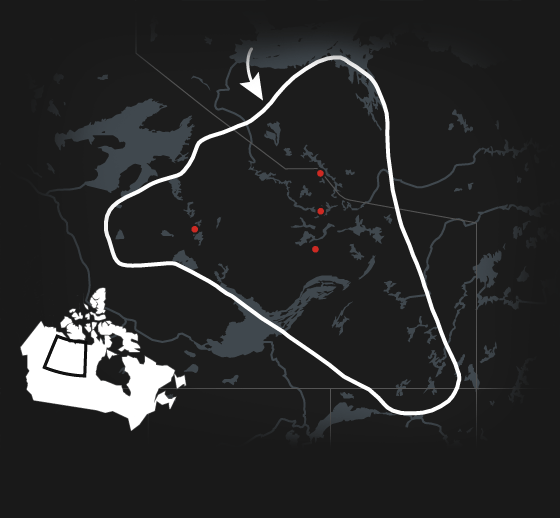
Bathurst caribou range
Northwest
Territories
Nunavut
Contwoyto
Lake
Lac de Gras
Gamèti
Snap Lake
Alberta
Christopher Manza/THE GLOBE AND MAIL,
Source: Government of Northwest Territories,
OpenStreetMap
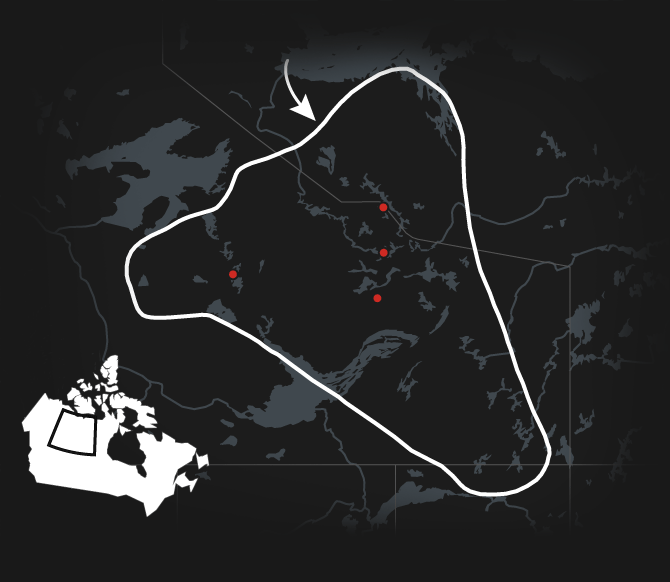
Bathurst caribou range
Northwest
Territories
Nunavut
Contwoyto
Lake
Lac de Gras
Gamèti
Snap Lake
Alberta
Christopher Manza/THE GLOBE AND MAIL, Source:
Government of Northwest Territories, OpenStreetMap
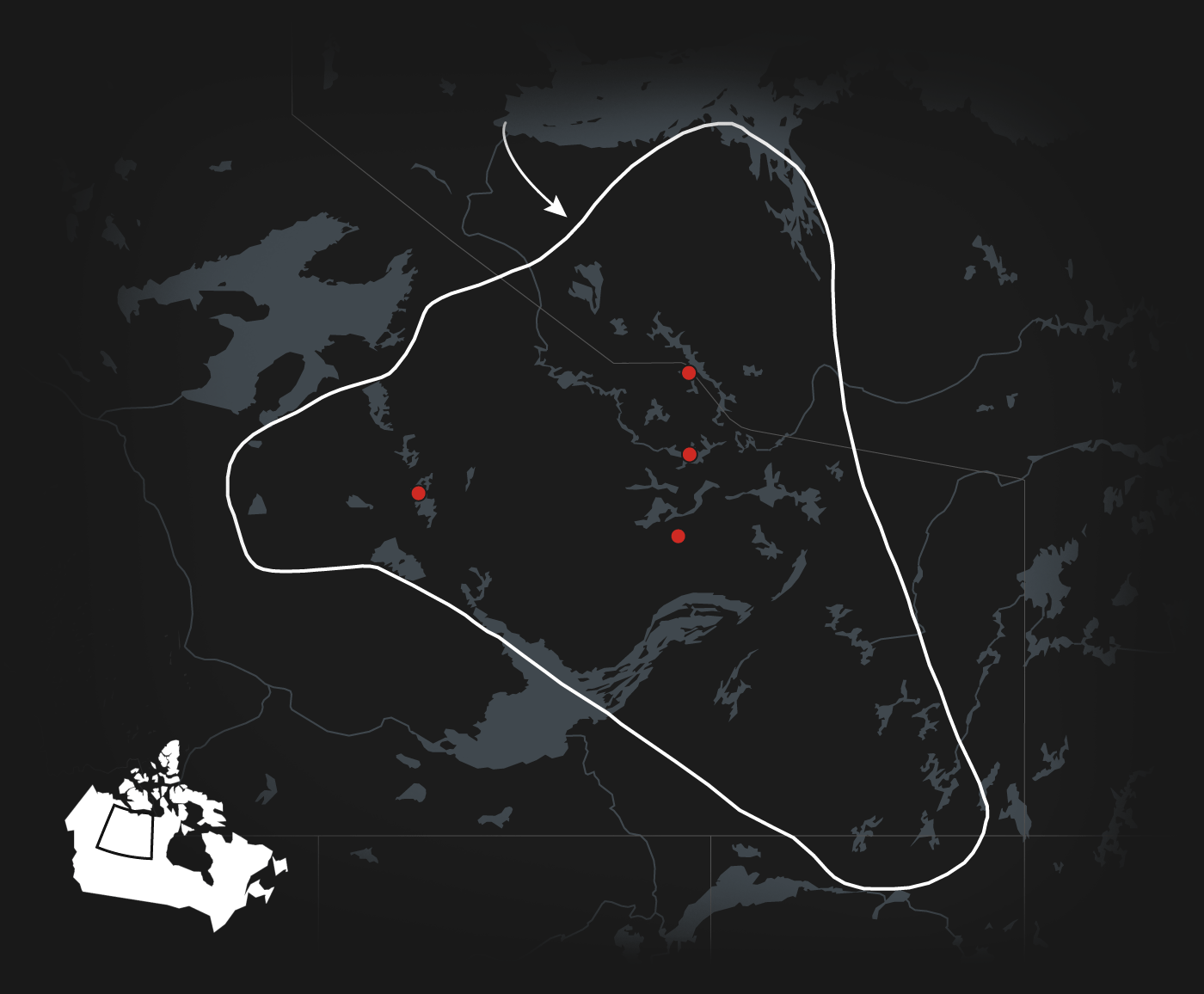
Bathurst caribou range
Northwest
Territories
Contwoyto
Lake
Nunavut
Lac de Gras
Gamèti
Snap Lake
Alberta
Christopher Manza/THE GLOBE AND MAIL, Source: Government of Northwest Territories, OpenStreetMap


Scientists are stumped by the astonishing population decline of caribou in Canada’s Northwest Territories. Some say the creation of diamond mines have disrupted their migration patterns and calving grounds. Others blame climate change for an increase in predators such as wolves and grizzly bears. Others blame overhunting.


An Indigenous-led research program called Ekwǫ̀ Nàxoèhdee K’è uses a mix of traditional Dene tracking techniques and Western research methods to study the herd, their habitat, predators and industrial disturbances. “Since we can’t hunt the caribou any more, the monitoring is a way to get back on the land and to spend time on the land,” says Tyanna Steinwand, a researcher with the Tłı̨chǫ First Nation government.


The Tłı̨chǫ phrase Ekwǫ̀ Nàxoèhdee K’è refers to the movement of the caribou herd throughout the year, from the calving grounds to the forest and back again. The program’s methodology is to “do as hunters do,” which is to watch everything and listen to what the land is telling you.


Researchers walk for hours to eskers or water crossings and record details about caribou, changes in the landscapes and any activities from industry. The days are long, sometimes monotonous. It is a slow and patient way to study caribou and collect information. But it also allows for rich collaboration.


The team – consisting of Tłı̨chǫ Dene Elders and biologists – spends weeks together and makes sure everyone is fed, safe from wildlife and rested. In 2025, youth from across the region were invited to take part in the camps. Most had never been to the area of Canadian tundra known as the Barrenlands before; several had never even left their communities. The Ekwǫ̀ Nàxoèhdee K’è program is founded on the belief that local people who rely on the land are in the best position to determine the health of barren-ground caribou.


“The elders have always said that if we respect the caribou and speak positively about them, they will return,” says Jocelyn Zoe, one of the program monitors.

“And we need to start speaking about the caribou in a good way. If we use the law of attraction to focus on positive thoughts and words, I believe this can help them become strong again.”

About the photographer
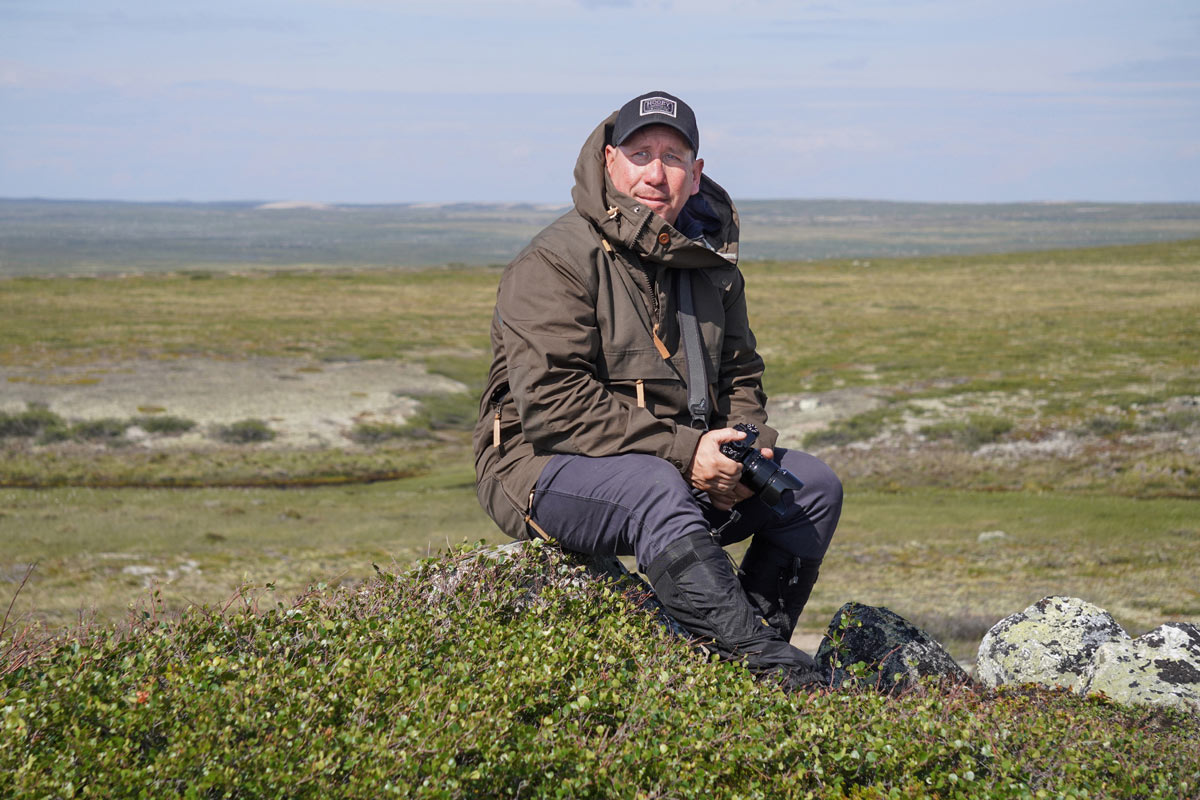
Pat Kane is a visual journalist based in Yellowknife, Northwest Territories, on the traditional land of the Yellowknives Dene First Nation. He takes a documentary approach to stories about life in Northern Canada, with a special focus on issues important to Indigenous people, including the relationship between land and identity. Pat is of Irish-Canadian and Algonquin Anishinaabe ancestry, and is a member of the Timiskaming First Nation.
Credits
- Photography and story by Pat Kane
- Photo editing by Merle Robillard
- Editing by Lisan Jutras and Ayesha Habib
- Visuals editing by Liz Sullivan and Solana Cain
- Audio editing by Deborah Baic
- Audience engagement by Moira Wyton
- Translation by Mary Adele Mackenzie
- Interactive design and development by Christopher Manza