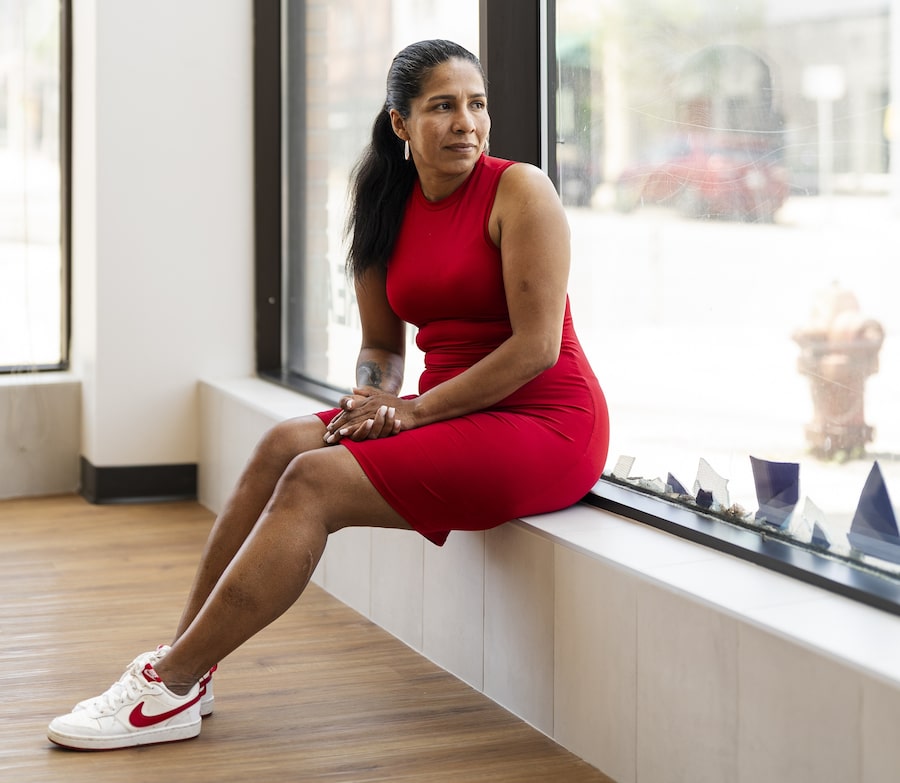

Claudia Ensuncho Martinez’s right forearm is tattooed with a feather, its spine formed by the white scar stretching from her wrist to elbow.
On a sweltering day last August, Ms. Ensuncho Martinez arrived at the Canadian border, fleeing the man who inflicted that scar. After the journey from Colombia by boat, by foot, by bus and by train, the Rainbow Bridge was a portal to a new life.
Ms. Ensuncho Martinez and her son were greeted warmly by a border official who went over their asylum request, she recalls. She handed over 40 pages of court documents describing in graphic detail her ex-partner’s attempt on her life, plus screenshots of a message he’d sent her two weeks earlier threatening to kill her. As the questioning drew to a close, she remembers the border officer saying the words she had waited months to hear: Welcome to Canada.
Her moment of relief was soon shattered, though, when a second border official weighed in on the family’s case, deciding they should be seeking asylum in the United States and turning them away.
A year on from the encounter, as they wait for the decision to be reviewed, the family has yet to step foot in the country they trudged through jungle and desert to reach – and instead are caught in the currents of two immigration systems that seem in many ways at odds, yet are bound by a shared responsibility to protect refugees.
The Safe Third Country Agreement prevents most asylum seekers passing through the U.S. from claiming protection in Canada and vice versa. It’s premised on both countries offering robust protections to refugees. But critics have long pointed to significant differences in how Canada and its southern neighbour deliver on the promise of safe harbour.
Among the most acute differences relates to people fleeing domestic violence – people like Ms. Ensuncho Martinez, who is now at risk of deportation to Colombia. Canada is considered a global leader in protecting refugees who have faced gender-based persecution. U.S. President Donald Trump, by contrast, used his first presidency to restrict domestic abuse victims’ access to asylum; he is using his second to deepen restrictions on asylum claims altogether.
Canada does not track the reasons why people arriving at its land border are seeking asylum, making it impossible to know how many are fleeing gender-based persecution.
But under the Safe Third Country Agreement, asylum seekers who face particular risks in the U.S. do – in theory – have protection.
The treaty contains numerous “safety valves” that require Canada Border Service Agency officials to grant entry to uniquely vulnerable people. Last year, the agency created an escalation protocol that can be triggered when there is “credible evidence” someone will face inhumane treatment in the U.S., or faces a serious possibility of being deported to face torture or death. That power is almost never used, data obtained by The Globe and Mail show.

Border officials gave Ms. Ensuncho Martinez an exclusion order that barred her from returning. The Globe looked at internal CBSA documents to assess the protocol guiding border agents in such decisions.Courtesy of Claudia Ensuncho Martinez
Accessing these safeguards requires asylum seekers – many of whom do not speak English – to mount complex legal arguments during border interviews where they have no right to counsel, internal CBSA guidance shows. This, critics say, leaves claimants vulnerable to erroneous decisions that are almost impossible to challenge once issued.
In a statement, CBSA spokesperson Luke Reimer said the STCA’s safeguards are deployed only in exceptional circumstances in which migrants face “a real and not speculative risk” of deportation from the U.S. to a country that would persecute them.
Asylum claimants “are free to seek legal advice prior to arriving at the border,” but are not entitled to counsel for the “routine information-gathering” that occurs during border interviews, he added.
To assess where this leaves domestic violence survivors, The Globe obtained hundreds of pages of legal documents related to these claims at the border, reviewed internal CBSA policy guidance, as well as court records, text messages and photos underpinning Ms. Ensuncho Martinez’s story.
The case, Toronto immigration lawyer Asiya Hirji told The Globe earlier this year, raises questions about the refugee pact shaping Ms. Ensuncho Martinez’s future.
“The most horrific of things was realized in this case,” said Ms. Hirji. “Why do we have an agreement between two countries who view the protection of women so disparately?”


Ms. Ensuncho Martinez grew up in Colombia’s northern region amid a decades-long armed conflict that has displaced millions. At 18, she began a relationship with a man from her village and moved to Bogotá, she told The Globe. An account of their relationship is detailed in court documents related to his subsequent abuse, bolstered by forensic medical evidence, psychiatric reports and eyewitness testimony.
The violence started after the birth of the couple’s second child, a little boy named Mathias, the Bogotá criminal court heard. Ms. Ensuncho Martinez’s partner would hit her with broomsticks and tools, and harass her at her workplace until she quit. She reported him to three family protection bodies, to no avail. In 2015, she left him. The threats, however, did not stop.
At around 10:30 p.m. on the evening of June 9, 2018, Ms. Ensuncho Martinez was changing out of her workwear at a local chicken processor. She’d left the children at home alone to pick up an extra shift, she recalls, and in the rush to get back to them, she’d thrown on her sneakers, leaving the laces loose.
Hurrying off, Ms. Ensuncho Martinez glanced over her shoulder – and saw a man brandishing a knife. It was her ex-partner. She broke into a sprint, but tripped on her shoelaces and fell. That was when he first stabbed her, puncturing her left breast.
As Ms. Ensuncho Martinez’s partner repeatedly struck her, a co-worker rushed over to help. The two men wrestled, until the assailant fled the scene. A bystander’s video shared by Ms. Ensuncho Martinez with The Globe shows a man she identified as her co-worker. He is lying on a stretcher with a massive slit across his left side, consistent with the medical report cited in court. The gouge is so deep that his organs are visible.
Ms. Ensuncho Martinez, too, was at risk of death. According to a forensic clinical report, she had sustained multiple stab wounds to her upper limbs, back and chest. By the time she was admitted to hospital, she had gone into shock, and blood was pooling in her chest cavity. Surgeons performed a surgery to drain the fluid, saving her life.

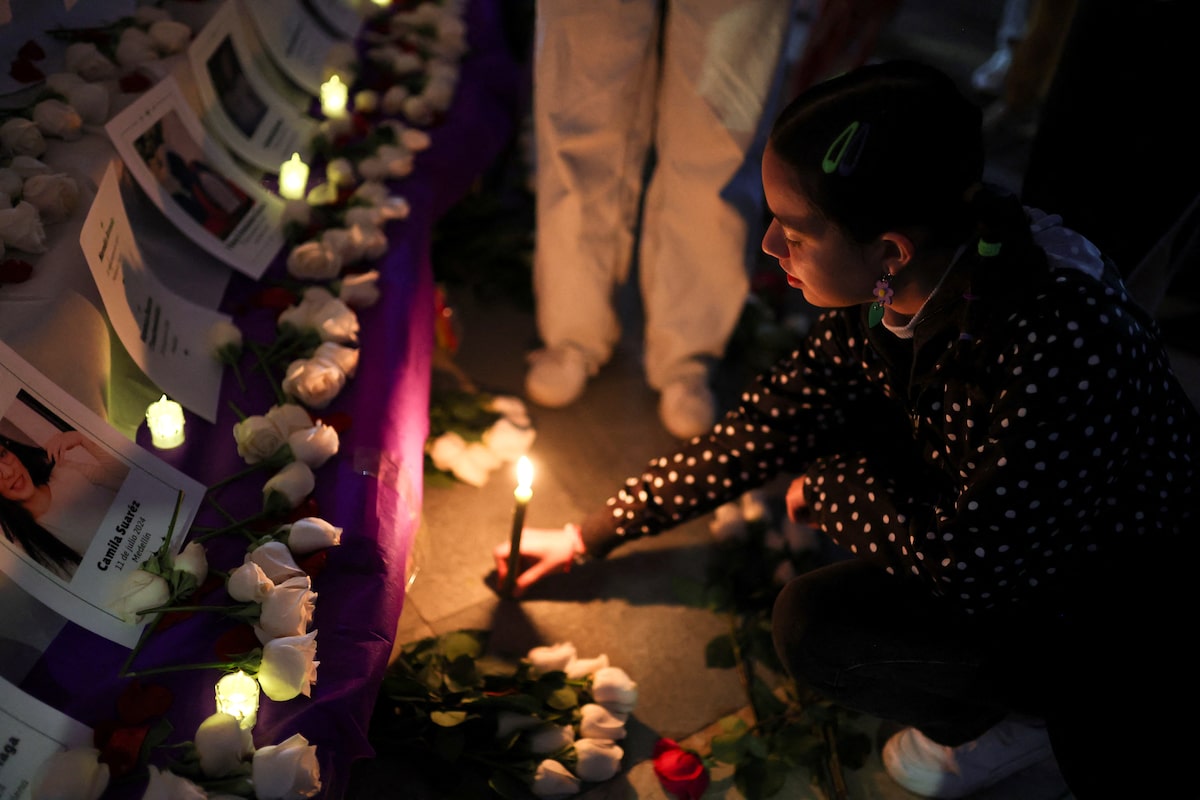
Colombian police can charge abusers with 'femicide,' a separate offence from other kinds of homicide or assault, and did so in the case of Ms. Ensuncho Martinez's ex-partner.Juan Barreto/AFP via Getty Images
As Ms. Ensuncho Martinez recovered, her ex-partner was arrested, charged with attempted homicide and femicide, and incarcerated. In December, 2022, the court found her ex-partner guilty. But the ruling came four years after he was first indicted, exceeding Colombia’s statute of limitations – resulting in his early release from jail.
By the following year, Ms. Ensuncho Martinez said, he was threatening her again. By this time, she’d met a new partner. But it felt impossible to live a normal life, she said, especially because her ex would conscript her daughter into relaying foul messages.
“He would call her and tell her to bring him my underwear,” Ms. Ensuncho Martinez said.
Eventually, Ms. Ensuncho Martinez said she consulted staff at a Colombian women’s rights organization, Casa de La Mujer, who told her Canada was best suited to offering protection to domestic violence survivors. Her daughter, who was 18 at the time, hoped to join her there later after she finished her schooling.
It was too expensive to fly directly to Canada, Ms. Ensuncho Martinez said. So she and her new partner sold their belongings and handed over $350 to a smuggler to get them and Ms. Ensuncho Martinez’s son out of the country by land and water.
On Jan. 5, 2024, the trio climbed into a small boat and set out for the open seas toward Panama.

In June, 2018, two days after Ms. Ensuncho Martinez was attacked in Colombia, an announcement in the United States radically changed the landscape for women fleeing domestic abuse.
It was Mr. Trump’s first term in office, and according to then-attorney-general Jeff Sessions, too many people were seeking protection in the U.S. for violence faced in “private.”
Mr. Sessions said he was overturning an immigration court decision granting asylum for domestic violence – setting a precedent that would make it virtually impossible for other women to make these claims.
Both Canada and the U.S. are legally obliged to protect people who are persecuted because they belong to a “particular social group” – a category that includes women subject to domestic abuse.
In 1993, Canada’s independent tribunal that rules on refugee cases issued a pioneering set of guidelines on gender-based claims, which outlined common forms of persecution faced by women and aimed to help tribunal members avoid sexist myths in their decision-making. The framework became a global template for handling such cases, and established a strong tradition here for recognizing domestic violence as grounds for refugee status.
In the U.S., the door to domestic violence claims only opened in 2014, when the immigration appeals court issued an extremely rare binding decision granting protection to a Guatemalan woman whose husband beat her, raped her, burned her with paint thinner and assaulted her while eight months pregnant, forcing a preterm delivery. The baby was born with bruises.
This was the legal precedent vacated by Mr. Sessions, who was empowered to do so because immigration courts in the U.S. are housed under the Justice Department – not the judiciary.


Under attorney-general Jeff Sessions, sworn in in 2017, policies to separate children from parents at the border provoked public outrage, as did new legal guidance on IPV.Pablo Martinez Monsivais/AP; Jonathan Ernst/Reuters/Reuters
This makes asylum decisions vulnerable to political pressures, said Karen Musalo, a professor of law at the University of California’s Hastings College of the Law and a leading expert on gender and refugee issues in the United States.
The U.S. does not collect data on gender-based persecution claims, and immigration court decisions are not public, making it difficult to quantify the problem. But Prof. Musalo said her research has identified hundreds of cases of women who experienced extreme violence being denied protection even when immigration judges deemed their stories credible.
After Joe Biden’s election, the tides seemed to shift once again: The country’s new attorney-general reversed the Trump administration’s ruling on gender-based persecution, and said the government would formulate guidelines for these asylum claims.
That never happened. In 2022, the United Nations refugee agency issued a briefing on the matter. It said the test applied in the U.S. to asylum seekers claiming gender-based persecution remained so restrictive as to be “out of step with international law.”


As the only land-based artery between South and Central America, Panama’s Darién Gap is a crucial pathway for migrants headed north. Its entrance is draped with flags, a jumble of colours representing the many nationalities that have risked this treacherous route to a new life.
Before entering the humid jungle, a friend snapped a photo of Ms. Ensuncho Martinez’s son, Mathias. It shows him wearing a determined expression, and dressed in blue shorts, scuffed white sneakers and a backward baseball cap. He was nine years old.
The family said they encouraged Mathias to think of the slippery trail as part of a theme park where he could splash in the river and marvel at nature. Harder to explain to the little boy was why they could not risk slowing down to help fellow migrants immobilized by injuries, often a death sentence in the nearly impenetrable terrain.

Mathias, Ms. Ensuncho Martinez’s son, was nine years old when they set out through the Darién Gap.Courtesy of Claudia Ensuncho Martinez
The crossing was 97 kilometres, and the trio completed it in less than three days, driven by the fear of theft, or worse. They traversed the rest of Central America by bus, disembarking to evade checkpoints on foot.
From Chiapas, Mexico’s southernmost state, the family began a 1,000-kilometre walk to Mexico City; from there, the family rode atop a train toward the northern border, wrapping Mathias in plastic bags at night to fend off the cold.
At Samalayuca, a tiny outpost surrounded by sand dunes, they returned to foot to avoid the growing number of patrols by horses, drones and helicopters as they neared Ciudad Juarez, the frontier town directly across from El Paso, Tex. The journey thus far had taken four months.
A river, a wire fence and a wall now lay between Ms. Ensuncho Martinez and the United States. But as she and Mathias dashed for American soil, they were separated from her partner after he stopped to help another child ensnared in the fence, forcing him to rejoin his own family later in their journey, she said.
On April 18, 2024, mother and son were apprehended by American border agents, immigration records show. They were placed in removal proceedings, but were released to await a court date.
The pair had completed their penultimate border crossing, they hoped. Now, they headed north.

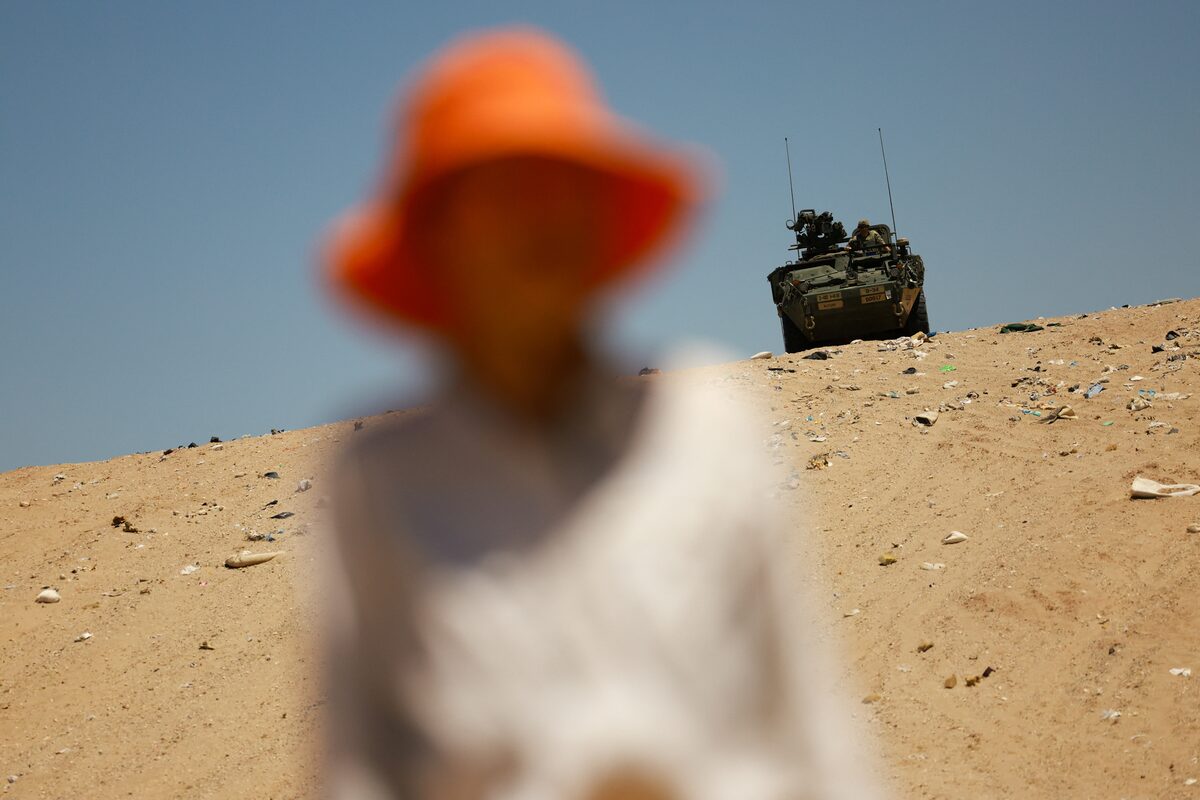
The Safe Third Country Agreement bars many people from entering Canada to claim asylum if they first pass through the U.S., but there are exceptions. These mostly apply to claimants who have close family in Canada, who are permitted to join them here to seek refugee status.
There are also protections for asylum seekers who don’t qualify for an exemption. These “safety valves” underpin the constitutionality of the refugee pact, Canada’s Supreme Court ruled in 2023. The safeguards give CBSA officers the ability to admit people when there is a real risk that an asylum seeker would struggle to access effective protection in the U.S.
While the STCA has faced numerous legal challenges, the courts have yet to weigh in on whether it violates Canada’s Charter commitment to equality, given the differences in how the U.S. treats gender-based asylum claims.
These proceedings are still under way in federal court. In its legal submissions, the federal government maintains that the U.S. approach to gender-based claims is consistent with international law, adding that “ongoing monitoring” confirmed America “affords a full and fair risk assessment to all claimants, including women.”
“That’s totally false,” said Prof. Musalo, who is a witness for the rights groups that launched the legal challenge, including the Canadian Council for Refugees. On top of what she calls the United States’ “outlier” approach to gender-based claims, she said the current administration demonstrates “open and blatant denial of even fundamental due process.”

At the CBSA's holding centre in Toronto – and its counterparts in Laval, Que., and Surrey, B.C. – arrested asylum seekers have the right to meet with legal counsel. In regular border interviews, it's a different story.Chris Young/The Canadian Press
Meanwhile, asylum seekers who arrive at the Canadian border often struggle to access the existing “safety valves” meant to protect them – owing to language barriers, unfamiliarity with Canada’s immigration laws and poor access to legal support, said Erin Simpson, a lawyer acting on another court case related to the effectiveness of those safeguards.
Internal CBSA guidance obtained by The Globe states that it is “generally” the CBSA’s policy to forbid lawyers from being present during border examinations, unless an arrest or detention has occurred.
In exceptional cases, asylum seekers who fear returning to the U.S. can request a deferral of removal from Canada at the border. Officers can initiate the agency’s escalation protocol to assess whether someone should be let in on humanitarian grounds.
But the burden of proof rests on claimants. Asylum seekers must provide evidence such as policy announcements or “operational guidance” from the U.S. that would prove “systemic barriers” to protection, the internal CBSA policy says.
“That’s a really unrealistic expectation,” Ms. Simpson said.
Of the tens of thousands of arrivals at the Canadian border, only 15 asylum seekers have requested a deferral of removal since the CBSA started tracking the issue in early 2023, data obtained by The Globe show. The CBSA’s escalation protocol, which was created last year, has been engaged twice. Thirteen of the deferral requests were denied.
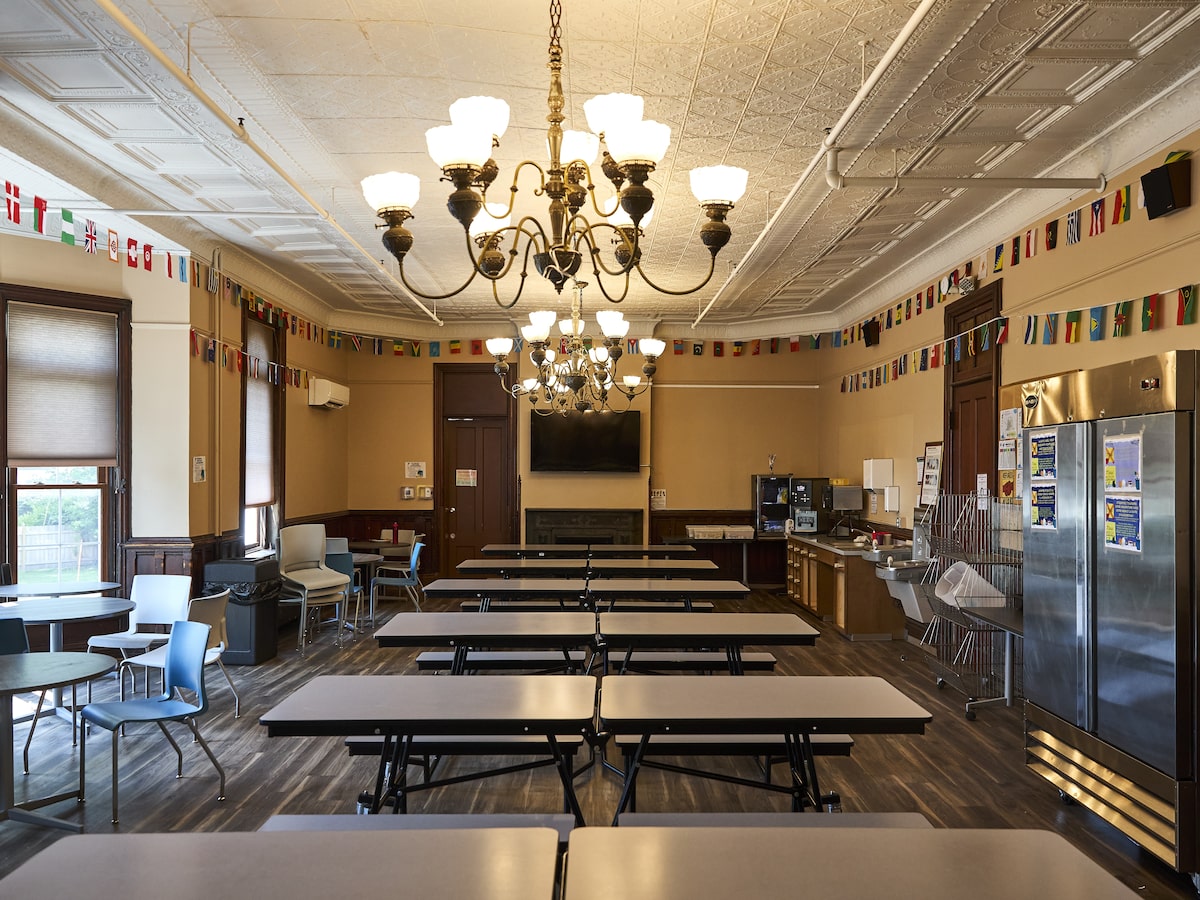
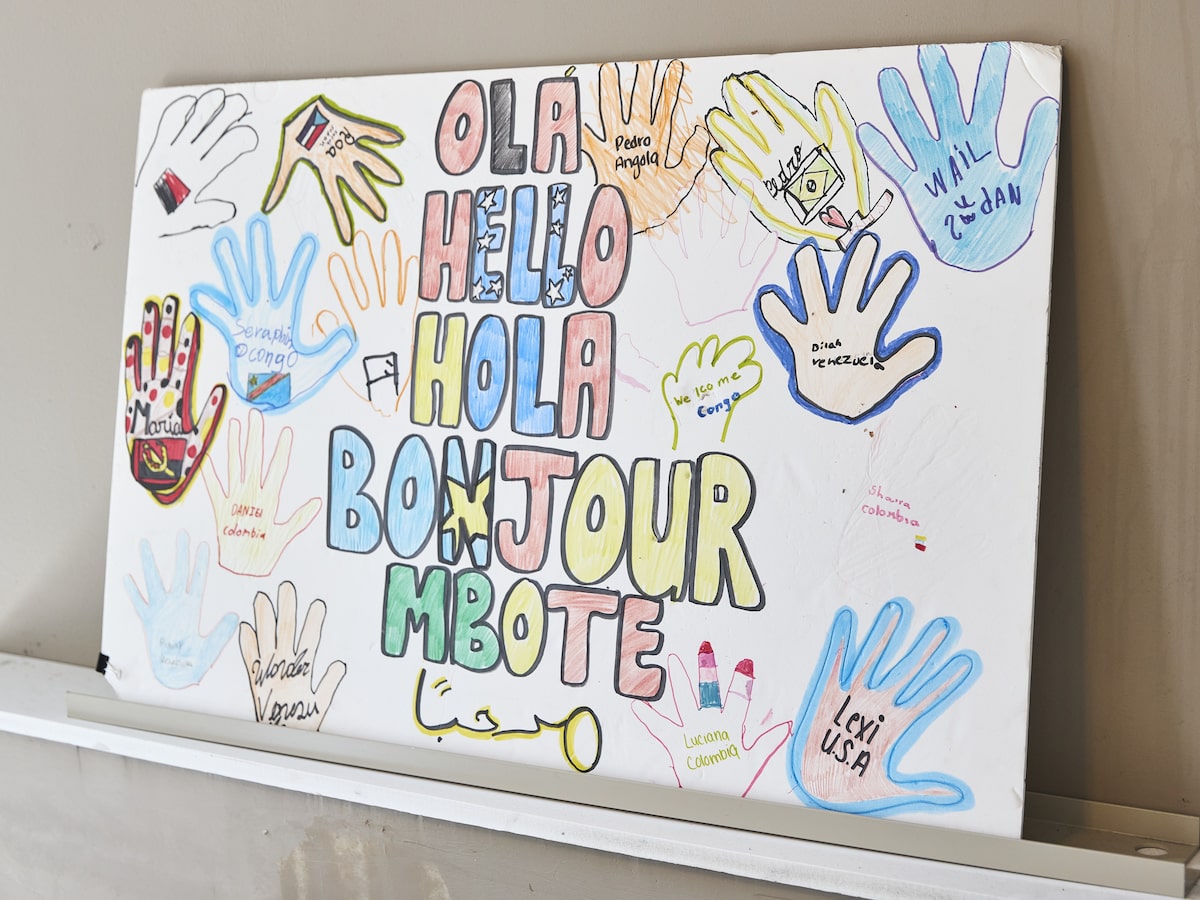
Shaded behind a large willow tree off a main thoroughfare in Buffalo sits a rambling old Italianate-style house that is home to Vive, one of America’s largest dedicated refugee shelters.
Many residents stop here on their way to the Canadian border, seeking entry under one of the exemptions to the Safe Third Country Agreement. Typically, shelter staff will set up an appointment for these clients at the Peace Bridge at Fort Erie. It has a formal refugee processing centre, making it better equipped for dealing with the nuances of these claims, said Matt Tice, director of immigrant services at Vive.
Ms. Ensuncho Martinez would eventually learn about the shelter’s services – but not in time for her Canadian border interview.
After reuniting with Ms. Ensuncho Martinez’s partner in Chicago, the family began saving money to continue on to Canada by picking up odd jobs. Then came an expletive-laden Facebook message from Ms. Ensuncho Martinez’s ex-husband with details suggesting he knew where she was.
“I’m going to kill you, bitch,” the message seen by The Globe reads.
Ms. Ensuncho Martinez decided to accelerate their plans to claim refuge in Canada. A Catholic charity paid for the family’s bus tickets to Buffalo, and on Aug. 29 last year, they crossed the Rainbow Bridge and requested asylum.

Ms. Ensuncho Martinez hoped to claim asylum in Canada and sought entry at the Rainbow Bridge at Niagara Falls.Derek Gee/The Buffalo News via AP
At first, Ms. Ensuncho Martinez recalls, she seemed poised to be granted admission. But things seemed to shift, she said, when the officer who initially interviewed her handed over her file to another official.
The CBSA’s account of the interaction is contained in two sets of notes released in court proceedings seven months after the initial encounter with Ms. Ensuncho Martinez and her family.
In one set of notes, an officer writes that Ms. Ensuncho Martinez feared returning to America because of threatening text messages from her ex-partner indicating that he was in the country and would “dispose of her body by throwing it into the river and feeding it to dogs.”
“These text messages were captured and are on file,” the notes read.

Ms. Ensuncho Martinez has a Facebook chat log full of threatening messages from her ex-partner, where he says he will kill her no matter where she goes.Courtesy of Claudia Ensuncho Martinez
Ms. Ensuncho Martinez’s life appeared to be in danger if sent back to the U.S., the officer said. Given the circumstances, the officer concluded that the CBSA should consider applying its escalation protocol.
But in a second set of notes, another officer disagrees. While acknowledging Ms. Ensuncho Martinez’s fear that her ex-partner had located her in the U.S., the officer’s notes say Ms. Ensuncho Martinez recently changed her phone number so that her ex-partner didn’t know where she was. Ms. Ensuncho Martinez’s case didn’t “meet the threshold for an Escalation Protocol,” the officer wrote.
Her bid to enter Canada failed. She and her family were transported to Vive, the shelter in Buffalo.
Asylum seekers can seek judicial reviews of CBSA’s decisions under the Safe Third Country Agreement. But in practice, this is extremely difficult for most people to do after being returned to the U.S., where they may face detention or deportation, said Leigh Salsberg, a lawyer on the STCA gender equality case.
Ms. Ensuncho Martinez filed an application for judicial review after Vive connected her with lawyers in Canada. The legal challenge filed earlier this year by Downtown Legal Services, the community legal clinic attached to the University of Toronto’s faculty of law, says the CBSA failed to properly examine whether Ms. Ensuncho Martinez would have access to effective protection in the U.S.
Asiya Hirji, Downtown Legal Services’ supervising lawyer, said Ms. Ensuncho Martinez’s case raises questions about the CBSA’s decision-making at the border.
“The chances of her getting status in America are very slim. The chances of her returning to Colombia as a result of that are high. And the chance of her being killed by this man are also very high,” Ms. Hirji said.
“If she doesn’t qualify for an exemption, who does?”

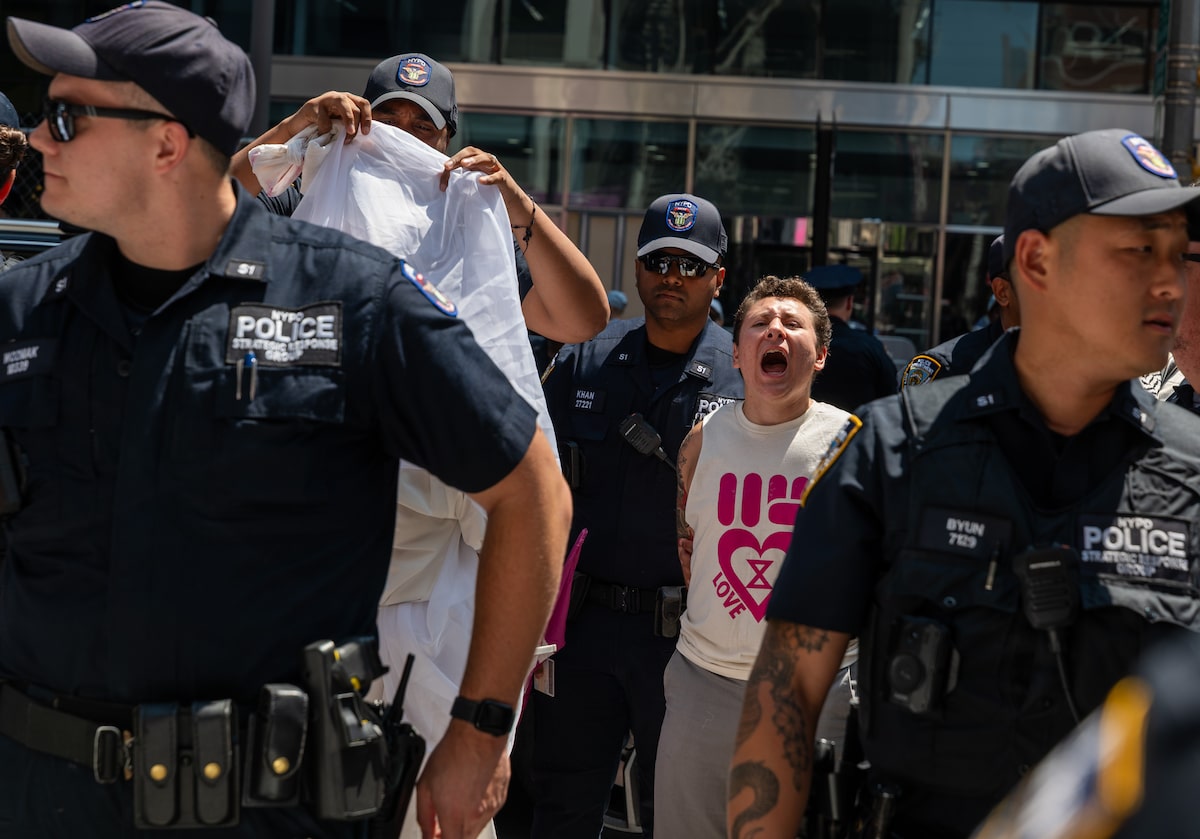
After briefly taking shelter at Vive, the family resettled in a new location that The Globe is not identifying to protect Ms. Ensuncho Martinez from her ex-partner.
The family’s fortunes seemed in limbo, at a time when America’s political landscape was also shifting. Ms. Ensuncho Martinez said a friend advised her to lodge an asylum claim in the U.S. before the Biden administration was potentially voted out of office, which she did in October, 2024, she said. She has yet to receive a court date.
Asylum acceptances have plummeted since Mr. Trump’s election. This is particularly true for people like Ms. Ensuncho Martinez, who do not have a lawyer. Over the past three months, around 90 per cent of unrepresented claimants were denied protection in immigration court, a Globe analysis of nationwide immigration court data show.
In early July, the U.S. Department of Justice issued a policy memorandum to immigration courts highlighting that judges had precedent to refuse gender-based asylum claims – based on a negative decision issued to a Haitian woman in 1975.
To Prof. Musalo, it signalled the Trump administration’s renewed intent to eliminate protections for women fleeing gender-based persecution.
“They had to go back 50 years,” she said. “To when there was an absolutely anachronistic, outdated, Dark Ages view of women’s rights.”
Then, less than two weeks after the Justice Department memo, the country’s immigration appeals body issued a binding decision rejecting asylum for a Salvadoran woman fleeing a stalker. While immigration judges are legally required to decide asylum claims on a case-by-case basis, the ruling hands them another precedent to deny gender-based claims.

As the United States tightens its limits on asylum claims, Canadian authorities face new questions about what to do with people seeking help at its borders.Darryl Dyck/The Canadian Press
Canada lives in Ms. Ensuncho Martinez’s imagination as a safe haven, somewhere she can reunite with her eldest daughter, who is still in Colombia. Realizing this future will depend on the outcome of their legal challenge against the decision issued at the Rainbow Bridge – and the outcome of the Canadian court case on whether the approach to gender-based refugee claims violates the Charter.
In the meantime, Ms. Ensuncho Martinez works in a factory; Mathias recently graduated Grade 5. Lately, said Ms. Ensuncho Martinez, he has started asking about going back to Colombia, exhausted by their increasingly tenuous bid to escape.
Ms. Ensuncho Martinez believes returning home would put her life at risk, and fears the U.S. will not protect her. She sometimes finds herself slipping toward despair, she said. But she sees it as her duty to stay the course, to bulwark her family, and in particular, her son.
“I don’t want them to feel the same,” she said.
Of her injuries inflicted by her ex-partner in Colombia, one in particular bothers Ms. Ensuncho Martinez. It’s the gash down her sternum, the one that damaged her lung and nearly killed her. But Ms. Ensuncho Martinez has plans for the thick keloids now formed there.
Like the feather on her arm, she will transform the scar into something new – something beautiful and of her own choosing. One day, when money allows, she will ink over the wound with a Koi fish, the shimmering and colourful creature that, even against a heady current, can swim upstream.

Sara Stathas/The Globe and Mail
A safer world for women: More from The Globe
The Decibel podcast
What does “restorative justice” look like in sexual-assault cases? Law professor Jennifer Llewellyn spoke with The Decibel about how it works, and how it could have addressed issues like those raised by the Hockey Canada trial. Subscribe for more episodes.
Commentary
Samra Zafar: Trauma doesn’t stop when the abuse stops
Andrea Werhun: Porn isn’t to blame for sexual assault
Video: What are the signs of ‘coercive control’?
Coercive control is a type of psychological abuse. Here's how to recognize it before it starts.
The Globe and Mail