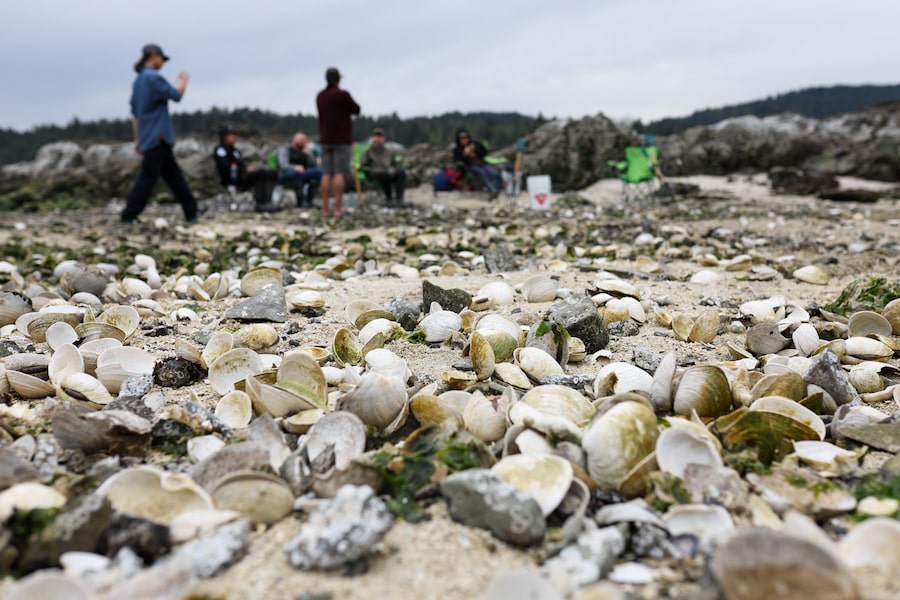
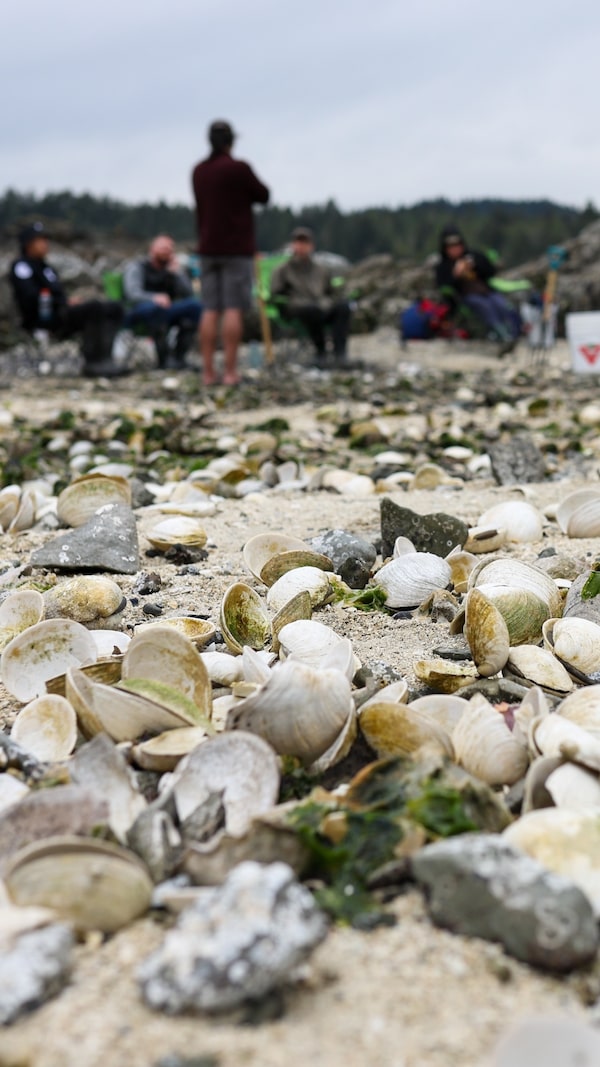
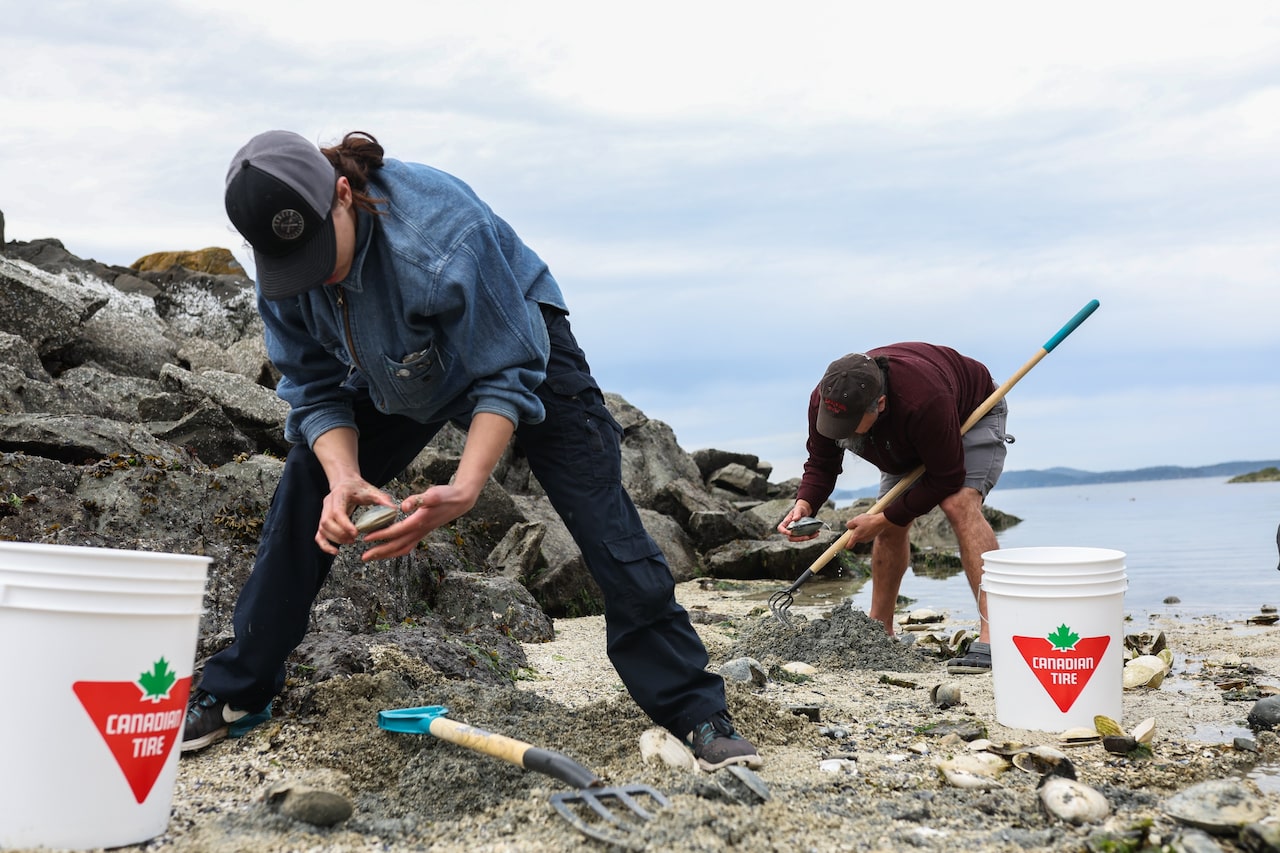
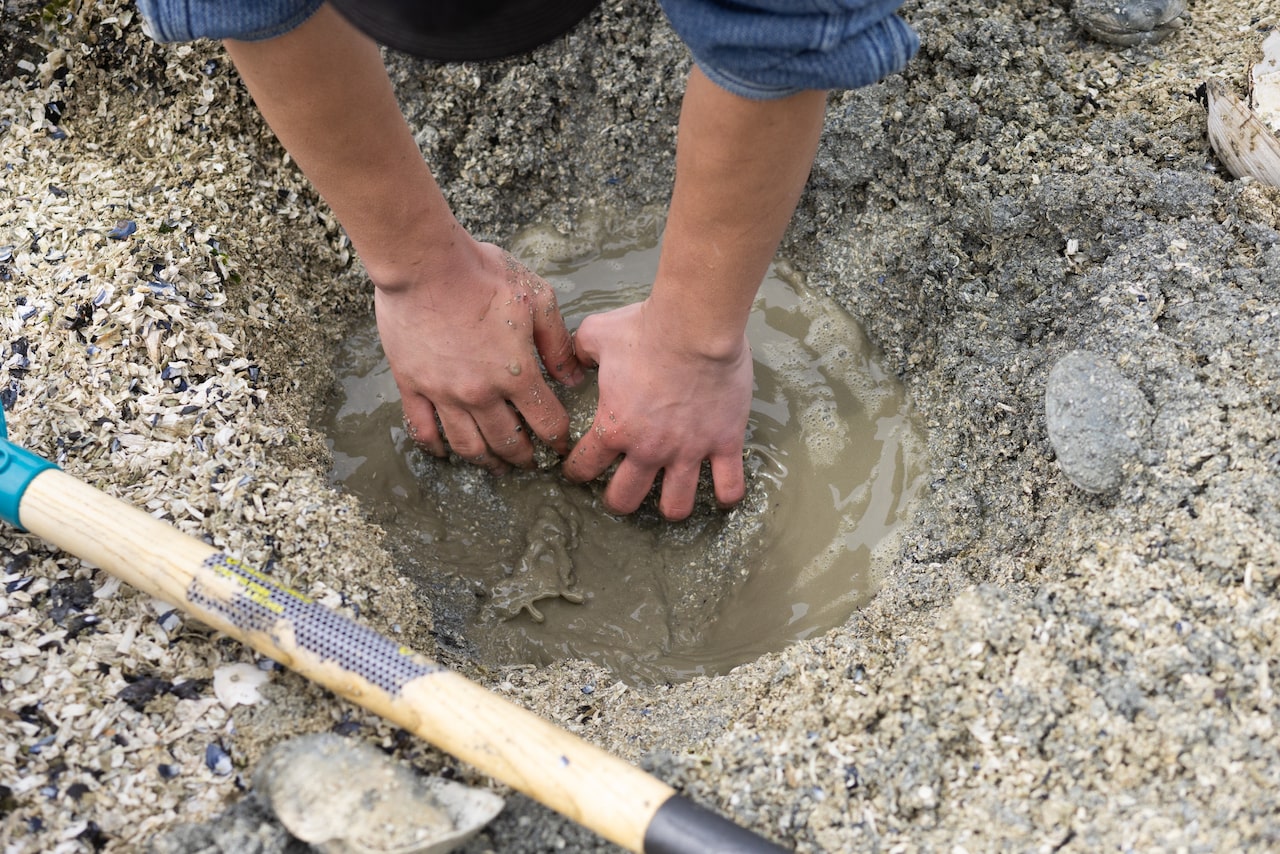
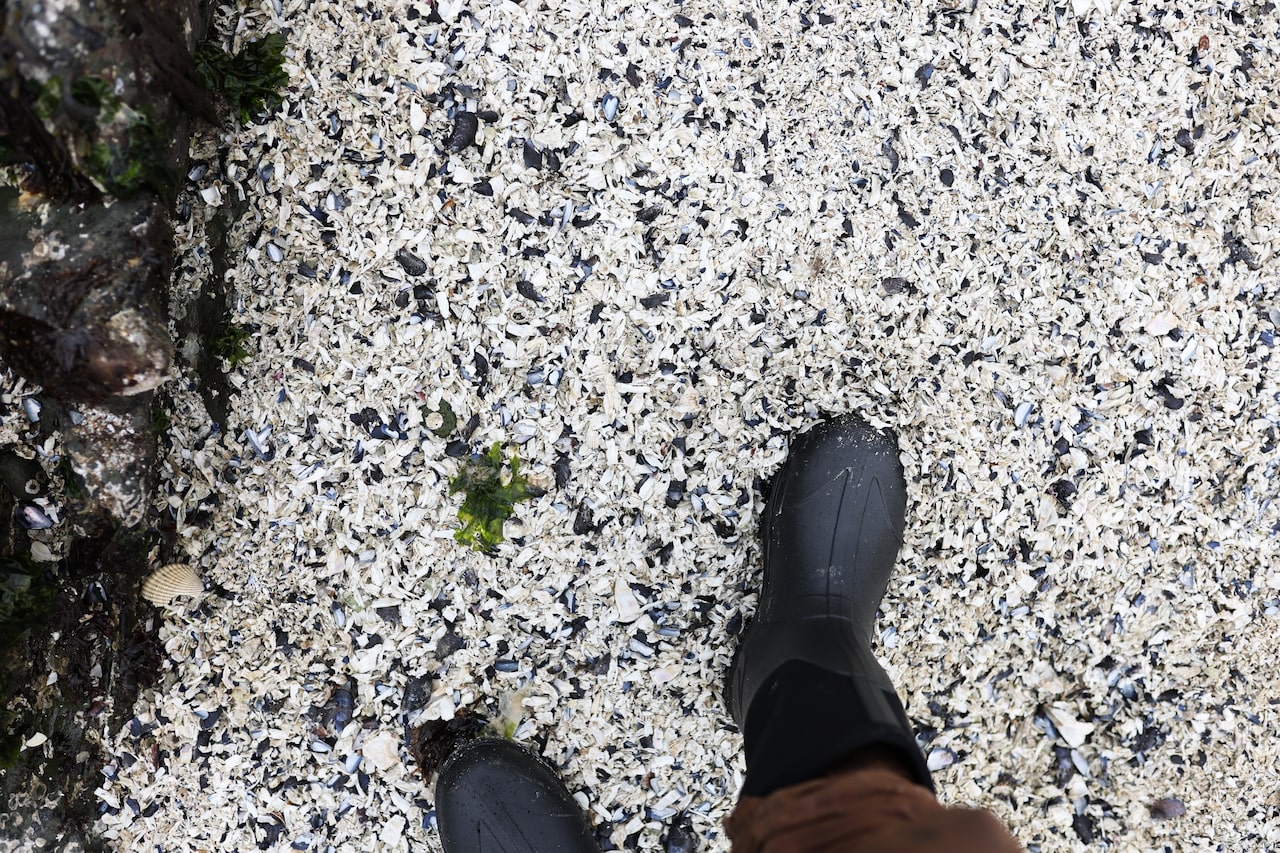
Crysta Charlie presses a pitchfork into the coarse shoreline at her feet, prying up a muddy mass of beach and seawater. At first, she reveals nothing but sand, and hundreds of years worth of accumulated seashell fragments that make up the substrate of this tidal environment.
Undaunted, Ms. Charlie tries again, probing in an ever-widening circle.
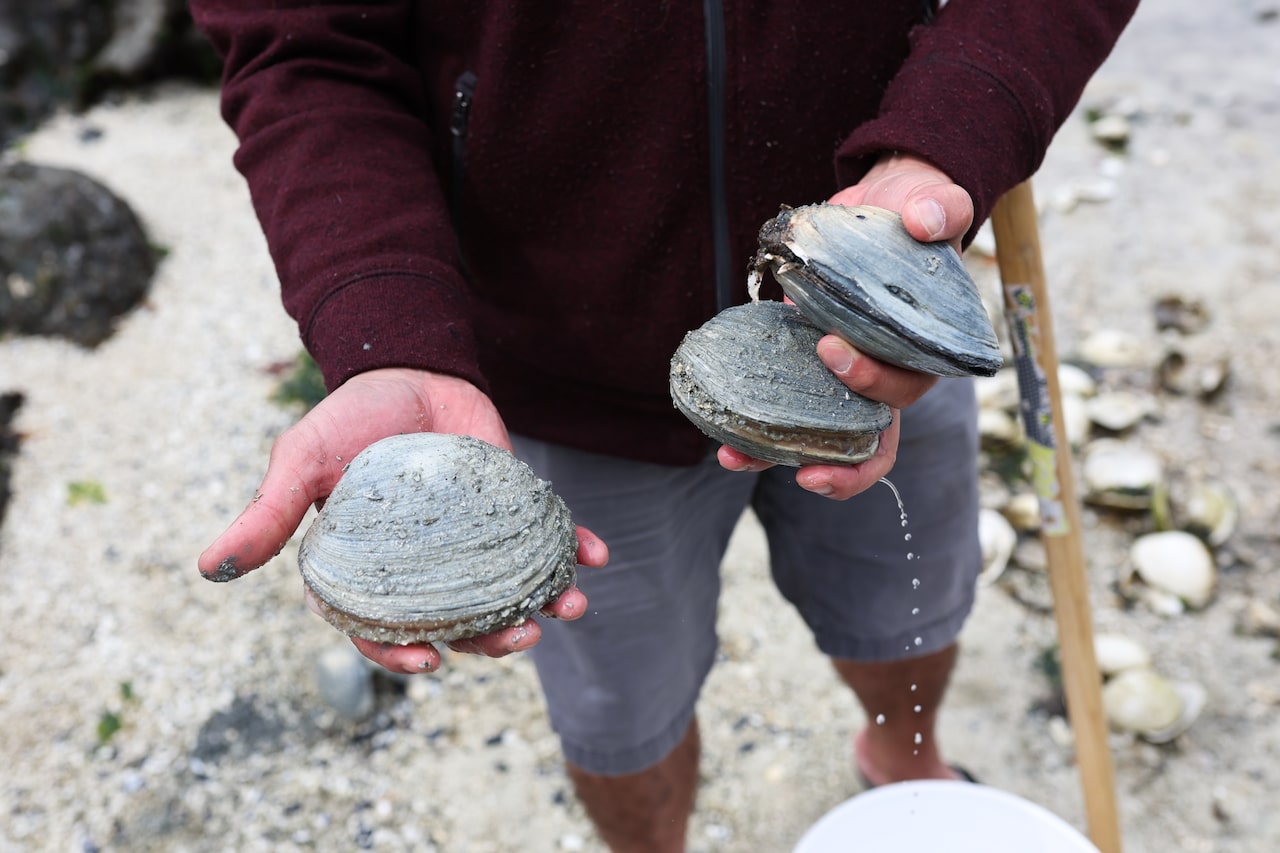
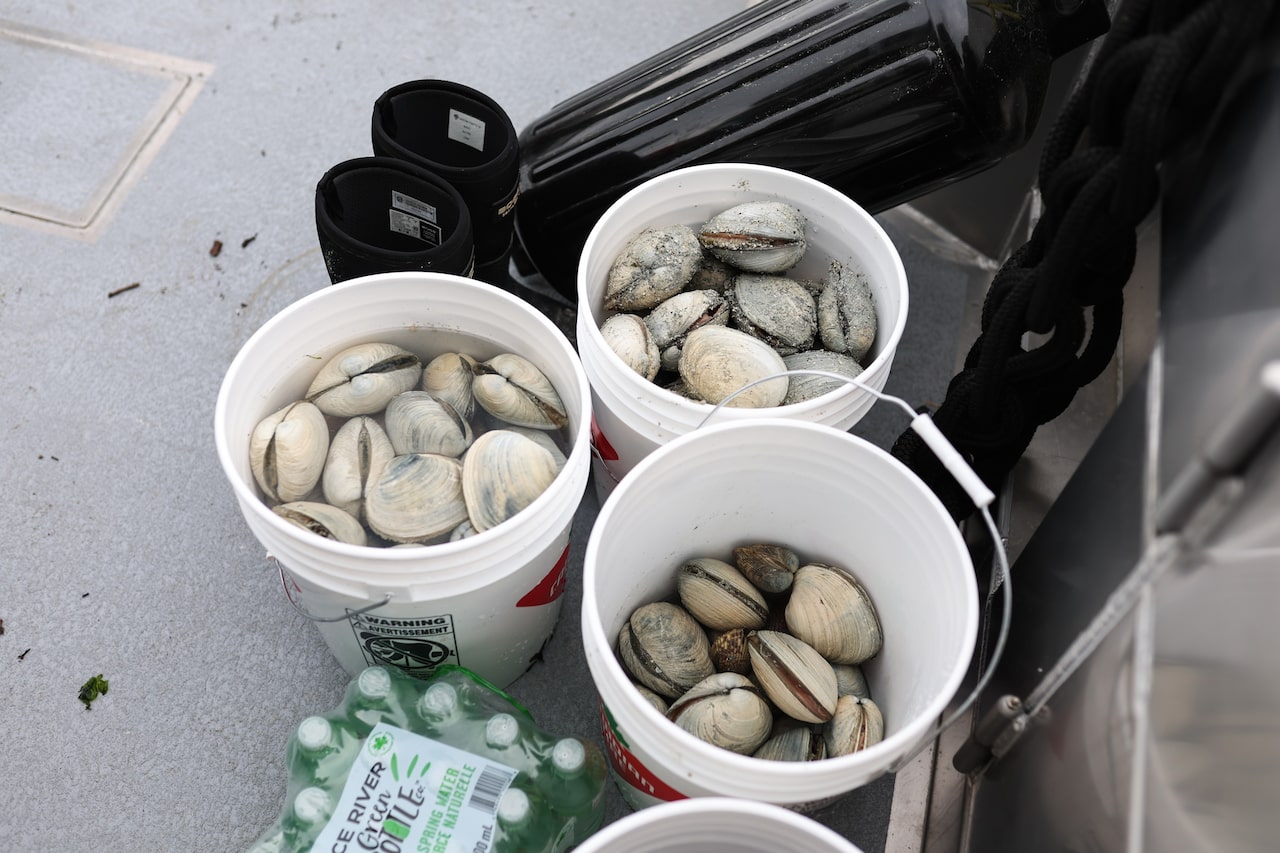
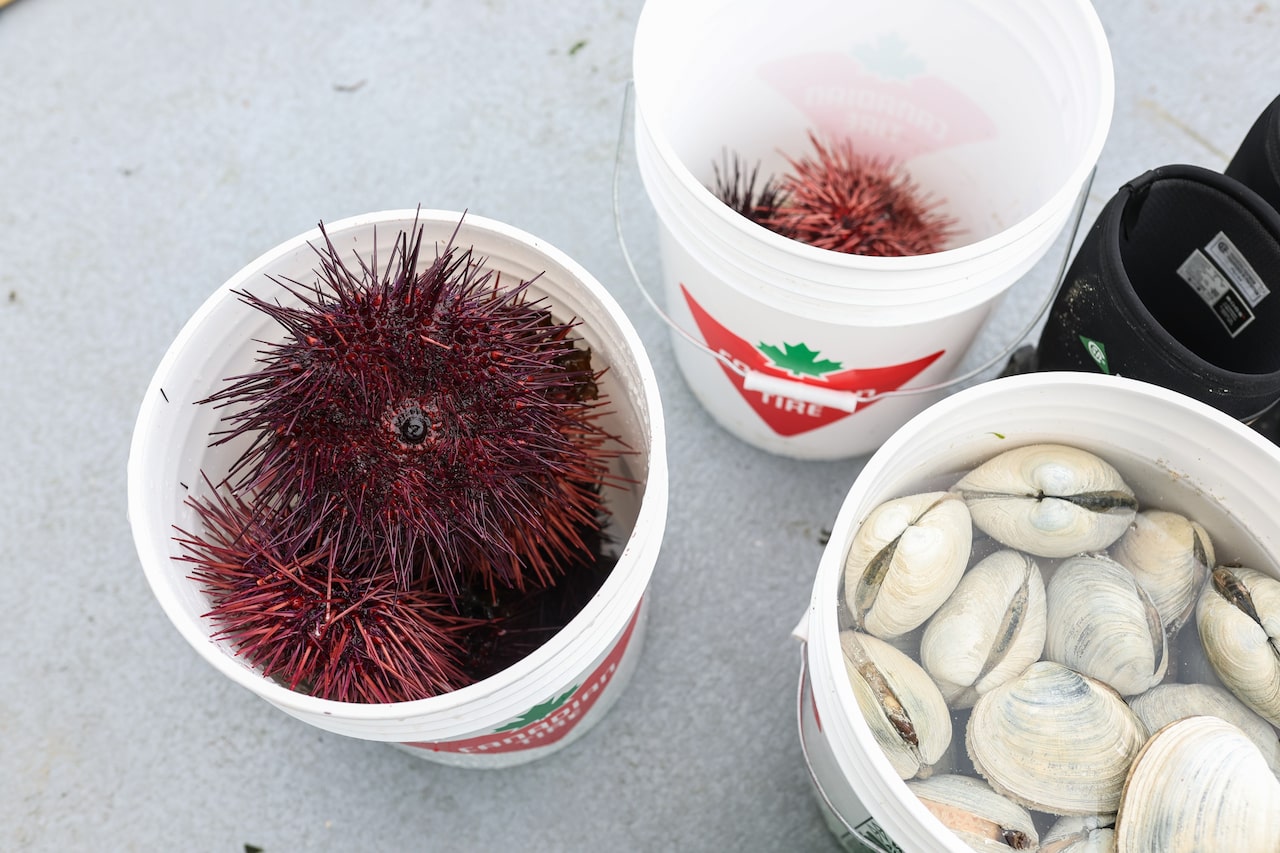
Then, yes – an oval clamshell the size of a softball emerges from the muck. It’s an enormous s’axwa’ (the Hul’q’umi’num word for butter clam), the kind that Ms. Charlie’s ancestors in these B.C. Gulf Islands relied on as a critical food source for thousands of years. She greets it with a smile before plopping it in a nearby pail.

“My grandpa, he gets clams all the time, and so I’m like, it looks pretty easy. But today proved me wrong,” she says with a laugh on a late April day. “It’s not easy.”
This is Ms. Charlie’s first time harvesting s’axwa’ and her success is thanks to a years-long effort by the Cowichan Tribes’ lands and natural resources department to revive a millennia-old heritage.
Cultivated clam beds and sea gardens once dotted the coastlines of the Gulf Islands, where the shellfish formed a critical staple in the diets of Cowichan Tribes members and other Coast Salish peoples. They perfected the art of shoreline aquaculture, building huge, rock seawalls that created oceanside gardens and improved the habitat for the prized molluscs.
“It was like our grocery store,” said Jared Qwustenuxun Williams, an Indigenous chef and Salish culture educator who is as passionate about reviving the Hul’q’umi’num language as he is about his people’s food sovereignty.

He’s talking about the Cowichan Estuary on Vancouver Island. The enormous tidal mud flat was once a reliable source not just of shellfish, but a whole host of traditional foods and medicines such as rice root and speenhw (the Hul’q’umi’num word for camas, a member of the lily family).
“There were so many clams and oysters and everything that you wouldn’t have to worry where you’re going to eat, you just had to go to the estuary,” he said.
For a culture reliant on oral storytelling to pass down knowledge of these food sources, the arrival of Europeans proved disastrous. At the time of contact in the mid-1850s, the Cowichan Nation was one of the largest and most powerful on B.C.’s southern coast, estimated to number around 15,000 people. But settlers brought new diseases, most devastating among them smallpox in 1861, which killed almost 90 per cent of the nation’s people. By 1901, around 800 were left, according to an early government census. There are around 5,500 Cowichan Tribes members today.
The details of where and when to harvest, how to properly build a sea garden wall and how to avoid the annual cycles of red tide biotoxins (which can accumulate in shellfish and cause severe illness in humans) was at risk of disappearing forever.
The Cowichan Tribes’ restoration programs aim to turn back that tide. The work dates back to the 1970s, when aerial surveys spotted unusual piles of rocks strung out in long walls in some of southeastern Vancouver Island’s bays and harbours.
The largest turned out to be an 800-metre-long, rock retaining wall in Salt Spring Island’s Fulford Harbour. The site is nearly 4,500 years old, according to Jacob Cook, the Cowichan Tribes’ sea gardens restoration co-ordinator.

Jacob Cook, the Cowichan Tribes Sea Gardens Restoration Coordinator, is part of a collaborative effort to help rebuild parts of the Fulford harbour garden wall.
He was hired two years ago to spearhead the program, and recalls being awestruck the first time he saw the structure, evidence of his people’s stewardship of the land dating back to the time of Egypt’s Great Pyramid.
“It’s a very special place,” Mr. Cook said.
Today, shellfish harvesting across B.C.’s South Coast is all but impossible in most places because of rising pollution levels caused by contaminants such as fibreglass particles. That’s what makes the clam bed beneath Ms. Charlie’s feet so valuable: It’s one of the few places that’s free enough of both pollutants and red tide biotoxins to harvest from safely.
The Cowichan Tribes do not publicly share their clam bed or sea garden locations, to protect them from being overharvested by the public.
The restoration work involves two key phases. During the summer months, Cowichan Tribes members work in partnership with the WSÁNEC Leadership Council and Parks Canada to rebuild and rehabilitate some these ancient sites. Over the winter, the efforts shift toward responsible harvesting, providing opportunities for members such as Ms. Charlie to get back to the land and practise collection and cultivation techniques.
“It’s those areas that our community members would go and harvest not over a generation or two, but over many lifetimes, over millennia,” said Tim Kulchyski, a biologist with the Cowichan Tribes.
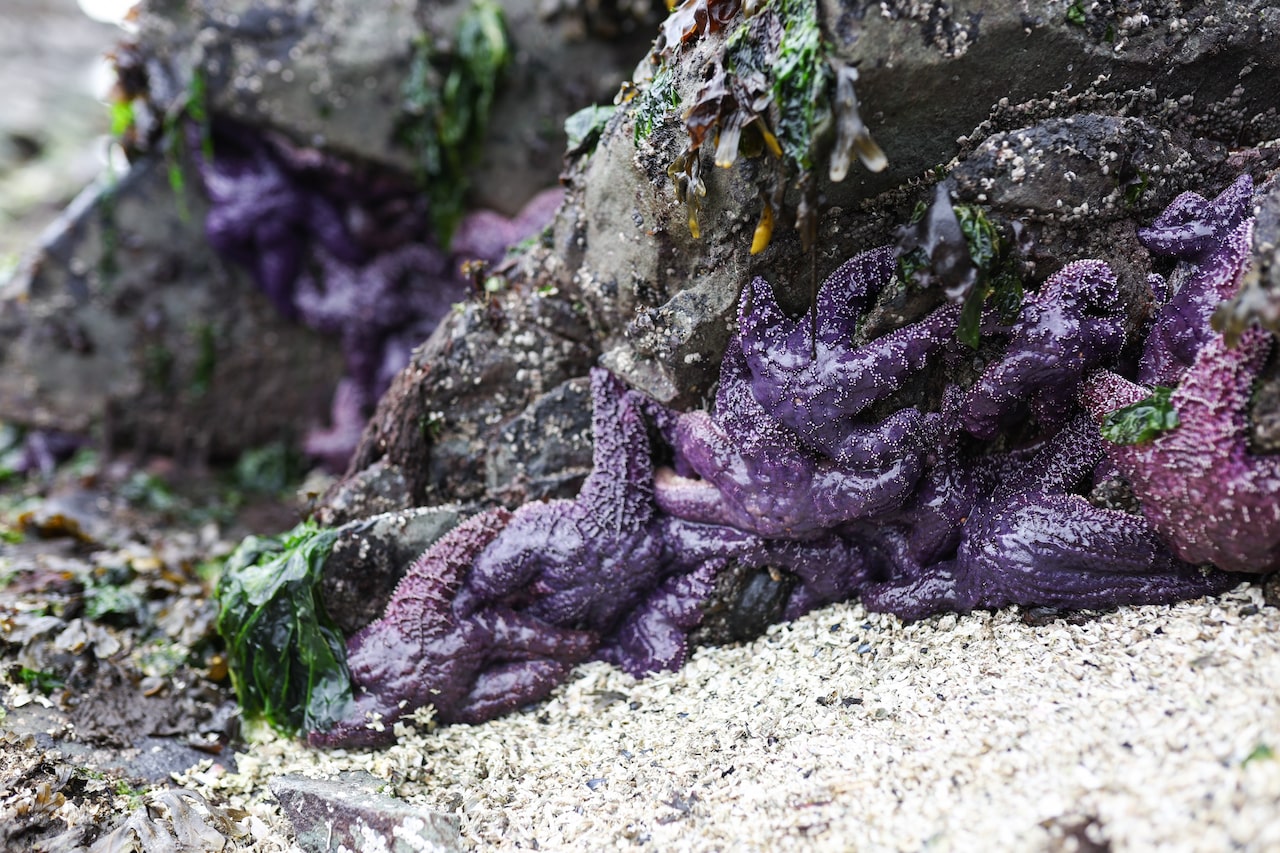
Controlled harvesting, with frequent turning and loosening of the sand, helps establish a better habitat for smaller clams to grow larger, which creates more seashell fragments – the critical substrate – which helps the cycle continue, Mr. Kulchyski explained. The end result is a healthier overall ecosystem – and grapefruit-sized clams with “a really nice sweet taste.”
Mr. Kulchyski has spent decades studying and working in his nation’s marine ecosystems.
“You start to learn the places that you should protect and what type of use you should have – and when it’s important to have that relationship to be able to guide all of us into the future,” he said.