Over the past eight years, about 50,000 Canadians have died of overdoses. They lost their lives because of what is often called a poisoned drug supply, riddled with super-potent drugs such as fentanyl.
The good news is that there is an antidote for the poison. Naloxone (pronounced na-LOX-own) reverses opioid overdoses in minutes. With a quick injection or a shot of nasal spray, overdose victims come back from the brink. The effect is so miraculous that it is sometimes called the Lazarus Drug, after the figure in the New Testament whom Jesus raised from the dead.
Safe and easy to use, the drug is thought to be one factor behind the recent decline in overdoses in North America. Health Canada says it has saved thousands of lives.
It could save many more. From downtown streets to university campuses, authorities have been flooding the zone with compact, portable naloxone kits and rolling out training programs for everyone from construction workers to librarians. The aim is to make naloxone part of the standard equipment of everyday life, something that people will keep in their medicine cabinets at home and in their handbags and backpacks when they go out.
Despite all this effort, the drug is still not widely understood. What, exactly, is naloxone? Who invented it and how does it work?

Dr. Jack Fishman in his laboratory, circa 1982.Rockefeller University/Supplied
In the early 1960s, a handsome young cancer researcher named Jack Fishman was moonlighting at a private pharmaceutical lab in New York. Dr. Fishman was a Jewish immigrant from Poland whose family fled their Nazi-occupied homeland when he was a boy. He spent his adolescence in Shanghai, a haven for Jewish refugees.
His boss at the lab brought him an interesting assignment. A colleague had suggested tweaking the structure of a drug called oxymorphone, a cousin of morphine. The aim was to create a drug that would counteract the often deadly effects of opioids. Other researchers had tried, but the drugs they produced had dangerous side effects and often proved as addictive as those they were designed to combat.
Working with his boss, Mozes Lewenstein, Dr. Fishman formulated naloxone. The Food and Drug Administration approved it in 1971 and it became a staple of hospital emergency rooms, who used it to help revive patients who had been sedated and anesthetized.
But, for years, its use was confined almost exclusively to the white-coated world of medicine. Only trained professionals were allowed to administer it. The opioids crisis changed everything. Addictive painkillers aggressively marketed by big pharmaceutical companies flooded North America in the 1990s. Overdoses soared. People were dying before first responders could even reach them.
What if naloxone could be used as a first-aid tool, saving lives in the same way that anti-venom shots save snake-bite victims or EpiPens save those with severe allergies?
Authorities in Italy had started handing out first-aid naloxone after a heroin epidemic struck cities in the north of the country in the late 1980s. At first, health officials in North America were reluctant to follow suit. They feared that, by giving users a safety net, they would be enabling drug use.
Frustrated, a Chicago group that worked with vulnerable drug users started obtaining and distributing the drug unofficially. The practice spread to other cities. In Canada, some street-health workers began smuggling boxes of the drug into this country.
As the overdose crisis worsened with the arrival of fentanyl in the 2010s, authorities finally saw the value of naloxone. It became an essential part of harm reduction, the practice of making it easier to use drugs without dying. That meant handing out clean needles, pipes, tourniquets and, now, naloxone kits.


Today the drug seems to be everywhere. Lapel buttons with a red cross testify: I Carry Naloxone. T-shirts bear the slogan: Keep Calm and Carry Naloxone. Jails hand it out to departing prisoners, who have a high-risk of overdosing if they use drugs after release. Every library in Toronto has kits on hand.
Most firefighters, ambulance crews and police forces carry it. The Ontario Provincial Police says its officers have used naloxone more than 700 times since 2019.
B.C. pharmacies have been handing out free naloxone since 2017. Provincial health authorities have since distributed more than 2.5 million kits.
As the drug spreads and the opioid crisis grinds on, many drug users have become informal street medics, carrying naloxone on their belts or bicycle handlebars. Most call it Narcan, after a brand name for one variety. Veterans of the streets often say they have used the drug dozens of times to yank passed-out companions back from the edge. It is so widespread that it has spawned a verb. To “narcan” someone is to give them a shot of naloxone.
What to know about Canada’s toxic drug crisis and supervised drug-use sites
When the Globe visited the city of Oshawa last year, a man rushed into a downtown convenience store and asked, “Have you got Narcan?” His girlfriend had collapsed from an overdose in the park across the street. When he got to her, her head was lolling back and her skin a shade of gray. He gave her a shot up the nose. Within minutes, she was back on her feet.

Opioids attach to opioid receptors in the brain, inducing feelings of relaxation, euphoria and pain relief.John Sopinski/The Globe and Mail
Naloxone is popular because it is both startlingly effective and almost childishly easy to use.
Opioids – whether they are the older kind like heroin derived from the opium poppy or the newer lab-made varieties like fentanyl – act on the central nervous system. That system, housed in the brain and the spinal cord, is the body’s command-and-control centre, in charge of essential mechanisms such as breathing. It sends messages to various bodily systems through a network of what are called receptors.
Receptors come in many varieties, each designed to bind with a certain sort of molecule to transmit a certain chemical signal. Dopamine, for instance, binds with dopamine receptors to control movement and memory. Opioids bind with opioid receptors, producing the familiar effects of relaxation, pain relief and euphoria.
If the opioid dose is too strong, it has another effect: it suppresses respiration. Overdose victims die because their breathing slows and finally stops. A telltale sign that someone is overdosing is that they start snoring loudly or even gurgling in their drug-induced sleep. Their lips and fingernails may turn blue.

Naloxone reverses opioids overdoses in minutes, commonly administered by nasal spray.John Sopinski/The Globe and Mail
Naloxone works by ejecting the opioid from the receptor and taking its place. Like a bouncer kicking a troublemaker out of a club, it restores order in the body. Scientists call the drug an opioid antagonist.

Naloxone kicks opioids off the receptors and takes their place, blocking their effect for a limited amount of time.John Sopinski/The Globe and Mail
It usually works its magic in just two to three minutes. Victims begin breathing more deeply and quickly. Their pallid skin regains its colour as they take in life-giving oxygen, suddenly back in the land of the living.
Administering the drug is a simple matter of filling a syringe with liquid naloxone from an ampule and injecting it in an upper arm or a thigh. The nasal-spray version is even simpler. A quick shot in the victim’s nostril usually does the job.
New versions of the drug may be even simpler. Researchers at King’s College London are working on a naloxone wafer that can fit in a wallet and that would dissolve in the mouth in seconds.
Elsewhere, researchers are working on fixes to the most fundamental shortcoming of naloxone: when a person suffers an overdose, someone needs to be there to save them. A 2022 report by the B.C. Coroners service found that about half of those who suffer fatal overdoses die alone. U.S. scientists are experimenting with a tiny implant, similar to a pacemaker, that would automatically release the drug if it detected signs of an overdose. It would even place a 911 call.
Like any drug, naloxone has other limitations. It does not reverse overdoses from non-opioid drugs such as cocaine or crystal methamphetamine. Nor does it work on xylazine, a potent animal tranquilizer, known as “tranq,” that began turning up in Canada’s illicit-drug supply several years ago.
The emergence of something called benzo-dope has further complicated matters. Dealers often mix opioids and benzodiazepines, a family of sedatives, including Xanax and Valium, that doctors prescribe for anxiety and insomnia. Harm-reduction workers say that this makes reviving overdose victims harder because they often stay drowsy and out of it for hours, even after getting a shot of naloxone.
All the same, experts say: When in doubt, Narcan. It works amazingly well with those who have taken opioids, and opioids are far and away the deadliest drugs around. Last year in British Columbia, ground zero of the opioids crisis, fentanyl was found in 83 per cent of drug deaths.
There is no downside to giving someone a dose of naloxone. If they are not in fact under the influence of opioids, the naloxone will do nothing, either good or bad.
The only real problem with naloxone is that it is not used often enough. A tragic case in Victoria last winter suggests that, despite all the kits that have been handed out, the drug is not always deployed when it should be.
University of Victoria student Sidney McIntyre-Starko, aged 18, collapsed from a fentanyl overdose in a dorm room on Jan. 23. She died five days later.
Her parents say that campus security waited nine minutes before giving her naloxone and 12 minutes before starting cardiopulmonary resuscitation. An inquest will examine her death. In the meantime. UVic has installed special naloxone boxes in campus residences.
Some first responders are still hesitant to use naloxone. One reason is that, by kicking the opioid off its receptors, it can throw overdose victims into almost instant withdrawal, an agonizing experience. Rather than being thankful, they may be confused or angry. Many first responders now use oxygen instead. Because the aim is to restore normal breathing, it can be just as effective.
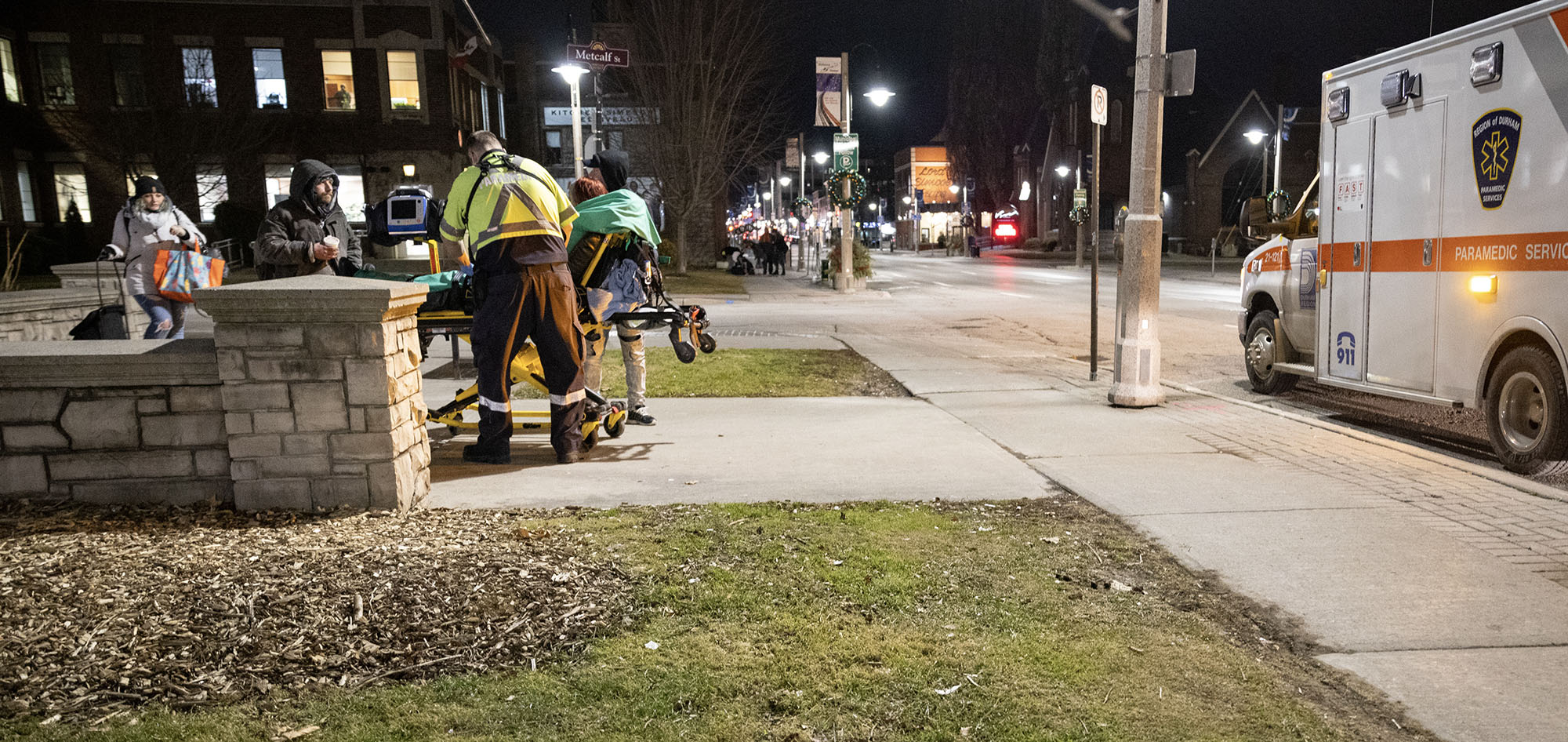
Ordinary people, too, can be hesitant to use naloxone. They feel: A trained professional should be doing this, not me. In fact, just about anyone can administer the drug. If they call 911, as they should, the paramedics will come and take over. In the meantime, a life will have been saved.
In Quebec’s Eastern townships last winter, a pair of high school-aged boys used naloxone to revive a teenage girl who had collapsed at a party. They had learned about it in a first-aid course at school and brought a kit with them.
Others are hesitant because they are afraid the police will come and they will get in some kind of trouble. They may not know that Canada’s Good Samaritan act protects those at a drug-overdose scene from being arrested for drug possession, or other things like violating their parole.
Jack Fishman moved on after his role in inventing naloxone. He did important work on steroids and the link between estrogen and breast cancer. He made a fortune when an overseas company bought a pharmaceutical company he had helped to lead.
In his sixties, he met a woman named Joy Stampler, who became his fourth wife. In 2003, her son from a previous marriage, Jonathan, suffered a drug overdose. Someone dumped his inert form on the doorstep of a Miami hospital. His mother and her husband, Mr. Fishman, rushed to Florida.
If those who were with him when he took his drugs had given him naloxone, he might have lived. But the drug was still hard to find. He fell into a coma. His heart stopped beating.
Ms. Stampler would later join a campaign to make naloxone easier to get. Her husband died in 2013, a half century after creating what he rightly called his “miracle drug.”