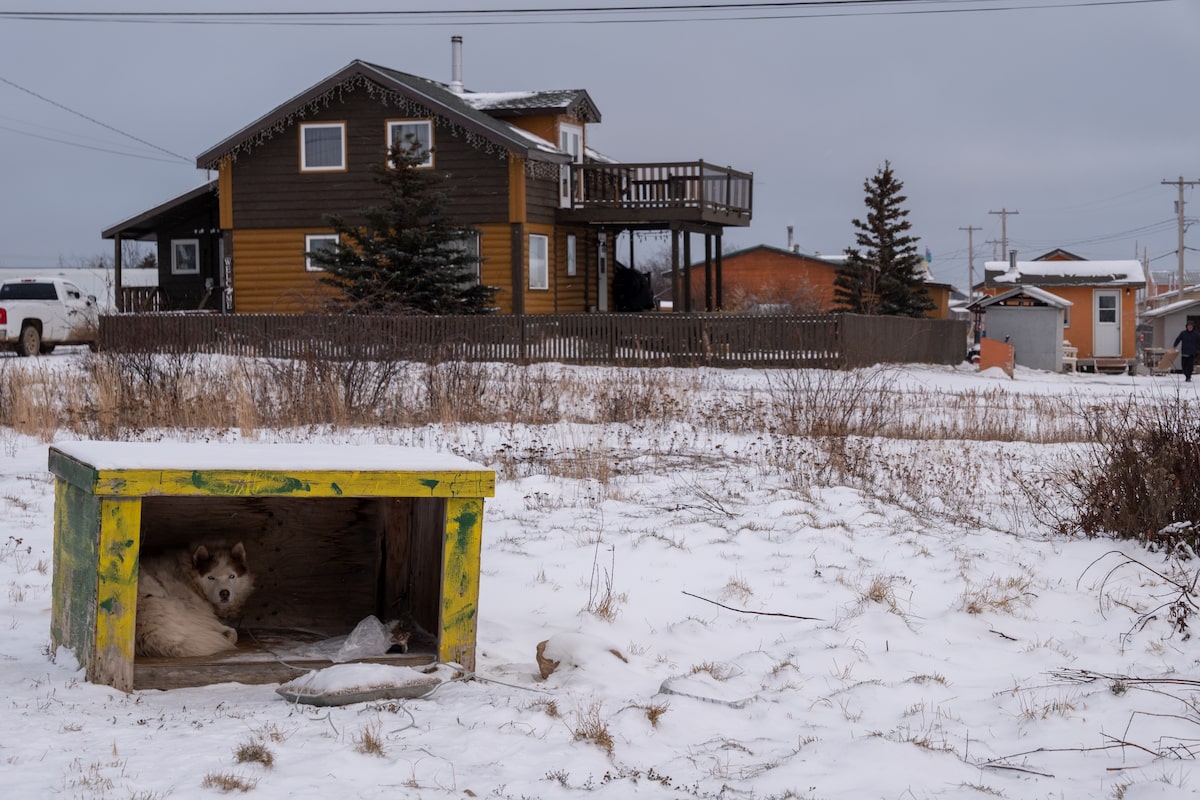
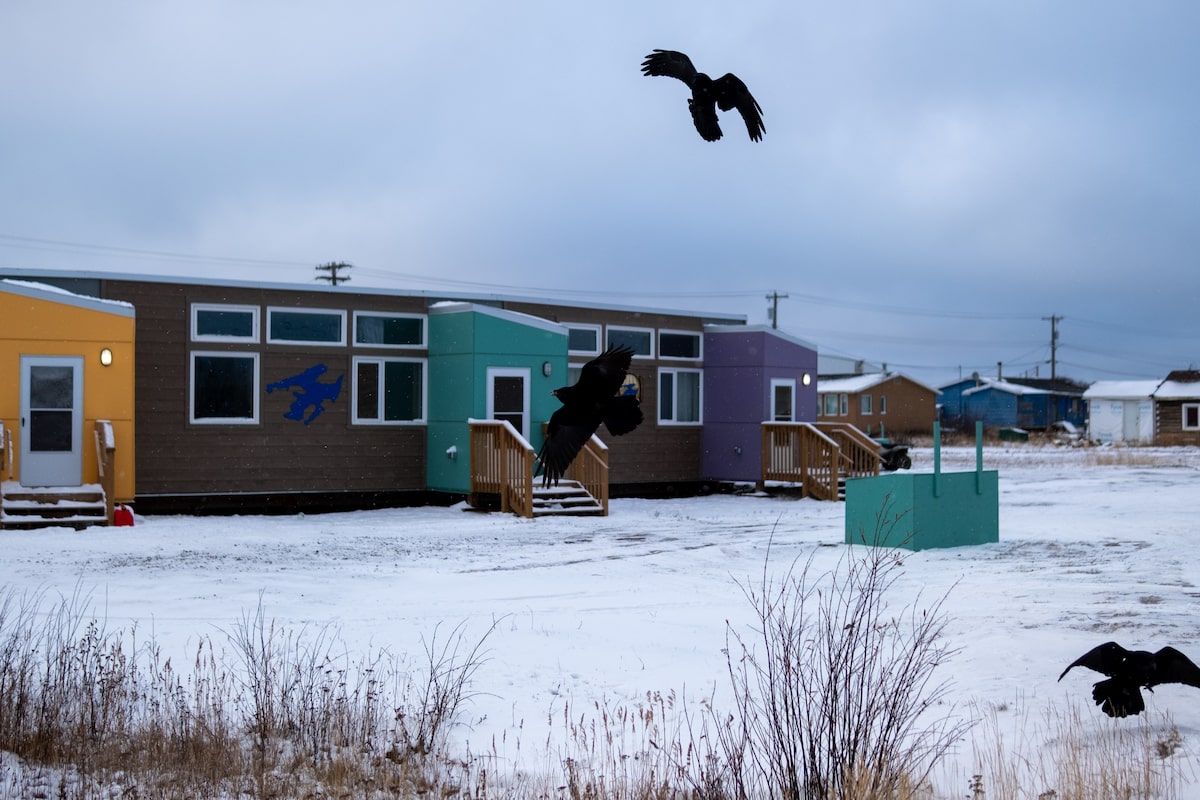
Wind whips along the shores of the Northwest Territories’ Great Bear Lake as Délı̨nę is blanketed in the season’s first snowfall. The fly-in Dene community, located just below the Arctic Circle, is the only settlement on one of the biggest lakes in the world.
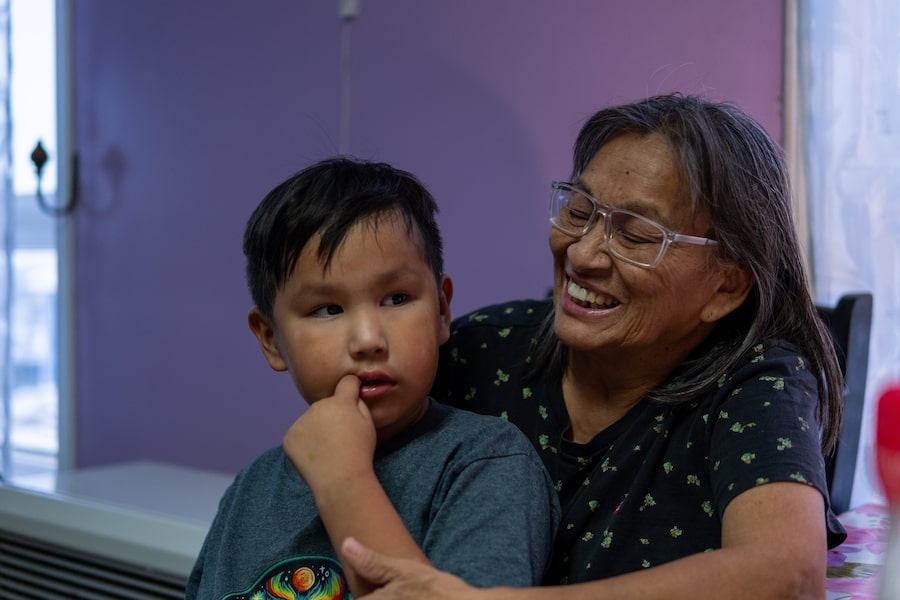
In her lilac-painted living room with a view of the water, Betty Tetso wraps her arms around her grandson, Mason, as the five-year-old settles on her lap beside the woodstove, his gloves hanging to dry.
As his main caregiver, Ms. Tetso gets him to kindergarten, fixes his meals and tucks him in at night. She also regularly inspects his teeth. She has to. Délı̨nę has no dentist. The closest clinic is more than 500 kilometres away, in Yellowknife. No dentists have visited in more than three years. None are scheduled to come.
Ms. Tetso’s vigilance is also rooted in an experience about two years ago with another grandson, a 10-year-old whose cavities had become so severe that she had to take him all the way to Edmonton so he could be sedated for fillings.
Mason only has a small cavity, but she’s worried. “He has to be checked because the cavity’s going to get bigger,” says Ms. Tetso, a former community health representative.

Most Canadians living in the south, whether in big cities or small towns, have their pick of local dentists, who they can conveniently visit for the recommended twice-yearly checkups. The reality is vastly different for remote First Nations and Inuit communities in the NWT. For them, access to dental services, which for decades has been sporadic and at times inadequate, has worsened since the COVID-19 pandemic.
Dentists, who used to visit these communities in the NWT on a regular basis, have stopped travelling to them – and seven communities of the 32 outside of Yellowknife haven’t been visited in six years or more.
Previously, some people could take a winter road to regional hubs in the territory to see a dentist. All but one regional clinic has closed, however, leaving Yellowknife as virtually the only reliable place for dental care in the NWT – a land mass bigger than France and Germany combined.
As Ms. Tetso did for her older grandson, residents must travel thousands of kilometres for treatment, after waiting to have that travel approved for federal funding.
But many living in remote communities, particularly elders or single parents with child-care pressures, are unable to travel, or can’t afford to take the time off, leaving them and their families without any treatment at all.
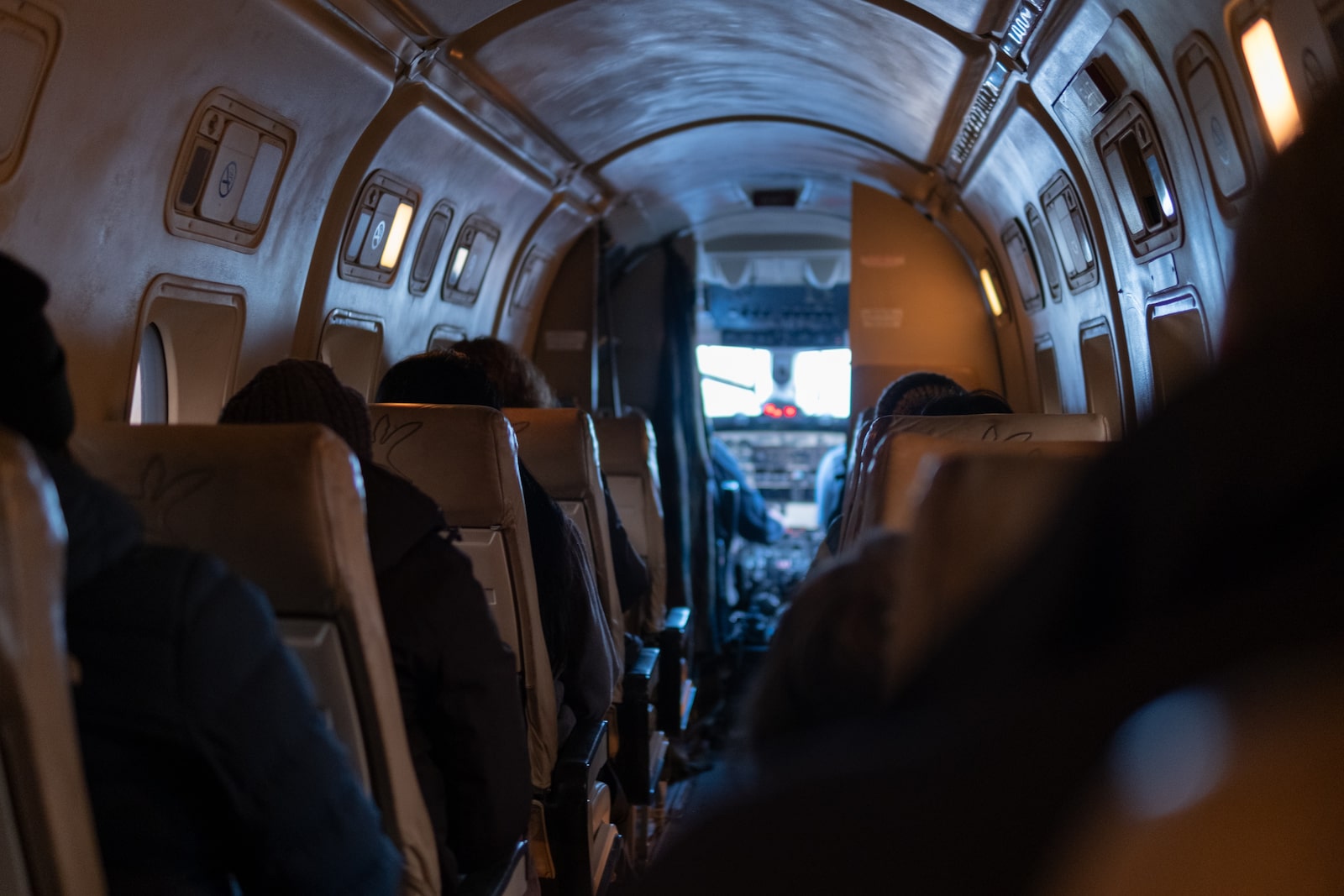
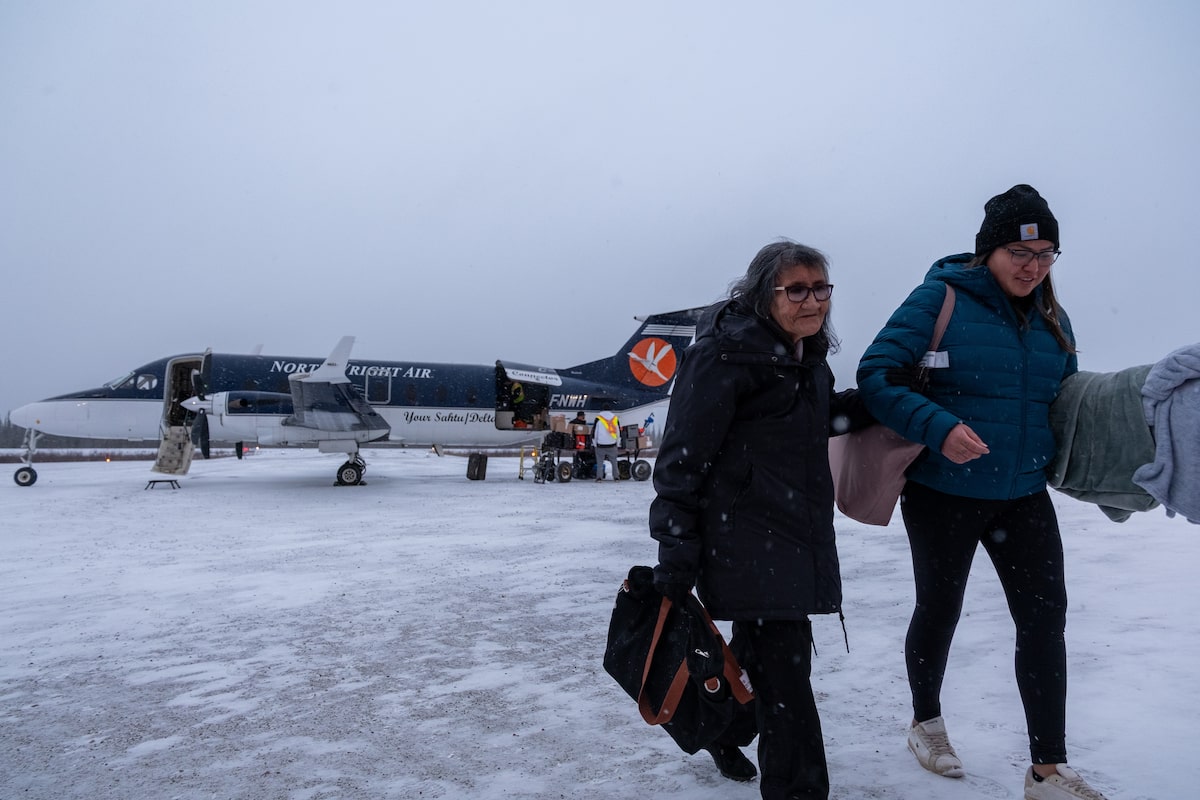
The Globe and Mail spent months examining the dental-care system in the Northwest Territories, visiting two fly-in communities – Délı̨nę and Tulita – and interviewing current and former health ministers, community leaders, dentists, other health care workers and researchers.
The investigation also included surveying communities and obtaining data on dental visits through access-to-information requests.
Community members described harrowing experiences, including a man in Tuktoyaktuk who pulled out his own tooth with a Leatherman multitool and a Tulita resident whose elderly mother had to fly three times to Yellowknife to get a painful abscess treated. One pediatric dentist in Yellowknife described needing to extract 12 adult teeth from a 13-year-old girl.
Dentists, The Globe learned, aren’t visiting because of faulty equipment, a dearth of adequate dental spaces and what they see as underfunding that affects both facilities and their compensation.
As First Nations and Inuit peoples are forced to travel thousands of kilometres for care, the costs to the federal government have skyrocketed.
Indigenous Services Canada told The Globe it spent $11.1-million on NWT dental travel in the fiscal year ending in 2025 – up nearly tenfold from six years earlier.
Access is a core principle of Canada’s health care system, and the federal government has said improving oral health care services is a key priority. But the most recent funding agreement that includes dental care for First Nations and Inuit living in NWT and Nunavut expired a year ago, and now governments are tussling over responsibilities and who should pay for what.
In the meantime, many in remote NWT communities are going without this essential service. Even Fort Smith – a town on the border with Alberta, which has all-season road access – lacks a clinic.
“We are dental orphans,” said Michael Miltenberger, a local resident and former minister of health.
Julie Grondin, a dentist who has worked in Canada’s North, but also abroad in Mauritania and Guatemala, said the condition of services in some northern communities was comparable to the humanitarian missions she’s worked on overseas.
“And yet, we’re talking about Canada.”
The lack of infrastructure, poorly maintained equipment and absence of continuity of care – all of this exists within one of the wealthiest countries in the world, she said. “It forces us to question how we value oral health, and who gets access to it.”

‘They’re really asking too much out of a dentist’
Dr. Hassan Adam first landed in Yellowknife in 1980, by way of England and Malawi. He was initially disappointed to find just two aging dental clinics in town, both with outdated equipment. Still, as he opened a new clinic and the others were modernized, he recalls plenty of skilled dentists came to Yellowknife, including from other countries. He says some of them flew to remote communities as well.
An affable and well-regarded dentist, Dr. Adam fell in love with the North – but was dismayed at the levels of oral disease he saw among Indigenous patients.
Research has found that, before colonization, oral health in Inuit communities was strong. As one 2023 article from the International Journal of Circumpolar Health noted, “Past Inuit populations were almost immune” to dental decay before 1950. Many factors changed that, including colonization causing a shift in diet away from traditional foods and to processed foods, and boil-water advisories driving people to consume soda pop and juice instead.
Dr. Adam was especially heartbroken to see the impact on children. “Kids – young kids – had no teeth, or teeth with lots of cavities, and I soon learned that this was a responsibility of the federal government,” he said in an interview at his Yellowknife clinic.
That responsibility dates, in part, to the 1876 Medicine Chest clause in Treaty 6, which said that a “medicine chest” be kept for First Nations – a clause that has since been interpreted by some courts as a government pledge for health care provisions.


Northern Indigenous peoples – whose staples include fish, caribou and other game – are still living with the health effects of sugary, processed foods from the south.
In 1979, the year before Dr. Adams’s arrival, the federal government introduced the Indian Health Policy in response to pressure from Indigenous leaders, who saw health services as a federal responsibility, based on treaty rights. The policy forms the backbone of Ottawa’s current-day non-insured health benefits (NIHB) program, coverage that includes dental care for eligible First Nations and Inuit residents across the country. Under a renewed 1997 mandate, its objective is to help them reach an overall health status “that is comparable to the health of the Canadian population.”
As part of that program, which is typically renewed every few years, the federal government pays for dentists to visit remote communities and funds travel for dental patients who need to seek treatment in bigger cities.
While the NWT co-ordinates logistics of visiting dental services and medical travel, it doesn’t employ dentists or oversee their practice.
The goal of equitable care was never quite achieved, and the NIHB dental program has for decades drawn criticism over red tape, restrictions and costs. The Auditor-General of Canada has issued 11 audits since 1979, raising concerns – in many cases over costs and effectiveness – and making recommendations.
In a 2017 report, the Auditor-General said that Health Canada had known for many years that the oral health of First Nations and Inuit populations across the country was much poorer than that of other Canadians, yet hadn’t finalized a strategic approach to help reduce those differences.
That report cited surveys showing more than 90 per cent of First Nations and Inuit adolescents had one or more teeth affected by cavities, compared with 58 per cent of adolescents who were not Inuit or First Nations – and that they were more likely to have their dental issues left untreated.
Still, at that time, NWT residents were able to access some level of care closer to home. Most remote communities were visited regularly by dentists, and were served by regional hubs in places such as Inuvik and Norman Wells.
When COVID-19 hit, the dental visits stopped, and the system never quite recovered.

Pirjo Friedman, based at Adam Dental Clinic in Yellowknife until she retired last fall, remembers how the pandemic made visits to distant towns even more fraught than before.
Pirjo Friedman, a dentist who has worked in fly-in communities on behalf of the Adam Dental Clinic since 2011, witnessed how a challenging situation worsened.
When dental visits restarted in 2021 and 2022, Dr. Friedman returned to communities only to find missing or broken equipment. During a 2023 trip to Fort Good Hope, the facility’s pipes froze, flooding the treatment room. In the same year, a compressor that powers dental instruments broke down in Délı̨nę; a replacement was flown in, but a day and a half was lost on what was already a short five-day visit. The following year, in Fort Simpson, broken equipment and water leaking onto the floor ultimately made work impossible.
Dr. Friedman and other dentists who spoke to The Globe described further obstacles to delivering their services. A stringent cargo allowance set by Ottawa meant dentists had to pay out of pocket to haul compressors and other heavy equipment, and a lack of dedicated dental spaces in communities meant they often had to practise in crowded health-centre rooms.
A huge problem, said Dr. Adam, is that “the dental equipment is so bad,” and that no spare parts are on hand to fix them. “They’re really asking too much out of the dentist.”
Pay is also an issue, he said. Dentists are not compensated for extra days in the event that they are grounded because of weather conditions. And he estimated that NIHB rates for many procedures are about 20 per cent lower than the territory’s dental association fee guide.
All together, these conditions eventually led Dr. Adam and others to stop bidding on the contracts – and the territory stopped posting them, too.
The NWT hasn’t awarded any formal dental-service contracts in at least three years. It approved some visits under the terms of previous contracts, but since last summer, no dentist has gone into any remote communities.
The federal and territorial governments of the NWT and Nunavut are currently wrangling over costs. The last NIHB agreement between the governments expired in March, 2025, and have not been renewed. In the NWT, this leaves no one to take responsibility for equipment and maintenance costs – and has left residents to suffer the consequences.

‘Catastrophic’ dental-care gaps
Tim Tutcho arrives to the Grey Goose Lodge by snowmobile. After sitting down at a table in the restaurant, he talks about how he has to be careful about what he eats.
The resident of Délı̨nę, a community of about 570 people, says he has suffered for half a year with dental problems. He needs a filling and it hurts when he chews. He’s worried the enamel on his teeth has eroded, and his teeth haven’t been looked at in years.
“I haven’t had a regular checkup since the spring of 2019,” he says, adding that difficulty eating has led to a decline in his health.
Although some people in his community travel for dental care, for him that’s not an option. Mr. Tutcho, who has a baby at home, works at the local airport and can’t take time off. He says many of his friends are in the same situation.

Staff at the Délı̨nę airport are used to medical travellers, but not everyone can afford to make such trips.
In Délı̨nę, outside of a single, brief visit from a travelling dentist in 2022, residents haven’t had regular care since February, 2020 – six years ago.
Mr. Tutcho has spent months reaching out to health authorities, seeking an appointment closer to home. In an e-mail to the Health Minister last April, which Mr. Tutcho provided to The Globe, he explained that he can’t spend “2 or 3 days in Norman Wells or Yellowknife for a one hour appointment,” and asked why he can’t go to the health centre in Délı̨nę for dental service.
A response from the minister’s office in May cited concerns over dental equipment as a factor in pausing services. The e-mail said the goal was to resume dental services in Délı̨nę “in the coming months.” (They haven’t been restored yet).
In October, Mr. Tutcho wrote again to express concerns that his overall health is being affected by a lack of treatment. “I have not received any dental service and I have developed sinusitis and now I have GERD.”


A new health centre was under construction when The Globe went to Tulita in November.
A short flight away from Délı̨nę, in the hamlet of Tulita, residents have gone three years without a dental visit.
The whole community is affected, said Samantha Bayha, the hamlet’s senior administrative officer. “I’ve seen when people have a minor tooth issue, and not getting treatment right away or it’s delayed – it worsens into a more serious issue,” she said.
Ms. Bayha’s mother, who is 67 years old, had a serious dental abscess in October, and had to travel to Yellowknife on three separate occasions for treatment. A 12-year-old family member, too, suffered from cavities that were eventually taken care of in Edmonton. “It was just heartbreaking, seeing the pain. And all we could do was give him Orajel or Tylenol until he got treated.”
Previously, Délı̨nę and Tulita residents had access to a dentist a few months of the year, as they could travel by winter roads to the regional hub of Norman Wells, which had a dental office and occasional visiting clinics. That office closed around a decade ago and in its place is a cannabis shop.
Now, they must take an 18-seater regional plane to get to Yellowknife. A round trip costs about $2,265.

Fred Andrew was one of the Tulita residents who spoke about their struggles with dentistry.
A Globe survey of 32 communities outside of Yellowknife found at least six have not had a regular dental clinic come in six years or more. Two said they didn’t have records for when the last dentist came. And an access-to-information request filed by The Globe shows that another seven communities have not had a dentist visit in two years or more.
Darrell Nasogaluak, in Tuktoyaktuk on the Arctic Ocean coast, pulled out his own tooth with a Leatherman multitool in 2020. “It was out of desperation that I did that,” he said. “It hurt a lot, but I was able to go out and not worry about having a bad tooth when I was out hunting.”
He said people in Tuktoyaktuk usually have to travel the 1,100 kilometres to Yellowknife to get dental work. “Over all, dental health is really deteriorating here in the community.”
In a phone interview from Fort Good Hope, Gabriel Kakfwi described a reality that’s not uncommon for most people living in NWT’s fly-in communities. “I’ve been going through a few days of a bad toothache, like a borderline infection,” he said. “If I was in the city and that pain was there, I would have just gone to a dentist right there. But I can’t really do that.”
The hardest part, he said, is the wait times. “I’ve heard some horror stories of some friends and family that have had a cracked or broken tooth, and they’re told that they had to wait two and a half to three weeks until they could get out to Yellowknife or Inuvik.”
Those in need of travelling for dental care say the NIHB program is hampered by preapprovals and long wait times; others pay out of pocket because of exclusions, ineligibility or because they feel they simply can’t delay treatment any longer.
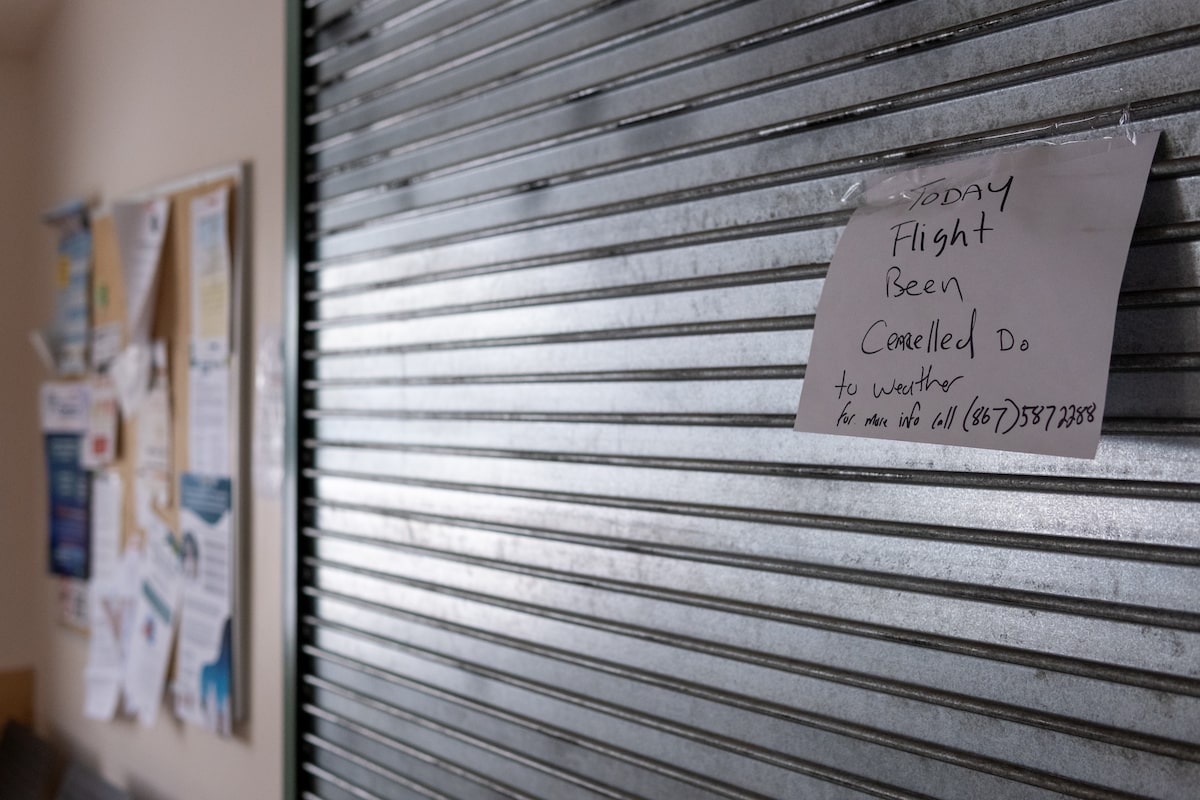
The need for dental travel means nurses are tied up seeing people with toothaches in order to make referrals. Flights are so full with dental patients that, at times, those needing to leave for medical travel can’t get seats on the limited-capacity flights, health care workers said.
In the 2024-25 fiscal year, in a territory with a population of 46,000, about half of whom live in Yellowknife, patients made 5,352 trips for dental purposes.
Adam Dental Clinic in Yellowknife is currently fielding about 50 emergency referrals from across the territory every week.
The town’s medical boarding homes are often full, in part because of the influx of dental patients. Overflow has gone to hotels in the past, but they’ve also been inundated with a growing number of global tourists visiting to see the Aurora.
Last March, the territory advised residents with non-urgent dental plans to delay travel to Yellowknife, citing lack of places to stay, or to go to Whitehorse instead.
When facilities in Yellowknife are full or more complex procedures are required, clients are referred to Edmonton. The number of people in the NWT travelling to that city for dental treatment jumped to 317 in the fiscal year ended 2024, a fourfold increase from four years prior, federal figures show.
For those who can’t travel, the consequences can be profound. Oral diseases are linked with other serious health issues such as diabetes, heart disease and pneumonia. Untreated dental infections are excruciating, and potentially fatal. Oral disease and tooth loss can also cause severe mental-health issues, including depression, anxiety and social isolation.
Dr. Friedman called the current situation “catastrophic,” especially for small children. As well as suffering the long-term implications from lack of preventative care, untreated oral health issues can affect their ability to sleep, eat, speak and learn.
Dr. Hasnain Dewji, a Vancouver area-based pediatric dentist who travels to Yellowknife every month or two, said the current wait time for a procedure is six months.
A year or two ago, what would have been just a filling is now a nerve treatment on that tooth and a crown, he said. “Decay does spread from area to area. And then it gets worse and gets harder to fix. So some of those teeth, in some cases, that could have been saved are now not being saved or being taken out instead.”
On his last trip to Yellowknife in November he had to extract 12 adult teeth, including the front teeth, from a 13-year-old girl. “If she could have gotten care earlier, there would have been a better chance of that being avoided,” he said. “It was devastating case where you thought, this never should have happened.”

Looking for long-term solutions
Lesa Semmler, the NWT Health Minister, spent 15 years as a front-line nurse in Inuvik and has seen the challenges people endure in accessing health and dental care. She recalls managing an operating room full of kids needing dental surgery. As an MLA, before becoming minister, she regularly pushed for better quality dental care.
But access, she said, has only worsened in recent years. “We need to be treated the same as all other Canadians. When you talk to somebody in downtown Ottawa, and say you had to spend $8,000 to fly to get a dentist appointment, they would be shocked.”
Even before the territory’s NIHB agreement with Ottawa expired last March, Ms. Semmler said her priority has been negotiating a longer-term deal – one that will bring services closer to communities and ensure Indigenous peoples have equitable access to care.
“We have to have the funding to be able to run those programs better,” she said in an interview in the NWT Legislative Assembly in Yellowknife, stressing that dental services for Indigenous peoples are a federal responsibility.
Specifically, she thinks the feds should invest in new equipment, cover freight costs and pay dentists if they’re stranded in communities because of weather conditions. Ultimately, she said, enabling in-community care will cost the federal government less.

When there’s no room at the boarding homes, medical travellers can be sent to stay at the Yellowknife Lodge, a trailer complex.
Without a renewed NIHB agreement with Ottawa, the territory is footing the bill for dental-travel costs. Last month, the territory estimated the funding shortfall for the NIHB program, including dental care, was $13-million in 2024-25, costs that the territorial government incurred.
A key sticking point is deciding who will pay for dental equipment. Ms. Semmler said the territory does not receive allocated funding to purchase any.
ISC said it has provided $508,000 to the NWT for equipment and retrofits since 2020, even though that, as well as infrastructure and maintenance, are not eligible expenses under NIHB. It said that, historically, the territory has maintained community dental clinics.
ISC told The Globe it is aware of problems in dental-care access. The department said it’s working with the territory to resume in-community dental services, “recognizing that potential cost efficiencies may increase” when services can be provided locally.

Auditor-General Karen Hogan has challenged Indigenous Services Canada on its dental services, and the gaps in its knowledge of what communities need.Sean Kilpatrick/The Canadian Press
But according to recent Auditor-General’s reports, the ISC isn’t is fully aware of the scope of the problem.
In October, the Auditor-General reported that the ISC still didn’t know how much of an oral health gap existed between First Nations and Inuit populations and other Canadians. As a result, it said ISC didn’t know “which oral health services were needed most, where they were needed, and the number and type of oral health professionals needed to deliver the services.”
When asked if it has ever assessed the effectiveness of NIHB dental coverage in improving oral health, ISC said the program does not collect any data specific to oral health outcomes because “health monitoring doesn’t fall under the program’s purview.”
ISC said it will work with partners “to explore the possibility of developing a national oral health data strategy” for all Canadians.
Beyond funding, other solutions have been explored in the past. In the 1980s, more dentists from abroad were allowed to practice in the North. And in the 1990s, residents were trained in oral health to work in their own communities, with a focus on prevention. (Government cuts and policy changes ended both of those programs).

Premier R.J. Simpson, left, and Prime Minister Mark Carney met in Ottawa last November, when the federal government promised new money for dentistry in the Northwest Territories.Adrian Wyld/The Canadian Press
Governments have introduced some recent changes: The federal government said in November it will fund a new dental-therapy program in the NWT, and as of December, the territory is allowing dental hygienists to practise without a dentist.
But while residents of the territory wait for governments to come to an agreement that will bring dentists back to their communities, Dr. Adam in Yellowknife said the current situation is both frustrating and wasteful.
“They’re willing to pay millions of dollars in flights, but they can’t even set up one or two clinics with that money,” he said, adding that if new facilities were funded, “there would be a chance that more dentists would go.”
He estimated a new office with good equipment could be set up for $60,000.
Ultimately, he said care closer to communities will be more effective – and more cost efficient. “It may be a little more expensive upfront, but it’s going to pay off huge later.”
The long-term benefit also applies to people’s health. During The Globe’s visit to remote communities, in casual conversations in grocery stores and lodges, residents almost universally said dental-care troubles are an ever-present issue. Virtually everyone had a niece or nephew, grandchild, cousin or friend who needs care and is struggling to get it.
Mr. Tutcho’s relatives and friends have had to travel long distances for dental care, or they’ve done without. “All we want is basic health,” he said.

‘The silly thing is that there seems to be money, but – where is it going?’ Dr. Friedman says. ‘It’s not distributed the right way. Governments end up paying more, and less people benefit.’
See the North: More from The Globe and Mail
The Decibel podcast
The Arctic is getting warmer, fast, and for Inuit that’s a nutritional problem: In a changing landscape, their communities risk becoming more remote and harder to feed. Journalist Jenn Thornhill Verma took The Decibel to Nunatsiavut, in northeastern Labrador, to see how elders are adapting. Subscribe for more episodes.
In depth
Nunavut road project could transform the territory, but at what cost?
Inside the plan to bring the first public visual arts centre to NWT
Ottawa consults on allowing hunting of tundra swans to dismay of bird lovers, conservationists