An Ontario doctor has been placed under supervision by the provincial physicians regulator after an investigation into his MAID practice found that he crossed professional boundaries and failed to adhere to protocols – including in one case where inadequate medication caused a patient to resume breathing after the doctor pronounced him dead and left.
The College of Physicians and Surgeons of Ontario reviewed two complaints against Dr. James MacLean relating to two 2024 medical assistance in dying cases and conducted a broader probe into his general medical practice that included a review of his charts.
The college determined that the London, Ont., doctor displayed a lack of judgment, dealt with patients in a way that risked looking like coercion and kept inadequate records. Dr. MacLean’s conduct “exposes or is likely to expose patients to harm or injury in five out of twenty [patient] charts reviewed,” a summary of a decision this spring by the college’s Inquiries, Complaints and Reports Committee states.

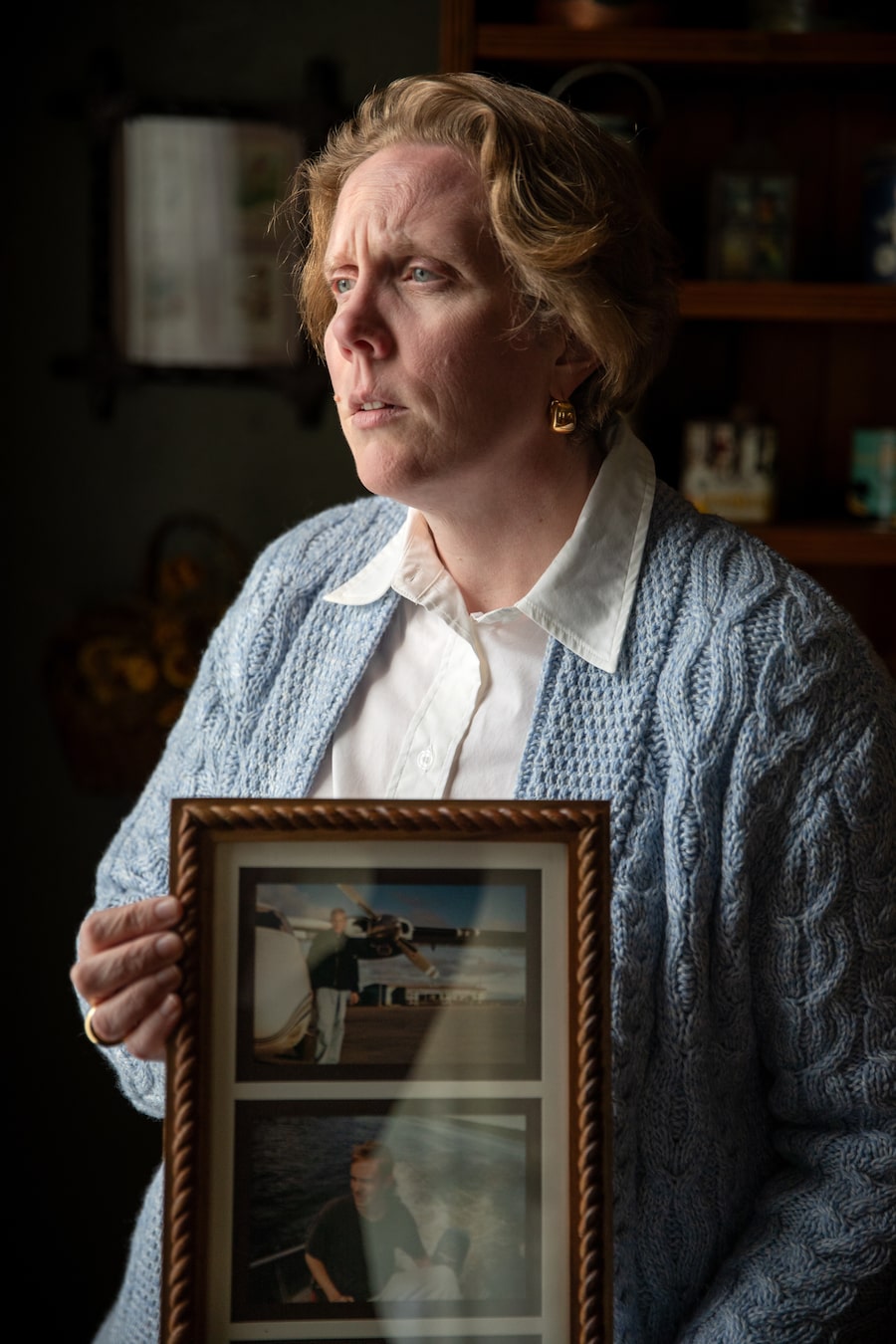
Ms. Dillon shows a photo of her brother, Thomas, a former patient of Dr. James MacLean.Lindsay Lauckner Gundlock/The Globe and Mail
The patients’ names are not disclosed in any of the publicly released documents, but The Globe and Mail has learned that one of the complaints relates to the 2024 death of Thomas Dillon, a 45-year-old Ontario man who had Crohn’s disease.
His family told The Globe they are concerned with the college’s decision to allow Dr. MacLean to continue providing assisted death and that they object to some of its conclusions.
Dr. MacLean did not respond to phone messages, e-mails and a letter detailing The Globe’s questions about the complaints, the broader investigation and the college’s decisions. A staff member at his family-medicine practice in London told The Globe that he declined to comment.
In documents prepared by the college and reviewed by The Globe, Dr. MacLean defended his MAID practice and agreed to take steps to improve his approach. He stated that he used his best judgment and sought to honour his patients’ wishes.
In the case of the patient who spontaneously resumed breathing, the college’s records show that Dr. MacLean ordered a MAID medication kit from a pharmacy, but it wasn’t ready when he went to collect it, so he used a previously acquired kit.
The college’s decision shows Dr. MacLean administered an anesthetic but did not give the 67-year-old cancer patient the neuromuscular-blocking medication customarily used in an assisted death because he was unable to locate it in his briefcase.
Shortly after administering the anesthetic, Dr. MacLean pronounced the patient’s death. He told the college that because the patient was frail and because he did not detect respirations or a heartbeat, he thought the neuromuscular-blocking medication was not necessary. After Dr. MacLean left the patient’s home, the patient resumed spontaneous breathing, the decision states. Dr. MacLean then returned, administered additional medication, including the neuromuscular-blocking agent, and again pronounced the patient dead.

The other complaint centres on the death of Mr. Dillon, who had been deemed eligible for MAID by Dr. MacLean and a nurse practitioner because of his suffering and decline related to the Crohn’s diagnosis and persistent complications with an external pouch to collect waste.
Extensive medical records, which were obtained by the family and shared with The Globe, show Mr. Dillon had a history of alcohol abuse, depression and suicidal ideation. These records included files from Mr. Dillon’s family doctor, a psychiatrist, a gastroenterologist and an internal medicine doctor.
According to the medical records and the college’s 16-page decision, which the family provided to The Globe, Dr. MacLean conducted Mr. Dillon’s MAID eligibility assessment outside of a Tim Hortons coffee shop on June 27, 2023, in St. Thomas, Ont. Dr. MacLean and Mr. Dillon proceeded to exchange dozens of text messages about plans for the medically assisted death, the records show.
On the morning of Jan. 29, 2024, Dr. MacLean met Mr. Dillon at the Tim Hortons and then drove him to a location in London where Mr. Dillon had agreed to have the procedure done, the college’s decision states. Dr. MacLean administered the lethal medications in a room at a holding facility in an industrial unit where cadavers are prepared for transport to funeral homes.
The college faulted Dr. MacLean for crossing professional boundaries and taking an unduly casual approach with the assessment location but did not object to the venue where the death took place.
Mr. Dillon’s family agrees with some of the college’s findings, but in an interview with The Globe, they said they believe many issues remain unresolved and the regulator should have gone further.

Dr. MacLean conducted Mr. Dillon’s MAID eligibility assessment outside of this Tim Hortons in St. Thomas, Ont., in 2023, according to medical records and the College of Physicians and Surgeons of Ontario decision.Lindsay Lauckner Gundlock/The Globe and Mail
“I am horrified that the college has not stopped him from practising,” Mr. Dillon’s aunt, Megan Nichols, said in an interview at her London-area home, alongside Mr. Dillon’s sister, Sarah Dillon. “What does it take?”
Canada legalized medical assistance in dying in 2016 for those whose deaths were reasonably foreseeable. The practice was broadened in 2021 to those enduring intolerable suffering but not approaching their natural deaths.
The federal government is now weighing whether to further expand MAID to patients whose sole condition is mental illness – a controversial proposal that has exposed a deep divide within the medical community.
In the case of Mr. Dillon, the college’s inquiries committee issued Dr. MacLean a caution and accepted his voluntary undertaking to agree to certain practice conditions, including a minimum six-month clinical supervision and unannounced inspections of his practice locations and patient records.
A caution – in which a doctor must appear before the committee to receive direction about specific issues – is not disciplinary action but rather a remedial step the committee can take if it is concerned about a physician’s practice or conduct.
The committee also issued Dr. MacLean cautions relating to the other complaint and the broader investigation into his practice. According to documents reviewed by The Globe, the college did not escalate its concerns to the Ontario Physicians and Surgeons Discipline Tribunal, which adjudicates allegations of professional misconduct or incompetence.

Ms. Dillon shares family photographs of her brother as a child. The complaint regarding Mr. Dillon's case was one of two complaints considered by the College of Physicians and Surgeons of Ontario regarding assisted deaths carried out by Dr. James MacLean in 2024. The college also conducted a broader probe into his general medical practice.Lindsay Lauckner Gundlock/The Globe and Mail
Dr. MacLean’s registration on the college’s website is listed as “restricted” as of Oct. 1, 2025, but the practice conditions he agreed to are dated April 15, 2026. The college’s decision notes that he has been practising under supervision since October.
A spokesperson for the college, Laura Zilke, would not disclose why his licence has been restricted since the fall. She also did not answer questions about whether there is a certain number of cautions that would prompt the college to escalate a matter, nor would she disclose how many physicians have been issued cautions or placed under conditions relating to assisted dying since 2016.
“Decisions about whether a matter proceeds with a caution or an alternative disposition are based on the seriousness of the concern and the evidence before the committee, including whether there are ongoing risks to patients or broader concerns about a registrant’s practice,” she said in an e-mail.
In Ontario, the chief coroner’s office has responsibility for the monitoring and oversight of MAID after the fact. The office retrospectively reviews all such deaths to evaluate for legal and regulatory compliance. A specialized MAID Death Review Committee, established by the coroner’s office, examines complicated cases.
Mr. Dillon’s case was among those reviewed by the committee. According to an eight-page report released to the Dillon family and provided to The Globe, the committee found that Dr. MacLean’s decision to drive Mr. Dillon to the MAID location “may have bordered on coercive.” Committee members were also concerned that Dr. MacLean did not adequately engage with Mr. Dillon’s family, failed to thoroughly investigate addiction and substance misuse, and did not document a thorough exploration of social support and mental-health options.
Given its concerns, the committee referred the case to the College of Physicians and Surgeons of Ontario.
A spokesperson for the Office of the Chief Coroner, Stephanie Rea, said in an e-mail that the office has referred 13 practitioners to their professional colleges since assisted dying was legalized in 2016. Ms. Rea said the office could not disclose how many of Dr. MacLean’s cases had been referred to the MAID Death Review Committee.
The college reviewed Mr. Dillon’s death and found that there were “over 20 pages of text messages between the patient” and Dr. MacLean pertaining to plans for the MAID procedure, according to the regulator’s decision.

Mr. Dillon’s family believe the text messages and the venues used by Dr. MacLean were inappropriate, especially in the context of a medically assisted death.Lindsay Lauckner Gundlock/The Globe and Mail
In one instance, according to the decision, there was mention of Dr. MacLean asking Mr. Dillon to be in a documentary, presumably about MAID.
In another text exchange quoted in the decision, Dr. MacLean wrote the following in light of the Dillon family’s disapproval of their loved one’s desire for the procedure: “Sorry you have to go through so much grief related to your decision to end your suffering with a medically assisted death. Can they not understand what you have been through? You are the one ending your life and not them. Do they think it is going to negatively impact them? It is not about them.”
The college-appointed assessor who interviewed Dr. MacLean and reviewed his charts determined that his communication in these instances crossed professional boundaries inherent in the physician-patient relationship and “raised a risk of perceived coercion.”
In his responses to the assessor, Dr. MacLean asserted that he did not ask the patient to be in a documentary, but rather “presented” it as an “opportunity” to some of his MAID patients, according to the college’s decision. Dr. MacLean said he “was not uniquely or excessively involved with this patient, nor did they have a long-standing relationship,” the college’s decision says.
Dr. MacLean, who graduated from medical school in 1980, advised the college that he conducted Mr. Dillon’s eligibility assessment outside a coffee shop at his patient’s request. “He acknowledges that he could have seen the patient at [a community health centre] in St. Thomas but did not think of it at the time,” the decision says. Dr. MacLean stated that he was conscious of potential privacy violations in a public setting and “remained diligent” in watching for anyone who might overhear their conversation.
The inquiries committee determined Dr. MacLean’s actions reflected “an unduly casual approach to MAID-related requests that is inconsistent with the heightened professionalism and procedural safeguards expected in this area of practice.”
With respect to driving Mr. Dillon to the procedure location in London, Dr. MacLean said Mr. Dillon refused to get a ride with his sister, who showed up at the Tim Hortons where the two men had arranged to meet prior to the procedure. He said he “ultimately transported the patient himself to ensure the patient’s final moments were dignified.”
Dr. MacLean noted to the college that Mr. Dillon was unwilling to have the procedure at home, because he lived with his mother and he knew his family didn’t approve. Dr. MacLean advised the college he was unable to get temporary privileges to perform the procedure at the local hospital and that Mr. Dillon was unwilling to go to an out-of-town hospital because of transportation limitations, the decision says. (Mr. Dillon’s driver’s licence had been suspended in 2022 because he was hospitalized for seizures related to alcohol withdrawal, his medical records show.)
Dr. MacLean said the room at the transportation company was an appropriate location for assisted dying, having been “arranged with chairs, carpeting and wall decorations,” the decision says. He described the location as a “dignified space that the patient was satisfied with.” The committee said it was not concerned about the location because it was Mr. Dillon who chose it after alternative options were explored.
The Globe went to the location, which is described on Mr. Dillon’s death certificate as a “funeral establishment.” It is accessible by an unmarked door and a garage door in the rear of an industrial plaza.

The industrial plaza in London, Ont., where Mr. Dillon accessed MAID in 2024. The location was listed as a 'funeral establishment' on Mr. Dillon’s death certificate. The unit where he died is a holding facility where cadavers are prepared for transport to funeral homes.Lindsay Lauckner Gundlock/The Globe and Mail
Ms. Nichols and Ms. Dillon say they believe Mr. Dillon should not have qualified for MAID in the first place, because of what they describe as his persistent and active suicidal ideation. The women assert that Mr. Dillon’s desire for an assisted death was a result of mental illness and was not directly owing to his underlying physical condition.
Ms. Dillon said that she is Catholic, but not overly religious, and that she and the family aren’t opposed to MAID when it is provided to eligible, consenting patients and according to professional standards.
She and Ms. Nichols said his diagnosis of a chronic inflammatory bowel disease two decades ago derailed his dream of becoming a commercial pilot, but he was still able to pursue hobbies such as skydiving and maintain friendships. They said the isolation of the COVID-19 pandemic and loss of work as a timber framer sent him into depression and alcohol abuse.
Ms. Dillon said her brother’s mental health took a significant turn for the worse in the couple of years leading up to his death, and that led to a reliance on alcohol and opioids. Around Christmas in 2023, about a month before his death, she said the family’s elderly dog stepped on his foot and he became irate and wanted to call the police on the dog.
In its decision, the college noted Mr. Dillon’s mental-health history but said it “does not negate capacity or voluntariness, particularly in the context of chronic and serious illness.” The coroner’s office, for its part, determined there was no evidence that Mr. Dillon lacked capacity during his eligibility assessments or on the day of the procedure.
But Ms. Dillon told The Globe she had concerns about her brother’s substance abuse and capacity for consent the morning he died.
At 8:52 a.m. on Jan. 29, 2024, Ms. Dillon received a text message from one of Mr. Dillon’s friends, stating that Mr. Dillon was going to the Tim Hortons in St. Thomas to meet someone for his MAID appointment, according to notes she wrote immediately after her brother died.

Ms. Dillon believes her brother should not have qualified for MAID in the first place, owing to his documented history of alcohol abuse, depression and suicidal ideation.Lindsay Lauckner Gundlock/The Globe and Mail
Ms. Dillon, who is an emergency room nurse, said she raced to the coffee shop and found her brother. She said she observed that he had severely dilated pupils, glassy eyes and a flat affect. The family’s complaint to the college states that on the morning Mr. Dillon died, “his pupils were so dilated, you could not see his iris. He was clearly under the significant influence of some combination of medications.”
Ms. Dillon’s submission to the college also states that, after Mr. Dillon died, the family found empty pill bottles for prescriptions he had recently filled.
In his interview with the college’s assessor, Dr. MacLean denied the family’s allegation that he failed to appropriately assess Mr. Dillon’s capacity. He said it is not true that Mr. Dillon had dilated pupils or glassy eyes. “At no time did he observe any behaviour, demeanour, or appearance suggesting the patient was incapacitated,” the decision says.
On the question of whether Dr. MacLean adequately assessed Mr. Dillon’s capacity on the morning of his death, the college said its review was limited to the documentary record and there was “no indication in the record that capacity was in question at the time of provision.” The coroner’s committee came to the same conclusion.
Ms. Dillon said upon arrival at the coffee shop, she pleaded with her brother not to follow through with MAID, begging him to instead go with her to the hospital for help with his mental illness. Mr. Dillon refused, she said, and got into Dr. MacLean’s vehicle.
She said she didn’t know who Dr. MacLean was and that he initially refused to identify himself (the college’s decision does not address this point).
Ms. Dillon said she followed the men to a parking lot behind a plaza in London and entered the building with them through a back door beside a garage. They walked through the garage into a room where a nurse inserted an IV into Mr. Dillon’s arm, she said. Mr. Dillon said he was cold and asked for a blanket, Ms. Dillon said.
She said she repeatedly told Dr. MacLean that she thought what was happening was wrong.
In that moment, she said, she felt she had to make a choice: Continue to argue against the assisted death and risk being thrown out of the room, leaving her brother to die alone, or allow the events to unfold and hold her sibling’s hand in his final moments. She chose the latter.
Mr. Dillon, she said, had told her, “If you love me, you will let me go.”
According to Dr. MacLean’s clinical notes from that morning, he injected the lethal combination of medications at 10:11 a.m. Ms. Dillon said she felt her brother’s pulse slow and then fade to nothing. Mr. Dillon was pronounced dead at 10:22 a.m.
“At least I could hold his hand,” Ms. Dillon said, “and give him a kiss goodbye.”