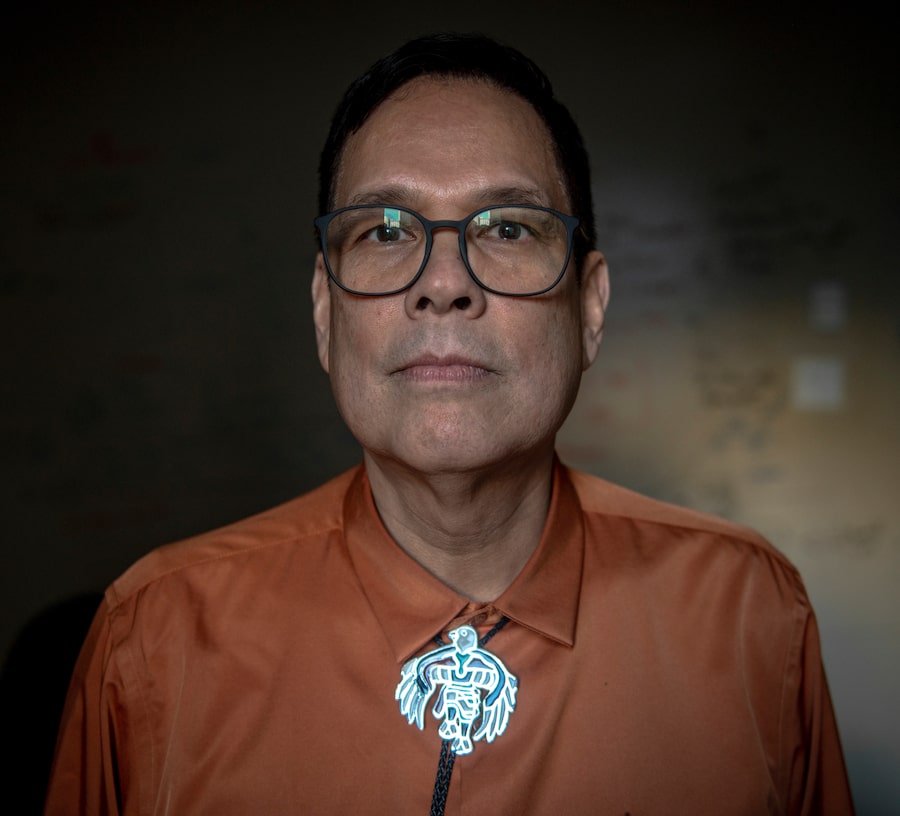
The offer usually arrives just minutes into the meeting: Does he want to make a deal that would effectively turn his business into a shell company?
The person across the table chooses their words carefully, but David Carrière-Acco knows exactly what they’re proposing. If he agrees to team up on a bid for a government contract, his company will get a cut – without having to do any of the work.
Mr. Carrière-Acco, president of management consulting firm Acosys Consulting Services Inc., has heard some version of this pitch several times. It comes with the territory, he says, when you run an Indigenous company that does business with the federal government.
He’s never interested.
“This isn’t the way we do business,” he explains in an interview. “I won’t do it.”
These kinds of arrangements – in which small Indigenous businesses are used by non-Indigenous firms to get preferential access to government contracts – are an open secret in the Indigenous business community.
Unveiled in 1996, the federal government’s Procurement Strategy for Indigenous Business (PSIB) was a well-intentioned policy. It hoped to develop Indigenous businesses by directing government spending their way, leading to downstream benefits for Indigenous communities. The PSIB, one insider said, was meant to be a tool in a “war on poverty.”
Nearly three decades later, it has also created an express lane for large government contractors who’ve strategically partnered with Indigenous companies.
Timeline of events
Learn more below about how the Procurement Strategy for Indigenous Business was created, and how concerns about it took root.
A Globe and Mail investigation has found the government ignored decades of internal and external warnings about the Procurement Strategy for Indigenous Business, allowing companies with minimal staff and very little separation from their larger, non-Indigenous partners to flourish and win contracts earmarked for Indigenous businesses, according to an examination of corporate filings, public records and interviews with more than 50 experts and people with experience in the industry.
These partnerships – known officially as joint ventures – have done little to benefit the Indigenous business landscape or Indigenous communities, experts say.
In 2021, the Trudeau government supercharged the policy, compounding the problem. It set an ambitious target: One out of every twenty dollars spent on contracts should go to Indigenous businesses. The new goal directed a torrent of new spending towards Indigenous firms. Between 2018 and 2023, the value of those contracts quintupled. That year, the purchasing policy accounted for more than $1.6-billion.
Federal contracting has been in the public eye since revelations that the ArriveCan mobile app, commissioned by the government at the height of the COVID-19 pandemic, ballooned in cost from $80,000 to nearly $60-million. As media and parliamentary committees investigated, they learned that two of the main private companies on the project were hired through the strategy.
Some of that work had been carried out by Dalian Enterprises Inc., an Indigenous firm with two employees, and Coradix Technology Consulting Ltd., a larger, non-Indigenous operation with at least 40 staff. The two companies had worked together in a joint venture since the early 2000s.
Dalian and its partnership with Coradix have been paid at least $317-million by Ottawa since 2011, according to figures provided to the House of Commons public accounts committee. But auditors found last month they failed to meet the procurement strategy’s rules across a dozen contracts. Both firms were suspended from federal work last spring, and Coradix has since filed a lawsuit contesting the decision. David Yeo, Dalian’s founder, told The Globe earlier this year that the firm and its partnership had complied with the policy’s rules.
A Globe and Mail investigation last year found Dalian and Coradix intersected substantially. Coradix was a minority owner of Dalian, the non-Indigenous company’s founder sat on Dalian’s board, and the two businesses shared an office and many business functions.
Carolane Gratton, a spokesperson for Indigenous Services Canada, said joint ventures should not be assumed to be shells, and that they are reviewing the strategy both internally and externally. She added that while past evaluations have warned of the risk of shells, the department did not identify them as a widespread problem.

David Yeo, left, and Tony Carmanico, right, are the founders of Dalian Enterprises Inc. and Coradix Technology Consulting Ltd.Supplied
But experts say the rules surrounding joint ventures are too lax and are allowing shell companies to flourish.
“It’s very prevalent,” says Mr. Carrière-Acco, the owner of Acosys and a member of Peter Ballantyne Cree Nation in Saskatchewan. “You’ll always find somebody who wants to game the system.”
Non-Indigenous firms have approached him with a shell proposal at least five times, he says. In exchange, he’s been offered around 5 per cent of the contract’s billable revenue.
His business, named after the Plains Cree word for “arrow,” has operated for nearly 20 years and has a joint venture of its own. While he owes much of his success to the PSIB, shells have significantly distorted the playing field.
“If I had $400-million in contracts, could you imagine what I would do with it? And here I am, trying to rub two pennies in my pocket,” he says.
”At the end of the day, when I see shell companies gaming it and government buyers willing to buy into it – it’s right there in the open, and they don’t care – I get frustrated by that.”


‘The bureaucratic dream’
Government contracting, also known as procurement, is a dense, intricate affair, replete with arcane acronyms and byzantine protocols.
The public sector requires all manner of goods (buildings, computers, toilet paper) and services (accountants, call centre agents, IT support), many of which are acquired through a competitive bidding process, with the contract often awarded to the cheapest offer that meets all of the government’s requirements.
Governments have long used their significant spending power to incentivize entire sectors of the economy. This was the case for the Procurement Strategy for Indigenous Business, which was born out of a pledge in the “Red Book,” the Liberal Party of Canada’s 1993 election platform.
“The socio-economic conditions of Aboriginal peoples are the poorest in the country,” the platform said. “A Liberal government will adopt federal procurement policies designed to stimulate the growth of Aboriginal business.”
After voters swept Jean Chrétien’s Liberals into power, the government set about implementing the change. Within a few years, the Procurement Strategy for Aboriginal Business, as it was then called, was ready. Under the policy, departments could now designate some contracts as “set-asides,” making them off-limits to non-Indigenous companies.

Jean Chrétien’s Red Book, a policy blueprint that helped the Liberals return to government in 1993, included a promise about Indigenous procurement that would make the PSIB possible.Tom Hanson/The Canadian Press
The procurement strategy was launched on April 1, 1996.
Businesses looking to qualify under the policy must first register with the Indigenous Business Directory, a public list of companies maintained by the federal government, and prove they are majority-owned and controlled by Indigenous people or organizations. Non-Indigenous businesses can still participate via joint ventures, but they can never own or control a majority of the partnership. The PSIB also comes with a “content criterion” requiring that at least 33 per cent of the value of a contract’s work be performed by Indigenous businesses.
To ensure businesses comply with the procurement strategy’s rules, the policy has an auditing regime, administered by Indigenous Services Canada.
The strategy deliberately allowed for joint ventures with the idea that these partnerships would create a knowledge transfer from established companies to fledgling Indigenous businesses. “That was the bureaucratic dream,” says Marc Brooks, a retired career public servant who led the policy from the fall of 1996 until the early 2000s.
Mr. Brooks wasn’t entirely sold on the joint venture idea. His background – he held a business degree and had owned a small business – told him the mechanism could be exploited.
“I think I realized it from day one, if you want to know the truth.”
Concerns were also surfacing outside of the public service. Citing the Canadian Federation of Independent Business, an Ottawa Citizen story mere months before the policy’s launch wrote about “a real danger that non-Aboriginal businessmen will set up shell companies, with an Aboriginal address and partners, to scoop up easy contracts and tax benefits.”

In an effort to keep shell companies in check, Mr. Brooks pushed for penalty clauses when the strategy was still being designed. These would state that a joint venture’s contract could be cancelled if it ran afoul of the spirit of the policy. But government lawyers rebuffed him, saying the policy already had contract cancellation language.
Many Indigenous business owners who spoke with The Globe said they had warned the federal government about problematic joint ventures. But it’s also clear that the Indigenous Services department was aware of the issue early on.
In a 1999 “implementation status report,” evaluators wrote that public servants, as well as Indigenous business and community leaders, were already worried about shells. “Several key informants were concerned about the problem of whether ‘front’ companies may arise to take advantage of the set-aside process,” evaluators said. “The original program designers anticipated this problem and instituted measures such as certifications and random audits.”
Three years later, another review confirmed those concerns. Interviewees said that non-Indigenous firms were enlisting Indigenous “figureheads” to act as fronts for joint ventures. “This is a situation in which a firm appears to meet the letter of the PSAB eligibility requirements but has little or no true Aboriginal content,” the report said.

A report in 2007, a year after Stephen Harper took office, said that some staff felt that shells were “not being appropriately penalized for their dishonesty.”
In 2014, nearly 20 years into the policy’s existence, an evaluation again returned to the issue of shells, stating that “the resources originally in place to monitor compliance have been significantly reduced; there are little, if any, official verifications that Aboriginal firms are actually completing the work (particularly in the cases of partnerships); and there is concern that there may be abuse of the program in this regard.”
Warnings also came from outside the government. In 2006, John Bernard, president and CEO of Donna Cona Inc., the largest Indigenous IT company in Canada, testified before a Senate committee about “weak rules surrounding joint ventures and partnerships.” He pleaded with senators to fix the policy, not abandon it.
“Let us not throw the baby out with the bath water,” he said.

John Bernard, whose company worked to bring remote First Nations high-speed internet in the 2000s, spoke out in that era against allegedly dubious procurement practices.Tibor Kolley/The Globe and Mail
For Bradford Morse, chief of staff to Mr. Chrétien’s Indian Affairs minister when the PSIB was designed and rolled out, the intent of the policy was simple: It was a “war on poverty.”
“The germ of all this really was a response to the reality that the Indigenous-owned segment of the Canadian economy was minuscule,” says Mr. Morse, now a law professor at Thompson Rivers University in Kamloops, B.C. At the time, Indigenous businesses were mostly small, local operations – taxis, craft shops, corner stores – with little capital and few prospects of expansion, he said. The strategy’s designers hoped to build up manufacturing capacity and didn’t foresee that it would be used for the kinds of large IT projects that are now common under the policy.
The fact so many alleged shells now access the policy points to “a lack of rigour in enforcement and policies,” Mr. Morse says.
The policy was intended to help Indigenous businesses flourish, creating a feedback loop of employment and training – but that’s been distorted. “You have one person incorporate a company, and that makes it eligible for an Indigenous preference.”
“It is completely contrary to the purpose of PSIB.”

Two companies, or one?
For most of its existence, the procurement strategy occupied an obscure corner of Ottawa’s enormous purchasing efforts. In 2015, for instance, set-aside contracts under the PSIB amounted to $93-million, just 0.47 per cent of the nearly $20-billion Ottawa paid that year for goods and services.
Once the Liberal government announced its 5 per cent Indigenous procurement target, departments scrambled to contract with Indigenous businesses. Suddenly, the PSIB was responsible for two types of procurement: The set-aside contracts it had created two and a half decades ago, and an enormous, growing tranche of regular contracts departments hoped to direct to accredited Indigenous suppliers.
Indigenous contracting became a bonanza. Indigenous businesses were awarded $1.6-billion in contracts in 2023, up from $322-million in 2018. And Indigenous businesses registrations spiked by more than 40 per cent between 2023 and 2024.
One of the businesses that has most benefited from this new, expanded version of the strategy is Adirondack Information Management Inc. The Ottawa-area Indigenous recruiting company caters to the federal government’s voracious appetite for temporary IT, human resources, finance and administrative workers. The company has often operated in joint venture with The AIM Group Inc., an established non-Indigenous staffing agency.
During its first decade, Adirondack and its joint venture eked out a few million in yearly contracts, if that. That began to change in 2020. That year, they were paid $7-million by the government. Two years later, $27-million. In 2024, they earned more than $70-million. That was the most any registered Indigenous company made from government contracts that year, according to The Globe’s analysis of public accounts.
They are now one of the PSIB’s greatest success stories: Since 2011, they’ve received $189-million.
On paper, Adirondack and the AIM Group are two different companies. But an examination of those companies’ corporate disclosures, other public information and interviews with former staff reveals the extent to which they overlap. In a statement to The Globe, Adirondack acknowledged the overlap, noting their arrangement has been found to be compliant.
Both companies share the same address, at 130 Albert St., a commercial building in downtown Ottawa. When a reporter visited the address this week, large banners for both companies were visible in the office lobby, below a sign that read “THE AIM GROUP INC.”
In Adirondack’s early days, its name was almost identical to the AIM Group. The company, which was founded in 2006, was called “AIM - Adirondack Information Management” on its incorporation certificate. The initials were dropped three years later. (The AIM Group was founded in 1989.)

The companies’ blending also extends online. Adirondack’s website registration points to the AIM Group, and its primary contact is AIM’s chief financial officer.
Adirondack’s founding directors were Barry Payne, Meredith Egan and David Megson. Mr. Payne, who hails from Hiawatha First Nation in central Ontario, was an entrepreneur who also ran other businesses, including a furniture supply company that did public sector contract work. He now works for the government as an advisor helping businesses navigate the procurement process, and declined to comment for this story. Mr. Egan and Mr. Megson were owners of the AIM Group. Mr. Egan is AIM’s president and CEO, according to LinkedIn; Mr. Megson died in 2018.
Mr. Payne left the company in 2021, corporate filings show. Representatives for Adirondack declined to answer any questions about how the company met its Indigenous ownership and control requirements after he left. When Mr. Payne departed, however, the board was reconfigured to add a new individual, Sophie Lafontaine, as president and director. Adirondack did not respond to questions about her heritage, and The Globe was unable to reach her. According to Adirondack’s website, the company is majority owned by members of the Native Alliance of Quebec, which advocates for Indigenous people who live off-reserve in the province.
In 2024, Ms. Lafontaine left the company, and a new name, Jason Levesque, appeared on Adirondack’s corporate filings as a director and president. Mr. Levesque’s profile on LinkedIn says he is an AIM Group employee, having joined the company in 2008. His title, per the website, is “National Director of Government Affairs.” At least five others on LinkedIn have listed themselves as working at or representing both companies simultaneously or in succession over the years.

A tale of two companies
Adirondack Information Management Inc., an Ottawa-area Indigenous recruiting company that often works in joint venture with The AIM Group Inc., has seen its business grow rapidly since the government set a 5-per-cent Indigenous procurement target in 2021. But to what extent is Adirondack distinct from the AIM Group?
Name
The AIM
Group Inc.
Adirondack Information Management Inc. (formerly AIM - Adirondack Information Management Inc.)
Founded
2006
1989
Ownership
Majority Indigenous
Non-Indigenous
Address
130 Albert St., Ottawa
Website
registration
Points to “The AIM Group Inc.”
CEO
Meredith Egan
Meredith Egan
President
Jason Levesque
Secretary
Meredith Egan
Treasurer
Meredith Egan
Meredith Egan
and Jason Levesque
Directors
Meredith Egan
Total
federal
payments
$189,235,025*
(2011 to 2024)
$130,278,149
(2006 to 2024)
*Including joint venture.
THE GLOBE AND MAIL, SOURCE: CORPORATE FILINGS,
PUBLIC ACCOUNTS OF CANADA AND INDIGENOUS
SERVICES CANADA

A tale of two companies
Adirondack Information Management Inc., an Ottawa-area Indigenous recruiting company that often works in joint venture with The AIM Group Inc., has seen its business grow rapidly since the government set a 5-per-cent Indigenous procurement target in 2021. But to what extent is Adirondack distinct from the AIM Group?
Name
The AIM
Group Inc.
Adirondack
Information
Management Inc. (formerly AIM -
Adirondack Information
Management Inc.)
Founded
2006
1989
Ownership
Majority Indigenous
Non-Indigenous
Address
130 Albert St., Ottawa
Website
registration
Points to “The AIM Group Inc.”
CEO
Meredith Egan
Meredith Egan
President
Jason Levesque
Secretary
Meredith Egan
Meredith Egan
Treasurer
Meredith Egan
and Jason Levesque
Directors
Meredith Egan
Total
federal
payments
$189,235,025*
(2011 to 2024)
$130,278,149
(2006 to 2024)
*Including joint venture.
THE GLOBE AND MAIL, SOURCE: CORPORATE FILINGS,
PUBLIC ACCOUNTS OF CANADA AND INDIGENOUS
SERVICES CANADA

A tale of two companies
Adirondack Information Management Inc., an Ottawa-area Indigenous recruiting company that often works in joint venture with The AIM Group Inc., has seen its business grow rapidly since the government set a 5-per-cent Indigenous procurement target in 2021. But to what extent is Adirondack distinct from the AIM Group?
Adirondack Information Management Inc.
(formerly AIM - Adirondack Information Management Inc.)
Name
The AIM Group Inc.
Founded
2006
1989
Ownership
Majority Indigenous
Non-Indigenous
Address
130 Albert St., Ottawa
Website registration
Points to “The AIM Group Inc.”
CEO
Meredith Egan
President
Meredith Egan
Jason Levesque
Secretary
Meredith Egan
Meredith Egan
Treasurer
Meredith Egan
and Jason Levesque
Directors
Meredith Egan
Total federal
payments
$189,235,025*
(2011 to 2024)
$130,278,149
(2006 to 2024)
*Including joint venture.
THE GLOBE AND MAIL, SOURCE: CORPORATE FILINGS, PUBLIC ACCOUNTS OF
CANADA AND INDIGENOUS SERVICES CANADA
Adirondack’s only directors are Mr. Levesque and Mr. Egan. The company has four employees, according to the Indigenous Business Directory. Six former AIM Group employees said that Adirondack relied on AIM staff to make bids on government contracts. And five with direct knowledge said salespeople were told by AIM’s leadership to promote Adirondack and the joint venture during pitches to government purchasers. The Globe is not identifying the employees because they were not authorized to speak on internal company matters.
Former public servants said one of the goals of the strategy was for non-Indigenous businesses to pass on their knowledge and expertise, and Mr. Levesque says that has been Adirondack’s experience with AIM. In an e-mailed statement responding to questions about its ability to carry out work, he said that because of its joint venture work, Adirondack “has acquired the capacity to independently bid on and win federal government contracts.”
In all, The Globe identified five businesses listed at AIM’s office and controlled by Mr. Egan or Mr. Levesque, including AIM and Adirondack. One of the other three, Alika Internet Technologies Inc., is also registered on the Indigenous Business Directory. The five firms have received a combined $420-million by the government since 2003, almost half of which went to the two Indigenous businesses, according to public accounts data.
As the PSIB has grown in scale, so has Adirondack’s federal government income, which now eclipses AIM’s. Last year, the firm and its joint venture accounted for 89 per cent of the five companies’ federal revenue.


AIM Group and Adirondack share an office in downtown Ottawa, a few blocks southeast of Parliament Hill.
In response to The Globe’s questions about the relationship between the two companies, Mr. Levesque said members of Adirondack’s joint venture share “several corporate functions including business development, marketing, bids and proposals, account management, recruiting, accounting and bookkeeping, accounts receivable and payable, invoicing, payroll and other administrative functions.”
Mr. Levesque pointed to the government’s Indigenous Business Directory, which lists Adirondack and the partnership. Their inclusion on that list means they’ve been found to be in compliance with the procurement strategy, he said.
The joint venture has been audited several times in recent years, according to information provided by Indigenous Services Canada to a House of Commons committee.
Many contracts under the PSIB are subject to a “pre-award” audit, which verifies basic compliance. Post-award audits, which review whether the company met the terms of the program, rarely take place. Mr. Levesque did not specify whether Adirondack or its joint venture have ever been the subject of a post-award audit.
In October, Adirondack’s joint venture vanished from the Indigenous Business Directory. When The Globe asked why, Indigenous Services said it was once again subjecting the partnership to a pre-award audit.
At the end of December, the government delivered its verdict. Adirondack had passed.

A shiny penny
Wayne Kaboni, an Indigenous businessman, has long been a critic of how the system works in practice. In 1994, he founded 2Rivers Technologies, a computer hardware reseller that bid on federal contracts. Mr. Kaboni, an Anishinabek man from Wiikwemikoong Unceded Territory in Ontario, had learned how to work with computer databases just a few years earlier and was now launching a technology business.
With the emergence of the desktop computer era and the wind of the procurement strategy at his back, Mr. Kaboni’s company grew rapidly over the next few years, and he soon expanded into computer assembly. He partnered with an Ottawa-area manufacturing firm, bought a condo to operate out of and assembled a team.
“I had Indigenous employees, Indigenous techs, Indigenous assemblers in my facility,” Mr. Kaboni says. “My joint venture partner had a certain technical expertise that I couldn’t beg, borrow and steal from anyone, and he was willing to partner with me, so we forged a relationship.”
His business hired Indigenous staff, trained them and taught them specialized skills – exactly the type of work the PSIB was supposed to encourage. But he was competing against shells, he says. They had minimal overhead and partnered with established non-Indigenous firms offering computers from major manufacturers.
In the Indigenous business community, he said, those those firms were referred to as “guys with cellphones and post office boxes.”
He added: “That was the joke on the street.”
Mr. Kaboni spent years trying and failing to grow the business. In the end, he gave up. “I basically walked away from the industry with a really sour taste in my mouth.”
After decades in the Indigenous public sector, he recently returned to the entrepreneurial fold.
He now runs two businesses: A social impact enterprise in Calgary focused on affordable housing, food and water security and sustainability, and a Toronto-based technology company that works in cybersecurity, artificial intelligence and computer hardware.
The Toronto company, Ariginal Technologies Group Ltd., is listed on the federal government’s Indigenous Business Directory, and has begun making bids on federal contracts. In the meantime, his firm is using government grants to train Indigenous people in cybersecurity. “If we can train 50 Indigenous technicians who become remote support for us, then I’ve got 50 people that I can rely on, and they can start their own cybersecurity companies,” he says.
Re-entering the government contracting world still poses the same challenges it did 30 years ago, however.
“I’m competing against these guys that have done millions of dollars of business, like in the ArriveCan scenario,” he says. “I’m not compromising my ethics for a shiny penny.”
“I mean, I’m like anybody else – I love the shiny penny – but I’ve got to be able to sleep at night.”
With research by Stephanie Chambers