The Globe is visiting communities across the country to hear from Canadians about the issues affecting their lives, their futures and their votes in this federal election.
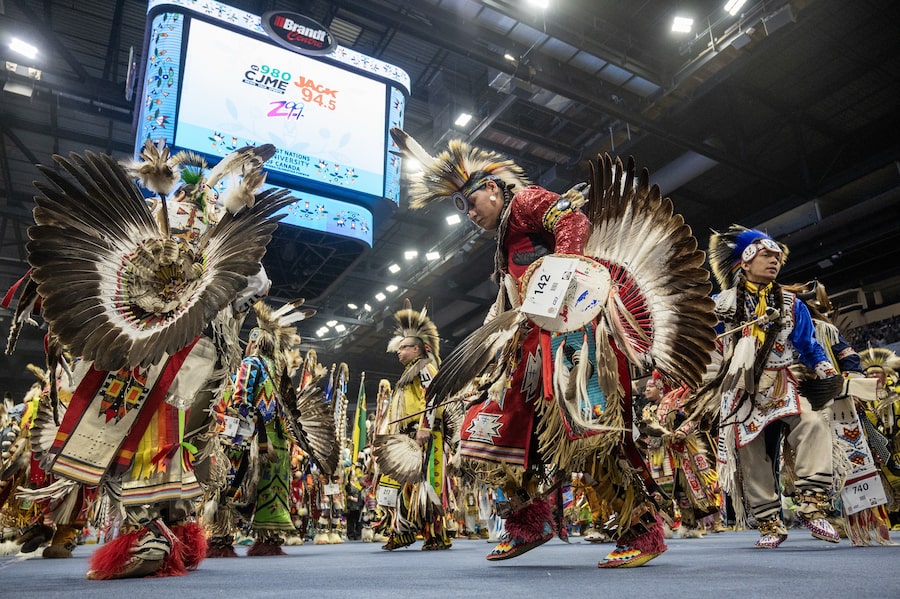
The dancers and drummers had travelled from around Turtle Island to gather in oskana kâ-asastêki. They met on Treaty 4 territory, the heart of the city now called Regina. The place known as Pile of Bones, because of all the bison skulls discarded there.
It was the second and final day of the First Nations University of Canada Spring Celebration Powwow, one of the oldest and largest powwow celebrations in the country.
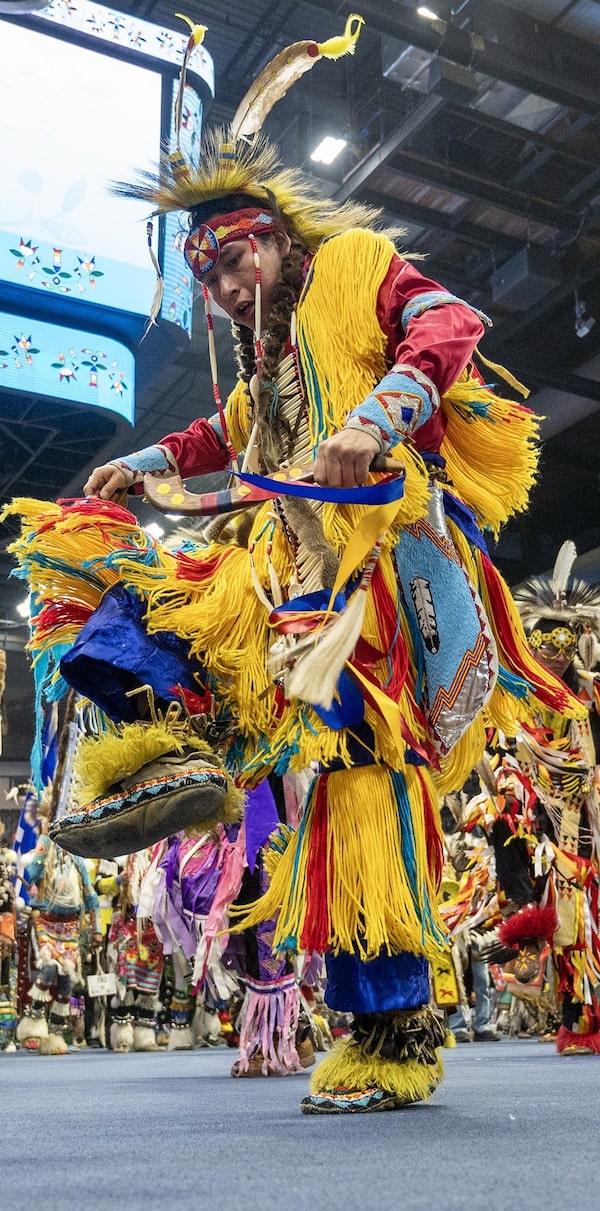
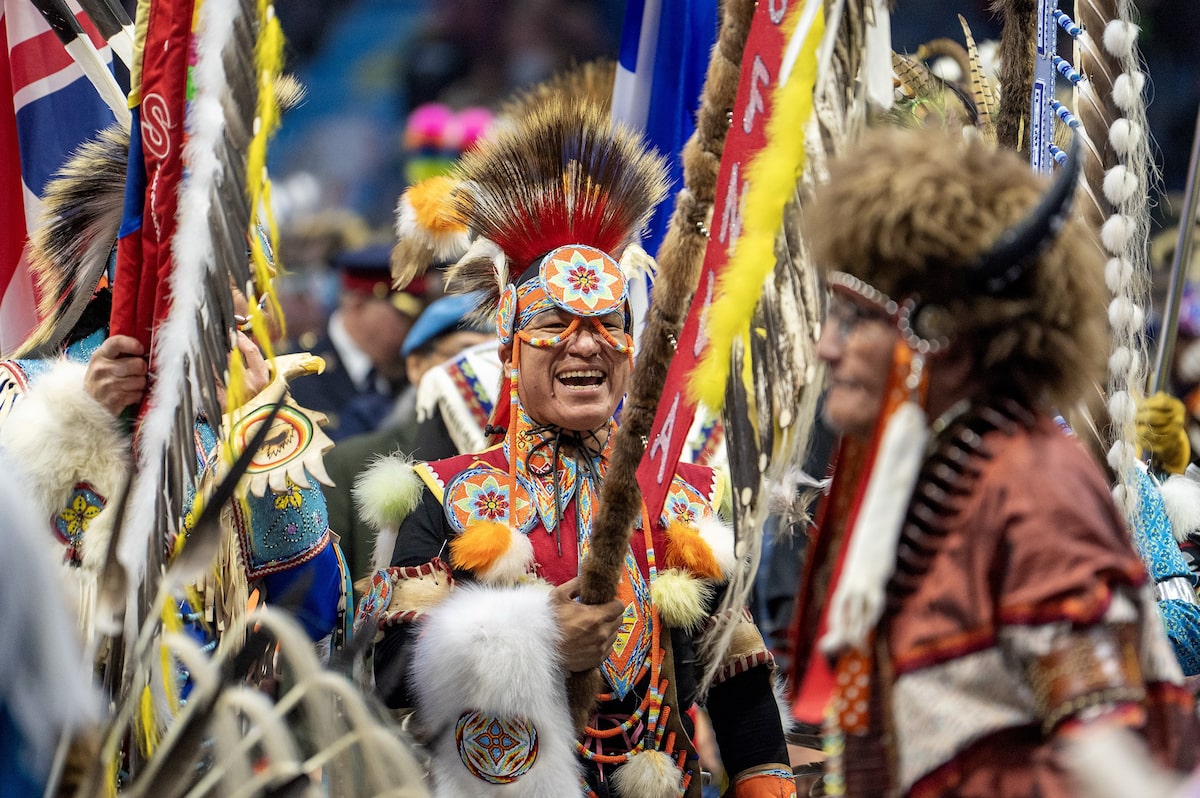
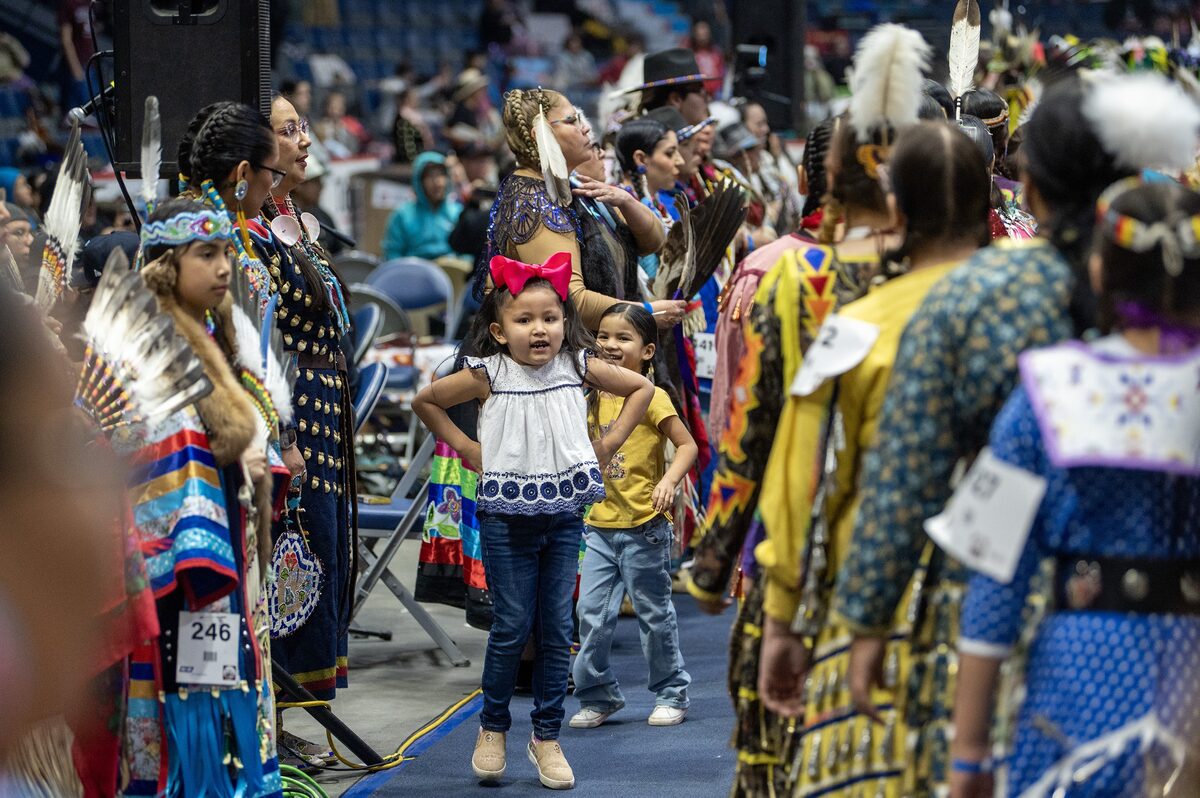
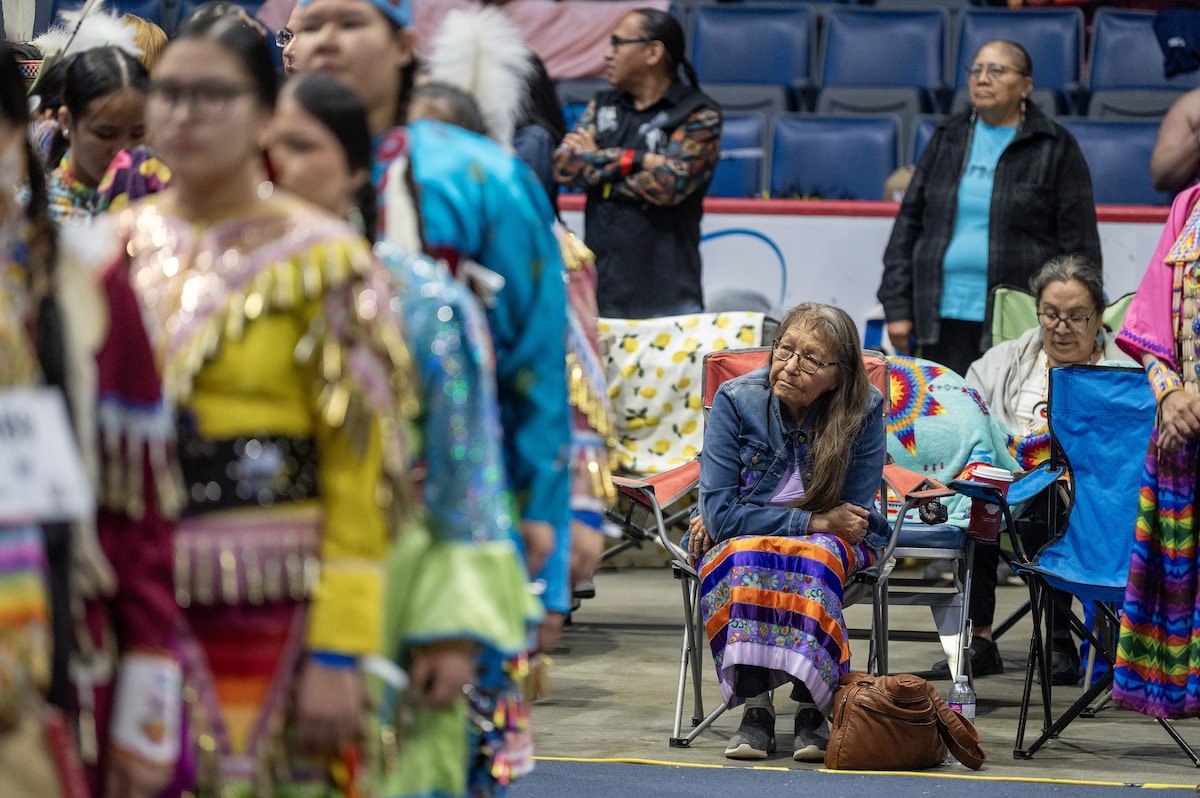
More than 700 dancers and 19 drum groups were competing in the powwow, from tiny tots to golden age seniors, and many thousands more people had come to watch and celebrate. During the Grand Entry procession, dancers in regalia joined elders and warriors and veterans, the Brandt Centre arena thrumming with the heartbeat of drums, sparkling with the ring of jingle dresses and bells.
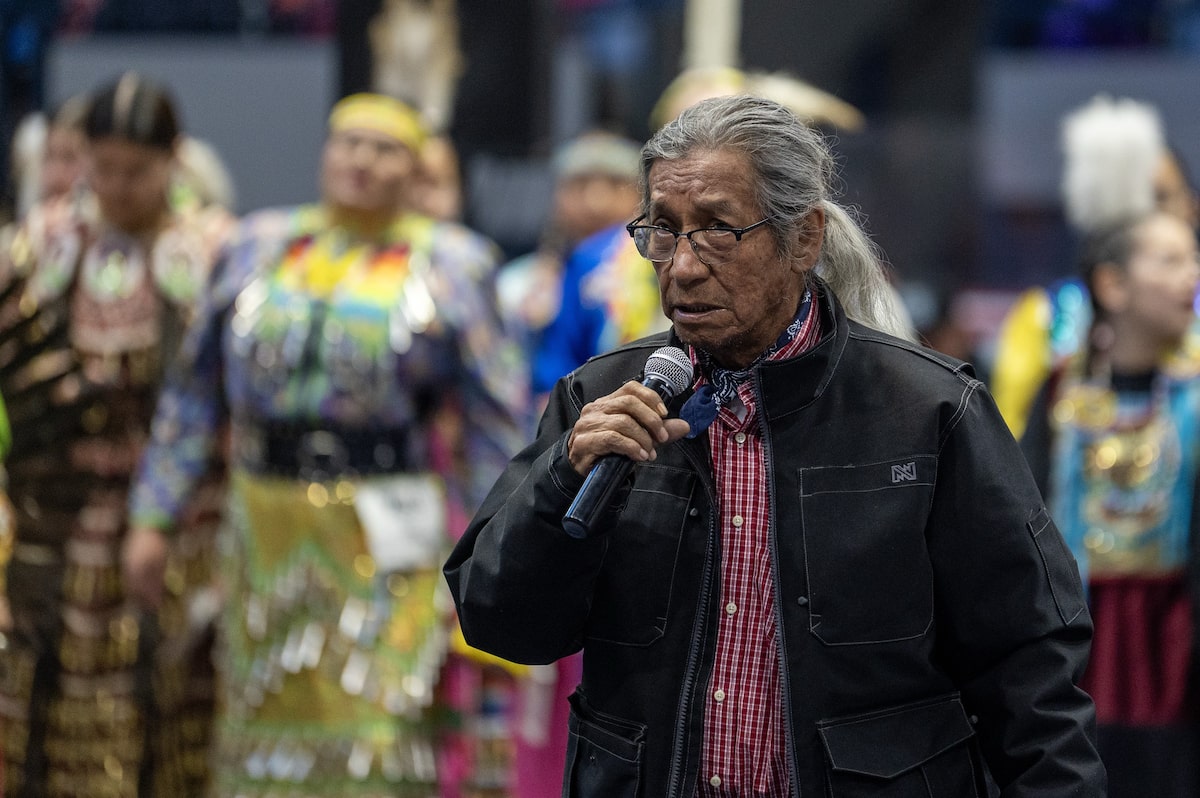
On the microphone, emcees Elmer Rattlesnake and Clifton Goodwill talked about the arrival of spring, and the importance of maintaining and reviving Indigenous languages and cultures.
But it was politics – and in particular, the threat of an unpredictable and hostile new American regime – that was on the minds of many.
In his opening prayer, Cree Elder and Knowledge Keeper AJ Felix asked specifically for protection against American President Donald Trump and his government.
“Don’t allow the United States Trump administration to dishonour our country here in Canada,” he said. “Lord God, don’t allow Trump to hurt our people.”
He wasn’t the only one thinking about the American President.
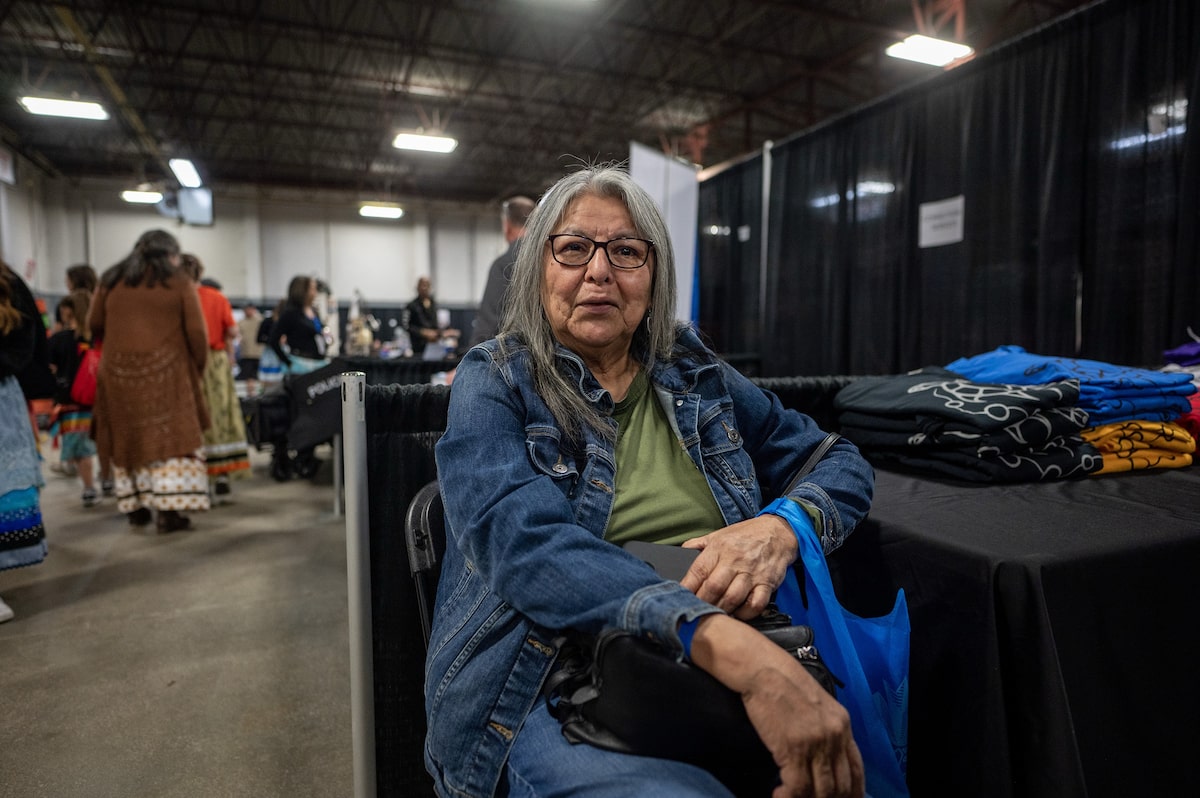
“I wouldn’t want Trump’s policies or practices or whatever they are to be part of the Canadian government,” said Elaine Jourdain, who had travelled from Anishinaabeg of Naongashiing in Ontario, and was sitting with her friends in the tradeshow area of the powwow on Sunday afternoon. “I think the Canadian people are not like Americans.”

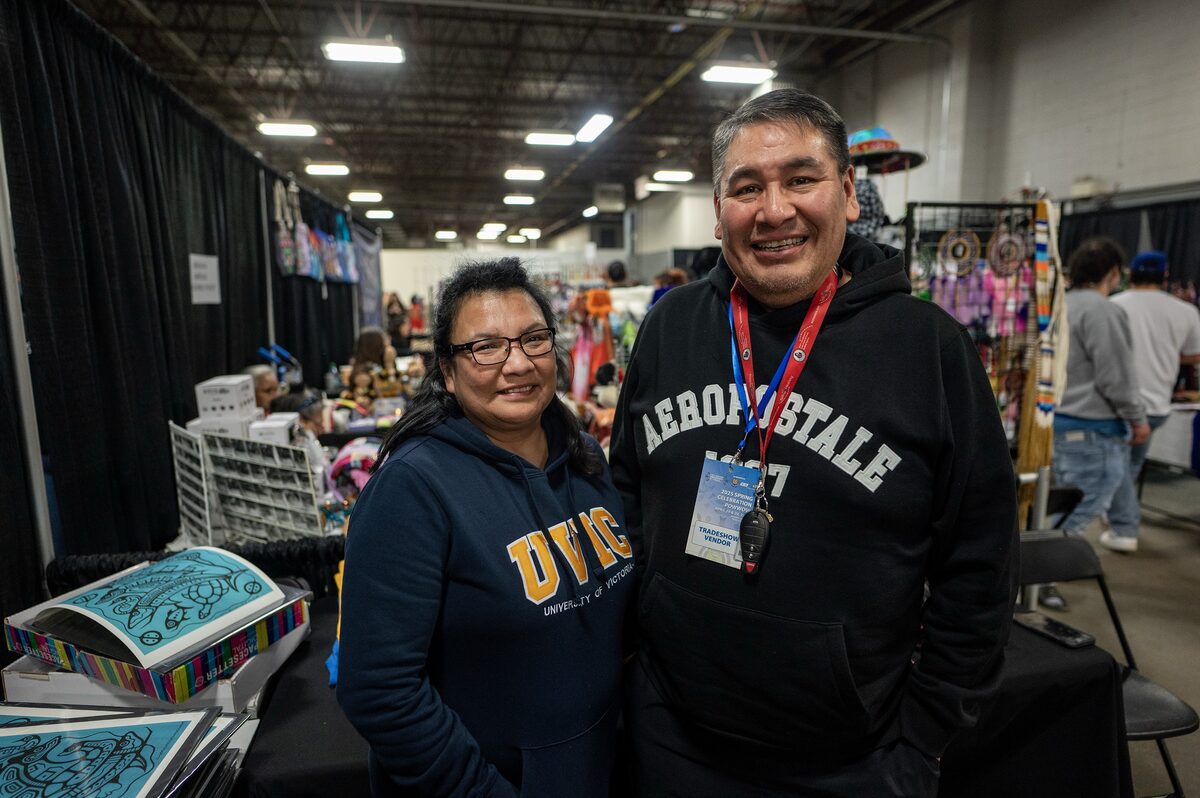
Lydia Big George, who was there helping her husband, Darryl, sell his artwork, said she, too, was thinking more about federal politics and the future of Canada these days.
“I think we all do, more so because of what the U.S. is doing to the rest of the world, and its impacts to our country,” said Ms. Big George. “For me, it’s the attitude of the people. What if that influences the attitude of the rest of the people? Because Canada has always been known to be that country that, it’s safe to come here. It doesn’t matter what nationality you are. And that’s something that we as Canadians are proud about.”
She said she worries about the American influence in areas like health care, which – even if flawed – is still accessible and equal to anyone in Canada, unlike the inequity she sees in the United States. “We do aim to try and serve everybody, no matter who you are. And I think that’s something that the U.S. doesn’t have,” she said. “We’ll never be perfect, but I like how it targets everybody.”
At a booth nearby, Jill Ruep was talking to people about a beadwork pattern app she’s developing through Saskatchewan’s Southeast College. Ms. Ruep said the current situation with the United States has already affected the trips her family regularly made over the border to North Dakota for hockey and to visit with friends. She said she’s already seen significant cost increases trying to buy beads and ribbon skirts from Native American suppliers, which can easily chew up the small profits to be made from her handiwork.
“I am feeling very nervous because my husband works in the oil industry, and it seems to have its ups and downs about every five years. Every time we feel like we’re getting ahead, something goes on with government, politics, and we lose our jobs, and we have to start all over. And we are sick and tired of starting all over,” she said.
“My husband’s 53 years old. Through COVID and the last thing, we’ve got no RRSPs left. He’s worked his entire life and has no retirement. We both work full-time and have good-paying jobs. Explain that to us.”

Kashtin Sinclair, at right with Whittany Delorme, has been doing the math to see what tariffs might do to the lemonade business he brings to powwows such as this one.
Kashtin Sinclair was thinking about the future of his business in the coming powwow season. “I run a little lemonade stand, so I’m worried about the tariffs raising the prices on lemons,” said Mr. Sinclair, who has turned a YouTube lemonade recipe into Your Main Squeeze Lemonade, a side business selling the most popular beverage on the powwow circuit.
Now, he was bracing for a box of lemons to be double what it cost last summer. And even with a good job, he was wondering how to keep the lemonade stand going and pay his other bills, between groceries, truck payments and all the other costs involved in supporting a young family. “I have it written down in my phone that I need, like, $3,000 bi-weekly or else it all comes crumbling down, and then I think of the economy like that. Like, we’re so far in debt, the economy could just come crumbling down. And then there’s tariffs too, affecting businesses in Canada,” said Mr. Sinclair. He was wearing a large medallion beaded with the name of his community, Cowessess First Nation.
“I just didn’t realize how much pull America has on Canada’s economy,” he said, noting recent layoffs announced in the auto industry in Ontario. “Forcing big businesses to shut down like that? It just blows me away. So who’s next, right?”
Mr. Sinclair said when it comes to voting, he listens to the advice of his wise family members, though he joked that their approach is “whoever’s the lesser of evil, that’s who you vote for.” But he also remembers looking at a map after the last election and seeing how results were skewed away from the West, leading him to wonder whether his vote would count for much at all.
“It didn’t matter what Saskatchewan voted. It didn’t matter what Manitoba voted, Alberta, Northwest Territories, all these little provinces or whatever. It only mattered what Ontario voted, and that didn’t make sense to me …,” he said. “We have people talking like, ‘Indigenous votes matter,’ and I’m like, we’re 5 per cent of Canada. Does our vote really matter? Even if we all band together and we voted for NDP, which probably won’t get in, it wouldn’t really matter.”
East to West: More from The Globe and Mail
The Decibel podcast
Through the 2025 election, producer Kasia Mychajlowycz is travelling across Canada to ask locals what’s on their minds. In Nova Scotia and New Brunswick, many spoke of increasing patriotism and anger at Donald Trump, as well as their struggles with cost of living in rural communities. Subscribe for more episodes.
From our reporters
Sioux Lookout’s economic pivot fails to bring prosperity
In Manitoba’s Wheat City, uncertainty over tariffs is causing frustration
Calgary’s diverse Northeast has big hopes and gnawing worries
For farmers of Souris, PEI, every pressing campaign issue is a hot potato