
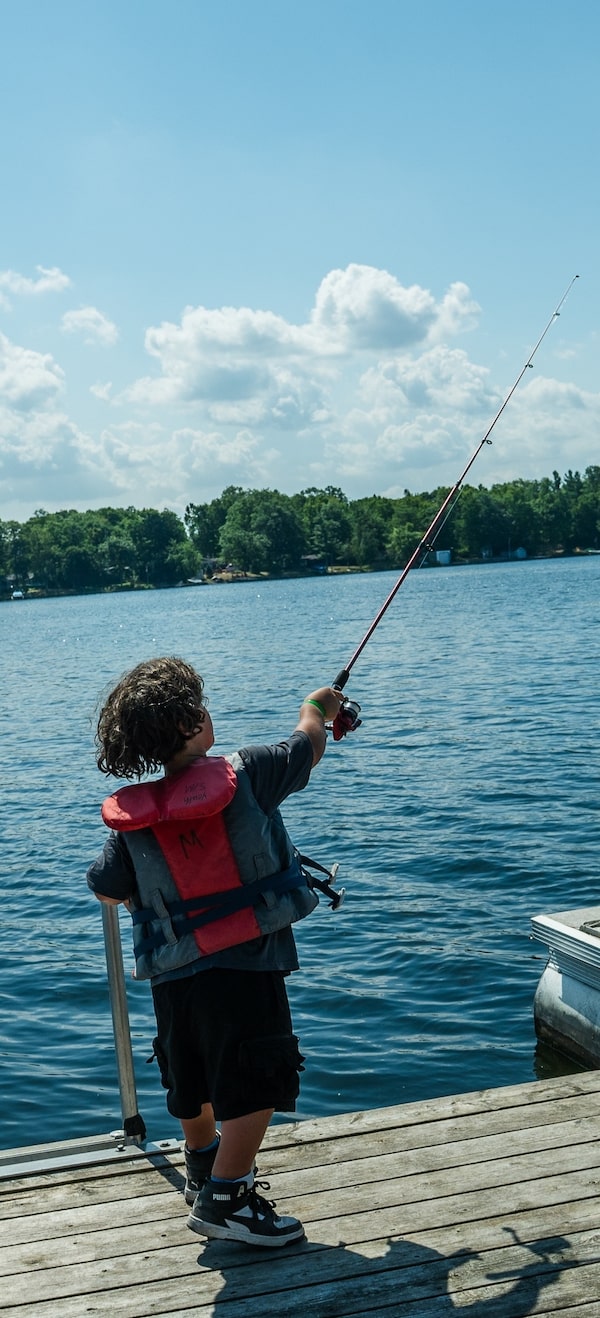
Verona Scorsone-Jung and her new best friend are jumping off the dock at their summer camp, swimming to the ladder and doing it all over again in a continuous loop of carefree summer fun.
Then there’s a pause, because 10-year-old Verona wants to explain a few things about having Tourette syndrome.
She has tics. They show up in different ways. Sometimes, she raises her shoulders up to her neck. Other times, she scrunches her face up and opens her mouth. She often tries to suppress her tics at school but it doesn’t feel good.
“It kind of makes your entire body tense up,” she says. Sometimes when she’s out at the mall or other places people stare. They don’t understand. They think it’s weird. She wants them to know it’s just something she has to do.
The kids at school are pretty supportive, she says, but it’s nothing like being at this summer camp.
“I get to meet a lot of people with Tourette’s, and I’ve never done that before. And I made a best friend,” she says, throwing her arm over the shoulders of the girl standing next to her, both of them smiling that big smile kids have when they make a new best friend.
With that, they pull their goggles over their eyes and jump back into the lake.


Up and around the dusty trail at the end of the dock, a group of boys with limb differences and facial differences are picking teams for soccer-baseball.
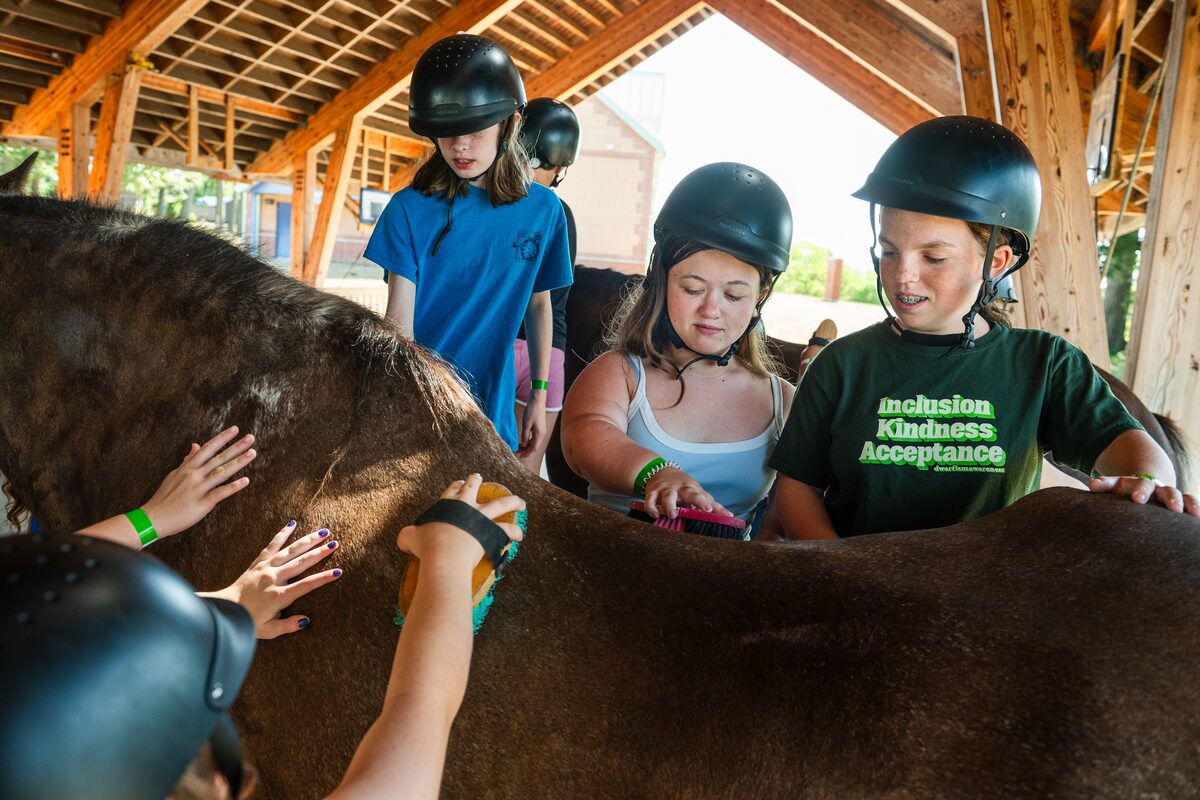
On the other end of Jacob Island, kids with dwarfism or skin conditions are brushing the camp’s two Clydesdale horses, Pegi and Riley Ann.
“We are using every second we have here to give them the funnest week of their life because for some of these kids they don’t get to have this much fun,” says April Young, camp director at Camp Maple Leaf in Kawartha Lakes, a two-hour drive east of Toronto. “But at the same time, too, we are helping kids with their resilience, their self-esteem.”

Camp director April Young, pictured embracing development director Charmaine Frado, believes the camp's main goal is 'friendships that follow you home.'
There are many specialty camps across Canada helping kids deal with specific life challenges, from cancer to learning disabilities, autism to Down syndrome.
Camp Maple Leaf was originally founded in 1955 for children of military families. But in 2016, when the camp was bought by the Camp Tanamakoon Charitable Foundation, the new owners, who still serve military families, wanted to create a summer camp for kids living with rare life challenges.
“We were seeing that there are any number of small groups like this who will never have their own camp,” says Kim Smith, president of Camp Maple Leaf, which operates in New Brunswick and Alberta as well as Ontario.
The camp serves children with facial or limb differences, skin conditions, Tourette syndrome, dwarfism and alopecia, as well as kids with a parent who has cancer.
Coming to the camp is an opportunity for these children to be themselves, free of stigma, bullying and the social isolation that often comes with having a rare condition, Ms. Young says.
Their experiences will resonate throughout the year, with higher self-esteem and new friends they can continue to bond with.

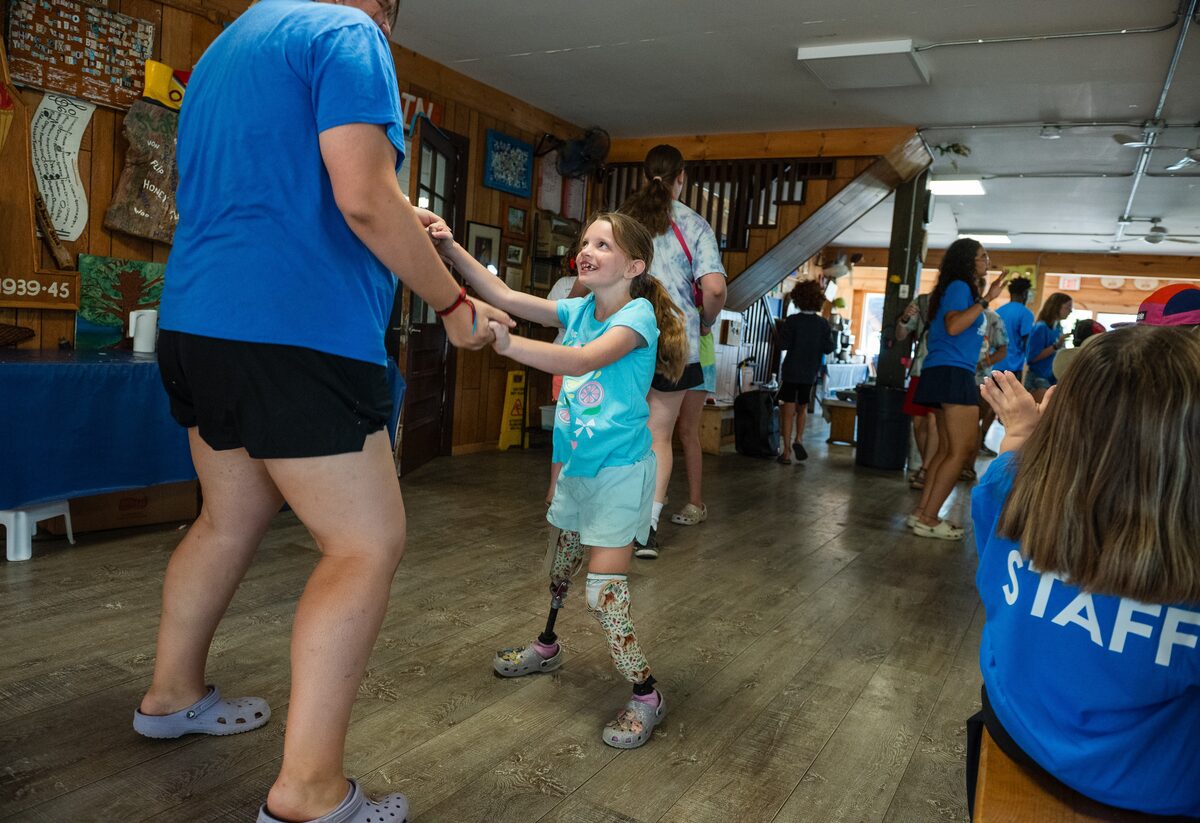
The camp aims to give young people like Zaylia Kroustallis, 7, as welcoming an environment as possible, with the resources to look after their mental health.
Besides classic summer camp activities, such as archery and swimming, the campers are introduced to wellness techniques, such as making their own fidget toys and having sound bowl and aromatherapy sessions.
The “Volcano Room,” a shed full of padding, is there for anyone who wants to let out some emotions. And to help out those campers with mobility issues, or those just tired of walking on a hot day, volunteer counsellor Isabella Lamanna – a University of Guelph student with dwarfism – drives an eight-seater golf cart, outfitted with wooden blocks so she can reach the pedals, from one end of camp to the other.
Her camp name is “Fritz.” She lovingly refers to the golf cart as “the Fritz-mobile.”
Many of the counsellors are former campers who bring their own lived experience to each weeklong session. The camp also consults with experts and charitable organizations to better understand the life challenge campers face.
Each spring, staff are trained in anti-bullying techniques, which are then passed on to campers.
There is also – and not surprisingly – a big emphasis on helping kids make friends. Camp Maple Leaf’s number one goal, in fact, is “friendships that follow you home,” says Ms. Young.

Ms. Young, whose camp name is Calypso, got a note of thanks that was pinned up for other staff to see. 'You always put a smile on my face.'
Many kids with facial differences will have never met anyone else like them, says Kelsey Ferrill, the program manager at AboutFace, a Canadian charity dedicated to creating a supportive network for people with facial differences.
The friendships they make at camp can be invaluable throughout the rest of the year.
“They can stay in touch about everything they’re going through, any challenges, any bullying, anything like that,” she says. “Having that support throughout the year is a really powerful thing.”
Patricia Williams’s 13-year-old son, Alec, who was born with a facial difference, was eager to go back to camp this summer after making a close friend there last year.
Alec was born with Goldenhar syndrome, which affects the development of the face, ears and spine, and he only has one ear.
This past school year he wrote a speech about his syndrome, and cut his hair short instead of wearing it long over the side where he does not have an ear.
“That’s quite a change that we’ve seen in Alec,” his mom says. “He has more confidence in making new friends. Camp has really helped him come out of his shell.”


On the grass near the flagpole, where the 75 kids at camp this week are welcomed to share stories about their experiences, you can see friendships being formed.
Four boys are sitting at a picnic table making Popsicle stick ninja stars. They are all staying in the same cabin.
There’s 10-year-old Amir Pasternak, who has dwarfism. “This is the first time I ever met someone who was short,” he says. “I’ve seen someone on the street once, but this is the first time I’ve actually interacted with one.”
There is Ethan Faria, 11, who had his right hand amputated years ago and is in a wheelchair.
Sitting up on the picnic table is Keegan Gain, 10, who is at camp with his sister who has Down syndrome.
Then there is Lucas Traid, also 10 and the sibling of a camper with a skin condition, who says in a small, far away voice that he is not really part of the crew.
“Of course you’re part of the crew!” all the other boys yell. “You’re in our cabin. Whoever is in our cabin is in our crew!”

Accessible Canada: More from The Globe and Mail
The Decibel podcast
When summer ends and school resumes, many postsecondary students will ask for help accommodating disabilities. Joe Friesen spoke with The Decibel about why such requests are on the rise in Canada, and how campuses that struggle to meet demand can adapt. Subscribe for more episodes.
Disability and the arts
Immersive dance show takes audience on an adventure into blindness
TV series Pretty Blind uses low vision as a jumping off point for comedy
Andrew Gurza wants you to know disabled people still have sex lives