Matter and space
a. India’s Chandrayaan-3 mission, including a lander and a rover, touched down near the moon’s south pole on Aug. 23. The rover travelled more than 100 metres across the lunar surface. However, neither reactivated after shutting down for the onset of lunar night in early September. Missions launched by Russia and the UAE both failed to land successfully this year. A Japanese spacecraft is currently heading for an attempted soft landing in January.
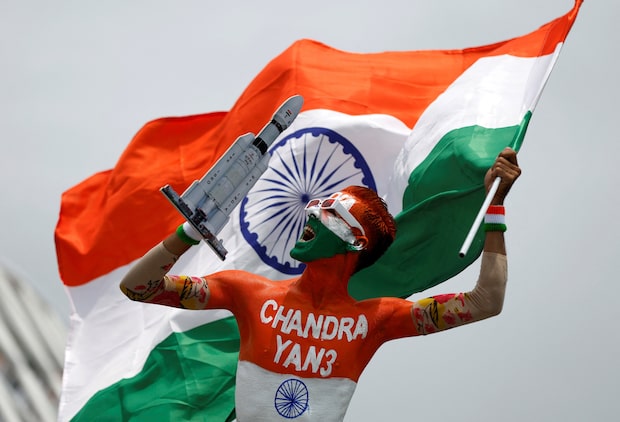
Enthusiast Arun Haryani holds up a model of LVM3 M4, the launch vehicle for India's Chandrayaan-3 spacecraft, in Ahmadebad on Aug. 22.
Amit Dave/Reuters
b. In April, Jeremy Hansen and three U.S. astronauts were selected to be the crew of Artemis II. The mission to circle around the moon and return is scheduled to launch no earlier than next November. It will mark the first crewed lunar flight in more than 50 years.
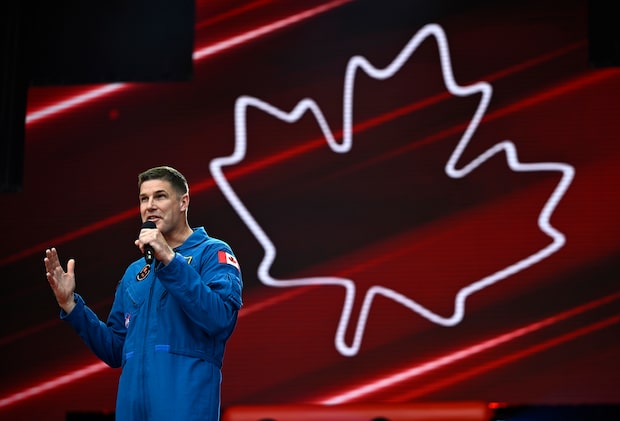
Astronaut Jeremy Hansen, shown at Ottawa's LeBreton Flats on Canada Day, is set to go to the moon with Americans Victor Glover, Christina Koch and Reid Wiseman.
Justin Tang/The Canadian Press
d. So far, the sample curation team at NASA’s Johnson Space Center in Houston has managed to extract about 70 grams of asteroid material, mostly through a flap in the ring-shaped sample collection head. But the team has not been able to remove two screws that would allow them access to the remainder of the sample. The team is now working on a new procedure to open up the device, which must be kept in a nitrogen environment to prevent contamination.
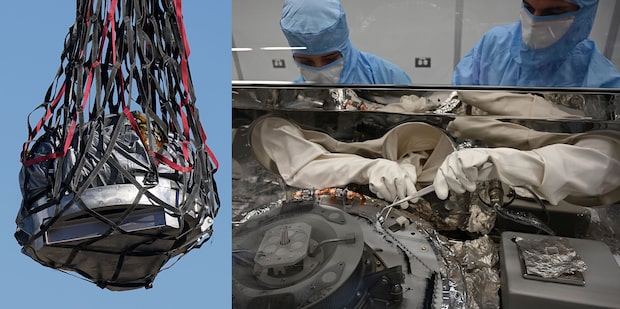
On Sept. 24, a helicopter carries the newly returned OSIRIS-REx capsule to a temporary clean room in Utah; three days later, scientists try to collect particles form the base of the sample canister at Johnson Space Center in Houston.
Rick Bowmer/AP, NASA via AP
c. LK-99 caused a sensation when it was claimed to be a room-temperature superconductor in an un-reviewed paper posted online in July. The claim was soon challenged by numerous research teams and disproven by August.
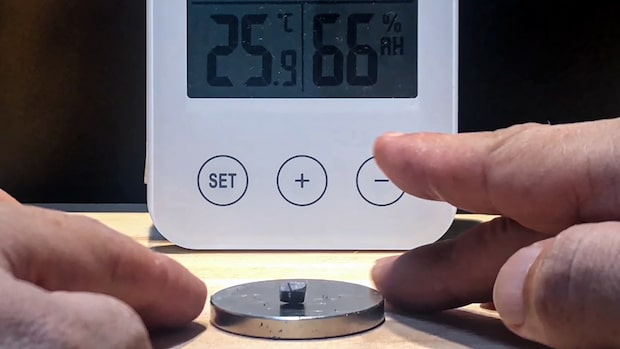
A small piece of LK-99 hovers over a magnet. Researchers quickly disproved its creators’ claims that the substance was a room-temperature superconductor.
Hyun-Tak Kim via The New York Times
Earth and climate
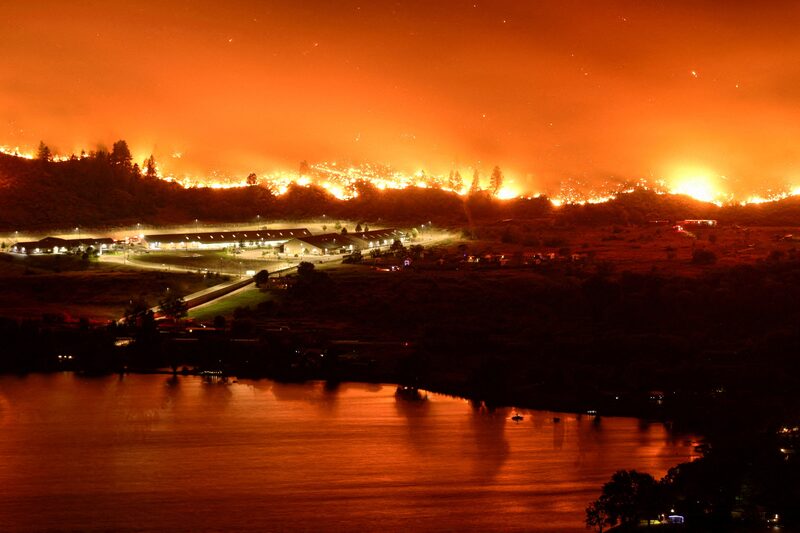
d. Based on data compiled by the Canadian Interagency Forest Fire Centre, the staggering size of the area burned this year is nearly as much as burned over the previous seven years combined.
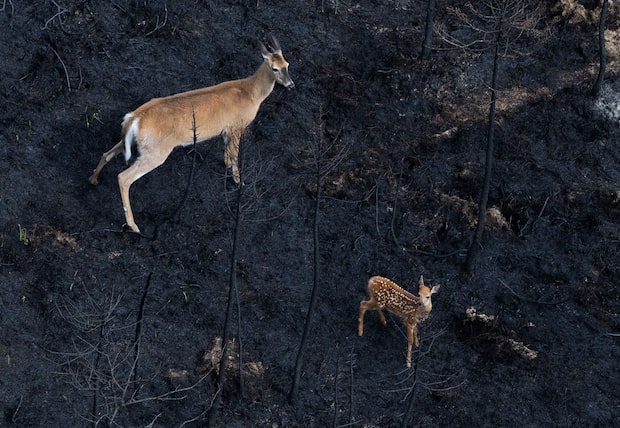
Deer look out at the burned woods near Shelburne, N.S., in June, after the wildfire season got off to an early and devastating start.
Nova Scotia Government/AFP via Getty Images
c. Southern Turkey was struck by a magnitude 7.8 earthquake on Feb. 6 – the year’s strongest – followed by a 7.5 earthquake the same day. The double blow was the year’s worst by far, with a confirmed death toll exceeding 59,000.
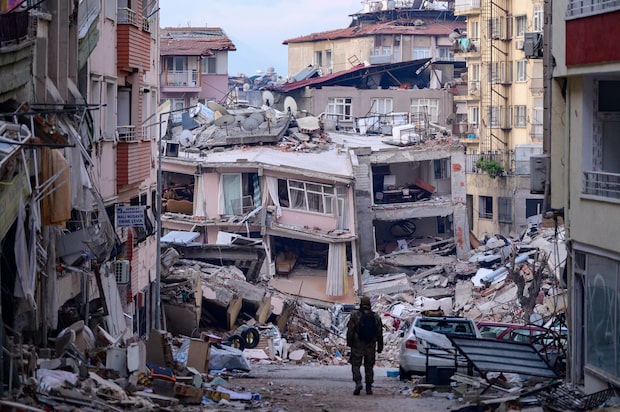
A soldier walks among ruined buildings in Hatay, Turkey, on Feb. 12, after a 7.8-magnitude earthquake struck the country's southeast.
Yasin Akgul/AFP via Getty Images
c. Hurricane Hilary reached Category 4 off the coast of Mexico before it slammed into the Baja Peninsula on Aug. 20 and travelled north into the United States, unexpectedly capturing the spotlight in the midst of the Atlantic hurricane season and triggering the first tropical storm watch in Southern California’s history.
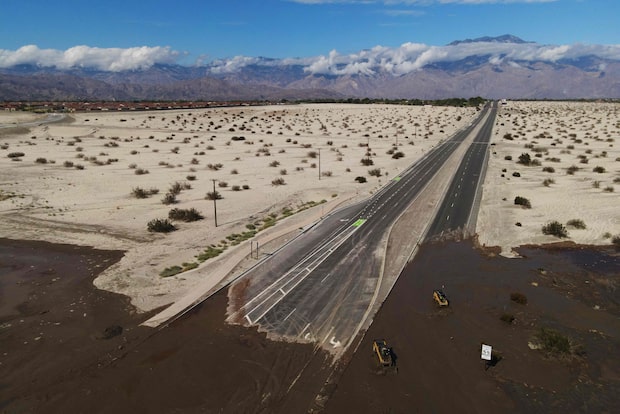
Mud blocks Interstate 10 in Racho Mirage, Calif., on Aug. 21, after Tropical Storm Hilary drenched California.
David Swanson/AFP via Getty Images
b. A scientific working group that reports to the International Commission on Stratigraphy selected Crawford Lake as the reference site for the start of the Anthropocene – the proposed geological period that is defined by humanity’s profound impact on the planet. The choice was based on the lake’s well-preserved record of sediment deposits that include traces of plutonium from nuclear weapons testing in the 1950s and early 1960s. The plutonium coincides with a number of changes that became evident around the same time because of human influence on the climate and the global environment.
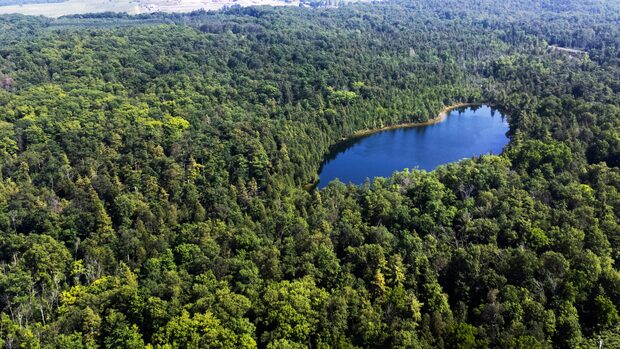
Sediment from Crawford Lake, near Campbellville, Ont., gives scientists clues about what was happening in the climate throughout history.
Fred Lum/The Globe and Mail
Ecology and evolution
c. The assessment, from the Intergovernmental Science-Policy Platform on Biodiversity and Ecosystem Services, also found that 3,500 of the invading species can be characterized as harmful, “seriously threatening nature, nature’s contributions to people and good quality of life.”
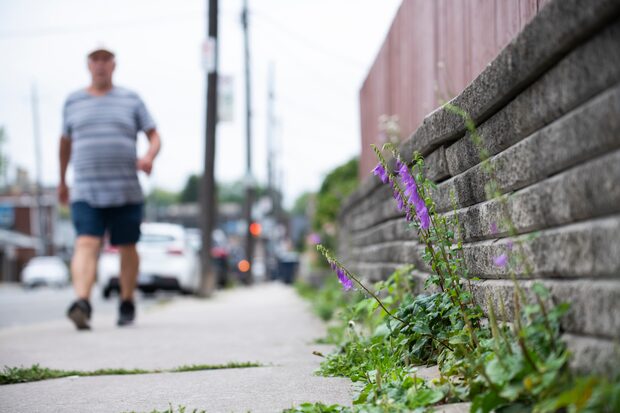
Creeping bellflower, an invasive plant, growing along Rogers Road in Toronto.
Fred Lum/The Globe and Mail
a. In a study published in August in the journal Nature, researchers estimated the skeletal mass of Perucetus colossus to be 5.3 to 7.6 tonnes, more than double that of an adult blue whale.
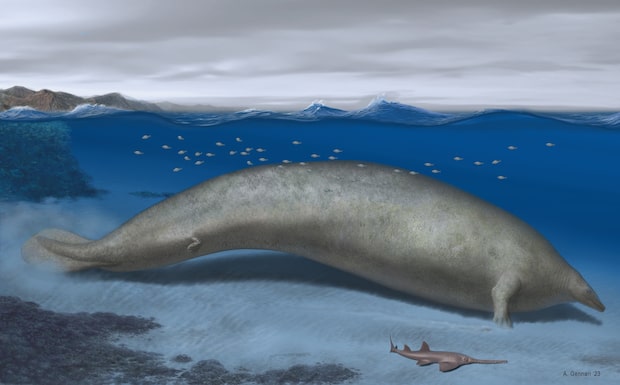
An artist’s interpretation of Perucetus colossus, an ancient whale whose bones were discovered in Peru.
Alberto Gennari/Nature Publishing Group/AFP via Getty Images
b. The study, conducted at a Moroccan zoo and published in Proceedings of the Royal Society B, showed that the crocs were interested in cries of distress from young primates including humans, most likely because they might lead to tasty snack.
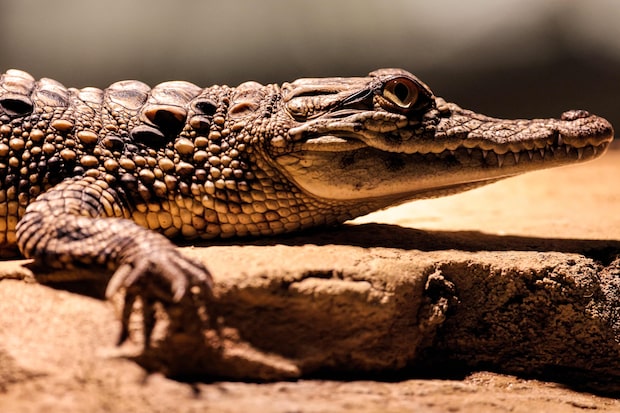
A juvenile crocodile basks at the Dubai Crocodile Park. Research in Morocco found the reptiles took a keen interest in the cries of human infants.
Giuseppe Cacace/AFP via Getty Images
a. Despite public protests, the Shropshire county council’s planning committee approved the roadway by a six-to-five vote. We assume Darwin would consider this a depressingly unnatural selection.
Body and brain
d. The approval, on Dec. 8, comes three years after Emmanuelle Charpentier and Jennifer Doudna were awarded the Noble Prize for developing the gene editing technology, and 11 years after the landmark paper that launched it.
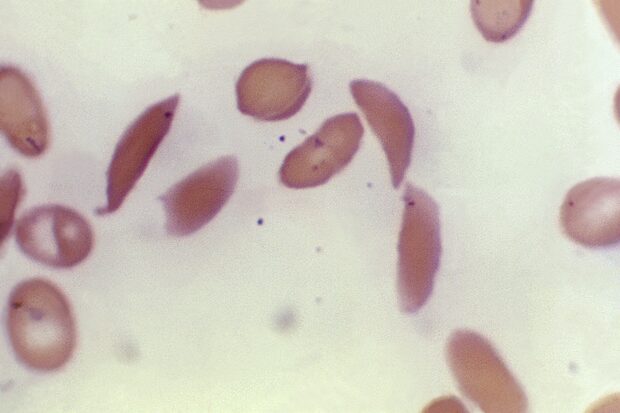
Sickle cell disease results when blood cells become crescent-shaped, like these ones from a patient in 1972, and hence less good at carrying oxygen. U.S. regulators have approved a gene therapy to help with that.
Dr. F. Gilbert/CDC via AP
c. The drugs, which go by various trade names including Trulicity and Ozempic, were developed years ago to treat Type 2 diabetes. More recently, they have attracted attention because they can reduce body weight and weight-related conditions. This led to an explosion of media coverage in 2023 and continuing shortages of the medications.
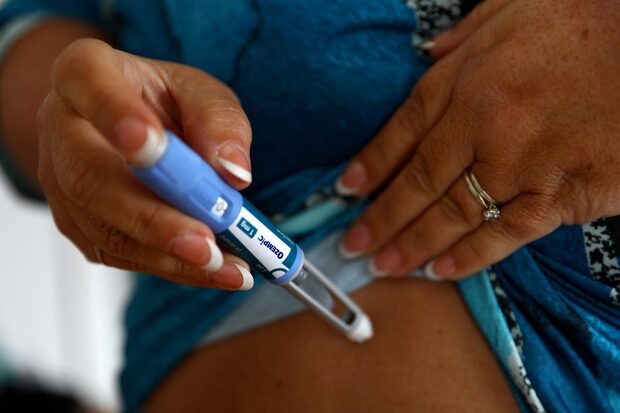
A woman injects herself with Ozempic at her home in Dudley, England. The drug is in high demand and she was not able to get the prescription filled through the British public health system.
Lee Smith/Reuters
c. The analysis, which was based on blood donor samples, showed an average infection rate of 76 per cent that skewed higher in younger people.
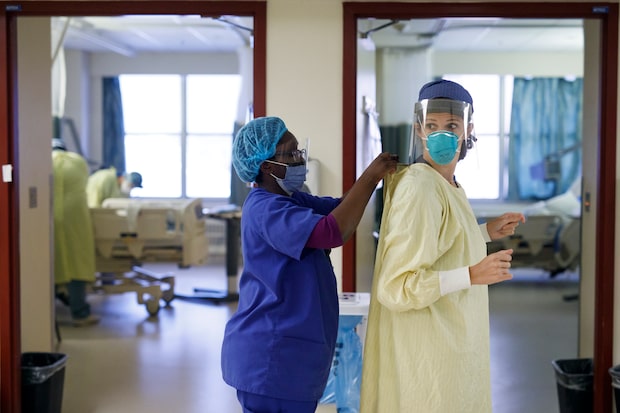
A nurse gets gowned up in Toronto Western Hospital's COVID-19 ward in October, 2020. Since the early months of the pandemic, the coronavirus has infected a large share of Canada's population.
Cole Burston/The Globe and Mail
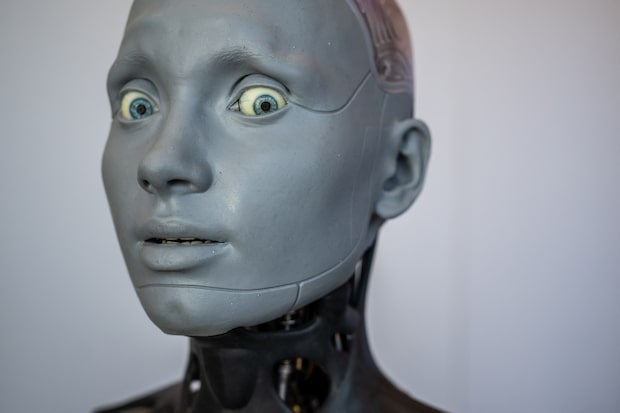
a. As documented in a study published in August, scientists worked with 29 epilepsy patients who had electrodes implanted in their brains as part of their treatment. The patients listened to the song which was then reconstructed using only their brain patterns. Though it sounds distorted, both the melody and some of the lyrics are recognizable in the audio reconstruction.
Technology and civilization
d. In a research article published in Nature, the archaeologists document finding two logs with notches cut so that they fit together, as though part of a larger wooden structure. Dating techniques set the age of the logs at about 476,000 years ago – long before Homo sapiens appeared.
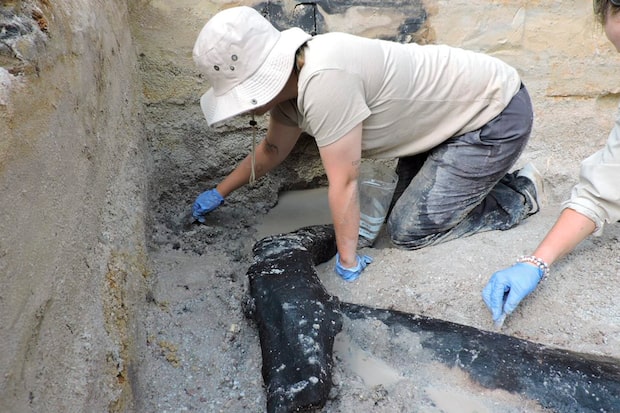
Researchers excavate a wooden structure in Zambia in 2019. The crossed logs could be the oldest known evidence of humans building with wood, according to research published in Nature.
Larry Barham/University of Liverpool via AP
b. Writing in the journal Science, the authors note that romantic kissing is described in clay tablets in the Sumerian language. This is contrary to an idea raised in 2022 that kissing emerged more recently and may have been a driver of disease transmission.

Couples kiss at a joint same-sex wedding ceremony in Sao Paulo on Dec. 16, organized by an NGO and residential shelter.
Amanda Perobelli/Reuters
b. Dr. Hinton was also first to add his name to a statement from the Center for AI Safety that says: “Mitigating the risk of extinction from AI” should be a global priority for humanity.
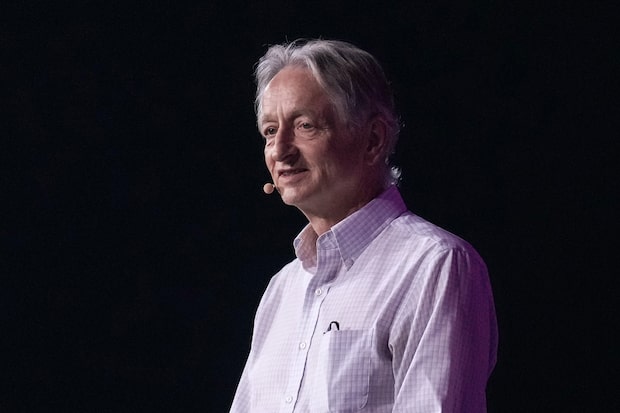
Geoff Hinton joins a moderated discussion at Toronto’s Collision conference this past June.
Chris Young/The Canadian Press
c. In a study published in July, scientists showed how they were able to “de-extinct” the protein sequences.
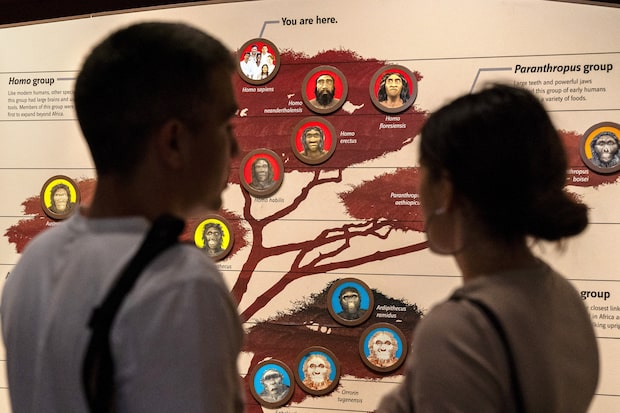
Exhibits at the Smithsonian Museum of Natural History in Washington show modern humans, Homo sapiens sapiens, at the top of a family tree shared with Neanderthals and Denisovans.
Jacquelyn Martin/The Associated Press
How well did you do?
Do you think you have what it takes to complete The Globe's giant holiday crossword?
Download the puzzle on solve it online here. Share your progress with us on social media using the hashtag #GlobeCrossword.