Care Between the Lines is a summer series, which will introduce you to volunteers in health care who fill gaps and provide compassion in a system that can be isolating and scary.
Al Sutherland has a checklist to complete before he clocks in to a volunteer shift with the Gravelbourg Cares Shuttle Service, a non-profit in southern Saskatchewan that transports residents to medical appointments that can’t be accessed close to home.
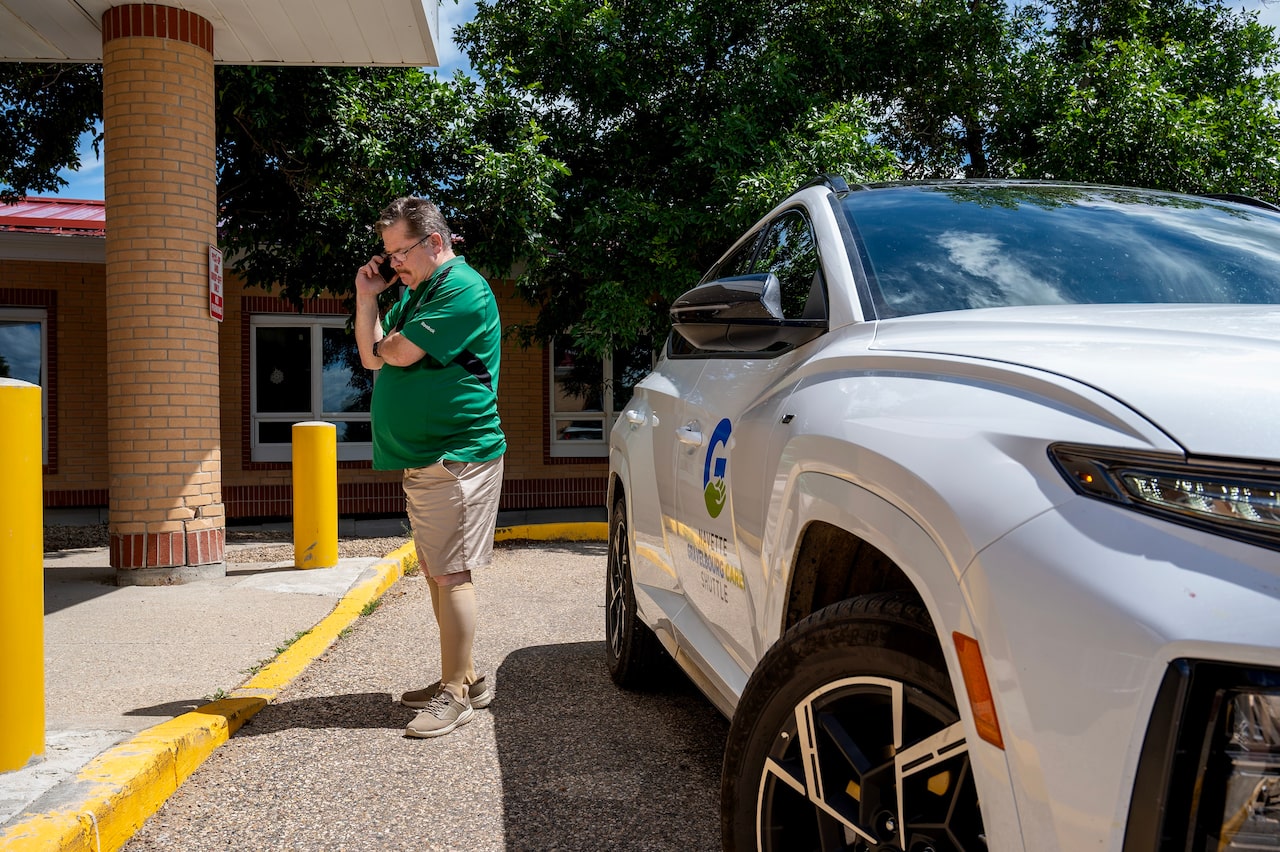
First, he connects with dispatch, to find out the passenger and travel details of each trip on his schedule, and whether anyone will need extra support. Then, he checks weather and road reports the night before and in the morning, altering his route or carving out extra time if need be.
This helps Mr. Sutherland avoid any foreseeable delays, a must when passengers rely on him to get to medical appointments they might not otherwise be able to travel to. Cancer treatment and ophthalmology appointments are among the most common but he says people travel for “any specialty beyond primary care.”

Mr. Sutherland, 57, began volunteering in 2020 after retiring from the RCMP. He estimates he has completed more than 250 trips with the non-profit in southern Saskatchewan.
Mr. Sutherland is part of a community-powered support structure outside the health care system – one that keeps patients connected to medical care.
It’s mostly seniors who use the service, many of whom are frail and unable to drive or have no family nearby to lend a hand. Additionally, it’s a big help for newcomers and transplants from other provinces, especially in places that are void of public transit.
Mr. Sutherland keeps running through his checklist: Is the vehicle clean? Is the gas tank full?
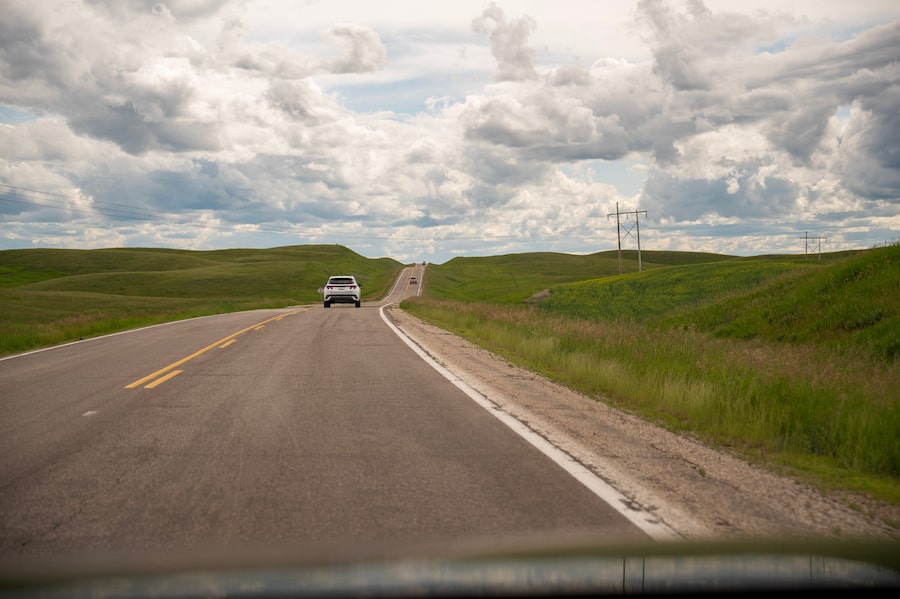
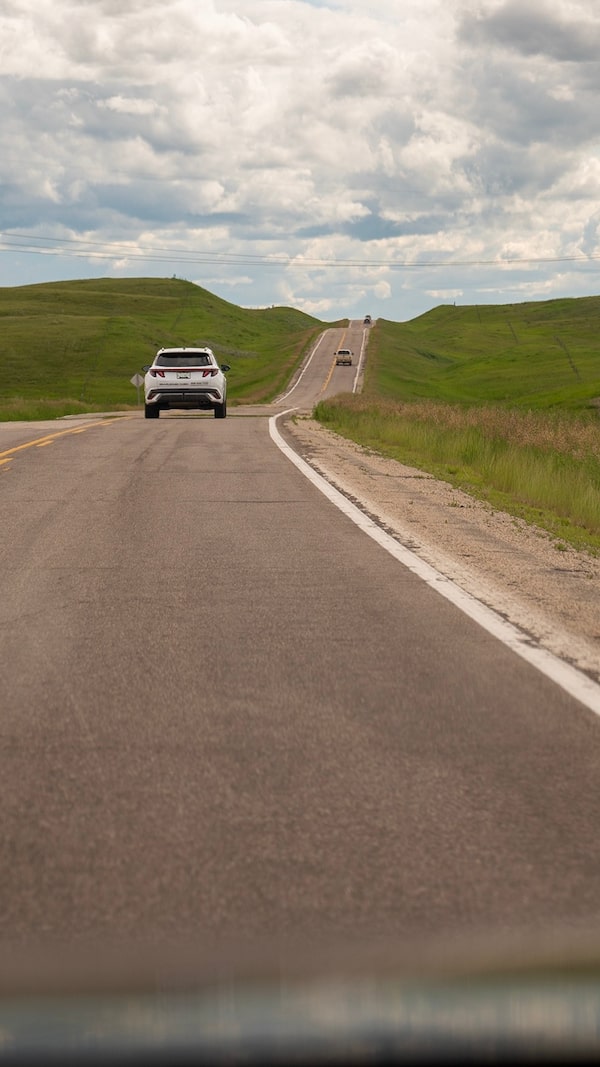
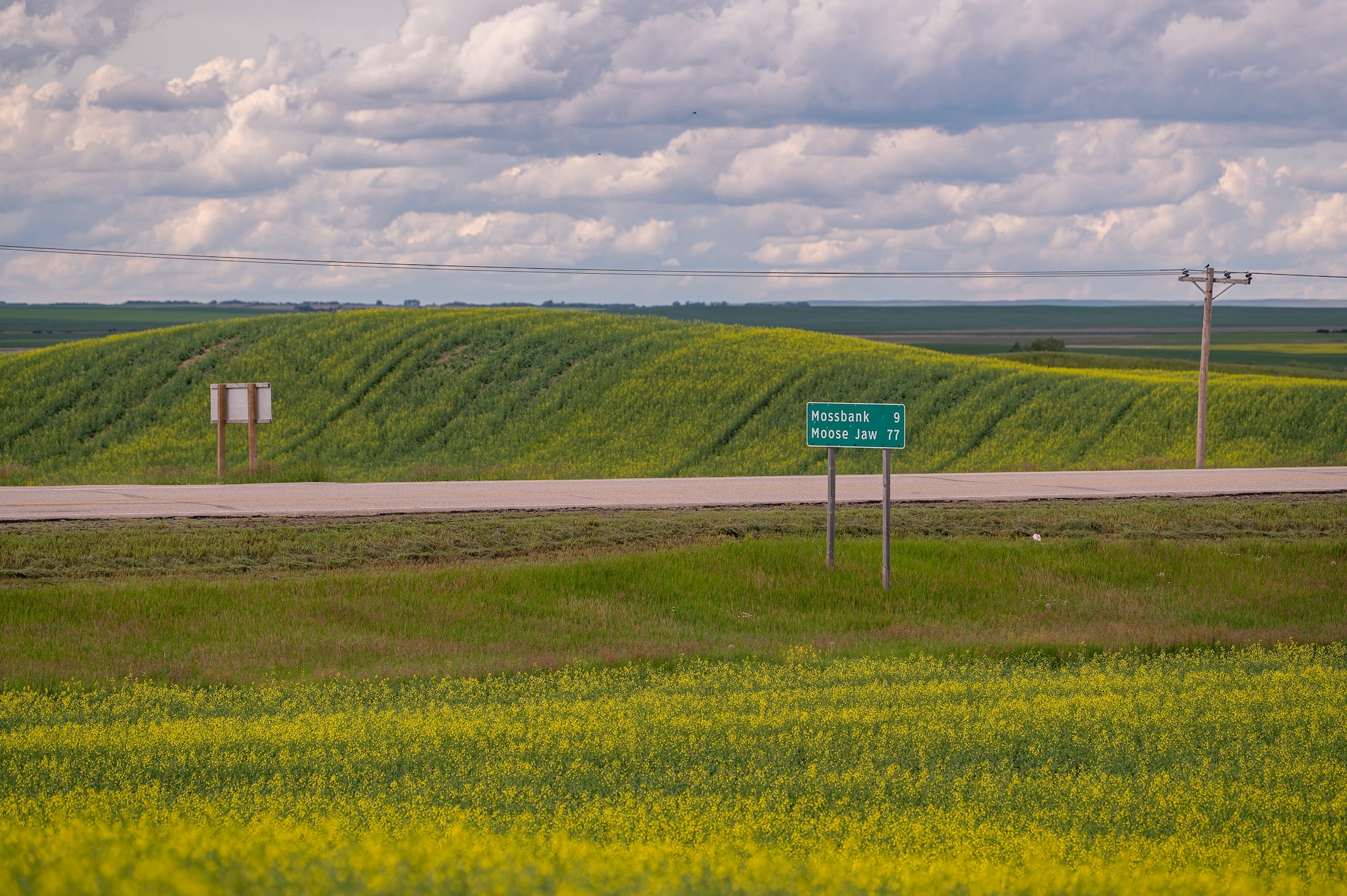
Once it’s all ticked off, Mr. Sutherland straps into the driver’s seat and starts his day, driving the same prairie roads over and over again, often to the major urban centres of Moose Jaw and Regina, respectively 240 and 375 kilometres round-trip from Gravelbourg.
The 57-year-old says when he first joined as a volunteer six years ago after retiring from the RCMP, he wanted to find a new “mission in life.” Asked whether he has indeed found that mission after hundreds of trips, totalling tens of thousands of kilometres, Mr. Sutherland says it is best answered with a story.
He speaks about one of his earliest passengers, a woman who had to travel to Saskatoon for a positron emission tomography, or PET scan, which are most commonly used to diagnose and monitor cancer.
“She tried to drive herself – she doesn’t have a smartphone, doesn’t do technology – and she got lost, missed her appointment time and had to turn around and drive three and a half hours back and make another appointment,” he says. “In the meantime, she found out about us. We got her to her appointment. We had a lot of laughs on the way up and way back. And, afterwards, I was just like, you know what, this is why I’m doing this.”
Transportation has long been recognized as a significant barrier to accessing health care. This is especially true in remote and rural regions of Canada where people must travel great distances for health services that are not available locally.
Research from the Canadian Institute for Health Information, released in 2024, concluded that one in every 11 people admitted to a hospital in Canada – or roughly 250,000 hospitalizations annually – had a high or very high travel burden.
Factors that raise the level of travel burden include living in a different community than the hospital, the travel distance, an absence of roads, whether the patient is a child or a senior, and whether the hospitalization is urgent or unscheduled. The most challenged group were patients who had no access to roads between their home and hospital, and have to rely on ferries and flights.
The Society of Rural Physicians of Canada have called rural medical patient transport a “wicked problem” that affects equitable access to medical care. The society says the problem is most acute in remote Indigenous communities, but even well-resourced rural communities struggle.
Despite widespread awareness of these shortfalls, transportation deserts still exist across the country. So, everyday people have stepped up instead.

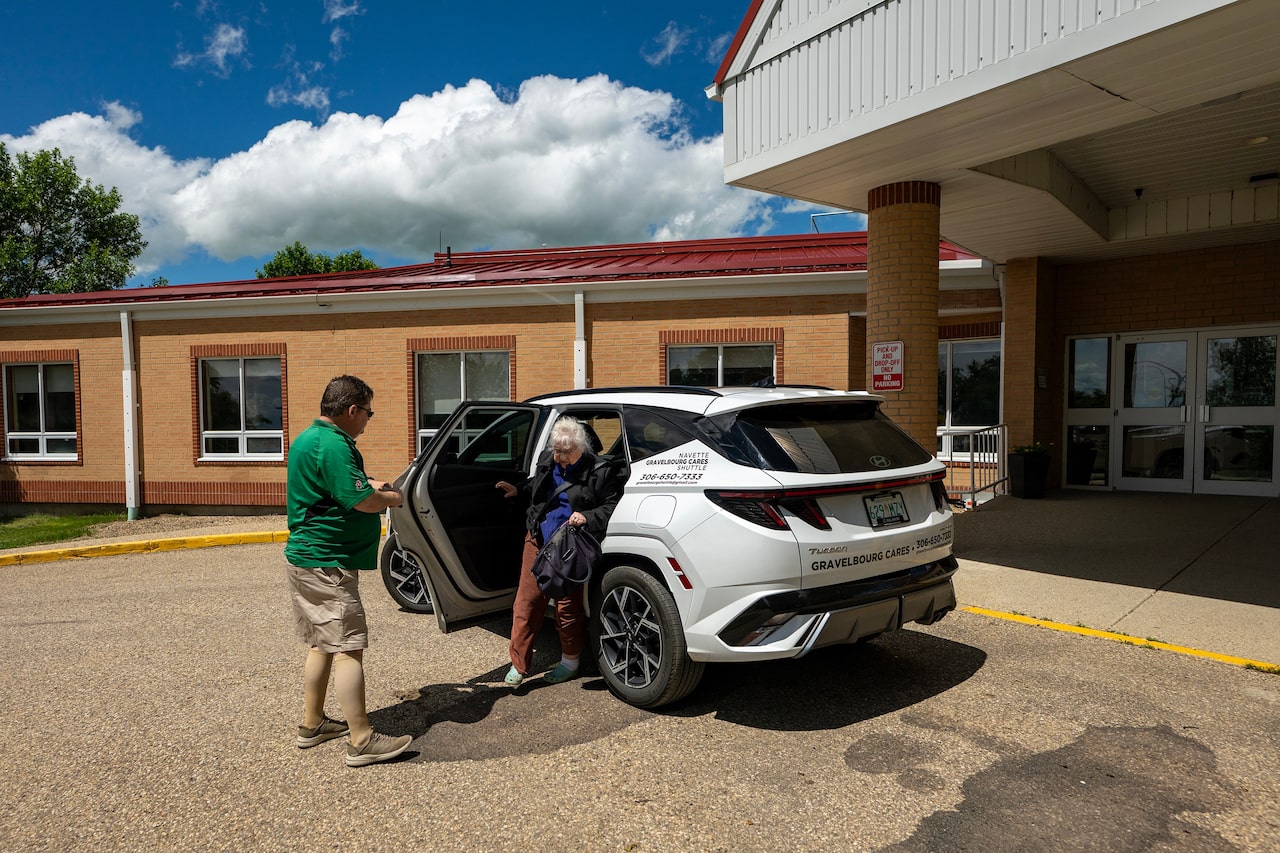
Mr. Sutherland drops off Ms. Vail as Kevin Rozell, another volunteer for the Gravelbourg Cares Shuttle Service, arrives with client Cheryl Todd.
In Gravelbourg, transportation gaps widened after the provincial government shut down the 70-year-old Saskatchewan Transportation Company in 2017, a widely relied-on bus service that connected communities across the vast prairie province. It was Gravelbourg’s only public transportation link to larger city centres.
Shortly after, Linda Roberts and her husband Brian got to talking about a potential solution to fill the gap. Would residents use a medical shuttle if one existed? This is the question founders Ms. Roberts, Lynn Holmes and Betty Hawkins asked their community. After a brief consultation, more than 100 people says yes.
In 2019, drivers with the Gravelbourg Care Shuttle Service hit the road for the first time, delivering what the organization refers to as a “small town lifeline on wheels.”
Inside the shuttle, Mr. Sutherland says it has the “vibe of a good coffee shop.” Sometimes it’s quiet so that passengers can rest after tiring appointments. Other times music is playing or he’s cracking jokes on the way home. “It’s caring for other people,” he says.
Gravelbourg’s first vehicle, a white Ford Transit – purchased with startup capital from the town and fundraised money – was retired in September, 2023, after 106,000 kilometres. Another 103,000 kilometres were racked up on their second vehicle, a Hyundai Tucson Hybrid, before trading it in for a new model last year. It already has 43,000 on the dial.
The reason Gravelbourg is able to show up for its community to this extent is because of generous donations from individuals and businesses – that cover everything from car washes and maintenance to the salary of a dispatcher – and through various government grants.
It’s been so successful that they are now also helping residents of the nearby community of Assiniboia, said Mr. Sutherland.
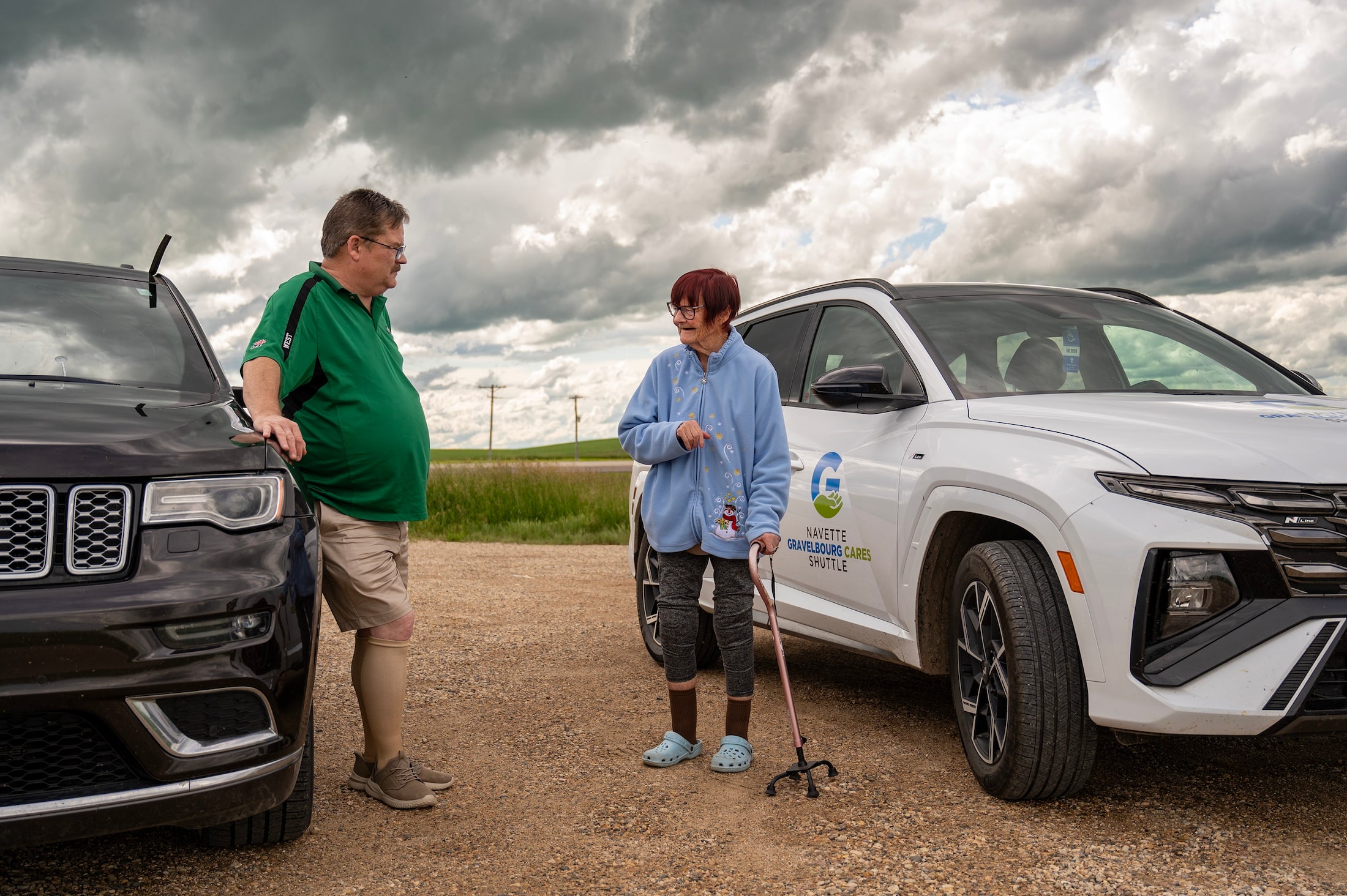
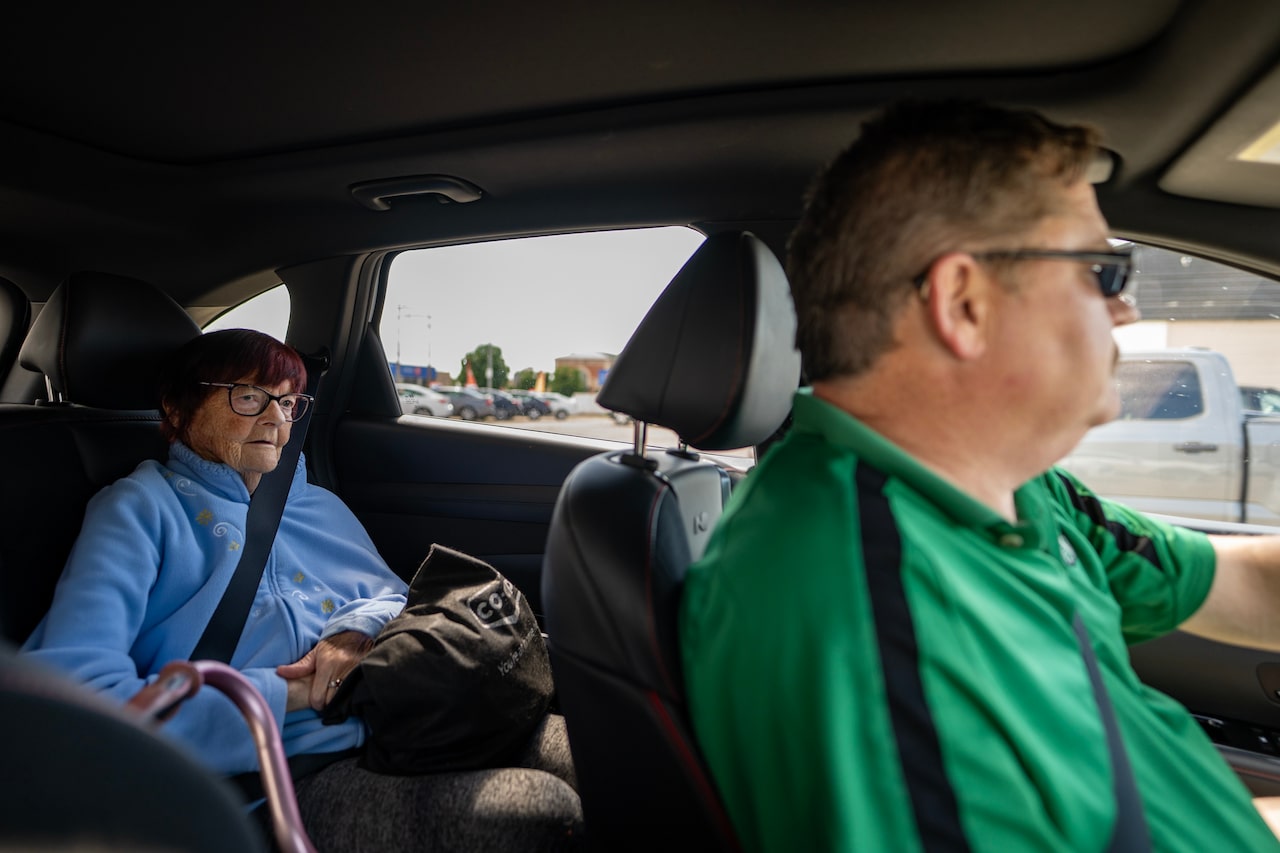
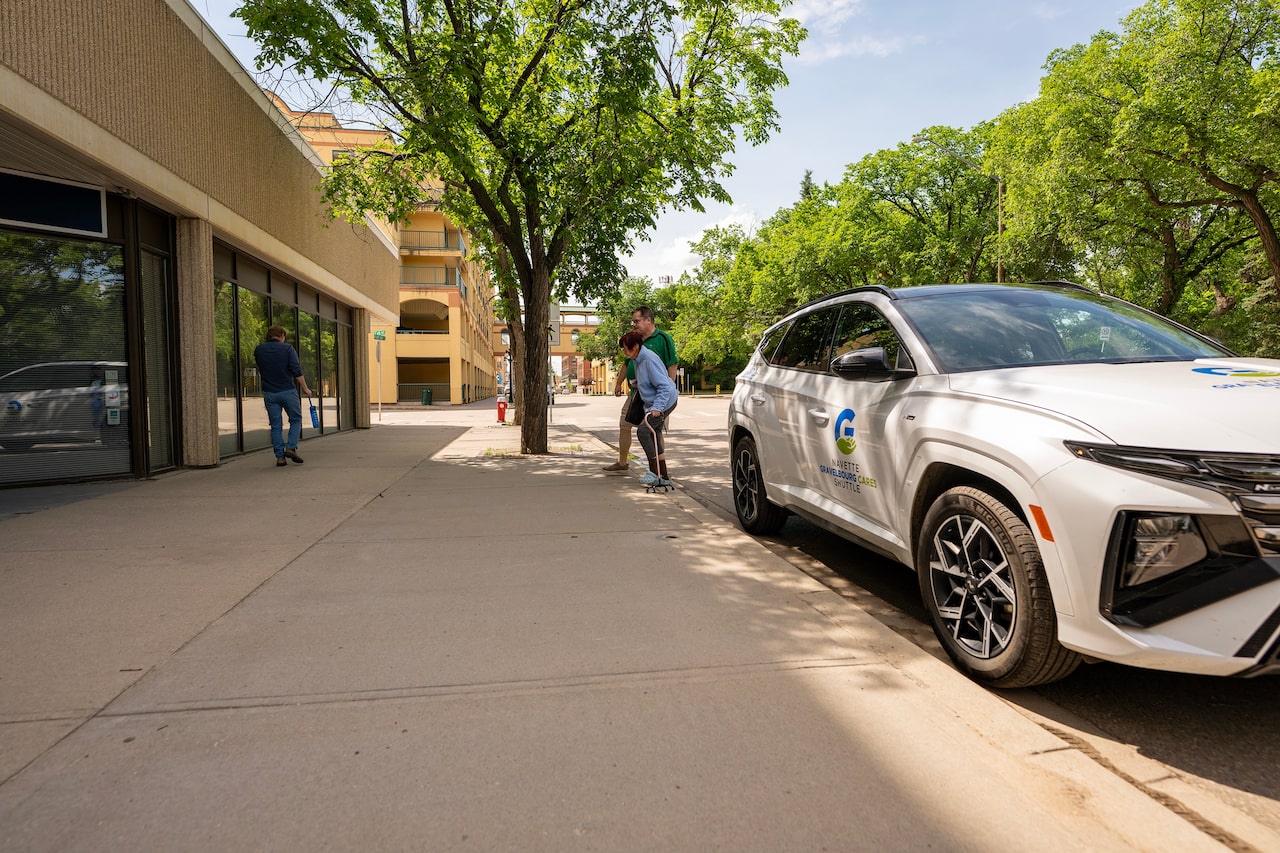
Cheryl Todd, 80, who doesn’t drive and is hard of hearing, says she has relied on the shuttle to make it to various appointments over the last few years. She says the suggested donations – $65 return from Moose Jaw and $80 for Regina – are worth the cost when you need help.
“They are a very good organization and really very kind and helpful people. I would rate them 10 out of 10,” says Ms. Todd. “I have recommended a few friends take the shuttle.”
Volunteer ride programs exist across the country in a range of sizes and forms. For example, some organizations, such as the one in Gravelbourg, operate a shared vehicle, while others encourage volunteers to use their own cars. In some places, driving services cost money; in others, they are free. And they differ in how they operate, such as being a registered non-profit or more grassroots in nature.
There is no question that these programs are filling a massive transportation gap for health care access, however there are still spaces wide enough to fall through. Many communities remain without reliable transportation options and, even in places with programs like Gravelbourg, not every request can be fulfilled.

The Gravelbourg Cares Shuttle Service has been so successful that they are now helping residents of the nearby community of Assiniboia.
Terry Kostyna is a volunteer with the Saskatchewan Health Quality Council whose work focuses on how rural communities can innovate to provide reliable transportation for seniors. He says there are often “simple, small-town solutions” that larger health organizations can’t replicate.
But he says they can be difficult to get off the ground, pointing to the volunteer-led shuttle programs as an example. Costs, licensing and insurance and volunteer retention are concerns he’s heard from communities.
That’s why Mr. Kostyna is part of a small group that’s creating a volunteer transportation guide book, similar to what has been created by the United Way in British Columbia. The B.C. Volunteer Driver Programs Guide explains how to plan and design volunteer-led transportation programs, including how to budget, evaluate insurance policies and mitigate liability.
“It’s really important that people understand what they need to do, especially when you’re working with volunteers, regulations and insurance liability,” says Mr. Kostyna, who is also the mayor of Candle Lake, Sask.
He hopes they can ultimately highlight to the provincial government that these services work and that they come with a reasonable price tag. “That will get their attention and, as these thing grow and evolve, they’ll fund them,” says Mr. Kostyna. “That’s one of our goals.”
Dale Hunter, a spokesperson for the Saskatchewan health ministry says that while the province is aware of the work being done by the HQC, “there are currently no plans to change the policy regarding transportation coverage.” The ministry does not generally cover costs associated with travel, accommodations or meals.
Mr. Kostyna pointed to a program in Alberta as a shining example of what’s possible.
The Drive Happiness Seniors Association has roots dating back to 1998 in southwest Edmonton. It is a non-profit with the purpose of helping seniors maintain independence by providing transportation to essential destinations such as medical appointments and grocery stores. The group received funding through municipal, provincial and federal governments.
Volunteers with Drive Happiness are able to use their own vehicle and are reimbursed for gas. Meanwhile, riders are required to purchase tickets for $12 each. One ticket covers up to 90 minutes of time or 40 kilometres. Any longer or farther and more tickets are required.
While not available in every community, Drive Happiness operates across Alberta, including all major cities, the mountain town of Jasper and some small towns, such as Smoky Lake and Rocky Mountain House. In 2024, they had 166 active volunteers who completed 9,100 rides to medical appointments.
Then there are smaller-scale operations.
Flip through The Strasbourg Spotlight, a monthly newsletter for the small Saskatchewan town of fewer than a thousand residents, and you’ll see the telephone numbers of volunteers available that month for the Senior Citizens’ Taxi Service. The bright-yellow-and-black ad outlines the cost: $5 for local trips, a suggested $85 to Regina (about 100 kilometres south) or $0.55 per kilometre for other trips outside of town.
The Strasbourg service is more casual than other programs of its kind. Clients can call any of the numbers listed to request a ride to any location of their choosing and drivers can choose whether or not they want to do it.
In some form or another, the service has been running for 40 years.
Sherry Burgess, the program co-ordinator, describes it as “neighbours helping neighbours, friends helping friends.” She says there are about 16 volunteers, a quarter of whom raise their hands each month to take on driving responsibilities.
“It’s maybe a little bit old-fashioned, you know how people used to get together and do barn raising,” she says. “But in Strasbourg, that’s what we do.”
She says the town has little to offer for health services. There is no hospital and Strasbourg is home to just one licensed practical nurse, one doctor and a couple of lab technicians. This leaves locals with no choice but to travel outside of the town for specialist medical appointments and care.
While there are suggested amounts for the client to pay, she says not everyone does. “It’s completely between the client and the driver,” says Ms. Burgess, adding that some residents are subsidized through the town or covered by other social supports.
Ms. Burgess says there have been some hiccups, including one volunteer who got into a fender bender and one man with whom they had to have a difficult conversation about hygiene. But they’ve largely been “very fortunate” with how smoothly the program has run, she says.

Returning back to Gravelbourg, Mr. Sutherland gets in his car to drive home after a day of shuttling passengers to medical appointments they might not otherwise have been able to travel to.
Back in Gravelbourg, after a day of driving, Mr. Sutherland helps passengers out of the vehicle and walks them to their door if needed. He then debriefs with the dispatcher and makes sure the Tucson is ready for its next trip.
After he finishes his shift, his first order of business is to check in with his wife and then get dinner started. But, before his head hits the pillow, he’s often preparing for his next trip.
And so the checklist begins again.
CARE BETWEEN THE LINES
Women’s Auxiliary Volunteers at SickKids bring warmth to patients and their families
At London Children’s Hospital, a ventriloquist and her puppets pull heartstrings