How’s the air quality today where you live? Consult our live map of advisories by city or check the Environment Canada forecasts.
Hazardous fumes and thick smoke have blanketed Western Canada, extending toward large parts of Ontario and even beyond the country’s border – an ominous sign that wildfire season is well under way.
More than 210 wildfires are actively burning across Canada as strong, shifting winds and warmer-than-normal temperatures have clashed with tinder-dry conditions.
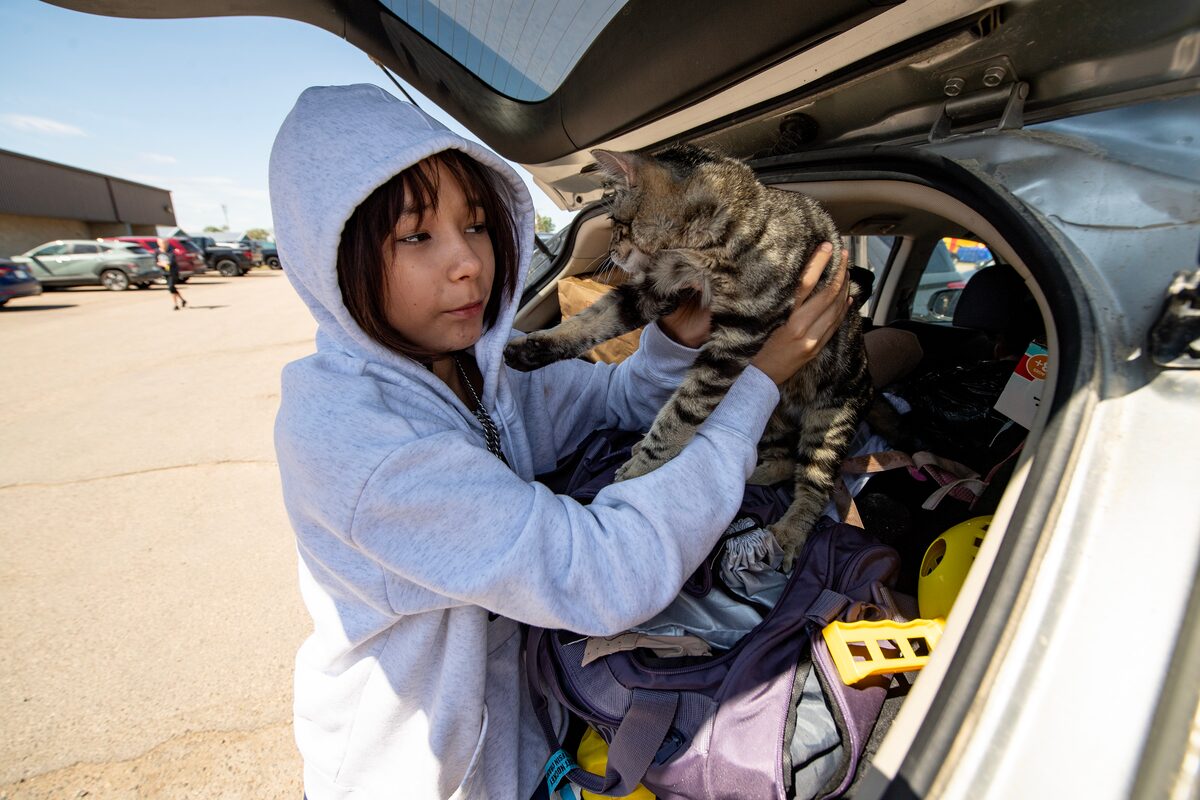
The encroaching flames have triggered rare province-wide states of emergency in both Saskatchewan and Manitoba, where around 32,000 people combined have been forced to evacuate from their homes. Dozens of other fires are aflame in Alberta and British Columbia.
This weekend, crews in Manitoba, where more than 18,000 people have been displaced, will be contending with 27 large wildfires.
Given forecasts of little to no rain, the province is anticipating more flares to begin and has warned several communities to be ready to flee at a moment’s notice.
Saskatchewan has nearly doubled its count of evacuees, reaching nearly 15,000 this week. Officials are grappling with 24 raging fires, and more than 900,000 hectares have burned.
Alberta, meanwhile, has at least 50 smaller fires; about 5,000 people have been evacuated. British Columbia is facing around 65 wildfires, and a handful of communities near the Alberta border have been ordered to vacate their properties, with strong winds in the northeast showing potential for more extreme fire activity by Sunday.


Where is the smoke and where will it go?
Steven Flisfeder, a meteorologist from Environment and Climate Change Canada, says wildfire smoke is contributing to poor air quality from northeastern British Columbia all the way to central and southern Quebec. A special air-quality statement was issued for the Greater Toronto Area and large swaths of Ontario on Friday.
Environment Canada said it expects poor visibility and high concentrations of wildfire smoke to remain in the air across many major cities, including Toronto and Ottawa, for the next several days.
Smoke from Canadian wildfires has also been drifting into parts of the United States and as far as Europe. The U.S. Environmental Protection Agency has issued air-quality warnings for several states, including Minnesota, New York and Florida, and Europe’s Copernicus Atmosphere Monitoring Service said the smoke has travelled as far east as Greece.
While conditions could change, Mr. Flisfeder said this wildfire season appears to be mirroring the 2023 season, which started early and affected a large portion of Canada.
How wildfire smoke moves depends on how much of it is in the atmosphere and the amount of wildfire activity on the ground, he said.
It also depends on the general atmospheric pattern – where the smoke is lifted higher into the atmosphere, where it is pushed closer to the earth’s surface and how it is pushed in any given direction.
BlueSky Canada, a project of the University of British Columbia, has created a public smoke forecast map that tracks wildfire smoke across Canada.
The map is based on satellite observations. Information about fuel types, weather, temperature, relative humidity and precipitation are then fed into an automated system that predicts the path of wildfire smoke, said Kat Pexa, a smoke information specialist with BlueSky.
The service is predicting a continued eastward drift of smoke from wildfires burning in Saskatchewan and Manitoba on Friday.
What is the Air Quality Health Index?
The Air Quality Health Index is a scale from one to 10+ used by the federal government. It is calculated using a formula that takes into account pollutants, nitrogen dioxide and ground-level ozone, Mr. Flisfeder said.
Most people without pre-existing health conditions are typically at low risk of developing symptoms from being exposed to air that falls between one and three on the scale, he said.
When the air quality reaches between four and six, the general population may experience symptoms such as cough or throat irritation.
If the air quality reaches between seven and 10, “that’s when everybody in the general public should start to consider reducing their activity, especially strenuous activity outdoors, and especially if you start to feel those symptoms coming on,” Mr. Flisfeder said.
A reading of 10 or more is a signal to limit outdoor activities.
Mr. Flisfeder recommends using the index as a tool to decide how to adjust daily activities and also when to check in on family, neighbours and community members who may be vulnerable and need a reminder to take precautions.
What are the symptoms of wildfire smoke exposure?
Wildfire smoke contains fine particulate matter – toxic, microscopic particles that can be inhaled and travel deep into the lungs. The health effects of wildfire smoke are correlated with the amount of exposure, according to Health Canada.
Early signs of smoke inhalation include coughing and irritation of the eyes, nose and throat. More severe cases may be accompanied by shortness of breath or wheezing.
Children, seniors and people with chronic conditions, such as asthma, heart disease or diabetes, are at greater risk of experiencing severe symptoms, said Angela Yao, an environmental health expert.
For pregnant women, a growing body of research links wildfire smoke exposure with low birth weight and an elevated risk of respiratory infections for babies, Dr. Yao said.


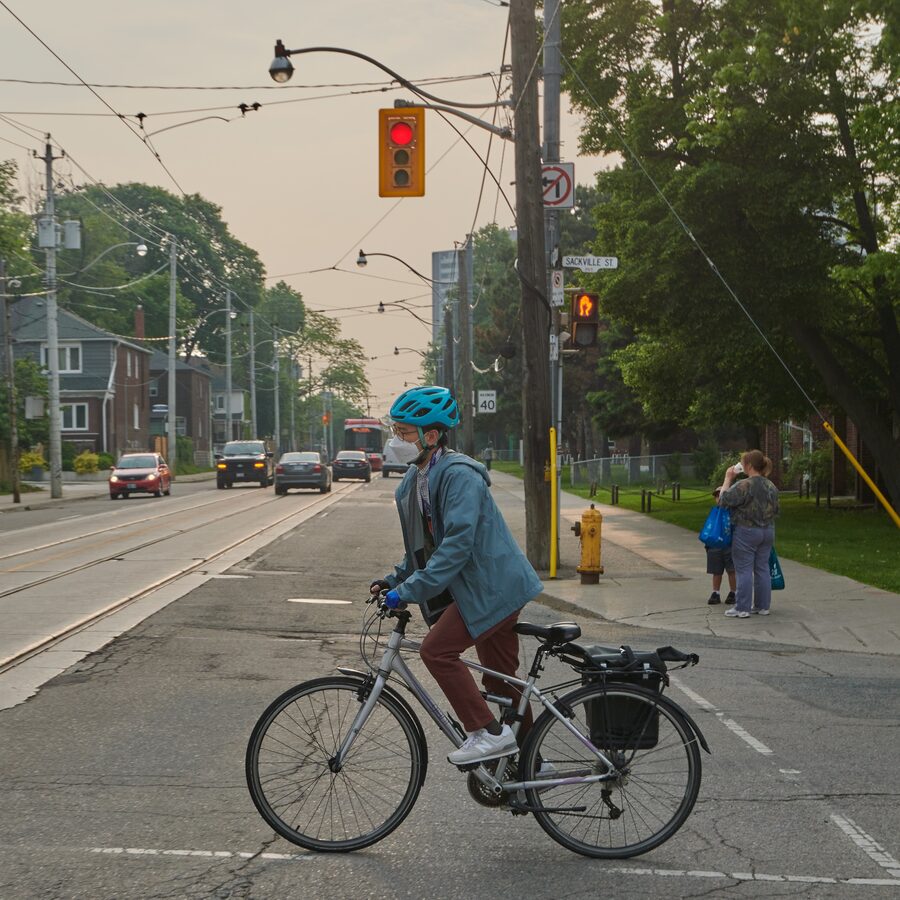
People in smoke-affected cities such as Toronto may not always be sensitive to the poor air quality, but health officials across Canada are warning people to be careful when exerting themselves.Sammy Kogan/The Globe and Mail
How to navigate daily activities when the air quality is poor
Dr. Yao recommends using air-quality ratings to guide your timing of outdoor activities such as walking your dog.
“Some people are more sensitive, some are less sensitive,” Dr. Yao said, referring to people’s responses to smoke exposure. “The overarching advice is really to listen to your body and take it easy when the air quality is not as good.”
While Health Canada indicates there is no safe level of wildfire smoke exposure, symptoms typically subside when air quality improves.
“I think we should be cautious but not too panicked,” Dr. Yao said. “The best way is to know all the tools we can use to protect ourselves and know there is ways to do that.”
However, severe symptoms of smoke inhalation, such as difficulty breathing, are a sign to seek medical attention, experts say.
A study conducted after the 2023 wildfire season found asthma-related emergency room visits rose by 40 per cent among children one to two days after smoke blanketed Ontario. Adult visits increased by 48 per cent for a week after smoke exposure.

Air-filtration devices can make a big difference in homes or businesses affected by wildfire smoke outside.Justin Tang/The Canadian Press
How to prevent wildfire smoke inhalation
Experts emphasize the importance of remaining inside buildings with air-filtration or HVAC systems and avoiding any strenuous outdoor activities when the air quality is poor.
For buildings without air filtration systems, studies have shown that setting up a DIY system using a furnace filter and box fan in one room is an effective way to clean the air.
Keeping windows shut and doors closed will reduce contaminating filtered indoor air with smoke. Still, as temperatures rise it’s important to stay cool by turning on air conditioning at home or visiting air-conditioned public spaces, such as community centres, shopping malls or public libraries, Dr. Yao said.
“If your place gets too hot, then you need to prioritize cooling because that’s usually more dangerous if it gets overheated,” she said.
Those at greater risk of suffering severe symptoms from wildfire smoke inhalation, including seniors, should monitor their symptoms and keep medications to treat existing health conditions on hand.
Wearing a well-fitted, dry mask is an effective way to reduce smoke inhalation, Dr. Yao said. For individuals sensitive to smoke, she recommended wearing a N95 or KF94 mask when outdoors in poor air quality.
Wildfire season: More from The Globe and Mail
The Decibel podcast
When Canadian forests go up in flames, remote First Nations get the lion’s share of the smoke and related health hazards. For a previous wildfire season, researcher Nicole Redvers spoke with The Decibel about the impact on Indigenous communities. Subscribe for more episodes.
Firefighting in depth
A prescribed burn in B.C. offers a glimpse at firefighting’s future
Australia’s volunteer ‘firies’ offer lessons on taming wildfires in Canada