
A rat crosses a Times Square subway platform in New York on Jan. 27, 2015.Richard Drew/The Associated Press
For city dwellers around the world, the effects of climate change have been widespread and sometimes detrimental, including challenges to air quality, infrastructure and public safety.
But a new study of northern hemisphere cities including Toronto shows that rising global temperatures have benefited at least one urban group: Rats.
According to the research, rat populations have been on the rise for at least a decade in the majority of urban centres where data are available. The environmental factor that tracks most closely with rodents’ surging numbers is climate.
The results suggest that without proactive measures – such as better management of garbage and other food sources – issues with rats are likely to increase. This is especially in northern cities, where the rate of warming temperatures caused by fossil fuel emissions is more pronounced than the global average.
“We think we’re explaining the majority of the variation in rat trend numbers across the cities,” said Jonathan Richardson, a biologist at the University of Richmond in Virginia who led the work. “Long-term increase in temperature was by far the strongest predictor.”
Rats are a ubiquitous presence in most cities and a concern for public health officials because of their potential to spread disease. Even so, comparative, systematic studies of rats across multiple centres are surprisingly scarce.
For their own study, published Friday in the journal Science Advances, Dr. Richardson and his colleagues gathered data from cities on three continents to try to tease out what the numbers are showing. That meant zeroing in on locations where rats have been consistently monitored for a long enough period of time to establish a trend.
Despite public concern about the rodents, they found that – for most municipalities – such information simply does not exist.
“Nobody really knows exactly how many rats live in any city,” said Maureen Murray, a wildlife disease ecologist with Chicago’s Lincoln Park Zoo and a co-author on the study.
To overcome this challenge, the researchers focused on cities where they could access public complaints and inspection reports to get a sense of how rat numbers are changing over at least a seven-year period.
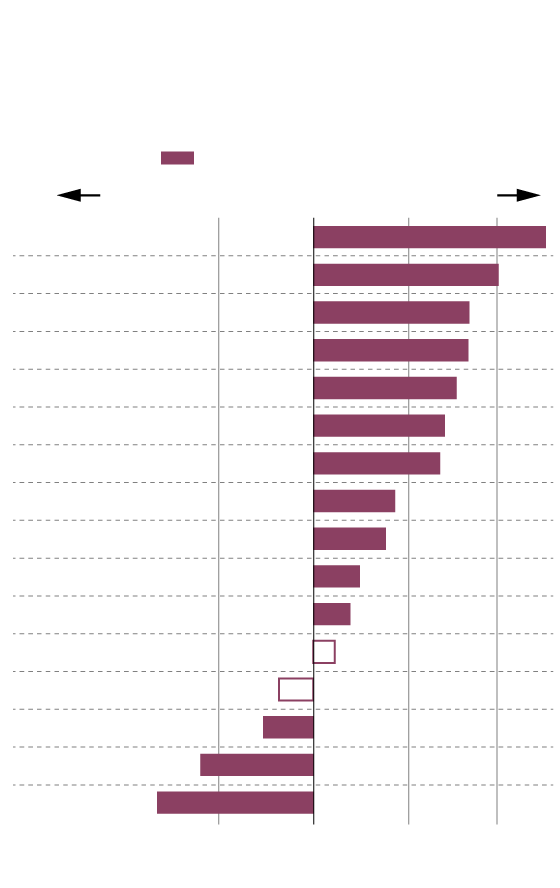
Only sixteen municipalities met those criteria, nearly all in North America, with Toronto as the lone Canadian city in the study. It scored the third highest behind Washington D.C. and San Francisco in showing a significant trend toward increasing rat numbers.
Next, the researchers tried to tease out which factors might have an effect on rat populations regardless of how rats were being counted. These included population density and degree of urbanization, which can influence availability of food and habitat, and gross domestic product (GDP), which speaks to the resources a city may be able to draw on for rat management.
Researchers also considered two climate-related factors for each city – the long-term temperature increase and the average minimum temperature.
Among all factors, it was long-term temperature increase that showed the strongest association with increasing rat numbers.
Dr. Murray said that this squares with what is known about the rat’s reproductive rate, which increases in tempo when temperatures rise and food tends to be more available.
“This animal has evolved to reproduce as quickly as possible,” Dr. Murray said.
For cities such as Toronto, which oscillate between cold and warm periods through the year, the study suggests that climate change is allowing rats to spend more time operating at their peak reproductive rate.
Among the factors that were least correlated with rat sightings was GDP, which indicates that wealthy cities are doing as poorly as cities with fewer resources when it comes to managing the problem. This points to a lack of forward planning in containing rat numbers before they balloon, Dr. Murray said.
“Being proactive about rat issues, understanding where the biggest issues are, monitoring sanitary conditions and improving those before you have a rat problem, are so important,” she added. “Because preventing rats is much, much more possible than exterminating rats that have already become established.”
Kaylee Byers, a public health researcher at Simon Fraser University in Vancouver who was not involved in the study, said there are plenty of reasons to pay attention to rats in urban environments. Among the diseases that rats are known to carry is leptospirosis, a bacterial infection that can be fatal to humans and dogs and can be contracted from rat urine. More broadly, the presence of rats in or near where people live is known to negatively impact mental health.
Dr. Byers said the study’s authors did admirable work with the information available but she added data based on public reports can be affected by numerous factors, including how accustomed people are to the presence of rats and which cities are more or less likely to receive complaints about the rodents.
“It’s the best data we have, but it’s not perfect data,” Dr. Byers said. “I think it’s a really interesting first look and it points towards future questions that we should be asking.”
Those questions could include why four cities in the study – New Orleans, Louisville, St. Louis and Tokyo – showed a decreasing trend in rat reports, presumably for local reasons unrelated to climate.
Dr. Richardson said there was plenty of scope for further work, as well as public interest in the science.
“Most people when they find out I study rats, they’re like, ‘Oh gross, but tell me more.’” he said. “There’s a visceral repulsion – but also intrigue.”
A warm welcome for rats
A statistical analysis of 16 cities reveals trends in urban rat populations over an average of 12 years. Numbers show the significance and direction of the trend. Cities where the temperature rise was more pronounced over time tended to have a larger increase in rat sightings.
>99% confidence interval
CHANGE IN RAT SIGHTINGS
Increasing
Decreasing
Washington, D.C.
San Francisco
Toronto
New York City
Amsterdam
Oakland
Buffalo
Chicago
Boston
Kansas City
Cincinnati
Dallas
St. Louis
Tokyo
Louisville
New Orleans
-5
0
5
10
the globe and mail, Source: J.Richardson/AAAS
A warm welcome for rats
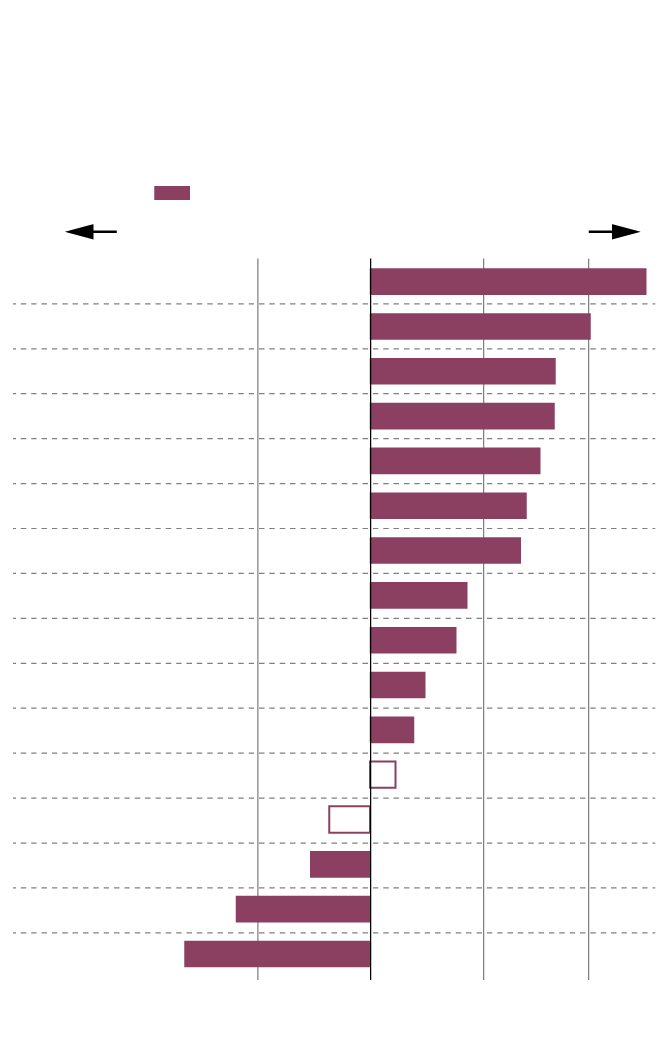
A statistical analysis of 16 cities reveals trends in urban rat populations over an average of 12 years. Numbers show the significance and direction of the trend. Cities where the temperature rise was more pronounced over time tended to have a larger increase in rat sightings.
>99% confidence interval
CHANGE IN RAT SIGHTINGS
Increasing
Decreasing
Washington, D.C.
San Francisco
Toronto
New York City
Amsterdam
Oakland
Buffalo
Chicago
Boston
Kansas City
Cincinnati
Dallas
St. Louis
Tokyo
Louisville
New Orleans
-5
0
5
10
the globe and mail, Source: J.Richardson/AAAS
A warm welcome for rats
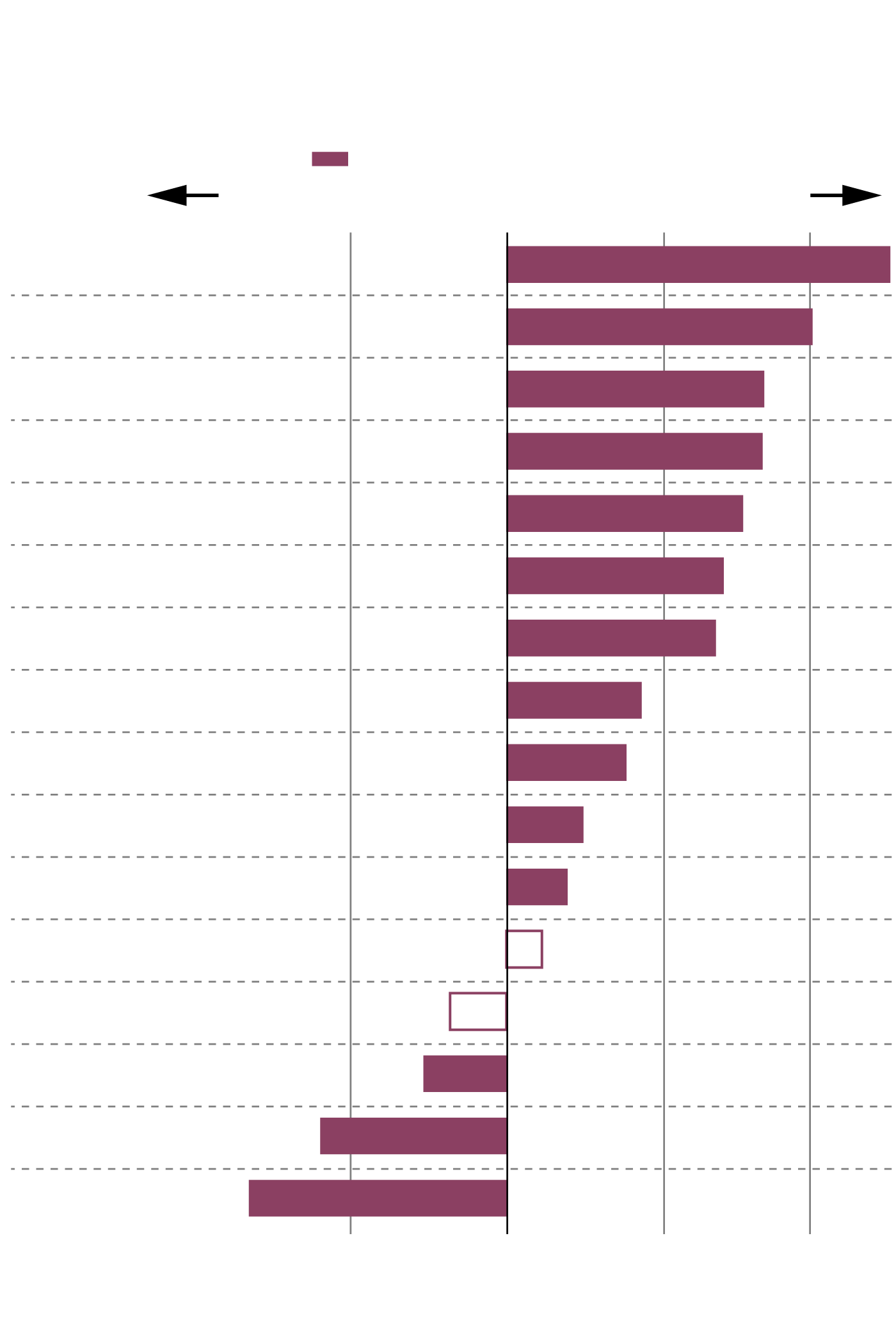
A statistical analysis of 16 cities reveals trends in urban rat populations over an average of 12 years. Numbers show the significance and direction of the trend. Cities where the temperature rise was more pronounced over time tended to have a larger increase in rat sightings.
>99% confidence interval
CHANGE IN RAT SIGHTINGS
Increasing
Decreasing
Washington, D.C.
San Francisco
Toronto
New York City
Amsterdam
Oakland
Buffalo
Chicago
Boston
Kansas City
Cincinnati
Dallas
St. Louis
Tokyo
Louisville
New Orleans
-5
0
5
10
the globe and mail, Source: J.Richardson/AAAS