It’s Saturday night on Pelee Island and the highlight of Springsong has arrived.
Held every year on Mother’s Day weekend, the event is billed as a three-day celebration of books and birding. Its location – a bucolic parcel of farmland surrounded by the waters of Lake Erie – is home to Canada’s southernmost community. It may also be one of the country’s least appreciated natural gems.
Every spring, the island serves as a temporary landing pad for hundreds of thousands of migrating birds arriving from as far away as the Amazon rain forest. They stop, feed and depart again, driven by a restless instinct to complete a journey they will then have to reverse in the fall.
Pelee Island is also a seasonal roost for Canada’s best-known author. For nearly 40 years, Margaret Atwood has made a home away from home here, and she has left her imprint on island life. In 2002, Ms. Atwood helped to launch Springsong with her partner Graeme Gibson, who died in 2019.
Last month, at the Springsong 25th-anniversary gala, Ms. Atwood stepped to the microphone and reprised her role as star performer, backed by the event’s now-legendary rubber chicken choir.

“Chickens on high,” Ms. Atwood commanded with her signature deadpan delivery. The chorus line assembled behind her dutifully complied.
Ms. Atwood then launched into to the event’s traditional opening number: a rendition of Old MacDonald, augmented by the sound of many rubber chickens squeezed to the rhythm of the familiar tune.
Squawking and laughter filled the island’s eponymous winery, where more than 200 attendees had gathered for the dinner and the entertainment.
The unflappable Ms. Atwood then proceeded to her second selection, When the Red, Red Robin (Comes Bob Bob Bobbin’ Along). By the song’s finale, the rubber chicken choir had reached its hysteric crescendo.
Afterward, guest lecturer Tim Birkhead, an ornithologist from the University of Sheffield, elicited a round of applause when he summed up the experience with a laugh. “This is the weirdest bird event I’ve ever been to.”
The pinch point
There is a purpose to the fun.
Across North America, birds are in trouble. In a landmark study published in 2019, a team of U.S. and Canadian researchers estimated there were about three billion fewer birds on the continent than in 1970. The decline is especially pronounced among migrating species, whose populations have diminished by 28 per cent.
This is grave news for birds but also for wildlife conservation in general. Bird migration is not just a biological wonder but a key component in a continent-wide cycle of ecosystem renewal. Without it, Canada’s biodiversity would be impoverished.
Even those who pay close attention to the phenomenon find its scale and impetus hard to grasp.
How could a species like the Blackburnian warbler – an exquisite, tiger-striped songbird weighing no more than 13 grams – possibly be better off travelling 8,000 kilometres from the foothills of the Andes Mountains to breed in the boreal forest?
Yet evolution has honed this tiny bird and many others for precisely such an undertaking, because it optimizes their survival.
What they get in return is a chance to feast on something that even the most ardent nature lovers tend to despise: our bugs.
“There are lots of insects in the Amazon Basin, but not like this,” said Dan Mennill, a biologist at the University of Windsor who studies migrating bird behaviour and communication. “The seasonal boom we have in Canada is unlike anything those birds can get anywhere else.”
Drawn by this massive surplus, many songbirds move northward in waves that typically peak in May and June. As they travel, they follow well-established flyways tied to geographic landmarks.
In the eastern half of the continent, one such route runs along the Mississippi River valley, while another hugs the mid-Atlantic coast. The two routes overlap at the Great Lakes, a watery barrier that birds must conquer to access the northern wilderness beyond.
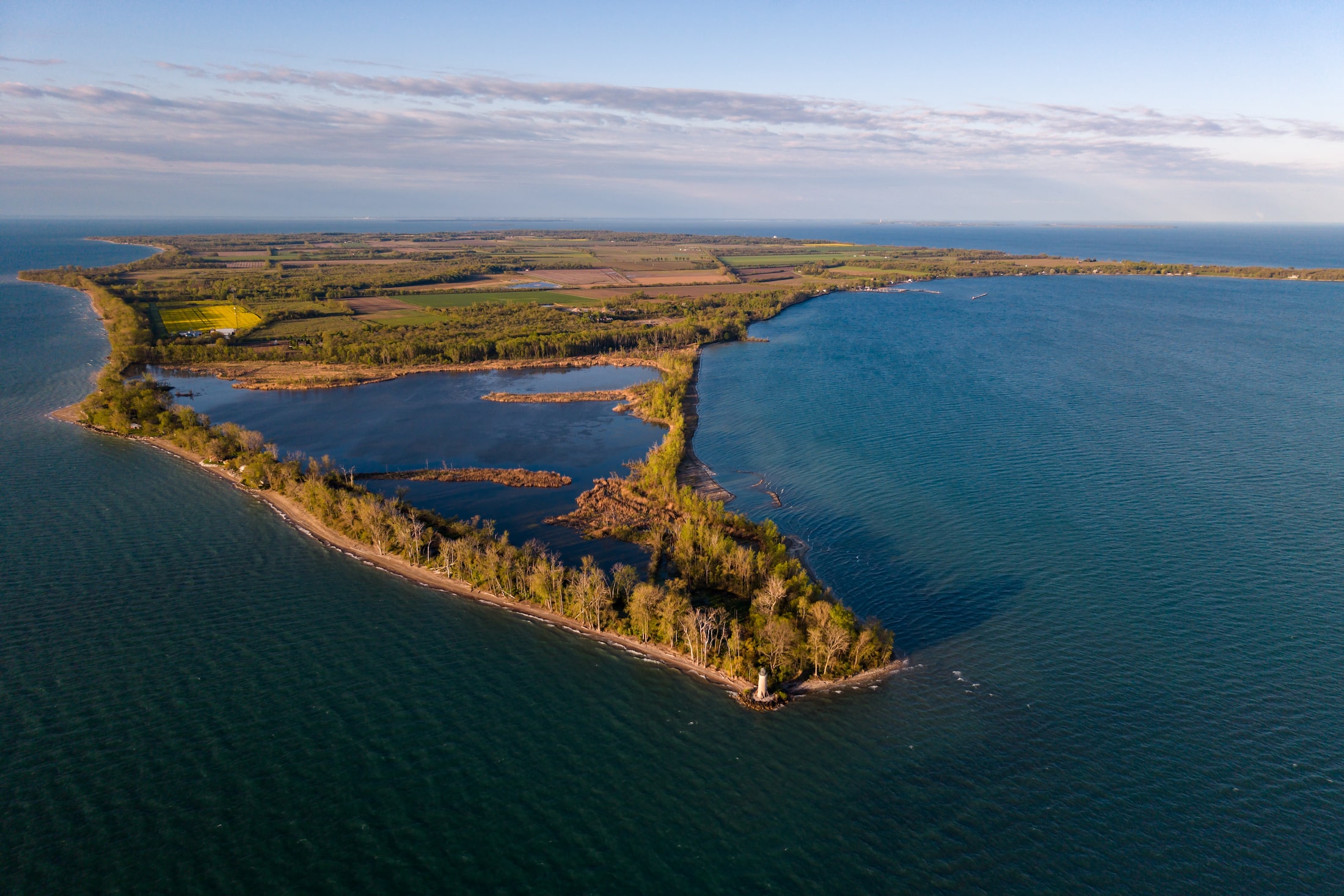
For those that cross at Lake Erie, Pelee Island can provide a crucial safe haven. Measuring roughly 12.5 by six kilometres, it is the largest island in a freshwater archipelago that runs north from the Ohio shore – a final stop where exhausted birds can gather the strength they need to complete the leap across the lake.
During migration season the island acts as a “pinch point,” as Ms. Atwood calls it, concentrating a wide array of species into a relatively small area.

That makes it a choice spot for birdwatching and also for bird science. Whatever changes are taking place in the avian world more generally are often best observed here, where the winged torrent runs strongest.
“Pelee Island represents this magic place where you can dip your finger into the flyway and figure out what’s happening,” said Ian Davidson, Americas regional director for the global conservation group BirdLife International.
Those who come to the island are often in tune with that magic. Among them was Graeme Gibson.

The rapture
“I came to the birds relatively late in life,” began Mr. Gibson in the introduction to his Bedside Book of Birds, a bestseller he first published in 2005.
He went on to say that for 37 years, he did not understand what birders were all about. Their obsession seemed eccentric and mysterious.

The brilliant golden prothonotary warbler is a rare and endangered songbird in Canada. It occasionally breeds on Pelee Island, which falls within its summer range. Many other species are only passing through and breed much further north in Canada's boreal forest.
But through a series of bird encounters, including the chance sighting of an albatross on a family excursion to the Galapagos Islands, Mr. Gibson experienced something akin to a religious conversion.
“At its heightened moments, birdwatching can encourage a state of being close to rapture,” he wrote.
He was hooked. But it wasn’t until he and Ms. Atwood had fallen for Pelee Island and purchased a cottage there that his passion for birds turned into something larger.
It began with Springsong Weekend, a way to combine the couple’s literary and birding interests in an event that could also raise money for the Pelee Island Heritage Centre. Ms. Atwood credits Mr. Gibson and the Heritage Centre’s founding director, Ron Tiessen, with cooking up the idea.
Among the activities open to participants at Springsong is a 24-hour race to identify as many avian species as possible. The competition runs through the night to include owls and other nocturnal birds. This year’s winning team checked off 92 species (a late spring led to a lower showing than in previous years).
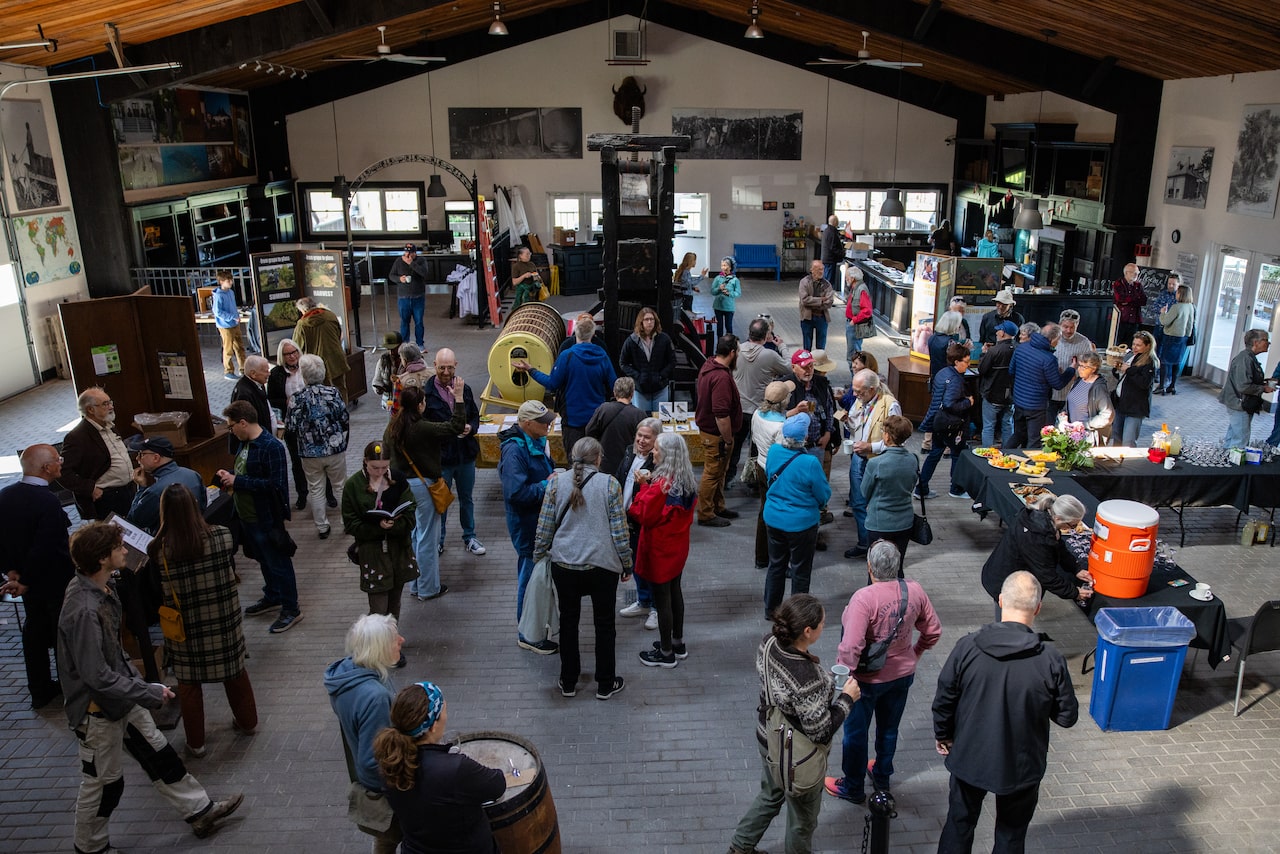
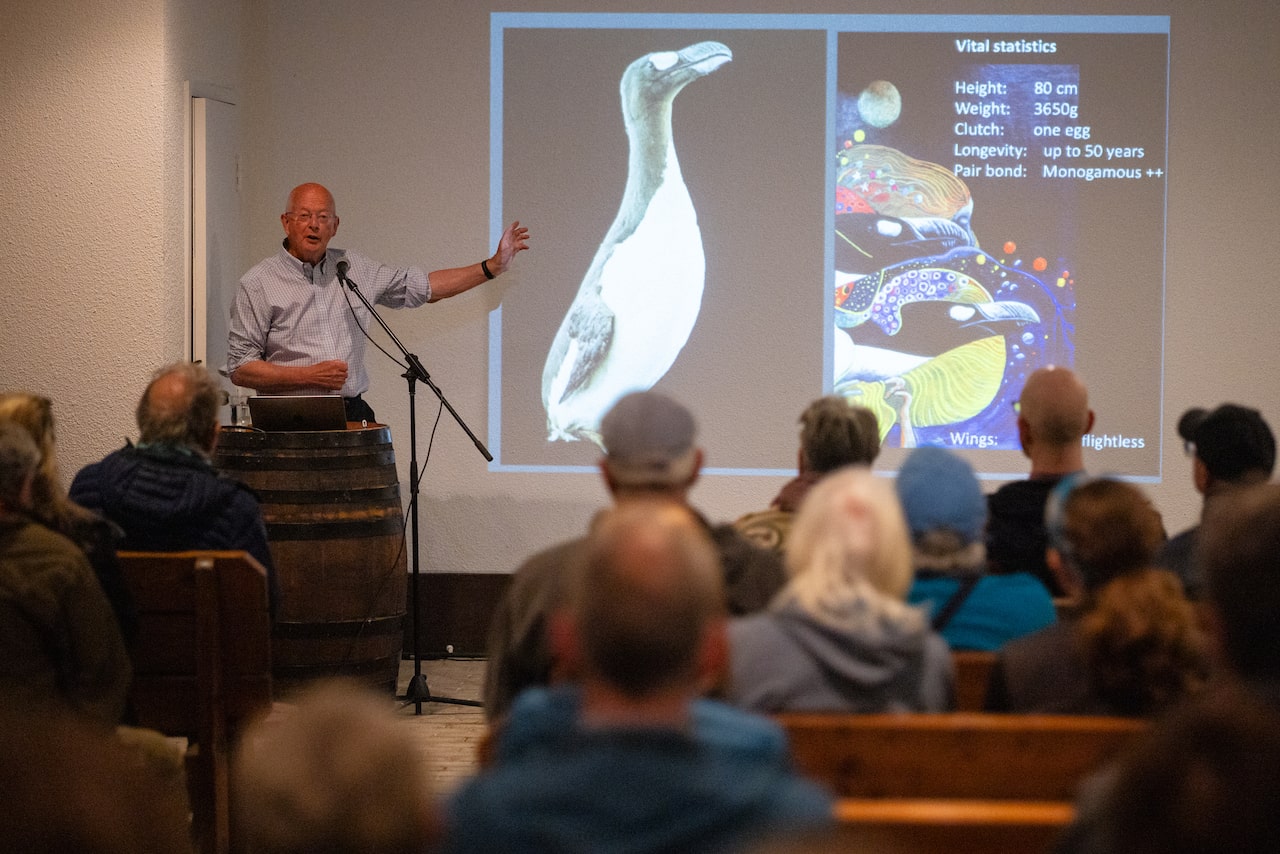
The event also brings in special guests from the birding world, including scientists, naturalists and bird advocates such as the late Canadian artist and filmmaker Bill Lishman.
Writers make up the other half of the offering. Over the years, featured authors at Springsong have included Farley Mowat, Jane Urquhart and Lawrence Hill, among others. This year’s literary guest was poet and author Ian Williams, winner of the Giller Prize for his novel Reproduction.

Ms. Atwood has donated more than $1-million to make her beloved island a key hub for bird science.
As Ms. Atwood wrote in her memoir, Book of Lives, the motivation for including writers was to offer something for partners who found themselves stuck on the island for a weekend, “because not every spouse of every birder wants to crouch all night in a chilly ditch.”
In 2004, Mr. Gibson and Ms. Atwood stepped up their commitment to the island’s flying fauna when they co-founded the Pelee Island Bird Observatory. The not-for-profit effort is dedicated to the study and preservation of birds that depend on the island.
The observatory was initially headed up by Mr. Gibson’s son, also called Graeme, and his daughter-in-law Sumiko Onishi. Both are full-time residents on the island. The younger Mr. Gibson suffered a stroke in 2018 and Ms. Onishi, together with seasonal staff, now handles the core of the observatory’s activities. During migration season, this includes bird banding and a long-running daily survey of species. Data from the observatory are shared with a national scientific collective, the Canadian Migration Monitoring Network.
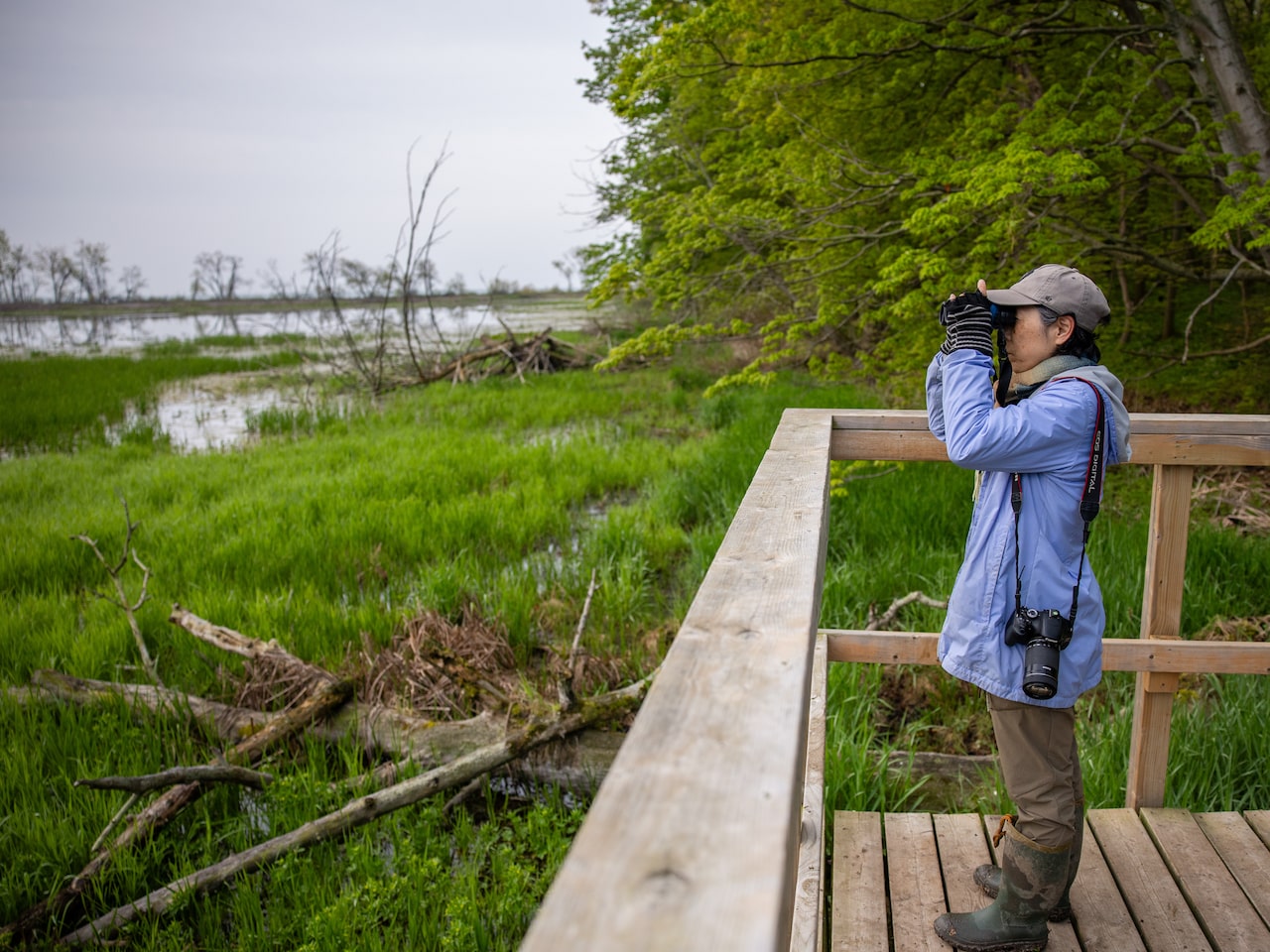

Matthew Fuirst, a wildlife biologist with the conservation organization Birds Canada, said that the consistent gathering of data over many years provides an invaluable record of bird activity on the island.
“The value of the long-term data is to better understand how population trends of birds have changed over time,” he said. “And by being able to understand that, we can dive deeper into the mechanics of why birds might be declining.”
This September, the observatory is set to reach a major milestone when it opens its new Atwood-Gibson Bird Centre. The nearly completed centre is intended as both an outreach facility and residence for visiting researchers, staff and volunteers. Its opening will bolster Pelee Island’s role as a key centre for bird science in Canada at a time when information about migrating species has never been more important.
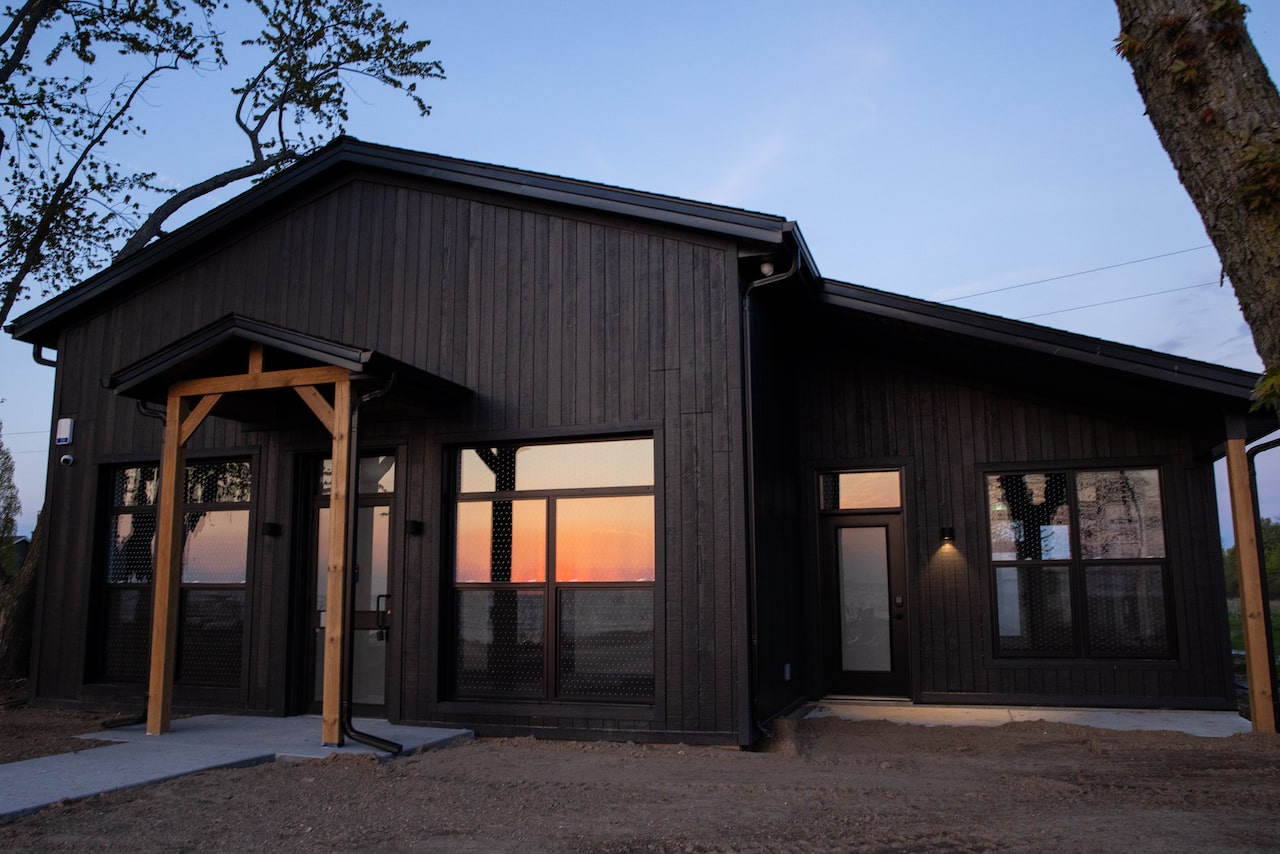

Close to $3.5-million has been raised to fund the effort, including a donation of more than $1-million from the organization’s founding honorary chair, Ms. Atwood, who also serves as a board member, fundraiser and advocate.
“It is fair to say that without her extraordinary commitment, the Atwood-Gibson Bird Centre would likely still be in the planning stages, if it were possible at all,” said Deborah Egan, who chairs the not-for-profit.
In an interview, Ms. Atwood said the support helps ensure the organization’s long-term survival. When conservation efforts depend solely on government – “any government,” she said – “they can always pull the rug up.”
A world apart
The word pelee derives from French for peeled or bare. It was the word French missionaries used to describe the partly treeless appearance of Point Pelee, a triangular peninsula that juts out into western Lake Erie, when they first reached the area in 1670.
On a clear day, it’s possible to stand on the point and glimpse Pelee Island off in the distance.
The island is built on a plateau of limestone that has been separated from the mainland for at least 4,000 years. For most of that time, it was a partly submerged wetland with a few higher patches poking above the waterline. That made the island a paradise for waterfowl and shore birds but not especially enticing for settlement. Traces of Indigenous activity on the island date back millenniums. But there is a sense that the island has always been a world apart – a feeling that persists today.
The island’s early modern history features a cast of characters that could inspire a novel and that reflects the complex interplay of Indigenous, British and American cultures and interests at what was once Canada’s western frontier.
In 1788, Thomas McKee, the son of a prominent British official in the region, leased the island from two First Nations in the Detroit River area. Mr. McKee’s descendants sold to William McCormick in 1823. Mr. McCormick, a local politician and militia officer, moved his family there the following year.
Among the early residents was Mr. McCormick’s mother, Elizabeth, who as a young woman had been taken during a Wyandot raid near Pittsburgh. As recounted in a family history published in 1899, she lived as a captive member of an Indigenous community in Ohio until she was noticed by Mr. McCormick’s father, a Scottish fur trader, who engineered her escape.
By 1833, inhabitants included a government-appointed lighthouse keeper and his family. In the late 1860s, a Kentucky winemaker, disaffected by the outcome of the U.S. Civil War, saw potential in the island’s mild climate and began cultivating grapes there, launching Canada’s first winery.
The island, by then a small township, was further transformed in the late 1880s, when the construction of dikes and canals allowed for the conversion of its extensive marsh into farmland. By the eve of the First World War, the island’s year-round population had peaked at about 1,000 residents.
Today, only about 230 people live on the island throughout the year, but the seasonal population can swell to 3,000 during the summer months when cottagers and tourists take the 90-minute ferry ride over from the mainland to experience the island’s unique charm.
To raise additional tourist revenue, the township has staged an annual pheasant hunt since 1932. Thousands of pheasants are released for the event, which runs over several weekends in late fall.
Pheasants are not a native species on Pelee Island. But at least 314 other birds are – an astonishing number that comes directly from the records of the observatory’s volunteers and staff.
The island’s avian richness was recognized as far back as 1910 after a visit by Lynds Jones, an Ohio-born naturalist and professor at Oberlin College. It was Mr. Jones who seems to have first realized that the island might form part of a natural highway for migrating birds.
On the mainland, birds have always been an attraction at Point Pelee, which became a national park in 1918. Pelee Island, perhaps because it is less accessible to seasonal birdwatching crowds, has had a lower profile. But in recent years its bounty, and value to science, has increasingly come to light.

Spreading the net
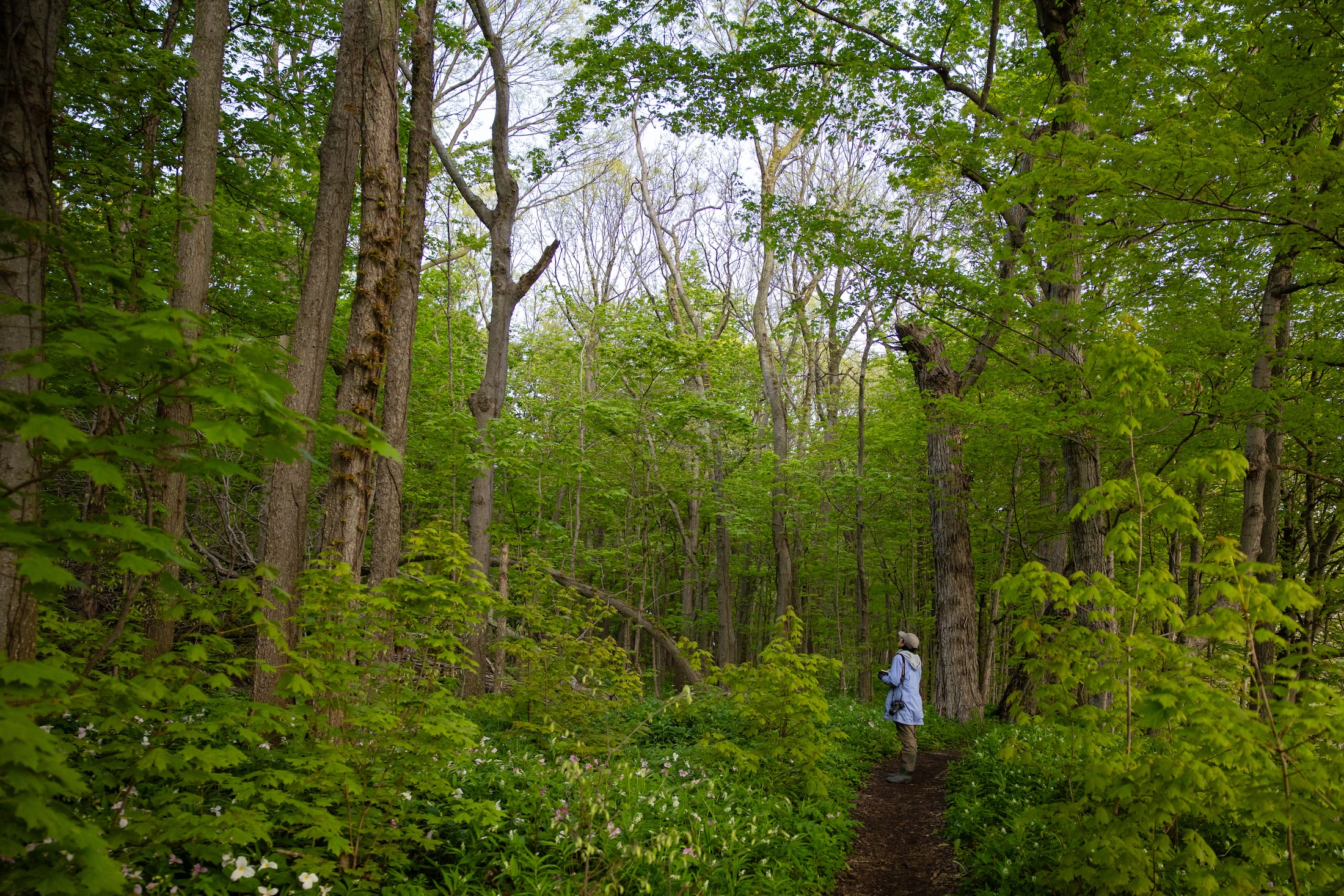
Early one morning during Springsong, I walked with a group of expert birders through a stand of Carolinian forest that covers the southern tip of Pelee Island. As we navigated a waterlogged path, I dearly hoped my boots would not be left behind in the squishy muck.
My expert companions pointed out the double-tone piping of a wood thrush, which can sing two notes at the same time. We soon encountered Ms. Onishi, who had already completed her daily survey of species. Together with two seasonal student hires, she was now checking mist nets, barely visible among the trees, which capture small birds for banding.
Sure enough, one of the nets had snagged a yellow warbler. Its tiny body and colourful plumage seemed a striking contrast to the vast world and multiple hazards it had avoided just to be there.
To avoid predators, songbirds migrate at night, often in mixed flocks. This makes their movements harder to discern, though they can now be tracked in bulk using radar.
To provide a more granular understanding of which bird species is moving when, Dr. Mennill, the University of Windsor biologist, uses acoustic devices to capture soft sounds that night-flying songbirds make as they call out to each other while airborne. During our walk, he put up a tall pole with a funnel at the top designed to feed bird sounds down to a tiny battery-powered microphone.
He and his students are erecting identical poles across the country to build up a national acoustic database of bird migration. Pelee Isand marks the network’s southernmost extent.
“The long-term goal is we compare the data to what the banding teams have got and find out if they’re catching similar species,” Dr. Mennill said.

The data could help determine whether birds are all using the same stopping points as they move across the continent, in order to better inform conservation efforts.
The observatory is increasingly building ties with other projects and facilities, including Birds Canada, whose headquarters is near Long Point about 150 kilometres to the east.
On the island, the observatory’s presence also dovetails with the work of organizations such as the Nature Conservancy of Canada and Ducks Unlimited, which are seeking to preserve the island’s existing natural habitat and restore some of its former wetlands. At present, about 18 per cent of the island has been set aside for nature, including land gifted by Ms. Atwood and Mr. Gibson.
“Our goal is to take the lands that the NCC owns and turn those into the best habitat that we can,” said Jill Crossthwaite, acting program director for the conservancy’s southwestern Ontario operations.

The observatory is set to reach a major milestone when it opens its new Atwood-Gibson Bird Centre, four decades after Ms. Atwood and Mr. Gibson first made landfall.
A long-time fan of Springsong and the chicken choir, Ms. Crossthwaite said the creation of trails and other ways for people to interact with Pelee Island’s natural spaces add to its growing attraction as an ecotourist destination.
Not long after Ms. Atwood and Mr. Gibson first showed up on the island, Mr. Gibson managed to get stuck on the roof of their cottage after a ladder slipped and he had to call out for someone – anyone – to help him get down. When an islander happened along who could facilitate the rescue, the episode proved to be an icebreaker.
“You’re not really accepted in a small community unless there’s a story about you,” Ms. Atwood said.
Four decades later, their story has grown into a lasting legacy for the island’s human community and a helping hand for its avian visitors. With luck, the work of Ms. Atwood, Mr. Gibson and their island allies will mean the birds’ epic flight continues for generations.
Editor’s note: This article has been updated to correct the first name of Matthew Fuirst, a wildlife biologist with Birds Canada.