I was barely a teenager in 1976. The seasoned rock critic who stands before you today was then a skinny basketball-loving kid who had no truck with loud music. Casey Kasem’s American Top 40 countdown was appointment radio every Saturday at 1 p.m. in my bedroom in Clifton Springs, N.Y.
The Starland Vocal Band had their Afternoon Delight, and I had mine.
The Bicentennial year was a loopy, schmaltzy, discoed pop-music time. Barry Manilow wrote the songs, there was no cure in sight for Boogie Fever, and the meekly rocking Eagles were taking things to a limit I could easily reach. To my mind, Paul McCartney was correct: There was absolutely nothing wrong with Silly Love Songs.
2026 culture lookahead: From CharliXCX to Softcult, five albums to listen to in the new year
So, when the metallic, high-minded Canadian power trio Rush released its conceptual fourth album, 2112, in the spring of 1976, it would not have made a blip on my radar. The words and numbers “Rush 2112” sounded like a vanity licence plate.
Today, I consider the record – with a rock-opera suite about a protagonist discovering music in a sci-fi dystopian age – one of the greatest Canadian records ever made. We now know that 2112 is considered the recording that saved the band’s career. But in 1976? Rush was at the crossroads, and I was just coming of age.

Neil Peart, Geddy Lee and Alex Lifeson of Rush pose next to a flight case backstage in Springfield, Mass., on Dec. 9, 1976, during their All The World's a Stage tour.Fin Costello/Supplied
The Background
Earlier this year, Rush announced its unretirement and a blockbuster summer tour that kicks off June 7, at the Kia Forum in Los Angeles. The band had called it quits after drummer-lyricist Neil Peart died of glioblastoma at 67 in 2020.
The return of guitarist Alex Lifeson and singer-bassist Geddy Lee, now with German drummer Anika Nilles, has been greeted ecstatically by fans and media alike. Concert ticket sales went through the roof. The rock gods, by golly, had returned.
Fifty years ago, the lofty status Rush enjoys today would have been unimaginable. The relatively straight-ahead rock of their first two albums, 1974’s eponymous debut and 1975’s Fly by Night, sold well on the strength of singles In the Mood and the title song Fly by Night.
The best albums ever, according to Globe readers
However, the early momentum skidded to a halt with the release of 1975’s Caress of Steel, an ambitious but failed adventure in progressive hard rock that left the band’s U.S. label confused and disappointed. After hearing the 20-minute song The Fountain of Lamneth, Mercury Records turned off the taps.
The media and radio programmers were just as unenthusiastic. Robert Christgau wrote in The Village Voice that Rush was “the most obnoxious band currently making a killing on the zonked teen circuit.”
What Christgau meant by “obnoxious” was “pretentious.” What he meant by the circuit was the road. With Caress of Steel a dud, booking agents lost interest in the long-haired Canadians in funky stage wear.

Lee and Lifeson in 2010.Peter Power/The Globe and Mail
“The Caress of Steel tour was a tour of ups and downs,” says Lee, speaking with his long-time friend and bandmate Lifeson earlier this month on Zoom. “Toward the end, the gigs were getting smaller and less significant. There was a feeling the shine had gone off us.”
Whether opening shows for Nazareth in Western Canada or sharing a bill with Ted Nugent in the U.S. Midwest, Rush toured relentlessly in 1975, albeit to diminishing returns. They even dubbed the shows the “Down the Tubes” tour.
“We seemed to be going in the wrong direction,” Lee says. “I don’t think we were deterred by it, but we were aware of it.”
Heading into the recording studio for their fourth album, Rush had to make a decision: Make another conceptual record and continue their prog-rock evolution or appease their record label with something more radio-friendly. They decided on the former direction.
“We said screw it,” recalls Lifeson. “We would do what we do, and if we went down in flames, they would be our flames.”

Lee and Lifeson perform on May 1, 1977 in Minot, N.D.Fin Costello/Supplied
The Album
One night after a concert in 1975, drummer Peart got into a heated discussion backstage with a record company lawyer. The philosophical Peart was a fan of Rod Serling, who created TV’s The Twilight Zone, and writer Ayn Rand. As a lyricist, he absolutely did not write silly love songs; as a virtuoso musician, his brain was wired symphonically.
The lawyer (a “suit” in rock world parlance) accused Peart of harming the band’s future because he didn’t understand the concept of compromise. The legal man wasn’t completely wrong. Peart and his bandmates were in their early 20s, stubbornly clinging to the dream of a musically idealistic life.
“Neil spoke his mind to the guy,” Lee says. “I think that incident bonded us in the complete opposite direction the suits wanted us to go. The lawyer, if anything, put wood in our fire.”
The album 2112 reflects that rebelliousness. It was recorded with their regular producer Terry Brown at the Toronto Sound Studios facility he co-created. The multipart title track, which takes up the album’s whole first side, was inspired by Rand’s dystopian novella from 1938, Anthem (which is also the name of the record label co-founded by then Rush manager Ray Danniels).

Drummer Neil Peart performs in Los Angeles on Aug. 1, 2015. Peart died in 2020.Rich Fury/The Canadian Press
The story involves a Solar Federation of planets (symbolized by a shimmering red star on the album cover) where individualism is outlawed by priests in a futuristic totalitarian state. A foreboding computer voice lays it out: “We have assumed control.”
The album’s second side is composed of the kind of accessible sounds the suits wanted from Rush: the weed-tripping A Passage to Bangkok; the hazy languor of The Twilight Zone; Lifeson’s Lessons, with a breezy acoustic riff owing more to Seals & Crofts than Led Zeppelin; and Lee’s down-tempo Tears, an ode to his future wife.

Lee performs at a music festival in Quebec City on July 15, 2010.Jacques Boissinot/The Canadian Press
The hard-rock coda Something For Nothing is a Rand-influenced battle anthem for the individualist: “No, you don’t get something for nothing / You can’t have freedom for free.”
Rush had made the album they had fought for, but would it sell? Their manager didn’t understand it, and when it was played for the Mercury brass, the room was left puzzled. Other hard-rock bands of the era were getting airplay with ballads. Think Aerosmith’s Dream On, Nazareth’s Love Hurts and Beth by Kiss. Rush had nothing like that to offer.
“We used to joke that if we were ever going to have a hit, someone else would have to take something we wrote and redo it in a way that sounded the least like Rush as possible,” Lee says, laughing. “And cut it in half,” Lifeson adds.

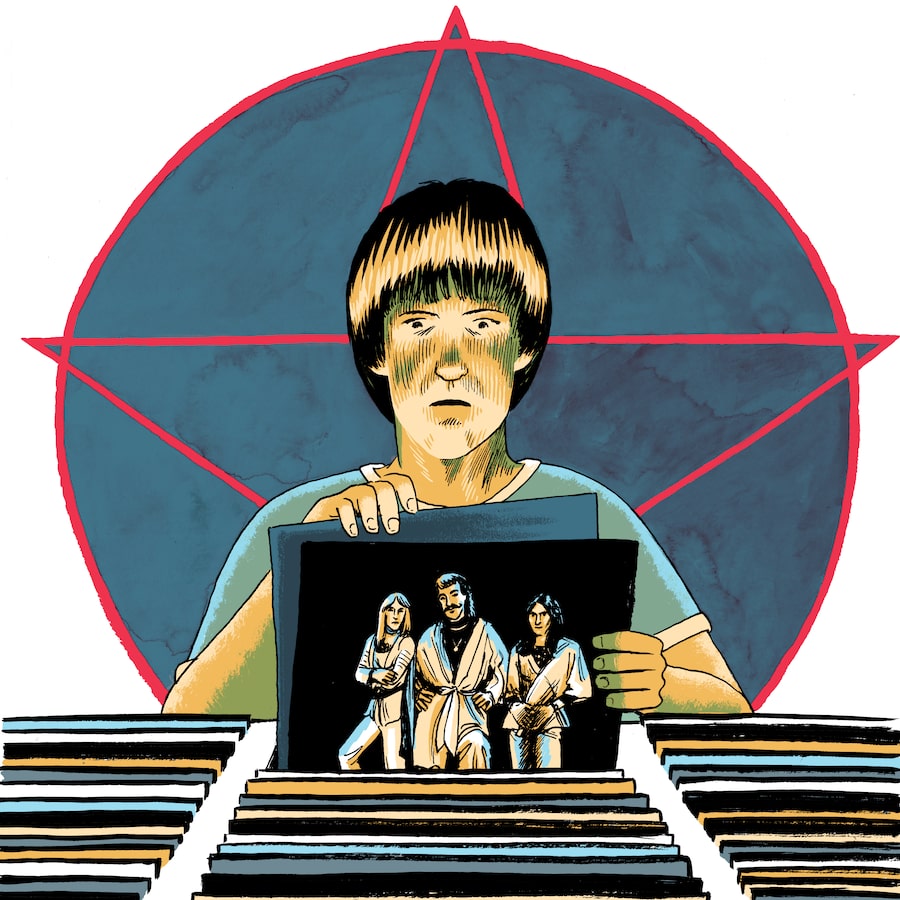
Illustration by Jonathan Dyck
The Discovery
With little in the way of label support and radio interest, 2112 still managed to gain attention by word of mouth and Rush’s constant touring. In March, 1976, they showcased the album during a four-night residency at the Starwood, a sleazy West Hollywood rock venue. On Dec. 1, they were back in Los Angeles, opening for the rising star Nugent at the Forum.
“It was a slow burn,” Lifeson recalls. “It took about a year for the album to catch fire.”
Between March of 1976 and May of 1977, the group played 140 shows and toured England for the first time. By Aug. 23, 1977, Rush was headlining a show at a packed Canadian National Exhibition Grandstand in Toronto. The band had buzz.
“When people saw Rush in concert, they were hearing the entire album,” says Donna Halper, a media historian who championed Rush as a disc jockey and music director at Cleveland’s WMMS in the 1970s. “And for young angsty teens, the storytelling of 2112 really touched them.”
If it wasn’t the album’s conceptual narrative, it was the exotic look of the band and the elaborate gatefold packaging of the record that struck a chord with Rush fans. The inside art featured a naked man seemingly resisting the power of the Solar Federation star. Today, it is one of rock music’s most iconic branding images. The look of 2112 was threatening in an appealing way, even before one heard the cutting-edge progressive metal sound.
“The album was red and black, and it had what looked to be a pentagram on it,” says Martin Popoff, author of Anthem: Rush in the ‘70s. “The back of the album had the guys in robes. They looked rich, and the album looked expensive. Some people made fun of it, but many others thought, ‘Wow, this is clearly a cool band.’”

A young Brad Wheeler in 1977 at Owen Field in Norman, Okla.Brad Wheeler/The Globe and Mail
Meanwhile, it wasn’t until 1978, living with my family in Shawnee, Okla., that I heard Rush for the first time. A high-school band called Lyra played Rush’s 1974 song Working Man at a talent contest. It was heavy and brooding, but no more so than the Aerosmith and Black Sabbath sounds I’d already come across.
But Rush’s 2112, which I purchased after friends talked it up, was a wilder animal by far. The first-side suite is especially cinematic, particularly part III, Discovery. The hero comes across a guitar, which he struggles to play but quickly rediscovers the lost, suppressed art of music.
What can this strange device be?
When I touch it, it gives forth a sound
It’s got wires that vibrate and give music
What can this thing be that I found?
Having never heard anything like it before, I shared the protagonist’s wonderment. The music was so dangerous, so metal, so virtuosic, with a cohesive sound and story to boot. It was my gateway album to sophisticated heavy music.
I never went back, and neither did Rush. The album’s success vaulted the band into the rock-stardom stratosphere it still occupies today, with more than 40 million records sold worldwide and induction into the Rock and Roll Hall of Fame in 2013. The band defeated the suits and took charge of their careers.
In other words, they had assumed control.