
Louise Penny is a strategic Canadian industry, like aluminum or dairy. So when she joins the trade war with the U.S., it means something.
Few Canadian authors sell more books. Penny is at 19.3 million and counting, with her latest Armand Gamache mystery, The Black Wolf, debuting at No. 1 on the New York Times and Globe and Mail bestsellers lists, like all of her novels do. It will almost certainly sell in the seven figures.
From Mike Myers to Maggie Kang, these are our 2025 artists of the year
But this time around, she will not be found south of the border promoting the crime-solving escapades of the Sûreté du Québec’s head of homicide, despite ravenous demand from her Swiftian fans, who turn out to her public appearances by the thousands.
Earlier this year, Penny announced that she would be cancelling the U.S. dates on her book tour in protest of U.S. President Donald Trump’s tariffs and threats to Canadian sovereignty. It was a move that captured, and catalyzed, the elbows-up sentiment seething across the country. In her wake, the adoptive Torontonian John Irving cancelled his U.S. book tour as well, while the legendary Québécois playwright Michel Tremblay up and sold his house in Key West, Fla.
The closest Penny got to the States on her Black Wolf tour is the border itself. On the first weekend of November, she held back-to-back events at the Haskell Free Library and Opera House, a more than century-old institution straddling the border between Stanstead, Que., and Derby Line, Vt.
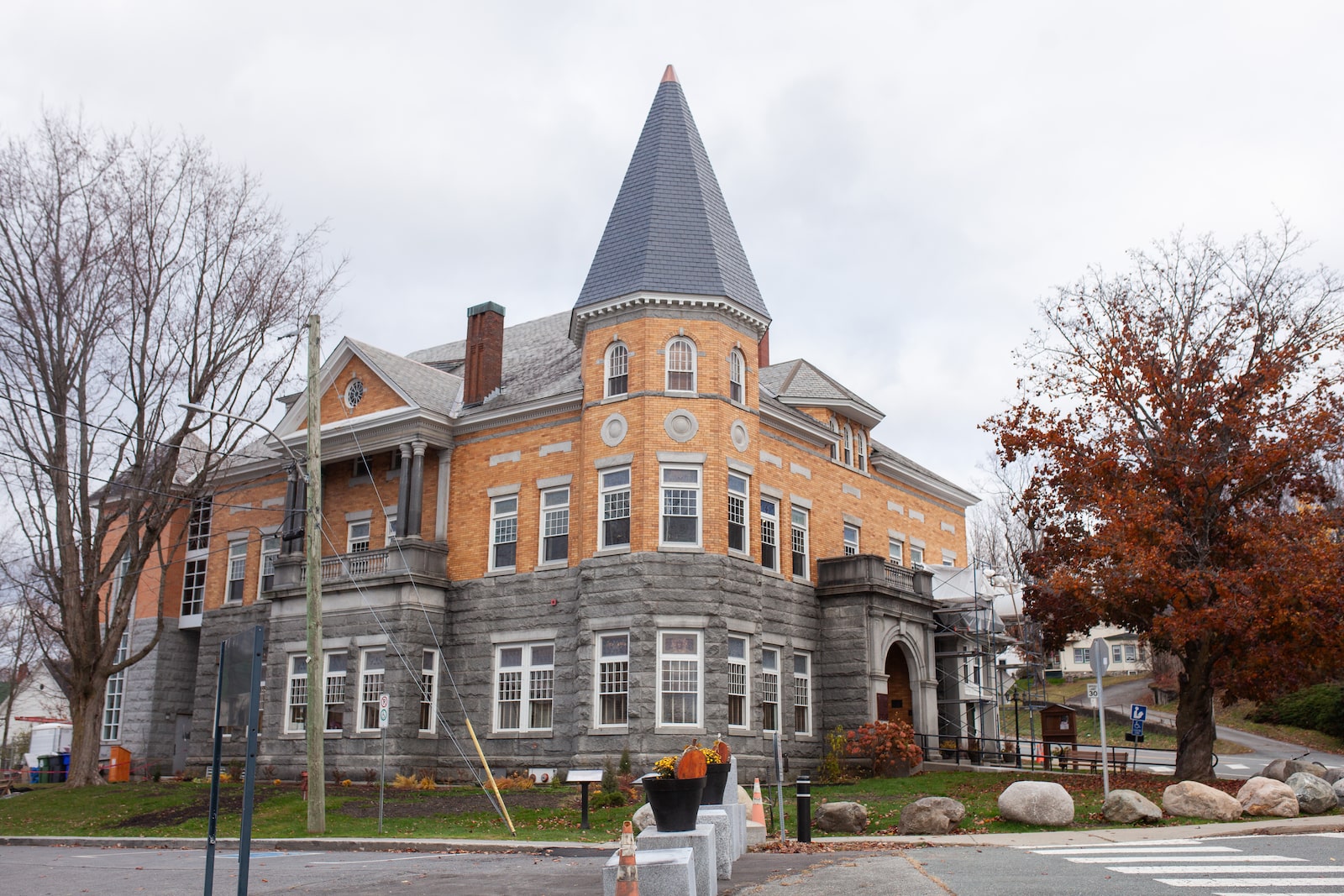
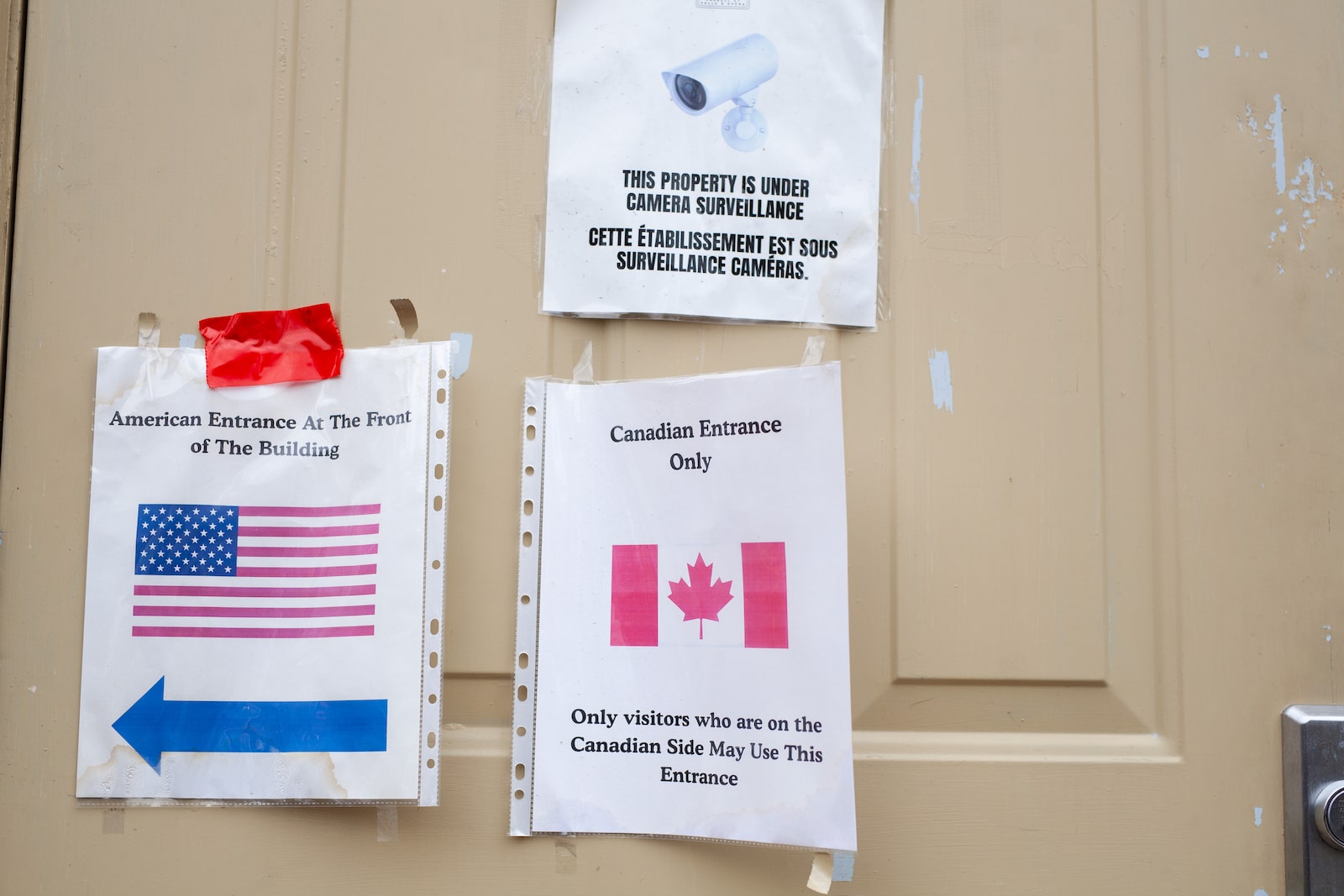
The library was built by the widow of a lumber baron to symbolize cross-border friendship and has become, in the past 12 months, a symbol of cross-border discord. U.S. authorities restricted access to Canadians, while U.S. Secretary of Homeland Security Kristi Noem made headlines by jumping back and forth over the line on the floor representing the international boundary and making taunting comments about Canada becoming the 51st state.
So when Penny took the stage at the Haskell, her Order of Canada pinned right next to her Remembrance Day poppy, it was a fitting act of patriotic defiance.
“This building is more than bricks and mortar, it’s heart and soul,” she told a sellout crowd of hundreds, to rock-star applause. The building also happens to figure prominently in The Black Wolf, a story conceived before Trump’s re-election, prophetically, about a plot to have the U.S. swallow Canada.
After reassuring herself that she wasn’t accidentally sitting on the American side of the stage, Penny explained to the binational audience in their fold-down theatre seats why she was boycotting the States. “As a Canadian, I’m not going to go into someone else’s house and start haranguing them in their own home. I will do it from a distance,” she said, to a roar of laughter. Then, more earnestly: “This is a moral issue. This is a moral wound. And if I didn’t take that stand, then shame on me.”
And the crowd went wild.

Louise Penny held back-to-back events at the Haskell Free Library and Opera House in Nov., 2025.Karene-Isabelle Jean-Baptiste/The Globe and Mail
Her fans had come not just to see Louise Penny, but to experience Louise Penny Country. The Haskell is in Quebec’s Eastern Townships, where Penny lives and where the fictional town at the heart of her work, Three Pines, is located.
Although they’re all essentially murder mysteries, her books feature a constellation of recurring characters, including the curmudgeonly poet Ruth Zardo and her pet duck, along with linchpin settings such as the bistro with the world’s best croissant and café au lait, that have made Three Pines a kind of fantasy realm for millions of readers.
At least three companies offer bus tours of Knowlton, Que., and environs, the inspiration for Penny’s universe. Along with bookmarks and key chains, it is also possible to purchase a Three Pines jigsaw puzzle.
Penny herself has cultivated this blurring of real and imagined settings by opening, earlier this year, Café Three Pines, designed to replicate the bistro she has in her mind when she writes the Gamache novels. It has the same flickering fireplace, fine coffee and ineffable coziness her readers have salivated over for 20 books now.

Three Pines corner resides in the Brome Lake bookstore in Knowlton, Que.Karene-Isabelle Jean-Baptiste/The Globe and Mail
The author presides over this Louise Penny industrial complex with the air of a country squire rather than a Fortune 500 CEO. When the bookstore above Café Three Pines went up for sale recently, she bought it, just in case any corporate landlords might swoop in. When the Haskell needed a new Canadian entrance, Penny chipped in $50,000.
Watching her work a room before a book event is like watching Oprah wade through the audience at one of her shows. When she entered her café one morning in November, she was mobbed for hugs and selfies.
“You are fabulous, fabulous, fabulous,” one fan enthused.
“I love your sweater!” she shot back.
Penny was warm and personable with readers in both official languages. The way she navigated conversations about the boycott with American readers who had made the trip to Knowlton was a master-class in rope-line politicking, in that it felt genuine.

GUILLAUME SIMONEAU/The Globe and Mail
“It’s not meant as an attack on the U.S., it’s a clear defence of Canada,” she said to one woman, before adding with a grin, “Well, maybe a little attack.”
Meryl Streep would play her in a movie, because no one could better capture the crisp diction and slightly patrician drawl that used to be known as Canadian Dainty, or the thoughtful ambivalence of her expression that can crack into conspiratorial laughter in the blink of an eye.
You’d never guess from her cashmere shawl-wearing manner that Penny has dispatched dozens of hapless victims on the page, in sometimes elaborately gruesome ways: origami with blood, as she calls it. She has electrocuted characters at curling tournaments, pierced their hearts with arrows and poisoned their drinking water.
In fact, if Louise Penny were writing the screenplay of her life, her cool composure and pent up darkness might make her a good candidate as a surprise murder suspect herself.
Seen in another light, she is simply a pro. The warmth of her interactions with readers isn’t feigned, but it doesn’t come naturally to her either. Penny is a lifelong introvert wound up in a web of anxieties with a natural tendency to sloth, by her own description. Meeting and greeting takes as much discipline for her as getting up at 5:30 a.m. to write every day, which she also does in order to produce her habitual book a year.
Penny has nailed just about every aspect of bestsellerdom: She can sign a thousand books in 60 minutes, faster than J.K. Rowling, according to her Canadian publicist Jamie Broadhurst, who has seen both authors wield a pen. Penny likes to sign her books in neat stacks of five with their covers hanging open for easier access, with three assistants keeping the conveyor belt of paper moving (and occasionally prodded by imprecations to “keep up”).

Penny can sign a thousand books in sixty minutes.Karene-Isabelle Jean-Baptiste/The Globe and Mail
For someone who claims to be shy, her interviews and live events unfurl with the smooth self-assurance of a seasoned performer. She tells a compelling life story, beginning as a well-off but lonely child of divorce growing up in Toronto, frightened of the world until a breakthrough while reading Charlotte’s Web (spiders weren’t so bad after all); a successful career as a radio journalist for the CBC that was shadowed by worsening alcoholism and depression; getting sober at 35 and meeting her future husband, the much older pediatric cancer doctor Michael Whitehead, at an AA meeting.
Whitehead convinced her to quit her job and write full-time, before five years of hideous writer’s block left her watching daytime TV and binge-eating gummi bears instead. Finally, she realized she should write the kind of book she most liked reading: crime fiction, and base her saintly, haunted detective Gamache on her husband.
Even with the manuscript of her first novel, Still Life, in hand, success did not come overnight. Or overweek, or overyear. Long before it was released this year in a deluxe 20th-anniversary edition with voguishly spray-painted page edges, she shopped the first draft to publishers around the world, including many in Canada, who all said no. Some of the Canadians found it too Canadian. Many replied with silence.
Only after finishing second for a British prize given to unpublished crime authors – the New Blood Dagger – did she find an agent and land a book deal. Even then, her first few books were a slog; sometimes, she says, Whitehead was the only person at her events.
But eventually Gamache caught on, with readers and critics alike. The Wall Street Journal praised her “outstanding, original oeuvre.” The Washington Post called 2016’s A Great Reckoning “deep and grand and altogether extraordinary.”

The same year, she received a fan letter from none other than Hillary Clinton. Students of recent political history will recall that 2016 was a rough year for the former secretary of state. It was also a terrible time for Penny, who had just lost her husband to dementia. Both afflicted in different ways, the women struck up a friendship that led to the co-written 2021 thriller State of Terror (a No. 1 New York Times bestseller, naturally).
Ironically for someone now so associated with thumbing her nose at the States, Penny’s career exploded in the U.S. first. She was on the Times’ bestseller list before The Globe’s. Because there were no Canadian publishers interested, she says, she sold her Canadian rights to her U.S. publisher, Minotaur, an imprint of Macmillan, one of the Big Five English-language houses.
The Penny phenomenon eventually went global, with her books translated into some 35 languages – she’s especially big in Germany – and Canada has caught the bug as much as anywhere.
Her Canadian tour for The Black Wolf turned into the Eras Tour of crime fiction. Penny’s launch at the National Arts Centre in Ottawa – conceived after she cancelled a commitment at the Kennedy Center in Washington over Trump’s “coup” there – sold all of its nearly 2,000 tickets in about 12 hours. She recently closed out the tour – after stops in Vancouver, Winnipeg, Calgary, and the brief residency at the Haskell – with a nearly sold-out night at Massey Hall in Toronto, an intimate venue for a rock star but a cavernous space for a novelist to fill.
Penny has taken other measures to onshore the production of what is an exceedingly Canadian series, awash in plots involving the Montreal mafia, allusions to poutine and dialogue sprinkled with “tabarnaks.” The Black Wolf was printed in Canada, and B.C.’s Raincoast Books handles Canadian distribution. Penny recently hired the velvet-voiced Quebec actor Jean Brassard to read all her audiobooks in English, starting with her 2024 novel The Grey Wolf. (Yes, that’s grey with an e.)
Cancelling her U.S. tour was a small but meaningful sacrifice in defence of Canada: Some American readers were angry and vowed not to buy her book. Even so, Penny says the decision was simple enough to make.
“You cannot visit a country that’s at war with yours,” she said in an interview before the Haskell event. “Lives aren’t being lost, but livelihoods are.”
Of course, for all the sincerity of her convictions, Louise Penny Inc. remains a deeply integrated cross-border operation, like many Canadian industries. The profits from her books, minus Penny’s royalty cheques, flow into American corporate coffers. She has no plans to switch to a Canadian publisher, either.
“I am so indebted to the Americans for what they have done for me,” she said. “I don’t want to sound unpatriotic, but the Canadian publishing industry was given a chance.”

Joined by Mellissa Fung at the Haskell Free Library in November, Penny announced the pair will be publishing about global Chinese espionage titled The Last Mandarin.Karene-Isabelle Jean-Baptiste/The Globe and Mail
Penny is far from alone among Canadian authors in bringing out her books through an American conduit. The literature Canadians read is, by and large, a product of the United States. Less than 5 per cent of the books purchased in English Canada are published by Canadian-owned publishers (compared with more than 50 per cent in Quebec).
Kenneth Whyte, president of the Toronto-based Sutherland House Books, praised Penny’s criticism of Trump and doesn’t begrudge the all-American book deal, but argued that it was a symptom of what ails the country’s literary industry.
“At some point I would like to see a novelist of her stature deliberately place her Canadian rights with a Canadian-owned publisher,” said Whyte. “It would make a tremendous difference to the health of Canadian independent publishing.”
Penny has not tired of geopolitics yet. At the Haskell in November, she joked that her next novel would be about “world peace.” Instead, she revealed on Dec. 1 that she will soon be publishing a collaboration with her friend, Canadian journalist Mellissa Fung, about global Chinese espionage titled The Last Mandarin.
Fung, author of two well-received non-fiction books about her work as a foreign correspondent, has been slightly bowled over by the commercial scale of the Penny operation.
“The publisher has sent 1,000, 1,200 tip-ins,” she said. “I didn’t even know what a tip-in was!” (It’s a piece of paper authors sign and insert into copies of their books when books aren’t yet available to sign.)
Still, Penny says she has no intention of branching into the type of mass production co-authorship practised by thriller writers such as James Patterson.
Like the dairy farmers and maple syrup harvesters who dominate her corner of Quebec, Penny is a Canadian industry with an artisanal soul – one who has been drafted into the trade war with her elbows up.
Editor’s note: An earlier version of this story incorrectly referred to the distributor of The Black Wolf as Raincoast Press. The earlier version also incorrectly referred to the Canada-U.S. border at Stanstead, Que., as the 49th parallel. This version has been corrected.