The last time Gisèle Pelicot spoke to the world, it lasted less than two minutes. It happened a few moments after her ex-husband and 50 other men were convicted in one of the most followed sexual-assault cases in history.
She delivered her short statement as she exited the courtroom in Avignon, France, on Dec. 19, 2024, the final day of the trial. Then, escorted by dozens of police officers, she made her way through a sea of supporters chanting her name.
What she remembers from that moment is a mix of relief, exhaustion and dizziness. The four-month-long trial had turned her into a public symbol, her name making headlines around the world.
“I needed to withdraw from all this media turmoil. To repair myself a little, to try to find some calm, to recharge,” she says. “I needed to do some introspection, to take stock of my life, and to try to rebuild on this minefield.”
So Pelicot returned to her house on l’Île de Ré, an island off western France. There, the 73-year-old retiree filled her days with ordinary, restorative routines: time at the beach, bike rides, dinner parties with friends and movie nights.
A year later, she’s ready to tell her story. Her book, A Hymn To Life, traces the minutes, weeks and years that followed the discovery of the abuse she endured. She reflects on her past and affirms her choice to be happy, to love and to keep on living, even after going through the unimaginable.
The book is a way to introduce herself, she explains, sitting in her literary agent’s sunlit office in Paris. “Here’s who I really am and why I’m still standing.”

A man holds placards which read 'Stop violence against women' and 'Justice for Gisele Pelicot' outside the courthouse before the verdict in the trial for Dominique Pelicot and 50 co-accused, in Avignon, France, December 19, 2024.ALEXANDRE DIMOU/Reuters
In the fall of 2024, Pelicot became known both for the scale of the assaults and for the courage it took to speak about them publicly. For nearly 10 years, her husband had been drugging her and recruiting men online to come into their home and sexually assault her while she lay unconscious.
What could have remained a local story became an international cultural reckoning about gendered violence after Pelicot made the uncommon choice to waive her anonymity and oppose a closed court hearing, a measure routinely used in French sexual-assault trials to protect victims’ privacy.
It may surprise readers of A Hymn To Life to learn that for nearly four years leading up to the trial, she was unwavering in her desire to keep her name out of the press.
“I was so ashamed when I first heard this sordid story,” she says. “I spent hours in the shower, trying to wash all of this dirt off. I think that’s what happens to a lot of victims. We all spend hours in the shower, trying to wash it all off.”
But as the start date drew near, Pelicot started to picture herself locked in a courtroom with 50 strangers, her ex-husband and all of their lawyers – nearly a hundred people, ready to discredit her.
It was during a brisk solo walk along the beach, the spring before the trial was set to start, that she changed her mind. As the sea air filled her lungs, the words “shame has to change sides” came to her mind. Why should she be the one to hide? “Everyone needs to see the faces of the fifty-one rapists,” she writes. “They should be the ones to hang their heads in shame, not me.”

'I was happy to offer my story as an example, and my name as a banner,' says Pelicot.Kasia Strek/The Globe and Mail
As the case started making headlines, she could feel her fight becoming more than just her own. With every letter, every interaction, she realized that her story was awakening the pain of other survivors of sexual assault, and that they saw themselves reflected in her experience.
“I was happy to offer my story as an example, and my name as a banner. I saw how it transformed all the pain of the trial into a liberating song,” she says. “They gave me strength, and this book is also a way of thanking them.”
By publishing more than a year after the verdicts, she’s able to showcase life after horror and share a message of hope for other survivors.
“I thought that maybe this book could be useful, maybe my story could help others,” she says. “It’s a way to show that, despite everything I’ve been through, I’m still standing. I found the strength to get back up.”
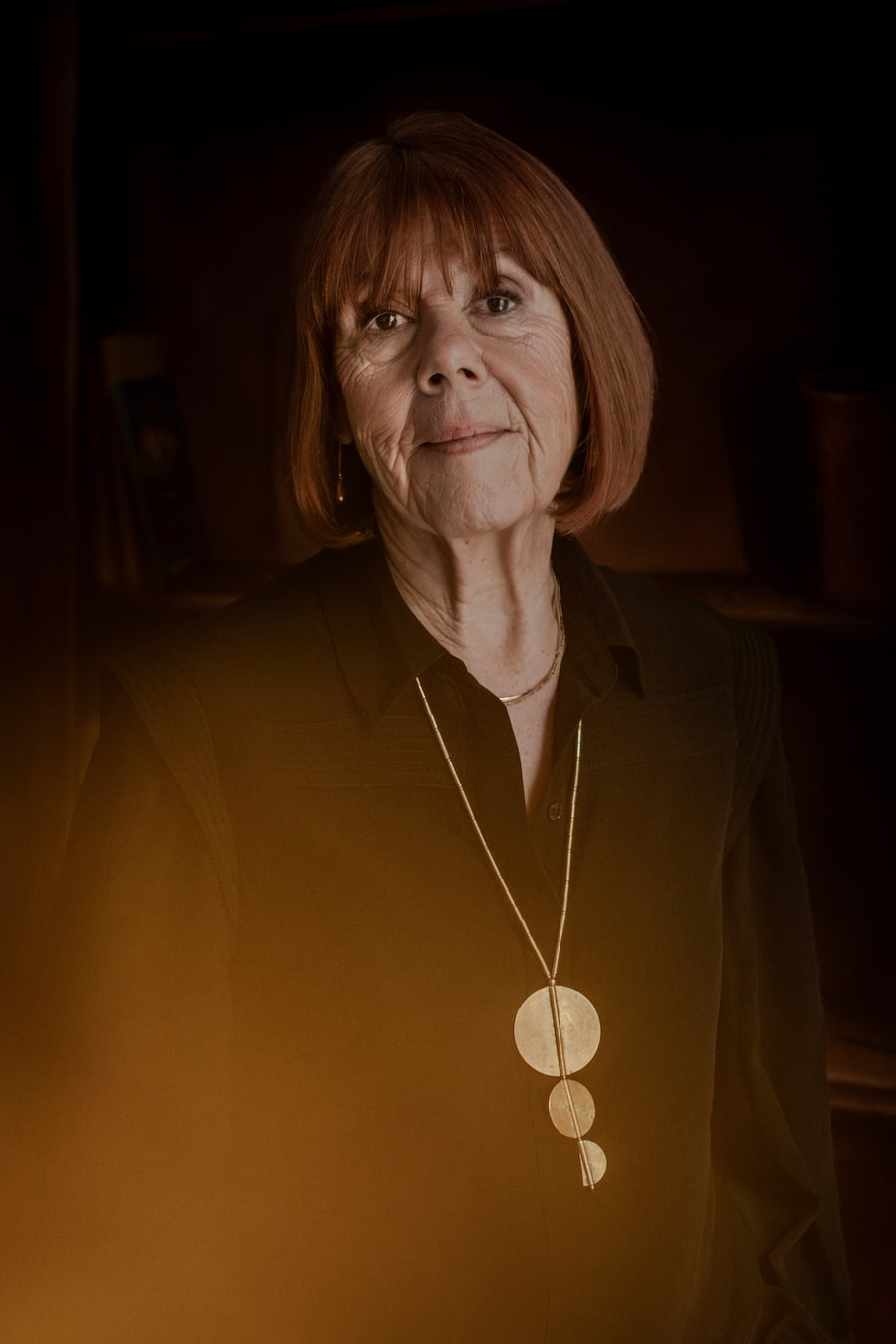
When we meet at her agent’s office in Paris, she appears serene, her voice gentle but confident. She is impeccably dressed. She has always been this way, she says, but during the trial, her elegance became a subject of conversation.
“The more people commented on it, the more I nurtured that elegance. It was also a way of asserting my presence over this tormented body, of giving it back everything rape had tried to destroy.”

A mural reading 'Gisele, women thank you' near the Avignon courthouse where the Mazan rape trial took place.CHRISTOPHE SIMON/AFP/Getty Images
As we talk, she sits in front of a portrait gallery showcasing authors her agent has worked with. Pelicot’s is in the centre. Close by is Denis Mukwege, a Nobel Peace Prize laureate recognized for his work with survivors of sexual violence in war-torn regions. Her agent, Susanna Lea, mentions a plan to place their photos side by side.
“It’s such an important message to share with people,” Lea says. “That you can get back up, and that victims of sexual violence do not have to feel ashamed. Those two messages are the battle of a lifetime, and it’s through books that we can try to help change attitudes.”
Since the trial ended, Pelicot has been named one of Time’s most influential people of 2025, awarded France’s Legion of Honour and received countless accolades. When asked whether she’s a feminist icon, however, she shakes her head.
“I don’t feel like an icon, I think I’m an ordinary woman who has done something extraordinary, and I would say I’m more of a reference point or a symbol for women. I’m just me, with my personality and all that I am.”
To let the world get to know her, Pelicot enlisted the help of a journalist and writer named Judith Perrignon. The two spent days together on Île de Ré, talking, sharing every meal and going on walks along the beach.
“I asked her to come stay with me at my home. I didn’t want us to meet for two hours in a restaurant or in a hotel room – I wanted her to get to know who I was,” Pelicot says. “I really wanted her to immerse herself in my life, to be in my brain, inside my mind.”
After a few days together, Perrignon would leave with her notes and work on the book until their next visit. Often, Pelicot would call the writer to share more memories or add context to what they had discussed. They exchanged drafts back and forth until every line felt right.
The result is a book that feels intimate and personal.

Amazon/Supplied
“When I read it, I truly feel like I’m the one who wrote it,” Pelicot says. “And I tell her she’s a magician, because she was truly exceptional in writing this book. I found someone who listened deeply and whom I could trust. And she captured perfectly what I entrusted her with.”
Until the trial, Pelicot had never considered putting her story in a book. But as her case grew beyond herself and proposals came in, the idea began to resonate.
The exercise wasn’t easy. Pelicot had to open up about difficult and painful memories. “It was both enriching and painful, because I had to dig deep within myself. I laid my soul bare in this book.”
A Hymn To Life is about much more than just the court case. It covers decades, exploring the experiences that shaped her, including financial struggles, career milestones and the loss of her mother when Pelicot was just nine years old.
She doesn’t shy away from the 50 years she shared with her ex-husband. She can still picture the first time she saw him, looking like a French pop star in her aunt’s kitchen. It was the 1970s, and she was just 19 when they fell in love.
What’s one to do with all those memories? Pelicot aims to salvage “relics from the ashes,” rather than walking away from it all. “You don’t get a second chance at life,” she writes. “If I erased everything, it would mean I was dead, and had been for years.”
Showing the fullness of their relationship also reveals how violence can take root even in couples who appear loving, stable and ordinary.

'I can’t forget what happened to me,' Pelicot says. 'The scars are indelible, but I’ve tried to make something out of them. That’s who I am, I’ve always tried to bounce back.'Kasia Strek/The Globe and Mail
For years, Pelicot’s husband, Dominique Pelicot, secretly crushed sedative pills into home-cooked meals, after-dinner glasses of wine or before-bed bowls of ice cream. All she saw were gestures of a man who adored her. “I thought I had a perfect husband. I had a happy life with that man. No one would have imagined what he could put me through,” she says.
A day after Pelicot learned of the assaults, police shared two disturbing photos they had found of the couple’s daughter sleeping in lingerie. Had she been subjected to the same kind of abuse?
Pelicot’s children had rushed to Provence to be with her. That night, her daughter asked her to share a room. Afraid their pains would merge, and terrified of falling apart, the mother said no. Instead, she slept in the marital bed. “The scene of rape, but still my bed,” she writes.
The next day, she watched her daughter spiral into a panic attack, struggling to process the discoveries. A few hours later, the family managed to board a train for Paris. Long silences lingered as they all sank into shock and exhaustion.
“By the time Christmas arrived our family had disintegrated. We didn’t spend Christmas Eve together. The horror was etched deep in each of us,” she writes, the weight of unanswered questions only deepening the wound.
“Everyone had to heal in their own way. It takes time, but we are on the right path,” she says during our conversation. “Relations with my children are more peaceful today.”
The memoir is for her family, too. It’s a way to give her children and grandchildren a legacy to be proud of, which is also why she chose to keep using the last name she shares with her ex-husband.
She knew that was the right decision after her granddaughter sent a text: “Grandma, I’m proud of you.” A teacher at school recognized the name and told the girl her grandmother had done something extraordinary.
“I can’t forget what happened to me,” Pelicot says. “The scars are indelible, but I’ve tried to make something out of them. That’s who I am, I’ve always tried to bounce back.”
She is in love again, with a widower who lives on Île de Ré. He was the one who drove her from the crowd on that final day of the trial. When she talks about him, her eyes glimmer with tears of joy.
“I’m 73 years old now and I’d like to fully enjoy the years I have left to live with the people I care about and love.”