
Mark Critch has been making his life flash before his eyes for half a decade now – and though it hasn’t quite driven the long-time This Hour has 22 Minutes satirist mad, it’s occasionally brought him to the brink.
Son of a Critch, the CBC show inspired by his Newfoundland youth, which he produces, writes and acts on, begins its fifth and final season on Sept. 8. The sweet coming-of-age comedy stars English actor Benjamin Evan Ainsworth as a young version of Critch making his way through Catholic school and discovering his vocation in comedy.
Narrated by Critch, it’s been in part a nostalgia trip back to the 1980s and 90s – and to the style of TV shows of that era such as The Wonder Years.

The cast of the first season of Son of a Critch.CBC/Supplied
Behind the scenes, however, Son of a Critch was more of an avant-garde, auto-fictional art project – think Synecdoche, New York but a sitcom. At least that’s what comes to mind listening to Critch, 52, over lunch as he tries to untangle memories from the hall of mirrors he’s created.
A typical day at work might see him dressing up like his late father, the radio broadcaster Mike Critch, whom he plays on the show, or watching actors recreate scenes from his high-school theatre arts class in the actual St. John’s classroom where they took place – an “out of body experience,” he says.
But the moments Critch really felt as if he had stepped onto the Star Trek Holodeck happened when he filmed scenes on the studio set, which had faithfully recreated the cramped house he grew up in.
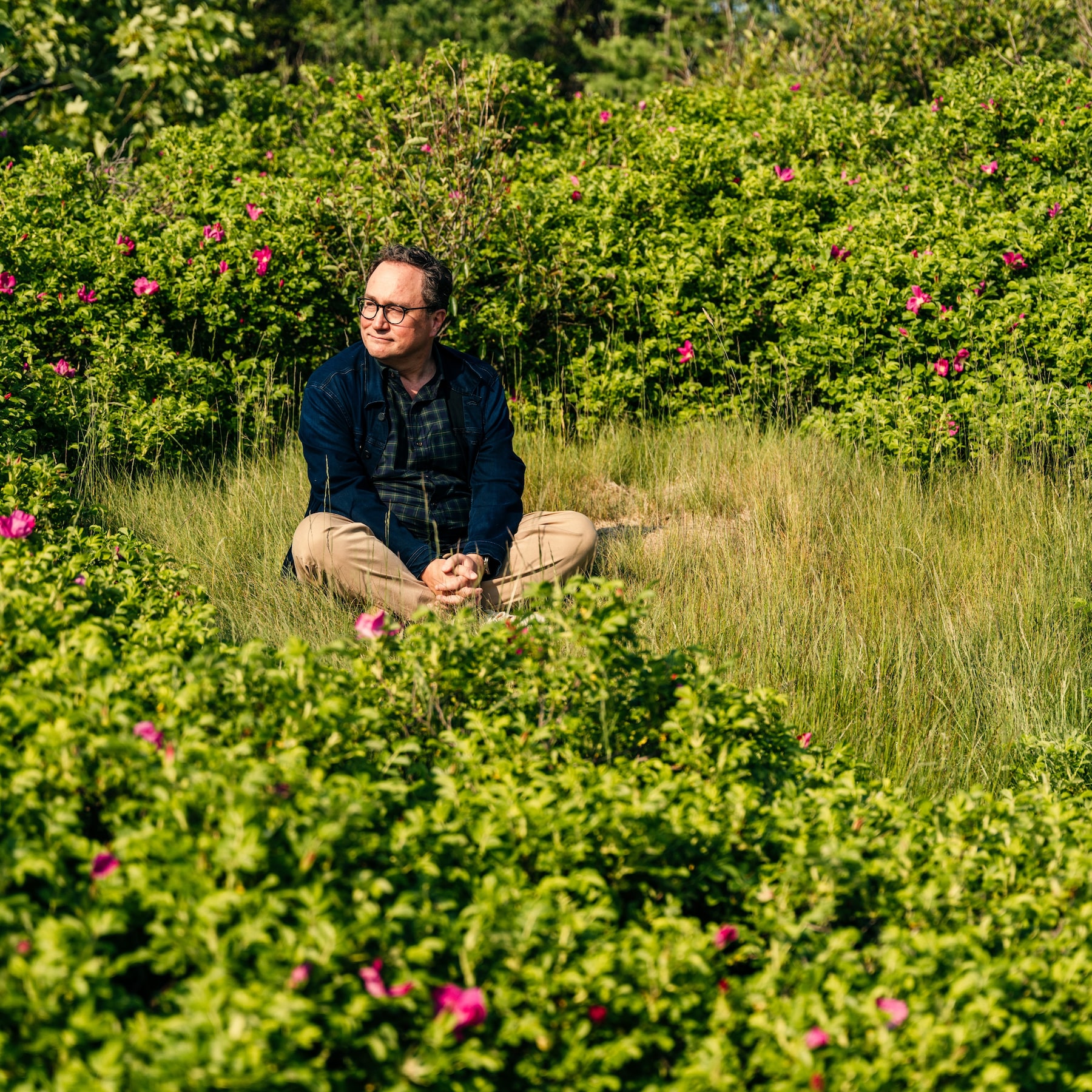
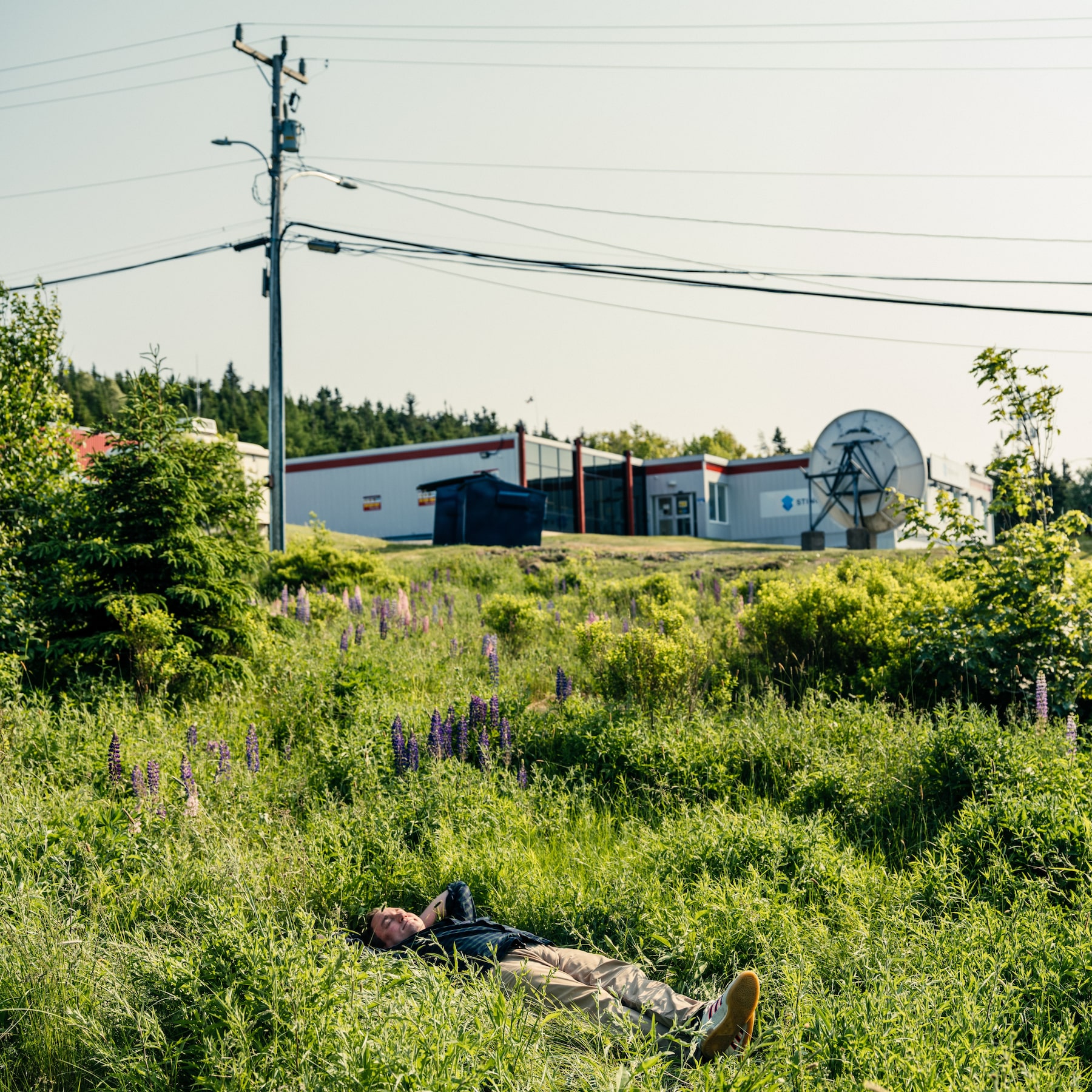
Located on a four-lane stretch of the Trans-Canada Highway outside of St. John’s, the comedian and actor’s real childhood home – a company house next to the radio station VOCM where his father worked – was demolished decades ago; all that remains is the old driveway and a field, taken over by the roses his mother once planted.
Comedian Mark Critch plays 'house' in the empty lot where his childhood home once stood.
Johnny C.Y. Lam/The Globe and Mail
Critch pulled real family furniture and heirlooms out of storage to dress the set simulacrum, including the radio seen on the kitchen counter, through which a young Mark heard his father’s disembodied voice delivering breaking news with his signature phrase: “Details are scanty.”
Critch has slipped through the portal to the past he’s created from time to time. One day when shooting the final season, he let his mind wander and found himself headed over to the windows of the set to see what was going on with the neighbours.
“As I touched the curtain, I realized what I was doing,” recalls Critch. “But for that six seconds, they could have been there, you know what I mean?” He pauses – and the curtain that’s his usual droll tone pulls back, for a moment. “Everybody was alive for that second in my head,” he says.
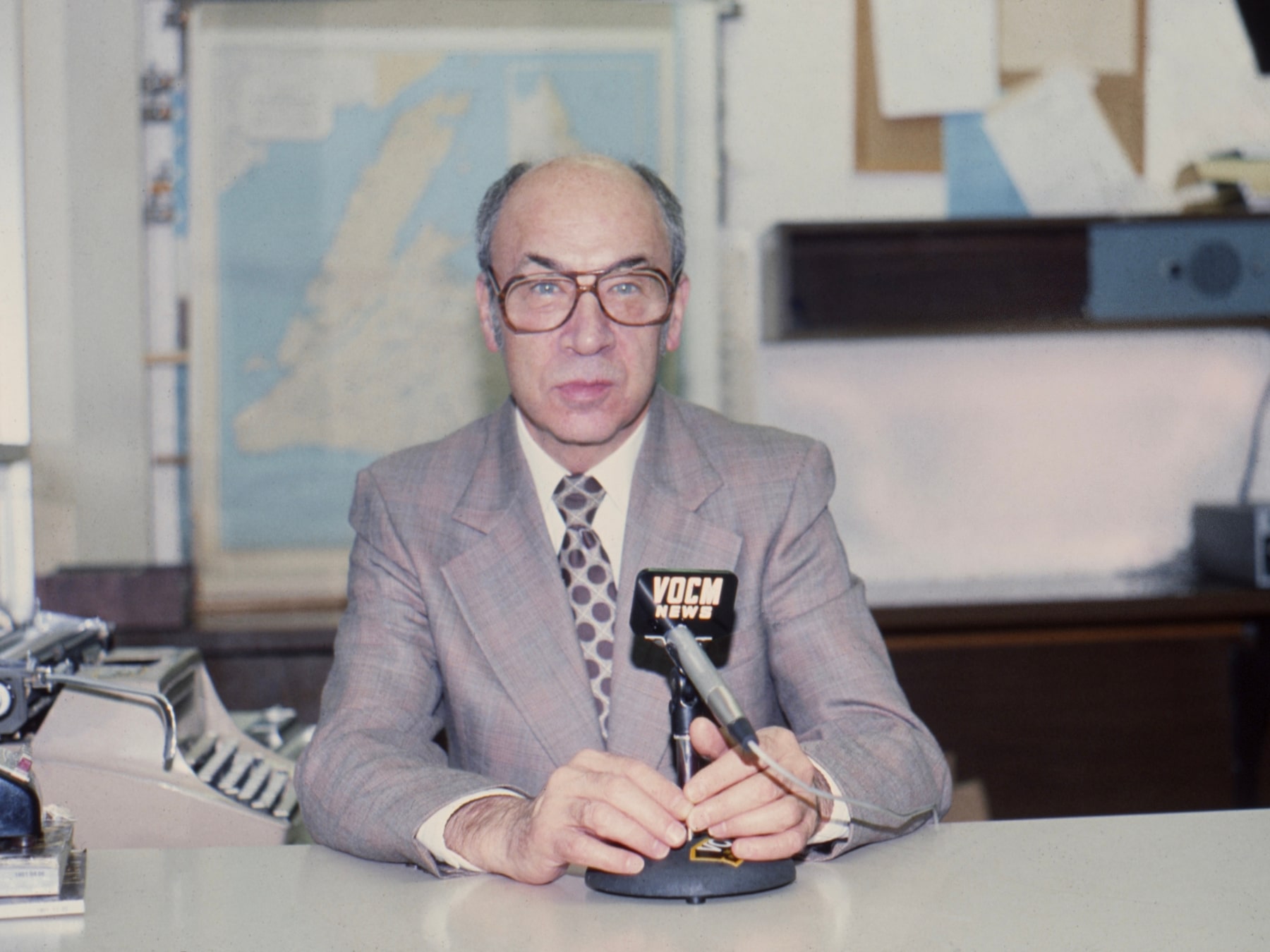
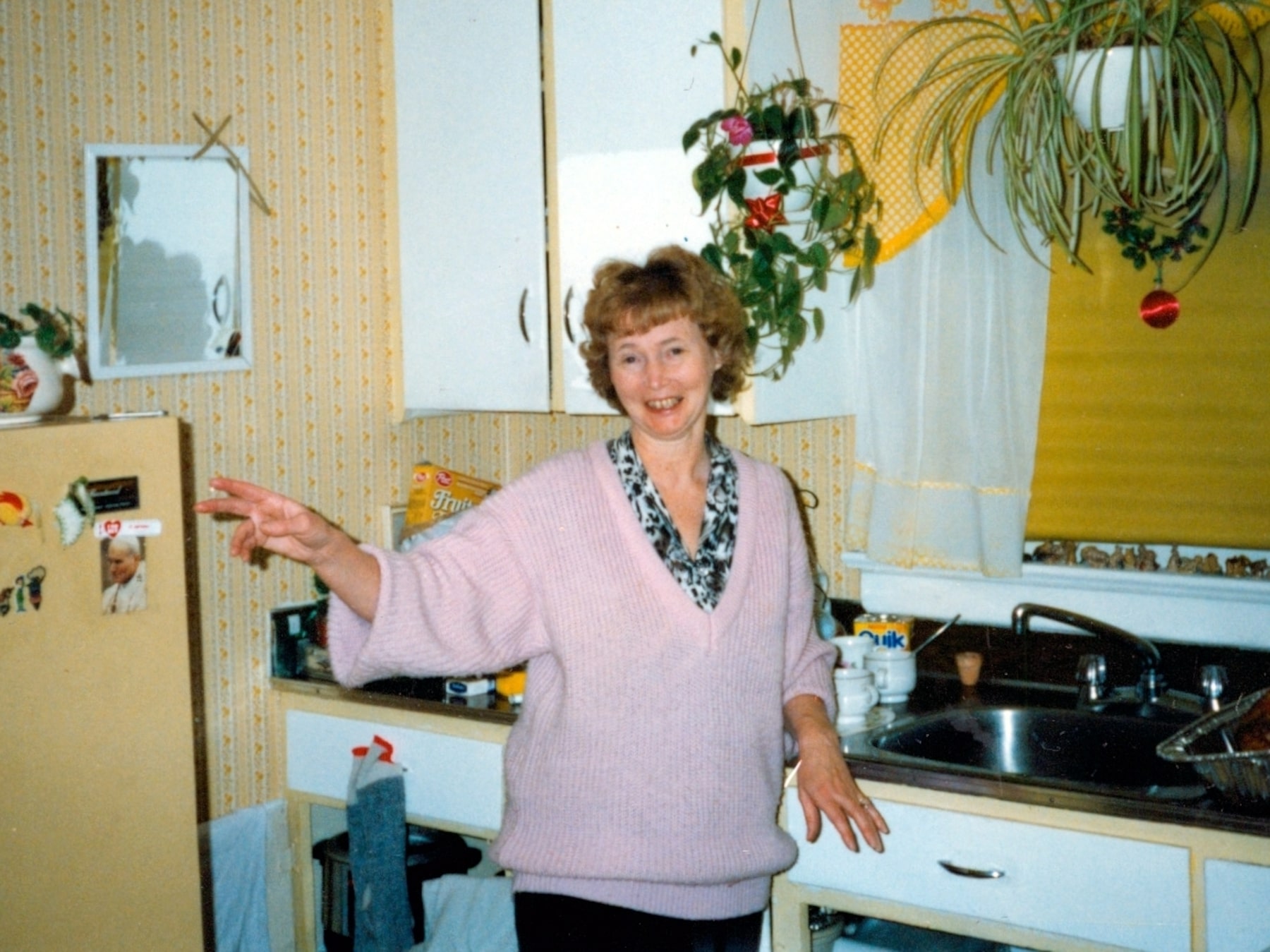
The deaths of Mark Critch’s parents immediately preceded what has become a more than 10-year project to entertain Canadians by resurrecting them in words and on screen.
His father passed away at age 93 in 2015, and his mother, Mary Critch, played by Claire Rankin on the show, died at age 80 in 2017.
In between these overwhelming losses, Critch started work on Son of a Critch: A Childish Newfoundland Memoir, which was published in 2018 and became a national bestseller.
The timing suggests the project was designed to channel grief – or dodge it. But Critch insists none of this was ever really his idea at all.
Penguin Random House Canada approached him in 2016 about writing a book – and Critch says he originally pitched a Canadian showbiz memoir, one that would cover his rise doing theatre, sketch comedy and satirical commentary on Newfoundland stages and regional television, anecdotes about being cash-strapped and couch-surfing at Rick Mercer’s, and his national breakout on 22 Minutes. (He would eventually write this – his 2021 follow-up, An Embarrassment of Critch’s.)
After submitting a chapter about his childhood, however, an editor urged Critch to expand it into a book of its own, to which he recalls thinking: “Man, that’s really stretching it out.”

A young Mark Critch.Mark Critch/Supplied
Similarly, Critch says he was skeptical of a TV adaptation when first suggested by showrunner Tim McAuliffe, a long-time collaborator who he used to write 22 Minutes sketches with on the back of napkins over dinner.
But the idea sold quickly to the CBC after a pitch at Just for Laughs in Montreal, and the show premiered in 2022 to an initial audience of 740,000 viewers and, the network says, remained the country’s most-watched comedy in its fourth season.
Regardless of whether it’s been on purpose or by accident, Critch now finds himself at the end of that journey juggling three versions of his childhood in his mind. It’s like watching a contortionist unknot himself as he answers questions about the differences between the comically embellished memoir he penned, the scripted series based on it and what really has happened in his life.
Take the Son of a Critch grandfather Patrick “Pop” Critch, played with verve if not anything resembling a Newfoundland accent by the Liverpudlian actor Malcolm McDowell.

Malcolm McDowell plays Pop in the series, with whom Critch has become close with off set.DERM CARBERRY/CBC/Supplied
Critch says Pop is partly inspired by Frank Leonard, a cousin of his father who had a wicked anarchist streak, and partly by his father himself in his later years when he was grandfather to Critch’s two boys, Will and Jacob.
But the very first version of the character – Critch clarifies by text a month on from our first interview, still untangling his phantom family – was inspired by his grandmother, who lived with his family and died one night just as his parents were about to go out for the evening.
That shocking story of being a child and nearly left with a lifeless grandparent plays out like farce in Critch’s memoir – which he originally intended to recreate in the TV series but thought would only be comically palatable with the genders swapped. “I could play the death of a cranky grandfather for laughs more than that of a sweet nan,” he texts. (He decided not to kill off the character, he says, only after McDowell was cast in the role, and he wanted to keep him around.)
It’s a long Newfoundland tradition, of course, to find laughter in loss and humour in hardship.
The real Patrick Critch, the comedian’s patrilineal grandfather of that name, died long before his grandson was born – on Christmas Day in 1928, when Critch’s father was still a boy.
Patrick had fallen off a roof, then contracted tuberculosis in the hospital, becoming the second Critch man in a row to experience a workplace-related death, his father having drowned at sea on a whaling expedition in 1896.
That tragic but not anomalous Newfoundland family history stopped repeating with Critch’s father – the first of three generations of men to enter fields such as broadcasting and entertainment.
That includes Mark’s two twentysomething sons: Jacob, the older, is a software engineer who is also a songwriter and has penned a number of J-pop and K-pop hits that have charted abroad; Will, the younger, performs as a drag artist under the name Gravy.
As Critch puts it in his memoir, self-deprecatingly: “It’s no wonder we Critches stopped being useful. Being useful was dangerous.”

Critch says he was skeptical of turning his book into a TV series initially when the idea was presented to him.Johnny C.Y. Lam/The Globe and Mail
While Critch can expand, over months, upon the multitudes that Pop contains, he is more cautious about some of the other composites in his oeuvre.
Fox, Mark’s romantic interest in the show played by Sophia Powers, was inspired by three girls he knew growing up, he says – while Fox, the childhood frenemy in the memoir who ends up in jail, is an amalgam of three different boys.
“I didn’t want to name them or make anyone in Newfoundland, which is a very small place, read the book and go, ‘oh that’s so and so,’” says Critch.
That level of discretion has not been extended to all the living – notably, his older brother Mike Critch Jr.
Better known as Mike Campbell, the name he adopted for his Newfoundland radio career to distinguish himself from his father, he has spent years on what he calls the “emotional roller coaster” of watching his parents come back to life in semi-recognizable sitcom form on screen alongside a version of himself played by Colton Gobbo, which he says is sweeter and less acerbic than he is.
“Mark has done this with reckless abandon,” says Mike, who hosts a morning show on K-Rock 97.5 and is director of programming for Stingray for Newfoundland and Labrador, over the phone from St John’s.

Mike Critch followed in his father’s footsteps and works as a morning show host on K-Rock 97.5.Mark Critch/Supplied
While the original memoir was being written, Mike says he had to hear about drafts of chapters from his brother’s famous pals such as Saint-Pierre star Allan Hawco and Great Big Sea singer Alan Doyle, but did not get an advance look himself.
“Right before the book came out, Mark texted me saying, ‘I’ve used some of your stories. I’ve changed a few things, but you’re getting a free book so I think that this makes it square,’” he recalls.
As for the CBC series, Mark had to get his brother’s legal permission to include him as a character – and Mike says that request came at the last minute, with a half-hearted apology for needing his signature by end of day. “He texted me a 15-page legal document, which disallows me to ever write my own book, to ever do my own show,” he says, with the resigned tone of a sibling eight years older.
Mark admits he may have at times asked for forgiveness rather than permission, waiting, for instance, until after he’d shot the season-three plotline based on his brother dating a young woman who was pregnant with another man’s child to talk to him about it.
“I could do that because it’s my brother – because that’s what brothers are for, I guess,” Mark says. “It was out of love. It was out of admiration.”
“Sometimes you just kind of gotta swallow something and ask yourself, ‘Is it worth it?’” Mike says. “With Mark, I find myself continuously doing that.”
But the admiration is mutual. “I’ve always been super proud of my brother,” says Mike.

Sophia Powers as Fox and Benjamin Evan Ainsworth as Mark Critch in the fifth season of Son of a Critch.CBC/Supplied
Son of a Critch has not only been a project to resurrect Critch’s late family – but to build a new one around the show with cast and crew.
Critch FaceTimes with his young on-screen alter-ego Ainsworth and his family in England on Christmas and has become great friends with McDowell, going down to visit him in Los Angeles.
“In a way, we were kindred spirits,” says McDowell, now 83, who found aspects of Newfoundland culture that reminded him of Liverpool growing up and was gifted a membership at the St John’s Crow’s Nest Officers’ Club by Critch early on.
Ainsworth, now 17, says he’s come to appreciate exactly what a welcoming set Critch created over time after experiencing more isolated sets. “He’s really made it such a lovely environment to grow up in for me and the other actors my age on the show,” he says, recalling going fishing with Critch and catching a sea cucumber during the first pandemic-shot season.
Son of a Critch is coming to an end as the Critch character leaves high school – but also in part because Ainsworth has grown up and blown up. He’s one of the Targaryen clan on HBO’s House of the Dragon, and he recently filmed The Legend of Zelda, a movie adaptation of the video game in which he plays main character Link.
This fall ends a watching ritual for many Canadian families – like that of former prime minister Justin Trudeau. A friend of Critch since he was an MP, this spring he visited the set with his son Hadrien, who got to be an extra for a day.
When he was a kid in the 1980s, Trudeau would watch comedies such as Family Ties, Cheers and reruns of Happy Days with his family – but, in an e-mail interview, he ruefully notes how viewing has became more of an individual experience with his older kids; he’d be watching Andor, while his son Xavier, tuned into The Boys and his daughter, Ella-Grace, streamed Gossip Girl.

Scenes are set around the dinner table in the series, often prompting viewer conversations of their own.DERM CARBERRY/Supplied
“I was looking for a show that my 11 year old and I could really share, and Son of a Critch was exactly that,” Trudeau writes. “Over the years, watching an episode together after dinner or just before bed once or twice a week became one of our little rituals.”
“It gave us time to laugh, talk and connect, and it sparked so many conversations that we’d both remember long after the show ended.”
Critch has made a point of including storylines that could spark those conversations – starting with the Mount Cashel Boys’ Home sexual abuse scandal in an episode the first season, which he says CBC executives initially pushed back against.
“I knew young kids were watching; I didn’t want to have to make this super uncomfortable dark episode, but when I was a kid, when I was that age, everybody was talking about it,” he says.
Critch’s love of Newfoundland history – which helped forge his initial connection with his wife of seven years, Melissa Royle, a lawyer who was chief of staff to former Newfoundland and Labrador premier Andrew Furey – is what makes the series a true contribution to Canadian culture, incorporating events from the 1988 hydroponic cucumber disaster to the failure of the Meech Lake Accord in 1990.
Set in 1992, the final season will reckon with the effects of the cod moratorium, which left nearly 30,000 in Newfoundland and Labrador out of work just as Critch became an adult.
The economic challenges came a year earlier for the Critch family when Mike Critch was, as his son puts it, “given the nudge” and had to retire at age 70.
The loss of his job also meant the Critch family had to move out of the house Mark grew up in.
On the second last day of shooting Son of a Critch, the actor arranged for his sons Will and Jacob, his wife and her parents, and Mike to spend some time in the recreation of that home alone.
It was an emotional experience. “It was almost the end of two eras,” Mike recalls.
“We were processing a lot of our real parents,” says Mark. “I lost them the first time; I let them go now.”
Critch seems ready to now put away his childhood – he’s got his 24th season on 22 Minutes ahead of him (the record tenure, by Cathy Jones, is 28) and is working on a historical novel inspired by the surrender of a German U-boat at Bay Bulls, Newfoundland, in 1945.
Then there’s his own family to take care of after a tragedy earlier this year. Emily Drake, Critch’s son Jacob’s long-time fiancée, died of cancer on Valentine’s Day at 27.
It was a difficult time, but he was heartened by the way this century’s less nuclear Critch clan – from his brother, to his wife, to his ex and kids’ mother, Sherrie Windsor – were all able to come together with love and support for Jacob.
“We hadn’t spent all that much time as a unit over the years, you know, just because everything’s back and forth,” says Critch, who like many Newfoundlanders has spent so much of his life as a seasonal worker, travelling to Halifax to shoot 22 Minutes each year, then back home for the summer.
Making Son of a Critch has left him pondering what turns a moment into a memory. He says there will be maybe 13 moments that he really remembers in a year. He’s has been filling in the gaps between with humour, with heart and no lack of chutzpah.
“You get to put things back a little better than they happen, you know,” he says. “Because it’s TV, where the sun always shines.”

DERM CARBERRY/CBC/Supplied
More from The Globe
Mark Critch: Small province, big heart: Why I stay in Newfoundland and Labrador
Mark Critch: Canada’s memorials reveal who we are as a country