Constellations “reveal themselves one star at a time.”
So says Bobcaygeon, arguably the Tragically Hip’s most famous song (and certainly a contender for this country’s alternate national anthem).
New musicals are much the same. The good ones don’t hatch in a day; they seldom come to fruition in one draft, or two, or even 15. They appear fuzzy on first encounter before eventually focusing into full-blown cosmos.
Since the Tragically Hip’s first performance in 1984, the group’s discography has soundtracked what it means to live in this country, with songs about everything from our prime ministers to the cottage-filled enclaves of rural Ontario. The Hip’s fan base is devout and protective of the work – especially since the untimely passing of front man Gord Downie in 2017.

Dharma Bizier, left, Alyssa Curto, centre, and Tahirih Vejdani rehearse at Theatre Aquarius in Hamilton on April 15.Carlos Osorio/The Globe and Mail
Now, the Hip has made the jump to theatre, with a brand-new jukebox musical, It’s a Good Life If You Don’t Weaken, that uses the band’s catalogue as the backdrop for the high-budget stage show.
In 2021, Canadian theatre producer Michael Rubinoff reached out to Jake Gold, the Tragically Hip’s manager, proposing turning the band’s songs into a musical. Gold was interested but hesitant at first – “We didn’t want a We Will Rock You,” he said.
Eventually, Rubinoff’s pitch – a story about a new immigrant adjusting to life in Canada – got the sign-off from Gold, and from the Hip themselves. The next four years were a slew of paperwork – legal clearances for the music, mostly, and other intellectual property negotiations between the Hip and the show’s producers.
Unlike most musicals in this genre, It’s a Good Life If You Don’t Weaken isn’t about the band – there was never a world in which this story would follow the life and career of Downie, according to both Gold and Rubinoff. In the end, it tells the tale of Waleed Al-Temimi, an Iraqi journalist living in exile in Kingston, Ont. – famously, the Hip’s hometown.
Last year, I was invited to follow the development of the musical behind the scenes. The experience was eye-opening.
As a critic, I’m used to sitting in a dark room and taking note of the things that go wrong. But witnessing the evolution of this show, I became newly aware of just how many things have to go right in order for a piece of theatre to make it to the stage. Creating a new musical is a fundamentally inefficient endeavour – there has to be enough time for things to fail, for tempers to ebb, for dust to settle.
This work requires an optimism that things will, against the odds, work out.
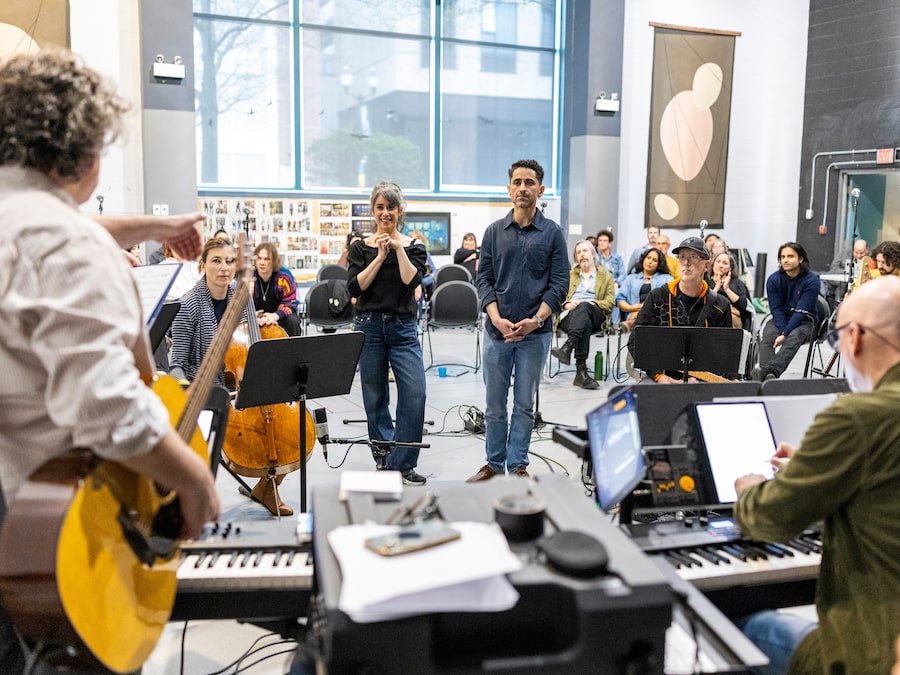
Tuesday, Aug. 5: Toronto Metropolitan University
It’s the first day of rehearsals for a workshop of It’s a Good Life If You Don’t Weaken. Opening night is on May 1, 2026 – just 269 days from now.
For the next three weeks, the cast and creative team will try things out at Toronto Metropolitan University’s Chrysalis performance space. And while the writers have already completed a few small developmental workshops, this one is longer: All going well, these weeks will give the team a chance to finesse the show with actors and musicians before heading into rewrites this winter, and then full-tilt rehearsals in the spring.

Mary Francis Moore, artistic director of Theatre Aquarius.Carlos Osorio/The Globe and Mail
The day starts with remarks from the bosses: Rubinoff, originating producer of the Tony and Olivier Award-winning Come From Away, and Mary Francis Moore, artistic director of Theatre Aquarius in Hamilton, Ont., where the musical will have its world premiere in May. The eventual show, produced by permission of Rubinoff and David and Hannah Mirvish, will be a co-production between Theatre Aquarius and Thousand Islands Playhouse, with additional support from the National Arts Centre and its National Creation Fund.
Brian Hill, the show’s present director and co-writer, spells out the basic shape of the story: It’s set in Kensington Market, a vibrant immigrant community in Toronto that, to his eye, perfectly represents the universality of the Hip’s lyrics.
“Musical theatre rules don’t apply to this show,” he says. Ahmed Moneka, Hill’s co-writer and, for now, an actor in the show, concurs. Himself an Iraqi immigrant – and Juno-nominated musician – he’s quiet but smiley as Hill talks.
Music supervisor and orchestrator Neil Bartram soon plunks out the notes to Ahead by a Century; the cast bellows the song as if they’ve been singing together for years. I leave at lunch, energized and impressed.

Playwrights Ahmed Moneka, left, and Jesse LaVercombe at a workshop day on Feb 5.Dahlia Katz/Supplied
Monday, Aug. 12, 2025: Toronto Metropolitan University
Hill sets goals for the week: to hear the show from beginning to end, and to finalize a few orchestrations, and to experiment with staging. There will be a presentation of the group’s work at the end of the workshop – mostly for the producers and a few industry contacts – but the cast shouldn’t worry about it, he says breezily.
“It’s a waste of rehearsal time,” he jokes, stressing that the presentation will only last half an hour or so.
The cast works with choreographer Marc Kimelman to find the physical vocabulary of the piece. “I don’t want to make it a dance show,” says Hill. To that end, Kimelman’s work is decidedly abstract, a collection of gestures rather than traditional dance moves. It suits the Hip’s poetic crunch.

A musical score for Bob Foster's arrangement of "Blow at High Dough" by The Tragically Hip rests on a music stand during a rehearsal.Carlos Osorio/The Globe and Mail
Aug. 13-27, 2025: Toronto Metropolitan University
The rehearsals I attend are joyful, hopeful, collaborative. When I bid the team adieu a few days before their final presentation, there’s no reason to think things are anything but peachy.
The rumours find me before I go looking for them.
Sources close to the production tell me the presentation went poorly – the musical’s script is unsalvageable, they say, and the producers are making big changes to the project. (The Globe and Mail is not identifying the sources because they were not authorized to discuss the workshop publicly.) I hear nothing from the team about next steps.
Saturday, Sept. 6, 2025: Burdock Brewery
I run into producer Rubinoff at an event for new musicals in Toronto, and when I ask how the presentation went, he laughs lightly, a hitch in his brow: “The book, the book, the book,” he singsongs, referring to Hill and Moneka’s script.
Thursday, Feb. 5: Mirvish Productions
It’s bitterly cold in Toronto, where It’s a Good Life If You Don’t Weaken is once more being workshopped – with a brand-new book, and a mostly new creative team. A lot has changed since those rosy weeks back in August.
But after a stretch of silence from the producers, I’m in one of Mirvish’s rehearsal studios in Toronto – and I’m back in the loop.

Director Mary Francis Moore at a workshop day on Feb. 5.Dahlia Katz/Supplied
Most notably, music supervisor Bartram and director/co-writer Hill are no longer on the project, owing to creative differences with the producers. (Bartram and Hill declined to speak with me for this story.) The show’s old script has been scrapped entirely; even its premise has been adjusted. In its new form, the story has nothing to do with Kensington Market: It’s now set 265 kilometres away, in Kingston, and follows Waleed, an Iraqi journalist living in exile as he learns how to navigate dual lives in Canada and back home.
Playwright and actor Jesse LaVercombe has been hired to help pen the show alongside co-writer Moneka – the friends previously worked together on the award-winning, culture-bending King Gilgamesh and the Man of the Wild, which has played across Canada and the U.S. Together, they’re trusted to create something special, and fast.
Theatre Aquarius artistic director Moore, meanwhile, will direct; Come From Away alum Bob Foster will supervise music.

Bob Foster, orchestrations and music supervisor, right, and music director Richard Evans, centre, work alongside drummer Aubrey Dayle during a rehearsal on April 15.Carlos Osorio/The Globe and Mail
As scored by Foster, the musical now opens with a string of Hip hits: Courage, then New Orleans Is Sinking, then Blow at High Dough. The new script wastes no time with pleasantries, instead dunking audiences into the action as Waleed speaks against the Iraqi government on international TV. As the character goes through the motions of immigrating to Canada – the jabs, stamps and vexations that accompany starting a new life abroad – the music thrums with Middle Eastern drums.
But while the new material is promising, it’s unfinished. The second act in particular needs significant attention: A frame narrative involving a narrator named Sam is workable, but in need of de-cutesifying, and a dozen songs are left to be arranged and scored.
The next time I see this group together, it will be in Hamilton, where It’s a Good Life If You Don’t Weaken is scheduled to begin previews in just 76 days. In the meantime, the writers will write. The performers will film promotional music videos at a Toronto recording studio. The marketing team will write advertising copy for a show that does not yet exist.
Tuesday, March 24: Theatre Aquarius

The cast and crew look at sketches and renderings on March 24, the first day of rehearsals.Dahlia Katz/Supplied
It’s yet another first day of rehearsal. Opening night looms just 38 days away.
In Theatre Aquarius’s cavernous rehearsal studio, the show’s designers present sketches and renderings: Scott Penner’s blue-grey set, inspired by the architecture of Baghdad, Hamilton and Kingston, will be covered in Hip-themed graffiti. Joyce Padua’s costumes, owing to the musical’s 2002 setting, will honour the best of Y2K-style grunge. Kimelman’s choreography will remain abstract, riffing on the themes of the story and songs without making them overly literal in the dancers’ bodies.
Moore is all smiles as the cast settles into their table read. Moneka, currently on tour with his band in Western Canada, listens to the read-through on Zoom – he’ll join the team in Hamilton in a few days.

Talia Schlanger, who plays Kate, and Ali Momen, who plays Waleed, during rehearsals on April 15.Carlos Osorio/The Globe and Mail
Ali Momen, an Iranian-Canadian actor best known for his portrayal of Ali, Kevin J. and others in Come From Away, immediately digs into the emotional complexities of Waleed. His voice easily stretches to accommodate the Hip catalogue’s range, and the story sounds at home in his mouth – it’s as if he’s been rehearsing the role for years and not minutes.
Talia Schlanger, a broadcaster as well as a musician and actor, brings similar depth to Kate, a local shopkeeper and the show’s second romantic lead. Her rendition of Cordelia is raw, unfiltered and impressive.
It’s not long before the rest of the cast reveals their charms. Karim Butt, a recent theatre school grad, plays the show’s Gen Z narrator – he’s never done a musical at this scale before. Dance captain Dharma Bizier, a Theatre Aquarius regular, is an extraordinary mover; she also grew up in the Middle East and so speaks some Arabic, a handy tool for this show. Singer-songwriter Sameer Cash, a friend and mentee of Downie, portrays Fadi, Waleed’s best friend in Iraq – like Butt, this marks his first professional theatre show.
To cap off rehearsal, the cast works on Courage. The song shakes the foundation of the theatre.

Cast members Kevin McLachlan, Brandon McGibbon, Rebecca Auerbach and Karim Butt on March 24.Dahlia Katz/Supplied
Sunday, March 29: Theatre Aquarius
As I watch Kimelman tinker with the choreography of the opening number, I wonder if the artists find this process as tedious as it looks. If they’re tired, it doesn’t show; no one grouses as the rehearsal stretches into the afternoon.
The group runs the same 20 bars of music at least 10 times, all in service of a single moment, in which a belligerent BBC anchor goads Waleed into speaking his mind. (When the timing issues are eventually smoothed out, the sequence is thrilling.)
Later in the day, the theatre carries the air of a three-ring circus. LaVercombe and Moore huddle at a clump of long tables; the ensemble rehearses choreography at the back of the room; music supervisor and orchestrator Foster works through arrangements on digital notation software, an acoustic guitar resting on his knee as he tinkers.

Playwright Ahmed Moneka, left, and choreographer Marc Kimelman, centre, watch as cast member Karim Butt, foreground, rehearses while director Mary Francis Moore looks on during a rehearsal on April 15.Carlos Osorio/The Globe and Mail
When the full group reunites to tackle scenework, Momen stops the action to ask questions of his character: Why does Waleed say that? Does this part of the story make sense, in 2002, in Iraq? One passage sees Waleed question the meaning of the word “roommate”: Momen suggests the journalist has undoubtedly seen Friends and so understands the term.
LaVercombe accepts nearly all of Momen’s suggestions; a joke about Friends is added to the script. Momen’s interjections will become a regular feature of the building of this show.
Wednesday, April 1: Theatre Aquarius
Co-writer Moneka is back from tour; at last, the studio feels complete. “My heart is bigger than this room,” he says at the top of rehearsal.
Kimelman walks the ensemble through the choreography for Boots or Hearts. In the show, the song is a vessel for Waleed’s first baseball game in Canada; it’s also one of the first backdrops for Waleed and Kate’s love story.
Rebecca Auerbach, who plays Waleed’s editor, Abigail, has a birthday. In the green room, the team sings to her in English, then Arabic, then Farsi.
Moneka teaches Momen an Iraqi descant – a decorative melody that complements the main tune – for the show’s title song. The new musical line, throaty and emotional, floats above the piano as Foster’s fingers fly across the keys.

Michelle Bouey, left, Dharma Bizier, Kale Penny and Rebecca Auerbach rehearse on April 15.Carlos Osorio/The Globe and Mail
Thursday, April 9: Theatre Aquarius
Moore meets with intimacy co-ordinator Greg Carruthers to discuss the day’s proceedings: They’re planning out how Kate and Waleed will kiss, and whose hands will go where when they do.
Upstairs, Kimelman works through Scared. In the show, Waleed sings the song to express his growing inability to write – and to work through the missteps that led him to a job at a coffee shop in Kingston, a world away from his mother and friends. Kimelman shows the ensemble how to hold newspapers between their fingers, and wispy copies of The Globe and Mail soon float around the theatre’s donor lounge.

Canadian theatre producer Michael Rubinoff and director Mary Francis Moore at a workshop day on Feb. 5.Dahlia Katz/Supplied
In the lobby, Moneka and LaVercombe struggle through rewrites. The ending of the show hasn’t come as easily to them as its opening, and both Moore and Rubinoff have encouraged them to spend time on it: There’s an idea to end the musical with Waleed narrating a sentimental newspaper column, but they’re having trouble making it seem sincere.
Back in the studio, Schlanger and Auerbach rehearse Wheat Kings, their voices intertwining in a simple arrangement by Foster. “Let’s see what tomorrow brings,” they croon.
Friday, April 10: Theatre Aquarius
A scene about Waleed’s mother, which sees the journalist’s new roommate, Lucas, try to broach their cultural divide, isn’t quite working.
Momen and Kevin McLachlan, who plays Lucas, offer suggestions that might make the moment less cloying. They reflect on losses in their own lives and rituals of grief from their own cultures.
By the time they’re done, the exchange is one of the strongest – and most poignant – in the show. Moore grins.
Sunday, April 12: Theatre Aquarius
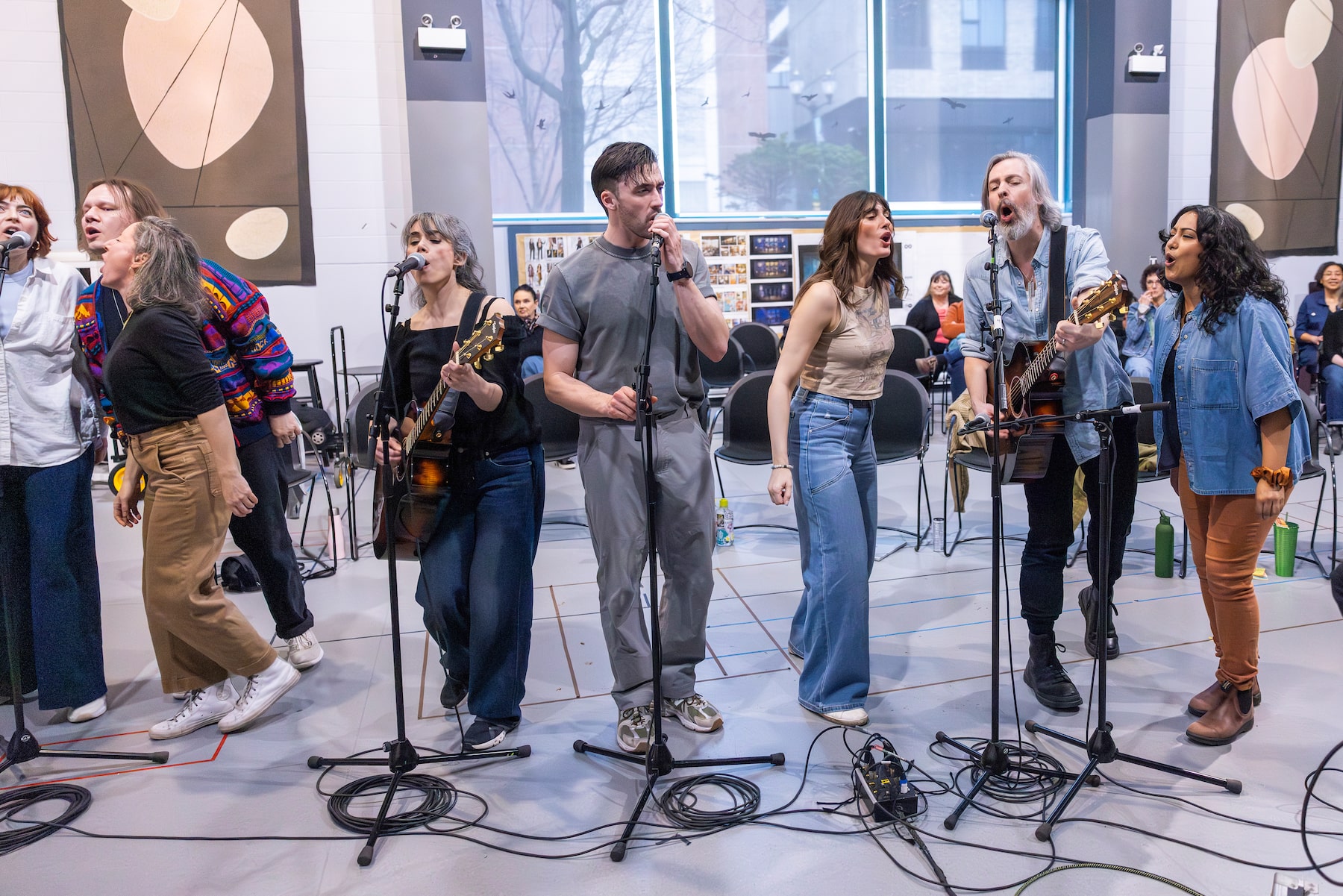
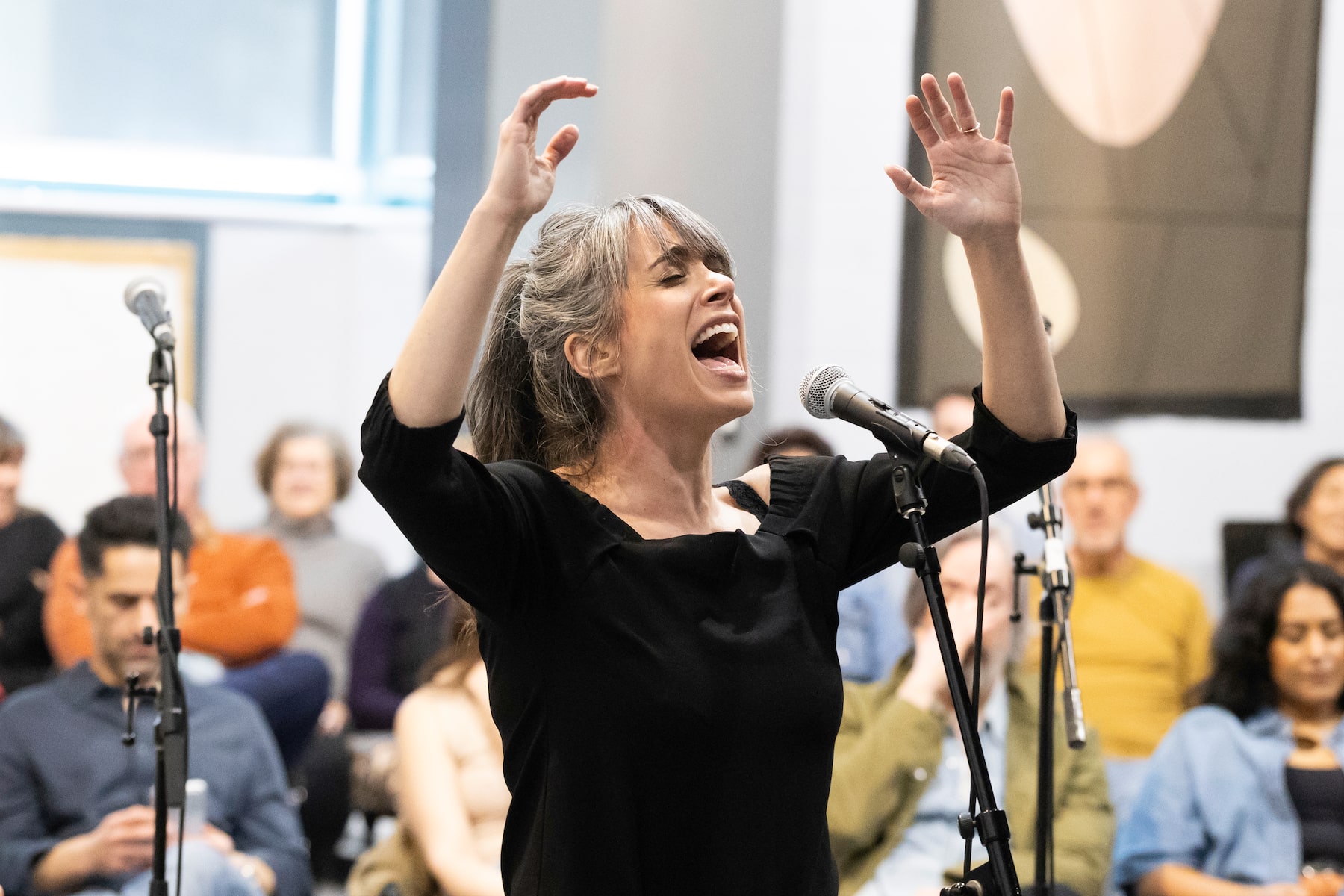
It’s time for a full run-through – a rehearsal of the show, top-to-bottom, without stopping.
It need not be perfect, says Moore at the top of the day. Don’t worry about getting lines word for word – the script has changed by the hour and mistakes will happen. Do your best.
The argument between Waleed and the BBC anchor has been sharpened into a dagger of dramatic impact. The escape scene, in which Waleed travels from Iraq to Jordan to Canada, is visceral and dangerous.
A throwaway quip from newspaper editor Abigail catches me off guard: It’s about an unseen reporter named Murphy. The writers never quite confirm whether my cameo is intentional, but when I point it out between interviews with the producers, cast and creative team, they don’t change it. I’ve earned it, says LaVercombe with a wink.

Cast members and musicians at the show's sitzprobe – the first music rehearsal with the full band – on April 15.Carlos Osorio/The Globe and Mail
April 13 – 30: Theatre Aquarius
Spring turns slushy and grey; ads for the musical appear on social media and Hamilton billboards. While I do visit the show’s sitzprobe – the first music rehearsal with the full band – and a few tech rehearsals, I step back from the production. I catch a preview, then another, and marvel at how quickly the project has bloomed.
It’s a particular bummer, however, to hear that the production has had to cut sparklers from Fireworks, owing to concerns they might pose a fire hazard. Another loss; another hurdle.
Friday, May 1: Theatre Aquarius

It's a Good Life If You Don't Weaken, in performance on April 21 at Theatre Aquarius in Hamilton, Ont.Dahlia Katz/Supplied
“These are the nicest people working in Canadian theatre,” says Moore at a preshow reception for donors and invited guests, tearing up as she thanks her collaborators. We’re back in the rehearsal studio, now transformed into a swanky event space. A server pours Hip-branded wine at an open bar; Moneka and LaVercombe beam at the back of the room; Rubinoff reminisces on the Zoom call that kicked off this whole project all those years ago.
It’s the end of one journey, but the beginning of another: After Aquarius, the show will play in Kingston this fall, then the Segal Centre in Montreal next May. Other cities will be announced soon; a cast album is set to be released later this year.
We mill into the auditorium, its stage masked by a deep red curtain. The sold-out crowd, split between theatre aficionados and CanCon enthusiasts, buzzes with anticipation.
The house roars with approval as recognizable songs bubble up between scenes. People sniffle at Foster’s arrangement of Grace, Too, which starts small – just two acoustic guitars and a pair of voices – before exploding into a no-holds-barred anthem.

It's a Good Life If You Don't Weaken, in performance on April 21 at Theatre Aquarius in Hamilton, Ont.Dahlia Katz/Supplied
I notice new details that weren’t there weeks ago, from the playful pauses of Kate and Waleed’s meet-cute to the subtle layers of the ex-relationship between coffee shop owner Didi (Tahirih Vejdani) and Kate’s brother, Jonathan (Brandon McGibbon). Seven hundred people laugh at the jokes I’ve heard too many times to count – but I giggle with them as if hearing them anew.
All at once, it’s time for Waleed’s first Victoria Day. It’s time for Fireworks.
The cast bops onstage, energetic and lithe. And then, like magic – sparklers. They’re back, the fire-code issue figured out. The dance number doesn’t just look like spring-into-summertime in small-town Ontario, with red plastic cups and disposable pyrotechnics; thanks to the sulphur in the firesticks, it smells like it, too.
“Isn’t it amazing anything’s accomplished?” the ensemble sings, sparks flashing. The crowd grooves along in their seats, blissfully unaware of the long road that led to this night, this story, these artists, this song.
Isn’t it?