In his Theory of Forms, Plato argued that worldly objects are merely physical expressions of eternal ideas.
Spotted: A fake Ferrari made from a Nissan
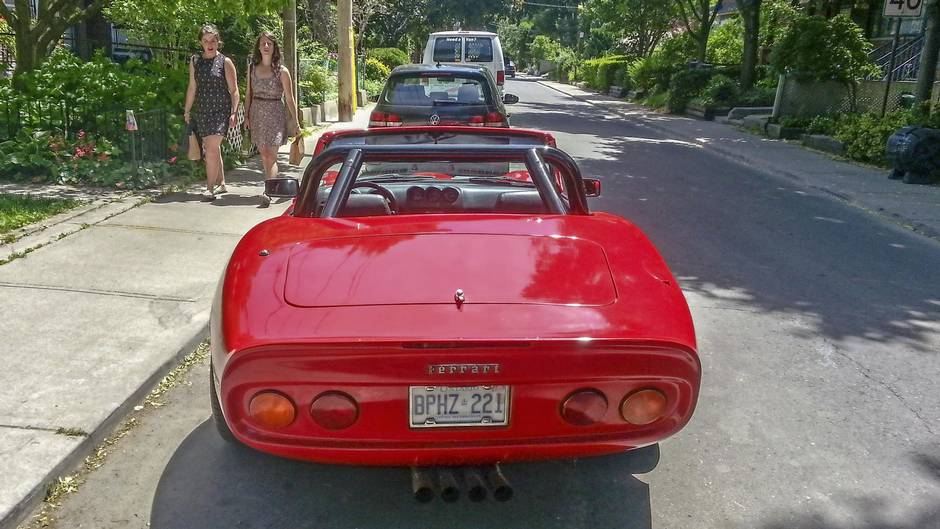
Which brings us to kit cars and The Case of the Fake Ferrari. Not long ago, a reader sent a picture of what appeared to be a Ferrari GTO convertible, a classic car that can sell for millions. On closer inspection, it became obvious that this was no GTO – instead, it was an old Nissan decked out with a fibreglass body kit and Ferrari badges.
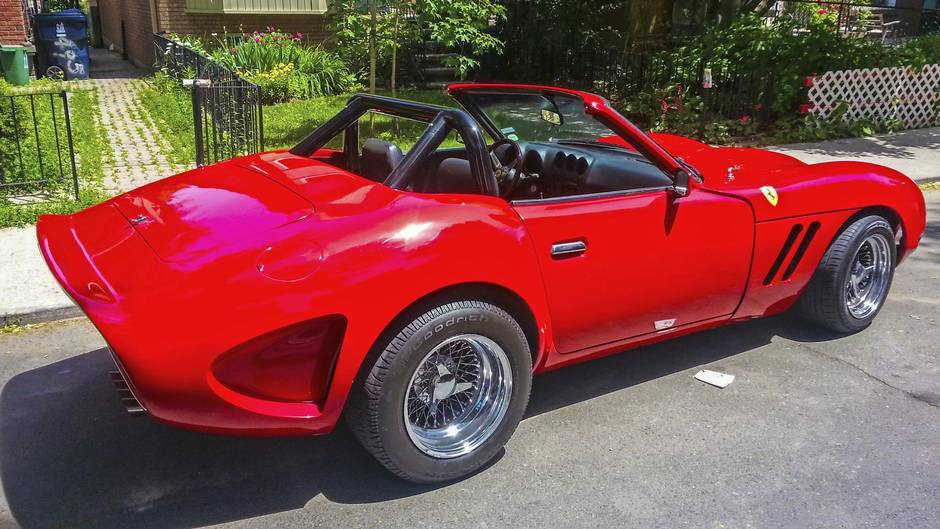
The kit car is the great pretender of the automotive world. Its value proposition is simple: You get a million-dollar machine for next to nothing. Bystanders watch in awe as you roll past. The opposite sex swoons. And only you know that your Ferrari is actually a clapped-out Nissan. Or at least that’s the theory.
In photos: Rare Toronto Ferrari covered for 25 years sells for $770,000
Like the toupée and the bicep implant, the kit car is a tricky artifice. Meant to impress, it can easily backfire (in the metaphysical sense) when onlookers realize they’ve been duped. The kit car invites deep-rooted questions about authenticity, value and the true meaning of objects.
My first encounter with a kit car was in the 1970s, when I stopped to admire an MG T-Type outside a Vancouver nightclub. The T-Type is a beloved, wire-wheeled English car that pilots drove during the Battle of Britain.
But something seemed off. The T’s body panels had a lumpen quality, as if the car had contracted a bad case of gout, and the steering wheel looked like it had been cannibalized from a Third-World taxi. However, the shifter and tailpipes seemed weirdly familiar. No wonder – they came from a VW Beetle. This T-Type was an imposter, a Beetle with a knockoff body dropped on top.
How many people would it fool? A few months later, I found a back-alley operation that turned out knock-off Auburn Speedsters. The original Auburn, styled by Gordon Buehrig, was a 1930s American masterpiece, with a flowing steel body straight out of The Great Gatsby. What I encountered in the Auburn knock-off shop was something else again. Rusting barrels of industrial solvent lined the sagging walls, and a guy with a cigarette hanging from the corner of his lip was spraying chopped fibreglass into a dodgy-looking body mould. The mould had been created by looking at pictures of a real Auburn, then carving a facsimile out of clay. The dimensions and proportions were wildly off, turning a classic machine into an ugly, hunchbacked parody. The running gear came from a Pontiac sedan.
The most-copied car is the Shelby Cobra, a legendary, fat-tired roadster produced in the 1960s. Over the years, hundreds of Cobra replicas have been built, with wildly varying levels of quality. Although a few were superior to the original machine, the vast majority were rolling jokes, with bodies made from cheap, chopper-gun fibreglass and mechanical components lifted from worn-out family sedans. A few years ago, I drove a Cobra clone with a frame made from rusted angle iron, a motor cannibalized from a clapped-out GMC Jimmy and doors that swung on Home Depot hinges.
Imitation may be the sincerest form of flattery, but Cobra creator Carroll Shelby didn’t see it that way – by the time he died in 2012, Shelby had spent decades fighting Cobra kit makers in court. His extermination efforts were only partly successful – the courts ruled that the kit car builders were entitled to build cars that resembled Shelby’s classic design, but couldn’t use the Cobra name.
The experience was an unpleasant one for all involved. After the courts dismissed one of Shelby’s last lawsuits, Factory Five president David Smith (one of the largest replica makers) said his company had spent more than $1-million (U.S.) defending itself, and said Carroll Shelby is “a man whose lasting legacy is rapidly changing from racing legend to prolific litigant.”
Another heavily copied design is the Lotus Seven, a lightweight machine designed by Colin Chapman in the 1950s. Countless knock-offs have been produced, including at least three from Ontario. The rights to the Seven design were purchased decades ago by Caterham, a company that produces a machine better than the original. Chapman’s design was brilliant, but suffered from long list of faults, including a breakage-prone frame, a leaking top and a red-hot exhaust system that ran along the side of the car, fully exposed, like a mobile branding iron.
Although the Caterham version is infinitely superior, many enthusiasts insist on having an original. “It’s authentic!” they insist. Maybe so, but I’d prefer a car with a frame that doesn’t break.
Plato argued that forms were malleable, but the idea they represented was permanent – your office chair may look different than the one that a Roman emperor used, for example, but both of you would know what was meant if someone referred to a chair.
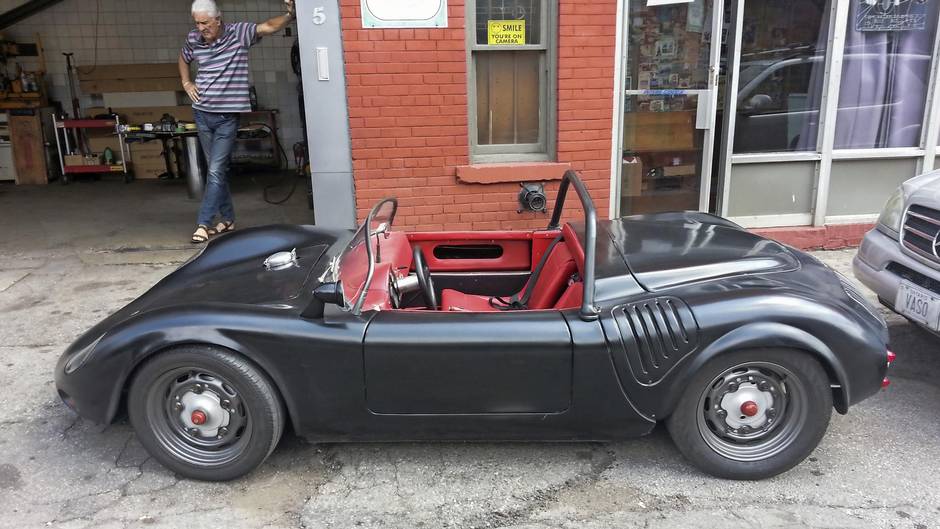
A car’s prestige and brand equity are rooted in this same principle. When someone says they drive a Rolls-Royce, polished steel and magisterial silence is instantly envisioned. The Porsche name evokes the Autobahn and howling exhaust tones.
But make a Rolls-Royce or Porsche body out of fibreglass and mount it on a VW Beetle chassis, and everything changes. The form may be similar, but the meaning is different. Plato never came up against a fake Ferrari, but if he did, he’d have something to say about it – some things are not eternal.
Like us on Facebook
Add us to your circles
Sign up for our weekly newsletter.