Our Prototypes column – by Charles Bombardier – introduces vehicle concepts and presents visuals from designers who illustrate the ideas. Some are extensions of existing concepts, others are new, some are production ready, and others really far-fetched. Here is a look-back at five of the most interesting ideas from 2014.
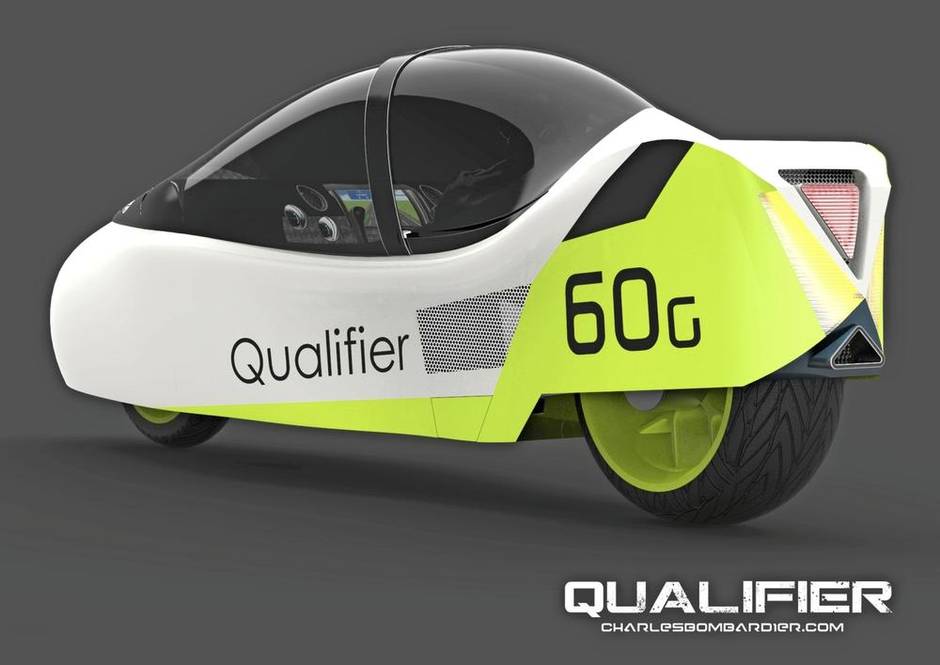
1. The Qualifier
The concept
If you’ve ever watched an episode of The Jetsons, you’ve probably wondered what vehicles from the future would look like. The Qualifier is an autonomous electric motorcycle concept that could bring the experience of riding to a whole new level. It’s equipped with two 30-kilowatt liquid-cooled motors and a smart gyroscopic system to keep it upright on two wheels at stoplights.
What it’s used for
The Qualifier could play a role in the coming Transport Electrification projects around the world. It takes up only a quarter of a car’s parking space and it uses less than a quarter of its energy. It doesn’t make any noise, nor does it pollute. It’s not a glamorous mode of transportation, but if you want to commute to work every day in your own personal vehicle while working or relaxing, this could be an excellent alternative.
The cost of such a vehicle could be below $10,000 if mass produced. You could also remove one motor and use incremental battery packs depending on your average trip. Each buyer could be offered the option of choosing the vehicle’s colours and graphics from a huge variety. Each Qualifier’s body would be covered with printed vinyl graphics at the factory, chosen online by the buyer.
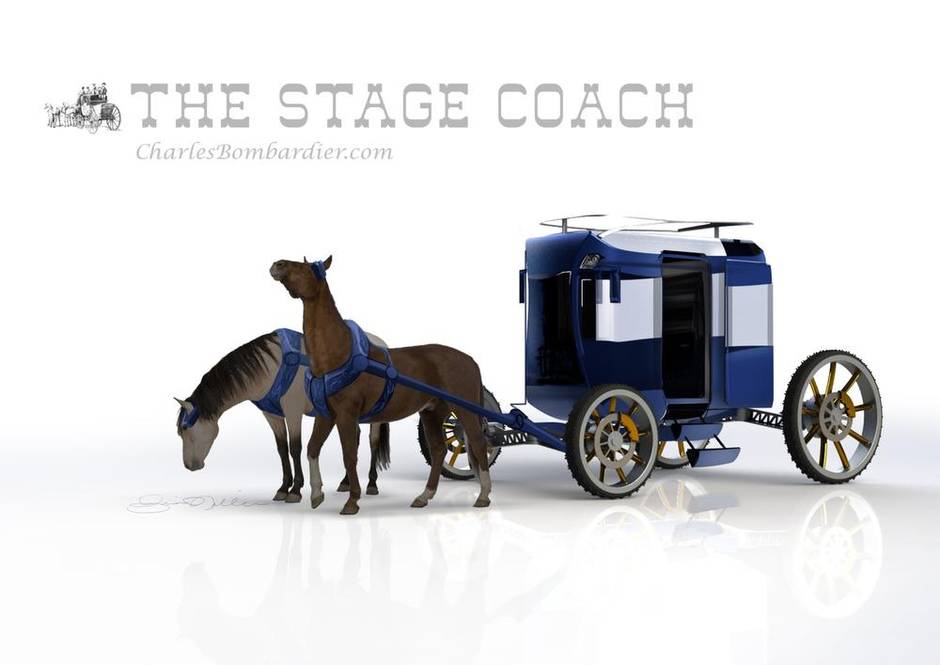
2. The Stage Coach
The concept
The Stage Coach blends modern technology with a traditional means of transportation. The 21st century vehicle depicts two eras: pulled by horses, just like the old times, but with high-tech features, such as an electronic stability system and panoramic skylight. The Stage Coach concept could eventually move another step ahead by introducing a variant that would be controlled by computer.
What it’s used for
A fully enclosed cockpit would probably complicate things when handling the horses, so it should probably be an optional feature or a convertible canopy. The Stage Coach should be engineered to last more than 25 years, and it should cost less than $25,000 (of course, that all depends on production volume, what it includes, and where it’s manufactured).
It would need to be sturdy, easily serviceable with off-the-shelf parts, which means alternators, radiators, batteries, window motors, and suspension would come from existing vehicles. In other words, no development.
The Stage Coach could be used for several purposes, such as visiting the countryside with your family, on ranches, large properties, or as a tourist attraction, say on cruise ship expeditions. In another scenario, it could become a means of transportation where no gasoline is available or wanted.
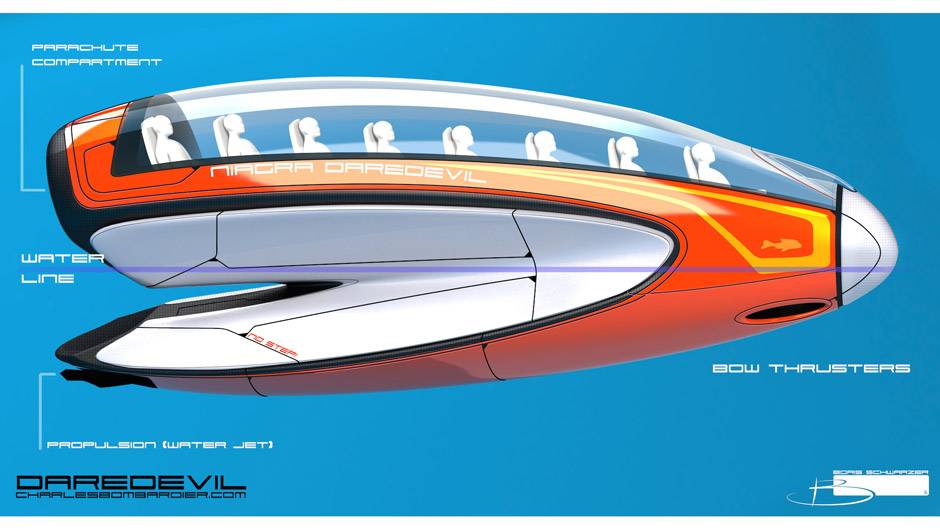
3. The Daredevil
The concept
The Daredevil is a thrill ride boat designed to take the plunge over Niagara Falls with eight people on board. A drag anchor chute would slow it down, and safety features would include shock-absorbing bumpers.
What’s it used for
Is there a market for such a craft? Yes, there is no doubt about that. Can it be designed to be safe, reliable, and exciting to ride? Most probably with current technology. We’ve come up with a few ideas, and we’d like your input on how to improve the design to make it simpler, cheaper, and safer. It’s an idea that we’d love to see turn into a prototype.
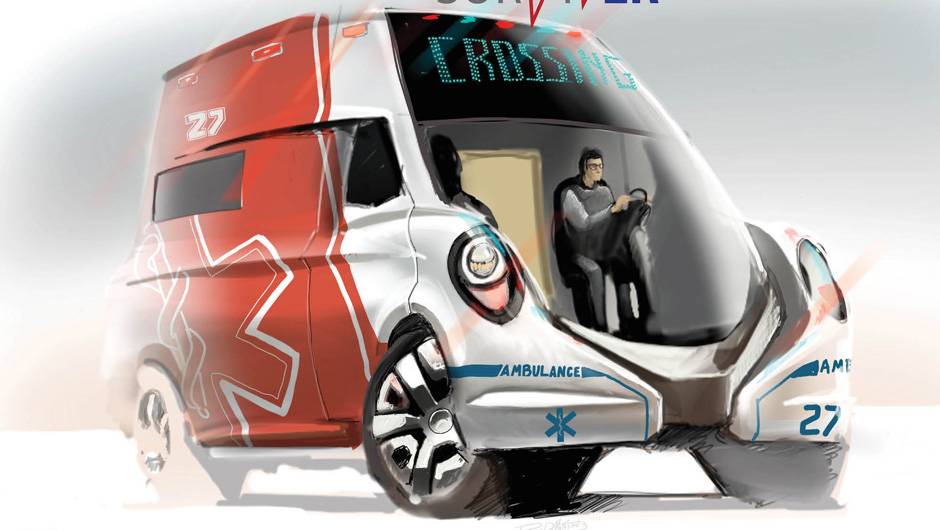
4. The SurvivER
The concept
The SurvivER is a prototype of a new generation of ambulance that would be quieter, smoother to ride, and easier to work in, compared with existing models.
What’s it used for
The SurvivER would be used as an ambulance to replace existing fleets. I am not certain the front windshield should be as large as the current image shows, or if the rear cargo bay should be separated from the frame by a suspension.
5. The Kube
The concept
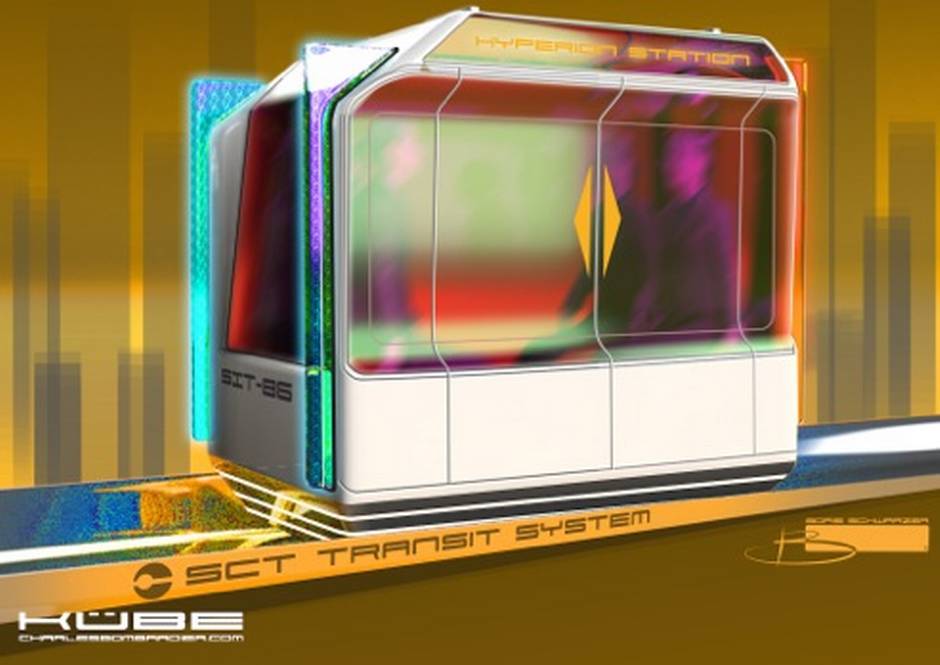
The Kube is a concept for a personal urban “roomcar” shaped like a cube. A roomcar would be a vehicle that serves as a means of transportation and as extra space for your living quarters. It’s similar to the Rubix concept, but it has no wheels – it hovers on magnetic levitation (maglev) tracks. This driverless electric vehicle aims to change how we use cars in growing cities, where space is expensive and limited.
What’s it used for
When our cars are parked at home or in the streets, they take up space, and they are of no use. The Kube aims to alter that by letting us use our vehicles for purposes other than transport. We are already paying taxes for our private parking spaces, so why not put them to use? It would also be easier to enter your home directly with the groceries.
The Kube could be used with a regular townhouse, fitted inside existing garages or serve as small transit units (people movers) in certain residential areas where the infrastructure would already be in place. In this case, you would only pay for your fare with your smartphone.
Like us on Facebook
Add us to your circles.
Sign up for our weekly newsletter.