Quick! Think of a Jeep. Any Jeep.
You thought of a Wrangler, didn’t you? Tough and brick-like, with big knobbie tires. Grrrr! Either that, or you thought of the original G.I. Joe Jeep, maybe with George Clooney at the wheel, both looking good in olive green drab.
You almost certainly did not think of the red Cherokee Overland I drove to Starbucks, fully loaded with ventilated leather seats, ambient LED interior lighting, and even a wireless charging pad for my phone. It was a $47,000 SUV – is that really a Jeep?
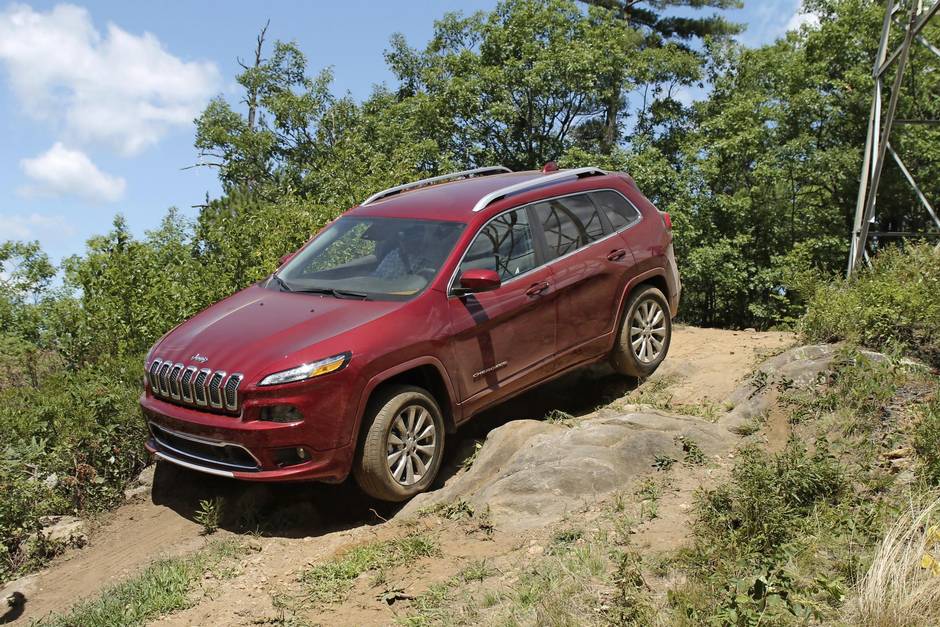
There are six different models in the Jeep lineup, from the sub-$20,000 Patriot and Compass to the $50,000-plus loaded Grand Cherokee. The mid-sized Cherokee is the big seller but make no mistake, the instantly recognizable Wrangler is the bread and butter. This year marks the 75th anniversary of the macho brand, so I drove out to the Kanata Starbucks to swap cars, climbing into a Wrangler Sahara to join a convoy up onto the trails.
This is what true Wrangler owners do – there’s no mall-crawling in their calling. The Cherokee followed behind – that driver drew the short straw.
In photos: Driving Jeeps through the mud and to Starbucks
Plenty of Jeep owners never go off-road, though, now that Jeep is a mainstream brand. Sales broke records last year for the fourth consecutive year, selling more than 1.2 million vehicles in 160 countries. The target is to sell two million in 2018, when there will be more new models and probably a pickup truck.
In Canada, almost 80,000 Jeeps were sold last year – a record – and a quarter of them were Wranglers. That’s quite an accomplishment for a vehicle that’s loud, slow and thirsty on gas. As Mark Allen, Jeep’s chief designer, noted, the Wrangler has been compared to a pair of ice skates: use them as they’re intended and they’re great for skating, but they make a crappy pair of shoes.
We drove through Calabogie and then ducked south on the dirt road to Wabun Lake. Here, we met members of the Eastern Ontario Trail Blazers, who guided the way along a trail called the Rusty Bat that follows the hydro lines high into the hills. We drove slowly and carefully, following the club’s Tread Lightly philosophy of leaving the area better than it’s found.
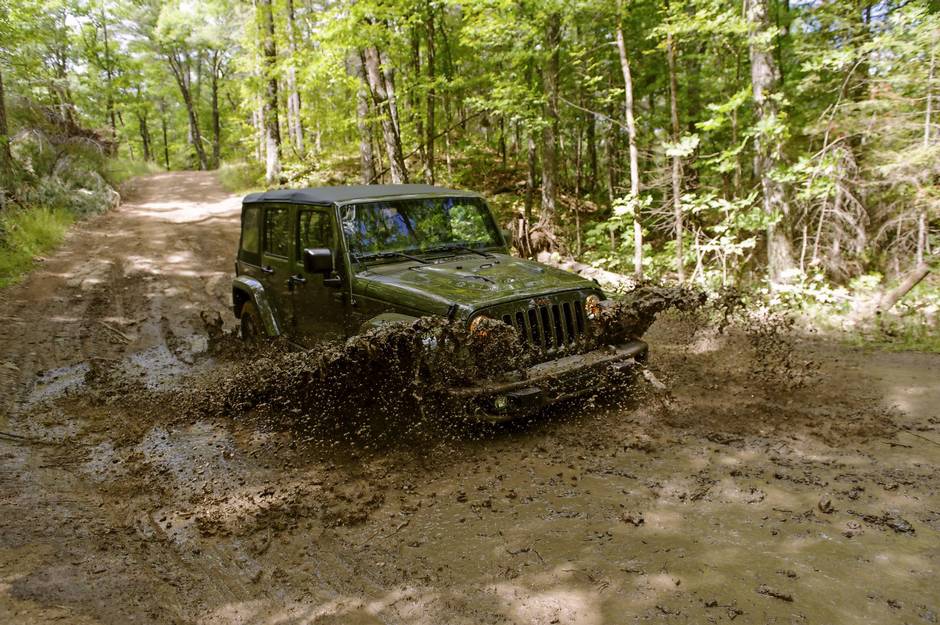
That didn’t mean we couldn’t splash through some deep mud and climb some near-impossible rocks. Trail-rated Jeeps have specific targets for handling off-road challenges, based on the original targets set out by the U.S. government in 1940 when it was looking for a military vehicle. Three makers designed a vehicle then for the army contract – Ford, Bantam, and Willys – and Willys ended up with the long-term deal. As Allen says, “No one was setting up a brand here – they were just answering a call.”
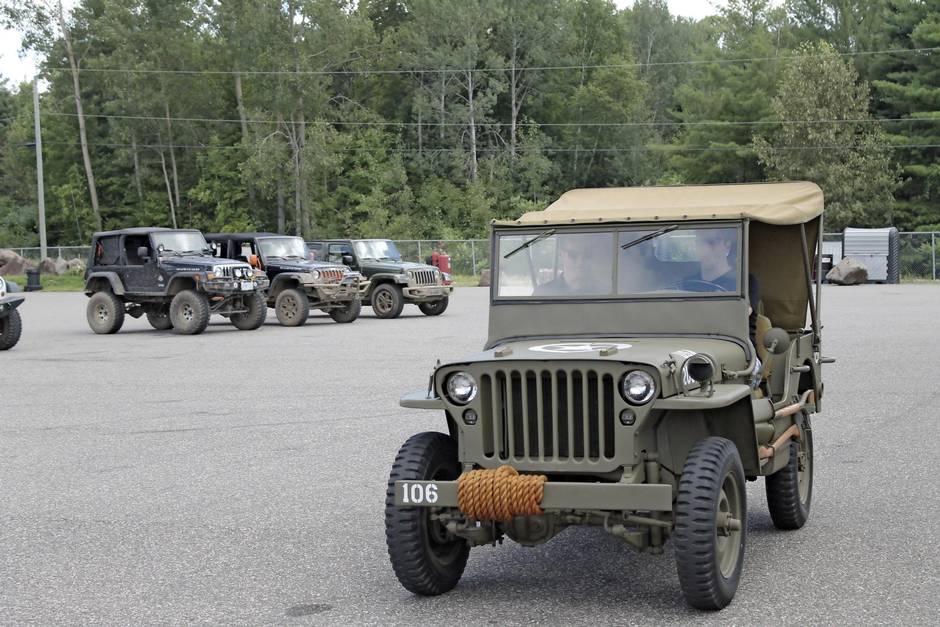
In 1945, Willys built the first civilian Jeep and the car became its own brand, diversifying into Wagoneers and Cherokees, eventually owned by Chrysler and now Fiat Chrysler Automobiles. Even the new “soft-road” Renegade can match some of those original army requirements: it can ford water as deep as 20 inches, though the Wrangler can make it through 30 inches of muck.
The Rusty Bat wasn’t a tough technical challenge – there was a Renegade in our convoy that went around some of the larger obstacles – but there were enough rocks in the path to need spotters to help make it through without any damage.
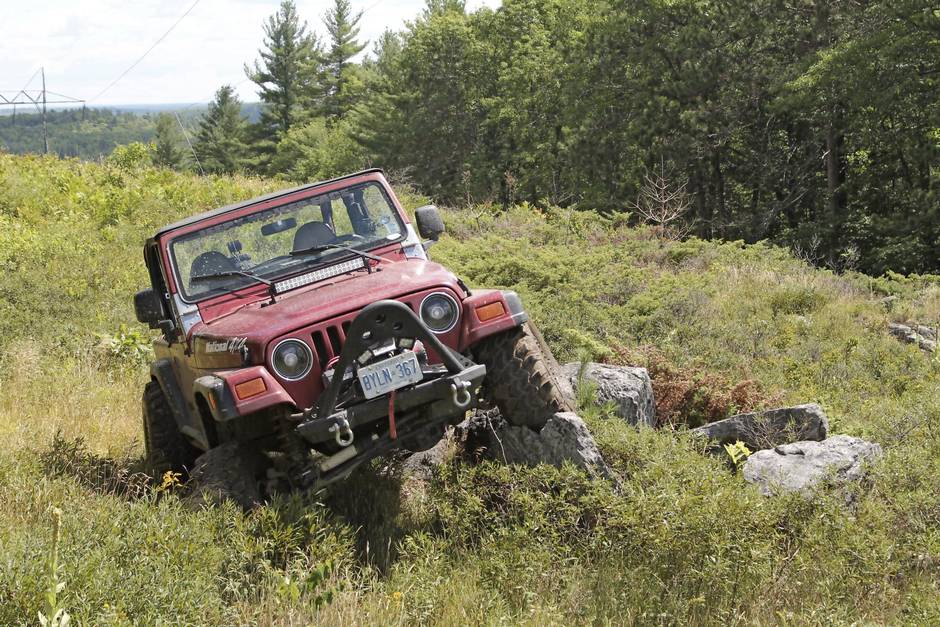
Jeeps are renowned for their articulation, which keeps wheels on the ground for traction when other wheels are climbing over things. It’s these long shock absorbers that make them so bouncy and potentially tippy on the highway – the Trail Blazers all had modified Jeeps that allowed greater articulation, and were running tire pressures as low as 6 psi. Such vehicles need to be driven with great care on paved roads.
The Wrangler Sahara was a fine compromise though. It’s not so rugged as the Rubicon edition, which has heavier-duty components, but it’s tougher than the basic Sport. The four-door Sahara starts at $39,695, though my optioned-up tester came in at $53,440 before taxes with its leather-faced seats and 75th Anniversary badging. I felt almost guilty getting it dirty. Almost.
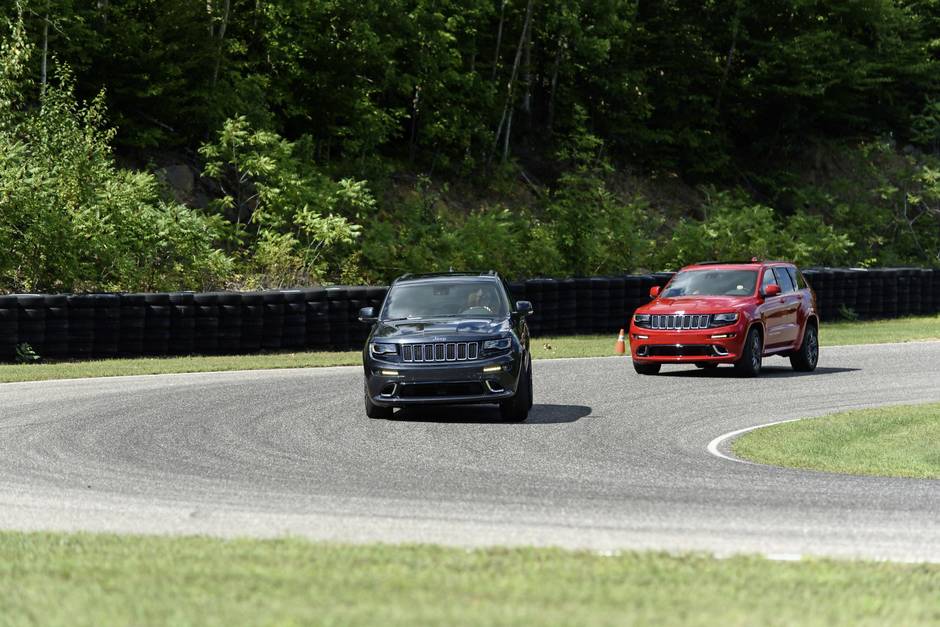
There’s another side to Jeep now, though, so we left the trail and drove over to Calabogie Motorsports Park. A trio of $68,000 Grand Cherokee SRTs was waiting there to prove what can be done with a 6.4-litre Hemi engine that makes 475 horsepower. There was also an immaculate Willys army Jeep from 1944 that was considerably slower and more cramped.
Is Jeep all things now to all people, after 75 years? It’s trying to be, though no single model can achieve everything both on-road and off. That’s okay. Only Wrangler owners really want to take on the trail, and they don’t want their Jeeps to be too quiet or too luxurious. They like climbing up high into the seat and slowing down for highway off-ramps.
It’s all part of the Jeep thing. If a little of that mystique still rubs off on the other models even after 75 years, then the brand has a long way to go yet.
The writer was a guest of the auto maker. Content was not subject to approval.
We've redesigned the Drive section - take a look